Hubbry Logo
Samsung Galaxy Note 4Samsung Galaxy Note 4Main
Open search
Samsung Galaxy Note 4
Community hub
Samsung Galaxy Note 4
logo
8 pages, 0 posts
0 subscribers
Be the first to start a discussion here.
Samsung Galaxy Note 4
from Wikipedia
Not found
Revisions and contributorsEdit on WikipediaRead on Wikipedia
from Grokipedia
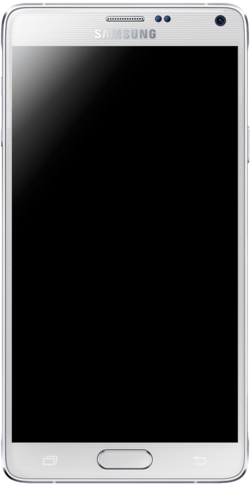
The Samsung Galaxy Note 4 is an Android-based developed and manufactured by as part of its Galaxy Note series, featuring a 5.7-inch Super display, an integrated stylus for productivity tasks, and advanced camera capabilities. It was unveiled on September 3, 2014, during a at IFA Berlin in and became available for purchase globally starting in October 2014, serving as the direct successor to the Galaxy Note 3. The device introduced several innovations to the series, including the first Quad HD (2560 × 1440) resolution screen in a Note model, which provided sharper visuals with 518 pixels per inch, along with a metallic frame for improved durability and aesthetics. At launch, the Galaxy Note 4 shipped with Android 4.4.4 KitKat overlaid by Samsung's user interface and was later upgradable to Android 6.0.1 , supporting a range of productivity features enhanced by the , such as Air Command for quick actions and screen-off memo capabilities. Hardware-wise, it was powered by either a 805 or Samsung 7 Octa processor (region-dependent), with 3 GB of RAM, 32 GB of internal storage expandable via microSDXC, and a 3,220 mAh battery that supported fast charging and an ultra power-saving mode for extended usage. The camera system featured a 16-megapixel rear sensor with optical (OIS) for brighter, clearer images in low light, and a 3.7-megapixel with a optimized for group selfies. The Galaxy Note 4 played a pivotal role in popularizing the category by balancing large-screen entertainment with stylus-based multitasking, achieving strong sales with 4.5 million units sold globally in the first month of availability and contributing to Samsung's leadership in the premium Android segment during 2014. Its design refinements, such as the softly curved rear glass and , influenced subsequent iterations in the Note lineup and helped bridge the gap between smartphones and tablets.

Development and Release

Announcement

The Samsung Galaxy Note 4 was unveiled on September 3, 2014, during the Samsung Unpacked 2014 Episode 2 press conference at the IFA consumer electronics trade show in , . Positioned as the successor to the Galaxy Note 3, the Note 4 highlighted key advancements including a higher-resolution display, a rear camera with optical for better low-light performance, and refined stylus capabilities for more intuitive input and productivity features. At the same event, Samsung announced the Galaxy Note Edge alongside it, introducing a distinctive curved-edge display for enhanced notifications and quick access to tools. Initial specifications teased during the unveiling included a 5.7-inch Quad HD Super AMOLED display offering sharper visuals than its predecessor, a 16-megapixel rear camera with optical , and a removable battery supporting fast charging.

Launch Dates

The Samsung Galaxy Note 4's global rollout commenced shortly after its unveiling at IFA 2014 in , with initial availability in select markets ahead of a broader international release. received the device first on September 26, 2014, followed by on September 29, 2014. Several European and Asian markets, including and , saw launches on October 10, 2014, though the experienced a one-week delay to , 2014, due to high demand. The marked the start of the wider global release on October 17, 2014, with initial carrier partnerships including , Verizon, , and Sprint offering the device for pre-order and immediate availability. By the end of October 2014, the Galaxy Note 4 had reached 140 countries worldwide.

Model Variants

The Samsung Galaxy Note 4 was released in several model variants tailored to specific regions and carriers, primarily differing in their system-on-chip (SoC) to accommodate local network requirements. The international models, designated SM-N910F for and SM-N910C for select global markets including and , utilized Samsung's in-house 5433 octa-core processor. In the United States, carrier-specific and unlocked variants adopted the 805 quad-core processor to support advanced LTE-Advanced (LTE-A) bands prevalent in North American networks. These included the SM-N910U for unlocked devices, SM-N910V for Verizon Wireless, SM-N910T for , and SM-N910A for . Chinese market variants, such as the SM-N9100 and SM-N9108, also featured the Snapdragon 805 SoC, optimized for China's TD-LTE and TD-SCDMA networks, with the SM-N9100 supporting dual-SIM (Duos) functionality for enhanced connectivity in that region. A key distinction among these variants lies in the SoC selection: the 5433 was employed in international models for broader global compatibility, while the Snapdragon 805 powered North American and Chinese versions to enable LTE-A and specialized band support. Despite these differences, all variants shared uniform memory configurations of 3 GB LPDDR3 RAM and 32 GB internal storage, expandable via microSD. Additionally, a Developer Edition was offered for the unlocked SM-N910U model, allowing users to unlock the and access privileges for custom development, priced at $700 directly from .

Design and Build

Physical Specifications

The Samsung Galaxy Note 4 measures 153.5 × 78.6 × 8.5 mm and weighs 176 g, making it a sizable with a slim profile for its era. Its build features a 4 front panel for scratch resistance, a removable polycarbonate plastic back with a faux texture for improved grip and aesthetics, and an aluminum frame for structural durability. The device lacks an official IP rating for water or dust resistance, distinguishing it from subsequent Galaxy Note models that introduced such protections. Available in Charcoal Black and Frost White at launch, the Galaxy Note 4 later expanded to include Bronze Gold and Blossom Pink variants in select markets. The front includes a physical home button integrated with a fingerprint sensor for biometric authentication, flanked by capacitive navigation keys. On the edges, it features a micro-USB 2.0 port for charging and data transfer, a 3.5 mm headphone jack, and an IR blaster enabling functionality for compatible devices.

S Pen Stylus

The stylus included with the Samsung Galaxy Note 4 utilizes Wacom's electromagnetic resonance (EMR) digitizer technology embedded in the device's display, enabling battery-free operation and high-precision input without the need for charging. This setup supports 2048 levels of pressure sensitivity, a doubling from the previous model's 1024 levels, which allows for nuanced control over line thickness, shading, and stroke variation in and writing applications. The digitizer also detects the angle of the pen for more natural rendering of strokes, simulating traditional pen-on-paper dynamics. A key hardware capability is Air View hover detection, which senses the from up to 10 mm above the screen surface, allowing users to preview content such as emails, images, or links by hovering without making contact. This feature enhances navigation efficiency by providing pop-up previews and enabling gesture-based interactions like double-tapping for quick actions. The 's design includes a side for activating these hovers and other commands, contributing to its role as a core input tool beyond finger touch. The stylus integrates with intelligent input features that leverage its hardware precision, such as Action Memo for real-time handwriting-to-text conversion and task creation directly on the screen. Scrapbook utilizes the pen's accuracy to clip and organize , images, or text into customizable collections, while Screen Write enables annotations and drawings over any open app or screenshot. These capabilities stem from the S Pen's responsive digitizer, which distinguishes fine pen movements from palm rejection during use. For practicality, the Galaxy Note 4 features a dedicated storage slot in its lower frame edge, where the magnetically secures when not in use, preventing loss and ensuring quick access. The stylus comes with replaceable nibs designed to reduce smudging and fingerprints, along with a removal tool for easy swapping as the tips wear over time—typically lasting for hundreds of hours of use depending on . Unlike later models, the Note 4's does not include advanced tilt detection beyond basic angle recognition or connectivity for remote controls.

Hardware

Display

The Samsung Galaxy Note 4 is equipped with a 5.7-inch Super display, offering a Quad HD resolution of 2560 × 1440 pixels and a of ~518 ppi, which provides sharp and detailed visuals suitable for its form factor. The panel utilizes Samsung's adaptive display technology, which automatically adjusts and sharpness based on ambient lighting conditions to enhance viewing comfort. Additionally, the screen supports multi-window functionality optimized for the larger , allowing simultaneous use of multiple applications, though detailed implementation is covered in the software section. The display achieves high color accuracy, covering approximately 100% of the in its AMOLED Photo mode, making it particularly suitable for photo editing and vibrant . Maximum reaches up to 356 nits in manual mode, with automatic providing higher output in ambient light to ensure good visibility in various lighting environments, while adaptive further optimizes luminance based on surroundings. The screen is protected by Corning 4, providing enhanced resistance to scratches and impacts compared to previous generations. Integration with the enables hover-based features, such as previewing content without direct touch, enhancing interaction with the display's high-resolution surface.

Processor and Memory

The Samsung Galaxy Note 4 featured two primary chipset variants depending on the region and carrier. In the United States and , it utilized the 805 system-on-chip (SoC), which includes a 2.7 GHz quad-core Krait 450 CPU and an 420 GPU. Internationally, the device employed the 5433 SoC, comprising a big.LITTLE architecture with a quad-core cluster clocked at 1.9 GHz for high-performance tasks and a quad-core cluster at 1.3 GHz for efficiency, paired with a Mali-T760 GPU. The Note 4 came equipped with 3 GB of LPDDR3 RAM across all variants, providing sufficient multitasking capabilities for its era. Internal storage was 32 GB of eMMC 5.0 flash memory, which could be expanded using a dedicated microSDXC card slot supporting cards up to 128 GB in capacity. At launch, benchmark performance varied slightly by chipset; the Exynos 5433 model achieved scores around 40,000, while the Snapdragon 805 variant scored approximately 45,000, reflecting comparable overall computational capabilities.

Battery and Charging

The Samsung Galaxy Note 4 features a removable with a capacity of 3,220 mAh, allowing users to easily replace it for extended use or in case of degradation. This design choice marked the last time a Galaxy Note series model included a user-replaceable battery until the Note Fan Edition variant. The battery supports typical endurance ratings of up to 20 hours (3G) talk time and 420 hours () standby time under standard conditions, with video playback lasting up to 13 hours. For charging, the device incorporates 2.0 technology, enabling wired fast charging at up to 15 W via a compatible and USB cable, which significantly reduces recharge times compared to standard methods. Additionally, wireless charging is available as an optional feature through a separate Qi-compatible back cover accessory, providing a convenient cable-free option for users. To optimize battery life during low-power situations, the Galaxy Note 4 includes Ultra Power Saving Mode, which restricts functionality to essential apps such as calls and , switches the interface to a display, and limits background processes to potentially extend usability for basic communication when the battery is critically low. This mode activates a simplified, energy-efficient environment that prioritizes longevity over full feature access.

Connectivity and Sensors

The Samsung Galaxy Note 4 supported a range of technologies, including 2.5G /GPRS/EDGE on bands 850/900/1800/1900 MHz, HSPA+ with speeds up to 42 Mbps on bands 850/900/1900/2100 MHz, and 4G LTE with Category 4 (150/50 Mbps) or Category 6 (up to 300 Mbps download) capabilities, the latter available in Snapdragon 805 variants depending on country and carrier. It did not include FM radio functionality. Wireless connectivity options encompassed Wi-Fi 802.11a/b/g/n/ac with dual-band support, , and HT80 for enhanced throughput; 4.1 with low energy (BLE) and ANT+; NFC for contactless payments and data transfer; and positioning via GPS, , and satellites. The device also featured an IR LED blaster, enabling it to function as a control for compatible home electronics. For physical connections, the Galaxy Note 4 utilized a micro-USB 2.0 port supporting OTG and MHL 3.0 for TV-out and HDMI mirroring, along with a 3.5mm headphone jack. It lacked water or dust resistance certifications. The Note 4 incorporated a comprehensive suite of sensors, including an accelerometer, gyroscope, geomagnetic (compass), proximity, RGB ambient light, barometer, UV, gesture recognition via IR-LED, Hall effect for flip covers, heart rate monitor, and SpO2 (blood oxygen) sensor, with the latter two available depending on market. A front-mounted fingerprint sensor integrated into the home button marked the first such feature in the Galaxy Note series, allowing for secure authentication.

Software

Operating System and Interface

The Samsung Galaxy Note 4 launched with Android 4.4.4 KitKat as its operating system, customized by Samsung's Nature UX 3.0 skin, which was later updated to version 3.5 with subsequent software releases. This interface provided a refined overlay on the base Android framework, emphasizing visual enhancements and usability tweaks tailored for the device's form factor. Key elements of the TouchWiz Nature UX 3.0 included a magazine-like home screen with integrated Flipboard Briefing, accessible by swiping left from the main panel to deliver a customizable, scrollable feed of news and content. Users could personalize the interface through customizable themes that adjusted colors, wallpapers, and icon styles, along with a one-handed mode designed for easier operation on the 5.7-inch display—activated by double-tapping the home button or using edge gestures to resize and reposition the screen toward the thumb's reach. Security features were bolstered by 2.0, an embedded platform offering enterprise-level protections such as data isolation in secure containers and real-time threat detection, complemented by a basic for device unlocking via swipe gestures. The device came preloaded with several proprietary applications, including as Samsung's voice-activated assistant for hands-free commands and Samsung Apps as the dedicated storefront for downloading region-specific content and software. These apps, while enhancing ecosystem integration, contributed to perceptions of bloatware due to their non-removable nature without advanced modifications.

Integrated Features

The Samsung Galaxy Note 4 introduced enhanced multi-window functionality, enabling users to run two applications simultaneously in a split-screen view, with an adjustable divider to resize each pane for better . This feature supported orientation changes between and modes and allowed seamless file transfers or link opening between the windows, such as dragging content from one app to another. Additionally, pop-up view permitted resizable, movable windows for apps that could be minimized to a circular or launched over the background, facilitating drag-and-drop interactions via the for tasks like inserting images into messages. Central to the device's integrated experience were S Pen-specific applications accessed through the Air Command menu, which appeared upon removing or pressing its button. Air Command provided quick shortcuts to tools like Action Memo for handwriting notes that could be pinned as widgets or saved to apps, and Smart Select for capturing rectangular screen areas as images or extracting text via (OCR) for editing or sharing. Image Clip allowed users to collect multiple screen snippets into a scrapbook-style gallery, while Screen Write enabled immediate annotations on screenshots. The S Health application leveraged the device's built-in for comprehensive wellness tracking, including monitoring by placing a finger on the rear for real-time readings during exercise or . It also supported blood (SpO2) measurements using the same array, alongside (UV) detection for sun exposure alerts, with data integration from compatible wearables like the Gear Fit. These features emphasized preventive health insights, though recommended professional devices for medical accuracy. Gallery enhancements focused on intuitive organization and security, with tag-based sorting allowing users to label photos by faces, locations, or events for quick searches and album creation. S Pen hover previews provided Air View functionality to browse images without opening them, and drag-and-drop integration with multi-window mode simplified sharing annotated content to other apps. For privacy, Private Mode hid selected files within the Gallery and other apps behind a PIN or pattern lock, ensuring sensitive media remained inaccessible in standard view.

Update History

The Samsung Galaxy Note 4 launched in September 2014 with Android 4.4.4 KitKat as its initial operating system, customized with Samsung's interface. In early 2015, the device received its first major update to Android 5.0.1 , which introduced for a refreshed visual style and runtime permissions to enhance user control over app access. A follow-up patch to Android 5.1.1 arrived in mid-2015, addressing stability issues and further refining the interface. The final major official update came in late 2015 and into 2016 with Android 6.0.1 Marshmallow, incorporating features like Doze mode for improved battery optimization through adaptive and granular app permission controls that allow revocation post-installation. No further Android version upgrades were provided beyond Marshmallow. delivered monthly security patches for the Galaxy Note 4 through 2016 to address vulnerabilities in the Android OS and Samsung software. These transitioned to quarterly updates thereafter, with official support concluding in August 2017, after which no further from was issued. As of 2025, the device benefits from unofficial community-driven support, including builds reaching Android 12L ( 19.1), which provide ongoing security enhancements and modern app compatibility for users willing to install custom ROMs. Other custom ROM projects, such as those based on /e/OS or independent developer efforts, further extend the Note 4's usability beyond its official lifecycle.

Camera System

Rear Camera

The rear camera of the Samsung Galaxy Note 4 features a 16-megapixel BSI sensor with a 1/2.6-inch and 1.12µm pixel pitch, paired with an f/2.2 lens and 31mm (35mm equivalent). It incorporates phase detection autofocus (PDAF) for rapid focusing and optical (OIS), marking the first implementation of OIS in the Galaxy Note series to reduce blur in low-light conditions and handheld video. An LED flash supports geo-tagging, panorama, and HDR modes for enhanced in challenging lighting. The camera's Selective Focus feature allows users to simulate depth-of-field effects post-capture by adjusting focus points on photos taken in close-range mode, leveraging the OIS for stable shots. This hardware setup delivers sharp images with good detail retention, particularly benefiting from OIS for clearer low-light photography compared to prior Note models without stabilization. For video recording, the rear camera supports 4K UHD resolution at 30 fps with a 5-minute duration limit to manage heat and storage, alongside at 30/60 fps and at 120 fps for slow-motion capture. sound recording is included across modes, contributing to versatile multimedia use.

Front Camera

The front-facing camera on the Samsung Galaxy Note 4 utilizes a 3.7-megapixel paired with an f/1.9 lens and fixed focus, designed primarily for selfies and video calls. This setup allows for improved low-light performance compared to previous models due to the brighter , enabling clearer images in dim conditions. A standout feature is its video recording capability, supporting (2560 x 1440) resolution at 30 frames per second—the first on a to achieve QHD video quality at launch. This innovation elevated videos and video conferencing, providing sharper detail than the standard common in contemporaries. The camera's further enhances usability, capturing a broader for group selfies and supporting a 120-degree wide mode to include more subjects without repositioning. Additionally, built-in beauty mode filters apply real-time adjustments like skin smoothing and face slimming to improve portrait aesthetics during capture. Software enhancements include digital video stabilization to reduce shake during recording, processed through the device's camera app for steadier footage in handheld scenarios. Integration with voice commands enables hands-free operation, such as initiating recording with phrases like "Record video," which proved useful for vlogging or calls without physical interaction. Despite these advances, the front camera lacks optical , relying solely on software methods that are less effective than hardware solutions, and its resolution remains lower than the rear camera's 16 megapixels, limiting it to secondary imaging roles.

Accessories

S View Cover

The S View Cover is an official flip-style protective case developed by for the Galaxy Note 4, featuring a translucent that allows users to interact with notifications, incoming calls, and media controls without fully opening the cover. This accessory replaces the device's standard back panel and attaches via built-in magnets, which signal the phone to activate the S View interface and turn off the display when closed to conserve battery life. Available in materials such as premium leather with stitched edges or synthetic alternatives for varied , the cover provides full front and back protection while maintaining a slim profile. Key interactive features accessible through the window include swiping to preview missed calls, messages, and notifications, as well as double-tapping to answer or dismiss calls and alarms directly. Users can also access the sensor by placing a finger on the exposed area within the window for quick health monitoring, activate the via a dedicated shortcut, and view customizable clock faces or wallpapers. These functions integrate seamlessly with the Galaxy Note 4's software, enabling limited touch interactions without unlocking the device. The cover supports personalization options, such as selecting which apps or contacts appear in the view. At launch in 2014, the S View Cover was priced at approximately $50 to $60 USD, depending on the color variant and retailer, positioning it as a premium accessory option for enhanced and protection. It was compatible exclusively with the Galaxy Note 4 model (SM-N910 series), ensuring a precise fit for its 5.7-inch display and hardware layout.

Gear VR Compatibility

The Samsung Galaxy Note 4 served as the inaugural smartphone compatible with the Gear VR headset, marking a significant entry into mobile . Compatibility was restricted to variants equipped with the 805 processor, specifically those distributed through major and European carriers, including the models SM-N910U (unlocked ), SM-N910V (Verizon), SM-N910T (), and SM-N910A (). These models were selected due to their hardware capabilities, such as the high-resolution display and processing power necessary for VR performance, excluding Exynos-based international variants like the SM-N910F or SM-N910C. This compatibility stemmed from a between and Oculus VR, aimed at delivering immersive experiences and dedicated VR applications through the Gear VR Innovator Edition headset (model SM-R320). The integration required users to insert the Note 4 into the headset, leveraging Oculus's mobile SDK for software optimization and content ecosystem development. Key features enabled by this setup included precise head-tracking, powered by the Note 4's built-in and sensors, which allowed for intuitive 3D navigation in virtual environments. Additionally, the phone's 5.7-inch Quad HD Super AMOLED display was optimized for VR rendering, providing a wide and reduced latency to minimize during extended sessions. The Gear VR Innovator Edition launched in December 2014, shortly after the Note 4's release, with the headset priced at $199 and available through Samsung's online store and select carriers like . Initial availability was limited to the compatible Note 4 variants, positioning the bundle as an early consumer gateway to VR entertainment and media consumption.

Commercial Performance

Sales Figures

The Samsung Galaxy Note 4 achieved 4.5 million units sold globally in its first month following the launch on September 26, 2014, marking a solid but slightly lower performance compared to the Galaxy Note 3's 5 million units in the same period. Analysts estimated total sales would exceed 11 million units by the end of 2014. Sales were particularly strong in , including its home market of and where the device launched early to counter the , as well as in the United States and where initial shipments outpaced those of the Note 3; however, the series contributed to a broader decline in Samsung's premium profits. Manufacturing and supply chain challenges, driven by high demand, led to delays in initial shipments to key markets such as the , where availability was postponed to October 17, 2014, and , where the official launch shifted to October 14, 2014, potentially tempering early sales momentum in those regions.

Pricing and Availability

The Samsung Galaxy Note 4 launched in the United States with an unlocked manufacturer suggested retail price (MSRP) of $799 for the 32 GB model. Carrier-subsidized pricing was set at $299 with a two-year contract across major providers; for instance, offered the unlocked version for $825, while Verizon listed it at an effective $700 off-contract. A developer edition, featuring an unlockable , was available directly from for $699.99 on the Verizon network. Internationally, the device debuted at €699 in European markets such as . In , the launch price was ₹58,300. For , the standard model retailed for CNY 5,399 through . The Galaxy Note 4 was distributed through Samsung's official online and physical stores, major U.S. carriers including , Verizon, Sprint, T-Mobile, and U.S. Cellular, as well as retailers like and Amazon, with pre-orders beginning in September 2014 and general availability starting October 17, 2014. Following its launch, pricing declined rapidly due to competition and the introduction of newer models. By July 2015, U.S. carriers applied a $200 reduction to subsidized contract prices, bringing them to $99.99, while unlocked units were available for as low as $369.99 by August 2015. As of November 2025, values for used Galaxy Note 4 devices typically range from $15 to $37, depending on condition and storage capacity.

Reception

Critical Reviews

The Samsung Galaxy Note 4 received generally positive reviews from professional critics upon its launch in 2014, with an average score of approximately 8.7 out of 10 across multiple outlets, reflecting praise for its hardware innovations and refinements over predecessors. Sites like PhoneArena awarded it 9.3/10 for its capable camera and overall performance, while gave 4.5/5, highlighting the refined interface with fewer pre-installed apps compared to prior models. initially rated it 9/10 (later adjusted to 7.7/10 amid market changes), commending the stylus integration and fast charging but noting some shortcomings in photo quality. Critics consistently lauded the device's 5.7-inch Quad HD Super display as a standout feature, with DisplayMate declaring it the best display ever tested at the time due to its exceptional color accuracy (Absolute Color Error of 1.5 JNCD), 14% improved power efficiency over the Note 3, and low reflectivity for superior visibility in ambient light. The stylus was praised for its enhanced responsiveness with over 2,000 pressure sensitivity levels, enabling precise note-taking and editing that felt more natural than in earlier iterations. Battery life also drew acclaim, with the 3,220mAh unit delivering up to 20 hours of talk time and supporting rapid charging to 50% in 30 minutes, outperforming many contemporaries in endurance tests. Multitasking capabilities, including split-screen mode and pop-up windows, were highlighted as seamless, leveraging the device's 3GB RAM and quad-core processor for smooth operation of multiple apps. On the downside, reviewers pointed to the high launch price of around $850 unlocked in the as a barrier, especially given the incremental nature of upgrades from the Galaxy Note 3, such as the higher-resolution screen and refined without revolutionary changes. Build quality received mixed feedback; while the metal frame added a premium feel, the plastic rear panel (styled in faux leather) was criticized for not fully escaping 's reputation for less luxurious materials compared to rivals like the iPhone 6 Plus. Bloatware remained a common complaint, with pre-loaded and carrier apps cluttering the interface despite efforts to streamline it. User feedback echoed professional sentiments, with an average rating of 4.7 out of 5 from over 600 reviews on Samsung's official product pages, appreciating the display and battery but echoing concerns over software clutter. On retail sites like Amazon, customer ratings averaged 4.2 out of 5, based on over 2,000 verified purchases praising the phablet's versatility while noting the for features.

Awards and Achievements

The Samsung Galaxy Note 4 garnered significant recognition for its innovative display. DisplayMate Technologies evaluated its 5.7-inch Quad HD Super screen and awarded it the highest performance among all smartphones tested to date in 2014, citing record-breaking absolute color accuracy (1.5 JNCD, visually indistinguishable from perfect), peak brightness of 698 nits for improved outdoor visibility, and infinite contrast ratio due to perfect blacks in technology. The device also received a CES 2015 Innovation Award, recognizing its exceptional design and engineering. The device's rear camera achieved a notable milestone in filmmaking history. In 2015, the Indonesian production Cai Lan Gong became the world's first full-length shot entirely on smartphones at , primarily using the Galaxy Note 4's 16-megapixel sensor with for . As a pioneer, the Galaxy Note 4 introduced (OIS) to Samsung's large-screen lineup, marking the first implementation in a Note-series device to reduce blur in photos and 4K video under motion or low light. It also debuted QHD (1440p@30fps) video recording capability on its front-facing 3.7-megapixel camera, surpassing standard for sharper self-recorded content and video chats.

Known Issues

Hardware Failures

One of the most prominent hardware failures in the Samsung Galaxy Note 4 involved the embedded (eMMC) storage chip, particularly in models equipped with the 805 processor. Users frequently encountered the "mmc0 read failed" error, accompanied by symptoms such as sudden freezes during operation, random reboots, and persistent boot loops that prevented the device from starting properly. These malfunctions typically emerged after 1-2 years of regular use, leading to complete inoperability as the eMMC chip, responsible for storing the operating system and user data, degraded prematurely. The only reliable resolution required replacing the entire , often costing hundreds of dollars out of . Battery swelling and overheating issues were also documented in genuine Galaxy Note 4 units, often intensified by prolonged heavy usage or exposure to high temperatures during charging. This degradation could cause the device to generate excessive heat, potentially leading to physical bulging of the battery casing and reduced performance over time. Samsung's official guidance highlights that such swelling results from gas buildup in aging batteries, advising immediate discontinuation of use to prevent risks like fire hazards. These problems primarily affected devices from 2014 to 2016, though they were less widespread than eMMC failures. The fingerprint sensor in the Galaxy Note 4 was unreliable due to its swipe-style design, which was sensitive to swipe speed, angle, and finger moisture, leading to frequent false rejections and prompting many users to revert to PIN or pattern locks.

Recalls and Lawsuits

In , the U.S. Consumer Product Safety Commission (CPSC) issued a recall for approximately 10,200 refurbished Galaxy Note 4 smartphones distributed by as replacement devices between December 2016 and April 2017. These units contained 3,500 mAh lithium-ion batteries installed by during refurbishment, which could overheat and pose fire and burn hazards to consumers. No incidents were reported, but and urged affected users to stop using the devices immediately and provided free replacement batteries along with prepaid shipping labels for returns. A lawsuit, Beture et al. v. America, Inc., was filed in August 2017 in the U.S. District Court for the District of on behalf of U.S. purchasers of Snapdragon-powered Galaxy Note 4 models. The suit alleged that knew of but concealed a defect in the embedded (eMMC) storage chips, which caused premature failures, random reboots, freezing, and the "mmc_read failed" error, ultimately rendering devices inoperable after the one-year period. Plaintiffs claimed violations of the Magnuson-Moss Warranty Act and various state consumer protection statutes, seeking damages for repair costs, lost data, and diminished device value. denied the defect allegations, asserting that the eMMC issues fell outside coverage and were not systemic. The case proceeded through discovery and motions, with Samsung maintaining that any failures were due to normal wear or external factors. In 2020, the court approved a settlement that provided monetary compensation to eligible class members who submitted valid claims by the deadline, resolving the dispute without admission of liability by Samsung. No broader device-wide recall was conducted for the Galaxy Note 4, though the eMMC issues prompted Samsung to offer goodwill repairs or extended support in select regions for affected users beyond standard warranty terms. These events incurred substantial costs for Samsung in legal fees, settlements, and customer service initiatives.

Legacy and Successors

Innovations and Impact

The Samsung Galaxy Note 4 marked a significant milestone in the Galaxy Note series by being the last model to include a user-removable battery and microSD card slot for expandable storage, features that were omitted starting with the Note 5 in 2015 due to a shift toward sealed designs for water resistance and thinner profiles. Although the Note 8 in 2017 reintroduced microSD support up to 256 GB, it retained a non-removable battery, ending the of easily swappable power sources in the lineup. This design choice in the Note 4 enhanced user repairability and flexibility, allowing for battery replacements without specialized tools and storage expansion beyond the base 32 GB internal capacity. The device also brought innovative health-focused sensors to mainstream smartphones, including a integrated into the rear camera module—building on the Galaxy S5's implementation—and an (UV) ray sensor, the first of its kind in a smartphone. These sensors worked with the S Health app to measure blood (SpO2) and UV exposure levels, providing users with real-time alerts for sun protection and wellness tracking, thereby popularizing biometric and in flagship phablets. The Note 4's refined advanced phablet multitasking capabilities, enabling precise , pressure-sensitive drawing with 2,048 levels of sensitivity, and features like screen-off memos and air command gestures for quick app access. Introduced as part of the Galaxy Note series that pioneered the category in 2011, the 's enhancements in the Note 4 influenced broader adoption across the industry, including Apple's introduction of the for iPads in 2015 and integrated support in subsequent Android tablets and foldables. As of 2025, the Galaxy Note 4 holds collectible appeal among modders and enthusiasts, with active custom ROM development—such as unofficial /e/OS-R builds based on —extending its usability for basic tasks like browsing and media playback despite official support ending years ago. Its resale value remains low, with trade-in offers averaging around $6 and maximums up to $15, though it is valued for repairability thanks to the accessible design highlighted in detailed teardown guides. Culturally, the Note 4 powered early experiences through the Gear VR headset, serving as the first optimized for immersive 360-degree demos in partnerships with Oculus, which helped propel mobile VR adoption. This contributed to achieving a global of approximately 25% in 2014, bolstering its position amid growing competition.

Successor Models

The Samsung Galaxy Note 5 served as the direct successor to the Galaxy Note 4, announced on August 13, 2015, and released in the United States on August 21, 2015. It featured a 5.7-inch Quad HD Super AMOLED display, a non-removable 3,000 mAh battery—marking a departure from the Note 4's removable design—an Exynos 7420 Octa processor, and 4 GB of RAM. However, Samsung skipped its release in Europe during 2015, opting instead to focus on markets like the US and Asia, with the device not becoming widely available there until later or in select regions. The Galaxy Note series continued with the Note 7, announced on August 2, 2016, and released on August 19, 2016, which introduced a curved-edge display and an iris scanner for biometric authentication. This model was recalled globally in September 2016 due to battery defects causing overheating and explosions, leading Samsung to discontinue it entirely. In response to the Note 7 issues, Samsung released the Galaxy Note Fan Edition (FE) in July 2017 as a safer alternative based on Note 7 hardware, which reintroduced expandable storage via microSD card support up to 256 GB. The primary successor, the Galaxy Note 8, was announced on August 23, 2017, and released on September 15, 2017, featuring enhanced capabilities such as improved pressure sensitivity and new gesture controls for tasks like screen capture and . Subsequent models in the series built on this foundation by adopting curved displays as standard and integrating iris scanners for secure unlocking, evolving the phablet's design toward premium aesthetics and advanced biometrics. The Note series continued through the Note 9 (2018), Note 10 (2019), and Note 20 (2020), introducing features like wireless charging, connectivity, and advanced camera systems. However, following the Note 20, Samsung discontinued the dedicated Note lineup in 2021, integrating S Pen stylus support into its flagship Galaxy S Ultra models starting with the Galaxy S21 Ultra, thereby merging the Note's productivity-focused legacy into the broader S series.

References

Add your contribution
Related Hubs
User Avatar
No comments yet.