



Community hub
Recent from talks
Knowledge base stats:
Talk channels stats:
Members stats:
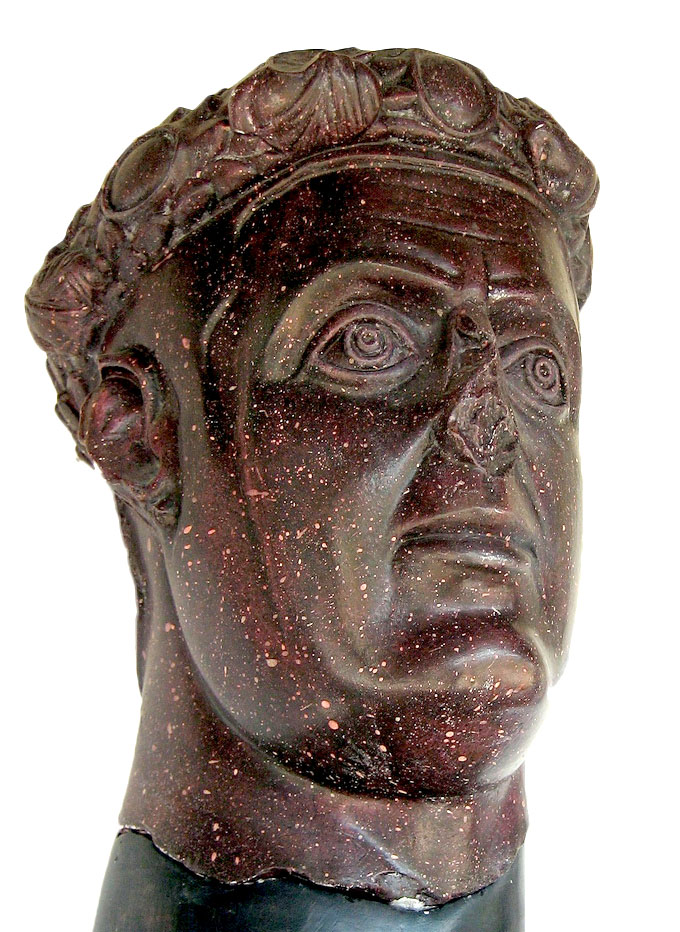
Galerius
Gaius Galerius Valerius Maximianus (/ɡəˈlɛəriəs/; Greek: Γαλέριος; c. 258 – May 311) was Roman emperor from 305 to 311. He participated in the system of government later known as the Tetrarchy, first acting as caesar under Emperor Diocletian. In this period Galerius obtained victory warring against the Persian Sassanian Empire, defeating Narseh at the battle of Satala in 298 and possibly sacking the Sassanian capital of Ctesiphon in 299. He also campaigned across the Danube against the Carpi, defeating them in 297 and 300. Galerius was promoted to augustus upon the abdication of Diocletian in 305, but had to contend with multiple usurpers as the Tetrarchic system broke down. Although he was a staunch opponent of Christianity, he ended the Diocletianic Persecution by issuing the Edict of Serdica in 311.
Galerius was born in the Danube provinces, either near Serdica or at the place where he later built his palace named after his mother – Felix Romuliana (Gamzigrad), in the province later known as Dacia Ripensis. Under this palace, an older villa has been found that is sometimes interpreted as Galerius's birthplace. His mother, Romula, had left Roman Dacia (today Romania) and settled in New Dacia south of the Danube because of the Carpians' attacks. He originally followed his father's occupation, that of a herdsman, where he was nicknamed "Armentarius", herdsman (Latin: armentum, lit. 'herd'). His original cognomen was "Maximinus", but he changed it to "Maximianus" after becoming Caesar.
He served with distinction as a soldier under Emperors Aurelian and Probus, and in 293, at the establishment of the Tetrarchy, was designated Caesar along with Constantius Chlorus, receiving in marriage Diocletian's daughter Valeria (later known as Galeria Valeria), and at the same time being entrusted with the care of the Illyrian provinces. After a few years campaigning against Sarmatians and Goths on the Danube, he received command of the legions on the eastern imperial limits. Soon after his appointment, Galerius was dispatched to Egypt to fight the rebellious cities Busiris and Coptos.
In 294, Narseh, a son of Shapur I, who had been passed over for the Sassanid succession, came into power in Persia. Narseh probably moved to eliminate Bahram III, a young man installed by a noble named Vahunam in the wake of Bahram II's death in 293. In early 294, Narseh sent Diocletian the customary package of gifts, but within Persia, he was destroying every trace of his immediate predecessors, erasing their names from public monuments. He sought to identify himself with the warlike reigns of Ardashir (r. 226–241) and Shapur (r. 241–272), who had sacked Roman Antioch and captured Emperor Valerian.
In 295 or 296, Narseh declared war on Rome. He appears to have first invaded western Armenia, retaking the lands delivered to Tiridates in the peace of 287. He occupied the lands there until the following year. The historian Ammianus Marcellinus, circa 320–395, is the only source detailing the initial invasion of Armenia. Southern (1999, 149) dates the invasion to 295; Barnes (1982, 17, 293) mentions an earlier, unsuccessful invasion by Narseh based on the fact that the title Persici Maximi was given to all four emperors; Odahl (2004, 59) concurs with Barnes and suggests that Saracen princes in the Syrian desert collaborated with Narseh's invasion. Narseh then moved south into Roman Mesopotamia, where he inflicted a severe defeat on Galerius, then commander of the eastern forces, in the region between Carrhae (Harran, Turkey) and Callinicum (Raqqa, Syria). Diocletian may or may not have been present at the battle, but presented himself soon afterwards at Antioch, issuing an official version of events which placed all the blame for the affair upon Galerius. In Antioch, Diocletian forced Galerius to walk a mile in advance of his imperial cart while still clad in the purple robes of an emperor. David Stone Potter reads a symbolic message in the display: the loss at Carrhae was due not to the failings of the empire's soldiers, but to the failings of their commander, and Galerius's failures would not be accepted. Another scholar, Roger Rees, suggests that Galerius's position at the head of the caravan was merely the conventional organization of an imperial progression, designed to show a Caesar's deference to his Augustus.
Galerius's army was reinforced probably in the spring of 298 by new contingents collected from the empire's Danubian holdings. Narseh did not advance from Armenia and Mesopotamia leaving Galerius to lead the offensive in 298 with an attack on northern Mesopotamia via Armenia. Diocletian may or may not have been present to assist the campaign. Narseh retreated to Armenia to fight Galerius's force, putting himself at a disadvantage; the rugged Armenian terrain was favorable to Roman infantry, but not to Sassanid cavalry. Local aid gave Galerius the advantage of surprise over the Persian forces, and he defeated Narseh in two successive battles. During the second encounter, the Battle of Satala in 298, Roman forces seized Narseh's camp, his treasury, his harem, and his wife. Narseh's wife would live out the remainder of the war in Daphne, a suburb of Antioch, serving as a constant reminder to the Persians of the Roman victory.
Galerius advanced into Media and Adiabene, winning continuous victories, most prominently near Theodosiopolis (Erzurum), and securing Nisibis (Nusaybin) before 1 October 298. The historian Timothy Barnes argues that he moved down the Tigris, taking Ctesiphon. Barnes's main argument for this is that Eusebius's biography of Constantine mentions that the later emperor had seen the ruins of Babylon according to this work. Patricia Southern also argues that he took Ctesiphon based on the uncertainty of the location where the seizure of Narseh's wife and harem took place. However, no source ever specifically claims that Ctesiphon was sacked and many other historians argue Diocletian prevented him from moving further into Sasanian territory.
Narseh had previously sent an ambassador to Galerius to plead for the return of his wife and children, but Galerius had dismissed this ambassador, reminding him of how Shapur had treated Valerian. In any case, the Romans treated Narseh's captured family well, perhaps seeking to evoke comparisons to Alexander and his beneficent conduct towards the family of Darius III. Peace negotiations began in the spring of 299, with both Diocletian and Galerius presiding. Their magister memoriae (secretary) Sicorius Probus was sent to Narseh to present terms.
Hub AI
Galerius AI simulator
(@Galerius_simulator)
Galerius
Gaius Galerius Valerius Maximianus (/ɡəˈlɛəriəs/; Greek: Γαλέριος; c. 258 – May 311) was Roman emperor from 305 to 311. He participated in the system of government later known as the Tetrarchy, first acting as caesar under Emperor Diocletian. In this period Galerius obtained victory warring against the Persian Sassanian Empire, defeating Narseh at the battle of Satala in 298 and possibly sacking the Sassanian capital of Ctesiphon in 299. He also campaigned across the Danube against the Carpi, defeating them in 297 and 300. Galerius was promoted to augustus upon the abdication of Diocletian in 305, but had to contend with multiple usurpers as the Tetrarchic system broke down. Although he was a staunch opponent of Christianity, he ended the Diocletianic Persecution by issuing the Edict of Serdica in 311.
Galerius was born in the Danube provinces, either near Serdica or at the place where he later built his palace named after his mother – Felix Romuliana (Gamzigrad), in the province later known as Dacia Ripensis. Under this palace, an older villa has been found that is sometimes interpreted as Galerius's birthplace. His mother, Romula, had left Roman Dacia (today Romania) and settled in New Dacia south of the Danube because of the Carpians' attacks. He originally followed his father's occupation, that of a herdsman, where he was nicknamed "Armentarius", herdsman (Latin: armentum, lit. 'herd'). His original cognomen was "Maximinus", but he changed it to "Maximianus" after becoming Caesar.
He served with distinction as a soldier under Emperors Aurelian and Probus, and in 293, at the establishment of the Tetrarchy, was designated Caesar along with Constantius Chlorus, receiving in marriage Diocletian's daughter Valeria (later known as Galeria Valeria), and at the same time being entrusted with the care of the Illyrian provinces. After a few years campaigning against Sarmatians and Goths on the Danube, he received command of the legions on the eastern imperial limits. Soon after his appointment, Galerius was dispatched to Egypt to fight the rebellious cities Busiris and Coptos.
In 294, Narseh, a son of Shapur I, who had been passed over for the Sassanid succession, came into power in Persia. Narseh probably moved to eliminate Bahram III, a young man installed by a noble named Vahunam in the wake of Bahram II's death in 293. In early 294, Narseh sent Diocletian the customary package of gifts, but within Persia, he was destroying every trace of his immediate predecessors, erasing their names from public monuments. He sought to identify himself with the warlike reigns of Ardashir (r. 226–241) and Shapur (r. 241–272), who had sacked Roman Antioch and captured Emperor Valerian.
In 295 or 296, Narseh declared war on Rome. He appears to have first invaded western Armenia, retaking the lands delivered to Tiridates in the peace of 287. He occupied the lands there until the following year. The historian Ammianus Marcellinus, circa 320–395, is the only source detailing the initial invasion of Armenia. Southern (1999, 149) dates the invasion to 295; Barnes (1982, 17, 293) mentions an earlier, unsuccessful invasion by Narseh based on the fact that the title Persici Maximi was given to all four emperors; Odahl (2004, 59) concurs with Barnes and suggests that Saracen princes in the Syrian desert collaborated with Narseh's invasion. Narseh then moved south into Roman Mesopotamia, where he inflicted a severe defeat on Galerius, then commander of the eastern forces, in the region between Carrhae (Harran, Turkey) and Callinicum (Raqqa, Syria). Diocletian may or may not have been present at the battle, but presented himself soon afterwards at Antioch, issuing an official version of events which placed all the blame for the affair upon Galerius. In Antioch, Diocletian forced Galerius to walk a mile in advance of his imperial cart while still clad in the purple robes of an emperor. David Stone Potter reads a symbolic message in the display: the loss at Carrhae was due not to the failings of the empire's soldiers, but to the failings of their commander, and Galerius's failures would not be accepted. Another scholar, Roger Rees, suggests that Galerius's position at the head of the caravan was merely the conventional organization of an imperial progression, designed to show a Caesar's deference to his Augustus.
Galerius's army was reinforced probably in the spring of 298 by new contingents collected from the empire's Danubian holdings. Narseh did not advance from Armenia and Mesopotamia leaving Galerius to lead the offensive in 298 with an attack on northern Mesopotamia via Armenia. Diocletian may or may not have been present to assist the campaign. Narseh retreated to Armenia to fight Galerius's force, putting himself at a disadvantage; the rugged Armenian terrain was favorable to Roman infantry, but not to Sassanid cavalry. Local aid gave Galerius the advantage of surprise over the Persian forces, and he defeated Narseh in two successive battles. During the second encounter, the Battle of Satala in 298, Roman forces seized Narseh's camp, his treasury, his harem, and his wife. Narseh's wife would live out the remainder of the war in Daphne, a suburb of Antioch, serving as a constant reminder to the Persians of the Roman victory.
Galerius advanced into Media and Adiabene, winning continuous victories, most prominently near Theodosiopolis (Erzurum), and securing Nisibis (Nusaybin) before 1 October 298. The historian Timothy Barnes argues that he moved down the Tigris, taking Ctesiphon. Barnes's main argument for this is that Eusebius's biography of Constantine mentions that the later emperor had seen the ruins of Babylon according to this work. Patricia Southern also argues that he took Ctesiphon based on the uncertainty of the location where the seizure of Narseh's wife and harem took place. However, no source ever specifically claims that Ctesiphon was sacked and many other historians argue Diocletian prevented him from moving further into Sasanian territory.
Narseh had previously sent an ambassador to Galerius to plead for the return of his wife and children, but Galerius had dismissed this ambassador, reminding him of how Shapur had treated Valerian. In any case, the Romans treated Narseh's captured family well, perhaps seeking to evoke comparisons to Alexander and his beneficent conduct towards the family of Darius III. Peace negotiations began in the spring of 299, with both Diocletian and Galerius presiding. Their magister memoriae (secretary) Sicorius Probus was sent to Narseh to present terms.