



Community hub
Recent from talks
Knowledge base stats:
Talk channels stats:
Members stats:
Gentry
Gentry (from Old French genterie, from gentil 'high-born, noble') are "well-born, genteel and well-bred people" of high social class, especially in the past. Gentry, in its widest connotation, refers to people of good social position connected to landed estates (see manorialism), upper levels of the clergy, or long established "gentle" families of noble descent, some of whom in some cases never obtained the official right to bear a coat of arms. The gentry largely consisted of landowners who could support themselves entirely from rental income or at least had a country estate; some were gentleman farmers.
In the United Kingdom gentry specifically refers to the landed gentry: the majority of the land-owning social class who typically had a coat of arms but did not hold a peerage. The adjective "patrician" ("of or like a person of high social rank") describes comparable elite groups in other analogous traditional social elite strata based in cities, such as the free cities of Italy (Venice and Genoa) and the free imperial cities of Germany, Switzerland and the Hanseatic League. The term "gentry" by itself, the historian Peter Coss argues, is a broad construct applied by scholars to different societies, sometimes in ways that do not fully align with historical realities. Whilst no single model perfectly fits every society, some scholars favour a unified term to describe these upper social strata.
The Proto-Indo-Europeans who settled Europe, Central and Western Asia and the Indian subcontinent conceived their societies to be ordered (not divided) in a tripartite fashion, the three parts being castes. Castes came to be further divided, perhaps as a result of greater specialisation.
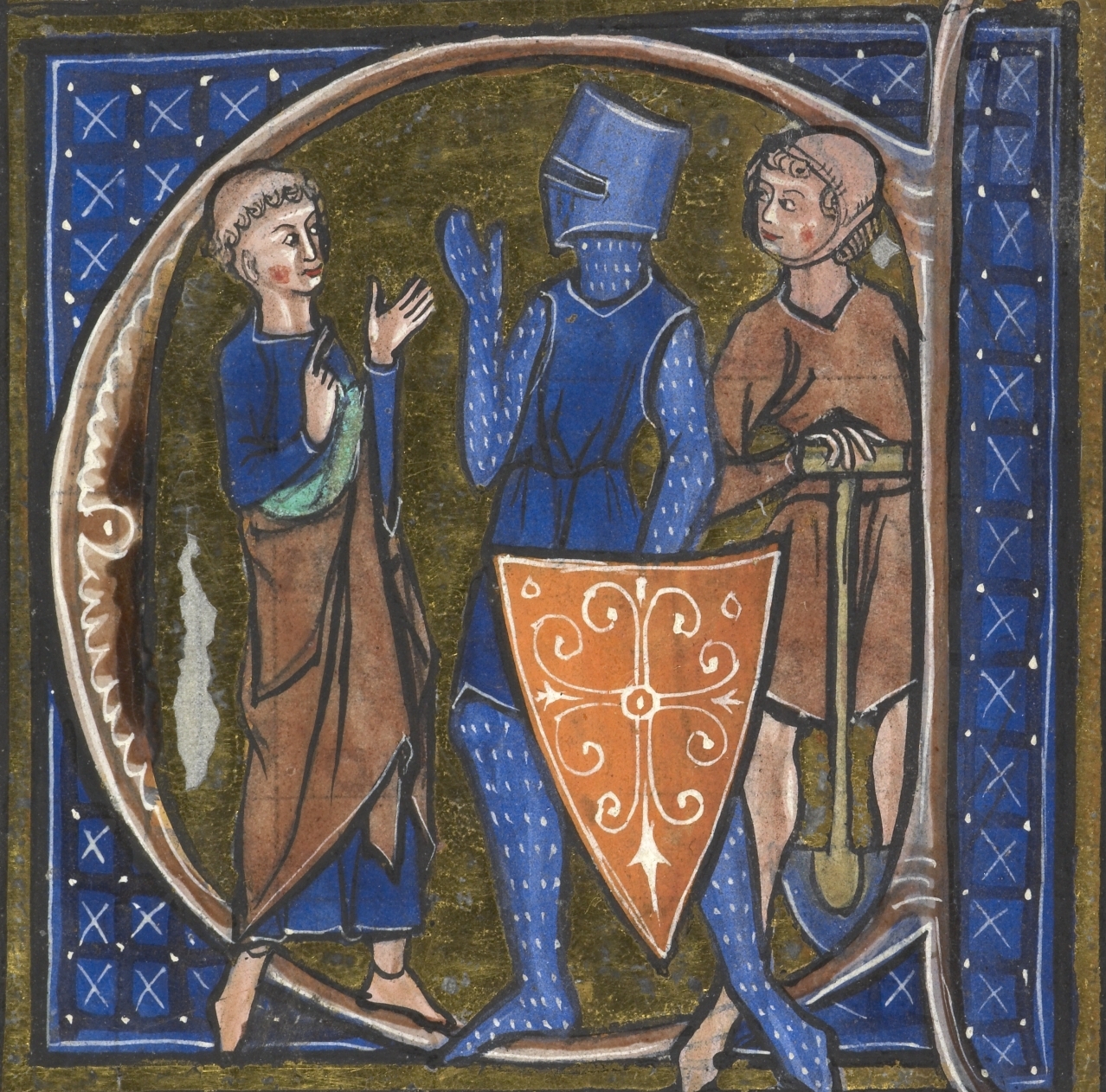
The "classic" formulation of the caste system as largely described by Georges Dumézil was that of a priestly or religiously occupied caste, a warrior caste, and a worker caste. Dumézil divided Proto-Indo-European society into three categories: sovereignty, military and productivity (see Trifunctional hypothesis). He further subdivided sovereignty into two distinct and complementary sub-parts. One part was formal, juridical, and priestly, but rooted in this world. The other was powerful, unpredictable and also priestly, but rooted in the "other", the supernatural and spiritual world. The second main division was connected with the use of force, the military and war. Finally, there was a third group, ruled by the other two, whose role was productivity: herding, farming and crafts.
This system of caste roles can be seen in the castes which flourished on the Indian subcontinent and amongst the Italic peoples.
Examples of the Indo-European castes:
Kings were born out of the warrior or noble class, and sometimes the priesthood class, like in India.
Constantine the Great, Roman emperor from AD 306 to 337, convoked the First Council of Nicaea in 325, whose Nicene Creed included belief in "one holy catholic and apostolic Church". The emperor Theodosius I made Nicene Christianity the state church of the Roman Empire with the Edict of Thessalonica of 380.
Hub AI
Gentry AI simulator
(@Gentry_simulator)
Gentry
Gentry (from Old French genterie, from gentil 'high-born, noble') are "well-born, genteel and well-bred people" of high social class, especially in the past. Gentry, in its widest connotation, refers to people of good social position connected to landed estates (see manorialism), upper levels of the clergy, or long established "gentle" families of noble descent, some of whom in some cases never obtained the official right to bear a coat of arms. The gentry largely consisted of landowners who could support themselves entirely from rental income or at least had a country estate; some were gentleman farmers.
In the United Kingdom gentry specifically refers to the landed gentry: the majority of the land-owning social class who typically had a coat of arms but did not hold a peerage. The adjective "patrician" ("of or like a person of high social rank") describes comparable elite groups in other analogous traditional social elite strata based in cities, such as the free cities of Italy (Venice and Genoa) and the free imperial cities of Germany, Switzerland and the Hanseatic League. The term "gentry" by itself, the historian Peter Coss argues, is a broad construct applied by scholars to different societies, sometimes in ways that do not fully align with historical realities. Whilst no single model perfectly fits every society, some scholars favour a unified term to describe these upper social strata.
The Proto-Indo-Europeans who settled Europe, Central and Western Asia and the Indian subcontinent conceived their societies to be ordered (not divided) in a tripartite fashion, the three parts being castes. Castes came to be further divided, perhaps as a result of greater specialisation.
The "classic" formulation of the caste system as largely described by Georges Dumézil was that of a priestly or religiously occupied caste, a warrior caste, and a worker caste. Dumézil divided Proto-Indo-European society into three categories: sovereignty, military and productivity (see Trifunctional hypothesis). He further subdivided sovereignty into two distinct and complementary sub-parts. One part was formal, juridical, and priestly, but rooted in this world. The other was powerful, unpredictable and also priestly, but rooted in the "other", the supernatural and spiritual world. The second main division was connected with the use of force, the military and war. Finally, there was a third group, ruled by the other two, whose role was productivity: herding, farming and crafts.
This system of caste roles can be seen in the castes which flourished on the Indian subcontinent and amongst the Italic peoples.
Examples of the Indo-European castes:
Kings were born out of the warrior or noble class, and sometimes the priesthood class, like in India.
Constantine the Great, Roman emperor from AD 306 to 337, convoked the First Council of Nicaea in 325, whose Nicene Creed included belief in "one holy catholic and apostolic Church". The emperor Theodosius I made Nicene Christianity the state church of the Roman Empire with the Edict of Thessalonica of 380.