
Recent from talks
Geography of Indonesia
Knowledge base stats:
Talk channels stats:
Members stats:
Geography of Indonesia
Indonesia is an archipelagic country located in Southeast Asia, lying between the Indian Ocean and the Pacific Ocean. It is located in a strategic location astride or along major sea lanes connecting East Asia, South Asia and Oceania. Indonesia is the largest archipelago in the world. Indonesia's various regional cultures have been shaped—although not specifically determined—by centuries of complex interactions with its physical environment.
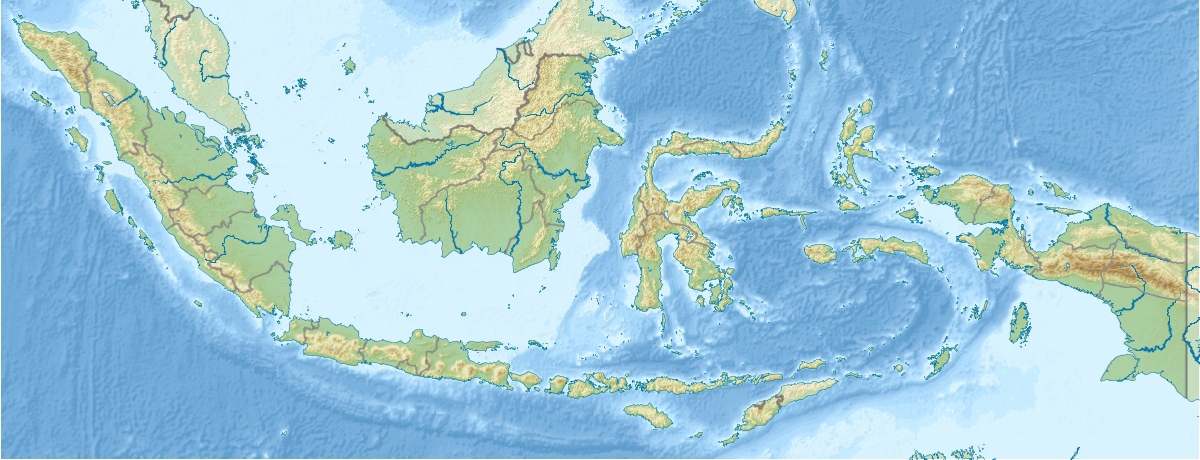
Indonesia is an archipelagic country extending about 5,120 kilometres (3,181 mi) from east to west and 1,760 kilometres (1,094 mi) from north to south. It is considered to be the largest archipelagic country in the world. According to a geospatial survey conducted between 2007 and 2010 by National Coordinating Agency for Survey and Mapping (Bakosurtanal), Indonesia has 17,500 islands. While earlier survey conducted in 2002 by National Institute of Aeronautics and Space (LAPAN) stated Indonesia has 18,307 islands. According to the CIA World Factbook, there are 17,508 islands. The discrepancy between the surveys is likely caused by the earlier different survey method including tidal islands, sandy cays and rocky reefs that surface during low tide and submerge during high tide. There are 8,844 named islands according to estimates made by the government of Indonesia, with 922 of those being permanent. It comprises five main islands: Sumatra, Java, Borneo (known as Kalimantan in Indonesia), Sulawesi, and New Guinea; two major island groups (Nusa Tenggara and the Maluku Islands) and sixty smaller island groups. Four of the islands are shared with other countries: Borneo is shared with Malaysia and Brunei; Sebatik, located off the northeastern coast of Kalimantan, shared with Malaysia; Timor is shared with East Timor; and New Guinea is shared with Papua New Guinea.
Indonesia has total land area of 1,904,569 square kilometres (735,358 sq mi), including 93,000 square kilometres (35,908 sq mi) of inland seas (straits, bays, and other bodies of water). This makes it the largest island country in the world. The additional surrounding sea areas bring Indonesia's generally recognised territory (land and sea) to about 5 million km2. The government claims an exclusive economic zone of 6,159,032 km2 (2,378,016 sq mi). This brings the total area to about 7.9 million km2.
During the Pleistocene, the Greater Sunda Islands were connected to the Asian mainland while New Guinea was connected to Australia. Karimata Strait, Java Sea and Arafura Sea were formed as the sea level rose at the end of the Pleistocene.
The main islands of Sumatra, Java, Madura, and Kalimantan lie on the Sunda plate and geographers have conventionally grouped them, (along with Sulawesi), as the Greater Sunda Islands. At Indonesia's eastern extremity is western New Guinea, which lies on the Australian plate. Sea depths in the Sunda and Sahul shelves average 300 metres (984 ft) or less. Between these two shelves lie Sulawesi, Nusa Tenggara (also known as the Lesser Sunda Islands), and the Maluku Islands (or the Moluccas), which form a second island group with deep, surrounding seas down to 4,500 metres (14,764 ft) in depth. The term "Outer Islands" is used inconsistently by various writers but it is usually taken to mean those islands other than Java and Madura.
Sulawesi is an island lies on three separate plates, the Banda Sea plate, Molucca Sea plate, and Sunda plate. Seismic and volcanic activities are high on its northeastern part, evidenced by the formation of volcanoes in North Sulawesi and island arcs such as the Sangihe and Talaud Islands, southwest of the Philippine Trench.
Nusa Tenggara or Lesser Sunda Islands consists of two strings of islands stretching eastward from Bali toward southern Maluku. The inner arc of Nusa Tenggara is a continuation of the Alpide belt chain of mountains and volcanoes extending from Sumatra through Java, Bali, and Flores, and trailing off in the volcanic Banda Islands, which along with the Kai Islands and the Tanimbar Islands and other small islands in the Banda Sea are typical examples of the Wallacea mixture of Asian and Australasian plant and animal life. The outer arc of Nusa Tenggara is a geological extension of the chain of islands west of Sumatra that includes Nias, Mentawai, and Enggano. This chain resurfaces in Nusa Tenggara in the ruggedly mountainous islands of Sumba and Timor.
The Maluku Islands (or Moluccas) are geologically among the most complex of the Indonesian islands, consisted of four different tectonic plates. They are located in the northeast sector of the archipelago, bounded by the Philippine Sea to the north, Papua to the east, and Nusa Tenggara to the southwest. The largest of these islands include Halmahera, Seram and Buru, all of which rise steeply out of very deep seas and have unique Wallacea vegetation. This abrupt relief pattern from sea to high mountains means that there are very few level coastal plains. To the south lies the Banda Sea. The convergence between the Banda Sea plate and Australian plate created a chain of volcanic islands called the Banda Arc. The sea also contains the Weber Deep, one of the deepest point in Indonesia.
Hub AI
Geography of Indonesia AI simulator
(@Geography of Indonesia_simulator)
Geography of Indonesia
Indonesia is an archipelagic country located in Southeast Asia, lying between the Indian Ocean and the Pacific Ocean. It is located in a strategic location astride or along major sea lanes connecting East Asia, South Asia and Oceania. Indonesia is the largest archipelago in the world. Indonesia's various regional cultures have been shaped—although not specifically determined—by centuries of complex interactions with its physical environment.
Indonesia is an archipelagic country extending about 5,120 kilometres (3,181 mi) from east to west and 1,760 kilometres (1,094 mi) from north to south. It is considered to be the largest archipelagic country in the world. According to a geospatial survey conducted between 2007 and 2010 by National Coordinating Agency for Survey and Mapping (Bakosurtanal), Indonesia has 17,500 islands. While earlier survey conducted in 2002 by National Institute of Aeronautics and Space (LAPAN) stated Indonesia has 18,307 islands. According to the CIA World Factbook, there are 17,508 islands. The discrepancy between the surveys is likely caused by the earlier different survey method including tidal islands, sandy cays and rocky reefs that surface during low tide and submerge during high tide. There are 8,844 named islands according to estimates made by the government of Indonesia, with 922 of those being permanent. It comprises five main islands: Sumatra, Java, Borneo (known as Kalimantan in Indonesia), Sulawesi, and New Guinea; two major island groups (Nusa Tenggara and the Maluku Islands) and sixty smaller island groups. Four of the islands are shared with other countries: Borneo is shared with Malaysia and Brunei; Sebatik, located off the northeastern coast of Kalimantan, shared with Malaysia; Timor is shared with East Timor; and New Guinea is shared with Papua New Guinea.
Indonesia has total land area of 1,904,569 square kilometres (735,358 sq mi), including 93,000 square kilometres (35,908 sq mi) of inland seas (straits, bays, and other bodies of water). This makes it the largest island country in the world. The additional surrounding sea areas bring Indonesia's generally recognised territory (land and sea) to about 5 million km2. The government claims an exclusive economic zone of 6,159,032 km2 (2,378,016 sq mi). This brings the total area to about 7.9 million km2.
During the Pleistocene, the Greater Sunda Islands were connected to the Asian mainland while New Guinea was connected to Australia. Karimata Strait, Java Sea and Arafura Sea were formed as the sea level rose at the end of the Pleistocene.
The main islands of Sumatra, Java, Madura, and Kalimantan lie on the Sunda plate and geographers have conventionally grouped them, (along with Sulawesi), as the Greater Sunda Islands. At Indonesia's eastern extremity is western New Guinea, which lies on the Australian plate. Sea depths in the Sunda and Sahul shelves average 300 metres (984 ft) or less. Between these two shelves lie Sulawesi, Nusa Tenggara (also known as the Lesser Sunda Islands), and the Maluku Islands (or the Moluccas), which form a second island group with deep, surrounding seas down to 4,500 metres (14,764 ft) in depth. The term "Outer Islands" is used inconsistently by various writers but it is usually taken to mean those islands other than Java and Madura.
Sulawesi is an island lies on three separate plates, the Banda Sea plate, Molucca Sea plate, and Sunda plate. Seismic and volcanic activities are high on its northeastern part, evidenced by the formation of volcanoes in North Sulawesi and island arcs such as the Sangihe and Talaud Islands, southwest of the Philippine Trench.
Nusa Tenggara or Lesser Sunda Islands consists of two strings of islands stretching eastward from Bali toward southern Maluku. The inner arc of Nusa Tenggara is a continuation of the Alpide belt chain of mountains and volcanoes extending from Sumatra through Java, Bali, and Flores, and trailing off in the volcanic Banda Islands, which along with the Kai Islands and the Tanimbar Islands and other small islands in the Banda Sea are typical examples of the Wallacea mixture of Asian and Australasian plant and animal life. The outer arc of Nusa Tenggara is a geological extension of the chain of islands west of Sumatra that includes Nias, Mentawai, and Enggano. This chain resurfaces in Nusa Tenggara in the ruggedly mountainous islands of Sumba and Timor.
The Maluku Islands (or Moluccas) are geologically among the most complex of the Indonesian islands, consisted of four different tectonic plates. They are located in the northeast sector of the archipelago, bounded by the Philippine Sea to the north, Papua to the east, and Nusa Tenggara to the southwest. The largest of these islands include Halmahera, Seram and Buru, all of which rise steeply out of very deep seas and have unique Wallacea vegetation. This abrupt relief pattern from sea to high mountains means that there are very few level coastal plains. To the south lies the Banda Sea. The convergence between the Banda Sea plate and Australian plate created a chain of volcanic islands called the Banda Arc. The sea also contains the Weber Deep, one of the deepest point in Indonesia.
Recent media