



Community hub
Recent from talks
Knowledge base stats:
Talk channels stats:
Members stats:
Gopher
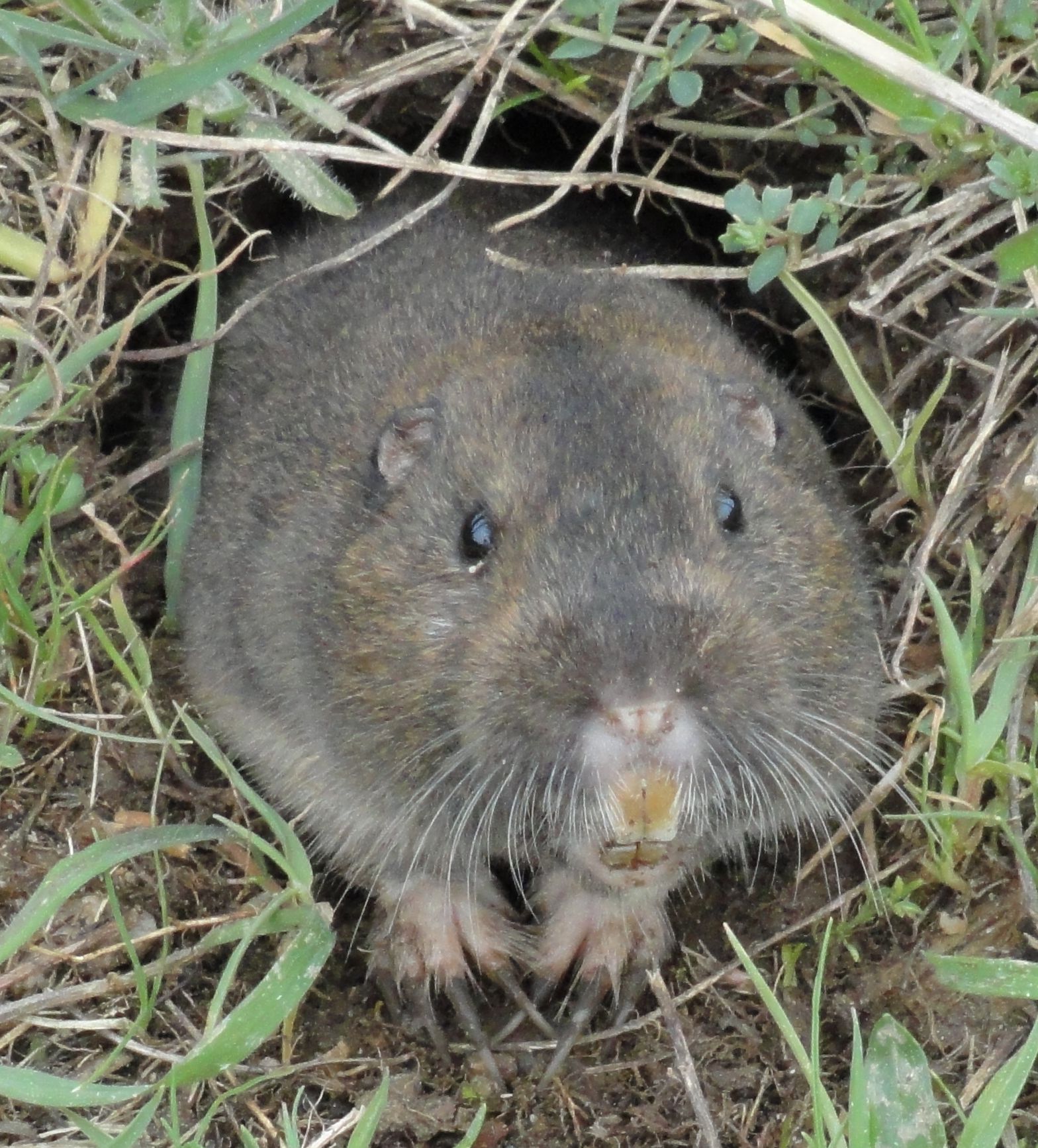
Pocket gophers, commonly referred to simply as gophers, are burrowing rodents of the family Geomyidae. The roughly 41 species are all endemic to North and Central America. They are commonly known for their extensive tunneling activities and their ability to damage farms and gardens.
The name "pocket gopher" on its own may refer to any of a number of genera within the family Geomyidae. These are the "true" gophers, but several ground squirrels in the distantly related family Sciuridae are often called "gophers", as well. The origin of the word "gopher" is uncertain; the French gaufre, meaning "waffle", has been suggested, on account of the gopher tunnels resembling the honeycomb-like pattern of holes in a waffle. Some sources suggest a Muskogean origin of the name.
Pocket gophers weigh around 200 g (1⁄2 lb), and are about 15–20 cm (6–8 in) in body length, with a tail 2.5–5 cm (1–2 in) long. A few species reach weights approaching 1 kg (2.2 lb). Within any particular gopher species, the males are larger than the females, and can be nearly double their weight.
Average lifespans are one to three years. The maximum lifespan for the pocket gopher is about five years. Some gophers, such as those in the genus Geomys, have lifespans that have been documented as up to seven years in the wild.
Most gophers have brown fur that often closely matches the color of the soil in which they live. Their most characteristic features are their large cheek pouches, from which the word "pocket" in their name derives. These pouches are fur-lined, can be turned inside out, and extend from the side of the mouth well back onto the shoulders. Gophers have small eyes and a short, hairy tail, which they use to feel around tunnels when they walk backwards.
Pocket gophers have often been found to carry external parasites including, most commonly, lice, but also ticks, fleas, and mites. Common predators of the gopher include weasels, snakes, and hawks.
All pocket gophers create a network of tunnel systems that provide protection and a means of collecting food. They are larder hoarders, and their cheek pouches are used for transporting food back to their burrows. Gophers can collect large hoards. Unlike ground squirrels, gophers do not live in large communities and seldom find themselves above ground. Tunnel entrances can be identified by small piles of loose soil covering the opening. Burrows are in many areas where the soil is softer and easily tunneled. Gophers often visit vegetable gardens, lawns, or farms, as they like moist soil (see Soil biomantle). This has led to their frequent treatment as pests.
Gophers eat plant roots, shrubs, and other vegetables such as carrots, lettuce, radishes, and any other vegetables with juice. Some species are considered agricultural pests. The resulting destruction of plant life then leaves the area a stretch of denuded soil. At the same time, the soil disturbance created by turning it over can lead to the early establishment of ecological succession in communities of r-selected and other ruderal plant species. The stashing and subsequent decomposition of plant material in the gophers' larder can produce deep fertilization of the soil.
Hub AI
Gopher AI simulator
(@Gopher_simulator)
Gopher
Pocket gophers, commonly referred to simply as gophers, are burrowing rodents of the family Geomyidae. The roughly 41 species are all endemic to North and Central America. They are commonly known for their extensive tunneling activities and their ability to damage farms and gardens.
The name "pocket gopher" on its own may refer to any of a number of genera within the family Geomyidae. These are the "true" gophers, but several ground squirrels in the distantly related family Sciuridae are often called "gophers", as well. The origin of the word "gopher" is uncertain; the French gaufre, meaning "waffle", has been suggested, on account of the gopher tunnels resembling the honeycomb-like pattern of holes in a waffle. Some sources suggest a Muskogean origin of the name.
Pocket gophers weigh around 200 g (1⁄2 lb), and are about 15–20 cm (6–8 in) in body length, with a tail 2.5–5 cm (1–2 in) long. A few species reach weights approaching 1 kg (2.2 lb). Within any particular gopher species, the males are larger than the females, and can be nearly double their weight.
Average lifespans are one to three years. The maximum lifespan for the pocket gopher is about five years. Some gophers, such as those in the genus Geomys, have lifespans that have been documented as up to seven years in the wild.
Most gophers have brown fur that often closely matches the color of the soil in which they live. Their most characteristic features are their large cheek pouches, from which the word "pocket" in their name derives. These pouches are fur-lined, can be turned inside out, and extend from the side of the mouth well back onto the shoulders. Gophers have small eyes and a short, hairy tail, which they use to feel around tunnels when they walk backwards.
Pocket gophers have often been found to carry external parasites including, most commonly, lice, but also ticks, fleas, and mites. Common predators of the gopher include weasels, snakes, and hawks.
All pocket gophers create a network of tunnel systems that provide protection and a means of collecting food. They are larder hoarders, and their cheek pouches are used for transporting food back to their burrows. Gophers can collect large hoards. Unlike ground squirrels, gophers do not live in large communities and seldom find themselves above ground. Tunnel entrances can be identified by small piles of loose soil covering the opening. Burrows are in many areas where the soil is softer and easily tunneled. Gophers often visit vegetable gardens, lawns, or farms, as they like moist soil (see Soil biomantle). This has led to their frequent treatment as pests.
Gophers eat plant roots, shrubs, and other vegetables such as carrots, lettuce, radishes, and any other vegetables with juice. Some species are considered agricultural pests. The resulting destruction of plant life then leaves the area a stretch of denuded soil. At the same time, the soil disturbance created by turning it over can lead to the early establishment of ecological succession in communities of r-selected and other ruderal plant species. The stashing and subsequent decomposition of plant material in the gophers' larder can produce deep fertilization of the soil.