Hubbry Logo
Graham LearGraham LearMain
Open search
Graham Lear
Community hub
Graham Lear
logo
8 pages, 0 posts
0 subscribers
Be the first to start a discussion here.
Graham Lear
Graham Lear
from Wikipedia

Key Information

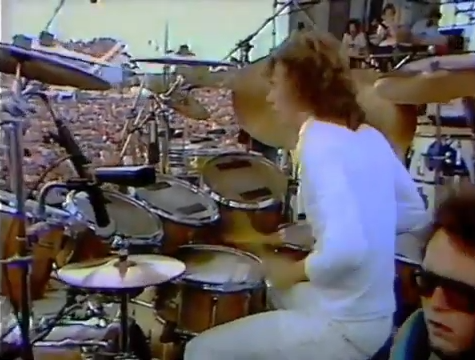
Graham Lear (born 24 July 1949) is a Canadian rock drummer, best known for his time with Gino Vannelli, Santana and REO Speedwagon.

Background

[edit]

Lear was born in Plymouth, United Kingdom. In 1952 his family moved to London, Ontario, Canada. He began his professional career at the age of 13 with the London (Ontario) Symphony Orchestra. During his teenage years he practised, played and toured with several bands in Canada and the United States. Gino Vannelli was the first major recording artist to recognize Lear's talents and he recorded with Gino on some of his most important work (Powerful People, Storm at Sunup, The Gist of the Gemini). He has toured and/or recorded worldwide with Carlos Santana, Paul Anka, REO Speedwagon, and Saga. He has also worked with TV and film composers Henry Mancini, Domenic Troiano, Jimmy Dale (pianist and arranger Boss Brass), David Foster, Mexican jazz-fusion group Sacbe, and recorded jingles for Nike, Molson and Avia.

His recordings credits include Moonflower, Inner Secrets, Marathon, Zebop!, Shango and Viva Santana! (Santana); The Swing of Delight, Havana Moon and Blues for Salvador (Carlos Santana); The Gist of the Gemini, Powerful People, Storm at Sunup, Yonder Tree, and Slow Love (Gino Vannelli); Second Decade (REO Speedwagon); Instinct (Tom Grant).

Modern Drummer interviewed Lear (July 82, Feb.99) The solo "Heads Hands and Feet" from Santana's Moonflower CD and the track "Where Am I Going?" from Gino Vannelli's Storm At Sunup CD were transcribed for Modern Drummer issues. Other publications include two cover features in the German publications Drums and Percussion (Jan '84) and Sticks (April '90).

His sampling and loop CD, Latin Rock Drumscapes featuring Orestes Vilato on percussion, released by Northstar Productions, received a 4.5 (out of five) rating in the Dec.98 issue of Electronic Musician.

1960s to 1970s

[edit]

Natural Gas

[edit]

Lear was a member of the group Natural Gas[1] which released their self-titled album on the Firebird label in 1970. He co-arranged the track "Rameses I" with Brian Wray and Carl Watral.[2]

Truck

[edit]

He was drummer in the group Truck which had evolved out of the group, Sound Spectrum. The group Sound Spectrum came from Ingersoll, Ontario. Formed in 1966, the line up included Bill Caldwell, Sandy MacKay, Dave Borland, Rob Oliver and Bruce Fleming.

In 1969, they changed their name to Truck.[3][4] By May 1972, they were signed to Sundog Productions. A celebration was held at Thunder Sound Studios to celebrate the acquisition of the group. Much of the organization and public relations to get key industry people to the 19 April event was handled by Michele Frank. Lighthouse's Skip Prokop also attended the event. The group's manager at the time was Peter Francey.[5] When their 1972 album was released, the line-up included Lear on Drums and Percussion, Larry Ernewein on Bass and Backing Vocals, Bill Usher on congas and bongos, Joey Miquelon (aka Joey Roberts[6]) on guitar, Brian Wray on Keyboards, Flute, Backing Vocals, Michael Curtis on Lead Vocals, Flute, Acoustic Guitar and percussion and James Roberts on Tenor Saxophone, Flute and Organ.[7]

The group released two singles in 1972, "Canada" bw "Rain" on Capitol 72679, and the Latin flavored "Get It Together" bw "Can’t Wait Until Tomorrow" on Capitol 72687. Their self-titled album was also released that year[8] which included the track "Rollin's On My Mind" which he co-wrote with keyboardist Brian Wray.[9][10] During their time they opened up for ELP, Deep Purple and Fleetwood Mac. The biggest gig they played was to 20,000 people at the Rockwood Music Festival in Orangeville, Ontario.[11] After a series of line-up changes the group broke up in 1974.[12]

Backing

[edit]

1970s to 1990s

[edit]

By 1974, Lear was a member of Gino Vannelli's backing band. Having played to crowds in clubs in Vancouver and Toronto etc., they returned to Montreal for a break in September.[13] By late September 1976, Lear and keyboard player Richard Baker had left Vanelli's band. It was suggested that this was due to the way that Vannelli took control of the music, how it should be played and creating a situation where musical freedom wasn't given to the musicians.[14]

Also in 1976 he was playing with Domenic Troiano who was booked to play at the Colonial Dance Palace from 1 to 6 November.[15] He was also asked to do an album with guitarist Toriano.

His association with Carlos Santana was sparked off when Santana heard him playing on Gino Vannelli's Storm at Sunup album and liked what he heard. It took some time for Santana to get hold of Lear who was previously at Los Angeles as he had moved back to Toronto. He was rehearsing there to do an album with Troiano. However he got a phone call to audition with Santana and flew to San Francisco to do it and ended up getting the job. He had to ring up Troiano with the words "maybe next time".[16]

2000s

[edit]

In 2007, Lear was touring internationally with Paul Anka, performing with Menopause The Musical in Portland, Oregon plus teaching, recording and performing in the Portland area with local artists.

Further reading

[edit]

References

[edit]
[edit]
Revisions and contributorsEdit on WikipediaRead on Wikipedia
from Grokipedia
Graham Lear (born July 24, 1949) is an English-born Canadian rock drummer best known for his long-standing collaborations with artists such as , Santana, and . Originally from Plymouth, , Lear relocated to , as a child and began drumming at age eight, auditioning successfully for the Police Boys Concert Band of , . He received formal training at the Grove School of Music and studied under notable instructors including , Robert Comber, Terry Clarke, and Penti Glan, with private tutelage from Ralph Humphrey, , and Duduka DaFonseca. Lear launched his professional career in the mid-1970s after moving to , where he first gained prominence as a session and touring drummer for on albums including the Grammy-nominated (1974) and (1975), as well as Gist of the Gemini (1976). He later joined Santana, contributing to the double-platinum live album Moonflower (1977) and performing at major venues such as . In the and beyond, Lear toured extensively with in 1988, and with in Europe in 1990. Throughout his career, Lear has worked with a diverse array of musicians, including , members of Joe Cocker's band such as Bobby Torres, saxophonist Patrick Lamb, and the jazz ensemble Sacbé. He reunited with Vannelli for the 1995 album Yonder Tree on the label. Lear's drumming has been highlighted in publications such as Modern Drummer, Drums and Percussion, Drums Etc., and Sticks magazines, and he has conducted clinics at institutions like the in , , , , and Tampa. More recently, he performed at the Niagara on the Lake Festival in 2014 and remains active with the jazz group Organomics.

Early life

Childhood and family background

Graham Lear was born on July 24, 1949, in Plymouth, England, and relocated with his family to London, Ontario, Canada, in 1952 at the age of three. He developed an early interest in music, beginning to play drums at the age of eight and auditioning successfully for the Police Boys Concert Band in London, Canada, where he received foundational training. As a young student, Lear studied under local instructors Don Johnson and Robert Comber, honing his skills in a supportive musical environment that emphasized discipline and technique.

Musical training and influences

He quickly auditioned for and joined the of , , where he received foundational guidance from former band alumni and Robert Comber. By age 13, Lear had advanced to performing with the London Symphony Orchestra, gaining early professional experience in orchestral settings that emphasized precision and ensemble playing. Lear pursued formal musical education at the Grove School of Music in , supplementing this with private lessons from renowned drummers including Ralph Humphrey, known for his fusion work; , a prolific celebrated for his groove-oriented style; and Duduka DaFonseca, a Brazilian percussionist who influenced Lear's rhythmic versatility. These studies honed his technical skills across genres, blending classical rudiments with contemporary techniques. His early involvement in local rock and R&B bands, such as and the Playwrights, further developed his adaptability in live performance settings. Lear's influences were rooted in Canadian jazz pioneers, particularly drummers Terry Clarke and , whose innovative approaches to swing and fusion inspired his own blend of R&B, rock, and elements. This foundation contributed to his reputation for "soulful precision," as noted by collaborators like , and shaped his career trajectory toward high-profile rock and fusion ensembles. Lear's disciplined practice regimen, encouraged by his father from a young age, underscored his commitment to continuous improvement throughout his formative years.

Early career

Canadian band work

Lear's entry into the Canadian music scene occurred during his teenage years in London, Ontario, where he began performing professionally at age 13 with the London Symphony Orchestra and local ensembles. By the late 1960s, Lear transitioned to rock and R&B, joining Natural Gas, a Montreal-based group formed in 1968 around vocalist George Olliver. As the band's drummer and percussionist, he contributed to their energetic soul-rock sound, performing regularly in local venues and touring. Natural Gas released their self-titled debut album in 1970 on the Firebird label, recorded in Montreal and New York; Lear co-arranged tracks and provided driving rhythms that supported the band's horn-driven arrangements and Olliver's powerful vocals. The album captured the vibrant Canadian R&B scene of the era, though the group disbanded shortly after its release. In the early , Lear aligned with , a jazz-rock outfit that evolved from the Ingersoll, Ontario-based Sound Spectrum, founded in 1966. Serving as , he helped shape their fusion of rock, soul, and elements during live performances across . Truck's self-titled 1973 album on featured Lear on all tracks, including the opener "Rollin's On My Mind," which he co-wrote with bassist Brian Wray; his versatile playing added dynamic grooves and fills that blended folk-rock accessibility with improvisational flair. The record highlighted the band's regional impact before internal changes led to his departure later that year. Lear's Canadian tenure culminated in 1973 with session work on Riverson's self-titled album for , a short-lived Montreal folk-psych project known for its harmonious, west coast-inspired sound infused with psychedelic textures. As drummer, he delivered subtle, supportive beats on tracks like their cover "," enhancing the band's ethereal vocals and acoustic-electric blend. These early collaborations established Lear's reputation in Canada's burgeoning rock circuit, paving the way for his international opportunities.

Breakthrough in the 1970s

In 1974, Graham Lear relocated to to join Gino Vannelli's band, marking a pivotal shift from his earlier Canadian performances to international recording opportunities. This collaboration began with the album , released that year on , where Lear provided drums on all tracks, contributing to its fusion of jazz, rock, and pop elements under production by . The album earned a Grammy nomination for Best Engineered Recording, highlighting the technical prowess of the sessions involving Lear's rhythmic foundation. Lear continued drumming on Vannelli's subsequent releases, including (1975) and (1976), both of which showcased his versatile style blending intricate grooves with orchestral arrangements. On , his contributions supported tracks like the title song and "Love Me Now," later covered by jazz drummer on his 1976 album Speak No Evil. These recordings solidified Lear's reputation in the jazz-rock scene, with engineered by at Air Studios in London, further elevating the band's sophisticated sound. In the late 1970s, Lear's profile expanded dramatically when , after hearing his drumming on Gino Vannelli's albums while traveling on a European tour bus, instructed manager Bill Graham to find him. Graham located Lear in , where he was rehearsing with guitarist , leading to Lear joining the band. He contributed to the double-platinum live/studio album Moonflower (1977), which featured his dynamic drum solo on "Head, Hands & Feet." This period included high-profile shows, such as a sold-out concert at , where Lear's powerful rhythms complemented Santana's Latin-rock energy during tracks like "Soul Sacrifice." His tenure with Santana through the end of the decade established him as a key figure in rock percussion, bridging his earlier fusion work with global stadium performances.

Major collaborations

Gino Vannelli

Graham Lear's collaboration with Canadian began in 1974 when Lear moved to to join Vannelli's band, marking a pivotal phase in Lear's career as a session and touring . This partnership produced several key albums that blended , rock, and pop elements, showcasing Lear's versatile drumming style. The duo's first joint effort was the 1974 album , which earned a Grammy nomination for Best Engineered Recording (non-classical). Later, in 1975, they recorded , produced by at A&M Studios, where Lear's intricate rhythms supported Vannelli's sophisticated arrangements on songs such as "Storm at Sunup" and "Love Me Now." Notably, drummer covered both "Storm at Sunup" and "Love Me Now" on his 1976 album Speak No Evil, underscoring the material's influence in circles. In 1976, Lear continued his collaboration with Vannelli for , recorded at Air Studios in and engineered by Beatles collaborator , featuring Lear's prominent percussion on fusion-oriented tracks like "Wild Horses" and "The Surest Things." This album further solidified their creative synergy, with Lear providing the rhythmic foundation for Vannelli's evolving sound. After a period apart, Lear and Vannelli reconnected in the early 1990s when Lear, then based in , contributed drums to Vannelli's Yonder Tree on label. Vannelli has described this album as one of his personal favorites, praising Lear's return for its emotional and musical depth on songs exploring themes of and growth. This reunion emphasized the enduring professional bond between the two musicians.

Santana

Graham Lear joined Santana in 1976 after , impressed by Lear's drumming on Gino Vannelli's albums, instructed manager Bill Graham to recruit him. Graham located Lear in , where he was rehearsing with guitarist , and arranged a successful audition. Within a month of being scouted, Lear made his debut with the band at a sold-out at in . Lear remained Santana's primary drummer from 1976 until 1987, except for the 1984–1985 tour when temporarily replaced him. During this decade-long tenure, he toured extensively with the group across and , contributing to high-energy live performances that blended rock, Latin, and elements. Notable tours included the 1976–1977 European outing, which captured the band's dynamic stage presence and influenced subsequent recordings. Lear provided drums on six Santana studio and live albums, marking a pivotal era in the band's evolution toward more accessible rock sounds while retaining Latin rhythms. These include the double album Moonflower (1977), a mix of live tracks from the European tour and studio cuts that achieved double platinum certification; (1978); Marathon (1979); Zebop! (1981); Shangó (1982); and (1987). His precise, groove-oriented style supported Carlos Santana's guitar work and the band's percussion-heavy arrangements, with standout contributions like the extended drum solo on "Soul Sacrifice" from Moonflower. Lear's involvement helped Santana maintain commercial momentum through the late 1970s and early 1980s, bridging their psychedelic roots with broader rock audiences.

Later career

REO Speedwagon and session work

In 1988, Graham Lear joined as their touring drummer, performing on the band's U.S. and South American tours. This stint came during a transitional period for the band, as original drummer Alan Gratzer departed in 1988 after contributing to the group's earlier successes. Lear's involvement extended to appearances in 's video recordings, including performances at the Festival in and a live show in . Beyond his tours, Lear continued extensive session work throughout the late 1980s and 1990s, leveraging his versatile rock and R&B style. Notable credits include drumming on Gino Vannelli's 1995 album Yonder Tree, a reunion project that showcased Lear's enduring collaboration with the artist. He also contributed to Randy Porter's 1995 jazz-fusion release Forest 4 the Trees, where he was highlighted as "The Lead Drummer" for its rhythmic drive. In the and beyond, Lear's session contributions shifted toward Canadian independent artists, reflecting his roots in . He recorded with on tracks blending folk-rock elements, as well as with , Jadea Kelly, and , providing solid grooves for their albums. These sessions, often produced in collaboration with figures like , underscored Lear's adaptability and reputation as a reliable studio musician across genres. Beginning in 2007, Lear joined Paul Anka's band as drummer, touring internationally and contributing to performances such as the 2007 Festival.

Jazz and independent projects

In the 1990s, after relocating to , Lear pursued jazz and fusion interests more deeply, forming the collaborative ensemble Clovis with saxophonist of Western Oregon University, alongside trombonist Keller Coker, Garry Hagberg, Matt Cooper, and Glen Moore. The group's self-titled album, released around 2005, featured original compositions by its members, blending elements with improvisational flair, and highlighted Lear's versatile drumming in a small-group setting. Lear also engaged in fusion performances, notably with the ensemble Sacbé at the 's Latin Cultural Festival in , where his rhythmic precision supported the group's Latin-infused explorations. During this period, he collaborated on multiple live dates with Native American Music Award winner Gary Small, incorporating indigenous influences into contexts that emphasized groove and cultural fusion. As part of his independent endeavors, Lear released Graham Lear's Drumscapes in 1998 through Northstar Productions, a sampling and loop-based CD showcasing his drumming layered with percussion by Orestes Vilató; it received a 4.5-out-of-5 rating in Electronic Musician for its utility in production and rhythmic innovation. In the , Lear continued work through groups like Organomics, a Hammond organ trio with Randy Stirtzinger on organ and Roy Patterson on guitar, performing at events such as the Niagara Jazz Festival and delivering soulful, organ-driven sets. He also led the Graham Lear Trio at the 2014 Niagara Jazz Festival, closing the event with a quartet performance that blended standards and originals, and contributed to the Nelson Band's "Bloozy Mondays" series, fusing , , and R&B. These projects underscored Lear's enduring commitment to and ensemble playing in his later years.

Recognition and legacy

Lear has received several honors for his contributions to music. In 2010, he was awarded the Dennis Brown Lifetime Achievement Award by the Jack Richardson Music Awards in London, Ontario. In 2018, he was inducted into the Jack Richardson London Music Hall of Fame, recognizing his extensive career as a drummer. His work has been featured in drumming publications such as , Drums and Percussion, Drums Etc., and Sticks magazines. Lear has also conducted educational clinics at institutions including the in , , , , and Tampa. As of 2025, Lear remains active in the music scene, particularly in , and his collaborations with major artists like and Santana have cemented his legacy as a versatile and influential rock and .

References

Add your contribution
Related Hubs
User Avatar
No comments yet.