


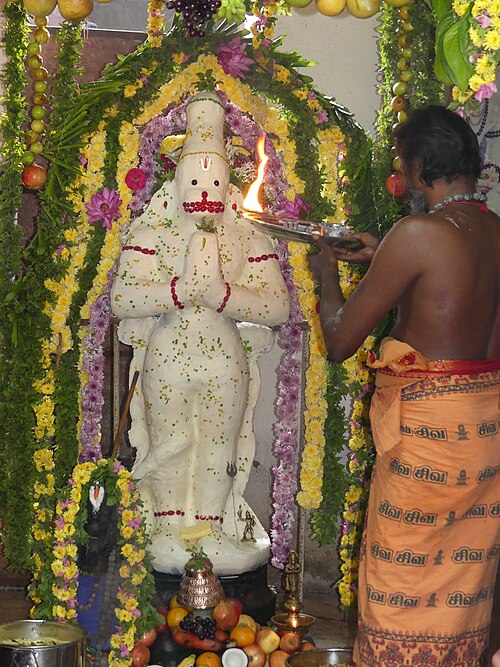


Hanuman Jayanti — The Sacred Celebration of Lord Hanuman's Birth
Hanuman Jayanti, also known as Hanuman Janmotsav, is one of the most joyfully observed Hindu festivals in India and across the world. It marks the birth anniversary of Lord Hanuman — the devoted disciple of Shri Ram, the embodiment of strength, courage, selfless service, and unwavering bhakti.
When Is Hanuman Jayanti Celebrated? (It Depends on Where You Are)
One of the most fascinating aspects of Hanuman Jayanti is that it does not have a single universal date — and that diversity itself is a testimony to how deeply Hanumanji is revered across India's many traditions.
In North India and Maharashtra, Hanuman Jayanti is celebrated on the full moon day (Purnima) of the Hindu month of Chaitra — falling in March or April. This timing is significant because it places the birth of Hanuman in close proximity to Rama Navami, reinforcing the eternal bond between the devoted servant and his beloved Lord.
In Karnataka, the festival is observed as Hanuman Vratam on Shukla Paksha Trayodashi — the 13th day of the waxing moon — during the month of Margashirsha (November–December). This date is drawn from the Kannada Panchang tradition and carries its own deep scriptural and regional authenticity.
In Tamil Nadu, it is observed as Hanumath Jayanthi during Margashirsha Amavasya, while in Andhra Pradesh and Telangana, the celebration stretches across an extraordinary 41 days — beginning on Chaitra Purnima and concluding in the month of Vaishakha.
These are not contradictions. Both dates are valid and rooted in scriptural interpretation, not contradiction. Across all regions, the devotion is the same — only the Panchang tradition differs. As the saying goes, Hanumanji belongs to every heart, and every heart has its own way of celebrating Him.
The Spiritual Significance
Lord Hanuman is celebrated not merely as a deity of physical might, but as the supreme symbol of Nishkama Karma — action without ego or expectation of reward. His life, as depicted across the Ramayana and the Hanuman Chalisa, teaches devotees the power of surrendering one's will to a higher purpose. On Hanuman Jayanti, it is widely believed that prayers offered with a pure heart carry extraordinary strength, and that Lord Hanuman's blessings remove fear, illness, and obstacles from one's life.
How Is It Celebrated?
Temples across India resonate with chanting of the Hanuman Chalisa, Sundar Kand recitations, and Ram Naam Sankirtans. Devotees wake before sunrise, take a ritual bath, and visit Hanuman temples to offer sindoor, jasmine oil, flowers, and prasad. In many localities, grand processions (shobha yatras) are carried out with community spirit and devotion.
Fasting is also commonly observed, particularly by those who follow Tuesday and Saturday fasts dedicated to Hanuman throughout the year. It is widely believed that Hanumanji was born at sunrise — and so temples typically begin their spiritual discourses before dawn and pause at the moment of sunrise to mark the sacred birth.
Hanuman Jayanti at Home
Many devotees observe the festival within their homes by lighting a lamp before Hanuman's image, reciting the Hanuman Chalisa 108 times, and offering bananas and boondi ladoos. Reading or listening to the Sundar Kand — the chapter of the Ramayana where Hanuman's courage and devotion shine most brilliantly — is considered especially auspicious on this day.
Further Reading
For a detailed guide on the rituals, puja vidhi, significance, and regional celebrations of Hanuman Jayanti — including the Karnataka vs North India date difference — visit Hanuman Jayanti guide.
Jai Bajrangbali!