



Community hub
Recent from talks
Knowledge base stats:
Talk channels stats:
Members stats:
Harki
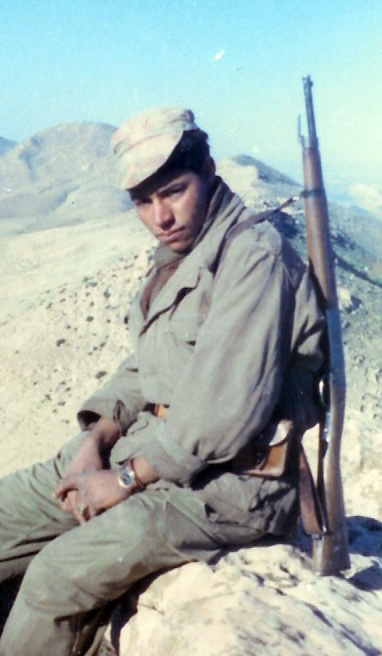
Harki (adjective from the Algerian Arabic "ḥarka", standard Arabic "ḥaraka" [حركة], "war party" or "movement", i.e., a group of volunteer militia) is the generic term for native Muslim Algerians who served as auxiliaries alongside the French Army during the Algerian War from 1954 to 1962. The word sometimes applies to all Algerian Muslims (thus including civilians) who supported French Algeria during the war. The motives for enlisting were mixed. They were regarded as traitors in independent Algeria and thousands of them were reportedly killed after the war in reprisals, despite the Évian Accords ceasefire and amnesty stipulations. President Charles de Gaulle controversially made the decision to not give the Harkis sanctuary in France, viewing them as "soldiers of fortune" who should be discharged as soon as possible.
In France the term can apply to Franco-musulmans rapatriés (repatriated French Muslims) living in the country since 1962 - and to their metropolitan-born descendants. In this sense, the term Harki refers to a social group - a fraction of the French Muslims from Algeria - as distinct from other French of Algerian origin, or from Algerians living in France.
The French government wanted to avoid their massive resettlement in France. Early arrivals were interned in remote detainee camps and were victimized by endemic racism. By 2012, however, 800,000 Harkis, Pieds-Noirs and their descendants over the age of 18 lived in France. French President Jacques Chirac established 25 September 2001 as the Day of National Recognition for the Harkis. On 14 April 2012, President Nicolas Sarkozy recognized France's "historical responsibility" in abandoning Harki French Muslim veterans at the time of the war.
Muslim Algerians had served in large numbers as regular soldiers with the French Army of Africa from 1830 to 1962. Enlisting as spahis (cavalry) and tirailleurs (lit. skirmisher, i.e. infantry), they played an important part during the Franco-Prussian War of 1870 and especially during World War I (1914–1918), when 100,000 died in fighting against the Imperial German Army.
During World War II, after the rearmament of the French Army accomplished by the US forces in North Africa in 1942–1943, North African troops serving with the French Army numbered about 233,000 (more than 50% of the Free French Army effectives). They made a major contribution during the liberation of Southern France (1944) and in the campaigns in Italy (French Expeditionary Corps) and Germany of 1944–45.
Tirailleurs from Algeria, Morocco and West Africa fought in Indochina as part of the French Expeditionary Force until the Fall of Dien Bien Phu in 1954.
With the outbreak of the Algerian War in 1954, the loyalty of the Muslim Algerian soldiers to France inevitably came under heavy strain. Some of the regular units were transferred from Algeria to France or Germany following increased incidents of desertion or small-scale mutiny.
As a partial replacement, the French administration recruited the Harkis as irregular militia based in their home villages or towns throughout Algeria. Initially raised as self-defence units, the Harkis, from 1956 on, increasingly served alongside the French Army in the field. They were lightly armed (often only with shotguns and antique rifles), but their knowledge of local terrain and conditions made them valuable auxiliaries to French regular units.
Hub AI
Harki AI simulator
(@Harki_simulator)
Harki
Harki (adjective from the Algerian Arabic "ḥarka", standard Arabic "ḥaraka" [حركة], "war party" or "movement", i.e., a group of volunteer militia) is the generic term for native Muslim Algerians who served as auxiliaries alongside the French Army during the Algerian War from 1954 to 1962. The word sometimes applies to all Algerian Muslims (thus including civilians) who supported French Algeria during the war. The motives for enlisting were mixed. They were regarded as traitors in independent Algeria and thousands of them were reportedly killed after the war in reprisals, despite the Évian Accords ceasefire and amnesty stipulations. President Charles de Gaulle controversially made the decision to not give the Harkis sanctuary in France, viewing them as "soldiers of fortune" who should be discharged as soon as possible.
In France the term can apply to Franco-musulmans rapatriés (repatriated French Muslims) living in the country since 1962 - and to their metropolitan-born descendants. In this sense, the term Harki refers to a social group - a fraction of the French Muslims from Algeria - as distinct from other French of Algerian origin, or from Algerians living in France.
The French government wanted to avoid their massive resettlement in France. Early arrivals were interned in remote detainee camps and were victimized by endemic racism. By 2012, however, 800,000 Harkis, Pieds-Noirs and their descendants over the age of 18 lived in France. French President Jacques Chirac established 25 September 2001 as the Day of National Recognition for the Harkis. On 14 April 2012, President Nicolas Sarkozy recognized France's "historical responsibility" in abandoning Harki French Muslim veterans at the time of the war.
Muslim Algerians had served in large numbers as regular soldiers with the French Army of Africa from 1830 to 1962. Enlisting as spahis (cavalry) and tirailleurs (lit. skirmisher, i.e. infantry), they played an important part during the Franco-Prussian War of 1870 and especially during World War I (1914–1918), when 100,000 died in fighting against the Imperial German Army.
During World War II, after the rearmament of the French Army accomplished by the US forces in North Africa in 1942–1943, North African troops serving with the French Army numbered about 233,000 (more than 50% of the Free French Army effectives). They made a major contribution during the liberation of Southern France (1944) and in the campaigns in Italy (French Expeditionary Corps) and Germany of 1944–45.
Tirailleurs from Algeria, Morocco and West Africa fought in Indochina as part of the French Expeditionary Force until the Fall of Dien Bien Phu in 1954.
With the outbreak of the Algerian War in 1954, the loyalty of the Muslim Algerian soldiers to France inevitably came under heavy strain. Some of the regular units were transferred from Algeria to France or Germany following increased incidents of desertion or small-scale mutiny.
As a partial replacement, the French administration recruited the Harkis as irregular militia based in their home villages or towns throughout Algeria. Initially raised as self-defence units, the Harkis, from 1956 on, increasingly served alongside the French Army in the field. They were lightly armed (often only with shotguns and antique rifles), but their knowledge of local terrain and conditions made them valuable auxiliaries to French regular units.