Hubbry Logo
Hazel TerryHazel TerryMain
Open search
Hazel Terry
Community hub
Hazel Terry
logo
8 pages, 0 posts
0 subscribers
Be the first to start a discussion here.
Hazel Terry
Hazel Terry
from Wikipedia

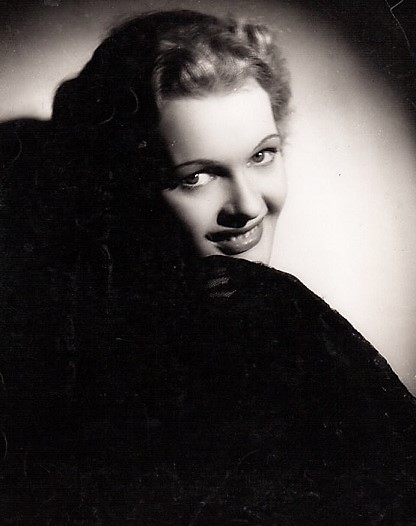
Hazel M. Neilson-Terry (23 January 1918 – 12 October 1974) was an English actress. A member of the theatrical dynasty the Terry family she had a successful stage career, and also made some cinema films. Among her roles was Ophelia in Hamlet opposite her cousin John Gielgud.

Key Information

Life and career

[edit]
Terry with Richard Cromwell in Our Fighting Navy (1937)

Terry was born in London, the daughter of the actor Dennis Neilson-Terry and his wife, actress Mary Glynne.[1] Her only sibling was her sister Monica Julia Glassborow née Neilson-Terry (died 1984).[2] Hazel's first role was at the age of 17 as the page in Henry IV, Part I with George Robey as Falstaff at His Majesty's in 1936. Later in that year she played Beauty in Everyman.[1]

As her cousin John Gielgud had done early in his career,[3] she joined the Oxford Repertory company; her roles included Olivia in Twelfth Night. In 1938 she made her New York debut playing Hazel in J B Priestley's Time and the Conways, later repeating the role on tour in Britain. She made her film debut in 1935 in The Marriage of Corbal.[1]

In the 1938 Malvern Festival season she appeared in The Last Trump, which transferred to the West End. Following what The Times called "various unremarkable engagements" she starred in a year-long ENSA tour as Amanda in Noël Coward's Private Lives.[4] In 1944 she understudied Peggy Ashcroft as Ophelia in Gielgud's last London Hamlet, and had the chance to play the role in Manchester and London.[1]

After World War II, her roles included Lydia in Coward's Peace in Our Time (1947), the Queen in Terence Rattigan's Adventure Story (1949), and Mesita in The Seagull (1949). The obituarist in The Times wrote, "After absence from the theatre during much of the fifties, she was uncommonly good as the housekeeper, an exacting part, in the fine cast (John Gielgud and Ralph Richardson among it) that brought Enid Bagnold's The Last Joke to the Phoenix in September, 1960." In 1961 she played Rachel in The Irregular Verb To Love in the West End.[1]

Personal life

[edit]
Hazel's fellow actor and cousin Sir John Gielgud

Terry was married, first to the actor Geoffrey Keen and then to David Evans.[4] Her daughter, Jemma Hyde (1941–2017),[5] became an actress. Hazel Terry committed suicide at the age of 56.[6][4] An inquest heard how she had taken a large dose of valium and had been an alcoholic for many years.

Selected filmography

[edit]

Notes

[edit]

References

[edit]
[edit]
Revisions and contributorsEdit on WikipediaRead on Wikipedia
from Grokipedia
Hazel Terry is an English actress known for her contributions to British theatre and film from the 1930s to the 1960s as a member of the renowned Terry theatrical family. Born Hazel Neilson-Terry on 23 January 1918 in London, she was the daughter of actors Dennis Neilson-Terry and Mary Glynne, and the granddaughter of Fred Terry and Julia Neilson, making her a grand-niece of Ellen Terry. Her career began in the 1930s with stage appearances and roles in British films such as Torpedoed (1937) and Sweet Devil (1938). She earned particular notice for playing Ophelia in Hamlet during the 1940s, including productions at the Theatre Royal Haymarket. In later years she took supporting parts in films including The Servant (1963) and maintained a presence in London theatre and British television dramas. Hazel Terry died in London on 12 October 1974 at the age of 56.

Early life

Family background

Hazel Neilson-Terry was born on 23 January 1918 in London, England. She was the daughter of the actor Dennis Neilson-Terry and the actress Mary Glynne, both established figures in British theatre. She belonged to the renowned Terry theatrical dynasty, a prominent family in British stage history spanning multiple generations. Her grandfather was the actor Fred Terry, son of Benjamin Terry and Sarah Ballard, while her great-aunt was the celebrated Victorian actress Ellen Terry. Through this lineage, she was a cousin of the actor John Gielgud, who came from another branch of the Terry family. This extensive family tradition of professional acting established her early connection to the British theatre world.

Early years and professional debut

Hazel Terry was born in London into a theatrical family, with her father Dennis Neilson-Terry and mother Mary Glynne both established actors, providing her with early exposure to the stage. She made her screen debut in 1936, appearing as Cleonie de Montsorbier in the British romantic drama The Marriage of Corbal (also known as The Prisoner of Corbal), set during the French Revolution. Her stage debut followed in 1936, when she played a page in William Shakespeare's Henry IV, Part 1 at His Majesty's Theatre in London. These early professional appearances in the mid-1930s marked the start of her acting career in the years immediately preceding World War II, building on her family's legacy in British theatre and film.

Career

Stage career

Hazel Terry established herself as a prominent British stage actress over a career that extended from the mid-1930s to the early 1960s. Her work encompassed classical revivals, contemporary dramas, and West End productions, demonstrating versatility across a range of roles in London and regional theatres as well as international tours. Following her professional debut, Terry's pre-war stage appearances included performances at the Malvern Festival in 1937–1938 and a New York debut in 1938 as Hazel in J. B. Priestley's Time and the Conways at the Ritz Theatre. She also appeared in various productions in the late 1930s at venues such as the Grand Theatre in Leeds and the Palace Theatre in Manchester. During the 1940s, she gained notable recognition for her performance as Ophelia opposite her cousin John Gielgud in his production of Hamlet, including performances at the Theatre Royal, Haymarket, London in 1944. She reprised the role through 1944–1945 in London and regional venues including the Bristol Hippodrome, as well as on a Far East tour in 1945. The family connection to Gielgud contributed to her casting in this prominent classical production. In the post-World War II period, Terry continued to secure significant roles in major plays. She portrayed Lydia (Lyia Vivian) in Noël Coward's Peace in Our Time in 1947, which opened at the Theatre Royal, Brighton on 15 July and transferred to the Lyric Theatre in London's West End. In 1949, she appeared as the Queen in Terence Rattigan's Adventure Story. She also performed as Mesita in Anton Chekhov's The Seagull in 1949. One of her later prominent roles was Rachel Stone in Hugh and Margaret Williams' The Irregular Verb to Love, which ran from 1961 to 1962 at venues including the Theatre Royal, Bath and the Alexandra Theatre, Birmingham. Terry's stage work reflected a sustained commitment to British theatre, with her final documented appearances occurring around the early 1960s after a period of reduced activity in the 1950s.

Film career

Hazel Terry's film career was limited and intermittent, serving primarily as a sideline to her more prominent work on the stage. Her screen appearances were sporadic, concentrated in the 1930s before a long absence and a brief return in the early 1960s. She made her film debut in The Prisoner of Corbal (1936), released in some markets as The Marriage of Corbal, where she played Cleonie De Montsorbier. The following year she appeared as Pamela Brent in Our Fighting Navy (1937), also known as Torpedoed. That same year she portrayed Hermione Blakiston in Missing, Believed Married (1937). In 1938 she took the role of Rose in Sweet Devil. After more than two decades away from cinema, Terry returned with a supporting role as Mrs. Rachel Crossley in the comedy Kill or Cure (1962). Her final film appearance was an uncredited cameo as Woman in Bedroom in Joseph Losey's acclaimed drama The Servant (1963).

Television career

Hazel Terry's television career was modest in scope compared to her extensive stage work, consisting mainly of guest appearances in British series during the 1960s, along with early contributions to pre-war television. She first appeared on television in 1939, taking a role in an episode of the BBC anthology series Telecrime and playing Mary Chester in the television movie The Shoemaker's Last. After more than two decades without television credits, Terry returned to the medium in the 1960s with supporting and guest roles in popular dramatic series. In 1963, she portrayed Mrs. Fenton in three episodes of the long-running ITV medical soap opera Emergency-Ward 10. The following year, she guest-starred as Edna Worth in the crime drama No Hiding Place, appearing in the episode "Why Baker Died." In 1965, she played Lady Julia in an episode of the adventure series Crane. These occasional television roles, primarily in crime and medical dramas, represented a secondary facet of her screen presence during the period.

Personal life

Death

Add your contribution
Related Hubs
User Avatar
No comments yet.