Hubbry Logo
Terry familyTerry familyMain
Open search
Terry family
Community hub
Terry family
logo
8 pages, 0 posts
0 subscribers
Be the first to start a discussion here.
Terry family
Terry family
from Wikipedia

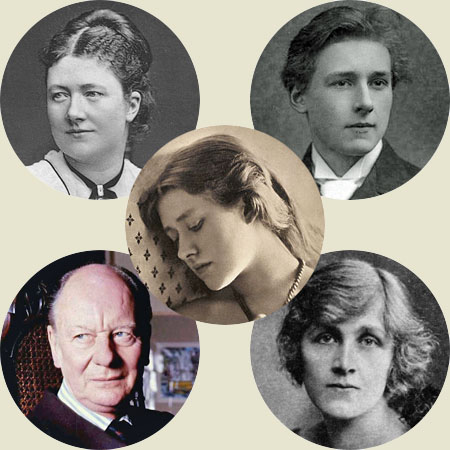
Top: Kate Terry and Gordon Craig; centre: Ellen Terry; Below: John Gielgud and Phyllis Neilson-Terry

The Terry family was a British theatrical dynasty of the late 19th century and beyond. The family includes not only those members with the surname Terry, but also Neilsons, Craigs and Gielguds, to whom the Terrys were linked by marriage or blood ties.

The dynasty was founded by the actor Benjamin Terry and his wife, Sarah. The first member of the family to achieve national prominence was their eldest surviving daughter, Kate. Her younger sister Ellen achieved international fame, in partnership with Henry Irving. Ellen Terry was seen as the greatest star of the family for many decades, but her great-nephew John Gielgud became at least as celebrated from the 1930s to the end of the 20th century. Among those of the family who did not become actors, Gordon Craig, Ellen's son, was an internationally-known theatre designer and director.

Members of the family who were professionally associated with the theatre, as performers, designers or managers, are given individual paragraphs below. Other members of the family are mentioned in the text.

Family tree

[edit]

The graphic below is simplified to show the best-known family members. For example, it shows only three of Gordon Craig's eight children. The names of actors and others connected with the theatre are shown in capital letters.

First generation

[edit]

Benjamin Terry and Sarah Ballard

[edit]
Sarah Terry with her daughter Ellen, circa 1860

Benjamin Terry (1817–1896)[n 1] was a moderately successful actor in the mid-19th century. His father, also called Benjamin, an innkeeper, married Catherine Crawford in 1838. The younger Benjamin's wife, Sarah, née Ballard (1819–1892), was the daughter of Peter Ballard, a builder and Master Sawyer who worked in Portsmouth.[n 2] She had no theatrical connections before meeting Terry and marrying him without her parents' knowledge.[2] She became an actress, adopting the stage name "Miss Yerrett",[3] but it was Terry who was the stronger theatrical influence on their children. He had been a member of William Charles Macready's company, and shared Macready's regard for good diction. His daughter Ellen recalled that he "always corrected me if I pronounced any word in a slipshod fashion, and if I now speak my language well it is in no small degree due to my early training."[4] The couple had eleven children, two of whom died in infancy. (They had been christened Kate and Ellen after their paternal and maternal grandmothers; Benjamin and Sarah reused the names for their next two daughters.) Of the nine children who survived to adulthood only two, the eldest son, Benjamin, and the next to youngest, Tom, had no theatrical history. Benjamin (b. 1839) went into commerce and emigrated to Australia and then India, and Tom (b. 1860), a drifter, lived on the fringes of criminality and poverty, constantly helped by his parents and siblings.[5]

Aniela Aszpergerowa

[edit]

The most prominent theatrical forebear on the Gielgud side of the family was the Polish actress Aniela Aszpergerowa (1815–1902), described by her great-grandson John Gielgud as "the greatest Shakespearean actress in all Lithuania".[6] Her husband, Wojciech, was also a famous leading actor.[7] Their daughter, also called Aniela, married Adam Gielgud, who had been born at sea during his parents' flight from Poland after the failed rising against Russian rule in 1830.[7] Their son Frank married Kate Terry's daughter, Kate Terry-Lewis.[7]

Second generation

[edit]

Listed in order of date of birth.

Kate Terry

[edit]

Kate (1844–1924) was the first of the Terry children to make the family name famous on the English stage, beginning her career as a small child. According to the academic Nina Auerbach, Kate may have been the most accomplished actor among her siblings, quickly gaining praise in the plays of Shakespeare, among others.[8] Contemporary critics thought the same: The Manchester Guardian ended its report of her last performance before her retirement: "In our unwilling acceptance of her farewell, we must now rest satisfied with the memory of the peerless beauty of her merry-hearted acting ... like the music of a bewitching melody piercing the stillness of the night, and ending just when the ear longed for the next note."[9][10] She gave up acting when she married the businessman Arthur James Lewis (1824–1901) in 1867 when she was 23. She made only two later stage appearances, the first in 1898, in a small role supporting her daughter Mabel in a new play in the West End; the second was in 1906 at her sister Ellen's jubilee celebrations at Drury Lane.[11] Of her four children, all daughters, only the youngest, Mabel, followed her into the theatrical profession. The two middle daughters were Janet and Lucy. Kate's eldest daughter, also named Kate, married Frank Gielgud; their four children included Val and John Gielgud.[12]

Ellen Terry

[edit]

Ellen (1847–1928) followed her elder sister into the acting profession at an early age. She became the most celebrated of her generation of the family, with a long professional partnership with Henry Irving. She was especially known for her Shakespearian roles.[13]

Ellen Terry's silver jubilee celebrations, 1906. She is on the right in the group of three, centre stage, with her sisters Marion and Kate. Fred is at the far right, his young son Dennis, stands near him in the foreground. All others on the stage are also members of the family.

In her silver jubilee celebrations at Drury Lane in 1906 twenty members of the family appeared onstage with her. They were listed by The Illustrated London News; those in bold type were professional actors or otherwise associated with the theatre:

relation to Kate relation to Ellen notes
Edith Craig niece daughter
Peter Craig great-nephew grandson son of Gordon Craig
Robin Craig great-nephew grandson son of Gordon Craig
Rosemary Craig great-niece granddaughter daughter of Gordon Craig
Geoffrey Morris nephew nephew son of Florence Terry
Beatrice Terry niece niece daughter of Charles Terry
Charles Terry brother brother
Dennis [Neilson] Terry nephew nephew son of Fred Terry
Fred Terry brother brother
George Terry brother brother
Horace Terry nephew nephew son of Charles Terry
Marion Terry sister sister
Kate Terry sister
Ellen Terry sister
Minnie Terry niece niece daughter of Charles Terry
Olive Terry niece niece daughter of Florence Terry
Phyllis [Neilson] Terry niece niece daughter of Fred Terry
Kate Terry-Gielgud daughter niece
Janet Terry-Lewis daughter niece
Lucy Terry-Lewis daughter niece
Mabel Terry-Lewis daughter niece

The scenery was designed, and the dances arranged, by Ellen's son Gordon Craig.[14]

Ellen Terry married three times, but her two children, Edith and Gordon, were the product of a long-term unmarried relationship with the architect Edward William Godwin.[12]

George Terry

[edit]

George (1852 – 22 March 1928) was a theatre business manager and treasurer.[12][15]

Marion Terry

[edit]
Marion Terry, c. 1890

Marion (1853–1930) had a stage career lasting more than fifty years, becoming known especially for creating roles in the plays of W. S. Gilbert, Oscar Wilde, Henry James and others.[16] When she died, the last of her generation of Terry sisters, The Times printed a leading article about "a long, a strange, a beautiful and affecting story" of Kate, Ellen, Florence and Marion Terry.[17] She never married and had no children.[17]

Florence Terry

[edit]

Florence Maud Terry (16 August 1856[18][19] – 15 March 1896[20]) like her eldest sister Kate, acted until her marriage and then left the stage. She began her adult stage career in 1870 at the Adelphi Theatre as Lewison in The Robust Invalid.[21][22] Also in 1870, at the Olympic Theatre, she created the title role in Little Nell, Halliday's stage adaptation of The Old Curiosity Shop. At the Lyceum Theatre, she appeared as Nerissa in The Merchant of Venice and Lady Ellen in The Iron Chest by Colman. Elsewhere, she played the roles of Olivia in Twelfth Night, Lady Betty in Tom Taylor's Lady Clancarty, and in several plays by W. S. Gilbert, including as Dorothy in Dan'l Druce, Blacksmith, Jenny in Sweethearts, Cynisca in Pygmalion and Galatea, Mirza in The Palace of Truth, and with her sister Marion in Gilbert's Broken Hearts (Savoy Theatre, 1882), just before her marriage and retirement.[22][23] She married a solicitor, William Morris. Of their four children, Olive (known variously as Olive Terry, Olive Morris and Olive Chaplin) and Jack Morris went on the stage.[12]

Charles Terry

[edit]

Charles (1858–1933) was a theatre and stage manager. He worked successfully in the Bordeaux wine trade, before moving into theatre management. After a spell working as business manager for Michael Gunn at the Theatre Royal, Dublin, he joined the Compton Comedy Company, with whom he tried acting, without success. The rest of his career was spent working in management. He was box-office manager at the Lyceum Theatre under Irving.[24] His management clients included Ivor Novello. He and his wife Margaret Pratt had three children, Minnie, Horace and Beatrice, all of whom followed a theatrical career.[12]

Fred Terry

[edit]
Julia Neilson and Fred Terry in Henry of Navarre, 1909

Fred (1863–1933) was the youngest of the eleven children of Benjamin and Sarah Terry. Fred had a long and successful career on the stage. He was known as a leading man in classic plays but achieved his greatest fame in swashbuckling parts such as the title role in The Scarlet Pimpernel.[25] He married the actress Julia Neilson, with whom he regularly co-starred. Their children, Phyllis and Dennis Neilson-Terry, followed them into acting careers.[26]

Julia Neilson

[edit]

Julia Neilson (1868–1957) married Fred Terry in 1891. In a long stage career, she appeared in tragedies and historical romances, often opposite her husband, and was known for her portrayal of Rosalind in a long-running production of As You Like It.[27] When her widowed mother remarried in the 1890s, it was to William Morris, the widower of Florence Terry (above). Julia Neilson thereby became step-sister to Olive Terry and Jack Morris, who were already her niece and nephew by marriage.[12]

Neilson was the first cousin of the actress Hilda Hanbury, whose descendants became the Fox acting dynasty.[28]

Third generation

[edit]

Listed by alphabetical order of surname

Edith Craig

Edith Craig

[edit]

Edith Craig (1869–1947) was the daughter of Ellen Terry and Edward Godwin. She followed her mother into the theatrical profession, first as an actress, and later as a director, producer and designer. From 1911 onwards she staged some 150 plays for the avant-garde theatre society the Pioneers. She also worked in fringe theatres such as the Everyman Theatre, Hampstead.[29] As a lesbian, an active campaigner for women's suffrage, and a woman working as a theatre director, Craig has been studied by feminist scholars as well as theatre historians.[30] Craig lived in a ménage à trois with the dramatist Christabel Marshall and the artist Clare "Tony" Atwood from 1916 until her death.[31] She served as the curator of the Ellen Terry Museum at Smallhythe Place.[32]

Gordon Craig

[edit]

Edward Henry Gordon Craig (1872–1966) was the son of Ellen Terry and Edward Godwin. After a modest start as an actor, he became a designer, writer and occasional director of modernist theatre, working in many countries. He was more celebrated in continental Europe than in Britain, and his large theatrical library was bought by the French government for the Collection Auguste Rondel.[31][33] Among his many children by several women including his wife (the actress, Helen Mary (May) Gibson), the violinist Elena Fortuna Meo (1879–1957), the dancer Isadora Duncan and the poet Dorothy Nevile Lees, were Edward Carrick, Robin Craig and Rosemary Gordon Craig.[34]

Jack Morris

[edit]

He was the son of Florence Terry and William Morris and brother of Olive Terry (below). He was an actor.[35]

Dennis Neilson-Terry

[edit]

Dennis Neilson-Terry (1895–1932), the only son of Fred Terry and Julia Neilson, and the brother of Phyllis Neilson-Terry, was an actor, manager and producer. His roles included Sebastian in Twelfth Night opposite the Viola of his sister in 1912.[36] In 1932 he and his wife, the actress Mary Glynne, toured southern Africa, where he contracted double pneumonia and died.[37] Their daughter was the actress Hazel Terry.[12]

Phyllis Neilson-Terry

[edit]
Phyllis Neilson-Terry in the title role of Trilby in 1915

Phyllis Neilson-Terry (1892–1977), daughter of Fred Terry and Julia Neilson, was an actress. After early successes in classic drama she pursued a varied career, including cabaret, pantomime and variety, as well as Shakespeare and other classics. One of her last major roles was in Terence Rattigan's Separate Tables (1954) in the West End and on Broadway.[38]

Mabel Terry-Lewis

[edit]
Mabel Terry-Lewis photographed by Bassano in 1920

Mabel Terry-Lewis (1872–1957) was a daughter of Kate Terry and Arthur James Lewis. She made her stage debut in 1895, aged twenty-three. When she married in 1904, she retired from the profession. Her husband died in 1917, and she returned to the stage in 1920. She appeared in the West End and on Broadway in a wide range of plays including revivals of comedies by Wilde and new works by authors such as Noël Coward.[39]

Beatrice Terry

[edit]
Beatrice Terry in A Little Un-Fairy Princess in 1902

Beatrice Terry (1890 – 17 March 1970) was the younger daughter of Charles Terry. She made her first appearance on the stage at the Lyceum on 7 June 1893 as the baby in Olivia, starring Henry Irving and Ellen Terry.[40] As a child she won praise from The Times for her acting in a stage version of Struwwelpeter in 1900.[41] In 1905 she toured the English provinces and the US with Edward Terry (who was not a relation). The following year she played J. M. Barrie's Peter Pan in London. In 1910 she again toured the US, this time in the company of her uncle and aunt, Fred Terry and Julia Neilson.[40] After this, she spent much of her career in the US. She appeared on Broadway many times between 1903 and 1929, including as Laura Atherton in Children of the Moon by Martin Flavin in 1923[42] and Lady Sneerwell in The School for Scandal in 1925.[43] She was an original member of the Civic Repertory Theatre in New York, founded by Eva Le Gallienne, in the 1920s. With that company she appeared as Olga in Three Sisters, Aline Solness in John Gabriel Borkman and Olivia in Twelfth Night (all 1927).[43] Beatrice's range was wide. She received good notices in modern light comedy,[44][45] and in variety, joining Ethel Barrymore and Sir Nigel Playfair in a sketch by Barrie at the London Palladium in 1934.[46] She also played in the classics, in which her roles included, in addition to Olivia and Lady Sneerwell, Ophelia in Hamlet and Titania in A Midsummer Night's Dream.[47] She first married the actor Leonard Mudie and later Geoffrey Marks. In later years, she lived in the Seattle, Washington area.[48]

Horace Terry

[edit]

Horace Charles Terry (27 July 1887 – 15 April 1957)[49] was the son of Charles Terry. As a child actor he made his debut in Arthur à Beckett's Faded Flowers at the Garrick in 1895.[50] The piece was a curtain-raiser to Sydney Grundy's A Pair of Spectacles, in which Terry's cousin, Mabel Terry-Lewis made her first stage appearance.[51] The London correspondent of The Boston Evening Transcript wrote that the boy played "very brightly indeed".[50] As an adult, Terry's roles included Colonel Werther in Her Love Against the World at the Lyceum in 1907.[52] He emigrated to the US and married Ethel May Moore at York, Ontario in Canada on 28 August 1912,[53] with whom he had four sons.[54] He became a naturalized US citizen in 1930[55] and lived for many years at Wyandotte, Michigan, working in a power plant.[54] He died in Wyandotte, aged 69.[49]

Minnie Terry

[edit]

Elder daughter of Charles Terry (1 January 1882 – 1964), born in Bordeaux, France.[56] She was a celebrated child actress, receiving praise from The Times for her performance in Herbert Beerbohm Tree's company in 1888.[57] After playing children's parts for seven years she returned to school, first at a boarding school in England, which she hated, and then, more congenially, at a finishing school at Fontainebleau, near Paris.[58] Two years after her return to the stage in the late 1890s, she played Lydia Languish in a production of The Rivals in which Edmund Gwenn was also appearing. They married in 1901, and Minnie had thoughts of leaving the stage, as some her aunts had done on marriage.[58] She accompanied Gwenn to Australia, in which he played in a disastrous tour of Ben Hur; the failure prompted her to restore the family finances by accepting an engagement from J. C. Williamson.[58] When the couple returned to England in 1904, Minnie appeared mostly in modern comedies, interspersed with occasional historical dramas.[56] She and Gwenn co-starred in a farce called What the Butler Saw in 1905.[56][59][60] When, in 1911, Irene Vanbrugh made her debut in variety, she chose Minnie Terry and Gwenn to join her in a short play specially written by Barrie.[61] In 1914 she played a Broadway season as Princess Thora in a dramatisation of Andersen's The Garden of Paradise. During the First World War, her marriage was dissolved. She remarried but remained on affectionate terms with Gwenn. In their old age, he travelled from his home in California for a reunion with his widowed ex-wife in 1956.[citation needed] Who's Who in the Theatre lists no performances by Minnie after October 1925,[62] but in a special BBC radio broadcast to mark Ellen Terry's 80th birthday in 1928, she joined other members of the family – Mabel Terry-Lewis and John Gielgud – together with other leading performers, in scenes from Shakespeare associated with Ellen.[63]

Olive Terry

[edit]

Olive Morris Chaplin (22 April 1884 – 9 November 1969) was the daughter of Florence Terry and William Morris. She made her first appearance on stage in her native London in February 1906, as Lady Gerania in Dr Wake's Patient, in which she subsequently toured. In 1906 she appeared in Arthur Bourchier's production of Macbeth at the Garrick. Later London appearances were as Lily in In the Workhouse (1911), Sister Christina in The Month of Mary (1913), and Spring in Godefroi and Yolande (1915).[56] She later married Charles Chaplin (not the famous film comedian) with whom she had a son, Michael. By an earlier relationship with the actor Charles Hawtrey she had a son, Anthony Hawtrey, who became an actor. She served as the curator of the Ellen Terry Museum after the death of Edith Craig.[32] By the 1930s she was living near the museum with the architect Lucy "Lucien" Gow.[64]

Fourth generation

[edit]

Listed by alphabetical order of surname:

Edward Carrick

[edit]

Edward Anthony Craig (1905–1998), who used the pen name Edward Carrick, was the third child and first son of Gordon Craig and Elena Fortuna Meo. He worked in the cinema as an art director, and designed three productions of Macbeth for stage and television between 1932 and 1960.[65]

Robin Craig

[edit]

He was a son of Gordon Craig, listed in the 1925 Who's Who in the Theatre as an actor.[66]

John Gielgud

[edit]
John Gielgud as Benedick in Much Ado About Nothing in 1959

Sir Arthur John Gielgud (1904–2000) was one of the leading actors of the middle and late 20th century. Along with Ralph Richardson and Laurence Olivier he dominated the English stage for several decades from the 1930s. He was particularly noted for his beautiful speaking voice and his mastery of Shakespearean verse. Later in his career he made more than sixty films.[67] He was a son of Kate Terry-Lewis and Frank Gielgud, and his brothers were Val and Lewis (below).[12]

Lewis Gielgud

[edit]

Lieut-Col Lewis Evelyn Gielgud (1894–1953) was a son of Kate Terry-Lewis and Frank Gielgud. He was the elder brother of Val and John (below and above) and became a senior figure in the Red Cross and UNESCO. He also wrote two novels, Red Soil and The Wise Child, a travel book, About It and About, and three plays in collaboration with Naomi Mitchison, The Price of Freedom, As It Was in the Beginning, and Full Fathom Five (1932). With his wife, Zita Gordon, he wrote radio plays; ballerina Maina Gielgud is their only child.[68]

Val Gielgud

[edit]

Val Henry Gielgud (1900–1981) was a BBC radio executive and author, the second of the four children of Frank Henry Gielgud and Kate Terry-Lewis. In an obituary, The Times called him "for 35 years the moving force in BBC radio drama".[69] His brothers were John and Lewis (above).[12]

Rosemary Gordon Craig

[edit]

A daughter of Gordon Craig, listed in the 1925 Who's Who in the Theatre as an actress.[66]

Anthony Hawtrey

[edit]

Anthony John Hawtrey (1909–1954), son of Olive Terry and Charles Hawtrey, was an actor. He appeared in six feature films between 1943 and 1948, and played leading roles in early post-war BBC television plays.[70] He appeared as the King of France in the Old Vic's production of King Lear in 1931, when his cousin John Gielgud played Lear and Ralph Richardson played Kent.[71] He was also a well-known producer and director, both in London and in the provinces.[72]

Hazel Terry

[edit]

Hazel Terry (1918–1974) was an actress whose roles ranged from Shakespeare (including Ophelia to the Hamlet of her cousin John Gielgud in 1944) to modern works, including a year-long engagement playing Amanda in Coward's Private Lives.[73]

Fifth generation

[edit]

Among the fifth generation of the family are the ballet dancer Maina Gielgud, daughter of Lewis Gielgud; the actress Jemma Hyde, daughter of Hazel Terry; and the author and illustrator Helen Craig, daughter of Edward Carrick.[74]

Notes

[edit]

References

[edit]

Sources

[edit]
  • Auerbach, Nina (1997). Ellen Terry: Player in Her Time. University of Pennsylvania Press; W W Norton. ISBN 0-8122-1613-X.
  • Collis, Rose (2016). Portraits to the Wall: Historic Lesbian Lives Unveiled. Bloomsbury Publishing. ISBN 978-1474287074.
  • Gaye, Freda, ed. (1967). Who's Who in the Theatre (fourteenth ed.). London: Sir Isaac Pitman and Sons. OCLC 5997224.
  • Gielgud, John (1979). An Actor and His Time. London: Sidgwick and Jackson. ISBN 0283985739.
  • Hunt, Bampton (ed.). The Green Room Book; or, Who's Who on the Stage. London and New York: T S Clark and F Warne and Co. OCLC 39940222.
  • Manvell, Roger (1968). Ellen Terry. London: Heinemann. ISBN 0434450006.
  • McDonald, Russ (2005). Look to the Lady: Sarah Siddons, Ellen Terry, and Judi Dench on the Shakespearean Stage. University of Georgia Press. ISBN 978-0820325064.
  • Morley, Sheridan (2001). John G – The Authorised Biography of John Gielgud. London: Hodder and Stoughton. ISBN 0340368039.
  • Parker, John, ed. (1925). Who's Who in the Theatre (fifth ed.). London: Sir Isaac Pitman and Sons. OCLC 10013159.
  • Parker, John, ed. (1933). Who's Who in the Theatre (seventh ed.). London: Sir Isaac Pitman and Sons. OCLC 18995487.
  • Parker, John, ed. (1957). Who's Who in the Theatre (twelfth ed.). London: Sir Isaac Pitman and Sons. OCLC 6345062.
  • Pemberton, Thomas Edgar (1902). Ellen Terry and her Sisters. London: C Arthur Pearson. OCLC 503670267.
  • Steen, Marguerite (1962). A Pride of Terrys – A Family Saga. London: Longmans. OCLC 1443983.

Further reading

[edit]
Revisions and contributorsEdit on WikipediaRead on Wikipedia
from Grokipedia
The Terry family was a prominent British theatrical dynasty of the Victorian and Edwardian eras, founded by the comic actor Benjamin Terry (1817–1896) and his wife Sarah Ballard (c. 1821–1892), who toured the provinces with their large family of performers. Their children included several noted actors, with (1847–1928) emerging as the most celebrated, renowned for her naturalism in Shakespearean roles and her 24-year partnership with at the Lyceum Theatre, which elevated British stage production through innovative staging and long runs of classic plays. The family's influence extended beyond Ellen through her siblings, such as Kate Terry and Marion Terry, who also achieved stage success, and her own children, including , a pioneer in modern theatre design emphasizing symbolic lighting and movement, and , a director, suffragist, and . Later generations maintained the legacy, with Ellen's niece's son, , becoming a leading Shakespearean actor of the 20th century, spanning theatre, film, and radio. Despite personal scandals, including Ellen's brief to painter G. F. Watts and her unmarried cohabitation with architect E. W. Godwin, which produced children out of wedlock, the Terrys' contributions prioritized artistic innovation over conventional morality, shaping professional theatre's transition from stock companies to specialized ensembles. The dynasty's endurance is evidenced by active performers into the late , underscoring a hereditary commitment to the craft amid shifting dramatic tastes from to realism.

Genealogy

Family Tree

The Terry family originated with Benjamin Terry (c. 1818–1896), of Irish descent, and Sarah Ballard (c. 1819–1892), of Scottish ancestry, both comic actors in provincial touring companies based near . The couple had eleven children from the early 1840s to the , nine of whom survived infancy, with at least seven entering the theatrical profession. Prominent second-generation siblings included:
  • Kate Terry (21 April 1844 – 6 January 1924), the eldest surviving daughter and an accomplished actress who debuted young and later retired to focus on family.
  • Ellen Terry (27 February 1847 – 21 July 1928), celebrated for Shakespearean roles and long association with Henry Irving.
  • Marion Terry (1852 – 1930), actress known for supporting roles in London theatre.
  • Florence Terry (1854 – 1896), actress who performed in family productions before early death.
  • Fred Terry (9 October 1863 – 17 April 1933), matinee idol actor, husband to Julia Neilson, with children including actresses Phyllis Neilson-Terry (1892–1977) and Dennis Neilson-Terry (1895–1937).
  • George Terry (dates uncertain), actor in provincial theatre.
  • Charles Terry (dates uncertain), minor theatrical figure.
Kate Terry's daughter Kate (Mrs. Charles Kelly) produced actor (1904–2000), extending the lineage into the 20th century. Ellen Terry's children, (1869–1947) and (1872–1966), became influential in theatre design and direction, though not always under the surname. The family's interconnected marriages reinforced the dynasty, with professional collaborations spanning decades in British stage productions.

Key Marriages and Lineages

Kate Terry, the eldest prominent actress in the second generation, married stockbroker Arthur James Lewis on 4 October 1867, retiring from the stage shortly thereafter to focus on family life. Their daughter, Kate Terry-Lewis (born 5 July 1868), briefly acted before marrying Polish-Lithuanian actor Franciszek (Frank) Henryk Gielgud on 12 January 1893 in ; this union linked the Terrys to the Gielgud lineage, producing Val Gielgud (1900–1981), a radio producer and brother to Sir John Gielgud (1904–2000), the acclaimed Shakespearean actor whose maternal heritage traced directly to the Terrys. Ellen Terry's marital history reflected her tumultuous personal life amid professional success. At age 16, she wed painter on 20 February 1864 in , but the union dissolved within a year due to incompatibility, with Terry resuming her career by 1865. She then entered a common-law partnership with architect and designer Edward William Godwin from 1869 to 1875, bearing two children— (1869–1947), a and , and Edward (1872–1966), an influential stage innovator—without formal marriage, which scandalized . Following her 1877 divorce from Watts, Terry married actor Charles Wardell (professionally Watkins) that July to legitimize her children's surname, though they separated soon after; Wardell died in 1885. Her final marriage, to American actor James Carew on 22 March 1907 during a U.S. tour, ended in divorce by 1910, as Carew was 29 years her junior. Fred Terry, the youngest brother, married actress Julia Neilson in 1890, forging a celebrated husband-wife duo that toured extensively and managed productions like Sweet Nell of Old Drury (1900). Their children extended the family's stage legacy: daughter Phyllis Neilson-Terry (1892–1977) became a notable actress in roles such as , while son Dennis Neilson-Terry (1895–1937) acted and produced, though his career was cut short by illness. Marion Terry, conversely, never married, devoting her life to a five-decade career without producing direct descendants. These alliances not only sustained the Terrys' theatrical influence across three generations but also intersected with broader artistic networks, from Pre-Raphaelite painters to modernist designers and international performers.
Family MemberSpouse/PartnerMarriage/Union YearKey Outcomes
Kate TerryArthur James Lewis1867Daughter Kate Terry-Lewis (m. Frank Gielgud 1893), maternal link to .
Ellen TerryG.F. Watts1864 (div. 1877)No children; brief artistic union.
Ellen TerryEdward William Godwin (common-law)ca. 1869–1875Children and .
Ellen TerryCharles Wardell1877 (sep. soon after)Legitimized existing children; no further issue.
Ellen TerryJames Carew1907 (div. ca. 1910)No children; late-life partnership.
Fred TerryJulia Neilson1890Children Phyllis and Dennis Neilson-Terry, both actors.

Founding Generation

Benjamin Terry and Sarah Ballard

Benjamin Terry was born on 14 September 1817 in , , , and baptized on 17 October 1817. He was the son of Benjamin Terry, an innkeeper who operated The Fortune of War pub, and Catherine Crawford. Terry worked as a provincial , often described as a strolling player in touring companies across , performing in comedic roles and contributing to the itinerant scene of the era. His professional listings also included artist portrait painter, professor of , and collector, reflecting a multifaceted involvement in beyond stage performance. Sarah Ballard, Terry's wife, was baptized on 18 February 1821 at St Mary's, Portsea, , with records indicating her birth around 1821 in . She was the daughter of Peter Ballard, a builder and Wesleyan preacher whose religious convictions led him to disapprove of her theatrical pursuits. Ballard supported her husband's career by managing the theatrical wardrobe and occasionally appearing in minor roles such as chorus or crowd scenes, though she did not pursue acting as a primary . The couple married quietly on 1 September 1838 at , Portsea, , where Terry identified himself as a gentleman and son of an innkeeper; witnesses included his cousin Ned Terry and Eliza Whitfield. Their early life involved frequent travel with provincial theatre troupes, residing in places such as Falmouth in 1841 before settling more permanently in by the 1860s, including addresses on Stanhope Street and Cambridge Gardens. Sarah died in the first quarter of 1892 in , , at age 73, while Benjamin followed in the second quarter of 1896, also in , at age 78. Benjamin and Sarah had eleven children, of whom at least nine survived infancy, born during their touring years and early London residence. Notable offspring included Elizabeth Murray Kate Terry (baptized 17 February 1844), Ellen Alice Terry (born 27 February 1847), Benjamin (c. 1849), George (c. 1852), Mary/Polly (c. 1854), (c. 1856), Marion (c. 1857), Charles (c. 1858), Thomas (c. 1860), and Frederick (c. 1863). Several daughters, including Kate, Ellen, Marion, and , achieved prominence on the London stage, establishing the Terry family as a theatrical dynasty originating from Benjamin and Sarah's provincial roots.

Aniela Aszpergerowa

Leontyna Aniela Aszpergerowa (née Kamińska; 27 November 1816 – 28 January 1902) was a Polish actress and singer active in the 19th century, known for her performances across partitioned Poland and the Grand Duchy of , where she garnered significant acclaim in theatre circles. Born in to Stefan Kamiński and Maria Wasińska, she pursued a stage career that spanned major venues in , , and , often specializing in dramatic and operatic roles that highlighted her vocal and acting versatility. Her professional name derived from her marriage to Jakub Aszperger, a figure in Polish cultural life, though details of their union remain sparsely documented in English-language sources. Aszpergerowa's theatrical prominence established a legacy in Eastern European arts, but her enduring connection to Western dynasties stems from her family lineage. She had two daughters, Waleria and Aniela Leontyna; the latter married Adam Gielgud (c. 1845–1911), a Polish and actor born at sea to émigré parents during their flight from political unrest. This union produced Francis (Frank) Henry Gielgud (1860–1949), a whose second marriage in 1902 to Kate Terry-Lewis (1868–1958)—a direct descendant of Benjamin Terry through his daughter Kate Terry—integrated Aszpergerowa's descendants into the English Terry acting family. Their son, Sir (1904–2000), became a pivotal figure bridging Polish theatrical heritage with the Terry lineage, performing alongside Terry relatives like his cousin Neilson-Terry. Aszpergerowa retired to Lemberg (modern ), where she died at age 85, leaving a familial thread that influenced subsequent generations in Anglo-Polish theatre exchanges. Her influence, though indirect in British contexts, underscores the Terry family's broader European roots beyond its origins.

Second Generation

Kate Terry

Kate Terry (21 April 1844 – 6 January 1924) was an from the Terry theatrical family. Born in as the eldest daughter of touring comic actor Benjamin Terry (1818–1896) and Sarah Ballard (1819–1892), she entered the profession as a performer alongside her siblings, including future Ellen, Marion, and Florence Terry. The family traveled extensively with provincial companies, providing early exposure to work. Terry's career gained prominence in the through Shakespearean roles and contemporary plays, establishing her as a leading actress by her early twenties. Notable performances included the title role in Charles Reade's Dora (June 1867, adapted from Tennyson's poem) and Beatrice opposite her sister Ellen as in (July 1867). Her West End farewell came at age 22 in the title role of . Despite approximately two decades on stage from childhood, she retired at 23 while at the peak of her popularity. In 1867, Terry married Arthur James Lewis, a wealthy silk merchant and partner in the haberdashery firm Lewis & Allenby, prompting her withdrawal from professional acting. The union, solemnized on 18 October 1867, aligned with her receipt of a gold bangle from Lewis commemorating her stage retirement. They had at least four daughters, two of whom pursued acting: Kate Terry-Lewis (1868–1958), who married actor Frank Gielgud and became the mother of , and Mabel Terry-Lewis (1872–1937). Terry lived until age 79, outlasting many family members, and was noted as the oldest surviving member of her prominent stage dynasty at her death in London.

Ellen Terry

Alice Ellen Terry was born on 27 February 1847 in , , , to actors Benjamin and Sarah Terry (née Ballard), the third of their eleven children. Several siblings, including Kate, Marion, and Fred Terry, also pursued successful stage careers. Trained by her parents, Terry made her stage debut at age eight or nine as Mamillius in Shakespeare's at the Princess's Theatre in in 1856. In 1864, at age sixteen, Terry married the forty-six-year-old painter on 20 February, but the union ended in separation after less than a year, with no children. She resumed acting and entered a relationship with architect Edward William Godwin around 1868, with whom she had two children: (born 1869) and (born 1872). Terry later married actor Charles Kelly Wardell in 1877, separating in 1881; they had no children together. In 1907, she married American actor James Carew in , but they separated by 1910. Terry's career peaked with her 24-year partnership (1878–1902) as leading lady to at the Lyceum Theatre, beginning with opposite Irving's in 1878. Notable Shakespearean roles included Portia in (1879), Beatrice in (1882), and (1888). The duo toured America multiple times, enhancing her international reputation. Into her later years, she performed in films, lectured across Britain, America, Australia, and New Zealand, and took her final fully staged role as the Nurse in at the Lyric Theatre in 1919. In 1900, Terry purchased Smallhythe Place in , where she retired and died of a on 21 July 1928 at age 81. She received an honorary LL.D. in 1922 and was appointed Dame Commander of the in 1925, later upgraded to Dame Grand Cross. Her influence extended to family descendants, including mentoring her great-nephew .

George Terry

George Terry was a member of the British Terry theatrical family, the brother of actresses , Kate Terry, and Marion Terry, as well as actors Charles Terry and Fred Terry. Born in the early 1850s to actors Benjamin Terry and Sarah Ballard, he pursued a career in theatre administration rather than performance. Terry served as treasurer of the Theatre in , where his sister performed alongside from 1878 onward. British census records from around 1891 list him as George E. Terry, aged approximately 38, residing with his wife Louisa J. Terry (born circa 1859 in , ) and employed in this financial role at the venue. His position involved managing the theatre's fiscal operations during a period of significant success for the Lyceum company. In July 1883, corresponded with manager , requesting a visit to her brother George, suggesting his close ties to the theatre's inner circle and possibly his personal circumstances at the time. Unlike many siblings, Terry did not appear on stage professionally, focusing instead on behind-the-scenes contributions to the family's theatrical endeavors.

Marion Terry

Marion Bessie Terry (13 October 1853 – 21 August 1930) was an English actress and the youngest sister of the celebrated performer , belonging to the prominent Terry theatrical dynasty. Born to provincial actors Benjamin Terry and Sarah Ballard, she entered the profession amid a family tradition of stage performance, debuting professionally in July 1873 as in a production of directed by . Over a spanning more than five decades, Terry earned acclaim for her refined portrayals, particularly in roles requiring elegance and emotional depth, though often overshadowed by her sister's fame. Terry originated several notable characters in contemporary plays, including Mrs. Erlynne, the enigmatic socialite concealing a scandalous past, in the premiere of Oscar Wilde's at St. James's Theatre on 20 February 1892. Her performance in this role highlighted her ability to convey complex moral ambiguity, contributing to the play's success during its initial run. She also appeared in revivals of Wilde's works, such as Mrs. Arbuthnot in in 1907 alongside , and took on parts in pieces by , , and Alfred Tennyson, including Camma in The Cup (1881). In 1908, she made her first American tour, starring in the lead of Divorçons, a French comedy adapted as . Never married, Terry remained devoted to her craft, performing alongside family members in productions like a rare joint appearance with and as the Clerk, Portia, and Nerissa in . She continued acting into her later years, with a farewell performance in W. Somerset Maugham's Our Betters shortly before her death from a cerebral haemorrhage at her home on 21 August 1930, aged 76, as the last surviving sister of the Terry lineage. Contemporary accounts praised her beauty, poise, and versatility, attributing her longevity on stage to diligent preparation and a natural aptitude for diverse characterizations.

Florence Terry

Florence Maud Terry was an English actress associated with the Terry family's theatrical dynasty in the . Born on 16 August 1856 in , , she was the daughter of provincial actors Benjamin Terry and Sarah Ballard, and one of eleven siblings including the renowned actress , her elder sisters Kate and Marion Terry, and brothers Charles, George, and Fred Terry. Like several of her siblings, Terry pursued a stage career in her youth, performing in supporting roles within family-oriented productions. A notable appearance included portraying Nerissa opposite Ellen Terry as Portia and Marion Terry in a clerical role in The Merchant of Venice, highlighting the collaborative dynamics among the Terry sisters on London stages during the 1870s. Her acting was confined to minor parts, overshadowed by the greater fame of Ellen and Kate, and she received personal correspondence from figures like Lewis Carroll in 1874, acknowledging her as an emerging performer in the family circle. In September 1882, Terry married , a solicitor, in , , prompting her retirement from the profession. The marriage produced at least two children, including daughter Olive Emily Morris (born 26 April 1881), reflecting a shift to domestic life amid the family's ongoing theatrical prominence. Terry died on 15 March 1896 at age 39, predeceasing several siblings and leaving a legacy tied primarily to her familial connections rather than independent stardom.

Charles Terry

Charles Terry (1858–1933) was an English theatre professional and a younger brother of the actress . Born into the Terry family of actors, he pursued a career behind the scenes in theatre management, including roles as a stage manager. His siblings included prominent performers such as , Kate, Marion, Fred, and George Terry, with whom he shared familial ties to the Victorian and Edwardian stage. Unlike his more celebrated sisters, who achieved stardom on stage, Terry focused on operational aspects of productions, contributing to the family's enduring influence in British theatre. He predeceased many relatives, dying on 27 February 1933 at Hospital in after a prolonged illness.

Fred Terry

Fred Terry was an English actor and theatrical manager born on 9 November 1863 in , the youngest sibling in the British Terry theatrical family, which included his sister . He entered the profession early, making his stage debut on 8 October 1880 at the Theatre as Sebastian in , opposite as Viola. Terry initially built his reputation through supporting roles in Shakespearean productions, including appearances with Henry Irving's company at the and later with Henry Beerbohm Tree. In 1891, Terry married the actress Julia Neilson, with whom he formed a prominent partnership that lasted over four decades. The couple co-managed theatrical companies, touring extensively and starring together in productions noted for romantic and swashbuckling themes, such as Sweet Nell of Old Drury (1900), The Heel of Achilles (1925), and the title role in (1905 adaptation), where Terry excelled in sword-and-cape hero parts. Their joint management emphasized historical dramas and romantic leads, sustaining popularity through provincial tours and West End runs until the late 1920s. Terry and Neilson had two children, Dennis Neilson-Terry (1895–1939) and Phyllis Neilson-Terry (1892–1978), both of whom pursued acting careers. He retired from active performance in the early 1930s due to health decline and died on 17 April 1933 in London at age 69.

Julia Neilson

Julia Emilie Neilson was born on 12 June 1868 in London to Alexander Ritchie Neilson, a silversmith and jeweler, and his wife Emily. Educated initially in Wiesbaden, Germany, she returned to London around 1883 and studied singing at the Royal Academy of Music. She made her stage debut in 1888 as Phoebe in As You Like It at the Lyceum Theatre under Henry Irving's management. Neilson joined Irving's company briefly before appearing in various productions, gaining recognition for her roles in romantic plays. Her breakthrough came in 1896 as Rosalind in . In the October–December quarter of 1891, she married Fred Terry, the youngest brother of the renowned actress , thereby integrating into the prominent Terry acting family. The couple collaborated professionally for nearly three decades, touring and provincial theaters in swashbuckling and romantic dramas, with Neilson often portraying elegant heroines opposite Terry's dashing leads. In 1900, Neilson and Terry entered management together, producing successful revivals such as The Scarlet Pimpernel, in which she repeatedly played Lady Blakeney. They visited the United States in 1895, with Neilson appearing in The Notorious Mrs. Ebbsmith, and again in 1910. The pair had two children who pursued acting careers: daughter Phyllis Neilson-Terry, born 15 October 1892, and son Dennis Neilson-Terry, born 1895. Following Fred Terry's death in 1933, Neilson continued performing occasionally until 1944. She died on 27 May 1957 in , , at the age of 88.

Third Generation

Edith Craig

Edith Ailsa Geraldine Craig (9 December 1869 – 27 March 1947) was an English actress, theatre director, producer, costume designer, and activist, the daughter of actress and architect Edward William Godwin. Born in , she was the elder sister of theatre practitioner . Her parents eloped in 1868 but separated in 1875, after which Terry raised the children primarily under the surname Wardell to avoid scandal. Craig attended Mrs. Cole’s school in and studied at the Royal Academy of Music. Craig made her London stage debut in 1878 and later acted with Henry Irving at the Lyceum Theatre, including in The Bells in 1895, followed by a tour of America. In 1911, she founded the Pioneer Players, a London-based theatre society that operated until 1925 or 1926, producing approximately 150 plays with suffrage themes, formerly banned works, and content promoting women's roles in theatre; the group challenged conventions by emphasizing social humanism and providing opportunities for female practitioners. In the 1920s, she directed plays at the Everyman Theatre in Hampstead and served as art director for the Leeds Art Theatre. Craig actively participated in the women's suffrage movement, joining the in 1908 and the Actresses' Franchise League the same year. She co-founded the International Suffrage Shop in 1910 with the Women's Freedom League and directed key productions such as How the Vote Was Won in 1909 and organized the 1910 suffrage procession "From Prison to Citizenship." Notably, she devised and produced A Pageant of Great Women with Cicely Hamilton, first performed on 12 November 1909 at the Scala Theatre in , featuring historical female figures like and ; it toured , appearing at venues including the Royal Albert Hall and . Craig often performed in the role of artist . From 1899, Craig lived with writer Christabel Marshall (known professionally as Christopher St. John), forming a household later expanded in 1916 to include artist Clare Atwood in a ménage à trois arrangement. Following Ellen Terry's death in 1928, Craig preserved Smallhythe Place as a museum dedicated to her mother and converted its barn into the Barn Theatre, maintaining it as a center for theatrical activities. She died on 27 March 1947 in Tenterden, Kent, from coronary thrombosis and chronic myocarditis.

Gordon Craig

Edward Gordon Craig (16 January 1872 – 29 July 1966) was an English theatre practitioner whose innovations in design, direction, and theory advanced modernist staging principles. Born in , , as the illegitimate son of actress and architect Edward William Godwin, Craig adopted his mother's stage surname alongside his sister . He entered the profession early, debuting as an actor at age 13 in Henry Irving's Lyceum Theatre company, where he took juvenile roles in productions co-starring his mother, gaining exposure to Victorian spectacle but growing disillusioned with its realism. Transitioning to design and direction by the , Craig rejected painted scenery and conventions, pioneering abstract environments with movable screens, symbolic lighting from above or behind, and minimal props to prioritize atmosphere and movement over illusion. His 1911 treatise On the Art of the Theatre, published by Heinemann, argued for theatre's elevation as a unified under a singular "artist-director" controlling all elements, drawing from influences like Wagnerian music and Adolphe Appia's lighting reforms. Craig's designs, often executed in models or engravings, impacted European directors; a prime example was his 1911–1912 collaboration with on at the , employing 34 screens for fluid reconfiguration and ethereal lighting, though practical clashes limited full realization. Central to his theory was the "Übermarionette," a proposed ideal performer—masked, stylized, and puppet-like—to deliver super-objective, ego-free expression immune to actors' emotional inconsistencies, as elaborated in essays from onward. From to 1929, Craig edited The Mask, a Florence-based journal that disseminated these ideas, critiquing commercial theatre and featuring contributions on , symbolism, and international experiments, with interruptions during . He directed select productions, such as a 1903 Much Ado About Nothing emphasizing rhythmic staging, and experimented with marionettes in , but frequent disputes with performers and patrons left many visions theoretical or partial. His wood engravings, books, and advocacy for non-verbal, visual theatre influenced subsequent reformers like and Gordon Craig's own in design. Craig's personal life involved multiple partnerships and at least ten children, including four with actress May Gibson (married 1893) and three with Elena Meo, notably Edward Carrick, who became a film and stage designer. Nomadic across , he resided in during much of his productive years before settling in Vence, , in 1948, where he pursued and writing until his death at age 94.

Jack Morris

Jack Morris was the son of English actress Florence Terry (1856–1896) and her husband William Morris, a solicitor whom she married in 1882, after retiring from the stage. His mother was the youngest sister of the celebrated actress . Morris's sibling, Olive Terry (1884–1969), followed the family into theatre, performing in stage productions including works with Ben Greet's company. Details of Jack Morris's life and career remain limited in historical records, consistent with his peripheral role relative to more prominent Terry family members.

Dennis Neilson-Terry

Dennis Neilson-Terry was born on 21 October 1895 in , , the son of actors Fred Terry and Julia Neilson, and the younger brother of actress Phyllis Neilson-Terry. As a member of the renowned Terry theatrical dynasty—nephew of Dame —he entered the profession early, reflecting the family's multigenerational commitment to stage performance. Neilson-Terry's stage career began in adolescence, with a documented role as in at the Shakespeare Memorial Theatre in , debuting on press night 28 July 1911 under the Royal Shakespeare Company. He later appeared on Broadway, taking the role of Martin in The Offense (opened 16 November 1925) and contributing as both performer and director in other productions, such as The Crooked Lady (1919). His work extended to film, where he featured in British productions including 77 Park Lane (1931) and Murder at (1932), alongside managing and producing theatrical endeavors. On 3 April 1917, he married actress Mary Glynne in , ; the union produced at least one . Neilson-Terry died on 14 July 1932 in , (now ), at age 36, from double pneumonia. His untimely death occurred abroad, possibly during travel or professional commitments, cutting short a career marked by the familial legacy of dramatic arts.

Phyllis Neilson-Terry

Phyllis Neilson-Terry was born on 15 October 1892 in , , to Fred Terry and Julia Neilson, making her part of the third generation of the prominent Terry theatrical dynasty. She died on 25 September 1977 in at the age of 84. Initially trained as a singer in and at the Royal Academy of Music, she pursued a career beginning with her professional debut on 13 September 1909 as Marie de Bellefort in Henry of Navarre at the Opera House in , using the stage name Phyllis Terson. Neilson-Terry made her debut in the same role at the Lyceum Theatre in 1910 and appeared in leading Shakespearean roles, including in and Queen Katherine in at the Shakespeare Memorial Theatre during . After spending four years performing in lighter theatrical productions, she returned to in 1919, where she diversified into , , variety shows, and further classical stage work, including a performance in Cockles and Champagne at the Saville and Theatres from May to September 1954. Her film credits include the title role in the silent historical drama Boadicea (1927) and appearances in Tense Moments with Great Authors (1922) and (1922). She also worked in television later in her career. Neilson-Terry married Cecil King and later Heron Carvic in 1958, with whom she remained until her death.

Mabel Terry-Lewis

Mabel Gwynedd Terry-Lewis (28 October 1872 – 28 November 1957) was an English stage and film actress, part of the extended known for its contributions to British theatre across generations. Born in as the youngest child of artist Arthur James Lewis (1824–1901) and actress Kate Terry (1844–1924), she was the niece of celebrated performer and sister to actress Kate Terry-Lewis. Her family background immersed her in the theatrical world from an early age, though she did not begin professional acting until her early twenties. Terry-Lewis debuted on the London stage in 1895 as Lucy Lorimer in A Pair of Spectacles at the Garrick Theatre, marking the start of a career spanning classic and contemporary plays. Subsequent roles included appearances in The Master, School, Ours, Caste, You Never Can Tell, English Nell, and After All, showcasing her versatility in 19th- and early 20th-century repertoire. She crossed to Broadway in the 1920s, performing as Mrs. Whittaker in Easy Virtue (1925–1926) and Mrs. Culver in The Constant Wife (1926–1927), both directed by Jed Harris and adapted from Noël Coward works. Later stage credits included the Duchess of Sutherland in Victoria Regina and roles in They Came to a City (1942–1943) at the Globe Theatre. Her theatre work emphasized character parts in drawing-room comedies and historical dramas, sustaining a steady presence until retirement in the mid-20th century. In 1904, Terry-Lewis married Ralph Cecil Batley, an officer who resigned his commission in January 1917 due to ill health; the couple resided at Benville Manor in Corscombe, Dorset, by 1911. No children are recorded from the marriage, which ended with Batley's death prior to her own. Transitioning to film in her later years, she appeared in Caste (1930), The Scarlet Pimpernel (1934), and Alfred Hitchcock's Jamaica Inn (1939), often in supporting roles that leveraged her refined stage presence. Terry-Lewis died in London at age 85, concluding a career that bridged Victorian theatre traditions with modern cinema while upholding the Terry family's legacy of professional excellence.

Beatrice Terry

Beatrice (1890–1970) was an English actress affiliated with the Terry theatrical dynasty. She was the daughter of actor Charles Terry and thus the niece of celebrated performer , as well as the sister of actress Minnie Terry. Terry commenced her acting career in England during childhood and extended her professional activities to the , where a substantial portion of her work occurred. She served as an inaugural ensemble member of Eva Le Gallienne's Civic Repertory Theatre in . Her collaborations included engagements with leading figures and Laurette Taylor. Notable performances encompassed the role of opposite Walter Hampden's in 1918. Terry married Geoffrey Marks and eventually settled in the region, where she resided until her death on 17 March 1970.

Terry

Terry (27 July 1887 – 15 April 1957) was a British actor associated with the Terry theatrical dynasty. Born in , he was the son of actor John Arthur Terry (1857–1933) and his wife Margaret Pratt, both of whom were involved in ; his siblings Terry (1882–1964) and Beatrice Terry (1890–1970) also pursued acting careers. Terry began performing as a , making his debut in Arthur à Beckett's play Faded Flowers. He continued in , appearing alongside family members such as Terry-Lewis in productions including A Pair of Spectacles and Faded Flowers during charity events at venues like the and Grafton Galleries. In adulthood, Terry resided in , , , as of the 1901 , and later spent approximately a decade in Wyandotte, , . Details of his later professional roles remain limited in available records, consistent with the varying prominence among extended Terry family members in the British stage tradition. He died on 15 April 1957.

Minnie Terry

Minnie Terry (1 January 1882 – 1964), born Marguerite Terry in , , was an English actress and member of the Terry theatrical dynasty, as the elder daughter of Charles Terry, brother to the renowned performer . She began her career as a child performer, making her stage debut at age six in 1888 at the Haymarket Theatre in a production featuring her as a juvenile débutante, where noted her appearance amid a cast including established actors. That year, she also appeared in Herbert Beerbohm Tree's company, earning praise from for her role as Mignon in Bootle's Baby at the , highlighting her precocious talent in a period when child actors were increasingly scrutinized for exploitation. By 1890, at age eight, Terry performed in the dramatic sketch On a Doorstep by Clement Scott during a matinée at the , continuing her early specialization in youthful parts typical of the Terry family's stage traditions. As a young adult, she remained active on stage, as evidenced by a 1902 profile describing her immersion in the family's theatrical milieu from infancy. In 1901, she married actor (born Edmund John Kellaway), whom she met during a production, though the union dissolved during the First World War around 1914; the couple had no children but maintained affectionate relations in later years, with Gwenn traveling from the to visit her before his death in 1959. Following the divorce, Terry remarried, but details of her later career and remain sparse, with her stage work tapering off after contemplating retirement upon marriage, in line with patterns observed among some Terry women. She died in 1964 at age 82.

Olive Terry

Olive Terry (22 April 1884 – 9 November 1969) was an English actress from the Terry theatrical family, the daughter of actress Florence Terry and William Morris. As the niece of renowned actress Ellen Terry, she made her stage debut in her aunt's company and performed under the name Olive Terry, gaining early notice as "the latest of the Terrys" in London theatre circles by 1907. Following 's death in 1928, Olive maintained close ties to the family legacy, attending her aunt at the bedside during her final days alongside and others. She strikingly resembled in appearance, a resemblance noted in family accounts of the period. After 's death in 1947, Olive served as of the Museum at Smallhythe Place, preserving the collection of theatrical artifacts, costumes, and memorabilia from her aunt's career; she resided nearby in the 1930s and continued stewardship into later years.

Fourth Generation

Edward Carrick

Edward Anthony Craig, known professionally as Edward Carrick, was born on 3 January 1905 in to theatre practitioner and violinist Elena Fortuna Meo. As the grandson of actress through his father, he belonged to the fourth generation of the Terry family's theatrical lineage. Carrick spent much of his childhood traveling across , including periods in , , and other locations, accompanying his parents. From 1917 to 1926, Carrick studied and theatre in under his father's guidance, developing skills in and performance. He began his professional career in 1927 as an for the Welsh-Pearson Film Company, contributing to early British cinema productions. Over the following decades, from the through the , he worked extensively as a set and art for both and theatre, including notable contributions to stage models like a 20th-century reinterpretation of his father's designs. In 1937, he founded a dedicated to studies, where he taught and honed techniques in visual for cinema. Carrick also pursued painting, printmaking, and illustration, with works held in collections such as the . He authored several books on design, including Designing for Moving Pictures (1941) and Art and Design in the British Film (1948), which detailed practical approaches to film set creation and historical aesthetics. His career bridged the innovative stage theories of his father with practical applications in the emerging British , though he maintained a lower public profile compared to earlier Terry family members. Carrick died on 21 January 1998.

Robin Craig

Henry Edward Robin Craig was born in 1895 in St. Albans, , , as the son of Edward Henry Gordon Craig, a prominent modernist and son of actress , and Helen Mary Gibson. He was one of several children from his parents' marriage in 1893, including siblings Philip Carlisle Craig (born 1894), Rosemary Nell Craig (born 1894), John Craig (born 1896), and Peter Craig (born 1897). Little is documented about Craig's personal life or professional activities beyond his familial connections to the Terry theatrical dynasty. His death date remains unconfirmed in primary records, with some genealogical sources suggesting 1992, though this lacks corroboration from official vital records.

John Gielgud

Sir John Gielgud, born Arthur John Gielgud on 14 April 1904 in London, was the son of Kate Terry-Lewis, an actress and daughter of Kate Terry (sister of the renowned Ellen Terry), making him a great-nephew of Ellen Terry and part of the extended Terry theatrical dynasty. His father, Frank Gielgud, was of Polish descent and worked as a writer. Gielgud's maternal aunt, Mabel Terry-Lewis, was also a prominent actress, and he shared family ties with cousins such as Phyllis Neilson-Terry, under whose company he began his professional stage career in 1922 as a junior member. His brothers, Val Gielgud and Lewis Gielgud, similarly pursued careers in theatre and radio production, perpetuating the family's artistic lineage. Gielgud trained at the Royal Academy of Dramatic Art and quickly established himself as a leading Shakespearean actor, renowned for his mellifluous voice and interpretive depth in roles such as , , and . He directed and produced numerous productions, including revivals of classic plays, and collaborated with contemporaries like and , forming a of British stage greats. Knighted in 1953 for services to theatre, Gielgud received the rare EGOT distinction—winning an Academy Award for Best Supporting Actor for (1981), a Tony Award, an Emmy, and a Grammy—along with BAFTA and Golden Globe honors. Throughout his seven-decade career spanning over 150 roles and more than 60 , Gielgud exemplified the Terry family's commitment to classical , often crediting his heritage for instilling a profound theatrical from childhood. He died on 21 May 2000 at his home near , , at the age of 96, leaving a legacy as one of the 20th century's most influential actors in sustaining and elevating British dramatic traditions.

Lewis Gielgud

Lewis Evelyn Gielgud was born on 11 June 1894 in , , to Frank Henry Gielgud, a stockbroker of Polish-Lithuanian descent, and Kate Terry-Lewis, an actress from the prominent Terry family of British theatre. As the eldest son, he was educated at and later attended Oxford University before serving in the during the First World War, where he sustained wounds. His siblings included , a radio and ; Sir , the renowned ; and sister Eleanor, who worked as John's secretary. Gielgud pursued writing early in his career, producing novels such as (1925) and The Wise Child (1929), a travelogue titled About It and About (1933), and three plays, alongside a of the classical Latin poem (The Vigil of Venus) with wood engravings by George Buday. These works reflected his scholarly interests and international travels, including roles as Under Secretary for the International Red Cross League. In 1919, he married Elise (Lilli) Herral, with whom he had children. During the Second World War, Gielgud served as a in intelligence, acting as chief recruiting officer for the French Section of the (SOE), where he interviewed candidates such as agent Jacques Vaillant de Guélis and collaborated with figures like . Released from military service in 1944, he resumed humanitarian efforts, returning to the Red Cross in 1945 as sub-commissioner in , work that earned him the Member of the (MBE) for services in relief and intelligence-related aid. Gielgud died on 25 February 1953 in at age 58.

Val Gielgud

Val Henry Gielgud (28 April 1900 – 30 November 1981) was an English and professional, best known for his pioneering work in at the . Born in to Frank Henry Gielgud, a businessman of Polish descent, and Kate Lewis, daughter of actress Marion (sister of ), he was the brother of actor Sir and part of the extended theatrical dynasty, continuing the family's legacy in and production. Gielgud initially pursued acting, appearing on in minor roles during the , but shifted focus to directing and administration amid the rise of . In 1929, Gielgud joined the as Productions Director, effectively heading its department, a role he held until , overseeing thousands of productions that established the medium's artistic standards. He emphasized adaptation techniques for microphone performance, distinguishing radio from stage by prioritizing voice and sound effects over visual elements, and produced adaptations of classics alongside original works, including collaborations featuring his brother John. Gielgud's tenure shaped BBC drama policy, resisting over-commercialization while experimenting with serialized formats; he also directed the corporation's first television drama in 1930, The World of Light, though early TV efforts were limited by technical constraints. His approach drew criticism for conservatism, particularly in later years, as younger producers advocated experimental styles, leading to his replacement by in 1963. Beyond , Gielgud was a prolific , penning twenty novels, eighteen plays, and seven volumes of , often drawing on theatrical themes and personal experiences within the Terry-Gielgud milieu. Notable works include and memoirs like Years in the Chair (1965), which detail his innovations. He received the CBE in 1957 for services to . Gielgud never married and died in at age 81, leaving a legacy of institutionalizing radio as a serious dramatic art form, extending the Terry family's influence from Victorian to modern media.

Rosemary Gordon Craig

Rosemary Nell Gordon Craig was born in 1894 in , , , as the daughter of modernist theatre practitioner and his first wife, actress Helen Mary Gibson. As the granddaughter of celebrated actress through her son Edward, Rosemary belonged to the extended theatrical dynasty, which spanned multiple generations of performers and designers in British theatre. She was one of five children from her parents' marriage, including siblings Philip Carlisle Craig and Henry Edward Robin Craig. Little is documented about Rosemary's personal life beyond her family ties, though she was the subject of a 1917 portrait by artist William Nicholson, reflecting social connections within artistic circles linked to her father. Her death date remains unrecorded in available genealogical records.

Anthony Hawtrey

Anthony Hawtrey, born John Henry Anthony Hawtrey on 22 January 1909 in , , was an English actor and theatre director connected to the Terry family through his mother, Olive Terry, an actress and niece of the renowned performer . His father was the actor Sir Charles Henry Hawtrey (1858–1923), though Hawtrey was born out of wedlock and raised primarily by his mother. As a great-nephew of , he represented the fourth generation of the family's theatrical lineage, though his career emphasized directing alongside . Hawtrey commenced his professional acting career in in 1930, performing in stage productions before touring and appearing with the Old Vic company during its 1934–1935 engagements in the United States and New York. By 1939, he had transitioned into directing, serving as director of productions at the Embassy Theatre in and later at the Repertory Company, where his stagings occasionally garnered sufficient acclaim to transfer to larger venues. During the Second World War, he enlisted in the , suspending his theatre work for military service. Postwar, Hawtrey resumed directing and expanded into television, helming adaptations such as the 1946 touring production of (where he also portrayed Rochester) and contributing to early and American anthology series. His acting credits included roles in Sunday-Night episodes (1950) and the U.S. series Studio One (1948), alongside film appearances like The First Gentleman (1948) as Sir Richard Croft and Pontius Pilate (1952) as Lucius. He married actress Marjory Clark (1900–1952) in an undisclosed year, though she predeceased him. Hawtrey died of a heart attack on 18 October 1954 in , , at the age of 45, concluding a career marked by versatility in a competitive theatrical landscape dominated by his illustrious relatives.

Hazel Terry

Hazel Terry (January 23, 1918 – October 12, 1974) was an English actress affiliated with the Terry family's longstanding theatrical tradition. Born Hazel M. Neilson-Terry in , she was the daughter of actors Dennis Neilson-Terry and Mary Glynne, making her the granddaughter of the prominent performers Fred Terry and Julia Neilson. Her sibling was Monica Julia Neilson-Terry, and she shared familial ties with notable relatives including her cousin, the actor . Terry debuted in film during the mid-1930s, with early credits including The Marriage of Corbal (1936), Our Fighting Navy (1937), Missing, Believed Married (1937), and Sweet Devil (1938). Her stage work encompassed classical and contemporary repertoire; a highlight was portraying Ophelia opposite Gielgud's Hamlet in a 1944 London production directed by him, alongside actors such as Leslie Banks as Claudius and Miles Malleson as Polonius. Additional theatre appearances featured J.M. Barrie's Shall We Join the Ladies? and Christopher Fry's The Boy with a Cart, both at the Lyric Theatre, Hammersmith. Later roles included Lydia in Noël Coward's Peace in Our Time (1947) and the Queen in Terence Rattigan's Adventure Story (1949). In later years, Terry continued in film and television, notably as Mrs. Rachel Crossley in Kill or Cure (1962) and an uncredited role in Joseph Losey's The Servant (1963), alongside appearances in series such as No Hiding Place (1959) and Emergency – Ward 10 (1957). Terry's first marriage was to actor Geoffrey Keen, son of Malcolm Keen, in the early 1940s; the union produced daughter Jemma Hyde (1941–2017), who pursued acting, but ended in divorce in 1945. She wed David Evans in 1948, a marriage that lasted until her death. Terry died in London at age 56.

Fifth Generation and Beyond

Known Descendants

Maina Gielgud (born 14 January 1945), a British-Australian , choreographer, and , represents a known fifth-generation descendant through her father, Lewis Gielgud (1894–1953), a and Red Cross administrator. Gielgud trained under figures such as and performed as a principal with from 1971 to 1976, later directing the company from 1983 to 1997 and staging productions worldwide. Her mother was the Hungarian actress Zita Gordon, and she is the niece of Sir . Few other fifth-generation descendants have achieved public prominence in theatre or related fields, with records indicating limited continuation of notable careers beyond this individual. Val Gielgud (1900–1981), another fourth-generation member, had children, but their details remain private and unassociated with theatrical legacies in available accounts. Similarly, branches from Edward Carrick (1904–1998) and other fourth-generation figures yield no verifiable prominent descendants in the arts.

Continuation of Theatrical Involvement

Maina Gielgud, a descendant through the Gielgud line from Kate Terry's progeny, established a prominent career in ballet, extending the family's legacy into dance performance and administration. Born in 1945 as the daughter of Lewis Gielgud, she trained at the Royal Ballet School and performed as a with London Festival Ballet, where she excelled in classical and contemporary repertoires. Her international engagements included collaborations with Maurice Béjart's Ballet des XXe Siècle, contributing to innovative productions that blended modern choreography with theatrical expression. Gielgud later transitioned to leadership roles, serving as artistic director of from 1983 to 1997, during which she oversaw expansions in repertoire and international tours to enhance the company's global profile. She subsequently directed the Royal Danish Ballet from 1997 to 1999, introducing new works and revitalizing classical s amid financial and artistic challenges. In her freelance phase post-1999, she worked as a répétiteur and coach for companies including , staging ballets like and mentoring dancers, thereby sustaining interpretive traditions rooted in theatrical narrative. These efforts marked a shift from acting to ballet administration, reflecting adaptation within the family's heritage. Jemma Hyde, born in 1941 as the daughter of Hazel Terry (herself a third-generation ) and actor , pursued acting in film and television, appearing in minor and uncredited roles during the mid-20th century. Her work, though less documented in major theatrical productions, connected to the Terry lineage through maternal descent from Fred Terry and Julia Neilson. Hyde's career concluded by 2017, with limited public records of performances, indicating a tapering of prominent dramatic involvement in this branch. Beyond these figures, verifiable records of fifth- and later-generation descendants in professional remain sparse, suggesting the dynasty's influence waned as members diversified into other fields or private pursuits, unlike the concentrated stardom of prior eras. No major revivals or dynastic companies emerged, though occasional guest appearances and coaching roles preserved indirect ties to British institutions.

Legacy and Assessment

Contributions to British Theatre

The Terry family significantly influenced British theatre through multiple generations of actors, managers, and innovators, particularly in the late Victorian and Edwardian eras. (1847–1928), the most prominent member, elevated the status of actresses by pioneering a natural, expressive acting style that contrasted with the era's more rigid declamatory traditions, contributing to the evolution of modern performance techniques. Her 24-year partnership with at the Theatre from 1878 to 1902 featured acclaimed interpretations of Shakespearean roles, such as Portia in (1875) and , which drew large audiences and toured internationally, helping establish the actor-manager model as a commercial and artistic force. Fred Terry (1863–1933), Ellen's brother, and his wife Julia Neilson co-managed the Haymarket Theatre, producing romantic dramas and historical plays that sustained popular theatre during the early 20th century. Their 1905 adaptation and starring roles in at the New Theatre achieved long runs and revivals, popularizing swashbuckling adventure genres on stage and influencing subsequent adaptations. The couple's productions, including (1900), emphasized spectacle and emotional depth, maintaining theatre's appeal amid rising cinema competition. Edith Craig (1869–1947), Ellen's daughter, advanced experimental and feminist theatre by founding the Pioneer Players in 1911, a society dedicated to staging plays addressing social issues, , and works often overlooked by commercial venues. As director, , and , Craig produced over 150 performances, including suffrage-themed pageants with the Actresses' Franchise League, fostering opportunities for female creatives and integrating political activism into theatrical practice. Her work at fringe venues like the Everyman Theatre promoted innovative staging and socialist themes, bridging Victorian traditions with modernist developments. Subsequent Terrys, such as Phyllis Neilson-Terry (daughter of Fred and Julia), continued the legacy by performing leading roles in classics and new works, including (1915) and fundraising productions during , where she donated her full salary for Queen Elizabeth to support war efforts, demonstrating the family's through theatre. These contributions collectively helped professionalize British acting, diversify repertoire, and embed theatre in public life, with the family's multi-generational involvement spanning from Shakespearean revivals to social reform plays.

Family Dynamics and Personal Challenges

The Terry family exhibited a pattern of mutual professional support amid individual personal upheavals, with siblings frequently collaborating on stage productions and providing emotional backing during career transitions. Ellen Terry's early departure from the family touring troupe in 1866 to live with architect Edward William Godwin in rural represented a temporary rift, as she abandoned both familial and professional obligations for six years, prioritizing private life over the collective theatrical endeavors that defined the family's livelihood. Despite this, ties remained resilient; upon her return to the stage in 1874 following the relationship's dissolution in 1875, family members like her sister Marion assisted in childcare and reintegration into theatre circles. Ellen Terry's children, born during her unmarried union with Godwin—Edith in 1869 and Edward Gordon Craig in 1872—faced illegitimacy stigma, prompting the use of the Craig surname to shield them from social repercussions. Ellen assumed primary responsibility for their upbringing post-1875, fostering close bonds evidenced by her correspondence, which reveals affectionate oversight of Edith ("Edy") and particular devotion to Edward ("Teddy"), whom she regarded as central to her emotional world. Edith reciprocated by managing Ellen's household in later years and editing posthumous publications of her mother's works, underscoring a dynamic of intergenerational loyalty intertwined with Edith's independent pursuits in and design. Edward Gordon Craig's life amplified familial patterns of relational complexity, marked by his 1893 marriage to Helen Mary Gibson, with whom he fathered five children, alongside at least seven illegitimate offspring from other liaisons, contributing to chronic financial instability and nomadic existence that strained resources. These personal entanglements echoed Ellen's own, including her brief, mismatched to G.F. Watts in 1864 at age 16, which dissolved acrimoniously due to age disparity and incompatible lifestyles, forcing her temporary withdrawal from and reliance on networks for recovery. Victorian societal norms exacerbated such challenges, yet the family's theatrical immersion often mitigated isolation, as siblings like Fred and Kate Terry offered practical aid amid scandals that could have fractured less cohesive units. Later generations inherited these tensions; Edith Craig's open same-sex relationships and activism, while advancing feminist causes aligned with Ellen's milder views on , invited personal ostracism and professional hurdles in conservative circles. Gordon's erratic temperament and multiple family obligations further diffused familial cohesion, with his children scattered across , though occasional collaborations preserved theatrical continuity. Overall, the Terrys navigated these dynamics through pragmatic interdependence, prioritizing career resilience over conventional domestic stability, a strategy that sustained their prominence despite recurrent personal adversities like early deaths, divorces, and public scrutiny.

Critical Reception and Historical Evaluations

The Terry family's contributions to British theatre, particularly through Ellen Terry's performances, garnered widespread acclaim from Victorian and Edwardian critics for their emphasis on naturalism and emotional authenticity over declamatory traditions. Ellen Terry's portrayals, such as in Shakespearean roles at the Lyceum Theatre under from 1878 to 1902, were lauded for rendering complex characters accessible and humanized, with contemporaries like praising her as dominating audiences through a "secret of " in her vivid, intuitive style. Her light, airy approach, often enhanced by meticulously crafted historical costumes, was seen as pivotal to production success, elevating visual aesthetics to a core element of dramatic interpretation. In specific roles like , Terry's innovative characterization—as a more maternal and psychologically nuanced figure rather than a stereotypical villain—challenged traditionalist biases and sparked debate on theatrical evolution, with her preparatory notes anticipating sympathetic critical responses that contrasted with harsher views of predecessors like . Critics noted limitations in her tragic depth, positioning her strengths in lighter, empathetic roles over intense , yet her overall reception solidified her as an "uncrowned queen" of the stage, influencing peers through a performative blending personal with . Family members like Fred Terry and Julia Neilson received favorable notices for romantic leads in productions such as (1905), extending the dynasty's reputation for polished ensemble work, though individual critiques often deferred to Ellen's preeminence. Historical evaluations frame the Terrys as a foundational dynasty in British theatre's shift from pictorial spectacle to internalized realism, with Ellen's legacy enduring in modern analyses as a precursor to and a defier of societal constraints on women performers. Scholars highlight the family's multi-generational output—spanning from Benjamin Terry's provincial roots to descendants like —as emblematic of theatrical continuity, fostering sympathy for "old school" Shakespearean traditions amid 20th-century innovations. Assessments emphasize their role in curating performance legacies, as in the 1896 Cymbeline production, where family prominence amplified cultural memory of Shakespearean heritage, though some critiques underscore the overshadowing of lesser-known siblings by Ellen's stardom. Posthumous scholarship, including Virginia Woolf's observations of Terry's radiant dominance extinguishing fellow actors' efforts, underscores a lasting appraisal of intuitive artistry over technical rigidity.

References

Add your contribution
Related Hubs
User Avatar
No comments yet.