
Recent from talks
Heavy infantry
Knowledge base stats:
Talk channels stats:
Members stats:
Heavy infantry
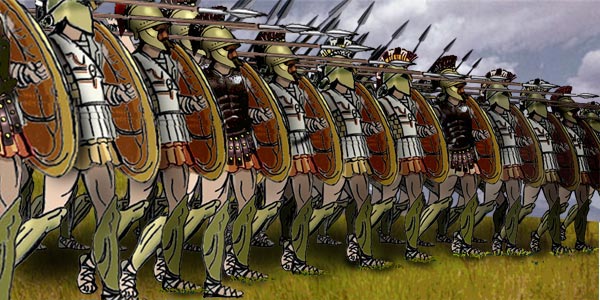
Heavy infantry consisted of heavily armed and armoured infantrymen who were trained to mount frontal assaults and/or anchor the defensive center of a battle line. This differentiated them from light infantry who were relatively mobile and lightly armoured skirmisher troops intended for screening, scouting, and other tactical roles unsuited to soldiers carrying heavier loads. Heavy infantry typically made use of dense battlefield formations, such as shield wall or phalanx, multiplying their effective weight of arms with force concentration.
Heavy infantry were critical to many ancient armies, which first attested by the Sumerians in the Stele of the Vultures. It was also used by rival Assyrian and Persian Sparabara, then by Greek hoplites, Macedonian phalangites, and Roman legionaries. After the fall of Rome, heavy infantry declined in Europe but returned to dominance in the Late Middle Ages with Swiss pikemen and German Landsknechts. With the rise of firearms during early modern warfare, dense formations became increasingly infeasible, and heavy armours were either ineffective or too cumbersome to be tactically useful. By the early 18th century, heavy infantry were replaced by line infantry armed with muskets and bayonets and wearing little to no armour.
In ancient Greece, the hoplite was a common form of heavy infantry. All hoplites had a shield and spear, and perhaps a helmet as well. Wealthier hoplites were able to afford bronze breastplate or linothorax armor, while poorer hoplites wore little to no armor. The hoplite armor and shield were designed to block arrows and blows from spear points and swords. Hoplites would act as both a city watch and as an army in the field. Hoplites were thought of as a force to be reckoned with because they would form a phalanx—a tight band of spearmen—which aided them against lighter infantry and cavalry.
Herodotus described an elite infantry unit of 10,000 soldiers, which he called the Immortals, in the army of the Achaemenid Empire. They were heavily armed, carrying wicker shields, short spears, quivers, swords or large daggers, and bow and arrow. Underneath their robes they wore scale armour coats, which means they were not "heavily-armored" (even by ancient standards), but on the other hand, this would allow them to carry more weapons. The regiment was followed by a caravan of covered carriages, camels, and mules that transported rations separate than that of the rest of the army.
Alexander's army employed infantry known as the phalangite – soldiers equipped with a small shield and long pike and employed in a formation known as the sarissa phalanx. Alexander also had a flexible heavy infantry force known as the Argyraspides, or silver shields, who acted as his elite infantry. Post-Alexander Hellenistic states such as Macedonia, Seleucid Persia, and Ptolemaic Egypt would employ more heavily armored phalangites, as well as their own variation of elite units such as the silver shields.
The Celts were a diverse group of people that, through migration, lived in an area stretching from the British Isles to Anatolia. A people with a strong warrior tradition, they varied greatly in battle and equipment. Some of the more heavily armed Celts wore mail armour and "Galea" type helmets, and threw javelins in battle; all of these elements were later adopted by the Romans. Celts were respected for their battle prowess and often served as mercenaries for other Mediterranean civilizations.
In the military of ancient Rome, heavy infantry made up most of the Roman army. The heavy infantry of the pre-Marian Roman Republic included the hastati, principes, and triarii (although depending how the hastati were armed and armored, they could also be considered light infantry). The hastati, the youngest men in the line, were armed with a sword, or gladius, and two javelins, or pila. The pila were usually thrown at a charging enemy before they were engaged in hand-to-hand combat. Hastati were also equipped with a helmet, a shield and a bronze breast plate or coat of mail (if they could afford it). The principes were armed just like the hastati, but they were older, more experienced and, because they had more money, were more likely to own better-quality arms.
The final type of heavy infantry were the triarii. They were armed and armored just like the principes except that instead of wielding a sword or gladius, they used a large spear known as the hasta. Incidentally, the hastati were originally armed with this weapon, which gave them their name, but the hasta were eventually abandoned as Rome switched from a Greek-style hoplite phalanx to the manipular system. The triarii were the last vestige of this older style of warfare in the Roman republic. The triarii were usually called in to end the battle and break the lines of the enemy.
Hub AI
Heavy infantry AI simulator
(@Heavy infantry_simulator)
Heavy infantry
Heavy infantry consisted of heavily armed and armoured infantrymen who were trained to mount frontal assaults and/or anchor the defensive center of a battle line. This differentiated them from light infantry who were relatively mobile and lightly armoured skirmisher troops intended for screening, scouting, and other tactical roles unsuited to soldiers carrying heavier loads. Heavy infantry typically made use of dense battlefield formations, such as shield wall or phalanx, multiplying their effective weight of arms with force concentration.
Heavy infantry were critical to many ancient armies, which first attested by the Sumerians in the Stele of the Vultures. It was also used by rival Assyrian and Persian Sparabara, then by Greek hoplites, Macedonian phalangites, and Roman legionaries. After the fall of Rome, heavy infantry declined in Europe but returned to dominance in the Late Middle Ages with Swiss pikemen and German Landsknechts. With the rise of firearms during early modern warfare, dense formations became increasingly infeasible, and heavy armours were either ineffective or too cumbersome to be tactically useful. By the early 18th century, heavy infantry were replaced by line infantry armed with muskets and bayonets and wearing little to no armour.
In ancient Greece, the hoplite was a common form of heavy infantry. All hoplites had a shield and spear, and perhaps a helmet as well. Wealthier hoplites were able to afford bronze breastplate or linothorax armor, while poorer hoplites wore little to no armor. The hoplite armor and shield were designed to block arrows and blows from spear points and swords. Hoplites would act as both a city watch and as an army in the field. Hoplites were thought of as a force to be reckoned with because they would form a phalanx—a tight band of spearmen—which aided them against lighter infantry and cavalry.
Herodotus described an elite infantry unit of 10,000 soldiers, which he called the Immortals, in the army of the Achaemenid Empire. They were heavily armed, carrying wicker shields, short spears, quivers, swords or large daggers, and bow and arrow. Underneath their robes they wore scale armour coats, which means they were not "heavily-armored" (even by ancient standards), but on the other hand, this would allow them to carry more weapons. The regiment was followed by a caravan of covered carriages, camels, and mules that transported rations separate than that of the rest of the army.
Alexander's army employed infantry known as the phalangite – soldiers equipped with a small shield and long pike and employed in a formation known as the sarissa phalanx. Alexander also had a flexible heavy infantry force known as the Argyraspides, or silver shields, who acted as his elite infantry. Post-Alexander Hellenistic states such as Macedonia, Seleucid Persia, and Ptolemaic Egypt would employ more heavily armored phalangites, as well as their own variation of elite units such as the silver shields.
The Celts were a diverse group of people that, through migration, lived in an area stretching from the British Isles to Anatolia. A people with a strong warrior tradition, they varied greatly in battle and equipment. Some of the more heavily armed Celts wore mail armour and "Galea" type helmets, and threw javelins in battle; all of these elements were later adopted by the Romans. Celts were respected for their battle prowess and often served as mercenaries for other Mediterranean civilizations.
In the military of ancient Rome, heavy infantry made up most of the Roman army. The heavy infantry of the pre-Marian Roman Republic included the hastati, principes, and triarii (although depending how the hastati were armed and armored, they could also be considered light infantry). The hastati, the youngest men in the line, were armed with a sword, or gladius, and two javelins, or pila. The pila were usually thrown at a charging enemy before they were engaged in hand-to-hand combat. Hastati were also equipped with a helmet, a shield and a bronze breast plate or coat of mail (if they could afford it). The principes were armed just like the hastati, but they were older, more experienced and, because they had more money, were more likely to own better-quality arms.
The final type of heavy infantry were the triarii. They were armed and armored just like the principes except that instead of wielding a sword or gladius, they used a large spear known as the hasta. Incidentally, the hastati were originally armed with this weapon, which gave them their name, but the hasta were eventually abandoned as Rome switched from a Greek-style hoplite phalanx to the manipular system. The triarii were the last vestige of this older style of warfare in the Roman republic. The triarii were usually called in to end the battle and break the lines of the enemy.
Recent media