



Community hub
Recent from talks
Knowledge base stats:
Talk channels stats:
Members stats:
History of New Orleans
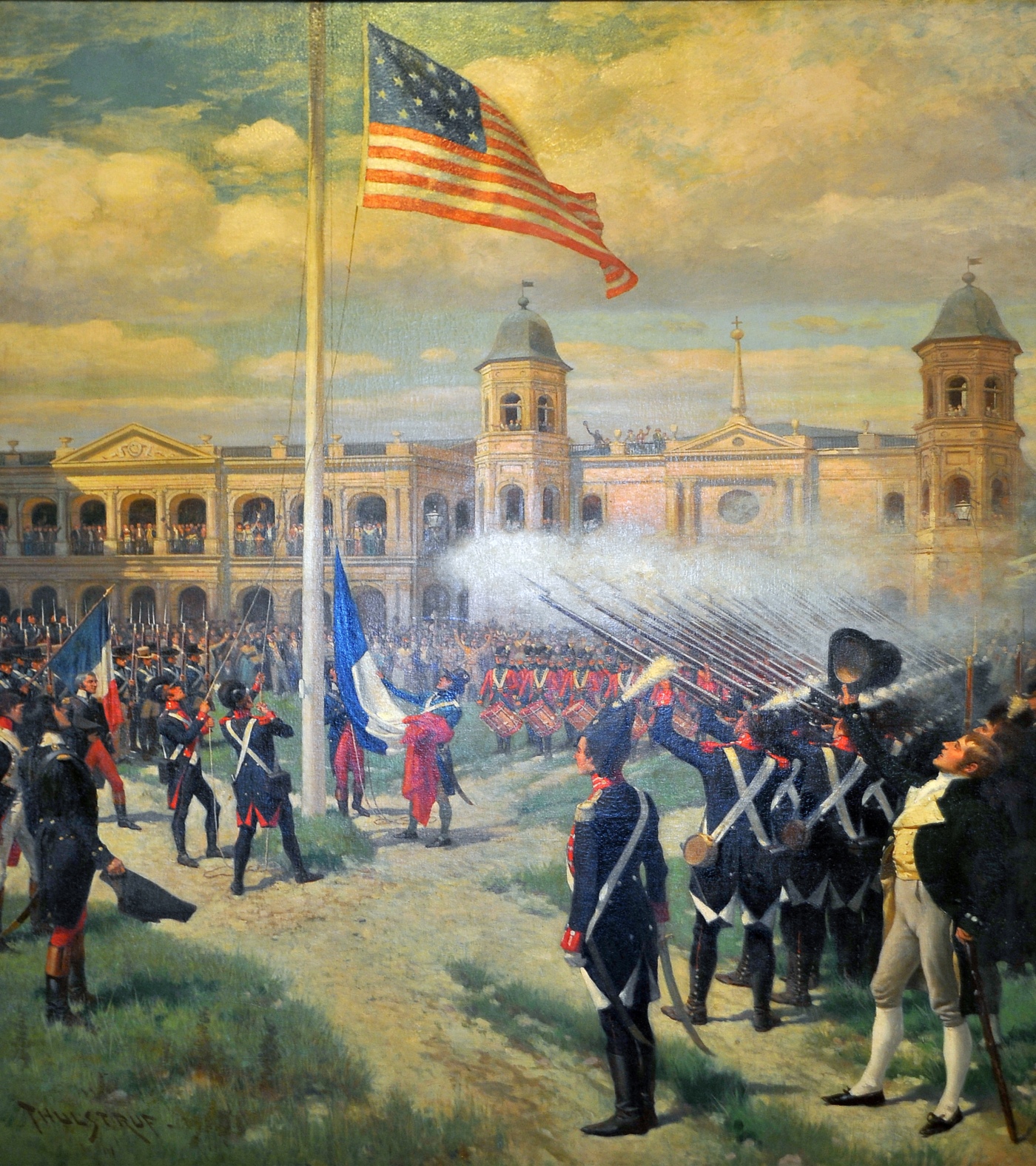
The history of New Orleans, Louisiana traces the city's development from its founding by the French in 1718 through its period of Spanish control, then briefly back to French rule before being acquired by the United States in the Louisiana Purchase in 1803. During the War of 1812, the last major battle was the Battle of New Orleans in 1815. Throughout the 19th century, New Orleans was the largest port in the Southern United States, exporting most of the nation's cotton output and other farm products to Western Europe and New England. As the largest city in the South at the start of the Civil War (1861–1865), it was an early target for capture by Union forces. With its rich and unique cultural and architectural heritage, New Orleans remains a major destination for live music, tourism, conventions, and sporting events and annual Mardi Gras celebrations. After the significant destruction and loss of life resulting from Hurricane Katrina in 2005, the city would bounce back and rebuild in the ensuing years.
The land mass that was to become the city of New Orleans was formed around 2200 BCE when the Mississippi River deposited silt creating the delta region. Before Europeans colonized the area, it was inhabited by Native Americans for about 1300 years. The Mississippian culture peoples built mounds and earthworks in the area. Later Native Americans created a portage between the headwaters of Bayou St. John (known to the natives as Bayouk Choupique) and the Mississippi River. The bayou flowed into Lake Pontchartrain. This became an important trade route. Archaeological evidence has shown settlement in New Orleans dating back to at least 400 C.E. Bulbancha was one of the original names of New Orleans and means "place of many tongues" in Choctaw. Bulbancha was an important trading hub for thousands of years.
French explorers, fur trappers and traders arrived in the area by the 1690s, some making settlements amid the Native American village of thatched huts along the Bayou. By the end of the decade, the French made an encampment called "Port Bayou St. Jean" near the head of the bayou; this would later be known as the Faubourg St. John neighborhood. The French also built a small fort, "St. Jean" (known to later generations of New Orleanians as "Old Spanish Fort") at the mouth of the bayou in 1701, using as a base a large Native American shell midden dating back to the Marksville culture. In 1708, land grants along the Bayou were given to French settlers from Mobile, but the majority left within the next two years due to the failure of attempts to grow wheat there. These early European settlements are now within the limits of the city of New Orleans, though they predate the city's official founding.
New Orleans was founded in early 1718 by the French as La Nouvelle-Orléans, under the direction of Louisiana governor Jean-Baptiste Le Moyne de Bienville. After considering several alternatives, Bienville selected the site for several strategic reasons and practical considerations, including: it was relatively high ground, along a sharp bend of the flood-prone Mississippi River, which thus created a natural levee (previously chosen as the site of an abandoned Quinipissa village); it was adjacent to the trading route and portage between the Mississippi and Lake Pontchartrain via Bayou St. John, offering access to the Gulf of Mexico port of Biloxi without going downriver 100 miles; and it offered control of the entire Mississippi River Valley, at a safe distance from Spanish and English colonial settlements.
From its founding, the French intended New Orleans to be an important colonial city. The city was named in honor of the then Regent of France, Philip II, Duke of Orléans. The regent allowed Scottish economist John Law to create a private bank and a financing scheme that succeeded in increasing the colonial population of New Orleans and other areas of Louisiana. The scheme, however, created an investment bubble that burst at the end of 1720. Law's Mississippi Company collapsed, stopping the flow of investment money to New Orleans. Nonetheless, in 1722, New Orleans was made the capital of French Louisiana, replacing Biloxi in that role.
The priest-chronicler Pierre François Xavier de Charlevoix described New Orleans in 1721 as a place of a hundred wretched hovels in a malarious wet thicket of willows and dwarf palmettos, infested by serpents and alligators; he seems to have been the first, however, to predict for it an imperial future.
In September 1722, a hurricane struck the city, blowing most of the structures down. After this, the administrators enforced the grid pattern dictated by Bienville but hitherto previously mostly ignored by the colonists. This grid plan is still seen today in the streets of the city's "French Quarter" (see map).
Much of the colonial population in early days was of the wildest character: deported galley slaves, trappers, gold-hunters; the colonial governors' letters were full of complaints regarding the riffraff sent as soldiers as late as Kerlerec's administration (1753–1763). Shortly after the founding, slaves were required to build the public works of the nascent city for thirty days when the crops had been harvested.
Hub AI
History of New Orleans AI simulator
(@History of New Orleans_simulator)
History of New Orleans
The history of New Orleans, Louisiana traces the city's development from its founding by the French in 1718 through its period of Spanish control, then briefly back to French rule before being acquired by the United States in the Louisiana Purchase in 1803. During the War of 1812, the last major battle was the Battle of New Orleans in 1815. Throughout the 19th century, New Orleans was the largest port in the Southern United States, exporting most of the nation's cotton output and other farm products to Western Europe and New England. As the largest city in the South at the start of the Civil War (1861–1865), it was an early target for capture by Union forces. With its rich and unique cultural and architectural heritage, New Orleans remains a major destination for live music, tourism, conventions, and sporting events and annual Mardi Gras celebrations. After the significant destruction and loss of life resulting from Hurricane Katrina in 2005, the city would bounce back and rebuild in the ensuing years.
The land mass that was to become the city of New Orleans was formed around 2200 BCE when the Mississippi River deposited silt creating the delta region. Before Europeans colonized the area, it was inhabited by Native Americans for about 1300 years. The Mississippian culture peoples built mounds and earthworks in the area. Later Native Americans created a portage between the headwaters of Bayou St. John (known to the natives as Bayouk Choupique) and the Mississippi River. The bayou flowed into Lake Pontchartrain. This became an important trade route. Archaeological evidence has shown settlement in New Orleans dating back to at least 400 C.E. Bulbancha was one of the original names of New Orleans and means "place of many tongues" in Choctaw. Bulbancha was an important trading hub for thousands of years.
French explorers, fur trappers and traders arrived in the area by the 1690s, some making settlements amid the Native American village of thatched huts along the Bayou. By the end of the decade, the French made an encampment called "Port Bayou St. Jean" near the head of the bayou; this would later be known as the Faubourg St. John neighborhood. The French also built a small fort, "St. Jean" (known to later generations of New Orleanians as "Old Spanish Fort") at the mouth of the bayou in 1701, using as a base a large Native American shell midden dating back to the Marksville culture. In 1708, land grants along the Bayou were given to French settlers from Mobile, but the majority left within the next two years due to the failure of attempts to grow wheat there. These early European settlements are now within the limits of the city of New Orleans, though they predate the city's official founding.
New Orleans was founded in early 1718 by the French as La Nouvelle-Orléans, under the direction of Louisiana governor Jean-Baptiste Le Moyne de Bienville. After considering several alternatives, Bienville selected the site for several strategic reasons and practical considerations, including: it was relatively high ground, along a sharp bend of the flood-prone Mississippi River, which thus created a natural levee (previously chosen as the site of an abandoned Quinipissa village); it was adjacent to the trading route and portage between the Mississippi and Lake Pontchartrain via Bayou St. John, offering access to the Gulf of Mexico port of Biloxi without going downriver 100 miles; and it offered control of the entire Mississippi River Valley, at a safe distance from Spanish and English colonial settlements.
From its founding, the French intended New Orleans to be an important colonial city. The city was named in honor of the then Regent of France, Philip II, Duke of Orléans. The regent allowed Scottish economist John Law to create a private bank and a financing scheme that succeeded in increasing the colonial population of New Orleans and other areas of Louisiana. The scheme, however, created an investment bubble that burst at the end of 1720. Law's Mississippi Company collapsed, stopping the flow of investment money to New Orleans. Nonetheless, in 1722, New Orleans was made the capital of French Louisiana, replacing Biloxi in that role.
The priest-chronicler Pierre François Xavier de Charlevoix described New Orleans in 1721 as a place of a hundred wretched hovels in a malarious wet thicket of willows and dwarf palmettos, infested by serpents and alligators; he seems to have been the first, however, to predict for it an imperial future.
In September 1722, a hurricane struck the city, blowing most of the structures down. After this, the administrators enforced the grid pattern dictated by Bienville but hitherto previously mostly ignored by the colonists. This grid plan is still seen today in the streets of the city's "French Quarter" (see map).
Much of the colonial population in early days was of the wildest character: deported galley slaves, trappers, gold-hunters; the colonial governors' letters were full of complaints regarding the riffraff sent as soldiers as late as Kerlerec's administration (1753–1763). Shortly after the founding, slaves were required to build the public works of the nascent city for thirty days when the crops had been harvested.