
_(cropped).jpg/250px-Dramatic_Views_of_Hurricane_Florence_from_the_International_Space_Station_From_9_12_(42828603210)_(cropped).jpg)


_(cropped).jpg/2000px-Dramatic_Views_of_Hurricane_Florence_from_the_International_Space_Station_From_9_12_(42828603210)_(cropped).jpg)
Community hub
Recent from talks
Contribute something
Nothing was collected or created yet.
Tropical cyclone
View on Wikipedia
_(cropped).jpg)
| Part of a series on |
| Tropical cyclones |
|---|
-_Good_pic.jpg) |
 Tropical cyclones portal Tropical cyclones portal |
A tropical cyclone is a rapidly rotating storm system with a low-pressure area, a closed low-level atmospheric circulation, strong winds, and a spiral arrangement of thunderstorms that produce heavy rain and squalls. Depending on its location and strength, a tropical cyclone is called a hurricane (/ˈhʌrɪkən, -keɪn/), typhoon (/taɪˈfuːn/), tropical storm, cyclonic storm, tropical depression, or simply cyclone. A hurricane is a strong tropical cyclone that occurs in the Atlantic Ocean or northeastern Pacific Ocean. A typhoon is the same thing which occurs in the northwestern Pacific Ocean. In the Indian Ocean and South Pacific, comparable storms are referred to as "tropical cyclones". In modern times, on average around 80 to 90 named tropical cyclones form each year around the world, over half of which develop hurricane-force winds of 65 kn (120 km/h; 75 mph) or more.[1]
Tropical cyclones typically form over large bodies of relatively warm water. They derive their energy through the evaporation of water from the ocean surface, which ultimately condenses into clouds and rain when moist air rises and cools to saturation. This energy source differs from that of mid-latitude cyclonic storms, such as nor'easters and European windstorms, which are powered primarily by horizontal temperature contrasts. Tropical cyclones are typically between 100 and 2,000 km (62 and 1,243 mi) in diameter. The strong rotating winds of a tropical cyclone are a result of the conservation of angular momentum imparted by the Earth's rotation as air flows inwards toward the axis of rotation. As a result, cyclones rarely form within 5° of the equator. South Atlantic tropical cyclones are very rare due to consistently strong wind shear and a weak Intertropical Convergence Zone. In contrast, the African easterly jet and areas of atmospheric instability give rise to cyclones in the Atlantic Ocean and Caribbean Sea.
Heat energy from the ocean acts as the accelerator for tropical cyclones. This causes inland regions to suffer far less damage from cyclones than coastal regions, although the impacts of flooding are felt across the board. Coastal damage may be caused by strong winds and rain, high waves, storm surges, and tornadoes. Climate change affects tropical cyclones in several ways. Scientists have found that climate change can exacerbate the impact of tropical cyclones by increasing their duration, occurrence, and intensity due to the warming of ocean waters and intensification of the water cycle.[2][3] Tropical cyclones draw in air from a large area and concentrate the water content of that air into precipitation over a much smaller area. This replenishing of moisture-bearing air after rain may cause multi-hour or multi-day extremely heavy rain up to 40 km (25 mi) from the coastline, far beyond the amount of water that the local atmosphere holds at any one time. This in turn can lead to river flooding, overland flooding, and a general overwhelming of local water control structures across a large area.
Definition and terminology
[edit]A tropical cyclone is the generic term for a warm-cored, non-frontal synoptic-scale low-pressure system over tropical or subtropical waters around the world.[4][5] The systems generally have a well-defined center which is surrounded by deep atmospheric convection and a closed wind circulation at the surface.[4] A tropical cyclone is generally deemed to have formed once mean surface winds in excess of 35 kn (65 km/h; 40 mph) are observed.[1] It is assumed at this stage that a tropical cyclone has become self-sustaining and can continue to intensify without any help from its environment.[1]
Depending on its location and strength, a tropical cyclone is referred to by different names, including hurricane, typhoon, tropical storm, cyclonic storm, tropical depression, or simply cyclone. A hurricane is a strong tropical cyclone that occurs in the Atlantic Ocean or northeastern Pacific Ocean, and a typhoon occurs in the northwestern Pacific Ocean. In the Indian Ocean and South Pacific, comparable storms are referred to as "tropical cyclones", and such storms in the Indian Ocean can also be called "severe cyclonic storms".
Tropical refers to the geographical origin of these systems, which form almost exclusively over tropical seas. Cyclone refers to their winds moving in a circle, whirling round their central clear eye, with their surface winds blowing counterclockwise in the Northern Hemisphere and clockwise in the Southern Hemisphere. The opposite direction of circulation is due to the Coriolis effect.
Formation
[edit]
Tropical cyclones tend to develop during the summer, but have been noted in nearly every month in most tropical cyclone basins. Tropical cyclones on either side of the Equator generally have their origins in the Intertropical Convergence Zone (ITCZ), where winds blow from either the northeast or southeast.[6] Within this broad area of low-pressure, air is heated over the warm tropical ocean and rises in discrete parcels, which causes towering thunderstorms to form.[6] These showers dissipate quite quickly; however, they can group together into large clusters of thunderstorms.[6] This creates a flow of warm, moist, rapidly rising air, which starts to rotate cyclonically as it interacts with the rotation of the earth.[6]
Several factors are required for these thunderstorms to develop further, including sea surface temperatures of around 27 °C (81 °F) and low vertical wind shear surrounding the system,[6][7] atmospheric instability, high humidity in the lower to middle levels of the troposphere, enough Coriolis force to develop a low-pressure center, and a pre-existing low-level focus or disturbance.[7] There is a limit on tropical cyclone intensity which is strongly related to the water temperatures along its path.[8] and upper-level divergence.[9] An average of 86 tropical cyclones of tropical storm intensity form annually worldwide. Of those cyclones, 47 reach strengths higher than 119 km/h (74 mph), and 20 become intense tropical cyclones, of at least Category 3 intensity on the Saffir–Simpson scale.[10]
Climate oscillations such as El Niño–Southern Oscillation (ENSO) and the Madden–Julian oscillation modulate the timing and frequency of tropical cyclone development.[11][12][13][14] Rossby waves can aid in the formation of a new tropical cyclone by disseminating the energy of an existing, mature storm.[15][16] Kelvin waves can contribute to tropical cyclone formation by regulating the development of the westerlies.[17] Cyclone formation is usually reduced 3 days prior to the wave's crest and increased during the 3 days after.[18]
Formation regions and warning centers
[edit]| Basin | Warning center | Area of responsibility | Notes |
|---|---|---|---|
| Northern Hemisphere | |||
| North Atlantic | United States National Hurricane Center (Miami) | Equator northward, African Coast – 140°W | [19] |
| Eastern Pacific | United States Central Pacific Hurricane Center (Honolulu) | Equator northward, 140–180°W | [19] |
| Western Pacific | Japan Meteorological Agency | Equator – 60°N, 180–100°E | [20] |
| North Indian Ocean | India Meteorological Department | Equator northwards, 100–40°E | [21] |
| Southern Hemisphere | |||
| South-West Indian Ocean |
Météo-France Reunion | Equator – 40°S, African Coast – 90°E | [22] |
| Australian region | Indonesian Meteorology, Climatology, and Geophysical Agency (BMKG) |
Equator – 10°S, 90–141°E | [23] |
| Papua New Guinea National Weather Service | Equator – 10°S, 141–160°E | [23] | |
| Australian Bureau of Meteorology | 10–40°S, 90–160°E | [23] | |
| Southern Pacific | Fiji Meteorological Service | Equator – 25°S, 160°E – 120°W | [23] |
| Meteorological Service of New Zealand | 25–40°S, 160°E – 120°W | [23] | |
The majority of tropical cyclones each year form in one of seven tropical cyclone basins, which are monitored by a variety of meteorological services and warning centers.[1] Ten of these warning centers worldwide are designated as either a Regional Specialized Meteorological Centre or a Tropical Cyclone Warning Centre by the World Meteorological Organization's (WMO) tropical cyclone programme.[1] These warning centers issue advisories which provide basic information and cover a systems present, forecast position, movement and intensity, in their designated areas of responsibility.[1]
Meteorological services around the world are generally responsible for issuing warnings for their own country. There are exceptions, as the United States National Hurricane Center and Fiji Meteorological Service issue alerts, watches and warnings for various island nations in their areas of responsibility.[1][23] The United States Joint Typhoon Warning Center and Fleet Weather Center also publicly issue warnings about tropical cyclones on behalf of the United States Government.[1] The Brazilian Navy Hydrographic Center names South Atlantic tropical cyclones, however the South Atlantic is not a major basin, and not an official basin according to the WMO.[24]
Interactions with climate
[edit]Each year on average, around 80 to 90 named tropical cyclones form around the world, of which over half develop hurricane-force winds of 65 kn (120 km/h; 75 mph) or more.[1] Worldwide, tropical cyclone activity peaks in late summer, when the difference between temperatures aloft and sea surface temperatures is the greatest. However, each particular basin has its own seasonal patterns. On a worldwide scale, May is the least active month, while September is the most active month. November is the only month in which all the tropical cyclone basins are in season.[25]
In the Northern Atlantic Ocean, a distinct cyclone season occurs from June 1 to November 30, sharply peaking from late August through September.[25] The statistical peak of the Atlantic hurricane season is September 10.[26]
The Northeast Pacific Ocean has a broader period of activity, but in a similar time frame to the Atlantic.[26] The Northwest Pacific sees tropical cyclones year-round, with a minimum in February and March and a peak in early September.[25] In the North Indian basin, storms are most common from April to December, with peaks in May and November.[25] In the Southern Hemisphere, the tropical cyclone year begins on July 1 and runs all year-round encompassing the tropical cyclone seasons, which run from November 1 until the end of April, with peaks in mid-February to early March.[25][23]
Of various modes of variability in the climate system, El Niño–Southern Oscillation has the largest effect on tropical cyclone activity.[27] Most tropical cyclones form on the side of the subtropical ridge closer to the equator, then move poleward past the ridge axis before recurving into the main belt of the Westerlies.[28] When the subtropical ridge position shifts due to El Niño, so will the preferred tropical cyclone tracks. Areas west of Japan and Korea tend to experience much fewer September–November tropical cyclone impacts during El Niño and neutral years.[29]
During La Niña years, the formation of tropical cyclones, along with the subtropical ridge position, shifts westward across the western Pacific Ocean, which increases the landfall threat to China and much greater intensity in the Philippines.[29] The Atlantic Ocean experiences depressed activity due to increased vertical wind shear across the region during El Niño years.[30] Tropical cyclones are further influenced by the Atlantic Meridional Mode, the Quasi-biennial oscillation and the Madden–Julian oscillation.[27][31]
| Basin | Season start |
Season end |
Tropical cyclones |
Refs |
|---|---|---|---|---|
| North Atlantic | June 1 | November 30 | 14.4 | [32] |
| Eastern Pacific | May 15 | November 30 | 16.6 | [32] |
| Western Pacific | January 1 | December 31 | 26.0 | [32] |
| North Indian | January 1 | December 31 | 12 | [33] |
| South-West Indian | July 1 | June 30 | 9.3 | [32][22] |
| Australian region | November 1 | April 30 | 11.0 | [34] |
| Southern Pacific | November 1 | April 30 | 7.1 | [35] |
| Total: | 96.4 | |||
Influence of climate change
[edit]


The IPCC Sixth Assessment Report summarize the latest scientific findings about the impact of climate change on tropical cyclones. According to the report, we have now better understanding about the impact of climate change on tropical storm than before. Major tropical storms likely became more frequent in the last 40 years. We can say with high confidence that climate change increased rainfall during tropical cyclones. We can say with high confidence that a 1.5 degree warming lead to "increased proportion of and peak wind speeds of intense tropical cyclones". We can say with medium confidence that regional impacts of further warming include more intense tropical cyclones and/or extratropical storms.[39]
Climate change can affect tropical cyclones in a variety of ways: an intensification of rainfall and wind speed, a decrease in overall frequency, an increase in the frequency of very intense storms and a poleward extension of where the cyclones reach maximum intensity are among the possible consequences of human-induced climate change.[2] Tropical cyclones use warm, moist air as their fuel. As climate change is warming ocean temperatures, there is potentially more of this fuel available.[3]
Between 1979 and 2017, there was a global increase in the proportion of tropical cyclones of Category 3 and higher on the Saffir–Simpson scale. The trend was most clear in the North Atlantic and in the Southern Indian Ocean. In the North Pacific, tropical cyclones have been moving poleward into colder waters and there was no increase in intensity over this period.[40] With 2 °C (3.6 °F) warming, a greater percentage (+13%) of tropical cyclones are expected to reach Category 4 and 5 strength.[2] A 2019 study indicates that climate change has been driving the observed trend of rapid intensification of tropical cyclones in the Atlantic basin. Rapidly intensifying cyclones are hard to forecast and therefore pose additional risk to coastal communities.[41]
Warmer air can hold more water vapor: the theoretical maximum water vapor content is given by the Clausius–Clapeyron relation, which yields ≈7% increase in water vapor in the atmosphere per 1 °C (1.8 °F) warming.[42][43] All models that were assessed in a 2019 review paper show a future increase of rainfall rates.[2] Additional sea level rise will increase storm surge levels.[44][45] It is plausible that extreme wind waves see an increase as a consequence of changes in tropical cyclones, further exacerbating storm surge dangers to coastal communities.[46] The compounding effects from floods, storm surge, and terrestrial flooding (rivers) are projected to increase due to global warming.[45]
There is currently no consensus on how climate change will affect the overall frequency of tropical cyclones.[2] A majority of climate models show a decreased frequency in future projections.[46] For instance, a 2020 paper comparing nine high-resolution climate models found robust decreases in frequency in the Southern Indian Ocean and the Southern Hemisphere more generally, while finding mixed signals for Northern Hemisphere tropical cyclones.[47] Observations have shown little change in the overall frequency of tropical cyclones worldwide,[48] with increased frequency in the North Atlantic and central Pacific, and significant decreases in the southern Indian Ocean and western North Pacific.[49]
There has been a poleward expansion of the latitude at which the maximum intensity of tropical cyclones occurs, which may be associated with climate change.[50] In the North Pacific, there may also have been an eastward expansion.[44] Between 1949 and 2016, there was a slowdown in tropical cyclone translation speeds. (Tropical cyclone translation speed is the speed at which a storm moves across the ocean, measured at consecutive locations at a selected time interval, such as every three hours or every six hours.) It is unclear still to what extent this can be attributed to climate change: climate models do not all show this feature.[46]
A 2021 study review article concluded that the geographic range of tropical cyclones will probably expand poleward in response to climate warming of the Hadley circulation.[51]
When hurricane winds speed rise by 5%, its destructive power rises by about 50%. Therefore, as climate change increased the wind speed of Hurricane Helene by 11%, it increased the destruction from it by more than twice.[52] According to World Weather Attribution the influence of climate change on the rainfall of some latest hurricanes can be described as follows:[53]
| The name of the hurricane | How much climate change increased rainfall |
|---|---|
| Hurricane Katrina | 4% |
| Hurricane Irma | 6% |
| Hurricane Maria | 9% |
| Hurricane Florence | 5% |
| Hurricane Dorian | 5–18% |
| Hurricane Ian | 18% |
| Hurricane Harvey | 7–38% |
| Hurricane Helene | 10% |
Intensity
[edit]Tropical cyclone intensity is based on wind speeds and pressure. Relationships between winds and pressure are often used in determining the intensity of a storm.[54] Tropical cyclone scales, such as the Saffir-Simpson hurricane wind scale and Australia's scale (Bureau of Meteorology), only use wind speed for determining the category of a storm.[55][56] The most intense storm on record is Typhoon Tip in the northwestern Pacific Ocean in 1979, which reached a minimum pressure of 870 hPa (26 inHg) and maximum sustained wind speeds of 165 kn (85 m/s; 305 km/h; 190 mph).[57] The highest maximum sustained wind speed ever recorded was 185 kn (95 m/s; 345 km/h; 215 mph) in Hurricane Patricia in 2015—the most intense cyclone ever recorded in the Western Hemisphere.[58]
Factors
[edit]Warm sea surface temperatures are required for tropical cyclones to form and strengthen. The commonly accepted minimum temperature range for this to occur is 26–27 °C (79–81 °F), however, multiple studies have proposed a lower minimum of 25.5 °C (77.9 °F).[59][60] Higher sea surface temperatures result in faster intensification rates and sometimes even rapid intensification.[61] High ocean heat content, also known as Tropical Cyclone Heat Potential, allows storms to achieve a higher intensity.[62] Most tropical cyclones that experience rapid intensification are traversing regions of high ocean heat content rather than lower values.[63] High ocean heat content values can help to offset the oceanic cooling caused by the passage of a tropical cyclone, limiting the effect this cooling has on the storm.[64] Faster-moving systems are able to intensify to higher intensities with lower ocean heat content values. Slower-moving systems require higher values of ocean heat content to achieve the same intensity.[63]
The passage of a tropical cyclone over the ocean causes the upper layers of the ocean to cool substantially, a process known as upwelling,[65] which can negatively influence subsequent cyclone development. This cooling is primarily caused by wind-driven mixing of cold water from deeper in the ocean with the warm surface waters. This effect results in a negative feedback process that can inhibit further development or lead to weakening. Additional cooling may come in the form of cold water from falling raindrops (this is because the atmosphere is cooler at higher altitudes). Cloud cover may also play a role in cooling the ocean, by shielding the ocean surface from direct sunlight before and slightly after the storm passage. All these effects can combine to produce a dramatic drop in sea surface temperature over a large area in just a few days.[66] Conversely, the mixing of the sea can result in heat being inserted in deeper waters, with potential effects on global climate.[67]
Vertical wind shear decreases tropical cyclone predicability, with storms exhibiting wide range of responses in the presence of shear.[68] Wind shear often negatively affects tropical cyclone intensification by displacing moisture and heat from a system's center.[69] Low levels of vertical wind shear are most optimal for strengthening, while stronger wind shear induces weakening.[70][71] Dry air entraining into a tropical cyclone's core has a negative effect on its development and intensity by diminishing atmospheric convection and introducing asymmetries in the storm's structure.[72][73][74] Symmetric, strong outflow leads to a faster rate of intensification than observed in other systems by mitigating local wind shear.[75][76][77] Weakening outflow is associated with the weakening of rainbands within a tropical cyclone.[78] Tropical cyclones may still intensify, even rapidly, in the presence of moderate or strong wind shear depending on the evolution and structure of the storm's convection.[79][80]
The size of tropical cyclones plays a role in how quickly they intensify. Smaller tropical cyclones are more prone to rapid intensification than larger ones.[81] The Fujiwhara effect, which involves interaction between two tropical cyclones, can weaken and ultimately result in the dissipation of the weaker of two tropical cyclones by reducing the organization of the system's convection and imparting horizontal wind shear.[82] Tropical cyclones typically weaken while situated over a landmass because conditions are often unfavorable as a result of the lack of oceanic forcing.[83] The Brown ocean effect can allow a tropical cyclone to maintain or increase its intensity following landfall, in cases where there has been copious rainfall, through the release of latent heat from the saturated soil.[84] Orographic lift can cause a significant increase in the intensity of the convection of a tropical cyclone when its eye moves over a mountain, breaking the capped boundary layer that had been restraining it.[85] Jet streams can both enhance and inhibit tropical cyclone intensity by influencing the storm's outflow as well as vertical wind shear.[86][87]
Rapid intensification
[edit]On occasion, tropical cyclones may undergo a process known as rapid intensification, a period in which the maximum sustained winds of a tropical cyclone increase by 30 kn (56 km/h; 35 mph) or more within 24 hours.[88] Similarly, rapid deepening in tropical cyclones is defined as a minimum sea surface pressure decrease of 1.75 hPa (0.052 inHg) per hour or 42 hPa (1.2 inHg) within a 24-hour period; explosive deepening occurs when the surface pressure decreases by 2.5 hPa (0.074 inHg) per hour for at least 12 hours or 5 hPa (0.15 inHg) per hour for at least 6 hours.[89]
For rapid intensification to occur, several conditions must be in place. Water temperatures must be extremely high, near or above 30 °C (86 °F), and water of this temperature must be sufficiently deep such that waves do not upwell cooler waters to the surface. On the other hand, Tropical Cyclone Heat Potential is one of such non-conventional subsurface oceanographic parameters influencing the cyclone intensity.[90]
Wind shear must be low. When wind shear is high, the convection and circulation in the cyclone will be disrupted. Usually, an anticyclone in the upper layers of the troposphere above the storm must be present as well—for extremely low surface pressures to develop, air must be rising very rapidly in the eyewall of the storm, and an upper-level anticyclone helps channel this air away from the cyclone efficiently.[90] However, some cyclones such as Hurricane Epsilon have rapidly intensified despite relatively unfavorable conditions.[91][92]
Dissipation
[edit]
There are a number of ways a tropical cyclone can weaken, dissipate, or lose its tropical characteristics. These include making landfall, moving over cooler water, encountering dry air, or interacting with other weather systems; however, once a system has dissipated or lost its tropical characteristics, its remnants could regenerate a tropical cyclone if environmental conditions become favorable.[93][94]
A tropical cyclone can dissipate when it moves over waters significantly cooler than 26.5 °C (79.7 °F). This will deprive the storm of such tropical characteristics as a warm core with thunderstorms near the center, so that it becomes a remnant low-pressure area. Remnant systems may persist for several days before losing their identity. This dissipation mechanism is most common in the eastern North Pacific. Weakening or dissipation can also occur if a storm experiences vertical wind shear which causes the convection and heat engine to move away from the center. This normally ceases the development of a tropical cyclone.[95] In addition, its interaction with the main belt of the Westerlies, by means of merging with a nearby frontal zone, can cause tropical cyclones to evolve into extratropical cyclones. This transition can take 1–3 days.[96]
Should a tropical cyclone make landfall or pass over an island, its circulation could start to break down, especially if it encounters mountainous terrain.[97] When a system makes landfall on a large landmass, it is cut off from its supply of warm moist maritime air and starts to draw in dry continental air.[97] This, combined with the increased friction over land areas, leads to the weakening and dissipation of the tropical cyclone.[97] Over a mountainous terrain, a system can quickly weaken. Over flat areas, it may endure for two to three days before circulation breaks down and dissipates.[97]
Over the years, there have been a number of techniques considered to try to artificially modify tropical cyclones.[98] These techniques have included using nuclear weapons, cooling the ocean with icebergs, blowing the storm away from land with giant fans, and seeding selected storms with dry ice or silver iodide.[98] These techniques, however, fail to appreciate the duration, intensity, power or size of tropical cyclones.[98]
Assessment methods
[edit]A variety of methods or techniques, including surface, satellite, and aerial, are used to assess the intensity of a tropical cyclone. Reconnaissance aircraft fly around and through tropical cyclones, outfitted with specialized instruments, to collect information that can be used to ascertain the winds and pressure of a system.[1] Tropical cyclones possess winds of different speeds at different heights. Winds recorded at flight level can be converted to find the wind speeds at the surface.[99] Surface observations, such as ship reports, land stations, mesonets, coastal stations, and buoys, can provide information on a tropical cyclone's intensity or the direction it is traveling.[1]
Wind-pressure relationships (WPRs) are used as a way to determine the pressure of a storm based on its wind speed. Several different methods and equations have been proposed to calculate WPRs.[100][101] Tropical cyclones agencies each use their own, fixed WPR, which can result in inaccuracies between agencies that are issuing estimates on the same system.[101] The ASCAT is a scatterometer used by the MetOp satellites to map the wind field vectors of tropical cyclones.[1] The SMAP uses an L-band radiometer channel to determine the wind speeds of tropical cyclones at the ocean surface, and has been shown to be reliable at higher intensities and under heavy rainfall conditions, unlike scatterometer-based and other radiometer-based instruments.[102]
The Dvorak technique plays a large role in both the classification of a tropical cyclone and the determination of its intensity. Used in warning centers, the method was developed by Vernon Dvorak in the 1970s, and uses both visible and infrared satellite imagery in the assessment of tropical cyclone intensity. The Dvorak technique uses a scale of "T-numbers", scaling in increments of 0.5 from T1.0 to T8.0. Each T-number has an intensity assigned to it, with larger T-numbers indicating a stronger system. Tropical cyclones are assessed by forecasters according to an array of patterns, including curved banding features, shear, central dense overcast, and eye, to determine the T-number and thus assess the intensity of the storm.[103]
The Cooperative Institute for Meteorological Satellite Studies works to develop and improve automated satellite methods, such as the Advanced Dvorak Technique (ADT) and SATCON. The ADT, used by a large number of forecasting centers, uses infrared geostationary satellite imagery and an algorithm based upon the Dvorak technique to assess the intensity of tropical cyclones. The ADT has a number of differences from the conventional Dvorak technique, including changes to intensity constraint rules and the usage of microwave imagery to base a system's intensity upon its internal structure, which prevents the intensity from leveling off before an eye emerges in infrared imagery.[104] The SATCON weights estimates from various satellite-based systems and microwave sounders, accounting for the strengths and flaws in each individual estimate, to produce a consensus estimate of a tropical cyclone's intensity which can be more reliable than the Dvorak technique at times.[105][106]
Intensity metrics
[edit]Multiple intensity metrics are used, including accumulated cyclone energy (ACE), the Hurricane Surge Index, the Hurricane Severity Index, the Power Dissipation Index (PDI), and integrated kinetic energy (IKE). ACE is a metric of the total energy a system has exerted over its lifespan. ACE is calculated by summing the squares of a cyclone's sustained wind speed, every six hours as long as the system is at or above tropical storm intensity and either tropical or subtropical.[107] The calculation of the PDI is similar in nature to ACE, with the major difference being that wind speeds are cubed rather than squared.[108]
The Hurricane Surge Index is a metric of the potential damage a storm may inflict via storm surge. It is calculated by squaring the dividend of the storm's wind speed and a climatological value (33 m/s or 74 mph), and then multiplying that quantity by the dividend of the radius of hurricane-force winds and its climatological value (96.6 km or 60.0 mi). This can be represented in equation form as:

where is the storm's wind speed and is the radius of hurricane-force winds.[109] The Hurricane Severity Index is a scale that can assign up to 50 points to a system; up to 25 points come from intensity, while the other 25 come from the size of the storm's wind field.[110] The IKE model measures the destructive capability of a tropical cyclone via winds, waves, and surge. It is calculated as:


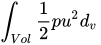
where is the density of air, is a sustained surface wind speed value, and is the volume element.[110][111]


Classification and naming
[edit]Classification
[edit]
Around the world, tropical cyclones are classified in different ways, based on the location (tropical cyclone basins), the structure of the system and its intensity. For example, within the Northern Atlantic and Eastern Pacific basins, a tropical cyclone with wind speeds of over 65 kn (120 km/h; 75 mph) is called a hurricane, while it is called a typhoon or a severe cyclonic storm within the Western Pacific or North Indian oceans.[19][20][21] When a hurricane passes west across the International Dateline in the Northern Hemisphere, it becomes known as a typhoon. This happened in 2014 for Hurricane Genevieve, which became Typhoon Genevieve.[112]
Within the Southern Hemisphere, it is either called a hurricane, tropical cyclone or a severe tropical cyclone, depending on if it is located within the South Atlantic, South-West Indian Ocean, Australian region or the South Pacific Ocean.[22][23] The descriptors for tropical cyclones with wind speeds below 65 kn (120 km/h; 75 mph) vary by tropical cyclone basin and may be further subdivided into categories such as "tropical storm", "cyclonic storm", "tropical depression", or "deep depression".[20][21][19]
Naming
[edit]The practice of using given names to identify tropical cyclones dates back to the late 1800s and early 1900s and gradually superseded the existing system—simply naming cyclones based on what they hit.[113][114] The system currently used provides positive identification of severe weather systems in a brief form, that is readily understood and recognized by the public.[113][114] The credit for the first usage of personal names for weather systems is generally given to the Queensland Government Meteorologist Clement Wragge who named systems between 1887 and 1907.[113][114] This system of naming weather systems fell into disuse for several years after Wragge retired, until it was revived in the latter part of World War II for the Western Pacific.[113][114] Formal naming schemes have subsequently been introduced for the North and South Atlantic, Eastern, Central, Western and Southern Pacific basins as well as the Australian region and Indian Ocean.[114]
At present, tropical cyclones are officially named by one of twelve meteorological services and retain their names throughout their lifetimes to provide ease of communication between forecasters and the general public regarding forecasts, watches, and warnings.[113] Since the systems can last a week or longer, and more than one can be occurring in the same basin at the same time, the names are thought to reduce the confusion about what storm is being described.[113] Names are assigned in order from predetermined lists with one, three, or ten-minute sustained wind speeds of more than 65 km/h (40 mph) depending on which basin it originates.[19][21][22]
Standards vary from basin to basin. Some tropical depressions are named in the Western Pacific. Tropical cyclones have to have a significant amount of gale-force winds occurring around the center before they are named within the Southern Hemisphere.[22][23] The names of significant tropical cyclones in the North Atlantic Ocean, Pacific Ocean, and Australian region are retired from the naming lists and replaced with another name.[19][20][23] Tropical cyclones that develop around the world are assigned an identification code consisting of a two-digit number and suffix letter by the warning centers that monitor them.[23][115]
Related cyclone types
[edit]In addition to tropical cyclones, there are two other classes of cyclones within the spectrum of cyclone types. These kinds of cyclones, known as extratropical cyclones and subtropical cyclones, can be stages a tropical cyclone passes through during its formation or dissipation.[116] An extratropical cyclone is a storm that derives energy from horizontal temperature differences, which are typical in higher latitudes. A tropical cyclone can become extratropical as it moves toward higher latitudes if its energy source changes from heat released by condensation to differences in temperature between air masses. Although not as frequently, an extratropical cyclone can transform into a subtropical storm, and from there into a tropical cyclone.[117] From space, extratropical storms have a characteristic "comma-shaped" cloud pattern.[118] Extratropical cyclones can also be dangerous when their low-pressure centers cause powerful winds and high seas.[119]
A subtropical cyclone is a weather system that has some characteristics of a tropical cyclone and some characteristics of an extratropical cyclone. They can form in a wide band of latitudes, from the equator to 50°. Although subtropical storms rarely have hurricane-force winds, they may become tropical in nature as their cores warm.[120]
Structure
[edit]Eye and center
[edit]
At the center of a mature tropical cyclone, air sinks rather than rises. For a sufficiently strong storm, air may sink over a layer deep enough to suppress cloud formation, thereby creating a clear "eye". Weather in the eye is normally calm and free of convective clouds, although the sea may be extremely violent.[121] The eye is normally circular and is typically 30–65 km (19–40 mi) in diameter, though eyes as small as 3 km (1.9 mi) and as large as 370 km (230 mi) have been observed.[122][123]
The cloudy outer edge of the eye is called the "eyewall". The eyewall typically expands outward with height, resembling an arena football stadium; this phenomenon is sometimes referred to as the "stadium effect".[123] The eyewall is where the greatest wind speeds are found, air rises most rapidly, clouds reach their highest altitude, and precipitation is the heaviest. The heaviest wind damage occurs where a tropical cyclone's eyewall passes over land.[121]
In a weaker storm, the eye may be obscured by the central dense overcast, which is the upper-level cirrus shield that is associated with a concentrated area of strong thunderstorm activity near the center of a tropical cyclone.[124]
The eyewall may vary over time in the form of eyewall replacement cycles, particularly in intense tropical cyclones. Outer rainbands can organize into an outer ring of thunderstorms that slowly moves inward, which is believed to rob the primary eyewall of moisture and angular momentum. When the primary eyewall weakens, the tropical cyclone weakens temporarily. The outer eyewall eventually replaces the primary one at the end of the cycle, at which time the storm may return to its original intensity.[125]
Size
[edit]| ROCI (Diameter) | Type |
|---|---|
| Less than 2 degrees latitude | Very small/minor |
| 2 to 3 degrees of latitude | Small |
| 3 to 6 degrees of latitude | Medium/average/normal |
| 6 to 8 degrees of latitude | Large |
| Over 8 degrees of latitude | Very large[126] |

There are a variety of metrics commonly used to measure storm size. The most common metrics include the radius of maximum wind, the radius of 34-knot (17 m/s; 63 km/h; 39 mph) wind (i.e. gale force), the radius of outermost closed isobar (ROCI), and the radius of vanishing wind.[128][129] An additional metric is the radius at which the cyclone's relative vorticity field decreases to 1×10⁻⁵ s−1.[123]
On Earth, tropical cyclones span a large range of sizes, from 100–2,000 km (62–1,243 mi) as measured by the radius of vanishing wind. They are largest on average in the northwest Pacific Ocean basin and smallest in the northeastern Pacific Ocean basin.[130] If the radius of outermost closed isobar is less than two degrees of latitude (222 km (138 mi)), then the cyclone is "very small" or a "midget". A radius of 3–6 latitude degrees (333–670 km (207–416 mi)) is considered "average sized". "Very large" tropical cyclones have a radius of greater than 8 degrees (888 km (552 mi)).[126] Observations indicate that size is only weakly correlated to variables such as storm intensity (i.e. maximum wind speed), radius of maximum wind, latitude, and maximum potential intensity.[129][130] Typhoon Tip is the largest cyclone on record, with tropical storm-force winds 2,170 km (1,350 mi) in diameter. The smallest storm on record is Tropical Storm Marco of 2008, which generated tropical storm-force winds only 37 km (23 mi) in diameter.[131]
Movement
[edit]The movement of a tropical cyclone (i.e. its "track") is typically approximated as the sum of two terms: "steering" by the background environmental wind and "beta drift".[132] Some tropical cyclones can move across large distances, such as Hurricane John, the second longest-lasting tropical cyclone on record, which traveled 13,280 km (8,250 mi), the longest track of any Northern Hemisphere tropical cyclone, over its 31-day lifespan in 1994.[133][134][135]
Environmental steering
[edit]Environmental steering is the primary influence on the motion of tropical cyclones.[136] It represents the movement of the storm due to prevailing winds and other wider environmental conditions, similar to "leaves carried along by a stream".[137]
Physically, the winds, or flow field, in the vicinity of a tropical cyclone may be treated as having two parts: the flow associated with the storm itself, and the large-scale background flow of the environment.[136] Tropical cyclones can be treated as local maxima of vorticity suspended within the large-scale background flow of the environment.[138] In this way, tropical cyclone motion may be represented to first-order as advection of the storm by the local environmental flow.[139] This environmental flow is termed the "steering flow" and is the dominant influence on tropical cyclone motion.[136] The strength and direction of the steering flow can be approximated as a vertical integration of the winds blowing horizontally in the cyclone's vicinity, weighted by the altitude at which those winds are occurring. Because winds can vary with height, determining the steering flow precisely can be difficult.
The pressure altitude at which the background winds are most correlated with a tropical cyclone's motion is known as the "steering level".[138] The motion of stronger tropical cyclones is more correlated with the background flow averaged across a thicker portion of troposphere compared to weaker tropical cyclones whose motion is more correlated with the background flow averaged across a narrower extent of the lower troposphere.[140] When wind shear and latent heat release is present, tropical cyclones tend to move towards regions where potential vorticity is increasing most quickly.[141]
Climatologically, tropical cyclones are steered primarily westward by the east-to-west trade winds on the equatorial side of the subtropical ridge—a persistent high-pressure area over the world's subtropical oceans.[137] In the tropical North Atlantic and Northeast Pacific oceans, the trade winds steer tropical easterly waves westward from the African coast toward the Caribbean Sea, North America, and ultimately into the central Pacific Ocean before the waves dampen out.[142] These waves are the precursors to many tropical cyclones within this region.[143] In contrast, in the Indian Ocean and Western Pacific in both hemispheres, tropical cyclogenesis is influenced less by tropical easterly waves and more by the seasonal movement of the Intertropical Convergence Zone and the monsoon trough.[144] Other weather systems such as mid-latitude troughs and broad monsoon gyres can also influence tropical cyclone motion by modifying the steering flow.[140][145]
Beta drift
[edit]In addition to environmental steering, a tropical cyclone will tend to drift poleward and westward, a motion known as "beta drift".[146] This motion is due to the superposition of a vortex, such as a tropical cyclone, onto an environment in which the Coriolis force varies with latitude, such as on a sphere or beta plane.[147] The magnitude of the component of tropical cyclone motion associated with the beta drift ranges between 1–3 m/s (3.6–10.8 km/h; 2.2–6.7 mph) and tends to be larger for more intense tropical cyclones and at higher latitudes. It is induced indirectly by the storm itself as a result of feedback between the cyclonic flow of the storm and its environment.[148][146]
Physically, the cyclonic circulation of the storm advects environmental air poleward east of center and equatorial west of center. Because air must conserve its angular momentum, this flow configuration induces a cyclonic gyre equatorward and westward of the storm center and an anticyclonic gyre poleward and eastward of the storm center. The combined flow of these gyres acts to advect the storm slowly poleward and westward. This effect occurs even if there is zero environmental flow.[149][150] Due to a direct dependence of the beta drift on angular momentum, the size of a tropical cyclone can affect the influence of beta drift on its motion; beta drift imparts a greater influence on the movement of larger tropical cyclones than that of smaller ones.[151][152]
Multiple storm interaction
[edit]A third component of motion that occurs relatively infrequently involves the interaction of multiple tropical cyclones. When two cyclones approach one another, their centers will begin orbiting cyclonically about a point between the two systems. Depending on their separation distance and strength, the two vortices may simply orbit around one another, or else may spiral into the center point and merge. When the two vortices are of unequal size, the larger vortex will tend to dominate the interaction, and the smaller vortex will orbit around it. This phenomenon is called the Fujiwhara effect, after Sakuhei Fujiwhara.[153]
Interaction with the mid-latitude westerlies
[edit]
Though a tropical cyclone typically moves from east to west in the tropics, its track may shift poleward and eastward either as it moves west of the subtropical ridge axis or else if it interacts with the mid-latitude flow, such as the jet stream or an extratropical cyclone. This motion, termed "recurvature", commonly occurs near the western edge of the major ocean basins, where the jet stream typically has a poleward component and extratropical cyclones are common.[154] An example of tropical cyclone recurvature was Typhoon Ioke in 2006.[155]
Effects
[edit]Natural phenomena caused or worsened by tropical cyclones
[edit]Tropical cyclones out at sea cause large waves, heavy rain, floods and high winds, disrupting international shipping and, at times, causing shipwrecks.[156] Tropical cyclones stir up water, leaving a cool wake behind them, which causes the region to be less favorable for subsequent tropical cyclones.[66] On land, strong winds can damage or destroy vehicles, buildings, bridges, and other outside objects, turning loose debris into deadly flying projectiles. The storm surge, or the increase in sea level due to the cyclone, is typically the worst effect from landfalling tropical cyclones, historically resulting in 90% of tropical cyclone deaths.[157] Cyclone Mahina produced the highest storm surge on record, 13 m (43 ft), at Bathurst Bay, Queensland, Australia, in March 1899.[158]
Other ocean-based hazards that tropical cyclones produce are rip currents and undertow. These hazards can occur hundreds of kilometers (hundreds of miles) away from the center of a cyclone, even if other weather conditions are favorable.[159][160] The broad rotation of a landfalling tropical cyclone, and vertical wind shear at its periphery, spawns tornadoes. Tornadoes can also be spawned as a result of eyewall mesovortices, which persist until landfall.[161] Hurricane Ivan produced 120 tornadoes, more than any other tropical cyclone.[162] Lightning activity is produced within tropical cyclones. This activity is more intense within stronger storms and closer to and within the storm's eyewall.[163][164] Tropical cyclones can increase the amount of snowfall a region experiences by delivering additional moisture.[165] Wildfires can be worsened when a nearby storm fans their flames with its strong winds.[166][167]
Effect on property and human life
[edit]

Tropical cyclones regularly affect the coastlines of most of Earth's major bodies of water along the Atlantic, Pacific, and Indian oceans. Tropical cyclones have caused significant destruction and loss of human life, resulting in about 2 million deaths since the 19th century.[169] Large areas of standing water caused by flooding lead to infection, as well as contributing to mosquito-borne illnesses. Crowded evacuees in shelters increase the risk of disease propagation.[157] Tropical cyclones significantly interrupt infrastructure, leading to power outages, bridge and road destruction, and the hampering of reconstruction efforts.[157][170][171]
Winds and water from storms can damage or destroy homes, buildings, and other manmade structures.[172][173] Tropical cyclones destroy agriculture, kill livestock, and prevent access to marketplaces for both buyers and sellers; both of these result in financial losses.[174][175][176] Powerful cyclones that make landfall – moving from the ocean to over land – are some of the most powerful, although that is not always the case. An average of 86 tropical cyclones of tropical storm intensity form annually worldwide, with 47 reaching hurricane or typhoon strength, and 20 becoming intense tropical cyclones, super typhoons, or major hurricanes (at least of Category 3 intensity).[177]
Africa
[edit]In Africa, tropical cyclones can originate from tropical waves generated over the Sahara Desert,[178] or otherwise strike the Horn of Africa and Southern Africa.[179][180] Cyclone Idai in March 2019 hit central Mozambique, becoming the deadliest tropical cyclone on record in Africa, with 1,302 fatalities, and damage estimated at US$2.2 billion.[181][182] Réunion island, located east of Southern Africa, experiences some of the wettest tropical cyclones on record. In January 1980, Cyclone Hyacinthe produced 6,083 mm (239.5 in) of rain over 15 days, which was the largest rain total recorded from a tropical cyclone on record.[183][184][185]
Asia
[edit]In Asia, tropical cyclones from the Indian and Pacific oceans regularly affect some of the most populated countries on Earth. In 1970, a cyclone struck Bangladesh, then known as East Pakistan, producing a 6.1 m (20 ft) storm surge that killed at least 300,000 people. This made it the deadliest tropical cyclone on record.[186] In October 2019, Typhoon Hagibis struck the Japanese island of Honshu and inflicted US$15 billion in damage, making it the costliest storm on record in Japan.[187] The islands that comprise Oceania, from Australia to French Polynesia, are routinely affected by tropical cyclones.[188][189][190] In Indonesia, a cyclone struck the island of Flores in April 1973, killing 1,653 people, making it the deadliest tropical cyclone recorded in the Southern Hemisphere.[191][192]
North and South America
[edit]Atlantic and Pacific hurricanes regularly affect North America. In the United States, hurricanes Katrina in 2005 and Harvey in 2017 are the country's costliest ever natural disasters, with monetary damage estimated at US$125 billion. Katrina struck Louisiana and largely destroyed the city of New Orleans,[193][194] while Harvey caused significant flooding in southeastern Texas after it dropped 60.58 in (1,539 mm) of rainfall; this was the highest rainfall total on record in the country.[194]
The Caribbean islands are regularly hit by hurricanes, which have caused multiple humanitarian crises in Haiti since 2004 due in part to the lack of infrastructure and high population density in urban areas.[195][196] In 2004, hurricane Jeanne caused severe flooding and mudslides, and a total estimated 3,006 deaths.[197] More recently, in 2016, hurricane Matthew caused US$2.8 billion in damages, killing an estimated 674 people.[198][199]
The northern portion of South America experiences occasional tropical cyclones, with 173 fatalities from Tropical Storm Bret in August 1993.[200][201] The South Atlantic Ocean is generally inhospitable to the formation of a tropical storm.[202] However, in March 2004, Hurricane Catarina struck southeastern Brazil as the first hurricane on record in the South Atlantic Ocean.[203]
Europe
[edit]Europe is rarely affected by tropical cyclones; however, the continent regularly encounters storms after they transitioned into extratropical cyclones. Only one tropical depression – Vince in 2005 – struck Spain,[204] and only one subtropical cyclone – Subtropical Storm Alpha in 2020 – struck Portugal.[205] Occasionally, there are tropical-like cyclones in the Mediterranean Sea.[206]
Environmental effects
[edit]Although cyclones take an enormous toll in lives and personal property, they may be important factors in the precipitation regimes of places they affect, as they may bring much-needed precipitation to otherwise dry regions.[207] Their precipitation may also alleviate drought conditions by restoring soil moisture, though one study focused on the Southeastern United States suggested tropical cyclones did not offer significant drought recovery.[208][209][210] Tropical cyclones also help maintain the global heat balance by moving warm, moist tropical air to the middle latitudes and polar regions,[211] and by regulating the thermohaline circulation through upwelling.[212] Research on Pacific cyclones has demonstrated that deeper layers of the ocean receive a heat transfer from these powerful storms.[213][214]
The storm surge and winds of hurricanes may be destructive to human-made structures, but they also stir up the waters of coastal estuaries, which are typically important fish breeding locales.[215] Ecosystems, such as saltmarshes and Mangrove forests, can be severely damaged or destroyed by tropical cyclones, which erode land and destroy vegetation.[216][217] Tropical cyclones can cause harmful algae blooms to form in bodies of water by increasing the amount of nutrients available.[218][219][220] Insect populations can decrease in both quantity and diversity after the passage of storms.[221] Strong winds associated with tropical cyclones and their remnants are capable of felling thousands of trees, causing damage to forests.[222]
When hurricanes surge upon shore from the ocean, salt is introduced to many freshwater areas and raises the salinity levels too high for some habitats to withstand. Some are able to cope with the salt and recycle it back into the ocean, but others can not release the extra surface water quickly enough or do not have a large enough freshwater source to replace it. Because of this, some species of plants and vegetation die due to the excess salt.[223] Hurricanes can carry toxins and acids onshore when they make landfall. The floodwater can pick up the toxins from different spills and contaminate the land that it passes over. These toxins are harmful to the people and animals in the area, as well as the environment around them.[224] Tropical cyclones can cause oil spills by damaging or destroying pipelines and storage facilities.[225][218][226] Similarly, chemical spills have been reported when chemical and processing facilities were damaged.[226][227][228] Waterways have become contaminated with toxic levels of metals such as nickel, chromium, and mercury during tropical cyclones.[229][230]
Tropical cyclones can have an extensive effect on geography, such as creating or destroying land.[231][232] Cyclone Bebe increased the size of Tuvalu island, Funafuti Atoll, by nearly 20%.[231][233][234] Hurricane Walaka destroyed the small East Island in 2018,[232][235] which destroyed the habitat for the endangered Hawaiian monk seal, as well as, threatened sea turtles and seabirds.[236] Landslides frequently occur during tropical cyclones and can vastly alter landscapes. Some storms are capable of causing hundreds to tens of thousands of landslides.[237][238][239][240] Storms can erode coastlines over an extensive area and transport the sediment to other locations.[230][241][242]
Observation and forecasting
[edit]Observation
[edit]
_at_SENEX_Air_Quality-Climate_Research_Study_(9119691512).jpg)
Tropical cyclones have occurred around the world for millennia. Reanalyses and research are being undertaken to extend the historical record, through the usage of proxy data such as overwash deposits, beach ridges and historical documents such as diaries.[243] Major tropical cyclones leave traces in overwash records and shell layers in some coastal areas, which have been used to gain insight into hurricane activity over the past thousands of years.[244] Sediment records in Western Australia suggest an intense tropical cyclone in the 4th millennium BC.[243]
Proxy records based on paleotempestological research have revealed that major hurricane activity along the Gulf of Mexico coast varies on timescales of centuries to millennia.[245][246] In the year 957, a powerful typhoon struck southern China, killing around 10,000 people due to flooding.[247] The Spanish colonization of Mexico described "tempestades" in 1730,[248] although the official record for Pacific hurricanes only dates to 1949.[249] In the south-west Indian Ocean, the tropical cyclone record goes back to 1848.[250] In 2003, the Atlantic hurricane reanalysis project examined and analyzed the historical record of tropical cyclones in the Atlantic back to 1851, extending the existing database from 1886.[251]
Before satellite imagery became available during the 20th century, many of these systems went undetected unless it impacted land or a ship encountered it by chance.[1] Often in part because of the threat of hurricanes, many coastal regions had sparse population between major ports until the advent of automobile tourism; therefore, the most severe portions of hurricanes striking the coast may have gone unmeasured in some instances. The combined effects of ship destruction and remote landfall severely limit the number of intense hurricanes in the official record before the era of hurricane reconnaissance aircraft and satellite meteorology. Although the record shows a distinct increase in the number and strength of intense hurricanes, therefore, experts regard the early data as suspect.[252] The ability of climatologists to make a long-term analysis of tropical cyclones is limited by the amount of reliable historical data.[253]
In the 1940s, routine aircraft reconnaissance started in both the Atlantic and Western Pacific basin in the mid-1940s, which provided ground truth data. Early flights were only made once or twice a day.[1] In 1960, Polar-orbiting weather satellites were first launched by the United States National Aeronautics and Space Administration, but were not declared operational until 1965.[1] It took several years for some of the warning centers to take advantage of this new viewing platform and develop the expertise to associate satellite signatures with storm position and intensity.[1]
Intense tropical cyclones pose a particular observation challenge, as they are a dangerous oceanic phenomenon, and weather stations, being relatively sparse, are rarely available on the site of the storm itself. In general, surface observations are available only if the storm is passing over an island or a coastal area, or if there is a nearby ship. Real-time measurements are usually taken in the periphery of the cyclone, where conditions are less catastrophic and its true strength cannot be evaluated. For this reason, there are teams of meteorologists that move into the path of tropical cyclones to help evaluate their strength at the point of landfall.[254]
Tropical cyclones are tracked by weather satellites capturing visible and infrared images from space, usually at half-hour to quarter-hour intervals. As a storm approaches land, it can be observed by land-based Doppler weather radar. Radar plays a crucial role around landfall by showing a storm's location and intensity every several minutes.[255] Other satellites provide information from the perturbations of GPS signals, providing thousands of snapshots per day and capturing atmospheric temperature, pressure, and moisture content.[256]
In situ measurements, in real-time, can be taken by sending specially equipped reconnaissance flights into the cyclone. In the Atlantic basin, these flights are regularly flown by United States government hurricane hunters.[257] These aircraft fly directly into the cyclone and take direct and remote-sensing measurements. The aircraft launch GPS dropsondes inside the cyclone. These sondes measure temperature, humidity, pressure, and especially winds between flight level and the ocean's surface. A new era in hurricane observation began when a remotely piloted Aerosonde, a small drone aircraft, was flown through Tropical Storm Ophelia as it passed Virginia's eastern shore during the 2005 hurricane season. A similar mission was also completed successfully in the western Pacific Ocean.[258]
Forecasting
[edit]
High-speed computers and sophisticated simulation software allow forecasters to produce computer models that predict tropical cyclone tracks based on the future position and strength of high- and low-pressure systems. Combining forecast models with increased understanding of the forces that act on tropical cyclones, as well as with a wealth of data from Earth-orbiting satellites and other sensors, scientists have increased the accuracy of track forecasts over recent decades.[259]
However, scientists are not as skillful at predicting the intensity of tropical cyclones.[260] The lack of improvement in intensity forecasting is attributed to the complexity of tropical systems and an incomplete understanding of factors that affect their development. New tropical cyclone position and forecast information is available at least every six hours from the various warning centers.[261][262][263][264][265]
Geopotential height
[edit]In meteorology, geopotential heights are used when creating forecasts and analyzing pressure systems. Geopotential heights represent the estimate of the real height of a pressure system above the average sea level.[266] Geopotential heights for weather are divided up into several levels. The lowest geopotential height level is 850 hPa (25.10 inHg), which represents the lowest 1,500 m (5,000 ft) of the atmosphere. The moisture content, gained by using either the relative humidity or the precipitable water value, is used in creating forecasts for precipitation.[267]
The next level, 700 hPa (20.67 inHg), is at a height of 2,300–3,200 m (7,700–10,500 ft). 700 hPa is regarded as the highest point in the lower atmosphere. At this layer, both vertical movement and moisture levels are used to locate and create forecasts for precipitation.[268] The middle level of the atmosphere is at 500 hPa (14.76 inHg) or a height of 4,900–6,100 m (16,000–20,000 ft). The 500 hPa level is used for measuring atmospheric vorticity, commonly known as the spin of air. The relative humidity is also analyzed at this height to establish where precipitation is likely to materialize.[269] The next level occurs at 300 hPa (8.859 inHg) or a height of 8,200–9,800 m (27,000–32,000 ft).[270] The top-most level is located at 200 hPa (5.906 inHg), which corresponds to a height of 11,000–12,000 m (35,000–41,000 ft). Both the 200 and 300 hPa levels are mainly used to locate the jet stream.[271]
Awareness and response
[edit]Preparations
[edit]
Ahead of the formal season starting, people are urged to prepare for the effects of a tropical cyclone by politicians and weather forecasters, among others. They prepare by determining their risk to the different types of weather, tropical cyclones cause, checking their insurance coverage and emergency supplies, as well as determining where to evacuate to if needed.[272][273][274] When a tropical cyclone develops and is forecast to impact land, each member nation of the World Meteorological Organization issues various watches and warnings to cover the expected effects.[275] However, there are some exceptions with the United States National Hurricane Center and Fiji Meteorological Service responsible for issuing or recommending warnings for other nations in their area of responsibility.[276][277][278]: 2–4
An important decision in individual preparedness is determining if and when to evacuate an area that will be affected by a tropical cyclone.[279] Tropical cyclone tracking charts allow people to track ongoing systems to form their own opinions regarding where the storms are going and whether or not they need to prepare for the system being tracked, including possible evacuation. This continues to be encouraged by the National Oceanic and Atmospheric Administration and National Hurricane Center.[280]
Response
[edit]![[icon]](https://en.wikipedia.org/wiki/File:Wiki_letter_w_cropped.svg) |
.jpg)
Hurricane response is the disaster response after a hurricane. Activities performed by hurricane responders include assessment, restoration, and demolition of buildings; removal of debris and waste; repairs to land-based and maritime infrastructure; and public health services including search and rescue operations.[281] Hurricane response requires coordination between federal, tribal, state, local, and private entities.[282] According to the National Voluntary Organizations Active in Disaster, potential response volunteers should affiliate with established organizations and should not self-deploy, so that proper training and support can be provided to mitigate the danger and stress of response work.[283]
Hurricane responders face many hazards. Hurricane responders may be exposed to chemical and biological contaminants including stored chemicals, sewage, human remains, and mold growth encouraged by flooding,[284][285][286] as well as asbestos and lead that may be present in older buildings.[285][287] Common injuries arise from falls from heights, such as from a ladder or from level surfaces; from electrocution in flooded areas, including from backfeed from portable generators; or from motor vehicle accidents.[284][287][288] Long and irregular shifts may lead to sleep deprivation and fatigue, increasing the risk of injuries, and workers may experience mental stress associated with a traumatic incident. Heat stress is a concern as workers are often exposed to hot and humid temperatures, wear protective clothing and equipment, and have physically difficult tasks.[284][287]
Extraterrestrial tropical cyclones
[edit]Limited research has been conducted on the possibility of tropical cyclogenesis on other worlds. Polar vortices with structures similar to tropical cyclones have been found on other planets in the Solar System, such as Venus's north polar vortex and Saturn's Hexagon.[289][290] The four giant planets frequently generate large and extremely powerful storm systems, such as the Great Red Spot on Jupiter and the Great Dark Spots on Neptune, but these storms are anticyclones.[291][292] Tropical cyclones are regarded as a feature unique to Earth.[293]
Titan, the largest moon of Saturn, is the only other world in the Solar System known to host large bodies of liquid on its surface. It also hosts a "methane cycle," where liquid hydrocarbons power weather systems much like water does on Earth.[294] Despite the appearance of many cloud features, no low-level cyclones have been observed. A 2013 study determined that Titan's tropics are not favorable for tropical cyclogenesis, as its equatorial regions only host isolated lakes and is subject to high wind shear. The Coriolis force is also much weaker on Titan due to its long rotation period (nearly 16 days). However, the study found that hydrocarbon polar seas may contain enough thermal energy to power tropical cyclones. Genesis could be aided by waves generated in the Seasonal Convergence Zone (SCZ), Titan's counterpart to the ITCZ; unlike the ITCZ, the SCZ swings from polar region to polar region as seasons progress. Wind shear in the polar regions is more favorable for tropical cyclogenesis, and the high latitudes in which the polar seas are located could help counter the low Coriolis force to an extent.[293]
Exoplanetary climates may be influenced by tropical cyclones, encouraging theoretical analyses of tropical cyclone frequency and distribution on Earth-like exoplanets.[295] Earth-sized exoplanets are expected to be common around dim red dwarf stars;[296] for these planets to sustain liquid water oceans, they must orbit very close to their parent star.[297] As a result, many such planets are likely to be tidally locked, with slower rotation periods and one hemisphere permanently facing the star.[298] Early planetary climate models with Earth-like atmospheres suggested that tidally locked exoplanets are capable of hosting environments conducive for tropical cyclogenesis, albeit favorability is limited by their slow rotation rates.[295] Further simulations supported the viability of tropical cyclones on tidally locked planets. A 2020 study found that tropical cyclones are more common for planets near the inner edge of the habitable zone, with cyclones forming in both the day and night hemispheres on such planets.[298] A 2024 study further explored the influence of rotation periods on tropical cyclogenesis, concluding that planets with intermediate (8 day) rotation periods are most favorable for tropical cyclogenesis, though weak tropical cyclone-like systems spawned on planets with long (16 day) rotation periods as well.[299]
See also
[edit]
- Cyclone – Large scale rotating air mass
- Tropical cyclones by year
- Tropical cyclones in 2025
- 2025 Atlantic hurricane season
- 2025 Pacific hurricane season
- 2025 Pacific typhoon season
- 2025 North Indian Ocean cyclone season
- 2025–26 South-West Indian Ocean cyclone season
- 2025–26 Australian region cyclone season
- 2025–26 South Pacific cyclone season
References
[edit]- ^ a b c d e f g h i j k l m n o p Global Guide to Tropical Cyclone Forecasting: 2017 (PDF) (Report). World Meteorological Organization. April 17, 2018. Archived (PDF) from the original on July 14, 2019. Retrieved September 6, 2020.
- ^ a b c d e Knutson, Thomas; Camargo, Suzana J.; Chan, Johnny C. L.; Emanuel, Kerry; Ho, Chang-Hoi; Kossin, James; Mohapatra, Mrutyunjay; Satoh, Masaki; Sugi, Masato; Walsh, Kevin; Wu, Liguang (August 6, 2019). "Tropical Cyclones and Climate Change Assessment: Part II. Projected Response to Anthropogenic Warming". Bulletin of the American Meteorological Society. 101 (3): BAMS–D–18–0194.1. Bibcode:2020BAMS..101E.303K. doi:10.1175/BAMS-D-18-0194.1. hdl:1721.1/124705. ISSN 0003-0007.
- ^ a b "Major tropical cyclones have become '15% more likely' over past 40 years". Carbon Brief. May 18, 2020. Archived from the original on August 8, 2020. Retrieved August 31, 2020.
- ^ a b "Glossary of NHC Terms". United States National Hurricane Center. Archived from the original on February 16, 2021. Retrieved February 18, 2021.
- ^ "Tropical cyclone facts: What is a tropical cyclone?". United Kingdom Met Office. Archived from the original on February 2, 2021. Retrieved February 25, 2021.
- ^ a b c d e "Tropical cyclone facts: How do tropical cyclones form?". United Kingdom Met Office. Archived from the original on February 2, 2021. Retrieved March 1, 2021.
- ^ a b Landsea, Chris. "How do tropical cyclones form?". Frequently Asked Questions. Atlantic Oceanographic and Meteorological Laboratory, Hurricane Research Division. Archived from the original on August 27, 2009. Retrieved October 9, 2017.
- ^ Berg, Robbie. "Tropical cyclone intensity in relation to SST and moisture variability" (PDF). Rosenstiel School of Marine, Atmospheric, and Earth Science (University of Miami). Archived (PDF) from the original on June 10, 2011. Retrieved September 23, 2010.
- ^ Zhang, Da-Lin; Zhu, Lin (September 12, 2012). "Roles of upper-level processes in tropical cyclogenesis". Geophysical Research Letters. 39 (17) 2012GL053140. AGU. Bibcode:2012GeoRL..3917804Z. doi:10.1029/2012GL053140. ISSN 0094-8276. S2CID 53341455. Retrieved October 4, 2022.
- ^ Chris Landsea (January 4, 2000). "Climate Variability table — Tropical Cyclones". Atlantic Oceanographic and Meteorological Laboratory, National Oceanic and Atmospheric Administration. Archived from the original on October 2, 2012. Retrieved October 19, 2006.
- ^ Landsea, Christopher. "AOML Climate Variability of Tropical Cyclones paper". Atlantic Oceanographic and Meteorological Laboratory. Archived from the original on October 26, 2021. Retrieved September 23, 2010.
- ^ Aiyyer, Anantha; Molinari, John (August 1, 2008). "MJO and Tropical Cyclogenesis in the Gulf of Mexico and Eastern Pacific: Case Study and Idealized Numerical Modeling". Journal of the Atmospheric Sciences. 65 (8). American Meteorological Society: 2691–2704. Bibcode:2008JAtS...65.2691A. doi:10.1175/2007JAS2348.1. S2CID 17409876.
- ^ Zhao, Chen; Li, Tim (October 20, 2018). "Basin dependence of the MJO modulating tropical cyclone genesis". Climate Dynamics. 52 (9–10). Springer: 6081–6096. doi:10.1007/s00382-018-4502-y. S2CID 134747858. Archived from the original on October 2, 2022. Retrieved October 5, 2022.
- ^ Camargo, Suzana J.; Emanuel, Kerry A.; Sobel, Adam H. (October 1, 2007). "Use of a Genesis Potential Index to Diagnose ENSO Effects on Tropical Cyclone Genesis". Journal of Climate. 20 (19). American Meteorological Society: 4819–4834. Bibcode:2007JCli...20.4819C. doi:10.1175/JCLI4282.1. S2CID 17340459.
- ^ Molinari, John; Lombardo, Kelly; Vollaro, David (April 1, 2007). "Tropical Cyclogenesis within an Equatorial Rossby Wave Packet". Journal of the Atmospheric Sciences. 64 (4). American Meteorological Society: 1301–1317. Bibcode:2007JAtS...64.1301M. doi:10.1175/JAS3902.1. S2CID 12920242.
- ^ Li, Tim; Fu, Bing (May 1, 2006). "Tropical Cyclogenesis Associated with Rossby Wave Energy Dispersion of a Preexisting Typhoon. Part I: Satellite Data Analyses". Journal of the Atmospheric Sciences. 63 (5). American Meteorological Society: 1377–1389. Bibcode:2006JAtS...63.1377L. doi:10.1175/JAS3692.1. S2CID 15372289.
- ^ Schreck III, Carl J.; Molinari, John (September 1, 2011). "Tropical Cyclogenesis Associated with Kelvin Waves and the Madden–Julian Oscillation". Monthly Weather Review. 139 (9). American Meteorological Society: 2723–2734. Bibcode:2011MWRv..139.2723S. doi:10.1175/MWR-D-10-05060.1. S2CID 16983131.
- ^ Schreck III, Carl J. (October 1, 2015). "Kelvin Waves and Tropical Cyclogenesis: A Global Survey". Monthly Weather Review. 143 (10). American Meteorological Society: 3996–4011. Bibcode:2015MWRv..143.3996S. doi:10.1175/MWR-D-15-0111.1. S2CID 118859063.
- ^ a b c d e f RA IV Hurricane Committee (May 31, 2025). Hurricane Operational Plan for North America, Central America and the Caribbean 2025 (PDF) (Report). World Meteorological Organization. Retrieved November 1, 2025.
- ^ a b c d Typhoon Committee Operational Manual: Meteorological Component 2024 (PDF) (Report). World Meteorological Organization. 2025.
- ^ a b c d Panel on Tropical Cyclones (2023). Tropical Cyclone Operational Plan for the Bay of Bengal and the Arabian Sea 2023 (PDF) (Report). World Meteorological Organization.
- ^ a b c d e RA I Tropical Cyclone Committee (2023). Tropical Cyclone Operational Plan for the South-West Indian Ocean (PDF) (Report). World Meteorological Organization.
- ^ a b c d e f g h i j k RA V Tropical Cyclone Committee (2025). Tropical Cyclone Operational Plan for the South-East Indian Ocean and the Southern Pacific Ocean 2025 (PDF) (Report). World Meteorological Organization. Retrieved September 11, 2025.
- ^ "Normas Da Autoridade Marítima Para As Atividades De Meteorologia Marítima" (PDF) (in Portuguese). Brazilian Navy. 2011. Archived from the original (PDF) on February 6, 2015. Retrieved October 5, 2018.
- ^ a b c d e Atlantic Oceanographic and Meteorological Laboratory, Hurricane Research Division. "Frequently Asked Questions: When is hurricane season?". National Oceanic and Atmospheric Administration. Archived from the original on May 6, 2009. Retrieved July 25, 2006.
- ^ a b McAdie, Colin (May 10, 2007). "Tropical Cyclone Climatology". National Hurricane Center. Archived from the original on March 21, 2015. Retrieved June 9, 2007.
- ^ a b Ramsay, Hamish (2017). "The Global Climatology of Tropical Cyclones". Oxford Research Encyclopedia of Natural Hazard Science. Oxford University Press. doi:10.1093/acrefore/9780199389407.013.79. ISBN 978-0-19-938940-7. Archived from the original on August 15, 2021.
- ^ Joint Typhoon Warning Center (2006). "3.3 JTWC Forecasting Philosophies" (PDF). United States Navy. Archived from the original (PDF) on November 29, 2007. Retrieved February 11, 2007.
- ^ a b Wu, M.C.; Chang, W.L.; Leung, W.M. (2004). "Impacts of El Niño–Southern Oscillation Events on Tropical Cyclone Landfalling Activity in the Western North Pacific". Journal of Climate. 17 (6): 1419–1428. Bibcode:2004JCli...17.1419W. CiteSeerX 10.1.1.461.2391. doi:10.1175/1520-0442(2004)017<1419:IOENOE>2.0.CO;2.
- ^ Klotzbach, Philip J. (2011). "El Niño–Southern Oscillation's Impact on Atlantic Basin Hurricanes and U.S. Landfalls". Journal of Climate. 24 (4): 1252–1263. Bibcode:2011JCli...24.1252K. doi:10.1175/2010JCLI3799.1. ISSN 0894-8755.
- ^ Camargo, Suzana J.; Sobel, Adam H.; Barnston, Anthony G.; Klotzbach, Philip J. (2010), "The Influence of Natural Climate Variability on Tropical Cyclones, and Seasonal Forecasts of Tropical Cyclone Activity", Global Perspectives on Tropical Cyclones, World Scientific Series on Asia-Pacific Weather and Climate, vol. 4, WORLD SCIENTIFIC, pp. 325–360, doi:10.1142/9789814293488_0011, ISBN 978-981-4293-47-1, archived from the original on August 15, 2021
- ^ a b c d Hurricane Research Division. "Frequently Asked Questions: What are the average, most, and least tropical cyclones occurring in each basin?". National Oceanic and Atmospheric Administration's Atlantic Oceanographic and Meteorological Laboratory. Retrieved December 5, 2012.
- ^ "Report on Cyclonic Disturbances Over North Indian Ocean During 2018" (PDF). Archived from the original (PDF) on May 11, 2020.
- ^ "Australian Tropical Cyclone Outlook for 2019 to 2020". Australian Bureau of Meteorology. October 11, 2019. Archived from the original on October 14, 2019. Retrieved October 14, 2019.
- ^ 2019–20 Tropical Cyclone Season Outlook [in the] Regional Specialised Meteorological Centre Nadi – Tropical Cyclone Centre (RSMC Nadi – TCC) Area of Responsibility (AOR) (PDF) (Report). Fiji Meteorological Service. October 11, 2019. Archived (PDF) from the original on October 11, 2019. Retrieved October 11, 2019.
- ^ Leonhardt, David; Moses, Claire; Philbrick, Ian Prasad (September 29, 2022). "Ian Moves North / Category 4 and 5 Atlantic hurricanes since 1980". The New York Times. Archived from the original on September 30, 2022.
Source: NOAA - Graphic by Ashley Wu, The New York Times
(cites for 2022— data) - ^ ● Gilford, Daniel M.; Giguere, Joseph; Pershing, Andrew J. (November 20, 2024). "Human-caused ocean warming has intensified recent hurricanes". Environmental Research: Climate. 3 (4): 045019. Bibcode:2024ERCli...3d5019G. doi:10.1088/2752-5295/ad8d02.
● Explained in "Climate change increased wind speeds for every 2024 Atlantic hurricane: Analysis" (PDF). Climate Central. November 20, 2024. Archived (PDF) from the original on November 20, 2024. - ^ Ajasa, Amudalat; Clement, Scott; Guskin, Emily (August 23, 2023). "Partisans remain split on climate change contributing to more disasters, and on their weather becoming more extreme". The Washington Post. Archived from the original on August 23, 2023.
- ^ Climate Change 2023: Synthesis Report. Contribution of Working Groups I, II and III to the Sixth Assessment Report of the Intergovernmental Panel on Climate Change (PDF). Geneva, Switzerland: IPCC. 2023. pp. 46, 51, 69, 98. Retrieved October 28, 2024.
- ^ Kossin, James P.; Knapp, Kenneth R.; Olander, Timothy L.; Velden, Christopher S. (May 18, 2020). "Global increase in major tropical cyclone exceedance probability over the past four decades" (PDF). Proceedings of the National Academy of Sciences. 117 (22): 11975–11980. Bibcode:2020PNAS..11711975K. doi:10.1073/pnas.1920849117. ISSN 0027-8424. PMC 7275711. PMID 32424081. Archived (PDF) from the original on November 19, 2020. Retrieved October 6, 2020.
- ^ Collins, M.; Sutherland, M.; Bouwer, L.; Cheong, S.-M.; et al. (2019). "Chapter 6: Extremes, Abrupt Changes and Managing Risks" (PDF). IPCC Special Report on the Ocean and Cryosphere in a Changing Climate. p. 602. Archived (PDF) from the original on December 20, 2019. Retrieved October 6, 2020.
- ^ Thomas R. Knutson; Joseph J. Sirutis; Ming Zhao (2015). "Global Projections of Intense Tropical Cyclone Activity for the Late Twenty-First Century from Dynamical Downscaling of CMIP5/RCP4.5 Scenarios". Journal of Climate. 28 (18): 7203–7224. Bibcode:2015JCli...28.7203K. doi:10.1175/JCLI-D-15-0129.1. S2CID 129209836. Archived from the original on January 5, 2020. Retrieved October 6, 2020.
- ^ Knutson; et al. (2013). "Dynamical Downscaling Projections of Late 21st Century Atlantic Hurricane Activity: CMIP3 and CMIP5 Model-based Scenarios". Journal of Climate. 26 (17): 6591–6617. Bibcode:2013JCli...26.6591K. doi:10.1175/JCLI-D-12-00539.1. S2CID 129571840. Archived from the original on October 5, 2020. Retrieved October 6, 2020.
- ^ a b Collins, M.; Sutherland, M.; Bouwer, L.; Cheong, S.-M.; et al. (2019). "Chapter 6: Extremes, Abrupt Changes and Managing Risks" (PDF). IPCC Special Report on the Ocean and Cryosphere in a Changing Climate. p. 603. Archived (PDF) from the original on December 20, 2019. Retrieved October 6, 2020.
- ^ a b "Hurricane Harvey shows how we underestimate flooding risks in coastal cities, scientists say". The Washington Post. August 29, 2017. Archived from the original on August 30, 2017. Retrieved August 30, 2017.
- ^ a b c Walsh, K. J. E.; Camargo, S. J.; Knutson, T. R.; Kossin, J.; Lee, T. -C.; Murakami, H.; Patricola, C. (December 1, 2019). "Tropical cyclones and climate change". Tropical Cyclone Research and Review. 8 (4): 240–250. Bibcode:2019TCRR....8..240W. doi:10.1016/j.tcrr.2020.01.004. hdl:11343/192963. ISSN 2225-6032.
- ^ Roberts, Malcolm John; Camp, Joanne; Seddon, Jon; Vidale, Pier Luigi; Hodges, Kevin; Vannière, Benoît; Mecking, Jenny; Haarsma, Rein; Bellucci, Alessio; Scoccimarro, Enrico; Caron, Louis-Philippe (2020). "Projected Future Changes in Tropical Cyclones Using the CMIP6 HighResMIP Multimodel Ensemble". Geophysical Research Letters. 47 (14) e2020GL088662. Bibcode:2020GeoRL..4788662R. doi:10.1029/2020GL088662. ISSN 1944-8007. PMC 7507130. PMID 32999514. S2CID 221972087.
- ^ "Hurricanes and Climate Change". Union of Concerned Scientists. Archived from the original on September 24, 2019. Retrieved September 29, 2019.
- ^ Murakami, Hiroyuki; Delworth, Thomas L.; Cooke, William F.; Zhao, Ming; Xiang, Baoqiang; Hsu, Pang-Chi (2020). "Detected climatic change in global distribution of tropical cyclones". Proceedings of the National Academy of Sciences. 117 (20): 10706–10714. Bibcode:2020PNAS..11710706M. doi:10.1073/pnas.1922500117. ISSN 0027-8424. PMC 7245084. PMID 32366651.
- ^ James P. Kossin; Kerry A. Emanuel; Gabriel A. Vecchi (2014). "The poleward migration of the location of tropical cyclone maximum intensity". Nature. 509 (7500): 349–352. Bibcode:2014Natur.509..349K. doi:10.1038/nature13278. hdl:1721.1/91576. PMID 24828193. S2CID 4463311.
- ^ Studholme, Joshua; Fedorov, Alexey V.; Gulev, Sergey K.; Emanuel, Kerry; Hodges, Kevin (December 29, 2021). "Poleward expansion of tropical cyclone latitudes in warming climates". Nature Geoscience. 15: 14–28. doi:10.1038/s41561-021-00859-1. S2CID 245540084. Archived from the original on January 4, 2022. Retrieved January 4, 2022.
- ^ Nuccitelli, Dana (October 9, 2024). "Climate change made Hurricane Helene and other 2024 disasters more damaging, scientists find". Yale Climate Connections. The Yale Center for Climate Communication, Yale School of the Environment. Retrieved October 28, 2024.
- ^ "Yet another hurricane wetter, windier and more destructive because of climate change". World Weather Attribution. Retrieved October 28, 2024.
- ^ Knapp, Kenneth R.; Knaff, John A.; Sampson, Charles R.; Riggio, Gustavo M.; Schnapp, Adam D. (August 1, 2013). "A Pressure-Based Analysis of the Historical Western North Pacific Tropical Cyclone Intensity Record". Monthly Weather Review. 141 (8). American Meteorological Society: 2611–2631. Bibcode:2013MWRv..141.2611K. doi:10.1175/MWR-D-12-00323.1. S2CID 19031120.
- ^ "What is a Tropical Cyclone?". Bureau of Meteorology. Archived from the original on October 3, 2022. Retrieved October 7, 2022.
- ^ "Saffir-Simpson Hurricane Wind Scale". National Hurricane Center. Archived from the original on June 20, 2020. Retrieved October 7, 2022.
- ^ Dunnavan, G.M.; Diercks, J.W. (1980). "An Analysis of Super Typhoon Tip (October 1979)". Monthly Weather Review. 108 (11): 1915–1923. Bibcode:1980MWRv..108.1915D. doi:10.1175/1520-0493(1980)108<1915:AAOSTT>2.0.CO;2.
- ^ Pasch, Richard (October 23, 2015). "Hurricane Patricia Discussion Number 14". National Hurricane Center. Archived from the original on October 25, 2015. Retrieved October 23, 2015.
Data from three center fixes by the Hurricane Hunters indicate that the intensity, based on a blend of 700 mb-flight level and SFMR-observed surface winds, is near 175 kt. This makes Patricia the strongest hurricane on record in the National Hurricane Center's area of responsibility (AOR) which includes the Atlantic and the eastern North Pacific basins.
- ^ Tory, K. J.; Dare, R. A. (October 15, 2015). "Sea Surface Temperature Thresholds for Tropical Cyclone Formation". Journal of Climate. 28 (20). American Meteorological Society: 8171. Bibcode:2015JCli...28.8171T. doi:10.1175/JCLI-D-14-00637.1. Archived from the original on April 28, 2021. Retrieved April 28, 2021.
- ^ Lavender, Sally; Hoeke, Ron; Abbs, Deborah (March 9, 2018). "The influence of sea surface temperature on the intensity and associated storm surge of tropical cyclone Yasi: a sensitivity study". Natural Hazards and Earth System Sciences. 18 (3). Copernicus Publications: 795–805. Bibcode:2018NHESS..18..795L. doi:10.5194/nhess-18-795-2018. Archived from the original on April 28, 2021. Retrieved April 28, 2021.
- ^ Xu, Jing; Wang, Yuqing (April 1, 2018). "Dependence of Tropical Cyclone Intensification Rate on Sea SurfaceTemperature, Storm Intensity, and Size in the Western North Pacific". Weather and Forecasting. 33 (2). American Meteorological Society: 523–527. Bibcode:2018WtFor..33..523X. doi:10.1175/WAF-D-17-0095.1. Archived from the original on April 28, 2021. Retrieved April 28, 2021.
- ^ Brown, Daniel (April 20, 2017). "Tropical Cyclone Intensity Forecasting: Still a Challenging Proposition" (PDF). National Hurricane Center. p. 7. Archived (PDF) from the original on April 27, 2021. Retrieved April 27, 2021.
- ^ a b Chih, Cheng-Hsiang; Wu, Chun-Chieh (February 1, 2020). "Exploratory Analysis of Upper-Ocean Heat Content and Sea Surface Temperature Underlying Tropical Cyclone Rapid Intensification in the Western North Pacific". Journal of Climate. 33 (3): 1031–1033. Bibcode:2020JCli...33.1031C. doi:10.1175/JCLI-D-19-0305.1. S2CID 210249119. Archived from the original on April 27, 2021. Retrieved April 27, 2021.
- ^ Lin, I.; Goni, Gustavo; Knaff, John; Forbes, Cristina; Ali, M. (May 31, 2012). "Ocean heat content for tropical cyclone intensity forecasting and its impact on storm surge" (PDF). Journal of the International Society for the Prevention and Mitigation of Natural Hazards. 66 (3). Springer Science+Business Media: 3–4. doi:10.1007/s11069-012-0214-5. ISSN 0921-030X. S2CID 9130662. Archived (PDF) from the original on April 27, 2021. Retrieved April 27, 2021.
- ^ Hu, Jianyu; Wang, Xiao Hua (September 2016). "Progress on upwelling studies in the China seas". Reviews of Geophysics. 54 (3). AGU: 653–673. Bibcode:2016RvGeo..54..653H. doi:10.1002/2015RG000505. S2CID 132158526.
- ^ a b D'Asaro, Eric A. & Black, Peter G. (2006). "J8.4 Turbulence in the Ocean Boundary Layer Below Hurricane Dennis". University of Washington. Archived (PDF) from the original on March 30, 2012. Retrieved February 22, 2008.
- ^ Fedorov, Alexey V.; Brierley, Christopher M.; Emanuel, Kerry (February 2010). "Tropical cyclones and permanent El Niño in the early Pliocene epoch". Nature. 463 (7284): 1066–1070. Bibcode:2010Natur.463.1066F. doi:10.1038/nature08831. hdl:1721.1/63099. ISSN 0028-0836. PMID 20182509. S2CID 4330367.
- ^ Zhang, Fuqing; Tao, Dandan (March 1, 2013). "Effects of Vertical Wind Shear on the Predictability of Tropical Cyclones". Journal of the Atmospheric Sciences. 70 (3): 975–983. Bibcode:2013JAtS...70..975Z. doi:10.1175/JAS-D-12-0133.1.
- ^ Stovern, Diana; Ritchie, Elizabeth. "Modeling the Effect of Vertical Wind Shear on Tropical Cyclone Size and Structure" (PDF). American Meteorological Society. pp. 1–2. Archived (PDF) from the original on June 18, 2021. Retrieved April 28, 2021.
- ^ Wingo, Matthew; Cecil, Daniel (March 1, 2010). "Effects of Vertical Wind Shear on Tropical Cyclone Precipitation". Monthly Weather Review. 138 (3). American Meteorological Society: 645–662. Bibcode:2010MWRv..138..645W. doi:10.1175/2009MWR2921.1. S2CID 73622535.
- ^ Liang, Xiuji; Li, Qingqing (March 1, 2021). "Revisiting the response of western North Pacific tropical cyclone intensity change to vertical wind shear in different directions". Atmospheric and Oceanic Science Letters. 14 (3) 100041. Bibcode:2021AOSL...1400041L. doi:10.1016/j.aosl.2021.100041.
- ^ Shi, Donglei; Ge, Xuyang; Peng, Melinda (September 2019). "Latitudinal dependence of the dry air effect on tropical cyclone development". Dynamics of Atmospheres and Oceans. 87 101102. Bibcode:2019DyAtO..8701102S. doi:10.1016/j.dynatmoce.2019.101102. S2CID 202123299. Retrieved May 14, 2022.
- ^ Wang, Shuai; Toumi, Ralf (June 1, 2019). "Impact of Dry Midlevel Air on the Tropical Cyclone Outer Circulation". Journal of the Atmospheric Sciences. 76 (6). American Meteorological Society: 1809–1826. Bibcode:2019JAtS...76.1809W. doi:10.1175/JAS-D-18-0302.1. hdl:10044/1/70065. S2CID 145965553.
- ^ Alland, Joshua J.; Tang, Brian H.; Corbosiero, Kristen L.; Bryan, George H. (February 24, 2021). "Combined Effects of Midlevel Dry Air and Vertical Wind Shear on Tropical Cyclone Development. Part II: Radial Ventilation". Journal of the Atmospheric Sciences. 78 (3). American Meteorological Society: 783–796. Bibcode:2021JAtS...78..783A. doi:10.1175/JAS-D-20-0055.1. S2CID 230602004. Archived from the original on May 14, 2022. Retrieved May 14, 2022.
- ^ Rappin, Eric D.; Morgan, Michael C.; Tripoli, Gregory J. (February 1, 2011). "The Impact of Outflow Environment on Tropical Cyclone Intensification and Structure". Journal of the Atmospheric Sciences. 68 (2). American Meteorological Society: 177–194. Bibcode:2011JAtS...68..177R. doi:10.1175/2009JAS2970.1. S2CID 123508815.
- ^ Shi, Donglei; Chen, Guanghua (December 10, 2021). "The Implication of Outflow Structure for the Rapid Intensification of Tropical Cyclones under Vertical Wind Shear". Monthly Weather Review. 149 (12). American Meteorological Society: 4107–4127. Bibcode:2021MWRv..149.4107S. doi:10.1175/MWR-D-21-0141.1. S2CID 244001444. Archived from the original on May 14, 2022. Retrieved May 15, 2022.
- ^ Ryglicki, David R.; Doyle, James D.; Hodyss, Daniel; Cossuth, Joshua H.; Jin, Yi; Viner, Kevin C.; Schmidt, Jerome M. (August 1, 2019). "The Unexpected Rapid Intensification of Tropical Cyclones in Moderate Vertical Wind Shear. Part III: Outflow–Environment Interaction". Monthly Weather Review. 147 (8). American Meteorological Society: 2919–2940. Bibcode:2019MWRv..147.2919R. doi:10.1175/MWR-D-18-0370.1. S2CID 197485216.
- ^ Dai, Yi; Majumdar, Sharanya J.; Nolan, David S. (July 1, 2019). "The Outflow–Rainband Relationship Induced by Environmental Flow around Tropical Cyclones". Journal of the Atmospheric Sciences. 76 (7). American Meteorological Society: 1845–1863. Bibcode:2019JAtS...76.1845D. doi:10.1175/JAS-D-18-0208.1. S2CID 146062929.
- ^ Ryglicki, David R.; Cossuth, Joshua H.; Hodyss, Daniel; Doyle, James D. (November 1, 2018). "The Unexpected Rapid Intensification of Tropical Cyclones in Moderate Vertical Wind Shear. Part I: Overview and Observations". Monthly Weather Review. 146 (11): 3773–3800. Bibcode:2018MWRv..146.3773R. doi:10.1175/MWR-D-18-0020.1.
- ^ Rios-Berrios, Rosimar; Finocchio, Peter M.; Alland, Joshua J.; Chen, Xiaomin; Fischer, Michael S.; Stevenson, Stephanie N.; Tao, Dandan (October 27, 2023). "A Review of the Interactions between Tropical Cyclones and Environmental Vertical Wind Shear". Journal of the Atmospheric Sciences. 81 (4): 713–741. doi:10.1175/JAS-D-23-0022.1.
- ^ Carrasco, Cristina; Landsea, Christopher; Lin, Yuh-Lang (June 1, 2014). "The Influence of Tropical Cyclone Size on Its Intensification". Weather and Forecasting. 29 (3). American Meteorological Society: 582–590. Bibcode:2014WtFor..29..582C. doi:10.1175/WAF-D-13-00092.1. S2CID 18429068.
- ^ Lander, Mark; Holland, Greg J. (October 1993). "On the interaction of tropical-cyclone-scale vortices. I: Observations". Quarterly Journal of the Royal Meteorological Society. 119 (514). Royal Meteorological Society: 1347–1361. Bibcode:1993QJRMS.119.1347L. doi:10.1002/qj.49711951406.
- ^ Andersen, Theresa K.; Shepherd, J. Marshall (March 21, 2013). "A global spatiotemporal analysis of inland tropical cyclone maintenance or intensification". International Journal of Climatology. 34 (2). Royal Meteorological Society: 391–402. doi:10.1002/joc.3693. S2CID 129080562. Retrieved October 7, 2022.
- ^ Andersen, Theresa; Sheperd, Marshall (February 17, 2017). "Inland Tropical Cyclones and the "Brown Ocean" Concept". Hurricanes and Climate Change. Springer. pp. 117–134. doi:10.1007/978-3-319-47594-3_5. ISBN 978-3-319-47592-9. Archived from the original on May 15, 2022. Retrieved May 20, 2022.
- ^ Houze, Robert A. Jr. (January 6, 2012). "Orographic effects on precipitating clouds". Reviews of Geophysics. 50 (1) 2011RG000365. AGU. Bibcode:2012RvGeo..50.1001H. doi:10.1029/2011RG000365. S2CID 46645620.
- ^ Ito, Kosuke; Ichikawa, Hana (August 31, 2020). "Warm ocean accelerating tropical cyclone Hagibis (2019) through interaction with a mid-latitude westerly jet". Scientific Online Letters on the Atmosphere. 17A. Meteorological Society of Japan: 1–6. doi:10.2151/sola.17A-001. S2CID 224874804. Archived from the original on October 7, 2022. Retrieved October 7, 2022.
- ^ Do, Gunwoo; Kim, Hyeong-Seog (August 18, 2021). "Effect of Mid-Latitude Jet Stream on the Intensity of Tropical Cyclones Affecting Korea: Observational Analysis and Implication from the Numerical Model Experiments of Typhoon Chaba (2016)". Atmosphere. 12 (8). MDPI: 1061. Bibcode:2021Atmos..12.1061D. doi:10.3390/atmos12081061.
- ^ "Glossary of NHC Terms". United States National Oceanic and Atmospheric Administration's National Hurricane Center. Archived from the original on September 12, 2019. Retrieved June 2, 2019.
- ^ Oropeza, Fernando; Raga, Graciela B. (January 2015). "Rapid deepening of tropical cyclones in the northeastern Tropical Pacific: The relationship with oceanic eddies". Atmósfera. 28 (1): 27–42. Bibcode:2015Atmo...28...27O. doi:10.1016/S0187-6236(15)72157-0.
- ^ a b Diana Engle. "Hurricane Structure and Energetics". Data Discovery Hurricane Science Center. Archived from the original on May 27, 2008. Retrieved October 26, 2008.
- ^ Brad Reinhart; Daniel Brown (October 21, 2020). "Hurricane Epsilon Discussion Number 12". nhc.noaa.gov. Miami, Florida: National Hurricane Center. Archived from the original on March 21, 2021. Retrieved February 4, 2021.
- ^ Cappucci, Matthew (October 21, 2020). "Epsilon shatters records as it rapidly intensifies into major hurricane near Bermuda". The Washington Post. Archived from the original on December 10, 2020. Retrieved February 4, 2021.
- ^ Lam, Linda (September 4, 2019). "Why the Eastern Caribbean Sea Can Be a 'Hurricane Graveyard'". The Weather Channel. TWC Product and Technology. Archived from the original on July 4, 2021. Retrieved April 6, 2021.
- ^ Sadler, James C.; Kilonsky, Bernard J. (May 1977). The Regeneration of South China Sea Tropical Cyclones in the Bay of Bengal (PDF) (Report). Monterey, California: Naval Environmental Prediction Research Facility. Archived (PDF) from the original on June 22, 2021. Retrieved April 6, 2021 – via Defense Technical Information Center.
- ^ Chang, Chih-Pei (2004). East Asian Monsoon. World Scientific. ISBN 978-981-238-769-1. OCLC 61353183. Archived from the original on August 14, 2021. Retrieved November 22, 2020.
- ^ United States Naval Research Laboratory (September 23, 1999). "Tropical Cyclone Intensity Terminology". Tropical Cyclone Forecasters' Reference Guide. Archived from the original on July 12, 2012. Retrieved November 30, 2006.
- ^ a b c d "Anatomy and Life Cycle of a Storm: What Is the Life Cycle of a Hurricane and How Do They Move?". United States Hurricane Research Division. 2020. Archived from the original on February 17, 2021. Retrieved February 17, 2021.
- ^ a b c "Attempts to Stop a Hurricane in its Track: What Else has been Considered to Stop a Hurricane?". United States Hurricane Research Division. 2020. Archived from the original on February 17, 2021. Retrieved February 17, 2021.
- ^ Knaff, John; Longmore, Scott; DeMaria, Robert; Molenar, Debra (February 1, 2015). "Improved Tropical-Cyclone Flight-Level Wind Estimates Using RoutineInfrared Satellite Reconnaissance". Journal of Applied Meteorology and Climatology. 54 (2). American Meteorological Society: 464. Bibcode:2015JApMC..54..463K. doi:10.1175/JAMC-D-14-0112.1. S2CID 17309033. Archived from the original on April 24, 2021. Retrieved April 23, 2021.
- ^ Knaff, John; Reed, Kevin; Chavas, Daniel (November 8, 2017). "Physical understanding of the tropical cyclone wind-pressure relationship". Nature Communications. 8 (1360): 1360. Bibcode:2017NatCo...8.1360C. doi:10.1038/s41467-017-01546-9. PMC 5678138. PMID 29118342.
- ^ a b Kueh, Mien-Tze (May 16, 2012). "Multiformity of the tropical cyclone wind–pressure relationship in the western North Pacific: discrepancies among four best-track archives". Environmental Research Letters. 7 (2). IOP Publishing: 2–6. Bibcode:2012ERL.....7b4015K. doi:10.1088/1748-9326/7/2/024015.
- ^ Meissner, Thomas; Ricciardulli, L.; Wentz, F.; Sampson, C. (April 18, 2018). "Intensity and Size of Strong Tropical Cyclones in 2017 from NASA's SMAP L-Band Radiometer". American Meteorological Society. Archived from the original on April 21, 2021. Retrieved April 21, 2021.
- ^ DeMaria, Mark; Knaff, John; Zehr, Raymond (2013). Satellite-based Applications on Climate Change (PDF). Springer. pp. 152–154. Bibcode:2013saag.book.....J. Archived (PDF) from the original on April 22, 2021. Retrieved April 21, 2021.
- ^ Olander, Timothy; Veldan, Christopher (August 1, 2019). "The Advanced Dvorak Technique (ADT) for Estimating Tropical Cyclone Intensity: Update and New Capabilities". American Meteorological Society. 34 (4): 905–907. Bibcode:2019WtFor..34..905O. doi:10.1175/WAF-D-19-0007.1. Archived from the original on April 21, 2021. Retrieved April 21, 2021.
- ^ Velden, Christopher; Herndon, Derrick (July 21, 2020). "A Consensus Approach for Estimating Tropical Cyclone Intensity from Meteorological Satellites: SATCON". American Meteorological Society. 35 (4): 1645–1650. Bibcode:2020WtFor..35.1645V. doi:10.1175/WAF-D-20-0015.1. Archived from the original on April 21, 2021. Retrieved April 21, 2021.
- ^ Chen, Buo-Fu; Chen, Boyo; Lin, Hsuan-Tien; Elsberry, Russell (April 2019). "Estimating tropical cyclone intensity by satellite imagery utilizing convolutional neural networks". American Meteorological Society. 34 (2): 448. Bibcode:2019WtFor..34..447C. doi:10.1175/WAF-D-18-0136.1. hdl:10945/62506. Archived from the original on April 21, 2021. Retrieved April 21, 2021.
- ^ Davis, Kyle; Zeng, Xubin (February 1, 2019). "Seasonal Prediction of North Atlantic Accumulated Cyclone Energy and Major Hurricane Activity". Weather and Forecasting. 34 (1). American Meteorological Society: 221–232. Bibcode:2019WtFor..34..221D. doi:10.1175/WAF-D-18-0125.1. hdl:10150/632896. S2CID 128293725.
- ^ Villarini, Gabriele; Vecchi, Gabriel A (January 15, 2012). "North Atlantic Power Dissipation Index (PDI) and Accumulated Cyclone Energy (ACE): Statistical Modeling and Sensitivity to Sea Surface Temperature Changes". Journal of Climate. 25 (2). American Meteorological Society: 625–637. Bibcode:2012JCli...25..625V. doi:10.1175/JCLI-D-11-00146.1. S2CID 129106927.
- ^ Islam, Md. Rezuanal; Lee, Chia-Ying; Mandli, Kyle T.; Takagi, Hiroshi (August 18, 2021). "A new tropical cyclone surge index incorporating the effects of coastal geometry, bathymetry and storm information". Scientific Reports. 11 (1): 16747. Bibcode:2021NatSR..1116747I. doi:10.1038/s41598-021-95825-7. PMC 8373937. PMID 34408207.
- ^ a b Rezapour, Mehdi; Baldock, Tom E. (December 1, 2014). "Classification of Hurricane Hazards: The Importance of Rainfall". Weather and Forecasting. 29 (6). American Meteorological Society: 1319–1331. Bibcode:2014WtFor..29.1319R. doi:10.1175/WAF-D-14-00014.1. S2CID 121762550.
- ^ Kozar, Michael E; Misra, Vasubandhu (February 16, 2019). "Integrated Kinetic Energy in North Atlantic Tropical Cyclones: Climatology, Analysis, and Seasonal Applications". Hurricane Risk. Vol. 1. Springer. pp. 43–69. doi:10.1007/978-3-030-02402-4_3. ISBN 978-3-030-02402-4. S2CID 133717045.
- ^ "Learn the difference between hurricanes, cyclones and typhoons", ABC, Inc., KGO-TV San Francisco, Channel 7 News. Retrieved May 25, 2023.
- ^ a b c d e f Smith, Ray (1990). "What's in a Name?" (PDF). Weather and Climate. 10 (1). The Meteorological Society of New Zealand: 24–26. Bibcode:1990WCli...10...24S. doi:10.2307/44279572. JSTOR 44279572. S2CID 201717866. Archived from the original (PDF) on November 29, 2014. Retrieved August 25, 2014.
- ^ a b c d e Dorst, Neal M (October 23, 2012). "They Called the Wind Mahina: The History of Naming Cyclones". Hurricane Research Division, Atlantic Oceanographic and Meteorological Laboratory (FTP). p. Slides 8–72. (To view documents see Help:FTP)
- ^ Office of the Federal Coordinator for Meteorological Services and Supporting Research (May 2017). National Hurricane Operations Plan (PDF) (Report). National Oceanic and Atmospheric Administration. pp. 26–28. Archived (PDF) from the original on October 15, 2018. Retrieved October 14, 2018.
- ^ Lander, Mark A.; et al. (August 3, 2003). "Fifth International Workshop on Tropical Cyclones". World Meteorological Organization. Archived from the original on May 9, 2009. Retrieved May 6, 2009.
- ^ Atlantic Oceanographic and Meteorological Laboratory, Hurricane Research Division. "Frequently Asked Questions: What is an extra-tropical cyclone?". National Oceanic and Atmospheric Administration. Archived from the original on February 9, 2007. Retrieved July 25, 2006.
- ^ "Lesson 14: Background: Synoptic Scale". University of Wisconsin–Madison. February 25, 2008. Archived from the original on February 20, 2009. Retrieved May 6, 2009.
- ^ "An Overview of Coastal Land Loss: With Emphasis on the Southeastern United States". United States Geological Survey. 2008. Archived from the original on February 12, 2009. Retrieved May 6, 2009.
- ^ Atlantic Oceanographic and Meteorological Laboratory, Hurricane Research Division. "Frequently Asked Questions: What is a sub-tropical cyclone?". National Oceanic and Atmospheric Administration. Archived from the original on October 11, 2011. Retrieved July 25, 2006.
- ^ a b National Weather Service (October 19, 2005). "Tropical Cyclone Structure". JetStream – An Online School for Weather. National Oceanic & Atmospheric Administration. Archived from the original on December 7, 2013. Retrieved May 7, 2009.
- ^ Pasch, Richard J.; Eric S. Blake; Hugh D. Cobb III; David P. Roberts (September 28, 2006). "Tropical Cyclone Report: Hurricane Wilma: 15–25 October 2005" (PDF). National Hurricane Center. Archived (PDF) from the original on March 4, 2016. Retrieved December 14, 2006.
- ^ a b c Annamalai, H.; Slingo, J.M.; Sperber, K.R.; Hodges, K. (1999). "The Mean Evolution and Variability of the Asian Summer Monsoon: Comparison of ECMWF and NCEP–NCAR Reanalyses". Monthly Weather Review. 127 (6): 1157–1186. Bibcode:1999MWRv..127.1157A. doi:10.1175/1520-0493(1999)127<1157:TMEAVO>2.0.CO;2. Archived from the original on August 1, 2020. Retrieved December 12, 2019.
- ^ American Meteorological Society. "AMS Glossary: C". Glossary of Meteorology. Allen Press. Archived from the original on January 26, 2011. Retrieved December 14, 2006.
- ^ Atlantic Oceanographic and Hurricane Research Division. "Frequently Asked Questions: What are "concentric eyewall cycles" (or "eyewall replacement cycles") and why do they cause a hurricane's maximum winds to weaken?". National Oceanic and Atmospheric Administration. Archived from the original on December 6, 2006. Retrieved December 14, 2006.
- ^ a b "Q: What is the average size of a tropical cyclone?". Joint Typhoon Warning Center. 2009. Archived from the original on October 4, 2013. Retrieved May 7, 2009.
- ^ Dance, Scott; Ducroquet, Simon; Muyskens, John (September 26, 2024). "See how Helene dwarfs other hurricanes that have hit the Gulf Coast". The Washington Post. Archived from the original on September 26, 2024.
- ^ "Global Guide to Tropical Cyclone Forecasting: chapter 2: Tropical Cyclone Structure". Bureau of Meteorology. May 7, 2009. Archived from the original on June 1, 2011. Retrieved May 6, 2009.
- ^ a b Chavas, D.R.; Emanuel, K.A. (2010). "A QuikSCAT climatology of tropical cyclone size". Geophysical Research Letters. 37 (18) 2010GL044558: n/a. Bibcode:2010GeoRL..3718816C. doi:10.1029/2010GL044558. hdl:1721.1/64407. S2CID 16166641.
- ^ a b Merrill, Robert T (1984). "A comparison of Large and Small Tropical cyclones". Monthly Weather Review. 112 (7): 1408–1418. Bibcode:1984MWRv..112.1408M. doi:10.1175/1520-0493(1984)112<1408:ACOLAS>2.0.CO;2. hdl:10217/200. S2CID 123276607.
- ^ Dorst, Neal; Hurricane Research Division (May 29, 2009). "Frequently Asked Questions: Subject: E5) Which are the largest and smallest tropical cyclones on record?". National Oceanic and Atmospheric Administration's Atlantic Oceanographic and Meteorological Laboratory. Archived from the original on December 22, 2008. Retrieved June 12, 2013.
- ^ Holland, G.J. (1983). "Tropical Cyclone Motion: Environmental Interaction Plus a Beta Effect". Journal of the Atmospheric Sciences. 40 (2): 328–342. Bibcode:1983JAtS...40..328H. doi:10.1175/1520-0469(1983)040<0328:TCMEIP>2.0.CO;2. S2CID 124178238.
- ^ Dorst, Neal; Hurricane Research Division (January 26, 2010). "Subject: E6) Frequently Asked Questions: Which tropical cyclone lasted the longest?". National Oceanic and Atmospheric Administration's Atlantic Oceanographic and Meteorological Laboratory. Archived from the original on May 6, 2009. Retrieved June 12, 2013.
- ^ Dorst, Neal; Delgado, Sandy; Hurricane Research Division (May 20, 2011). "Frequently Asked Questions: Subject: E7) What is the farthest a tropical cyclone has travelled?". National Oceanic and Atmospheric Administration's Atlantic Oceanographic and Meteorological Laboratory. Archived from the original on May 6, 2009. Retrieved June 12, 2013.
- ^ "Deadly cyclone Freddy has become Earth's longest-lived tropical storm". the Washington Post. March 7, 2023. Retrieved September 27, 2023.
- ^ a b c Galarneau, Thomas J.; Davis, Christopher A. (February 1, 2013). "Diagnosing Forecast Errors in Tropical Cyclone Motion". Monthly Weather Review. 141 (2). American Meteorological Society: 405–430. Bibcode:2013MWRv..141..405G. doi:10.1175/MWR-D-12-00071.1. S2CID 58921153.
- ^ a b Atlantic Oceanographic and Meteorological Laboratory, Hurricane Research Division. "Frequently Asked Questions: What determines the movement of tropical cyclones?". National Oceanic and Atmospheric Administration. Archived from the original on July 16, 2012. Retrieved July 25, 2006.
- ^ a b Wu, Chun-Chieh; Emanuel, Kerry A. (January 1, 1995). "Potential vorticity Diagnostics of Hurricane Movement. Part 1: A Case Study of Hurricane Bob (1991)". Monthly Weather Review. 123 (1). American Meteorological Society: 69–92. Bibcode:1995MWRv..123...69W. doi:10.1175/1520-0493(1995)123<0069:PVDOHM>2.0.CO;2.
- ^ Carr, L. E.; Elsberry, Russell L. (February 15, 1990). "Observational Evidence for Predictions of Tropical Cyclone Propagation Relative to Environmental Steering". Journal of the Atmospheric Sciences. 47 (4). American Meteorological Society: 542–546. Bibcode:1990JAtS...47..542C. doi:10.1175/1520-0469(1990)047<0542:OEFPOT>2.0.CO;2. hdl:10945/48910. S2CID 121754290.
- ^ a b Velden, Christopher S.; Leslie, Lance M. (June 1, 1991). "The Basic Relationship between Tropical Cyclone Intensity and the Depth of the Environmental Steering Layer in the Australian Region". Weather and Forecasting. 6 (2). American Meteorological Society: 244–253. Bibcode:1991WtFor...6..244V. doi:10.1175/1520-0434(1991)006<0244:TBRBTC>2.0.CO;2.
- ^ Chan, Johnny C.L. (January 2005). "The Physics of Tropical Cyclone Motion". Annual Review of Fluid Mechanics. 37 (1). Annual Reviews: 99–128. Bibcode:2005AnRFM..37...99C. doi:10.1146/annurev.fluid.37.061903.175702.
- ^ Atlantic Oceanographic and Meteorological Laboratory, Hurricane Research Division. "Frequently Asked Questions: What is an easterly wave?". National Oceanic and Atmospheric Administration. Archived from the original on July 18, 2006. Retrieved July 25, 2006.
- ^ Avila, L.A.; Pasch, R.J. (1995). "Atlantic Tropical Systems of 1993". Monthly Weather Review. 123 (3): 887–896. Bibcode:1995MWRv..123..887A. doi:10.1175/1520-0493(1995)123<0887:ATSO>2.0.CO;2.
- ^ DeCaria, Alex (2005). "Lesson 5 – Tropical Cyclones: Climatology". ESCI 344 – Tropical Meteorology. Millersville University. Archived from the original on May 7, 2008. Retrieved February 22, 2008.
- ^ Carr, Lester E.; Elsberry, Russell L. (February 1, 1995). "Monsoonal Interactions Leading to Sudden Tropical Cyclone Track Changes". Monthly Weather Review. 123 (2). American Meteorological Society: 265–290. Bibcode:1995MWRv..123..265C. doi:10.1175/1520-0493(1995)123<0265:MILTST>2.0.CO;2.
- ^ a b Wang, Bin; Elsberry, Russell L.; Yuqing, Wang; Liguang, Wu (1998). "Dynamics in Tropical Cyclone Motion: A Review" (PDF). Chinese Journal of the Atmospheric Sciences. 22 (4). Allerton Press: 416–434. Archived (PDF) from the original on June 17, 2021. Retrieved April 6, 2021 – via University of Hawaii.
- ^ Holland, Greg J. (February 1, 1983). "Tropical Cyclone Motion: Environmental Interaction Plus a Beta Effect". Journal of the Atmospheric Sciences. 40 (2). American Meteorological Society: 328–342. Bibcode:1983JAtS...40..328H. doi:10.1175/1520-0469(1983)040<0328:TCMEIP>2.0.CO;2.
- ^ Fiorino, Michael; Elsberry, Russell L. (April 1, 1989). "Some Aspects of Vortex Structure Related to Tropical Cyclone Motion". Journal of the Atmospheric Sciences. 46 (7). American Meteorological Society: 975–990. Bibcode:1989JAtS...46..975F. doi:10.1175/1520-0469(1989)046<0975:SAOVSR>2.0.CO;2.
- ^ Li, Xiaofan; Wang, Bin (March 1, 1994). "Barotropic Dynamics of the Beta Gyres and Beta Drift". Journal of the Atmospheric Sciences. 51 (5). American Meteorological Society: 746–756. Bibcode:1994JAtS...51..746L. doi:10.1175/1520-0469(1994)051<0746:BDOTBG>2.0.CO;2.
- ^ Willoughby, H. E. (September 1, 1990). "Linear Normal Modes of a Moving, Shallow-Water Barotropic Vortex". Journal of the Atmospheric Sciences. 47 (17). American Meteorological Society: 2141–2148. Bibcode:1990JAtS...47.2141W. doi:10.1175/1520-0469(1990)047<2141:LNMOAM>2.0.CO;2.
- ^ Hill, Kevin A.; Lackmann, Gary M. (October 1, 2009). "Influence of Environmental Humidity on Tropical Cyclone Size". Monthly Weather Review. 137 (10). American Meteorological Society: 3294–3315. Bibcode:2009MWRv..137.3294H. doi:10.1175/2009MWR2679.1.
- ^ Sun, Yuan; Zhong, Zhong; Yi, Lan; Li, Tim; Chen, Ming; Wan, Hongchao; Wang, Yuxing; Zhong, Kai (November 27, 2015). "Dependence of the relationship between the tropical cyclone track and western Pacific subtropical high intensity on initial storm size: A numerical investigation: SENSITIVITY OF TC AND WPSH TO STORM SIZE". Journal of Geophysical Research: Atmospheres. 120 (22). John Wiley & Sons: 11, 451–11, 467. doi:10.1002/2015JD023716.
- ^ "Fujiwhara effect describes a stormy waltz". USA Today. November 9, 2007. Archived from the original on November 5, 2012. Retrieved February 21, 2008.
- ^ "Section 2: Tropical Cyclone Motion Terminology". United States Naval Research Laboratory. April 10, 2007. Archived from the original on February 12, 2012. Retrieved May 7, 2009.
- ^ Powell, Jeff; et al. (May 2007). "Hurricane Ioke: 20–27 August 2006". 2006 Tropical Cyclones Central North Pacific. Central Pacific Hurricane Center. Archived from the original on March 6, 2016. Retrieved June 9, 2007.
- ^ Roth, David & Cobb, Hugh (2001). "Eighteenth Century Virginia Hurricanes". NOAA. Archived from the original on May 1, 2013. Retrieved February 24, 2007.
- ^ a b c Shultz, J.M.; Russell, J.; Espinel, Z. (2005). "Epidemiology of Tropical Cyclones: The Dynamics of Disaster, Disease, and Development". Epidemiologic Reviews. 27: 21–35. doi:10.1093/epirev/mxi011. PMID 15958424.
- ^ Nott, Jonathan; Green, Camilla; Townsend, Ian; Callaghan, Jeffrey (July 9, 2014). "The World Record Storm Surge and the Most Intense Southern Hemisphere Tropical Cyclone: New Evidence and Modeling". Bulletin of the American Meteorological Society. 5 (95): 757. Bibcode:2014BAMS...95..757N. doi:10.1175/BAMS-D-12-00233.1.
- ^ Carey, Wendy; Rogers, Spencer (April 26, 2012). "Rip Currents — Coordinating Coastal Research, Outreach and Forecast Methodologies to Improve Public Safety". Solutions to Coastal Disasters 2005. American Society of Civil Engineers. pp. 285–296. doi:10.1061/40774(176)29. ISBN 978-0-7844-0774-5. Archived from the original on May 26, 2022. Retrieved May 25, 2022.
- ^ Rappaport, Edward N. (September 1, 2000). "Loss of Life in the United States Associated with Recent Atlantic Tropical Cyclones". Bulletin of the American Meteorological Society. 81 (9). American Meteorological Society: 2065–2074. Bibcode:2000BAMS...81.2065R. doi:10.1175/1520-0477(2000)081<2065:LOLITU>2.3.CO;2. S2CID 120065630. Archived from the original on May 26, 2022. Retrieved May 25, 2022.
- ^ Atlantic Oceanographic and Meteorological Laboratory, Hurricane Research Division. "Frequently Asked Questions: Are TC tornadoes weaker than midlatitude tornadoes?". National Oceanic and Atmospheric Administration. Archived from the original on September 14, 2009. Retrieved July 25, 2006.
- ^ Grazulis, Thomas P.; Grazulis, Doris (February 27, 2018). "Top 25 Tornado-Generating Hurricanes". The Tornado Project. St. Johnsbury, Vermont: Environmental Films. Archived from the original on December 12, 2013. Retrieved November 8, 2021.
- ^ Bovalo, C.; Barthe, C.; Yu, N.; Bègue, N. (July 16, 2014). "Lightning activity within tropical cyclones in the South West Indian Ocean". Journal of Geophysical Research: Atmospheres. 119 (13). AGU: 8231–8244. Bibcode:2014JGRD..119.8231B. doi:10.1002/2014JD021651. S2CID 56304603.
- ^ Samsury, Christopher E.; Orville, Richard E. (August 1, 1994). "Cloud-to-Ground Lightning in Tropical Cyclones: A Study of Hurricanes Hugo (1989) and Jerry (1989)". Monthly Weather Review. 122 (8). American Meteorological Society: 1887–1896. Bibcode:1994MWRv..122.1887S. doi:10.1175/1520-0493(1994)122<1887:CTGLIT>2.0.CO;2.
- ^ Collier, E.; Sauter, T.; Mölg, T.; Hardy, D. (June 10, 2019). "The Influence of Tropical Cyclones on Circulation, Moisture Transport, and Snow Accumulation at Kilimanjaro During the 2006–2007 Season". Journal of Geophysical Research: Atmospheres. 124 (13). AGU: 6919–6928. Bibcode:2019JGRD..124.6919C. doi:10.1029/2019JD030682. S2CID 197581044. Retrieved May 25, 2022.
- ^ Osborne, Martin; Malavelle, Florent F.; Adam, Mariana; Buxmann, Joelle; Sugier, Jaqueline; Marenco, Franco (March 20, 2019). "Saharan dust and biomass burning aerosols during ex-hurricane Ophelia: observations from the new UK lidar and sun-photometer network". Atmospheric Chemistry and Physics. 19 (6). Copernicus Publications: 3557–3578. Bibcode:2019ACP....19.3557O. doi:10.5194/acp-19-3557-2019. hdl:10871/36358. S2CID 208084167. Archived from the original on January 24, 2022. Retrieved May 25, 2022.
- ^ Moore, Paul (August 3, 2021). "An analysis of storm Ophelia which struck Ireland on 16 October 2017". Weather. 76 (9). Royal Meteorological Society: 301–306. Bibcode:2021Wthr...76..301M. doi:10.1002/wea.3978. S2CID 238835099. Retrieved May 25, 2022.
- ^ a b Philbrick, Ian Pasad; Wu, Ashley (December 2, 2022). "Population Growth Is Making Hurricanes More Expensive". The New York Times. Archived from the original on December 6, 2022. Newspaper states data source: NOAA.
- ^ Haque, Ubydul; Hashizume, Masahiro; Kolivras, Korine N; Overgaard, Hans J; Das, Bivash; Yamamoto, Taro (March 16, 2011). "Reduced death rates from cyclones in Bangladesh: what more needs to be done?". Bulletin of the World Health Organization. Archived from the original on October 5, 2020. Retrieved October 12, 2020.
- ^ "Hurricane Katrina Situation Report #11" (PDF). Office of Electricity Delivery and Energy Reliability (OE) United States Department of Energy. August 30, 2005. Archived from the original (PDF) on November 8, 2006. Retrieved February 24, 2007.
- ^ Adam, Christopher; Bevan, David (December 2020). "Tropical cyclones and post-disaster reconstruction of public infrastructure in developing countries". Economic Modelling. 93: 82–99. doi:10.1016/j.econmod.2020.07.003. S2CID 224926212. Retrieved May 25, 2022.
- ^ Cuny, Frederick C. (1994). Abrams, Susan (ed.). Disasters and Development (PDF). INTERTECT Press. p. 45. ISBN 0-19-503292-6. Archived (PDF) from the original on May 26, 2022. Retrieved May 25, 2022.
- ^ Le Dé, Loïc; Rey, Tony; Leone, Frederic; Gilbert, David (January 16, 2018). "Sustainable livelihoods and effectiveness of disaster responses: a case study of tropical cyclone Pam in Vanuatu". Natural Hazards. 91 (3). Springer: 1203–1221. Bibcode:2018NatHa..91.1203L. doi:10.1007/s11069-018-3174-6. S2CID 133651688. Archived from the original on May 26, 2022. Retrieved May 25, 2022.
- ^ Perez, Eddie; Thompson, Paul (September 1995). "Natural Hazards: Causes and Effects: Lesson 5—Tropical Cyclones (Hurricanes, Typhoons, Baguios, Cordonazos, Tainos)". Prehospital and Disaster Medicine. 10 (3). Cambridge University Press: 202–217. doi:10.1017/S1049023X00042023. PMID 10155431. S2CID 36983623. Archived from the original on May 26, 2022. Retrieved May 25, 2022.
- ^ Debnath, Ajay (July 2013). "Condition of Agricultural Productivity of Gosaba C.D. Block, South24 Parganas, West Bengal, India after Severe Cyclone Aila". International Journal of Scientific and Research Publications. 3 (7): 97–100. CiteSeerX 10.1.1.416.3757. ISSN 2250-3153. Archived from the original on May 26, 2022. Retrieved May 25, 2022.
- ^ Needham, Hal F.; Keim, Barry D.; Sathiaraj, David (May 19, 2015). "A review of tropical cyclone-generated storm surges: Global data sources, observations, and impacts". Reviews of Geophysics. 53 (2). AGU: 545–591. Bibcode:2015RvGeo..53..545N. doi:10.1002/2014RG000477. S2CID 129145744.
- ^ Landsea, Chris. "Climate Variability table — Tropical Cyclones". Atlantic Oceanographic and Meteorological Laboratory, National Oceanic and Atmospheric Administration. Archived from the original on October 2, 2012. Retrieved October 19, 2006.
- ^ Belles, Jonathan (August 28, 2018). "Why Tropical Waves Are Important During Hurricane Season". Weather.com. Archived from the original on October 1, 2020. Retrieved October 2, 2020.
- ^ Schwartz, Matthew (November 22, 2020). "Somalia's Strongest Tropical Cyclone Ever Recorded Could Drop 2 Years' Rain In 2 Days". NPR. Archived from the original on November 23, 2020. Retrieved November 23, 2020.
- ^ Muthige, M. S.; Malherbe, J.; Englebrecht, F. A.; Grab, S.; Beraki, A.; Maisha, T. R.; Van der Merwe, J. (2018). "Projected changes in tropical cyclones over the South West Indian Ocean under different extents of global warming". Environmental Research Letters. 13 (6): 065019. Bibcode:2018ERL....13f5019M. doi:10.1088/1748-9326/aabc60. S2CID 54879038.
- ^ Masters, Jeff. "Africa's Hurricane Katrina: Tropical Cyclone Idai Causes an Extreme Catastrophe". Weather Underground. Archived from the original on March 22, 2019. Retrieved March 23, 2019.
- ^ "Global Catastrophe Recap: First Half of 2019" (PDF). Aon Benfield. Archived (PDF) from the original on August 12, 2019. Retrieved August 12, 2019.
- ^ Lyons, Steve (February 17, 2010). "La Reunion Island's Rainfall Dynasty!". The Weather Channel. Archived from the original on February 10, 2014. Retrieved February 4, 2014.
- ^ Précipitations extrêmes (Report). Meteo France. Archived from the original on February 21, 2014. Retrieved April 15, 2013.
- ^ Randall S. Cerveny; et al. (June 2007). "Extreme Weather Records". Bulletin of the American Meteorological Society. 88 (6): 856, 858. Bibcode:2007BAMS...88..853C. doi:10.1175/BAMS-88-6-853.
- ^ Frank, Neil L.; Husain, S. A. (June 1971). "The Deadliest Tropical Cyclone in history?". Bulletin of the American Meteorological Society. 52 (6): 438. Bibcode:1971BAMS...52..438F. doi:10.1175/1520-0477(1971)052<0438:TDTCIH>2.0.CO;2. S2CID 123589011.
- ^ Weather, Climate & Catastrophe Insight: 2019 Annual Report (PDF) (Report). AON Benfield. January 22, 2020. Archived (PDF) from the original on January 22, 2020. Retrieved January 23, 2020.
- ^ Sharp, Alan; Arthur, Craig; Bob Cechet; Mark Edwards (2007). Natural hazards in Australia: Identifying risk analysis requirements (PDF) (Report). Geoscience Australia. p. 45. Archived (PDF) from the original on October 31, 2020. Retrieved October 11, 2020.
- ^ The Climate of Fiji (PDF) (Information Sheet: 35). Fiji Meteorological Service. April 28, 2006. Archived (PDF) from the original on March 20, 2021. Retrieved April 29, 2021.
- ^ Republic of Fiji: Third National Communication Report to the United Nations Framework Convention on Climate Change (PDF) (Report). United Nations Framework Convention on Climate Change. April 27, 2020. p. 62. Archived (PDF) from the original on July 6, 2021. Retrieved August 23, 2021.
- ^ "Death toll". The Canberra Times. Australian Associated Press. June 18, 1973. Archived from the original on August 27, 2020. Retrieved April 22, 2020.
- ^ Masters, Jeff. "Africa's Hurricane Katrina: Tropical Cyclone Idai Causes an Extreme Catastrophe". Weather Underground. Archived from the original on August 4, 2019. Retrieved March 23, 2019.
- ^ "Billion-Dollar Weather and Climate Disasters". National Centers for Environmental Information. Archived from the original on August 11, 2021. Retrieved August 23, 2021.
- ^ a b Blake, Eric S.; Zelensky, David A. Tropical Cyclone Report: Hurricane Harvey (PDF) (Report). National Hurricane Center. Archived (PDF) from the original on January 26, 2018. Retrieved August 23, 2021.
- ^ "Building a resilient Haiti". UNOPS. Retrieved October 8, 2024.
- ^ "Disaster risk reduction in Haiti" (PDF). UNFCCC. Retrieved October 8, 2024.
- ^ "Hurricane Relief". USAID. Archived from the original on October 15, 2004. Retrieved October 8, 2024.
- ^ "After Hurricane Matthew, Many Victims in Haiti Feel Abandoned". govtech.com. Miami Herald. July 17, 2017. Archived from the original on July 17, 2017. Retrieved October 8, 2024.
- ^ "Hurricane Matthew" (PDF). nhc.noaa.gov. Archived from the original (PDF) on April 5, 2017. Retrieved October 8, 2024.
- ^ Pielke, R. A. Jr.; Rubiera, J; Landsea, C; Fernández, M. L.; Klein, R (2003). "Hurricane Vulnerability in Latin America & The Caribbean" (PDF). National Hazards Review. Archived (PDF) from the original on August 10, 2006. Retrieved July 20, 2006.
- ^ Rappaport, Ed (December 9, 1993). Tropical Storm Bret Preliminary Report (GIF) (Report). National Hurricane Center. p. 3. Archived from the original on March 3, 2016. Retrieved August 11, 2015.
- ^ Landsea, Christopher W. (July 13, 2005). "Subject: Tropical Cyclone Names: G6) Why doesn't the South Atlantic Ocean experience tropical cyclones?". Tropical Cyclone Frequently Asked Question. United States National Oceanic and Atmospheric Administration's Hurricane Research Division. Archived from the original on March 27, 2015. Retrieved February 7, 2015.
- ^ McTaggart-Cowan, Ron; Bosart, Lance F.; Davis, Christopher A.; Atallah, Eyad H.; Gyakum, John R.; Emanuel, Kerry A. (November 2006). "Analysis of Hurricane Catarina (2004)" (PDF). Monthly Weather Review. 134 (11). American Meteorological Society: 3029–3053. Bibcode:2006MWRv..134.3029M. doi:10.1175/MWR3330.1. Archived (PDF) from the original on August 30, 2021. Retrieved May 23, 2022.
- ^ Franklin, James L. (February 22, 2006). Tropical Cyclone Report: Hurricane Vince (PDF) (Report). National Hurricane Center. Archived (PDF) from the original on October 2, 2015. Retrieved August 14, 2011.
- ^ Blake, Eric (September 18, 2020). Subtropical Storm Alpha Discussion Number 2 (Report). National Hurricane Center. Archived from the original on October 9, 2020. Retrieved September 18, 2020.
- ^ Emanuel, K. (June 2005). "Genesis and maintenance of 'Mediterranean hurricanes'". Advances in Geosciences. 2: 217–220. Bibcode:2005AdG.....2..217E. doi:10.5194/adgeo-2-217-2005. Archived from the original on May 23, 2022. Retrieved May 23, 2022.
- ^ National Oceanic and Atmospheric Administration. 2005 Tropical Eastern North Pacific Hurricane Outlook. Archived June 12, 2015, at the Wayback Machine. Retrieved May 2, 2006.
- ^ "Summer tropical storms don't fix drought conditions". ScienceDaily. May 27, 2015. Archived from the original on October 9, 2021. Retrieved April 10, 2021.
- ^ Yoo, Jiyoung; Kwon, Hyun-Han; So, Byung-Jin; Rajagopalan, Balaji; Kim, Tae-Woong (April 28, 2015). "Identifying the role of typhoons as drought busters in South Korea based on hidden Markov chain models: ROLE OF TYPHOONS AS DROUGHT BUSTERS". Geophysical Research Letters. 42 (8): 2797–2804. doi:10.1002/2015GL063753.
- ^ Kam, Jonghun; Sheffield, Justin; Yuan, Xing; Wood, Eric F. (May 15, 2013). "The Influence of Atlantic Tropical Cyclones on Drought over the Eastern United States (1980–2007)". Journal of Climate. 26 (10). American Meteorological Society: 3067–3086. Bibcode:2013JCli...26.3067K. doi:10.1175/JCLI-D-12-00244.1.
- ^ National Weather Service (October 19, 2005). "Tropical Cyclone Introduction". JetStream – An Online School for Weather. National Oceanic & Atmospheric Administration. Archived from the original on June 14, 2012. Retrieved September 7, 2010.
- ^ Emanuel, Kerry (July 2001). "Contribution of tropical cyclones to meridional heat transport by the oceans". Journal of Geophysical Research. 106 (D14): 14771–14781. Bibcode:2001JGR...10614771E. doi:10.1029/2000JD900641.
- ^ Alex Fox. (June 20, 2023). "New Measurements Suggest Tropical Cyclones May Influence Global Climate". UC San Diego. Scripps Institution of Oceanography website Retrieved June 30, 2023.
- ^ Gutiérrez Brizuela, Noel; Alford, Matthew H.; Xie, Shang-Ping; Sprintall, Janet; Voet, Gunnar; Warner, Sally J.; Hughes, Kenneth; Moum, James N. (2023). "Prolonged thermocline warming by near-inertial internal waves in the wakes of tropical cyclones". Proceedings of the National Academy of Sciences of the United States of America. 120 (26) e2301664120. Bibcode:2023PNAS..12001664G. doi:10.1073/pnas.2301664120. ISSN 0027-8424. PMC 10293854. PMID 37339203.
- ^ Christopherson, Robert W. (1992). Geosystems: An Introduction to Physical Geography. New York: Macmillan Publishing Company. pp. 222–224. ISBN 978-0-02-322443-0.
- ^ Khanna, Shruti; Santos, Maria J.; Koltunov, Alexander; Shapiro, Kristen D.; Lay, Mui; Ustin, Susan L. (February 17, 2017). "Marsh Loss Due to Cumulative Impacts of Hurricane Isaac and the Deepwater Horizon Oil Spill in Louisiana". Remote Sensing. 9 (2). MDPI: 169. Bibcode:2017RemS....9..169K. doi:10.3390/rs9020169.
- ^ Osland, Michael J.; Feher, Laura C.; Anderson, Gordon H.; Varvaeke, William C.; Krauss, Ken W.; Whelan, Kevin R.T.; Balentine, Karen M.; Tiling-Range, Ginger; Smith III, Thomas J.; Cahoon, Donald R. (May 26, 2020). "A Tropical Cyclone-Induced Ecological Regime Shift: Mangrove Forest Conversion to Mudflat in Everglades National Park (Florida, USA)". Wetlands and Climate Change. 40 (5). Springer: 1445–1458. Bibcode:2020Wetl...40.1445O. doi:10.1007/s13157-020-01291-8. S2CID 218897776. Archived from the original on May 17, 2022. Retrieved May 27, 2022.
- ^ a b You, Zai-Jin (March 18, 2019). "Tropical Cyclone-Induced Hazards Caused by Storm Surges and Large Waves on the Coast of China". Geosciences. 9 (3): 131. Bibcode:2019Geosc...9..131Y. doi:10.3390/geosciences9030131. ISSN 2076-3263.
- ^ Zang, Zhengchen; Xue, Z. George; Xu, Kehui; Bentley, Samuel J.; Chen, Qin; D'Sa, Eurico J.; Zhang, Le; Ou, Yanda (October 20, 2020). "The role of sediment-induced light attenuation on primary production during Hurricane Gustav (2008)". Biogeosciences. 17 (20). Copernicus Publications: 5043–5055. Bibcode:2020BGeo...17.5043Z. doi:10.5194/bg-17-5043-2020. hdl:1912/26507. S2CID 238986315. Archived from the original on January 19, 2022. Retrieved May 19, 2022.
- ^ Huang, Wenrui; Mukherjee, Debraj; Chen, Shuisen (March 2011). "Assessment of Hurricane Ivan impact on chlorophyll-a in Pensacola Bay by MODIS 250 m remote sensing". Marine Pollution Bulletin. 62 (3): 490–498. Bibcode:2011MarPB..62..490H. doi:10.1016/j.marpolbul.2010.12.010. PMID 21272900. Retrieved May 19, 2022.
- ^ Chen, Xuan; Adams, Benjamin J.; Platt, William J.; Hooper-Bùi, Linda M. (February 28, 2020). "Effects of a tropical cyclone on salt marsh insect communities and post-cyclone reassembly processes". Ecography. 43 (6). Wiley Online Library: 834–847. Bibcode:2020Ecogr..43..834C. doi:10.1111/ecog.04932. S2CID 212990211.
- ^ "Tempestade Leslie provoca grande destruição nas Matas Nacionais" [Storm Leslie wreaks havoc in the National Forests]. Notícias de Coimbra (in Portuguese). October 17, 2018. Archived from the original on January 28, 2019. Retrieved May 27, 2022.
- ^ Doyle, Thomas (2005). "Wind damage and Salinity Effects of Hurricanes Katrina and Rita on Coastal Baldcypress Forests of Louisiana" (PDF). Archived (PDF) from the original on March 4, 2016. Retrieved February 13, 2014.
- ^ Cappielo, Dina (2005). "Spills from hurricanes stain coast With gallery". Houston Chronicle. Archived from the original on April 25, 2014. Retrieved February 12, 2014.
- ^ Pine, John C. (2006). "Hurricane Katrina and Oil Spills: Impact on Coastal and Ocean Environments" (PDF). Oceanography. 19 (2). The Oceanography Society: 37–39. Bibcode:2006Ocgpy..19b..37P. doi:10.5670/oceanog.2006.61. Archived (PDF) from the original on January 20, 2022. Retrieved May 19, 2022.
- ^ a b Santella, Nicholas; Steinberg, Laura J.; Sengul, Hatice (April 12, 2010). "Petroleum and Hazardous Material Releases from Industrial Facilities Associated with Hurricane Katrina". Risk Analysis. 30 (4): 635–649. Bibcode:2010RiskA..30..635S. doi:10.1111/j.1539-6924.2010.01390.x. PMID 20345576. S2CID 24147578. Retrieved May 21, 2022.
- ^ Qin, Rongshui; Khakzad, Nima; Zhu, Jiping (May 2020). "An overview of the impact of Hurricane Harvey on chemical and process facilities in Texas". International Journal of Disaster Risk Reduction. 45 101453. Bibcode:2020IJDRR..4501453Q. doi:10.1016/j.ijdrr.2019.101453. S2CID 214418578. Retrieved May 19, 2022.
- ^ Misuri, Alessio; Moreno, Valeria Casson; Quddus, Noor; Cozzani, Valerio (October 2019). "Lessons learnt from the impact of hurricane Harvey on the chemical and process industry". Reliability Engineering & System Safety. 190 106521. doi:10.1016/j.ress.2019.106521. S2CID 191214528. Retrieved May 19, 2022.
- ^ Cañedo, Sibely (March 29, 2019). "Tras el Huracán Willa, suben niveles de metales en río Baluarte" [After Hurricane Willa, metal levels rise in the Baluarte River] (in Spanish). Noreste. Archived from the original on September 30, 2020. Retrieved May 19, 2022.
- ^ a b Dellapenna, Timothy M.; Hoelscher, Christena; Hill, Lisa; Al Mukaimi, Mohammad E.; Knap, Anthony (December 15, 2020). "How tropical cyclone flooding caused erosion and dispersal of mercury-contaminated sediment in an urban estuary: The impact of Hurricane Harvey on Buffalo Bayou and the San Jacinto Estuary, Galveston Bay, USA". Science of the Total Environment. 748 141226. Bibcode:2020ScTEn.74841226D. doi:10.1016/j.scitotenv.2020.141226. PMC 7606715. PMID 32818899.
- ^ a b Volto, Natacha; Duvat, Virginie K.E. (July 9, 2020). "Applying Directional Filters to Satellite Imagery for the Assessment of Tropical Cyclone Impacts on Atoll Islands". Coastal Research. 36 (4). Meridian Allen Press: 732–740. doi:10.2112/JCOASTRES-D-19-00153.1. S2CID 220323810. Archived from the original on January 25, 2021. Retrieved May 21, 2022.
- ^ a b Bush, Martin J. (October 9, 2019). "How to End the Climate Crisis". Climate Change and Renewable Energy. Springer. pp. 421–475. doi:10.1007/978-3-030-15424-0_9. ISBN 978-3-030-15423-3. S2CID 211444296. Archived from the original on May 17, 2022. Retrieved May 21, 2022.
- ^ Onaka, Susumu; Ichikawa, Shingo; Izumi, Masatoshi; Uda, Takaaki; Hirano, Junichi; Sawada, Hideki (2017). "Effectiveness of Gravel Beach Nourishment on Pacific Island". Asian and Pacific Coasts. World Scientific: 651–662. doi:10.1142/9789813233812_0059. ISBN 978-981-323-380-5. Archived from the original on May 16, 2022. Retrieved May 21, 2022.
- ^ Kench, P.S.; McLean, R.F.; Owen, S.D.; Tuck, M.; Ford, M.R. (October 1, 2018). "Storm-deposited coral blocks: A mechanism of island genesis, Tutaga island, Funafuti atoll, Tuvalu". Geology. 46 (10). Geo Science World: 915–918. Bibcode:2018Geo....46..915K. doi:10.1130/G45045.1. S2CID 135443385. Retrieved May 21, 2022.
- ^ Baker, Jason D.; Harting, Albert L.; Johanos, Thea C.; London, Joshua M.; Barbieri, Michelle M.; Littnan, Charles L. (August 2020). "Terrestrial Habitat Loss and the Long-term Viability of the French Frigate Shoals Hawaiian Monk Seal Subpopulation". NOAA Technical Memorandum NMFS-PIFSC. NOAA Fisheries. doi:10.25923/76vx-ve75. Archived from the original on May 12, 2022. Retrieved May 20, 2022.
- ^ Tokar, Brian; Gilbertson, Tamra (March 31, 2020). Climate Justice and Community Renewal: Resistance and Grassroots Solutions. Routledge. p. 70. ISBN 978-1-000-04921-3. Archived from the original on May 17, 2022. Retrieved May 27, 2022.
- ^ Samodra, Guruh; Ngadisih, Ngadisih; Malawani, Mukhamad Ngainul; Mardiatno, Djati; Cahyadi, Ahmad; Nugroho, Ferman Setia (April 11, 2020). "Frequency–magnitude of landslides affected by the 27–29 November 2017 Tropical Cyclone Cempaka in Pacitan, East Java". Journal of Mountain Science. 17 (4). Springer: 773–786. Bibcode:2020JMouS..17..773S. doi:10.1007/s11629-019-5734-y. S2CID 215725140. Archived from the original on May 17, 2022. Retrieved May 21, 2022.
- ^ Zinke, Laura (April 28, 2021). "Hurricanes and landslides". Nature Reviews Earth & Environment. 2 (5): 304. Bibcode:2021NRvEE...2..304Z. doi:10.1038/s43017-021-00171-x. S2CID 233435990. Archived from the original on May 17, 2022. Retrieved May 21, 2022.
- ^ Tien, Pham Van; Luong, Le Hong; Duc, Do Minh; Trinh, Phan Trong; Quynh, Dinh Thi; Lan, Nguyen Chau; Thuy, Dang Thi; Phi, Nguyen Quoc; Cuong, Tran Quoc; Dang, Khang; Loi, Doan Huy (April 9, 2021). "Rainfall-induced catastrophic landslide in Quang Tri Province: the deadliest single landslide event in Vietnam in 2020". Landslides. 18 (6). Springer: 2323–2327. Bibcode:2021Lands..18.2323V. doi:10.1007/s10346-021-01664-y. S2CID 233187785. Archived from the original on May 17, 2022. Retrieved May 21, 2022.
- ^ Santos, Gemma Dela Cruz (September 20, 2021). "2020 tropical cyclones in the Philippines: A review". Tropical Cyclone Research and Review. 10 (3): 191–199. Bibcode:2021TCRR...10..191S. doi:10.1016/j.tcrr.2021.09.003. S2CID 239244161.
- ^ Mishra, Manoranjan; Kar, Dipika; Debnath, Manasi; Sahu, Netrananda; Goswami, Shreerup (August 30, 2021). "Rapid eco-physical impact assessment of tropical cyclones using geospatial technology: a case from severe cyclonic storms Amphan". Natural Hazards. 110 (3). Springer: 2381–2395. doi:10.1007/s11069-021-05008-w. S2CID 237358608. Archived from the original on May 17, 2022. Retrieved May 21, 2022.
- ^ Tamura, Toru; Nicholas, William A.; Oliver, Thomas S. N.; Brooke, Brendan P. (July 14, 2017). "Coarse-sand beach ridges at Cowley Beach, north-eastern Australia: Their formative processes and potential as records of tropical cyclone history". Sedimentology. 65 (3). Wiley Library: 721–744. doi:10.1111/sed.12402. S2CID 53403886.
- ^ a b Nott, Jonathan (March 1, 2011). "A 6000 year tropical cyclone record from Western Australia". Quaternary Science Reviews. 30 (5): 713–722. Bibcode:2011QSRv...30..713N. doi:10.1016/j.quascirev.2010.12.004. ISSN 0277-3791. Archived from the original on December 21, 2020. Retrieved March 13, 2021.
- ^ Muller, Joanne; Collins, Jennifer M.; Gibson, Samantha; Paxton, Leilani (2017), Collins, Jennifer M.; Walsh, Kevin (eds.), "Recent Advances in the Emerging Field of Paleotempestology", Hurricanes and Climate Change: Volume 3, Cham: Springer International Publishing, pp. 1–33, doi:10.1007/978-3-319-47594-3_1, ISBN 978-3-319-47594-3, S2CID 133456333
- ^ Liu, Kam-biu (1999). Millennial-scale variability in catastrophic hurricane landfalls along the Gulf of Mexico coast. 23rd Conference on Hurricanes and Tropical Meteorology. Dallas, TX: American Meteorological Society. pp. 374–377.
- ^ Liu, Kam-biu; Fearn, Miriam L. (2000). "Reconstruction of Prehistoric Landfall Frequencies of Catastrophic Hurricanes in Northwestern Florida from Lake Sediment Records". Quaternary Research. 54 (2): 238–245. Bibcode:2000QuRes..54..238L. doi:10.1006/qres.2000.2166. S2CID 140723229.
- ^ G. Huang; W.W. S. Yim (January 2001). "Reconstruction of an 8,000-year record of typhoons in the Pearl River estuary, China" (PDF). University of Hong Kong. Archived (PDF) from the original on July 20, 2021. Retrieved April 2, 2021.
- ^ Arnold Court (1980). Tropical Cyclone Effects on California. NOAA technical memorandum NWS WR; 159. Northridge, California: California State University. pp. 2, 4, 6, 8, 34. Archived from the original on October 1, 2018. Retrieved February 2, 2012.
- ^ "Atlantic hurricane best track (HURDAT version 2)" (Database). United States National Hurricane Center. April 4, 2025.
 This article incorporates text from this source, which is in the public domain.
- Landsea, Chris (April 2022). "The revised Atlantic hurricane database (HURDAT2) - Chris Landsea – April 2022" (PDF). Hurricane Research Division – NOAA/AOML. Miami: Hurricane Research Division – via Atlantic Oceanographic and Meteorological Laboratory.
- ^ Philippe Caroff; et al. (June 2011). Operational procedures of TC satellite analysis at RSMC La Reunion (Report). World Meteorological Organization. Archived from the original on April 27, 2021. Retrieved April 22, 2013.
- ^ Christopher W. Landsea; et al. "Documentation for 1851–1910 Alterations and Additions to the HURDAT Database". The Atlantic Hurricane Database Re-analysis Project. Hurricane Research Division. Archived from the original on June 15, 2021. Retrieved April 27, 2021.
- ^ Neumann, Charles J. "1.3: A Global Climatology". Global Guide to Tropical Cyclone Forecasting. Bureau of Meteorology. Archived from the original on June 1, 2011. Retrieved November 30, 2006.
- ^ Knutson, Thomas; Camargo, Suzana; Chan, Johnny; Emanuel, Kerry; Ho, Chang-Hoi; Kossin, James; Mohapatra, Mrutyunjay; Satoh, Masaki; Sugi, Masato; Walsh, Kevin; Wu, Liguang (October 1, 2019). "TROPICAL CYCLONES AND CLIMATE CHANGE ASSESSMENT Part I: Detection and Attribution". American Meteorological Society. 100 (10): 1988. Bibcode:2019BAMS..100.1987K. doi:10.1175/BAMS-D-18-0189.1. hdl:1721.1/125577. S2CID 191139413. Archived from the original on August 13, 2021. Retrieved April 17, 2021.
- ^ Florida Coastal Monitoring Program. "Project Overview". University of Florida. Archived from the original on May 3, 2006. Retrieved March 30, 2006.
- ^ "Observations". Central Pacific Hurricane Center. December 9, 2006. Archived from the original on February 12, 2012. Retrieved May 7, 2009.
- ^ "NOAA harnessing the power of new satellite data this hurricane season". National Oceanic and Atmospheric Administration. June 1, 2020. Archived from the original on March 18, 2021. Retrieved March 25, 2021.
- ^ "Hurricane Hunters (homepage)". Hurricane Hunter Association. Archived from the original on May 30, 2012. Retrieved March 30, 2006.
- ^ Lee, Christopher. "Drone, Sensors May Open Path Into Eye of Storm". The Washington Post. Archived from the original on November 11, 2012. Retrieved February 22, 2008.
- ^ National Hurricane Center (May 22, 2006). "Annual average model track errors for Atlantic basin tropical cyclones for the period 1994–2005, for a homogeneous selection of "early" models". National Hurricane Center Forecast Verification. National Oceanic and Atmospheric Administration. Archived from the original on May 10, 2012. Retrieved November 30, 2006.
- ^ National Hurricane Center (May 22, 2006). "Annual average official track errors for Atlantic basin tropical cyclones for the period 1989–2005, with least-squares trend lines superimposed". National Hurricane Center Forecast Verification. National Oceanic and Atmospheric Administration. Archived from the original on May 10, 2012. Retrieved November 30, 2006.
- ^ "Regional Specialized Meteorological Center". Tropical Cyclone Program (TCP). World Meteorological Organization. April 25, 2006. Archived from the original on August 14, 2010. Retrieved November 5, 2006.
- ^ Fiji Meteorological Service (2017). "Services". Archived from the original on June 18, 2017. Retrieved June 4, 2017.
- ^ Joint Typhoon Warning Center (2017). "Products and Service Notice". United States Navy. Archived from the original on June 9, 2017. Retrieved June 4, 2017.
- ^ National Hurricane Center (March 2016). "National Hurricane Center Product Description Document: A User's Guide to Hurricane Products" (PDF). National Oceanic and Atmospheric Administration. Archived (PDF) from the original on June 17, 2017. Retrieved June 3, 2017.
- ^ "Notes on RSMC Tropical Cyclone Information". Japan Meteorological Agency. 2017. Archived from the original on March 19, 2017. Retrieved June 4, 2017.
- ^ "Geopotential Height". National Weather Service. Archived from the original on March 24, 2022. Retrieved October 7, 2022.
- ^ "Constant Pressure Charts: 850 mb". National Weather Service. Archived from the original on May 4, 2022. Retrieved October 7, 2022.
- ^ "Constant Pressure Charts: 700 mb". National Weather Service. Archived from the original on June 29, 2022. Retrieved October 7, 2022.
- ^ "Constant Pressure Charts: 500 mb". National Weather Service. Archived from the original on May 21, 2022. Retrieved October 7, 2022.
- ^ "Constant Pressure Charts: 300 mb". National Weather Service. Archived from the original on October 7, 2022. Retrieved October 7, 2022.
- ^ "Constant Pressure Charts: 200 mb". National Weather Service. Archived from the original on August 5, 2022. Retrieved October 7, 2022.
- ^ "Hurricane Seasonal Preparedness Digital Toolkit". Ready.gov. February 18, 2021. Archived from the original on March 21, 2021. Retrieved April 6, 2021.
- ^ Gray, Briony; Weal, Mark; Martin, David (2019). "The Role of Social Networking in Small Island Communities: Lessons from the 2017 Atlantic Hurricane Season". Proceedings of the 52nd Hawaii International Conference on System Sciences. 52nd Hawaii International Conference on System Sciences. University of Hawaii. doi:10.24251/HICSS.2019.338. hdl:10125/59718. ISBN 978-0-9981331-2-6.
- ^ Morrissey, Shirley A.; Reser, Joseph P. (May 1, 2003). "Evaluating the Effectiveness of Psychological Preparedness Advice in Community Cyclone Preparedness Materials". The Australian Journal of Emergency Management. 18 (2): 46–61. Archived from the original on May 23, 2022. Retrieved April 6, 2021.
- ^ "Tropical Cyclones". World Meteorological Organization. April 8, 2020. Archived from the original on December 18, 2023. Retrieved April 6, 2021.
- ^ "Fiji Meteorological Services". Ministry of Infrastructure & Meteorological Services. Ministry of Infrastructure & Transport. Archived from the original on August 14, 2021. Retrieved April 6, 2021.
- ^ "About the National Hurricane Center". Miami, Florida: National Hurricane Center. Archived from the original on October 12, 2020. Retrieved April 6, 2021.
- ^ Regional Association IV – Hurricane Operational Plan for NOrth America, Central America and the Caribbean. World Meteorological Organization. 2017. ISBN 978-92-63-11163-0. Archived from the original on November 14, 2020. Retrieved April 6, 2021.
- ^ "National Hurricane Center – "Be Prepared"". Retrieved November 9, 2023.
- ^ National Ocean Service (September 7, 2016). "Follow That Hurricane!" (PDF). National Oceanic and Atmospheric Administration. Retrieved June 2, 2017.
- ^ "OSHA's Hazard Exposure and Risk Assessment Matrix for Hurricane Response and Recovery Work: List of Activity Sheets". U.S. Occupational Safety and Health Administration. 2005. Archived from the original on September 29, 2018. Retrieved September 25, 2018.
- ^ "Before You Begin – The Incident Command System (ICS)". American Industrial Hygiene Association. Archived from the original on September 29, 2018. Retrieved September 26, 2018.
- ^ "Volunteer". National Voluntary Organizations Active in Disaster. Archived from the original on September 29, 2018. Retrieved September 25, 2018.
- ^ a b c "Hurricane Key Messages for Employers, Workers and Volunteers". U.S. National Institute for Occupational Safety and Health. 2017. Archived from the original on November 24, 2018. Retrieved September 24, 2018.
- ^ a b "Hazardous Materials and Conditions". American Industrial Hygiene Association. Archived from the original on September 29, 2018. Retrieved September 26, 2018.
- ^ "Mold and Other Microbial Growth". American Industrial Hygiene Association. Archived from the original on September 29, 2018. Retrieved September 26, 2018.
- ^ a b c "OSHA's Hazard Exposure and Risk Assessment Matrix for Hurricane Response and Recovery Work: Recommendations for General Hazards Commonly Encountered during Hurricane Response and Recovery Operations". U.S. Occupational Safety and Health Administration. 2005. Archived from the original on September 29, 2018. Retrieved September 25, 2018.
- ^ "Electrical Hazards". American Industrial Hygiene Association. Archived from the original on September 29, 2018. Retrieved September 26, 2018.
- ^ "The puzzling 'eye of a hurricane' on Venus". www.esa.int. Archived from the original on August 12, 2020. Retrieved April 24, 2020.
- ^ Eleanor Imster (August 12, 2014). "The eye of Saturn". Retrieved December 25, 2024.
- ^ Parisi, Marzia; et al. (November 19, 2021). "The depth of Jupiter's Great Red Spot constrained by Juno gravity overflights". Science. 374 (6570): 964–968. Bibcode:2021Sci...374..964P. doi:10.1126/science.abf1396. hdl:11573/1605351. ISSN 0036-8075. PMID 34709940. S2CID 240153766.
- ^ Polvani, L. M.; et al. (September 1990). "Simple Dynamical Models of Neptune's Great Dark Spot". Science. 249 (4975): 1393–1398. Bibcode:1990Sci...249.1393P. doi:10.1126/science.249.4975.1393. PMID 17812167.
- ^ a b Tokano, Tetsuya (April 2013). "Are tropical cyclones possible over Titan's polar seas?". Icarus. 223 (2): 766–774. Bibcode:2013Icar..223..766T. doi:10.1016/j.icarus.2013.01.023.
- ^ Battalio, Joseph Michael; Lora, Juan Manuel (September 2021). "Global Impacts From High-Latitude Storms on Titan". Geophysical Research Letters. 48 (18) e2021GL094244. Bibcode:2021GeoRL..4894244B. doi:10.1029/2021GL094244. PMC 8588012. PMID 34776555. e94244.
- ^ a b Bin, Jiayu; et al. (January 2018). "Low probability of tropical cyclones on ocean planets in the habitable zones of M dwarfs". Icarus. 299: 364–369. Bibcode:2018Icar..299..364B. doi:10.1016/j.icarus.2017.08.007.
- ^ He, Matthias Y.; Triaud, Amaury H. M. J.; Gillon, Michaël (2017). "First limits on the occurrence rate of short-period planets orbiting brown dwarfs". Monthly Notices of the Royal Astronomical Society. 464 (3): 2687–2697. arXiv:1609.05053. Bibcode:2017MNRAS.464.2687H. doi:10.1093/mnras/stw2391.
- ^ Bolmont, E.; Selsis, F.; Owen, J. E.; Ribas, I.; Raymond, S. N.; Leconte, J.; Gillon, M. (January 21, 2017). "Water loss from terrestrial planets orbiting ultracool dwarfs: implications for the planets of TRAPPIST-1". Monthly Notices of the Royal Astronomical Society. 464 (3): 3728–3741. arXiv:1605.00616. Bibcode:2017MNRAS.464.3728B. doi:10.1093/mnras/stw2578.
- ^ a b Yan, Mingyu; Yang, Jun (November 2020). "Hurricanes on tidally locked terrestrial planets: fixed surface temperature experiments". Astronomy & Astrophysics. 643: A37. arXiv:2007.02560. Bibcode:2020A&A...643A..37Y. doi:10.1051/0004-6361/202038203. A37.
- ^ Garcia, Valeria; Smith, Cole M.; Chavas, Daniel R.; Komacek, Thaddeus D. (April 2024). "Tropical Cyclones on Tidally Locked Rocky Planets: Dependence on Rotation Period". The Astrophysical Journal. 965 (1): 5. arXiv:2402.16687. Bibcode:2024ApJ...965....5G. doi:10.3847/1538-4357/ad2ea5. 5.

External links
[edit]


- United States National Hurricane Center – North Atlantic, Eastern Pacific
- United States Central Pacific Hurricane Center – Central Pacific
- Japan Meteorological Agency – Western Pacific
- India Meteorological Department – Indian Ocean
- Météo-France – La Reunion – South Indian Ocean from 30°E to 90°E
- Indonesian Meteorological Department Archived December 1, 2018, at the Wayback Machine – South Indian Ocean from 90°E to 125°E, north of 10°S
- Australian Bureau of Meteorology – South Indian Ocean and South Pacific Ocean from 90°E to 160°E
- Papua New Guinea National Weather Service – South Pacific east of 160°E, north of 10°S
- Fiji Meteorological Service – South Pacific west of 160°E, north of 25° S
- MetService New Zealand – South Pacific west of 160°E, south of 25°S
| Concepts | |||||||||||||||||||||||||||||||||||||||||||||||
|---|---|---|---|---|---|---|---|---|---|---|---|---|---|---|---|---|---|---|---|---|---|---|---|---|---|---|---|---|---|---|---|---|---|---|---|---|---|---|---|---|---|---|---|---|---|---|---|
| Anticyclone |
| ||||||||||||||||||||||||||||||||||||||||||||||
| Cyclone |
| ||||||||||||||||||||||||||||||||||||||||||||||


| International | |
|---|---|
| National | |
| Other | |


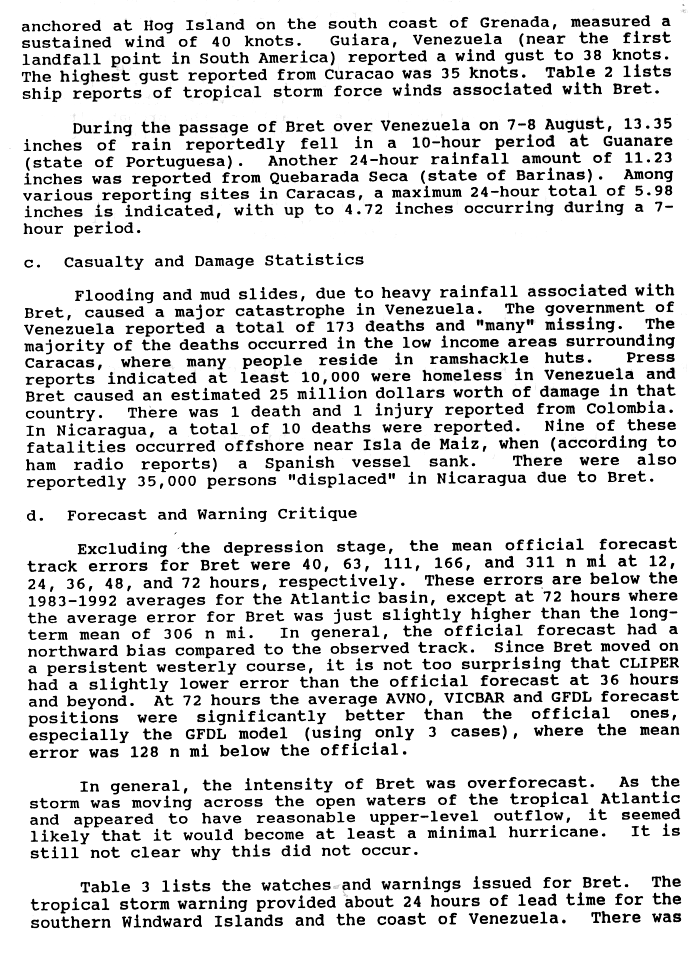

Tropical cyclone
View on GrokipediaDefinition and physical principles
Definition and core characteristics
A tropical cyclone is a warm-core, non-frontal synoptic-scale low-pressure system originating over tropical or subtropical waters, featuring organized deep convection and a closed low-level circulation around a well-defined center.[10] This structure distinguishes it from frontal systems, with maximum sustained winds—measured as a 1-minute average at 10 meters above the surface—reaching at least 17 m/s (34 knots or 39 mph) for classification as a tropical storm or higher, while systems below this threshold are termed tropical depressions.[11] The system forms without significant mid-latitude influences such as strong vertical wind shear or baroclinic instability at genesis, relying instead on self-sustaining processes driven by moisture convergence and latent heat release.[1] Core characteristics include a symmetric, circular wind field with winds increasing toward the center, absent the asymmetry typical of extratropical cyclones.[4] Formation requires sea surface temperatures of at least 26.5°C (79.7°F) over a sufficient depth to supply heat and moisture, enabling the convective organization essential to the cyclone's maintenance.[12] Unlike subtropical cyclones, which exhibit hybrid warm- and cold-core traits with maximum winds often aloft and potential frontal boundaries, tropical cyclones maintain a purely warm core throughout their depth, with the warmest temperatures at the center.[11] This warm-core nature precludes cold-core upper-level features and ensures the system's energy derives primarily from ocean heat fluxes rather than latitudinal temperature gradients.[13] Terminology varies by basin: in the North Atlantic and Northeast Pacific, intense tropical cyclones with sustained winds exceeding 32.7 m/s (64 knots or 74 mph) are called hurricanes; in the Northwest Pacific, equivalent systems are typhoons; elsewhere, the term cyclone is used predominantly, sometimes qualified as severe tropical cyclone based on wind thresholds.[14] These designations reflect regional conventions but do not alter the fundamental meteorological criteria.[15]Thermodynamic and dynamic foundations
Tropical cyclones operate as thermodynamic heat engines, converting thermal energy extracted from the ocean surface into mechanical energy primarily through the release of latent heat during water vapor condensation. Moist air parcels, enriched by evaporation over warm sea surfaces, converge at low levels, ascend in organized updrafts, and cool adiabatically until saturation, at which point condensation occurs, liberating latent heat that warms the surrounding air and sustains buoyancy-driven ascent. This process creates a feedback where the resulting low-level pressure deficit draws in more moist air, amplifying moisture convergence and further condensation, with the eyewall's intense convection serving as the core site of this energy conversion.[16][17] The efficiency of this engine approximates that of a Carnot cycle, bounded by the temperature difference between the sea surface (warm reservoir) and the upper-level outflow (cold reservoir), where heat intake occurs near the surface via enthalpy flux and rejection aloft via radiative cooling and subsidence. In this cycle, surface friction disrupts radial inflow, enabling angular momentum conservation that increases tangential winds, while vertical motion transports heat upward, maintaining the warm core anomaly essential for disequilibrium with the environment. Empirical thresholds underpin sustenance: sea surface temperatures must exceed 26.5 °C (80 °F) to supply adequate evaporative enthalpy, the inflow layer requires relative humidity above 80% to minimize dry air entrainment and support convergence, and vertical wind shear must remain below 10 m/s to preserve symmetric convection against differential advection.[18][19][1] Dynamically, cyclone rotation arises from the Coriolis effect deflecting inflowing air, establishing cyclonic vorticity that, combined with convergence, spins up tangential winds. In the free atmosphere away from friction, these winds achieve gradient balance, wherein the radial pressure gradient force equals the sum of centrifugal and Coriolis forces per unit mass: , with as azimuthal wind speed, radius, the Coriolis parameter, density, and pressure; this quasi-steady state confines intense convection near the center, where imbalances from eyewall heating steepen the gradient and drive intensification. Surface friction introduces inflow and asymmetry, but the overall balance sustains the vortex against dissipation, with eyewall processes dictating peak wind radii through angular momentum redistribution.[20][21]Distinction from other cyclonic systems
Tropical cyclones are characterized by a warm-core structure, where the central pressure minimum is associated with higher temperatures relative to the surrounding environment at all atmospheric levels, enabling sustained convection driven primarily by latent heat release from ocean surfaces warmer than 26.5°C (79.8°F).[11] This contrasts with extratropical cyclones, which feature a cold core aloft—colder air at the center compared to surroundings—and rely on baroclinic instability from horizontal temperature contrasts across frontal boundaries for energy, resulting in asymmetric wind and precipitation distributions with distinct warm and cold sectors.[13] Tropical systems lack such fronts, maintaining a more radially symmetric organization of deep convection around the low-pressure center.[22] Subtropical cyclones exhibit hybrid traits, blending elements of both tropical and extratropical systems: they often form with some closed surface circulation and convection but retain colder temperatures aloft, broader zones of maximum winds displaced outward from the center, and associations with upper-level lows or subtle frontal features over relatively cooler subtropical waters.[13] Unlike fully tropical cyclones, subtropical variants derive partial energy from baroclinicity rather than exclusively from warm sea surface fluxes, and they typically lack a well-defined eye or the uniform warm-core profile extending vertically.[23] Polar lows, small-scale (diameter 200–1,000 km) and short-lived (1–3 days) cyclones forming over ice-free polar seas north of the polar front, can mimic tropical cyclones in satellite imagery with convective "eyes," but they develop in cold-air outbreaks with strong baroclinicity and conditional symmetric instability, not the purely convective, latent-heat-dominated processes of tropical systems.[24] Their energy stems from sensible and latent heat fluxes over open water in subarctic environments, yielding intensities far below those of mature tropical cyclones despite superficial structural analogies.[25] Tropical cyclones operate on synoptic scales (hundreds to thousands of kilometers), precluding overlap with mesoscale phenomena like tornadoes—vertically oriented, cloud-attached vortices (typically 100 m–1 km wide) spawned by thunderstorm updrafts—or dust devils, weak (winds <60 km/h or 37 mph), fair-weather surface thermals rising without organized deep convection.[26] Monsoon depressions, embedded in the intertropical convergence zone or monsoon trough, form as elongated, quasi-stationary lows with asymmetric rainfall bands and weaker rotational symmetry, often evolving from vorticity maxima rather than the self-amplifying warm-core convection defining tropical cyclones; while some intensify into the latter, most remain distinct in lacking persistent central subsidence and radial wind maxima.[27]Formation processes
Essential environmental conditions
Tropical cyclones form only under a confluence of favorable oceanic and atmospheric conditions that enable sustained deep convection and low-level spin-up. These include sea surface temperatures (SSTs) of at least 26.5°C extending to depths of approximately 50–60 meters to supply latent heat through evaporation without rapid cooling from upwelling.[28] [29] High relative humidity in the mid-troposphere, typically above 70% at around 700 hPa, minimizes entrainment of dry air that could suppress convection.[30] Low vertical wind shear, generally less than 10 m/s between 850 hPa and 200 hPa, prevents disruption of the nascent vortex by differential flow aloft.[28] Additionally, a non-zero Coriolis parameter necessitates formation at least 5° latitude poleward of the equator (roughly 300 miles or 480 km), as equatorial regions lack sufficient rotational force for cyclonic organization.[1] Pre-existing low-level relative vorticity, often from disturbances like easterly waves or monsoon troughs, provides an initial rotational seed for aggregation of thunderstorms into a coherent system.[28] Atmospheric instability, characterized by conditional instability in a moist boundary layer overlain by drier mid-levels, promotes upright convection rather than widespread precipitation.[28] Unfavorable conditions inhibit genesis by counteracting these processes; for instance, vertical wind shear exceeding 10–12.5 m/s (20–25 knots) shears apart developing convection, tilting updrafts and favoring downdrafts.[31] Dry mid-level air intrusions reduce buoyancy in updrafts through evaporative cooling, leading to convective suppression and stabilization.[32] Insufficient ocean heat content below the 26.5°C isotherm limits energy transfer, as cooler subsurface waters entrained by mixing cool the surface and starve convection of moisture.[1] These thresholds, derived from statistical analyses of observed genesis events, underscore the rarity of formation even in tropical regions meeting most criteria.[33]Genesis mechanisms and regions
Tropical cyclone genesis commences with the organization of pre-existing disturbances, such as mesoscale vorticity clusters or synoptic-scale waves, where low-level convergence aggregates relative vorticity and moisture, initiating spin-up of a broad circulation. This process escalates as clustered mesoscale convective systems deepen, fostering a protective mid-level vortex that insulates developing convection from surrounding dry air entrainment, thereby enabling persistent vertical mass transport and surface pressure falls to form a tropical depression with sustained winds below 17 m/s.[34][35] In the North Atlantic basin, African easterly waves (AEWs) provide the predominant precursors, propagating westward from the African coast at intervals of 3-4 days, with roughly 50-60 waves per season supplying initial low-level cyclonic vorticity and convective triggers that contribute to 60-85% of subsequent tropical depressions.[36][37] Stronger AEWs often correlate with higher genesis potential due to enhanced barotropic instability and moisture flux, though weaker waves may still develop given favorable downstream sea surface temperatures exceeding 26.5°C.[38][39] Tropical cyclones arise in six primary ocean basins defined by warning centers: the North Atlantic (including Gulf of Mexico and Caribbean), northeast Pacific, northwest Pacific, north Indian Ocean, southwest Indian Ocean, and south Pacific/Australian region. The northwest Pacific basin dominates global genesis frequency, accounting for approximately 30% of all tropical cyclones with an annual average of 25-30 named storms from 1970-2020, followed by the north Indian (10-15%) and other basins at lower rates.[40][41] Genesis exhibits strong seasonality tied to the migration of the Intertropical Convergence Zone (ITCZ), which shifts northward into northern hemisphere subtropics during boreal summer (peaking June-November for Atlantic and Pacific basins) and southward in austral summer (November-April for southern basins), aligning zones of low-level convergence and high potential vorticity with equatorial warm pools conducive to disturbance amplification.[42][43] In the North Atlantic, peak activity aligns with maximum ITCZ latitude around 10°N in August-September, enhancing wave-induced convection over the main development region.[44]Role of warning and monitoring centers
The World Meteorological Organization (WMO) designates Regional Specialized Meteorological Centres (RSMCs) and Tropical Cyclone Warning Centres (TCWCs) to monitor and issue warnings for tropical cyclone genesis and early development across all ocean basins, ensuring coordinated global coverage through its Tropical Cyclone Programme.[45] These centers analyze disturbances in real time, issuing bulletins on location, potential intensity, and formation likelihood based on empirical data integration rather than speculative models alone.[46] For instance, the National Hurricane Center (NHC), serving as RSMC for the North Atlantic and Northeast Pacific, releases Tropical Weather Outlooks every six hours, specifying areas of disturbed weather with assessed chances of genesis into tropical cyclones within 48 to 96 hours.[47] Similarly, the Joint Typhoon Warning Center (JTWC), responsible for the Northwest Pacific, South Pacific, and parts of the Indian Ocean, evaluates tropical disturbances likely to reach significant wind speeds, providing subjective genesis probabilities categorized as low, medium, or high.[48] RSMC Tokyo, operated by the Japan Meteorological Agency, issues advisories for the Northwest Pacific basin, including text, graphical, and XML formats detailing early-stage cyclone positions and movements derived from multi-agency data.[49] RSMC New Delhi, under the India Meteorological Department, handles the North Indian Ocean, disseminating warnings on nascent systems to regional stakeholders.[50] WMO coordination facilitates data sharing among these entities, preventing overlaps and filling gaps in basin-specific monitoring, with RSMCs acting as primary nodes for international dissemination.[51] Central to these operations is the integration of satellite-derived products for genesis detection, such as the NOAA Tropical Cyclone Formation Probability (TCFP) tool, which computes formation odds within 500 km of grid points globally using infrared and microwave imagery to identify convective organization and vorticity.[52] These centers apply objective algorithms alongside subjective analysis of satellite patterns to flag invest areas—regions warranting special observation—enabling early advisories before systems achieve tropical depression status.[53] This data-driven approach prioritizes verifiable signatures like clustered convection over unconfirmed environmental proxies, supporting operational decisions on escalation to full warnings.[54]Internal structure
Primary features: eye, eyewall, and rainbands
The eye constitutes the central region of a tropical cyclone, characterized by light winds typically under 25 km/h and clear skies due to subsidence of dry air that warms and suppresses convection.[4] This subsidence maintains the eye's low pressure and structural integrity, with diameters generally ranging from 10 to 50 km in intense systems, as observed via satellite imagery and aircraft reconnaissance.[55] Radar and satellite data reveal the eye's cloud-free appearance results from descending motion compensating for eyewall updrafts, preserving the cyclone's warm core.[56] Encircling the eye lies the eyewall, an annular band of intense deep convection comprising cumulonimbus towers with rapid updrafts exceeding 10 m/s, where maximum tangential winds occur due to the tight radius of curvature and latent heat release.[57] This heat drives divergent outflow aloft, reinforcing the cyclonic circulation and pressure gradient force that sustains the storm's intensity, as evidenced by in-situ measurements from NOAA WP-3D aircraft showing peak winds confined to this ~10-20 km wide zone.[58] The eyewall's vertical structure, penetrating the tropopause, anchors the cyclone's dynamics by generating potential vorticity through convection.[59] Spiraling outward from the eyewall, rainbands form elongated zones of organized convection that advect moisture inward, contributing to overall precipitation and boundary-layer inflow essential for sustaining the vortex.[60] Satellite observations indicate these bands, often 50-200 km apart, produce asymmetric rainfall patterns, with principal bands demarcating the storm's environmental interface and generating vorticity via front-to-rear flow.[61] Their role in circulation maintenance involves releasing latent heat that propagates inward, potentially initiating secondary convection.[62] Eyewall replacement cycles occur when outer rainbands consolidate into a concentric secondary eyewall, which contracts inward, consuming the primary eyewall's moisture supply and causing temporary intensity fluctuations over 12-36 hours.[63] This process, documented in major cyclones via dual-Doppler radar, alters the radius of maximum wind, with the inner eyewall's dissipation reducing peak winds by up to 20-30% before the new eyewall matures.[64] Such cycles sustain long-term vigor by reorganizing convection, as the larger secondary eyewall enables greater energy extraction from the ocean.[65]Variations in size, shape, and vertical profile
The radius of maximum winds (RMW) in tropical cyclones typically ranges from 10 to 100 km, with smaller values more common in intense systems where intense convection contracts the eyewall, and larger RMW observed in weaker or expansive storms.[66] The outer extent of the circulation, measured by the diameter encompassing gale-force winds, varies widely from about 300 km in compact systems to over 2,000 km in the largest cases, reflecting differences in environmental moisture, vorticity, and ambient angular momentum.[4] These size variations arise primarily from the balance between inflow-driven contraction and outward propagation of convective rings, rather than intensity alone.[67] Tropical cyclones exhibit structural shapes ranging from axisymmetric to highly asymmetric, influenced by vertical wind shear and storm motion. In low-shear environments, storms often develop symmetric, circular forms with concentric eyewall and rainband structures.[68] Higher shear introduces asymmetry, displacing intense convection and the eyewall downshear, while the upshear side features drier, weaker updrafts, leading to elongated or distorted cloud patterns observable in satellite imagery.[69] Annular structures represent a distinct symmetric variant, characterized by a large eye (often exceeding 100 km in diameter) surrounded by a thick, uniform ring of deep convection lacking prominent inner rainbands or an embedded convective center, typically forming through eyewall expansion in favorable conditions.[70] In contrast, typical "embedded" configurations feature a compact eyewall enclosing the low-pressure center amid spiral bands, more prone to replacement cycles.[68] Vertically, the cyclone profile remains upright and aligned in low-shear settings, with the vortex axis nearly vertical through the troposphere, facilitating efficient heat release and intensification.[71] Moderate to strong vertical wind shear (exceeding 10 m/s between 850 and 200 hPa) induces a tilt, displacing the upper-level circulation center leeward relative to the low-level center, often by tens of kilometers, which ventilates mid-levels and suppresses eyewall development.[72] This misalignment increases with shear magnitude, promoting convective asymmetry and potential vortex precession, though partial realignment can occur via downshear reformation of convection.[73] Empirical observations confirm that upright profiles correlate with peak intensity, while persistent tilt signals structural degradation.[69]Intensity dynamics
Factors influencing peak intensity
The maximum potential intensity (MPI) of a tropical cyclone sets the theoretical upper limit on its peak sustained wind speeds, derived from thermodynamic principles that model the storm as a steady-state Carnot heat engine converting ocean heat into kinetic energy. In Emanuel's formulation, MPI depends on sea surface temperature (SST), which supplies enthalpy through evaporation, and the outflow temperature at the tropopause, typically around -70°C (200 K), which caps the efficiency via the ratio (T_s - T_o)/T_o, where T_s and T_o are absolute temperatures. The ventilation-limited MPI wind speed is approximated as V_p ≈ √[(C_k/C_d) × ((T_s - T_o)/T_o) × (h_s - h_o)], with C_k and C_d as exchange coefficients for enthalpy and momentum, and h_s - h_o the specific enthalpy difference between surface and outflow air; higher SSTs, exceeding 26-28°C, yield MPI values up to 80-90 m/s in ideal conditions, though observed peaks rarely surpass 70 m/s due to dissipative losses.[74][75] While surface SST establishes the baseline thermodynamic potential, integrated ocean heat content (OHC) to depths of 100-150 m governs the resilience of that potential against storm-induced cooling, as vertical mixing and upwelling can depress effective SST by 2-5°C within hours under high winds, truncating energy supply if OHC is insufficient. Empirical analyses of cyclones like Hurricane Pam (2015) demonstrate that paths over regions with OHC >100 kJ/cm² sustain higher intensities longer than equivalent SSTs over shallower thermoclines, emphasizing OHC's role in enabling prolonged exposure to warm waters without rapid enthalpy depletion.[76][77] Attainment of near-MPI is further modulated by inhibitory atmospheric conditions, including vertical wind shear, which exceeds 10-12 m/s in many environments and induces vortex tilt, asymmetric downdrafts, and core ventilation that erode eyewall symmetry and convection. Dry mid-level air entrainment, often from Saharan dust layers or subtropical highs, stabilizes the troposphere via evaporative cooling upon mixing, suppressing updrafts when intruding within 2-3 times the radius of maximum winds and reducing peak intensity by 10-20% in simulations. These factors collectively cap observed peaks below theoretical MPI, with empirical regressions confirming their dominance over basin-scale variations.[78][79] Negative feedbacks, such as intensified surface winds accelerating ocean cooling through enhanced upwelling (rates up to 1-2°C/h) and barrier layer disruption, impose duration limits on peak phases, typically confining them to 12-48 hours before enthalpy disequilibrium forces decline, even in favorable thermodynamics.[80]Rapid intensification processes
Rapid intensification in tropical cyclones is defined as an increase of at least 30 knots in maximum sustained winds over a 24-hour period.[57] This episodic strengthening contrasts with gradual intensification and is empirically linked to transient environmental "windows" of favorable conditions, typically lasting 12-48 hours, during which the storm's potential intensity is not fully realized until these align.[81] Key triggers include vertical wind shear below 10-15 knots, which minimizes disruption to the vortex alignment, and ocean heat content exceeding 100 kJ/cm², providing sustained energy transfer without significant cooling feedback from upwelling. High sea surface temperatures above 28.5°C and deep warm layers amplify latent heat release, fueling convection, while mid-level relative humidity above 70% suppresses entrainment of dry air that could inhibit updrafts.[83] The diurnal cycle often peaks RI events in predawn hours, as nocturnal radiative cooling stabilizes the boundary layer, enhancing moisture convergence and thunderstorm organization near the radius of maximum winds (RMW).[84] Internal processes involve axisymmetric deep convection wrapping around a contracting RMW, often 20-50 km in diameter during onset, which concentrates angular momentum and lowers central pressure via intensified inflow-outflow coupling.[85] Eyewall replacement cycles, if incomplete or delayed, can fail to disrupt this symmetry, allowing sustained vorticity amplification rather than temporary weakening from outer eyewall formation.[86] Satellite observations reveal signatures such as cooling infrared cloud-top brightness temperatures (dropping 10-20 K), indicating vigorous overshooting updrafts, and a persistent ring of cold clouds encircling a warming eye, signaling RMW contraction.[87] Microwave imagery may show enhanced inner-core precipitation asymmetry resolving into concentricity.[88] Globally, 10-20% of tropical cyclones undergo RI, with higher proportions in basins like the western North Pacific; recent data show no unambiguous long-term increase in frequency, amid natural variability and observational challenges.[83]Dissipation mechanisms
Tropical cyclones weaken and dissipate primarily through interaction with landmasses or unfavorable oceanic conditions, which disrupt the energy supply from warm sea surface temperatures (SSTs) and latent heat release. Upon landfall, surface friction from continental terrain significantly increases drag on the near-surface winds, disrupting the radial inflow of moist air into the eyewall and reducing the transport of angular momentum upward to sustain the vortex. This frictional effect broadens the wind field and erodes the low-level circulation, while the shift from oceanic moisture to drier land surfaces diminishes evaporation and convective available potential energy, leading to rapid decay of organized thunderstorms essential for maintaining the pressure gradient. For instance, historical observations show that major hurricanes like Hurricane Camille in 1969 lost over 50% of their maximum sustained winds within 12 hours after making landfall along the U.S. Gulf Coast, primarily due to these frictional and moisture deficits.[89][1] Over the open ocean, dissipation arises from translation over cooler waters or self-induced oceanic feedbacks that lower local SSTs below the threshold of approximately 26.5°C needed for convection. When a cyclone moves poleward or into regions with deeper thermoclines but lower surface warmth, reduced evaporation limits latent heat flux, starving the eyewall of fuel and causing convection to weaken. Additionally, the storm's own winds drive vertical mixing and Ekman pumping, entraining colder subsurface water to the surface and creating a cold wake that can drop SSTs by 2–5°C in the core region, particularly for slow-moving or looping systems where the wake persists beneath the circulation. This feedback loop accelerates intensity loss, as evidenced by numerical models simulating Hurricane Fabian in 2003, which showed a 20–30% wind speed reduction attributable to such upwelling-induced cooling over the western Atlantic.[90][91] Internal structural changes further contribute to dissipation, including eyewall decay and eye fill-in, where diminishing convection allows the central pressure to rise and the eye radius to expand, weakening the tangential winds via reduced pressure gradients. In cold wakes or post-landfall environments, the collapse of deep moist convection exposes the system to dry air entrainment, suppressing updrafts and leading to fragmentation of rainbands. Empirical data from airborne observations indicate that during weakening phases, eyewall replacement cycles often fail to complete, resulting in irreversible convection decay rather than reorganization.[4]Movement and evolution
Steering mechanisms and environmental influences
The movement of tropical cyclones is primarily determined by the large-scale environmental steering flow, particularly the deep-layer mean winds averaged through the troposphere from approximately 850 hPa to 200 hPa.[92] Stronger, more vertically coherent storms are steered by these deeper layer winds, which encapsulate the influence of upper-level troughs, ridges, and jet streams on the overall track.[93] Empirical analyses of historical track composites confirm that deviations from this steering flow are minimal for intense cyclones, with paths closely following the mean flow vectors derived from reanalysis data.[94] A dominant feature in steering is the subtropical ridge, a semi-permanent high-pressure system that often dictates recurvature patterns. Cyclones forming equatorward of a strong ridge axis typically track westward within the trade winds, while weakening ridges or approaching upper troughs can induce poleward deflection and recurvature into mid-latitudes.[93] For instance, in the Atlantic basin, the Bermuda-Azores High frequently anchors steering, channeling storms initially westward before potential northward turns as the ridge amplifies or shifts.[95] An additional influence is beta drift, arising from the latitudinal gradient in planetary vorticity (the beta effect), which causes a poleward and slightly westward deflection relative to the pure steering flow. This effect is most pronounced for smaller or weaker storms embedded in uniform flow south of the subtropical ridge, resulting in a net northwestward component at speeds of a few knots.[96] The magnitude of beta drift decreases with storm size and intensity, as larger vortices experience less relative influence from the Coriolis parameter gradient.[97] Tropical cyclone forward speeds generally range from 10 to 20 km/h, modulated by the strength of the steering currents; however, motion slows markedly near steering nulls, such as col points or saddle regions in the flow where deep-layer winds weaken to near zero.[98] In these areas of confluence or deformation, track uncertainty increases, as small perturbations in initial position can lead to divergent paths under varying environmental flows.[94]Intrastorm interactions and beta drift
Beta drift constitutes a fundamental self-induced motion in tropical cyclones, stemming from the meridional gradient in the Coriolis parameter, known as the β-effect. This planetary vorticity gradient interacts with the cyclone's vortex, generating asymmetric flow that propels the storm poleward and westward relative to the prevailing environmental steering currents. In the [Northern Hemisphere](/page/Northern Hemisphere), for westward-moving cyclones, this manifests as a deviation to the right of the steering flow, typically northwestward at speeds of several knots, with the magnitude scaling with vortex intensity and radial extent.[99][100][97] In idealized models of isolated vortices, beta advection produces characteristic track curvatures, deviating from pure steering due to the cyclone's ability to advect planetary vorticity gradients, thereby inducing a propagating dipole-like asymmetry. This dynamical process underscores the cyclone's partial autonomy from large-scale flows, with quantitative simulations revealing drift velocities proportional to β times the product of maximum tangential wind and radius of maximum wind.[101] Pairwise intrastorm interactions occur when multiple tropical cyclones approach within roughly 900 km, triggering the Fujiwhara effect, where reciprocal vorticity induction causes the systems to orbit their shared center of mass in a counterclockwise manner in the Northern Hemisphere. This mutual attraction alters individual tracks, often curving them toward one another, and can culminate in merger if separations diminish sufficiently.[102][103][104] In binary configurations, the dominant cyclone imposes vertical wind shear on its counterpart via differential outflow interactions, potentially weakening or disrupting the weaker system, while three-dimensional effects amplify shear magnitudes beyond symmetric vortex approximations. Merger outcomes depend on initial separation, relative strengths, and ambient conditions, with barotropic models classifying interactions into elastic scattering, partial merger, or complete fusion based on vorticity ratios and distances.[105][106]Transition to extratropical systems
Extratropical transition occurs when a tropical cyclone propagates poleward into a baroclinic environment characterized by strong horizontal temperature gradients, reduced sea surface temperatures, and increased vertical wind shear, leading to a gradual loss of its symmetric, warm-core structure and reliance on latent heat release for sustenance.[107] This process typically unfolds over several days as the cyclone interacts with midlatitude jet streams and frontal boundaries, resulting in an asymmetric distribution of convection displaced from the center and the development of a cold-core upper-level structure.[108] The transition is empirically identified by thresholds such as the cyclone reaching latitudes poleward of 30° where baroclinicity intensifies, often marked by a deepening of the central pressure due to external dynamical forcing rather than internal convective organization.[109] During the onset phase, the cyclone's radius of maximum winds expands, and rainfall becomes increasingly organized along frontal bands rather than spiral rainbands, reflecting a shift in energy sources from diabatic heating via condensation to baroclinic instability driven by geostrophic temperature advection.[110] Completion of transition is evidenced by the cyclone acquiring extratropical traits, such as a tilted trough axis and separation of the low-level circulation from upper-level divergence, though hybrid warm-secluded structures can persist temporarily.[111] In the North Atlantic basin, approximately 46% of all tropical cyclones since 1950 have undergone this evolution, with rates for hurricanes nearing 50% or higher in recent decades due to their greater resilience in cooler waters.[112][113] Post-transition remnants often retain significant intensity as extratropical or hybrid systems, capable of producing widespread heavy precipitation, gale-force winds, and downstream cyclogenesis that amplifies impacts over continental interiors far removed from tropical coasts.[114] For instance, transitioned cyclones can reintensify via baroclinic processes, posing hazards akin to or exceeding those of their tropical phase in midlatitude regions.[115] This end-stage evolution underscores the cyclone's adaptation to environmental forcings, where empirical diagnostics like 500-hPa geopotential height asymmetry exceeding specific thresholds confirm the structural reconfiguration.[109]Classification, naming, and metrics
Intensity scales and assessment methods
The Saffir-Simpson Hurricane Wind Scale classifies tropical cyclones in the Atlantic and eastern North Pacific basins into categories 1 through 5 based on maximum sustained one-minute wind speeds measured at 10 meters above the surface. Category 1 encompasses winds of 119-153 km/h (74-95 mph), Category 2 ranges from 154-177 km/h (96-110 mph), Category 3 from 178-208 km/h (111-129 mph), Category 4 from 209-251 km/h (130-156 mph), and Category 5 exceeds 252 km/h (157 mph).[116] This scale emphasizes potential wind-induced structural damage but excludes considerations of storm surge heights, rainfall totals, or forward speed, which can significantly amplify overall impacts.[117] The Dvorak technique provides a primary method for estimating tropical cyclone intensity via satellite imagery analysis, correlating cloud pattern features—such as curved bands and eye geometry—with empirical intensity indicators known as T-numbers, convertible to wind speeds.[118] Objective variants, including the Advanced Dvorak Technique (ADT), automate this process using geostationary infrared imagery to derive current intensity and short-term changes, though verification against in-situ data reveals systematic biases, particularly underestimating rapid intensification or overestimating in sheared environments.[119] Regional scales adapt similar principles with varying wind averaging periods; the Joint Typhoon Warning Center (JTWC) employs a one-minute sustained wind threshold akin to Saffir-Simpson for western Pacific typhoons, issuing intensity estimates that integrate satellite data with model guidance.[48] Australia's Bureau of Meteorology scale uses ten-minute sustained winds, categorizing systems from Category 1 (gales up to 125 km/h) to Category 5 (over 279 km/h), reflecting local observational standards but complicating direct comparisons due to averaging differences.[120] Aircraft reconnaissance, primarily via NOAA's WP-3D Orion flights equipped with dropsondes, validates remote estimates by deploying GPS-enabled probes that measure vertical profiles of wind, pressure, and temperature, often revealing discrepancies of 10-20% in satellite-derived intensities for non-reconnaissance basins.[121] Dropsondes confirm central pressure minima and radius of maximum winds, enabling recalibrations; for instance, 2010s reanalyses using updated ADT algorithms adjusted historical Atlantic intensities upward by 5-15 knots for select events, addressing early satellite sensor biases and improved pattern recognition.[122] These efforts highlight persistent challenges in reconciling satellite overestimations during weakening phases or underestimations in opaque cloud covers, necessitating ongoing ground-truth integration for reliable post-event best-track databases.[123]Global naming conventions and retirement
Tropical cyclones receive short, pronounceable names from predetermined lists coordinated by the World Meteorological Organization (WMO) through its Tropical Cyclone Programme, facilitating clear communication among meteorological services and the public.[124] Names are assigned by designated Regional Specialized Meteorological Centres (RSMCs) once a system reaches tropical storm intensity, defined as sustained winds exceeding 33 knots (61 km/h).[125] These lists vary by basin to accommodate regional languages and customs, emphasizing cultural neutrality by avoiding offensive or politically charged terms; for example, names must be gender-balanced where applicable and selected through consensus among affected nations.[126] In the North Atlantic and Caribbean basins, six rotating lists of 21 names each are employed, drawn from letters A to W while excluding Q, U, X, Y, and Z to ensure brevity and distinctiveness.[125] The lists alternate male and female names and incorporate English, French, and Spanish equivalents to reflect the linguistic diversity of potentially impacted regions.[126] Similar four-year rotating lists apply in the Eastern North Pacific, while the Western North Pacific uses a fixed roster of 140 names contributed by ESCAP/WMO Typhoon Committee members, assigned sequentially with numerical identifiers (e.g., 0116 for the 116th name).[127] Southern Hemisphere basins, such as the Southwest Indian Ocean, maintain four-year cycles with names proposed by Mauritius and other nations, often in English or French.[124] Lists recycle unless altered by retirement, ensuring predictability while allowing updates for relevance. Retirement occurs when a name becomes associated with a cyclone causing exceptional loss of life, economic damage, or social disruption, as determined post-season by the relevant WMO regional body following requests from affected member states.[126] There are no fixed quantitative thresholds, but decisions weigh fatalities, insured losses exceeding certain benchmarks (e.g., billions of dollars), and long-term recovery impacts; for instance, "Katrina" was retired after the 2005 North Atlantic hurricane inflicted over 1,800 deaths and $125 billion in damages across the United States.[128] Retired names are permanently replaced—often with phonetically similar alternatives—to prevent trivialization of past events and reduce public confusion in warnings.[129] Between 1950 and 2023, over 90 Atlantic names have been retired, with acceleration in recent decades due to rising storm intensities and coastal vulnerabilities.[128] Prior to 2021, when seasonal name lists were exhausted, auxiliary Greek-letter designations (e.g., Alpha, Beta) supplemented the main lists, a practice initiated in the Atlantic basin in 2005.[129] The WMO discontinued this in March 2021, citing media sensationalism, public misperception of severity (e.g., equating alphabetical order with intensity), and complications in retirement, as Greek names could not be systematically removed without depleting historical records. Instead, basins now maintain backup lists of pre-approved names for exhaustion scenarios, ensuring continued neutrality and operational efficiency; notable 2020 Greek-named storms like Eta and Iota were exceptionally retired despite the system's phase-out. This shift underscores the WMO's prioritization of hazard communication clarity over ad hoc extensions.[130]Comparison with subtropical and hybrid cyclones
Subtropical cyclones differ from tropical cyclones primarily in their thermal structure and energy sources, featuring a hybrid profile with cooler air aloft linked to upper-level lows, in contrast to the uniformly warm core of tropical systems that sustains convection through latent heat release over warm ocean surfaces. This results in asymmetrical wind and cloud distributions, with maximum sustained winds typically displaced outward from the center—often by 100-200 nautical miles—rather than concentrated near the eye or eyewall as in tropical cyclones. Subtropical systems derive energy from both surface sensible and latent heat fluxes, akin to tropical cyclones, and baroclinic instability from horizontal temperature gradients, leading to broader, less intense wind fields without well-defined fronts but retaining some mid-latitude characteristics.[131][132][133] Genesis of subtropical cyclones often involves extratropical lows or upper-level disturbances migrating equatorward over marginally warm subtropical waters (sea surface temperatures around 23-26°C), where they shed frontal boundaries but fail to fully warm the core due to insufficient insulation or vertical wind shear. Tropical cyclones, by definition, require sea surface temperatures exceeding 26.5°C, low shear, and sufficient Coriolis force, fostering symmetric, self-amplifying convection without reliance on baroclinicity. Hybrid cyclones, a term overlapping with subtropical in operational contexts like those used by the National Hurricane Center, describe systems blending these traits—such as partial warm-core seclusion within a larger baroclinic circulation—exhibiting mixed dynamics where tropical-like intensification competes with extratropical decay processes.[134][135][136] Empirical observations show subtropical cyclones are less frequent than tropical ones, forming sporadically outside peak tropical seasons (e.g., 1-3 per year in the Atlantic basin versus 10-15 tropical systems), with potential for transition to full tropical status under favorable conditions like core warming and convection centralization. For instance, the subtropical depression designated as Ana in April 2003 underwent tropical transition after sea surface temperatures rose above 26°C and wind shear diminished, reorganizing into Tropical Storm Ana with symmetric structure and peak winds near the center by May 1. Such upgrades highlight causal pathways where subtropical hybrids evolve tropically if baroclinic influences wane, though many dissipate without intensification due to cooler cores limiting thunderstorm outbreaks. Frequency trends remain debated, with reanalysis data indicating no robust increase in subtropical occurrences amid natural variability, contrasting claims of enhanced hybrid activity from warmer margins.[134][135]Observation and forecasting
Observational technologies and data sources
Geostationary satellites, such as NOAA's GOES series, deliver continuous visible and infrared imagery of tropical cyclones, enabling tracking of cloud patterns and structural evolution over the Atlantic and eastern Pacific basins.[137] The GOES-R series, commencing with GOES-16 launched on November 19, 2016, features the Advanced Baseline Imager (ABI) that captures full-disk images every 15 minutes and targeted storm sectors as frequently as every 30 seconds, with spatial resolutions reaching 0.5 km in the visible band.[137] Polar-orbiting satellites complement this by offering higher-resolution microwave imagery for inner-core precipitation and eyewall features, though with less frequent passes limited to twice-daily over a given location.[138] Scatterometers aboard satellites like the MetOp series' ASCAT instrument measure ocean surface wind vectors through radar backscatter, providing speeds and directions with resolutions around 25 km, particularly valuable for outer wind fields where rain interference is minimal.[139] Predecessor missions such as QuikSCAT, operational from June 19, 1999, to November 2009, similarly derived 10-meter winds over ice-free oceans but suffered degradation in heavy precipitation, limiting utility near cyclone centers.[140] These remote sensing tools infer cyclone intensity via pattern recognition techniques like Dvorak analysis, yet face resolution constraints that preclude direct measurement of maximum sustained winds below 25-50 km scales.[138] Aircraft reconnaissance, conducted by NOAA's WP-3D Orion platforms known as Hurricane Hunters, penetrates tropical cyclones to deploy GPS dropsondes—parachute-borne sensors that profile atmospheric temperature, humidity, pressure, and winds from flight level to the surface.[141] Dropsondes have been utilized since 1996, with over 2,500 released during the record-breaking 2005 Atlantic season alone, yielding high-vertical-resolution data essential for validating satellite estimates.[142][143] Airborne Doppler radars, such as those mounted on the WP-3D, map inner-core kinematics with resolutions down to 1-2 km, circumventing ground-based radar limitations like signal attenuation in intense precipitation and range constraints beyond 200-300 km from coastal sites.[138][144] In-situ observations from ocean buoys and voluntary observing ships furnish direct surface pressure, wind, and wave measurements for cyclone validation, but their sparse distribution—often fewer than 10 platforms within 500 km of a storm center—yields incomplete coverage over vast ocean expanses.[145] Drifting buoys from programs like the Data Buoy Cooperation Panel provide opportunistic data, yet systematic gaps persist, particularly in the data-sparse tropical Pacific and Atlantic, where ship reports serve as the primary in-situ source.[146] These ground-truth datasets, though limited, anchor remote observations and highlight the challenges in resolving fine-scale cyclone features amid observational sparsity.[147]Numerical modeling and prediction techniques
Numerical weather prediction (NWP) models form the core of tropical cyclone forecasting by solving governing equations of atmospheric dynamics and thermodynamics on discretized grids to prognose storm track, intensity, and structure. Global models such as the Global Forecast System (GFS) operated by the National Weather Service and the European Centre for Medium-Range Weather Forecasts (ECMWF) Integrated Forecasting System excel in track predictions due to their broad coverage and representation of large-scale steering flows, with ECMWF often outperforming GFS in medium-range accuracy.[148][149] Regional models like the Hurricane Weather Research and Forecasting (HWRF) model, developed by NOAA, provide higher-resolution simulations tailored to tropical cyclones, incorporating nested grids around the storm core for better inner-core dynamics and intensity forecasts.[150] These models rely heavily on physics parameterizations for sub-grid processes, particularly cumulus convection schemes that approximate moist updrafts and downdrafts essential to cyclone energization, as explicit resolution of convective scales remains computationally prohibitive even at kilometer-scale grids.[150] Track forecast errors have improved markedly, with 72-hour errors averaging 100-200 km in recent Atlantic seasons, reflecting advances in data assimilation and model resolution, though variability persists due to chaotic atmospheric interactions.[151] Intensity errors, however, remain larger and more challenging, with models systematically underpredicting rapid intensification (RI)—defined as a 30 kt increase in maximum winds within 24 hours—owing to inadequate representation of vortex alignment, eyewall replacement cycles, and ocean coupling.[152] Ensemble prediction systems, such as those from ECMWF and GFS, generate multiple realizations by perturbing initial conditions and physics parameters to quantify uncertainty, enabling probabilistic outputs like track spread and RI probabilities that enhance decision-making over deterministic runs.[148] Statistical-dynamical hybrid techniques blend NWP outputs with empirical relationships derived from historical data, exemplified by the Statistical Hurricane Intensity Prediction Scheme (SHIPS), which incorporates environmental predictors like vertical wind shear and ocean heat content alongside model fields to refine intensity guidance and outperform pure dynamical forecasts in RI scenarios.[153] Post-2020 integrations of machine learning (ML) have further augmented these methods, with algorithms trained on reanalysis datasets achieving up to 87% improvement in RI forecasts at short leads by identifying nonlinear patterns in satellite imagery, model fields, and thermodynamic profiles that traditional parameterizations miss.[154][152] Verification metrics, including absolute errors and skill scores relative to climatology, underscore ensembles' superiority in capturing spread, though persistent biases in convection and air-sea interactions limit overall fidelity.[149]Advances, limitations, and verification metrics
Track forecast errors for tropical cyclones have decreased substantially since the 1990s, with Atlantic basin errors reduced by approximately 75% compared to 1990 levels due to enhancements in observational data assimilation and numerical modeling.[155] Overall, track errors have halved since the mid-1990s and declined by two-thirds since the 1970s across global models.[156] Intensity forecast errors have similarly improved by about 50% in the Atlantic since the initiation of targeted research programs like the Hurricane Forecast Improvement Project in the early 2000s.[157] Contributions from specific observational advances include GPS dropsondes, which have reduced typhoon track forecast errors by 20-40% in targeted numerical weather prediction models through high-resolution in-situ profiles of thermodynamics and winds within storm cores.[158] CubeSat constellations, such as NASA's TROPICS mission launched in 2023, provide frequent microwave soundings that enhance forecasts of cyclone intensity, track, and structure by improving assimilation of temperature, humidity, and precipitation data in data-sparse regions.[159] Forecasts of rapid intensification—defined as a 30 kt increase in maximum winds over 24 hours—have gained 20-25% in skill relative to 2015-2017 baselines, attributable to refined statistical-dynamical indices and machine learning integrations.[160] Fundamental limitations persist due to the chaotic nature of atmospheric dynamics, where small initial perturbations amplify, imposing inherent predictability barriers; for instance, tropical cyclone intensity exhibits low-dimensional chaos with wind forecast limits of 3-9 hours under idealized conditions.[161] Model resolution remains a constraint, as current global systems often require convection-permitting grids (sub-3 km spacing) to resolve inner-core processes accurately, yet many operational forecasts operate at coarser scales, leading to underrepresentation of convective bursts driving intensification.[162] Error growth in intensity predictions is predominantly sourced from initial condition uncertainties rather than large-scale environmental factors.[163] Verification of tropical cyclone forecasts employs metrics such as mean absolute error for track and intensity, alongside probabilistic scores like the Brier score for assessing reliability in predicting hazards such as wind speeds exceeding thresholds.[164] The Brier skill score, derived from the Brier score relative to climatology, quantifies improvements in ensemble-based strike probability forecasts, often revealing gains in resolution and calibration for lead times up to 120 hours.[165] Global disparities are evident, with North Indian Ocean basins experiencing higher forecast errors and lower skill due to sparser observational networks compared to the Atlantic or western Pacific, exacerbating vulnerabilities despite comprising only 6% of global cyclone activity.[166][167]Climatic interactions and trends
Influence of natural variability (ENSO, AMO, etc.)
The El Niño-Southern Oscillation (ENSO) exerts a primary influence on tropical cyclone activity through modulation of atmospheric conditions, particularly vertical wind shear and mid-tropospheric humidity in key development regions. During El Niño phases, increased easterly vertical wind shear across the tropical Atlantic suppresses cyclone formation and intensification by disrupting vortex organization, leading to fewer named storms and hurricanes; empirical analyses of Atlantic basin data from 1950 onward confirm this suppression, with El Niño years averaging 20-30% fewer major hurricanes compared to neutral conditions.[168] Conversely, La Niña phases reduce this shear via weakened subtropical high pressure and enhanced easterly trades, fostering conditions for cyclone genesis and growth; for instance, La Niña events have been linked to heightened activity in the Atlantic Main Development Region, where shear drops below 12 m/s, permitting sustained intensification.[169][170] These effects stem from teleconnected atmospheric responses to Pacific SST anomalies, with causality evidenced by composite analyses showing shear anomalies directly correlating with genesis potential indices. The Atlantic Multidecadal Oscillation (AMO), a 60-80 year cycle in North Atlantic sea surface temperatures, drives multi-decadal shifts in cyclone frequency and intensity through basin-wide warming that lowers static stability and shear while boosting potential intensity. In its warm phase, spanning approximately 1995 to 2020, the AMO has coincided with elevated North Atlantic activity, including a 50-80% increase in major hurricane counts relative to the prior cool phase (1960s-1990s), as warmer SSTs exceeding 28°C expand the area conducive to rapid intensification.[171][172] Empirical indices, such as the Accumulated Cyclone Energy (ACE), reveal peaks during warm AMO periods, attributable to reduced trade wind strength and enhanced moisture influx, though interannual variability like ENSO can overlay these signals.[173] Intraseasonal modes like the Madden-Julian Oscillation (MJO) provide episodic triggers for cyclone genesis by propagating eastward across the tropics, enhancing convective organization and vorticity in favorable phases (e.g., phases 2-3 for Atlantic activity). MJO-active periods increase genesis rates by 20-50% through localized suppression of subsidence and boosts in mid-level humidity, as quantified in 30-60 day oscillation composites from global TC tracks since 1979; however, its influence is regionally variable and subordinate to seasonal mean states.[174][175] Similarly, the Indian Ocean Dipole (IOD) modulates activity in the North Indian Ocean, where positive IOD phases (cooler eastern SSTs) correlate with increased cyclone frequency via strengthened Walker circulation and reduced shear in the Arabian Sea, evidenced by higher TC counts during events like 1997-1998.[176] No single oscillation dominates globally, as empirical correlations with TC metrics (e.g., power dissipation index) vary by basin and require multivariate indices for robust prediction, underscoring the interplay of these forcings without implying unidirectional causality.[177]Empirical observed trends in frequency and intensity
Global tropical cyclone frequency, as recorded in the International Best Track Archive for Climate Stewardship (IBTrACS) dataset spanning multiple decades, has shown no significant long-term increase and in some analyses exhibits a slight decline, with annual global counts averaging around 80-90 storms from the 1970s onward without upward trajectory.[178][179] Observations indicate a roughly 13% decrease in annual global tropical cyclone formation during the 20th century, consistent across reliable tracking records adjusted for observational improvements.[180] Basin-specific variations exist; for instance, North Atlantic hurricane frequency has risen since the 1970s, correlating with the positive phase of the Atlantic Multidecadal Oscillation (AMO), which enhances thermodynamic favorability for storm genesis in that region.[181][182] Regarding intensity, empirical records from homogenized datasets reveal a modest upward shift in the proportion of storms attaining Category 4-5 status on the Saffir-Simpson scale, with global trends approximating 5% per decade over the satellite era (post-1970), though overall power dissipation index metrics show limited change when accounting for shorter-lived weaker storms that may be underrepresented in earlier data.[41][183] This intensification signal is more pronounced in basins with warming sea surface temperatures (SSTs), but global accumulated cyclone energy has remained stable in post-1990 analyses using consistent observational platforms.[41] Tropical cyclone-related rainfall extremes have increased in frequency and magnitude in certain regions, such as the U.S. mainland and western North Pacific, with extreme event rates rising 2-4 mm per decade in summed precipitation metrics, primarily linked to higher local SSTs enhancing moisture availability rather than uniform global patterns.[184][185] These trends hold after adjustments for detection biases, though they vary by basin and do not imply proportional increases in overall storm counts or durations.[186]Anthropogenic climate change attribution and projections
Attributing observed variations in tropical cyclone characteristics to anthropogenic greenhouse gas forcing is hindered by the brevity of reliable global records—reliable satellite-based detection began only in the late 1970s—and the infrequency of these events, which embeds potential signals within substantial natural variability, reducing statistical power for detection.[187] Sea surface temperatures (SSTs), critical for cyclone genesis and intensification, have warmed since the mid-20th century through a combination of anthropogenic influences and natural modes like the Atlantic Multidecadal Oscillation, complicating attribution as spatial patterns of warming influence cyclone activity more than global averages alone.[188] NOAA assessments conclude that no robust, detectable anthropogenic fingerprint has emerged in global or regional tropical cyclone frequency or intensity metrics through 2022, with observational trends remaining consistent with internal variability.[189] Geophysical Fluid Dynamics Laboratory (GFDL) analyses similarly find it premature to attribute increases in Atlantic major hurricane proportions to human-induced warming, given the lack of clear separation from multidecadal natural cycles.[83] Climate model projections, including those from Coupled Model Intercomparison Project phase 6 (CMIP6) ensembles, indicate a likely global decrease in tropical cyclone frequency of 5–30% by the late 21st century under high-emission scenarios, driven by stabilized or reduced favorable genesis conditions like weakened vertical wind shear in some basins.[190] Concurrently, models project a 10–20% rise in the proportion of Category 4–5 storms and modest intensification of peak winds (1–10% for 2°C global warming), alongside slower translation speeds and 10–15% higher rainfall rates from increased atmospheric moisture.[83] World Meteorological Organization expert panels endorse this directional consensus, projecting either fewer or unchanged total cyclone counts globally but amplified hazards from stronger intensities and precipitation.[191] These forecasts, however, exhibit wide inter-model spread due to discrepancies in simulating cyclone-scale processes, thermodynamic efficiency, and large-scale circulation responses, yielding low-to-medium confidence relative to thermodynamic projections like global temperature rise.[192] GFDL and NOAA syntheses emphasize that while physical principles—such as the Clausius-Clapeyron relation linking warming to moisture—support theoretical intensification, the absence of empirically confirmed anthropogenic signals in historical data tempers projection reliability, as models have historically overestimated tropical cyclone frequencies and shown biases in SST pattern simulation.[83] Independent evaluations reveal CMIP6 historical runs often underrepresent observed global frequency declines, attributing them partly to anthropogenic aerosol cooling offsets rather than pure greenhouse forcing, further highlighting attribution uncertainties.[193] Overall, projected shifts remain probabilistic, with basin-specific outcomes varying widely and dependent on emission trajectories, underscoring the dominance of unresolved model physics over definitive causal linkages.[187]Impacts and consequences
Direct meteorological hazards
Tropical cyclones generate direct meteorological hazards primarily through intense winds, storm surge, and heavy rainfall, with secondary phenomena including tornadoes, lightning, and rip currents. These hazards stem from the cyclone's low central pressure, strong radial pressure gradient, and associated wind fields, which drive physical processes like water displacement and atmospheric instability.[194] High winds constitute a core hazard, with maximum sustained surface winds reaching 33 m/s or more in tropical storm strength and exceeding 70 m/s in intense cyclones. Gusts amplify structural loading, often 1.3 to 1.6 times the sustained wind speed at 10 m elevation over open terrain, due to turbulence from surface friction and convective downdrafts. The Holland model relates central pressure deficit to maximum winds via , where is environmental pressure, central pressure, air density, and a shape parameter typically 1-2.5, enabling estimation of wind profiles from observed pressures.[195][196] Storm surge arises from wind-driven water piling against coastlines and the inverted barometer effect of low pressure, elevating sea levels 4-10 m above normal tides in major events. Surge height scales with maximum winds and fetch, with Category 4-5 cyclones producing 4-6 m or higher in shallow coastal zones, as onshore winds sustain Ekman transport onshore. Empirical models incorporate Holland-derived wind fields to simulate surge via shallow-water equations.[197][195] Heavy rainfall, fueled by moisture convergence and upward motion, yields accumulations of 500-1000 mm over 24-72 hours in slow-moving systems, with hourly rates up to 100 mm in eyewall and rainbands. This results from latent heat release sustaining convection, concentrating precipitation radially asymmetric relative to the track.[198] Tornadoes form preferentially in the right-front quadrant (Northern Hemisphere) due to enhanced vertical shear and low-level convergence in outer rainbands, with tropical cyclones spawning dozens per event, mostly EF0-EF1 intensity. Lightning occurs within convective cells but less frequently than in midlatitude storms, while rip currents extend offshore hazards via radial outflows.[199]Human and economic losses by region
Tropical cyclones cause disproportionate human and economic losses across regions, with fatalities concentrated in densely populated, less resilient developing areas of Asia and Africa, while economic damages predominate in wealthier regions like the Americas due to extensive infrastructure and insurance coverage. Globally, over the past 50 years, these storms have resulted in more than 779,000 deaths from 1,945 events, averaging approximately 15,600 fatalities per year, though underreporting is prevalent in low-income nations where data collection is limited by logistical challenges and political factors.[200] Death tolls have declined sharply since the mid-20th century, from annual averages exceeding 10,000 prior to 2000—driven by events like the 1970 Bhola cyclone in Bangladesh, which killed 300,000 to 500,000—to around 500 to 1,000 in recent decades, attributable to improved early warning systems and evacuations rather than reduced storm frequency or intensity.[201] [202] In Asia, which accounts for over 90% of cyclone-related fatalities in recent decades, losses emphasize human costs over economic ones, with surges in India and Bangladesh highlighting vulnerabilities from coastal population density and inadequate preparedness.[203] For instance, the 1991 cyclone in Bangladesh killed about 138,000 people, but subsequent investments in cyclone shelters reduced deaths from Super Cyclone Amphan in 2020 to around 100 despite similar intensity.[204] Economic damages, while significant—estimated at tens of billions annually in insured losses across the region—are often underinsured, exacerbating recovery burdens in countries like the Philippines and China.[205] No upward trend appears in normalized losses when adjusted for population growth and wealth accumulation, indicating development, not climatic shifts, drives raw increases.[206] The Americas, particularly the United States, experience lower mortality—typically dozens to hundreds per major event, as in Hurricane Katrina's 1,800 deaths in 2005—but higher normalized economic impacts from property destruction and insured claims.[207] In the US, normalized hurricane damages since 1900 average about $4.8 billion annually (in 1995 dollars), with no statistically significant increase after adjusting for inflation, population, and wealth, countering claims of escalating climate-driven costs.[206] Total insured losses from North Atlantic hurricanes average $20-30 billion yearly over recent decades, though 2024 exceeded this due to events like Hurricanes Helene and Milton.[208] [209] Africa sees elevated per-event fatalities relative to its cyclone exposure, as evidenced by Cyclone Idai in 2019, which killed over 1,000 across Mozambique, Zimbabwe, and Malawi, underscoring risks from weak infrastructure and remote terrains that hinder timely aid.[210] Economic losses remain modest compared to other regions, often under $1 billion per event, with limited insurance penetration amplifying uncompensated damages in subsistence economies.[211] Across regions, normalized loss trends show stability, with socio-economic factors like urbanization explaining variations more than meteorological intensification.[212]| Region | Primary Loss Type | Example Event Fatalities | Normalized Annual Economic Losses (approx.) |
|---|---|---|---|
| Asia | Human | Bhola 1970: 300,000+ | Tens of billions USD (underinsured) |
| Americas | Economic | Katrina 2005: 1,800 | $4.8B USD (US, 1995 dollars) |
| Africa | Human | Idai 2019: 1,000+ | Under $1B USD per major event |
Environmental and ecological effects
Tropical cyclones induce significant disruptions to coastal ecosystems through high winds, storm surges, and heavy precipitation, leading to widespread erosion and habitat alteration. Storm surges and wave action erode beaches and barrier islands, redistributing sediments and altering coastal geomorphology, as observed in studies of hurricane impacts on U.S. Gulf Coast habitats.[213] Mangrove forests, which buffer coastlines, frequently suffer defoliation, uprooting, and breakage from sustained winds exceeding 33 m/s, with damage severity increasing with forest height and exposure; for instance, the 2017 Atlantic hurricane season caused extensive mangrove mortality across Florida and the Caribbean due to these mechanisms.[214] [215] Coral reefs experience physical breakage from wave forces and reduced salinity from inland freshwater runoff, which induces osmotic stress and partial bleaching, compounded by localized acidification from cyclone-driven upwelling of low-pH waters.[216] [217] Estuarine and wetland systems undergo salinity stratification changes, with prolonged low-salinity plumes from riverine flooding suppressing benthic communities adapted to brackish conditions and mobilizing sediments that smother seagrass beds.[218] These disturbances fragment habitats and temporarily reduce local biodiversity, particularly in exposed intertidal zones. However, cyclones also promote nutrient upwelling in offshore waters by vertical mixing, elevating phytoplankton blooms and primary productivity for weeks post-event, which supports short-term enhancements in fish biomass and fishery yields through increased food availability.[219] [220] Over longer timescales, affected ecosystems demonstrate resilience through natural recovery processes, including vegetative regrowth in mangroves via propagule recruitment and ecological succession in reefs, where fast-growing corals and algae repopulate damaged areas within years to decades. Empirical assessments indicate no sustained net decline in biodiversity across cyclone-prone coastal regions, as disturbance regimes foster adaptive traits and prevent dominance by slow-succession species, maintaining overall ecosystem function despite periodic resets.[221] [222][223]Preparedness, response, and mitigation
Warning systems and public awareness
Tropical cyclone warning systems, such as those operated by the National Hurricane Center (NHC) in the United States, issue tropical storm watches approximately 48 hours before anticipated impacts and hurricane warnings 36 hours in advance, delineating areas potentially affected by sustained winds of 34-63 knots and over 64 knots, respectively.[224] These alerts are accompanied by the "cone of uncertainty," a graphical representation enclosing the probable path of the cyclone's center based on a set of circles sized according to historical forecast errors at 12-, 24-, 48-, 72-, and 120-hour intervals, with the center expected to remain within the cone about two-thirds of the time.[225] The cone emphasizes track uncertainty rather than wind field extent, prompting public focus on official watches and warnings over the graphic itself.[226] Empirical improvements in track forecasting have reduced average errors substantially, enabling more precise warnings; for instance, NHC Atlantic 24-hour track errors declined from approximately 140 nautical miles in 1970 to about 45 nautical miles in 2022, with similar gains for longer lead times up to 120 hours.[227][228] Potential tropical cyclone advisories, introduced to address pre-formation threats, have added an average of 18-21 hours of lead time for verified warnings compared to traditional issuance criteria.[229] Despite these advances, NHC has not formally extended standard watch and warning lead times since 2010, citing the need for further assessment of forecast skill integration.[230] Post-2010 dissemination enhancements include Wireless Emergency Alerts (WEA) via SMS and cell broadcasts, activated for hurricane warnings starting in 2012 to reach mobile users without opt-in, supplementing traditional broadcasts and apps like FEMA's for shelter location and real-time updates.[231][232] Public evacuation compliance in U.S. hurricanes averages around 66%, rising with storm intensity and prior experience, though rates vary by event—such as lower figures during Hurricane Sandy (about 10% under mandatory orders in some analyses)—and are influenced by factors like perceived risk and household resources.[233][234] Awareness campaigns and education efforts correlate with higher compliance by countering complacency, yet repeated false alarms—where warnings are issued but impacts do not materialize—erode trust in issuing agencies, reducing future protective actions via a "cry wolf" effect observed in surveys linking false alarms to diminished intentions to heed alerts.[235][236]Infrastructure resilience and policy measures
Building codes in hurricane-prone regions emphasize wind-resistant designs to minimize structural failure. The American Society of Civil Engineers (ASCE) 7-22 standard updates wind load provisions, including revised wind speed maps for hurricane areas based on refined probabilistic models, which inform minimum design loads for roofs, walls, and components to withstand gusts up to specified velocities.[237] In high-risk coastal states like Florida, post-1992 code enhancements mandate features such as strapped roofs, impact-resistant glazing, and reinforced connections, resulting in newer structures experiencing substantially less damage during intense storms compared to pre-code buildings.[238] [239] These measures have empirically averted over $1 billion in annual losses across more than one million structures by reducing vulnerability to wind and debris impacts.[239] For storm surge mitigation, elevation standards require habitable structures to be raised above the base flood elevation (BFE), which incorporates wave setup and runup effects beyond stillwater levels.[240] Local ordinances often add freeboard—1 to 2 feet above BFE—to account for uncertainty in surge projections, with coastal high-hazard areas (e.g., FEMA Zone VE) demanding pile foundations or breakaway walls to allow floodwaters to pass underneath without compromising stability.[241] Empirical assessments confirm that elevated designs significantly lower flood-induced losses, as water forces diminish exponentially with height above surge levels.[242] Policy measures include zoning restrictions that prohibit or limit development in floodplains and surge-prone zones, such as density caps on residential builds and bans on critical facilities like hospitals in high-risk areas, to prevent exposure amplification over time.[243] Reinsurance mechanisms enable governments and insurers to transfer catastrophic risks, functioning as a financial buffer that stabilizes premiums and encourages private investment in hardening by pooling losses from rare, high-severity events.[244] Cost-benefit analyses of these interventions consistently demonstrate positive returns; for instance, $1 invested in resilient infrastructure yields $4 to $7 in avoided repair and downtime costs, particularly in recurrent-threat zones where cumulative exposure justifies upfront expenditures.[245] [246] Internationally, the Sendai Framework for Disaster Risk Reduction (2015–2030) promotes resilient infrastructure through priorities like enhanced governance and risk-informed investments, advocating principles such as robust design, redundancy, and adaptive capacity to curb direct economic damages from cyclones.[247] [248] Adoption varies, with developed nations integrating these into national standards more effectively than in lower-income regions, where resource constraints hinder uniform enforcement despite framework endorsements.[249]Post-event recovery and adaptation strategies
Post-disaster recovery from tropical cyclones involves coordinated efforts by governments, insurers, and communities to restore infrastructure, housing, and economies, often spanning 1 to 5 years depending on storm severity and regional resources. For instance, analysis of Hurricanes Ike (2008), Katrina (2005), and Sandy (2012) indicates an average primary recovery period of 14 months for rebuilding homes and basic services, though full economic and population stabilization can extend beyond 2 years in severely affected areas.[250] Federal agencies like FEMA provide individual assistance for uninsured losses, including temporary housing and home repairs, with programs typically concluding after 18 months, after which communities rely on state and local funding for prolonged efforts.[251] Insurance claims play a critical role, covering wind and property damage, but delays are common; following Hurricane Michael (2018), one in six claims remained unresolved one year post-event, hindering household financial recovery.[252] Adaptation strategies implemented during recovery aim to mitigate future risks through structural changes, with empirical evidence highlighting trade-offs between hard infrastructure (e.g., seawalls, levees) and nature-based solutions (e.g., wetland restoration). Hard defenses, such as the levees protecting New Orleans during Hurricane Katrina, failed catastrophically in 2005 due to overtopping, design flaws, and soil subsidence, flooding 80% of the city and causing over 1,800 deaths, underscoring how engineered systems can underestimate hydrodynamic forces from storm surges.[253] [254] In contrast, nature-based approaches, like marsh restoration, have demonstrated measurable reductions in wave energy and erosion during hurricanes, with studies showing they can lower coastal structure repair costs by absorbing up to 50% of surge impacts in some scenarios.[255] Homeowner surveys post-storms reveal perceptions that bulkheads offer superior erosion protection over natural shorelines, yet long-term data indicate hybrid systems—combining vegetation buffers with barriers—enhance durability while reducing maintenance expenses.[256] Effectiveness of adaptations is gauged by metrics such as reduced flood recurrence risk, often achieved through elevating structures above base flood levels; post-Katrina rebuilds in elevated zones in Louisiana parishes correlated with 2.5 to 4 times faster household recovery compared to ground-level repairs reliant on aid alone.[257] Learning loops from events like Katrina have prompted shifts toward resilient zoning, with empirical tracking showing decreased property damage ratios in retrofitted areas during subsequent storms, though subsidence and sea-level rise continue to challenge static hard infrastructure efficacy.[258] Overall, recovery efficacy hinges on integrating empirical post-event data into designs, prioritizing elevation and flexible ecosystems over rigid barriers to address causal drivers like surge height and land subsidence.[259]Historical and extraterrestrial contexts
Evolution of scientific understanding
Scientific investigations into tropical cyclones began in the early 19th century, drawing on ship logs and land-based observations to discern their circulatory structure. In 1831, William C. Redfield examined tree damage from a gale in Connecticut, inferring counterclockwise rotation in the Northern Hemisphere based on divergent wind patterns and debris alignment.[260] William Reid further advanced this in the 1840s by compiling ship captain reports from Caribbean hurricanes, confirming low central pressures, spiral wind inflows, and progressive motion, which refuted linear storm models.[261] These empirical analyses established cyclones as large-scale vortices rather than mere wind surges, though causal mechanisms remained speculative without vertical atmospheric data.[260] By the late 19th century, systematic tracking emerged through national weather services. Cleveland Abbe, as chief of the U.S. Signal Service from 1871, promoted barometric and telegraphic networks for real-time storm warnings, enabling path predictions based on pressure gradients and historical analogs.[262] Early 20th-century progress incorporated upper-air soundings; rawinsonde launches in the 1940s revealed vertical shear's inhibiting role and conditional instability fueling ascent. Gordon Dunn and Herbert Riehl, in the 1940s, identified easterly waves in trade winds as precursors, with Riehl's 1945 analysis linking 10% of such disturbances to cyclone genesis via vorticity aggregation.[263] Post-World War II aircraft reconnaissance provided direct eyewall measurements, quantifying radial pressure drops exceeding 100 hPa.[264] The satellite era, commencing with TIROS-1 in 1960, transformed remote sensing by visualizing cloud patterns and eye formation globally, supplanting sparse ship reports.[265] Numerical modeling followed; Vikram Ooyama's 1969 simulation replicated axisymmetric intensification from cumulus convection, validating thermodynamic feedbacks.[260] Late 20th-century theories, such as Charney-Eliassen's 1964 cooperative intensity model, integrated angular momentum transport by organized convection.[16] Into the 21st century, ensemble forecasting systems, operationalized in the 1990s and refined post-2000, incorporated probabilistic track and intensity spreads from multiple model initializations, reducing deterministic biases.[266] Rapid intensification (RI) research accelerated in the 2000s, with Hurricane Research Division studies identifying environmental triggers like low shear and high ocean heat content, alongside inner-core vortex Rossby waves for convective organization.[266] These advances shifted from descriptive empiricism to predictive causal models, emphasizing stochastic convection and ocean-atmosphere coupling.[264]Notable historical developments and records
Super Typhoon Tip in 1979 holds the record for the largest tropical cyclone observed, with a diameter of 2,220 km (1,380 mi) across its one-minute wind field.[267] It also achieved a minimum central pressure of 870 hPa, the lowest reliably measured for any tropical cyclone.[268] The storm persisted for approximately 20 days from October 4 to October 24, underscoring extremes in both size and duration among documented systems.[269] Hurricane Patricia in 2015 set records for the Western Hemisphere, reaching a minimum pressure of 872 hPa and sustained winds of 185 knots (345 km/h), with an unprecedented 24-hour pressure drop of over 100 hPa.[270] This rapid intensification highlighted limits in forecasting extreme events despite advances in reconnaissance.[271] The U.S. Weather Bureau initiated systematic naming of Atlantic tropical cyclones in 1953 using female names to streamline communication and warnings.[129] This practice expanded globally under the World Meteorological Organization, replacing latitude-longitude designations and reducing errors in public dissemination. The 2005 Atlantic hurricane season, featuring record activity including Hurricane Katrina, sparked debates on trends in intense cyclones. Webster et al. reported a greater than 50% increase in category 4 and 5 storms since the 1970s, attributing it partly to warming oceans.[272] However, subsequent reanalysis by Klotzbach and Landsea found the apparent rise insignificant, with a small downward trend in frequency and an upward trend in proportion largely explained by enhanced satellite detection rather than fundamental shifts in intensity.[273]| Record Category | Cyclone | Year | Value |
|---|---|---|---|
| Lowest central pressure (global) | Typhoon Tip | 1979 | 870 hPa[268] |
| Largest diameter | Typhoon Tip | 1979 | 2,220 km[267] |
| Strongest winds (Western Hemisphere) | Hurricane Patricia | 2015 | 185 kt[270] |
Tropical cyclones on other planets
NASA's Cassini spacecraft observed persistent polar vortices on Saturn, including a massive cyclone at the south pole with winds exceeding 550 km/h and structural similarities to terrestrial hurricanes, such as a central eye-like feature spanning approximately 2,000 km.[276] These features arise from baroclinic instability and planetary rotation rather than warm-surface convection characteristic of tropical cyclones.[277] A comparable north polar cyclone, embedded within the hexagon wave pattern, exhibits sustained high-speed rotation driven by similar dynamical processes.[278] On Saturn's moon Titan, Cassini detected long-lived polar vortices, notably a south polar cloud vortex composed of frozen hydrogen cyanide particles at temperatures around 150 K, persisting through seasonal shifts in the hazy nitrogen-methane atmosphere.[279] These vortices display confined circulation akin to Earth's polar stratospheric clouds but lack the latent heat release from ocean evaporation central to tropical cyclone intensification; theoretical models suggest potential for methane-driven analogs over Titan's polar lakes during summer, though unobserved empirically.[280] Jupiter's Great Red Spot constitutes an anticyclonic storm roughly 16,000 km wide, with counterclockwise winds reaching 430 km/h, maintained for over 350 years through interaction with zonal jet streams rather than tropical moisture convergence.[281] Unlike low-pressure tropical systems, it represents a high-pressure regime sustained by internal heat fluxes and shear instabilities, precluding direct analogy to Earth-origin cyclones.[282] Direct detections of cyclone-like activity extend to exoplanets, where Hubble Space Telescope spectroscopy of WASP-121b, a tidally locked hot Jupiter orbiting 880 light-years away, revealed massive equatorial cyclones forming and dissipating over three years due to day-night temperature gradients exceeding 1,000 K.[283] Such dynamics highlight convective analogies but diverge from tropical cyclone prerequisites like surface evaporation and Coriolis forcing over habitable zones; models predict tropical-like storms possible on tidally locked terrestrial exoplanets with 8–10 day rotations, yet empirical confirmation remains elusive amid observational limits.[284][285]References
- https://earthobservatory.[nasa](/page/NASA).gov/images/91130/a-closer-look-at-rapidly-intensifying-hurricanes