



Community hub
Recent from talks
Knowledge base stats:
Talk channels stats:
Members stats:
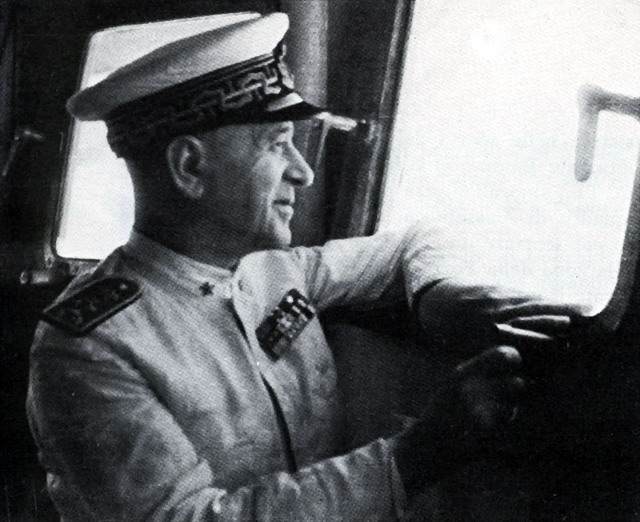
Inigo Campioni
Inigo Campioni (14 November 1878 – 24 May 1944) was an Italian naval officer during most of the first half of the 20th century. He served in four wars, and is best known as an admiral in the Italian Royal Navy (Regia Marina) during World War II. He was later executed by the Italian Social Republic for refusing to collaborate.
Campioni was born in Viareggio, Province of Lucca, Italy, on 14 November 1878. He entered the Italian Naval Academy at Leghorn (Livorno) in 1893. He graduated in 1896 as a guardiamarina (midshipman) and received a promotion to sottotenente di vascello (ship-of-the-line sublieutenant) in 1898 and then to tenente di vascello (ship-of-the-line lieutenant) in 1905.
Campioni participated in the Italo-Turkish War of 1911–1912, serving as an officer aboard the armored cruiser Amalfi.
World War I began in 1914, and Italy entered the war on the side of Allies in May 1915. Early in the war, Campioni served aboard the battleships Conte di Cavour and Andrea Doria. He was promoted to capitano di corvetta corvette captain in 1916 and became commanding officer of the destroyer Ardito, which under his command escorted numerous convoys to the Adriatic Sea and served with distinction in a naval engagement in the northern Adriatic in September 1917. For the latter action, Campioni received the Bronze Medal of Military Valor. In December 1918, just after the conclusion of the war, he received the War Merit Cross.
After World War I, Campioni was promoted to capitano di fregata (frigate captain) in 1919. He commanded the scout cruiser Tigre from 16 August 1924 to 22 October 1925 and received a promotion to capitano di vascello (ship-of-the-line captain) in 1926. He led naval design programs at the weapons laboratory at La Spezia and became the Italian naval attaché to France in Paris, then from 3 April 1929 to 24 October 1929 he commanded the battleship Duilio. After leaving Duilio, he served a, chief of staff of the First Fleet from 25 October 1929 to 9 May 1930, embarked on the heavy cruiser Trieste. From 10 May 1930 to 16 May 1931 he served as commanding officer of the heavy cruiser Trento.
Campioni achieved flag rank in 1932, being promoted to contrammiraglio (counter admiral), and was promoted again to ammiraglio di divisione (divisional admiral). He served as Chief Cabinet Secretary of the Navy before commanding the 5th Naval Division from 21 September 1935 to 21 September 1936, during the Second Italo-Abyssinian War of 1935–1936.
Campioni was promoted to ammiraglio di squadra (squadron admiral) in 1936 and in 1938 he assumed the post of Deputy Chief of Staff of the Navy. Held in high regard as the most promising officer in the Regia Marina, he became commander of the 1st Naval Squadron — the Italian main battlefleet — on 15 August 1939 with the battleship Giulio Cesare as his flagship. In 1939 he also became a Senator of the Kingdom of Italy.
World War II began when Nazi Germany invaded Poland on 1 September 1939. When Italy entered the war on the side of the Axis powers with its invasion of France on 10 June 1940, Campioni still commanded the Italian battlefleet. He remained in command for the first six months of the Mediterranean naval campaign supporting the invasion of France in June 1940 and then commanding the fleet in operations against the British, including the Battle of Calabria on 9 July 1940, Operation Hats in September 1940, the Battle of Taranto on 11–12 November 1940, Operation White in November 1940, and the Battle of Cape Spartivento on 27 November 1940. Heavily criticized for failing to intercept two British convoys and handling his superior force too cautiously during the latter battle, he was relieved of command on 8 December 1940 — to be succeeded by Angelo Iachino — and returned to the post of Deputy Chief of Staff of the Navy. He did, however, become a Commander of the Military Order of Savoy for his achievements from June 1940 through July 1941.
Hub AI
Inigo Campioni AI simulator
(@Inigo Campioni_simulator)
Inigo Campioni
Inigo Campioni (14 November 1878 – 24 May 1944) was an Italian naval officer during most of the first half of the 20th century. He served in four wars, and is best known as an admiral in the Italian Royal Navy (Regia Marina) during World War II. He was later executed by the Italian Social Republic for refusing to collaborate.
Campioni was born in Viareggio, Province of Lucca, Italy, on 14 November 1878. He entered the Italian Naval Academy at Leghorn (Livorno) in 1893. He graduated in 1896 as a guardiamarina (midshipman) and received a promotion to sottotenente di vascello (ship-of-the-line sublieutenant) in 1898 and then to tenente di vascello (ship-of-the-line lieutenant) in 1905.
Campioni participated in the Italo-Turkish War of 1911–1912, serving as an officer aboard the armored cruiser Amalfi.
World War I began in 1914, and Italy entered the war on the side of Allies in May 1915. Early in the war, Campioni served aboard the battleships Conte di Cavour and Andrea Doria. He was promoted to capitano di corvetta corvette captain in 1916 and became commanding officer of the destroyer Ardito, which under his command escorted numerous convoys to the Adriatic Sea and served with distinction in a naval engagement in the northern Adriatic in September 1917. For the latter action, Campioni received the Bronze Medal of Military Valor. In December 1918, just after the conclusion of the war, he received the War Merit Cross.
After World War I, Campioni was promoted to capitano di fregata (frigate captain) in 1919. He commanded the scout cruiser Tigre from 16 August 1924 to 22 October 1925 and received a promotion to capitano di vascello (ship-of-the-line captain) in 1926. He led naval design programs at the weapons laboratory at La Spezia and became the Italian naval attaché to France in Paris, then from 3 April 1929 to 24 October 1929 he commanded the battleship Duilio. After leaving Duilio, he served a, chief of staff of the First Fleet from 25 October 1929 to 9 May 1930, embarked on the heavy cruiser Trieste. From 10 May 1930 to 16 May 1931 he served as commanding officer of the heavy cruiser Trento.
Campioni achieved flag rank in 1932, being promoted to contrammiraglio (counter admiral), and was promoted again to ammiraglio di divisione (divisional admiral). He served as Chief Cabinet Secretary of the Navy before commanding the 5th Naval Division from 21 September 1935 to 21 September 1936, during the Second Italo-Abyssinian War of 1935–1936.
Campioni was promoted to ammiraglio di squadra (squadron admiral) in 1936 and in 1938 he assumed the post of Deputy Chief of Staff of the Navy. Held in high regard as the most promising officer in the Regia Marina, he became commander of the 1st Naval Squadron — the Italian main battlefleet — on 15 August 1939 with the battleship Giulio Cesare as his flagship. In 1939 he also became a Senator of the Kingdom of Italy.
World War II began when Nazi Germany invaded Poland on 1 September 1939. When Italy entered the war on the side of the Axis powers with its invasion of France on 10 June 1940, Campioni still commanded the Italian battlefleet. He remained in command for the first six months of the Mediterranean naval campaign supporting the invasion of France in June 1940 and then commanding the fleet in operations against the British, including the Battle of Calabria on 9 July 1940, Operation Hats in September 1940, the Battle of Taranto on 11–12 November 1940, Operation White in November 1940, and the Battle of Cape Spartivento on 27 November 1940. Heavily criticized for failing to intercept two British convoys and handling his superior force too cautiously during the latter battle, he was relieved of command on 8 December 1940 — to be succeeded by Angelo Iachino — and returned to the post of Deputy Chief of Staff of the Navy. He did, however, become a Commander of the Military Order of Savoy for his achievements from June 1940 through July 1941.