Hubbry Logo
Isabel Briggs MyersIsabel Briggs MyersMain
Open search
Isabel Briggs Myers
Community hub
Isabel Briggs Myers
logo
8 pages, 0 posts
0 subscribers
Be the first to start a discussion here.
Isabel Briggs Myers
Isabel Briggs Myers
from Wikipedia

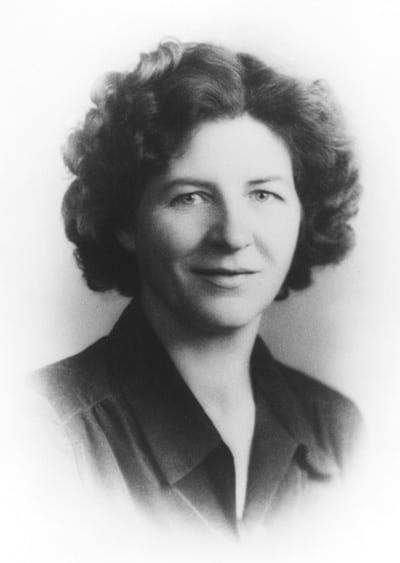
Isabel Briggs Myers (born Isabel Briggs; October 18, 1897 – May 5, 1980[1][2]) was an American writer who co-created the pseudoscientific personality test known as the Myers–Briggs Type Indicator (MBTI) with her mother, Katharine Cook Briggs.[3] The MBTI is one of the most-often used personality tests worldwide; over two million people complete the questionnaire each year.[3] Isabel Briggs Myers typed herself as an INFP (Mediator).

Key Information

Background

[edit]

Isabel Briggs Myers grew up in Washington, D.C. where she was home-schooled by her mother, Katharine Cook Briggs. Her father, Lyman James Briggs, worked as a research physicist. Briggs had little formal schooling up until she attended Swarthmore College, where she studied political science. During her time at the college she met Clarence "Chief" Gates Myers who was studying law. The two married in 1918 and were together until his death in 1980.[4] When Briggs Myers died in 1980 she left the copyright to the MBTI (which was little known at the time) to her son Peter.[5]

Fiction

[edit]

In August 1928, she participated in a mystery novel writing contest jointly offered by McClure's magazine and Frederick A. Stokes Company. Her novel Murder Yet to Come won the contest and was published periodically in the monthly magazine The Smart Set (which had absorbed McClure's in March 1929) between August 1929 and January 1930. It was later published in book form by Frederick A. Stokes Company on January 2, 1930.[6][7][8][9][10][11]

The contest prize included a $7,500 (equivalent to $141,000 in 2025) cash award and a contract for a second work of fiction. Briggs Myers fulfilled her obligation by writing the novel Give Me Death, which revisits the same detectives from Murder Yet to Come. In it, a Southern family commits suicide one by one after learning they may have "Negro blood".[12][13] The novel was published in 1934 and received harsh treatment from critics.[6]

MBTI personality indicator

[edit]

As WWII broke out, Briggs Myers read an article titled, "Fitting the Worker to the Job," and she recognized a need for a "people sorting instrument," especially as US involvement in the war in Europe seemed more likely. She wrote her epiphany in a letter to her mother, who was a staunch Carl Jung enthusiast.[14] Briggs Myers implemented the ideas of Carl Jung and added her own insights. She then created a paper survey which would eventually become the MBTI. The test was to assess personality type and was fully developed after 20 years of research by Briggs Myers with her mother. The three original pairs of preferences in Jung's typology are Extraversion and Introversion, Sensing and Intuition, and Thinking and Feeling. After studying them, Briggs Myers added a fourth pair, Judging and Perceiving.[15][3] Isabel Briggs Myers typed herself as an INFP (Mediator) personality and was an explorer of the concept of introversion and extroversion.

In the July 1980 edition of MBTI News, Briggs Myers attributed another reason for creating the MBTI to her marriage to Clarence Myers. Their differences in perceived psychological types inspired her mother, Katharine Cook Briggs, to keep studying differences among people and their actions. Her mother had come upon the work of Carl Gustav Jung and introduced it to her daughter who then started studying the psychological types.

In 1945, the dean of the George Washington School of Medicine allowed Briggs Myers and her mother to apply the MBTI to first-year undergraduates. This included about 5,500 students and Briggs Myers studied it for years by looking at patterns among dropouts and successful students.[16]

In 1975, Briggs Myers co-founded the Center for Application of Psychological Type with Mary McCaulley. CAPT is a non-profit organization run by the Myers & Briggs Foundation, which maintains research and application of the MBTI, also existing to protect and promote Briggs Myers' ideology.[17] Its headquarters are in Gainesville, Florida, and its motto is "Fostering human understanding through training, publishing, and research".[16]

As of 2022, according to the Myers & Briggs Foundation, "research on the MBTI instrument has continued into the present, with dozens of articles published each year."[17] The Isabel Briggs Myers Memorial Research Awards exist to further MBTI and psychological research. These awards are given twice a year, consisting of $2,000 for up to two people.[18] Most of the research supporting the MBTI's validity has been produced by CAPT and published in the center's own journal, the Journal of Psychological Type, raising questions of independence, bias, and conflict of interest.[19]

As of 2022, although the MBTI is widely used by businesses, coaches and psychologists, the MBTI has been found to have significant validity issues,[20] and is not widely endorsed by academic researchers in psychology.[21]

Publications

[edit]
  • Myers, I. (1980, 1995) Gifts Differing: Understanding Personality Type. Davies-Black Publishing, U.S. ISBN 0-89106-074-X
    • Gifts Differing is written by Isabel with her son, Peter Briggs Myers. It is about human personality and how it affects several aspects of life such as career, marriage, and meaning of life. It speaks about all sixteen personality types.[22]
  • Myers, I. (1990) Introduction to Type: A Description of the Theory and Applications of the Myers-Briggs Type Indicator. Center for Applications of Psychological Type Inc. ISBN 0-935652-06-X
  • Myers, I. and McCaulley, M. (1985) Manual: A Guide to the Development and Use of the Myers-Briggs Type Indicator. Consulting Psychologists Press. ISBN 0-89106-027-8

Further reading

[edit]

References

[edit]
[edit]
Revisions and contributorsEdit on WikipediaRead on Wikipedia
from Grokipedia
Isabel Briggs Myers (October 18, 1897 – May 5, 1980) was an American writer and psychological theorist best known for co-developing the Myers-Briggs Type Indicator (MBTI), a widely used personality assessment instrument rooted in Carl Jung's theory of . Born in , to Lyman J. Briggs and educator , she was homeschooled by her mother before graduating from in 1919. Myers married Clarence "Chief" Myers in 1918, with whom she had two children, Peter Briggs Myers and Ann Myers Hughes. Influenced by her mother's early interest in personality theory and Jung's Psychological Types (first read by the family in 1923), Myers began developing the MBTI in the 1940s amid World War II, aiming to create a practical tool for understanding individual differences to aid in job placements and reduce workplace conflicts. Working from her dining room in Swarthmore, Pennsylvania, alongside her mother, she spent over two decades refining the instrument through empirical validation, including data collection from thousands of medical and nursing students. The MBTI's first manualized form was copyrighted in 1943, with the full publication of the instrument occurring in 1962 through the , followed by her self-published Introduction to Type that same year. In 1975, Myers co-founded for Applications of Psychological Type (CAPT) with psychologist Mary McCaulley to promote research and application of the MBTI. Her later works included Gifts Differing (1980), which elaborated on personality types and their implications for personal growth. By the time of her death in 1980, the MBTI had become a cornerstone of psychological typing, now used annually by millions worldwide in counseling, , and organizational settings, translated into 21 languages.

Early Life and Education

Birth and Family Background

Isabel Briggs Myers was born on October 18, 1897, in , as the only surviving child of and ; she had a brother, Albert C. Briggs, who died in infancy. Her father worked as a and at the U.S. Bureau of Standards, where he eventually rose to director, establishing a stable household centered on scientific inquiry and intellectual rigor. Katharine Cook Briggs, a homemaker who had been homeschooled herself, maintained strong interests in and ; after Isabel's birth, she transformed the into a "cosmic of baby training," conducting systematic child-rearing experiments on her daughter to observe developmental patterns. Isabel was homeschooled by her mother in this environment, which emphasized self-directed learning and curiosity, with no formal schooling until she entered in 1915 at age 17; this upbringing, influenced by her parents' scholarly backgrounds, nurtured her early independence.

Education and Early Interests

Isabel Briggs Myers received her early education through by her mother, , who followed a of personalized instruction that emphasized over conventional schooling. This approach provided limited formal classroom experience but fostered a strong foundation in languages, , and sciences, areas in which Myers demonstrated notable aptitude. The intellectual environment of her , shaped by her mother's scholarly pursuits and her father's career as a , further motivated her academic ambitions. In 1915, at the age of 17, Myers enrolled at , a Quaker institution known for its rigorous liberal arts curriculum. She majored in , reflecting an interest in societal structures and governance, and graduated in 1919 with a , ranking first in her class. During her time at Swarthmore, she engaged deeply with coursework that honed her analytical skills, though her studies remained outside the realm of . Following graduation, Myers focused on family life and pursued writing interests during the , including such as short stories and novels, without formal training in —a field she never studied academically—and relied on self-directed reading to explore . Myers' nascent interests extended to writing, where she developed skills that later informed her work on personality theory, reflecting her early observations of individual differences influenced by her family's intellectual environment.

Personal Life

Marriage and Family

Isabel Briggs Myers married Clarence Gates Myers, known as "Chief," in 1918 while she was a student at . Clarence, a by profession, provided steady support throughout their 61-year , which lasted until Isabel's death in 1980. The couple had two children: a son, Peter Briggs Myers, born in 1926, and a daughter, Ann Isabel Myers, born in 1927. The family settled in , a suburb of where Clarence practiced law. Tragically, Ann died unexpectedly in 1972 at age 44 following minor surgery, leaving Isabel and Clarence with their son and grandchildren. In Swarthmore, Isabel managed domestic responsibilities as a homemaker and devoted mother, while pursuing her intellectual interests in personality typing from her home. Clarence's financial stability and encouragement enabled her to balance these roles, often using family members as subjects to refine her ideas on individual differences. This supportive environment fostered a close-knit unit, with the family remaining central to her life even as her work gained momentum. The dynamics of her marriage profoundly shaped Isabel's perspectives on personality variations. Clarence's pragmatic approach contrasted with her own intuitive style, prompting her to apply emerging type concepts to understand and harmonize family interactions, emphasizing the value of diverse temperaments in personal relationships. In her later years, amid growing health challenges, Isabel maintained this familial closeness while collaborating with the on research initiatives, which involved regular visits to the state.

Fiction Writing

Isabel Briggs Myers pursued fiction writing in the mystery genre during the late 1920s and early 1930s, producing two novels that highlighted her talent for constructing logical puzzles intertwined with explorations of . Her debut, Murder Yet to Come, emerged from her entry in a national novel-writing contest sponsored by McClure's Magazine and Frederick A. Stokes Company, which she won in , securing a $7,500 prize along with serial publication and a for a follow-up . Published in 1930 by Stokes, the novel centers on amateur detectives Peter Jerningham, a young physician, and Polly Thomas, his romantic interest and fellow investigator, as they probe an apparent accident in a locked of a Hudson River mansion that proves to be a cleverly disguised . The success of Murder Yet to Come, which became a , fulfilled the initial contract but obligated Myers to deliver a second novel under the terms of the prize agreement. She completed Give Me Death in 1934, again published by Stokes as a featuring Jerningham and . In this story, the detectives travel to a southern estate called Seven Mile Creek, where they investigate a series of apparent suicides among a prominent , uncovering hidden motives and familial secrets amid themes of and psychological strain. The narrative blends intricate puzzle-solving—centered on "impossible" scenarios and alibis—with romantic subplots that deepen character interactions and emotional stakes. Myers's mysteries reflect her analytical mind through their emphasis on logic and deduction, as characters methodically dissect human motives to resolve complex crimes, often involving misdirection and concealed identities. The novels prioritize fair-play clues and intellectual challenges over graphic violence, drawing readers into the detectives' rational unraveling of events while incorporating romantic tension to humanize the sleuthing process. Despite the initial acclaim for her first book, Myers's fiction achieved only limited commercial success overall, with Give Me Death receiving less enthusiastic reception and no further novels forthcoming from her. Both works fell out of print by the 1940s, overshadowed by her later pursuits, though copies and related manuscripts are preserved in archival collections such as the Isabel Briggs Myers Papers at the University of Florida's Special and Area Studies Collections. Recent reprints by Chosho Publishing in 2024 have revived interest in these early efforts.

Path to Personality Theory

Mother's Influence and Jung's Theories

Katharine Cook Briggs, an avid reader and homemaker with a keen interest in , began systematically studying differences in , motivated by observations of her daughter's fiancé and their contrasting approaches to child-rearing. By 1923, following the English translation of Carl Jung's , Briggs encountered the Swiss psychiatrist's framework, which resonated deeply with her own preliminary classifications of traits. She abandoned her initial system in favor of Jung's ideas, corresponding with him and developing descriptive profiles of types, such as "Executives" for those exhibiting thinking and judging preferences, which she shared through informal writings in the . Isabel Briggs Myers, having graduated from in 1919 with a degree in , joined her mother's explorations in the , applying the emerging type concepts to everyday interactions. Together, they observed personality variations among family members, friends, and acquaintances, noting how individuals differed in energy orientation (introversion versus extraversion), information gathering (sensing versus intuition), and decision-making (thinking versus feeling). These observations formed the basis of their collaborative efforts to catalog and understand type dynamics in practical settings, predating broader applications during . Building on Jung's core dichotomies, the Briggs-Myers duo adapted his complex psychological theory for accessibility, with Katharine contributing early insights into lifestyle preferences that later crystallized as the judging (structured) versus perceiving (flexible) dimension. In the 1950s, they refined 16 type descriptions and sent them to Jung for feedback, receiving his endorsement of their practical extension of his work. Without formal psychological training or academic credentials, Isabel was driven to simplify Jung's intricate ideas—originally aimed at clinical analysis of the unconscious—into a user-friendly tool for self-understanding and interpersonal harmony in daily life. This motivation stemmed from a desire to make insights actionable for ordinary people, emphasizing balanced development over therapeutic intervention.

World War II Experiences

During , Isabel Briggs Myers contributed to the war effort through various volunteer roles, including serving as an aircraft spotter for the and as a nurse's aide for the in the early 1940s. These experiences highlighted the urgent national need for efficient workforce mobilization, particularly as millions of women entered industrial jobs to support defense production while men served overseas. Motivated by this demand, Myers transitioned into employment consulting for defense industries in , where she advised on job placements for women, drawing on her observations of how individual differences affected performance in high-stakes roles. Without formal psychological training, she collaborated with early personnel management consultants to match workers to positions in companies like and , emphasizing innate traits over prior experience to boost productivity. In her consulting work, Myers observed frequent mismatches between workers' personalities and their assigned roles, such as introverted individuals struggling in high-interaction tasks or intuitive thinkers frustrated by repetitive manual labor, which led to inefficiencies and high turnover in the wartime economy. These insights prompted her, by , to develop informal typing questionnaires as practical tools to identify preferences and guide better hiring decisions, building briefly on her mother Katharine Briggs's earlier categorizations of types inspired by Carl Jung's theories. Her approach shifted from theoretical interest in to empirical application, driven by the pressing need to optimize the influx of unskilled women into defense jobs amid labor shortages. By 1943, Myers had formalized these efforts into an initial 93-question designed to assess personality types for improved hiring efficiency in industrial settings. She tested this form on over 5,000 medical students starting in 1945, correlating responses with their chosen specializations to refine the tool. This wartime experimentation marked a pivotal evolution in her work, transforming abstract ideas into a usable instrument for national productivity without reliance on established psychological credentials.

Development of the MBTI

Initial Design and Testing

Isabel Briggs Myers initiated the development of the Myers-Briggs Type Indicator (MBTI) in with a short-form designed to assess personality preferences based on Carl Jung's theory of . This preliminary version underwent rapid evolution through , expanding into a more comprehensive 172-question instrument by , as Myers sought to create a practical tool for understanding individual differences during . In collaboration with her mother, Katharine Cook Briggs, Myers carefully selected questionnaire items, prioritizing concrete behavioral indicators—such as everyday actions and preferences—over abstract or introspective concepts to ensure accessibility and reliability for a broad audience. This partnership drew on Briggs's earlier typological studies, allowing Myers to refine hundreds of potential questions into a focused set that captured observable traits effectively. Myers conducted initial testing on diverse populations, including college students, industrial employees, and family members, administering the questionnaire in informal settings to gather real-world data. She personally performed manual scoring for each response, assigning types based on preference patterns and iterating on the instrument to address ambiguities revealed in the results. Early reliability evaluations involved retesting participants, yielding consistency rates of 75-90% across preferences, which informed targeted revisions for item clarity and reduced ambiguity. Through analysis of these testing outcomes, Myers established the concept of type dynamics, including the identification of dominant functions within each type, grounded in empirical patterns from respondent data rather than a direct replication of Jung's framework. This approach emphasized practical utility, enabling the MBTI to highlight how preferences interacted in daily life.

Theoretical Adaptations from Jung

Isabel Briggs Myers adapted Carl Jung's theory of by introducing the Judging (J) and Perceiving (P) dichotomy as a fourth dimension, which was not explicitly outlined in Jung's original framework of extraversion/introversion, sensing/, and thinking/feeling. This addition stemmed from her observations of individuals' lifestyles, distinguishing between those who preferred a structured, decisive approach to the outer world (J) and those who favored flexibility and openness to new information (P). Myers posited that this dichotomy clarified how people oriented their dominant functions toward external interactions, making Jung's concepts more observable in everyday behavior. To enhance practicality, Myers simplified Jung's nuanced descriptions of cognitive functions into binary preferences, treating thinking and feeling, for instance, as rational decision-making styles rather than complex, hierarchical processes influenced by the unconscious. This reduction allowed for straightforward self-assessment, enabling individuals to identify a primary without delving into Jung's intricate dynamics of function attitudes. She emphasized type development as a lifelong process, viewing types not as fixed traits but as preferences that could evolve through conscious effort, particularly by strengthening the inferior function to achieve greater balance and adaptability. Myers' overarching goal was to democratize , transforming Jung's often obscure and academically dense into an accessible tool for non-experts to foster self-understanding and interpersonal harmony. She critiqued the inaccessibility of Jung's (1921), aiming instead to provide clear, actionable insights that could be applied in diverse settings like and workplaces. This adaptation prioritized utility over theoretical depth, ensuring the framework supported personal development without requiring specialized psychological training.

The Myers-Briggs Type Indicator

Core Structure and

The Myers-Briggs Type Indicator (MBTI) is structured around four , or preference pairs, that capture fundamental differences in how individuals perceive the world and make decisions. The first dichotomy, Extraversion (E) versus Introversion (I), addresses the source and direction of energy, with extraverts focusing outwardly on people and activities while introverts direct energy inwardly toward thoughts and ideas. The second, Sensing (S) versus (N), pertains to information gathering, where sensing types emphasize concrete facts and present realities, and intuitive types prioritize patterns, possibilities, and future implications. The third dichotomy, Thinking (T) versus Feeling (F), involves decision-making processes, with thinking types applying logical analysis and objective criteria, contrasted by feeling types who incorporate personal values and . Finally, Judging (J) versus Perceiving (P) describes lifestyle orientation, as judging types prefer structure, planning, and closure, while perceiving types favor flexibility, spontaneity, and openness to new information. These four dichotomies combine to form 16 distinct personality types, denoted by a four-letter code such as ISTJ or ENFP, each representing a unique blend of preferences rather than rigid traits or abilities. The MBTI assesses preferences along continua for each , but results are reported in a binary format to identify the dominant preference, providing a clear type classification while acknowledging that individuals may exhibit varying degrees of clarity in their preferences. For a deeper understanding of type dynamics, the MBTI incorporates the concept of cognitive functions, where each type has a hierarchy led by a dominant function supported by an auxiliary one, drawn from Jungian theory but adapted for practical application. For example, in an INTJ type, the dominant function is Introverted Intuition (Ni), which synthesizes insights into future-oriented patterns, while the auxiliary Extraverted Thinking (Te) facilitates logical organization and implementation in the external world. This functional interplay explains intra-type variations and development, emphasizing how preferences interact dynamically rather than in isolation. The MBTI questionnaire consists of approximately 93 forced-choice items in its standard form, where respondents select between two options per item, making it a self-reported tool that typically takes 20 to 30 minutes to complete. An extended Step II version expands to 144 items to explore facets within each preference. Isabel Briggs Myers viewed personality types as differing gifts that enrich , advocating for their use to foster mutual understanding and appreciation rather than or superiority.

Early Publication and Applications

The first formal publication of the Myers-Briggs Type Indicator (MBTI) Manual came in 1962, when the (ETS) released a version of the instrument after more than two decades of development and refinement by Isabel Briggs Myers. In the same year, Myers self-published Introduction to Type, a concise booklet outlining the tool's foundational concepts and applications. Initial adoption of the MBTI occurred in educational counseling during the 1960s. Universities including and , began incorporating the instrument into personality assessment programs by the late 1950s and early 1960s to aid student advising and self-understanding. At , psychologist Mary McCaulley discovered the MBTI through a review in the Mental Measurements Yearbook around 1968 and integrated it into training and student counseling, fostering early collaborations with Myers. Similarly, educator Harold Grant introduced the tool at and in the mid-1960s, using it for vocational guidance and type-related research. In the and , corporations increasingly adopted the MBTI for team-building exercises and career guidance, leveraging its focus on interpersonal preferences to enhance dynamics and employee placement. herself contributed to this expansion through hands-on workshops starting in the early 1970s, where she trained counselors, educators, and professionals in administering and interpreting the instrument based on its four dichotomies of personality preferences. These efforts culminated in the establishment of the Center for Applications of Psychological Type (CAPT) in 1975 by Myers and McCaulley at the , which formalized certification programs and trained over 1,000 practitioners by the end of the decade. By 1980, the MBTI had gained significant traction in counseling, , and organizational settings, with thousands of annual administrations emphasizing and personal growth over diagnostic labeling.

Publications

MBTI Manuals and Guides

Isabel Briggs Myers authored several key manuals and guides that formed the foundational resources for understanding and applying the Myers-Briggs Type Indicator (MBTI). Her primary work, the MBTI Manual: A Guide to the Development and Use of the Myers-Briggs Type Indicator, was first published in by , providing comprehensive instructions on administering, scoring, and interpreting the instrument. This manual detailed the theoretical underpinnings drawn from Carl Jung's typology, offered practical guidance on type dynamics, and included case studies illustrating real-world applications in counseling, , and organizational settings. Subsequent revisions expanded on empirical validation and normative data; the second edition appeared in 1985, incorporating updated research on reliability and form variations, while the third edition in 1998, co-authored with Mary H. McCaulley, Naomi L. Quenk, and Allen L. Hammer, added advanced statistical analyses and diverse population studies to enhance interpretive accuracy. Throughout, Myers emphasized practical examples and type tables to depict healthy expressions, deliberately avoiding pathological framings by portraying types as natural preferences rather than deficits. Complementing the manual, Myers self-published Introduction to Type in 1962 as a concise booklet to make MBTI concepts accessible to non-experts. This short guide explained the four dichotomies—Extraversion-Introversion, Sensing-Intuition, Thinking-Feeling, and Judging-Perceiving—through straightforward descriptions, illustrative examples from everyday life, and simple type tables that highlighted strengths without implying dysfunction. Multiple editions followed, with revisions in 1970, 1980, and beyond, refining language for clarity and incorporating feedback from early users to better support self-assessment and basic applications in personal development. The work's focus on positive, relatable scenarios helped demystify personality theory, positioning types as "gifts" that foster mutual understanding rather than diagnostic labels. In 1980, shortly before her death, Myers co-authored Gifts Differing: Understanding Personality Type with her son Peter B. Myers, offering an autobiographical exploration of type theory's evolution and practical implications. The book delved into the 16 personality types, using narrative examples from Myers's life and to illustrate how differing preferences influence relationships, choices, and , while reinforcing the avoidance of through celebratory descriptions of type-related talents. It included type tables and case vignettes to demonstrate interpersonal dynamics, emphasizing harmony among types as complementary "gifts" rather than sources of conflict or illness. Myers also contributed scholarly articles to professional journals in the , including early issues of the Journal of Psychological Type founded in 1977, where she discussed MBTI validation studies and empirical support for type theory's reliability. These pieces built on her manual's foundation, providing data-driven insights into scoring accuracy and interpretive guidelines, always prioritizing practical, non-pathologizing applications through examples of type in healthy contexts.

Other Writings

During the 1940s, as created urgent needs for efficient workforce allocation, Isabel Briggs Myers contributed to personnel management by applying in industrial settings. Her work with early personnel consultants in emphasized practical typing tools for selection and , presented in accessible terms to bridge psychological insights with realities. The MBTI has been applied in to help align occupations with preferences. Before focusing on theory, Myers wrote , including two mystery novels. Murder Yet to Come, published in , won a national detective story contest and features detectives solving an impossible crime at a secluded estate. She fulfilled a related obligation with Give Me Death in 1934, which involves a series of suspicious deaths in a southern family, exploring themes of heritage and psychological tension. Numerous unpublished papers by Myers, preserved in the University of Florida's Isabel Briggs Myers Papers collection, detail validation studies for the type dichotomies and the of indicator forms from zero to F, offering and analyses that supported her empirical refinements of . These documents highlight her focus on rigorous testing to ensure type descriptions resonated with everyday experiences. Across these works, Myers prioritized plain, relatable prose to connect Jungian concepts with practical life domains, serving as extensions of the core MBTI framework for broader audiences.

Legacy

Institutional Foundations and Recognition

In 1975, Isabel Briggs Myers co-founded the Center for Applications of Psychological Type (CAPT) in , alongside Mary McCaulley, establishing it as a nonprofit dedicated to psychological type research, MBTI instrument development, and practitioner training. CAPT served as a hub for validating and refining the MBTI through empirical studies and workshops, reflecting Myers' commitment to institutionalizing beyond individual use. Following Myers' death in 1980, the Myers & Briggs Foundation was established in the 1980s by her family to steward her legacy, managing MBTI royalties and funding research into psychological type dynamics. The foundation administers certification programs and ethical guidelines, ensuring the tool's responsible application in professional settings. Myers received notable recognition for her work. Her archives, encompassing personal diaries, correspondence, and MBTI development materials, were donated to the University of Florida by her son Peter B. Myers, preserving her lifetime achievements in type theory for scholarly access. To promote ethical MBTI use, Myers pioneered practitioner certification through CAPT's training initiatives, requiring structured education to interpret results accurately and non-judgmentally.

Impact and Criticisms

The Myers-Briggs Type Indicator (MBTI) has achieved widespread adoption globally, with over 50 million administrations since its inception and more than 2 million assessments conducted annually as of 2021. It is utilized in more than 115 countries across for and , for student development, and for personal growth. Despite its lack of diagnostic validity in , the MBTI has left a significant cultural legacy by popularizing personality typing in , including like "Please Understand Me" by David Keirsey, television shows, and mobile apps such as 16Personalities, which have taken millions of free versions. This has fostered a broader societal interest in and interpersonal understanding, particularly among younger generations on platforms where types serve as social labels and conversation starters. Criticisms of the MBTI center on its empirical shortcomings, including low test-retest reliability where about 50% of individuals receive a different type upon retesting after five weeks, and its binary dichotomies that oversimplify the continuum of human personality traits. During Isabel Briggs Myers's lifetime, the instrument received no formal peer-reviewed validation in psychological journals, contributing to its perception as lacking rigorous scientific foundation. The does not endorse the MBTI for diagnostic or clinical purposes, and segments of the psychological community have labeled it due to these psychometric limitations and absence of for outcomes like job performance. In response, Myers emphasized the tool's practical utility in everyday applications over strict scientific adherence, arguing in her writings that it aids understanding of differences rather than measuring fixed traits. Following Myers's death in 1980, the MBTI evolved with the introduction of Step II in 1998, which incorporates 20 facets per dichotomy for nuanced profiling, alongside fully digital versions that enhance accessibility via online platforms. However, the core dichotomous structure remains unchanged, sparking ongoing debates about inclusivity, including cultural biases that may disadvantage non-Western respondents and reinforce stereotypes in diverse settings.

References

Add your contribution
Related Hubs
User Avatar
No comments yet.