Hubbry Logo
search
logo
2137874

Jacob Talmon

logo
Community Hub0 Subscribers
Read side by side
from Wikipedia

Key Information

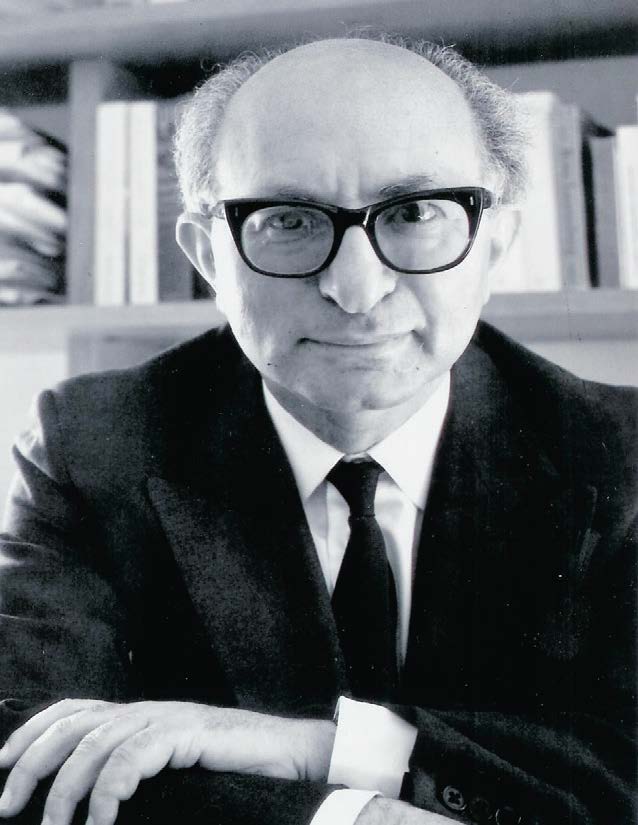
Jacob Leib Talmon (Hebrew: יעקב טלמון; June 14, 1916 – June 16, 1980) was Professor of Modern History at the Hebrew University of Jerusalem.

He studied the genealogy of totalitarianism, arguing that political Messianism stemmed from the French Revolution, and stressed the similarities between Jacobinism and Stalinism. He coined the terms "totalitarian democracy" and "Messianic democracy/political Messianism".

Biography

[edit]

Talmon was born in Rypin, a town in central Poland, into an Orthodox Jewish family. He left in 1934 to study at the Hebrew University in Jerusalem, then in the British Mandate of Palestine, now Israel. He continued his studies in France but left for London after the Nazi invasion; in 1943 he was awarded a PhD from the London School of Economics. His main works are The Origins of Totalitarian Democracy and Political Messianism: The Romantic Phase. Talmon argued that Rousseau's position may best be understood as "totalitarian democracy", a philosophy in which liberty is realized "only in the pursuit and attainment of an absolute collective purpose." Following the 1967 Six-Day War, Talmon engaged in a debate with Arnold J. Toynbee on the role of Jews and Zionism in history.[1]

Talmon died in Jerusalem on June 16, 1980, two days after his 64th birthday.[2]

Awards

[edit]

In 1957, Talmon was awarded the Israel Prize for social sciences.[3]

Major works

[edit]
  • The Origins of Totalitarian Democracy. Vol. 1. London: Secker & Warburg. 1952.; vol. 2: 1960
  • The Nature of Jewish History-Its Universal Significance, 1957
  • Political Messianism – The Romantic Phase, 1960
  • The Unique and The Universal, 1965
  • Romanticism and Revolt, 1967
  • Israel among the Nations, 1968
  • The Age of Violence, 1974
  • The Myth of Nation and Vision of Revolution – The Origins of Ideological Polarization in the 20th Century, 1981[4]
  • The Riddle of the Present and the Cunning of History, 2000 (Hebrew, p.m.)

See also

[edit]

References

[edit]
[edit]
Revisions and contributorsEdit on WikipediaRead on Wikipedia
from Grokipedia
Jacob Leib Talmon (14 June 1916 – 16 June 1980) was a Polish-born Israeli historian of ideas renowned for his analyses of modern European political thought, particularly the Enlightenment, the French Revolution, and the intellectual origins of totalitarianism.[1][2] He served as Professor of Modern History at the Hebrew University of Jerusalem, where he taught from 1949 until his death.[3][4] Talmon's seminal work, The Origins of Totalitarian Democracy (1952), argued that a messianic strain of democratic ideology—rooted in Jean-Jacques Rousseau's concept of the general will and embodied in Jacobin practices—anticipated the coercive structures of modern totalitarian regimes by prioritizing collective virtue over individual liberty.[5][6] This thesis established him as a key figure in Cold War-era historiography, influencing debates on the perils of ideological absolutism in democratic experiments.[6]

Early Life and Education

Birth and Upbringing

Jacob Talmon was born on June 14, 1916, in Rypin, a town in central Poland, into an Orthodox Jewish family.[7][8] His early years unfolded amid the turbulent interwar period in Poland, where Jewish communities faced economic hardship, cultural tensions, and rising antisemitism, fostering an environment steeped in traditional Jewish intellectual life alongside emerging discussions of national revival.[9] As a child around age ten, Talmon encountered Zionist thought through familial or communal conversations portraying Theodor Herzl as a messianic redeemer, reflecting the blend of religious orthodoxy and modern nationalist aspirations that influenced his formative worldview before departing Eastern Europe.[10] In 1934, at the age of 18, he immigrated to Palestine, navigating the initial challenges of adaptation in the Yishuv, where Zionist pioneering ethos deepened his early exposures from Poland.[4]

Academic Training

Talmon arrived in Palestine in 1934 to commence his studies at the Hebrew University of Jerusalem, where he pursued higher education in the humanities during the 1930s.[11][4] He subsequently continued his academic training at the Sorbonne in Paris before relocating to Britain amid the Nazi advance in France, where he completed his PhD at the London School of Economics in 1943.[3] At the Hebrew University, Talmon encountered the vibrant European intellectual milieu fostered by its founding scholars, gaining exposure to traditions that shaped his engagement with modern political thought. His formative years there cultivated early research interests in modern European history, with a focus on the Enlightenment and the French Revolution as precursors to ideological developments.[3]

Academic Career

Rise at Hebrew University

Talmon joined the faculty of the Hebrew University of Jerusalem as an instructor in modern history in 1949.[7] In 1960, he was promoted to professor of modern history, a position he held through the university's growth in the early years of Israeli statehood.[7] This progression reflected his growing influence amid the institution's expansion to accommodate the demands of a new nation.[2]

Teaching and Mentorship

Talmon held the position of professor of modern history at the Hebrew University of Jerusalem, instructing students in the intricacies of European political thought from the Enlightenment onward.[7] His approach to education was marked by a fervent delivery, as evidenced by his reported custom of muttering "preach well" to himself before entering the lecture hall, underscoring a preacher-like zeal in disseminating historical insights.[12] Talmon mentored influential Israeli scholars, such as military analyst Yehoshafat Harkabi, imparting a critical lens on political ideologies that echoed his own concerns with extremism.[13] He also guided historians like Mordechai Altshuler, contributing to the intellectual formation of a cadre attuned to the perils of totalitarian tendencies.[14]

Major Publications

The Origins of Totalitarian Democracy

Talmon's 1952 book The Origins of Totalitarian Democracy posits that modern totalitarianism emerged not as a rejection of democratic ideals but as a perverse outgrowth of certain Enlightenment-era conceptions of democracy, particularly those emphasizing absolute political equality and virtue.[15] He argues that this "totalitarian democracy" stems from Jean-Jacques Rousseau's doctrine of the general will, which envisions a singular, indivisible popular sovereignty that overrides individual differences in pursuit of collective unity and moral perfection.[16] In Talmon's view, this framework rejects empirical compromise, treating politics as a realm of absolute truth where dissent signals error or vice, thus laying the groundwork for coercive implementation.[5] Central to the thesis is the distinction between two streams of democratic thought originating in the eighteenth century: a liberal-empirical variant, rooted in pluralism and incremental reform, and a totalitarian variant characterized by monism, which assumes a single, exclusive political truth demanding immediate realization through state power.[17] Talmon traces the monistic strand through the French Revolution's Jacobins, who embodied Rousseau's ideas by enforcing virtue via terror and centralization, viewing the nation as an organic whole that justifies suppressing factions or minorities as threats to the general will.[15] This absolutism, he contends, prefigures twentieth-century regimes like Stalinism, where ideological purity masquerades as democratic expression, subordinating liberty to engineered social harmony.[17] Methodologically, Talmon employs intellectual history to connect these doctrines, analyzing primary texts from Rousseau, Robespierre, and others to reveal how optimistic Enlightenment faith in reason's capacity for perfecting society inadvertently fostered pathologies of intolerance and control.[5] By highlighting the monistic insistence on a predefined, virtuous state as an urgent imperative for action, he warns that such democracy inverts freedom into compulsion, where all thought and action bear social weight and must align with the ruling orthodoxy.[16]

Political Messianism Series

Talmon extended his examination of democratic absolutism in the multi-volume History of Totalitarian Democracy series, with the second volume, Political Messianism: The Romantic Phase, published in 1960.[18] This work traces the evolution of secular messianism in the post-Napoleonic era, focusing on the utopian ferment between 1815 and 1848 that birthed modern nationalism and communism as redemptive political forces.[19] Structured in parts devoted to socialist messianism and messianic nationalism, the volume portrays romantic-era ideologies as transforming ethical-political aspirations into totalizing missions akin to religious eschatology.[20] Talmon highlights how thinkers infused nationalism with providential purpose, envisioning the nation-state as the vehicle for humanity's moral regeneration, often at the expense of individual liberty and empirical restraint. In subsequent volumes, such as Myth of the Nation and Vision of Revolution (1980), Talmon broadens the scope to 19th- and 20th-century ideological polarizations, depicting socialism, nationalism, and related movements as quasi-religious crusades vowing utopian deliverance through collective transcendence.[21] He critiques this messianic dynamic for corroding liberal pluralism by demanding unqualified allegiance to abstract ideals, subordinating dissent and diversity to the pursuit of an infallible historical telos, thereby fostering intolerance masked as virtue.[20]

Core Ideas

Concept of Totalitarian Democracy

Talmon defined totalitarian democracy as a political system rooted in the conviction that a monolithic ideological truth must be realized through the general will, where the pursuit of absolute equality and virtue necessitates coercion to suppress dissent and opposition, treating all human actions as bearing social significance subject to collective judgment.[5] This approach views society as a unified organism requiring directed action toward a predefined perfect state, often justified by messianic-like urgency.[16] In contrast to liberal democracy, which emphasizes pluralism, individual rights, spontaneity, and the absence of overarching coercion in favor of empirical freedom and diversity of opinions, totalitarian democracy rejects such tolerance as incompatible with its goal of total harmony, instead prioritizing the enforcement of a singular virtuous order over personal liberties.[15] Talmon argued that while both traditions emerged from Enlightenment premises, liberal democracy accommodates empirical reality and limited government, whereas totalitarian democracy demands immediate realization of utopian ideals, leading to the elimination of political alternatives.[22] Talmon's concept serves as a caution in modern democratic experiments, highlighting the risks of ideological purity that subordinates procedural freedoms to substantive ends, potentially fostering authoritarian tendencies under the guise of egalitarian progress.[17]

Critique of Political Messianism

Talmon regarded political messianism as a secular ideology that displaced traditional religious eschatology with visions of utopian perfection, positing an inevitable progression toward a harmonious society that demanded total commitment and often bred fanaticism by subordinating individual reason to collective dogma.[5] This substitution, he argued, transformed politics into a quasi-religious endeavor where dissent was equated with heresy, fueling uncompromising zeal that eroded pragmatic governance.[16] In analyzing its progression, Talmon traced political messianism through phases beginning with romantic idealism, which romanticized collective aspirations and historical inevitability as pathways to redemption, but which inevitably shifted toward authoritarian mechanisms to enforce the envisioned order against resistance.[23] This evolution highlighted how initial enthusiasm for transformative ideals hardened into coercive structures, prioritizing the abstract utopia over lived realities and freedoms.[5] Talmon's critique embodied a conservative outlook that called for temperance and institutional safeguards to mitigate messianic overreach in ideologies such as Zionism, socialism, and nationalism, which he saw as vulnerable to excesses that could undermine liberal pluralism.[3] He advocated balancing visionary impulses with skepticism toward absolutist claims, linking such restraint to broader defenses against totalitarian tendencies in democratic thought.[24]

Recognition and Legacy

Awards Received

In 1956, Talmon received the Israel Prize in social sciences, Israel's highest civilian honor, awarded for his pioneering analysis of totalitarian democracy's ideological origins in Enlightenment thought.[25][4] This accolade, granted shortly after Israel's founding, underscored his contributions to political history amid the nation's emphasis on democratic resilience against authoritarian threats.[4] He was also elected to membership in the Israel Academy of Sciences and Humanities, recognizing his scholarly distinction in modern European history.[4]

Influence on Political Thought

Talmon's analysis of totalitarian democracy significantly shaped Cold War-era intellectual debates on the tensions between liberal democracy and authoritarian tendencies, positioning him as a prominent defender of Western liberalism against totalitarian ideologies.[26] His work highlighted the risks inherent in messianic political visions, influencing discussions that equated utopianism with threats to individual freedoms.[27] This perspective resonated with contemporaries, fostering affinities with anti-totalitarian thinkers like Isaiah Berlin, with whom Talmon maintained a close intellectual camaraderie centered on critiques of positive liberty and revolutionary excess.[28][29] In Israel, Talmon's ideas informed ongoing debates on liberalism amid statist policies and rising religious nationalism, as he navigated tensions between his Zionist commitments and liberal skepticism toward collectivist ideologies.[26] His critiques emphasized the perils of expanding politics into all spheres of existence, offering a cautionary framework for balancing national aspirations with democratic pluralism.[22] Post-1980 scholarship has expanded on Talmon's legacy through analyses of his Zionism critiques, distinguishing "good" nationalism rooted in moral renewal from "bad" variants prone to ideological overreach, thereby sustaining his influence in historiography of nationalism and political messianism.[30][31] These engagements underscore his enduring role in probing the intersections of liberalism, nationalism, and cosmopolitanism.[32]

References

User Avatar
No comments yet.