


Community hub
Recent from talks
Contribute something
Nothing was collected or created yet.
Jamie Doran
View on Wikipedia
Jamie Doran is an Irish-Scottish independent documentary filmmaker and former BBC producer.[7] He founded the award-winning company Clover Films, based in Windsor, in 2008.[8] He is also president of Datchet Village Football Club, which he founded in 1986.[9] Doran's films have been shown worldwide, and on series such as BBC's Panorama,[10] Channel 4's Dispatches,[11] Channel 4's True Stories,[12] PBS's Frontline,[13] Al Jazeera,[14] ABC's Four Corners,[15] Japan's NHK, Germany's ZDF[16] NDR/ARD and Denmark's DR.
Key Information


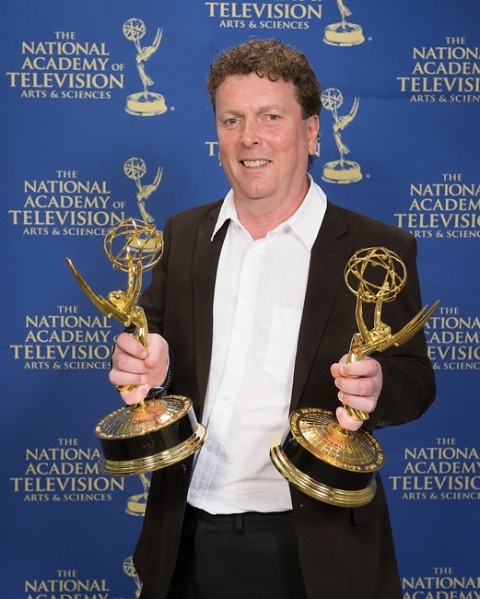
Many of Doran's documentaries cover the lives of people caught up war zones around the world.[17] His 2017 film The Boy Who Started the Syrian War, which has received over 100 million views globally, centers on the story of how anti-Assad graffiti created by schoolboys had reportedly started the Syrian civil war.[8] In 2016, his film ISIS in Afghanistan won two Emmy awards in the outstanding continuing coverage of a news story in a news magazine, and the best report in a news magazine categories,[18] as well as a Peabody award[19] and three awards at the New York Film Festival.
In 2014, his film Pakistan's Hidden Shame exposed the sexual abuse of street boys in Peshawar. The film won the grand jury award for best documentary at the United Nations Association Film Festival[20] and received high commendation from the Association for International Broadcasting.[21] His 2012 film Opium Brides focused on the collateral damage of the counter-narcotic effort in Afghanistan. It won an Emmy for outstanding investigative journalism,[1] and the duPont–Columbia award.[8] In 2010, his film The Dancing Boys of Afghanistan revealed the widespread and systematic child sex abuse by former Northern Alliance commanders.[22][23]
Filmography
[edit]Doran has directed and produced numerous documentaries, including:
| Year | Title | Plot |
|---|---|---|
| 2021 | The Fans Who Make Football: Celtic FC | This documentary explores what it means to be a fan of Celtic football club.[24][25] |
| 2019 | KGB - The Sward and the Shield | |
| 2018 | Crimea: Russia's Dark Secret | The documentary reveals the occupation of Crimea by Russia, and Russia's systematic and blatant violations of human rights on the territory of the peninsula.[26] |
| 2017 | ISIL Target Russia | This film journeys deep into the impregnable mountains of northern Afghanistan, where thousands of ISIL fighters are training and plotting an attack on Russia.[27] |
| 2017 | The Boy Who Started the Syrian War | An intimate look at the war in Syria through the eyes of Mouawiyah Syasneh, the boy whose anti-Assad graffiti lit the spark that engulfed Syria.[28][8] |
| 2016 | ISIS and the Taliban: The Journey | Doran journeys to Afghanistan to join Zubair Massoud, adviser to the national security council. They travel through some of the most dangerous territory in the world, to discover just how bad the situation really is after the withdrawal of most NATO forces two years previously.[29] |
| 2015 | The Taliban Hunters | This film follows the 'Taliban Hunters,' Karachi's elite police unit who are fighting back against Taliban militants in an attempt to regain control of the dangerous city.[30] |
| 2015 | Kenya's Enemy Within | An investigation into whether the wall promised by Kenya on the border of Somalia, in response to al-Shabab attacks, is already too late.[31] |
| 2015 | ISIS in Afghanistan | A special report that reveals how ISIS is on the rise in Afghanistan, and how they are targeting and training children to join Jihad in the war-torn country.[32][8] |
| 2015 | Living Beneath the Drones | A film that investigates the devastating impact that war and living under the constant threat of drones has on the mental health of the people of Afghanistan.[33] |
| 2014 | Syria's Second Front | A film which looks at the complexities of Syria's civil war. It is no longer the regime fighting president al-Assad, but they are also facing ISIS, who are quickly gaining ground and imposing their own barbaric rule.[34] |
| 2014 | On the Front Lines with the Taliban | With unprecedented access, this film follows Taliban fighters, as they launch an attack against the Afghan National Army from the Taliban stronghold in Charkh district, just an hour outside the Afghan capital, Kabul.[35] |
| 2014 | Arming the Rebels | This film offers a rare glimpse into a covert programme by US intelligence forces who have been training and arming select groups of Syrian rebels out of a previously reported location, in Qatar.[36] |
| 2014 | The Girls of the Taliban | A film which explores the new wave of privately run madrasahs that are opening across Afghanistan. As well as meeting the girls who study there, their families and the men behind the schools, the feeling among women's rights groupsis also captured - they fear their already limited freedoms are again under threat. |
| 2014 | Pakistan's Hidden Shame | A film directed by Mohammed Naqvi focusing on a culture in Peshawar of sexual abuse of street children.[37] It was screened at Sheffield Doc/Fest in June 2014. |
| 2012 | The Battle for Syria | Doran and Guardian correspondent Ghaith Abdul-Ahad travel to the frontline where rebel fighters face the forces of Bashar al-Assad's regime, witnessing the deadliest period of the fighting so far. |
| 2012 | Opium Brides | Najibullah Quraishi journeys deep into the Afghan countryside to reveal how ISAF poppy eradication programmes are forcing Afghan peasant farmers into debt with drug mafias. When they cannot pay, the traffickers take their daughters.[38] |
| 2012 | In the Hands of Al Qaeda | Ghaith Abdul Ahad investigates how Al Qaeda was able to capture Yemeni towns and cities from right under the noses of the United Statesand the Sana'a administration.[39] |
| 2011 | Pakistan's Open Secret | An observational documentary following a flamboyant 'family' of transgender people as they hustle and scrape together a living on the streets of Karachi.[40] |
| 2011 | The Promoters | An investigation into extra judicial killings in Kenya, where human rights workers accuse police of killing more than 8,500 young men in the last ten years alone.[41] |
| 2011 | Sudan: The Break Up | Made for Al-Jazeera, this three part series charts the troubled history of Sudan from pre-colonial times to the present day.[42][43] |
| 2010 | The Dancing Boys of Afghanistan | This controversial and widely acclaimed[22][44][45][46][47] film shows how former Northern Alliance warlords and powerful businessmen are preying on impoverished young boys in Afghanistan. The ancient tradition of Bachi Bazi (translation: boy-play) was banned under the Taliban, but has resurfaced since they were routed by ISAF in late 2001. Boys as young as 11 are bought and sold like slaves, dressed up like women and made to dance before audiences of men. The Dancing Boys of Afghanistan exposes how these boys are systematically sexually abused, and frequently murdered by jealous rival owners. Despite these practices being illegal under Afghan law, the film shows that the men committing the abuse do so with impunity. This film premiered at the Royal Society of Arts on 29 March 2010.[48] It was aired on PBS Frontline in the United States, and True Stories in the UK on 20 April 2010. |
| 2010 | Afghanistan: Behind Enemy Lines | Broadcast in February, 2010, as an episode of Dispatches on the British television network, Channel 4, this film shows how fighters from the proscribed extremist Islamic group, Hezb-e-Islami, are opening a new battlefront in Northern Afghanistan.[49][50] Filmed by the Rory Peck Award winning British-Afghan journalist, Najibullah Quraishi, who spent 2 weeks with these fighters, Afghanistan: Behind Enemy Lines includes footage of the fighters constructing planting and detonating roadside bombs (or IEDs).[51] Peter Beaumont, foreign affairs editor of the Guardian newspaper, described the film as "An extraordinary and intimate documentary depicting the lives of fighters within the Taliban's insurgency in Afghanistan".[52] This film was broadcast on PBS Frontline as Behind Taliban Lines in February 2010.[53] This film was nominated for a British Film and Television Academy Award in the Best Current Affairs programme category. In June 2010 it won the One World Media Award for best TV documentary. |
| 2009 | Africa Rising | This film documents the failure of Western development policy in Africa, and shows how a community of impoverished Ethiopian farmers are working themselves out of poverty through collectivization and micro-finance initiatives. It won the 2010 One World Media MDGs Award, being described by judges as "superbly shot and uplifting ... a compelling piece of work that drew the viewer into the heart of a community as it struggled to shake off a dependency culture".[54] |
| 2007 | Whiskey in the Jar | Documenting life on the remote Irish island of Tory, the only place in Ireland with an appointed sovereign.[55][56] |
| 2004 | Jimmy Johnstone: Lord of the Wing | A film on Jimmy 'Jinky' Johnstone, a Celtic and Scotland football hero of the 1960s and 70s who struggled with motor neurone disease.[1] |
| 2004 | Guinea Pig Kids | Shown on BBC2, this programme exposed how anti-HIV drugs were tested on "vulnerable and poor children at a New York care home ... who had no choice in whether or not to take part in trials and no proper advocates to speak on their behalf".[57] Describing HIV medicines given to the children as "futile" and "dangerous", the programme also demonstrated how children had been taken from their families to enable the "experimental" drug treatment to continue.[57] Despite critics' charges that the programme was "lurid, untrue" and contained "dangerous lies" a BBC investigation did not uphold these complaints. |
| 2003 | The Need for Speed | Follows the investigation of two U.S. pilots in relation to a friendly-fire incident in the war in Afghanistan in which four Canadian soldiers died. The pilots' defence stated that they were flying under the influence of amphetamines given to them by the U.S. Air Force.[58][59][60] Interviewees include former Chief of Staff of the United States Air Force, General Merrill McPeak.[58] The pilots' amphetamine usage was also covered by the BBC and the New York Times.[61][62] |
| 2002 | Afghan Massacre: The Convoy of Death | Interviewees presented as eyewitnesses state that several thousand Taliban prisoners of war were transported to Sheberghan prison in sealed containers and that hundreds or thousands of prisoners died.[63][64] Afghans interviewed in the film claim that U.S. personnel were present and involved in mass killings.[65][64][66] A preliminary version of the documentary was shown to the European Parliament and the German Parliament in June 2002, under the title Massacre at Mazar, The story resurfaced in July 2009, when U.S. President Barack Obama asked his national security team to look into allegations that the Bush administration |
| 2001 | The Android Prophecy | Documentary history of robots in the cinema that draws dark conclusions about the future of mankind, featuring contributions from Arthur C. Clarke, Steven Spielberg and Ridley Scott. |
| 2001 | City of Murder and Mayhem | Life in post-Soviet era Moscow: the film documents a month in the life of one of Russia's new breed of oligarch bankers, and shadows an elite police unit tasked with tackling organised crime.[citation needed] |
| 1998 | Starman | A sixty-minute biographical film for BBC Television of Yuri Gagarin, the first human in space. Doran also co-wrote a book on Gagarin with the popular-science writer, Piers Bizony.[72][73][74] |
| 1997 | Sexpionage | The story of the young women who were forced by the KGB to seduce foreign military personnel, businessmen and diplomats in order to elicit secrets from them. Includes first-hand testimony from former KGB agents, some of the women involved, as well as American intelligence analysts.[75][76] |
| 1994 | The Red Bomb | A three-part series on the Soviet Union's first nuclear bomb, built in 1949, years before the West thought the Soviet Union had the capability to build such a bomb. Features interviews with former Soviet spies and scientists.[77][78][79] |
Articles and interviews
[edit]- Amy Goodman (2014-09-30). Interview with 'Afghan Massacre' director Jamie Doran about Afghanistan's new vice president, notorious warlord Abdul Rashid Dostum, Democracy Now!
- Christiane Amanpour (2014-09-01). Interview with Jamie Doran about the sexual abuse of boys in Pakistan, CNN International
- Shihab-Eldin, Ahmed (2014-05-28). 'Syria: Arming The Rebels' producer Jamie Doran tells #WorldBrief about the covert U.S. training and arming program of Syrian rebels, HuffPost Live
- Steinberg, Stefan (2002-06-17). Interview with Jamie Doran, director of Massacre at Mazar, World Socialist Web Site
- "Did U.S. Forces Allow a Massacre of 3,000 Taliban Prisoners to Occur?" BuzzFlash asks Jamie Doran, Producer-Director of "Afghan Massacre: The Convoy of Death" Archived 1 October 2009 at the Wayback Machine, BuzzFlash Interview, 2003-09-23
- Doran, Jamie (2002-09-02). AFGHANISTAN'S SECRET GRAVES: A drive to death in the desert, Le Monde Diplomatique
References
[edit]- ^ a b c "Glasgow film-maker's double Emmy success". Evening Times. 9 October 2013. Retrieved 22 May 2018.
- ^ "New York Festivals - 2017 World's Best Television & Films™ Winners". Archived from the original on 2 August 2017. Retrieved 2 August 2017.
- ^ emmyonline.com/news_37th_winners
- ^ "Winners Announced for the 34th Annual News & Documentary Emmy® Awards | the Emmy Awards - the National Academy of Television Arts & Sciences". Archived from the original on 31 March 2015. Retrieved 5 May 2015.
- ^ "ISIS in Afghanistan". Peabody Awards. 2015.
- ^ "Alfred I. duPont-Columbia Awards - Columbia University Graduate School of Journalism". Dupontawards.org.
- ^ Hali, S. M. (2006-03-28). "Afghan Blues!" Archived 12 March 2012 at the Wayback Machine, The Nation
- ^ a b c d e "The need for upfront funding has never been greater". Broadcast. 16 March 2018. Retrieved 22 May 2018.
- ^ "Sponsoring Datchet Football Club". Oakwood Estates. Retrieved 5 March 2024.
- ^ "BBC One - Panorama, Inside the Taliban".
- ^ "BAFTA Awards Search | BAFTA Awards".
- ^ "Pakistan's Hidden Shame - Channel 4". www.channel4.com. Archived from the original on 28 August 2014.
- ^ "The Battle for Syria". PBS.
- ^ "Sudan: The break-up | Egypt | al Jazeera".
- ^ "Interview with Bob Carr". Australian Broadcasting Corporation. 8 October 2012.
- ^ "Kampf um Aleppo - ZDF.de". www.zdf.de. Archived from the original on 18 April 2013.
- ^ "18 Essential Documentaries on Afghanistan, the Taliban and America's Longest War". FRONTLINE.
- ^ "'Frontline,' '60 Minutes' Dominate News and Documentary Emmy Awards (FULL LIST)". 22 September 2016.
- ^ "ISIS in Afghanistan".
- ^ "UNAFF 2014: Awards".
- ^ "The 10th Annual AIB Awards cover the globe | AIB".
- ^ a b "The taboo topic our mission in Afghanistan ignores". The Globe and Mail. Toronto. 6 September 2012.
- ^ "Afghanistan includes 'Bacha Baazi' sexual abuse of children in revised penal code". The Khaama Press News Agency. 20 July 2017.
- ^ "Documentary on what it means to be a Celtic fan will broadcast tonight". Belfast Media Group.
- ^ Davidson, Euan (16 February 2021). "Exclusive: Celtic fan and film-maker Jamie Doran on Jinky, Female Ultras, and Bhoys in Baghdad". 67 Hail Hail.
- ^ "Crimea: Russia's Dark Secret". Al Jazeera.
- ^ "ISIL: Target Russia - Top Documentary Films".
- ^ "The Boy who Started the Syrian War | Syria". Aljazeera.com. Retrieved 31 October 2021.
- ^ "ISIS and the Taliban: The Journey". Pbsinternational.org. Retrieved 31 October 2021.
- ^ "Taliban Hunters". PBS.
- ^ "Kenya's Enemy Within". Al Jazeera.
- ^ "ISIS in Afghanistan". Pbd.org. Retrieved 31 October 2021.
- ^ "Afghanistan: Living Beneath the Drones". Al Jazeera.
- ^ "Syria's Second Front". PBS.
- ^ Lines, Fault. "Following Taliban fighters". Al Jazeera.
- ^ "Syria: Arming the Rebels". PBS.
- ^ Rehman, Sonya. "Pakistani Director Tackles Child Abuse in Pakistan". thediplomat.com. Retrieved 5 March 2024.
- ^ "Opium Brides". FRONTLINE.
- ^ "Ghaith Abdul-Ahad's Journey "Into Al Qaeda Heartland"". FRONTLINE.
- ^ "Transgenders: Pakistan's Open Secret". Channel 4.
- ^ "Journeyman Pictures : documentary films archive : The Promoters". journeyman.tv. Archived from the original on 9 November 2012.
- ^ Special series. "Sudan: History of a broken land". aljazeera.net.
- ^ "Sudan: History of a Broken Land". internationalpeaceandconflict.org. Archived from the original on 22 July 2011.
- ^ "The Dancing Boys Of Afghanistan: A deceptively titled depiction of disturbing reality". Metro. 20 April 2010.
- ^ "Archived copy". Archived from the original on 19 July 2011. Retrieved 21 April 2010.
{{cite web}}: CS1 maint: archived copy as title (link) - ^ "The Dancing Boys Of Afghanistan - FRONTLINE - PBS". pbs.org.
- ^ "The Dancing Boys of Afghanistan: Bacha Bazi: Afghan Child Prostitution | Daily Latest News". www.dailylatestnews.com. Archived from the original on 8 July 2011.
- ^ "RSA - True Stories: The Dancing Boys of Afghanistan". Archived from the original on 31 August 2010. Retrieved 22 April 2010.
- ^ Banks-Smith, Nancy (2 February 2010). "Behind Enemy Lines and Tower Block of Commons". The Guardian. London. Retrieved 5 May 2010.
- ^ Hale, Mike (23 February 2010). "The Afghan Side of War". New York Times. Retrieved 5 May 2010.
- ^ "Dispatches". Channel 4.
- ^ Beaumont, Peter (1 November 2009). "TV team's glimpse behind enemy lines shows confident Taliban is ready to go on fighting". The Guardian. London. Retrieved 5 May 2010.
- ^ "Behind Taliban Lines - FRONTLINE - PBS". pbs.org.
- ^ "One World Media :: MDGS". Archived from the original on 6 July 2010. Retrieved 24 June 2010.
- ^ "NDR Fernsehen - Sendungen - Länder - Menschen - Abenteuer- Alaskas Vulkaninseln (1) - die Aleuten". Archived from the original on 27 February 2010. Retrieved 21 April 2010.
- ^ "ARTE Doku Tory Island 13.08.2009". irlandforum.de.
- ^ a b 'Serious concern' at BBC over flawed HIV film, published in The Guardian. Accessed October 31, 2007.
- ^ a b Staff (20 October 2003). "The Need for Speed: Going to War on Drugs". CBC.ca. CBC.ca. Retrieved 2 August 2009.
- ^ Staff (24 June 2003). "Statt Friedman-Show ein Drogenfilm". Handelsblatt (in German). Retrieved 2 August 2009.
- ^ Moos, Ariane (9 May 2005). "US-Militär: Mehr Speed für Kampfpiloten". Die Zeit (in German). Retrieved 2 August 2009.
- ^ "Friendly fire' pilots took 'go pills". BBC News. 15 January 2003. Retrieved 5 May 2010.
- ^ Shanker, Thom; Duenwald, Mary (19 January 2003). "Threats and Responses: Military Bombing Error Puts a Spotlight On Pilots' Pills". New York Times. Retrieved 2 August 2009.
- ^ a b c Connolly, Kate; McCarthy, Rory (13 June 2002). "New film accuses US of war crimes". The Guardian. London. Retrieved 1 August 2009.
- ^ a b c Monbiot, George (25 March 2003). "One rule for them". The Guardian. London. Retrieved 5 May 2010.
- ^ a b Kellner, Douglas (2003). From 9/11 to Terror War. Rowman & Littlefield. p. 129. ISBN 978-0-7425-2638-9.
- ^ a b Finnegan, Lisa (2006). No Questions Asked: News Coverage Since 9/11. Greenwood Publishing Group. pp. 116–118. ISBN 978-0-275-99335-1.
- ^ Dehghanpisheh, Babak; Barry, John; Gutman, Roy (26 August 2002). "The Death Convoy Of Afghanistan: Witness Reports And The Probing Of A Mass Grave Point To War Crimes. Does The United States Have Any Responsibility For The Atrocities Of Its Allies? A Newsweek Investigation". Newsweek. Retrieved 31 July 2009.
- ^ Teather, David (19 August 2002). "UN evidence of Taliban massacre". The Guardian. London. Retrieved 5 May 2010.
- ^ Oppel, Rich (18 July 2009). "Afghan Warlord Denies Links to '01 Killings". New York Times. Retrieved 5 May 2010.
- ^
Anderson Cooper (12 July 2009). "Obama orders review of alleged slayings of Taliban in Bush era". CNN. Retrieved 14 July 2009.
President Obama has ordered national security officials to look into allegations that the
Bush administration resisted efforts to investigate a CIA-backed Afghan warlord over the killings of hundreds of Taliban prisoners in 2001. - ^ Staff (2009-07-13). Obama Calls for Probe into 2001 Massacre of at Least 2,000 Suspected Taliban POWs by US-Backed Afghan Warlord Archived 2009-08-05 at the Wayback Machine, Democracy Now!
- ^ Benjamin, Marina (18 March 1998). "Wednesday's book; Starman: the truth behind the legend of Yuri Gagarin by Jamie Doran and Piers Bizony (JBloomsbury, pounds 17.99)". The Independent. London. Retrieved 5 May 2010.
- ^ "Obscure orbits of Soviet stars". Times Higher Education. 18 September 1998.
- ^ "Fallen hero". New Scientist.
- ^ "Sexpionage". New York Times. Retrieved 2 August 2009.
- ^ "Sexpionage credits". New York Times. Retrieved 2 August 2009.
- ^ "Alsos: The Red Bomb: End of Innocence". alsos.wlu.edu. Archived from the original on 5 May 2010.
- ^ "Red Bomb". The New York Times. Retrieved 2 August 2009.
- ^ "Red Bomb Credits". The New York Times. Retrieved 2 August 2009.
External links
[edit]- Jamie Doran's company profile[permanent dead link] at clover-films.com
- Jamie Doran's biography on usindependents.com
| International | |
|---|---|
| National | |
| Other | |
