Hubbry Logo
Jay BarbreeJay BarbreeMain
Open search
Jay Barbree
Community hub
Jay Barbree
logo
8 pages, 0 posts
0 subscribers
Be the first to start a discussion here.
Jay Barbree
Jay Barbree
from Wikipedia

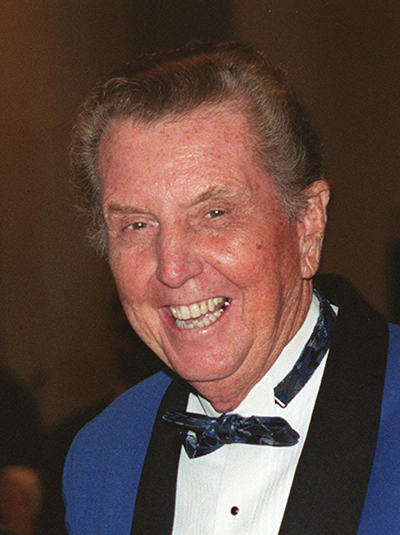
Jay Barbree (November 26, 1933 – May 14, 2021) was an American correspondent for NBC News, focusing on space travel. He was the only journalist to have covered every non-commercial human space mission in the United States, beginning with the first American in space, Alan Shepard aboard Freedom 7 in 1961, continuing through to the last mission of the Space Shuttle, Atlantis's STS-135 mission in July 2011.[3][4][5] He was present for all 135 Space Shuttle launches, and every crewed launch for the Mercury, Gemini, and Apollo eras. In all, he witnessed 166 human space launches.

Key Information

Early life

[edit]

Barbree grew up on his family's farm in Early County, Georgia, and entered the United States Air Force in 1950, when he was 16 years of age.[3] Following the Air Force, Barbree began his broadcast journalism career at WALB in Albany, Georgia, where, in 1957, he saw Sputnik's spent booster rocket orbiting in the sky and then wrote radio and television reports about the Soviet Union's launch of the first artificial satellite.[6][7][8][9]

Career

[edit]

Reporting

[edit]
Vanguard TV-3 exploded within seconds of launch on December 6, 1957.

Barbree was so interested in the space program that he paid for his ticket to get to Cape Canaveral in Florida in 1957 to watch the attempted Vanguard TV-3 launch. The failed launch was one Barbree did not forget: "There's ignition. We can see the flames", Barbree reported. "Vanguard's engine is lit and it's burning. But wait... wait a moment, there's... there's no liftoff! It appears to be crumbling in its own fire... It's burning on the pad... Vanguard has crumbled into flames. It failed ladies and gentlemen, Vanguard has failed".[6]

Early the following year, he returned and witnessed the successful launch of Explorer 1 on January 31, 1958, all the while calling in his reports to WALB. Eventually, Barbree was hired by radio station WEZY in Cocoa Beach, Florida and worked as a traffic reporter, covering the space program as well.[3]

Six months later, Barbree joined NBC as a part-time space program reporter, eventually moving to full-time.[4] Over the years, Barbree had been offered the opportunity to move to Washington, D.C., or New York City, but he turned down every offer, preferring to stay and report on what had quickly become his passion, spaceflight:[3] "This is a job where ... you have to be, whether you like it or not, a certain member of the space family".[10]

In 1958, while in a restroom, Barbree overheard a general and a NASA official talking about an upcoming launch called "Project SCORE", one of the earliest American satellites.[6] This would become one of Barbree's many scoops when after a bit of digging, he found that President Dwight D. Eisenhower would use the satellite to broadcast a pre-recorded Christmas message from outer space.[3][6] When SCORE launched in 1958, Barbree broadcast the story, knowing the military would not deny it once the satellite was in space.[3]

In the space program's early days, astronauts and reporters would often socialize in Cocoa Beach and had a very different relationship than they do today.[6] Barbree described his relationship with the astronauts as a friend and confidant, often going out to dinner with them or socializing when they were in town. In his book, Barbree wrote that in 1961, Alan Shepard told him an "off the record" fact: he was going to be the first American astronaut in space. Barbree noted that if he were to report this, it would jeopardize the friendships and possibly his career, so he said nothing. Barbree also recounts a conversation with Gus Grissom about the astronaut's concerns regarding Apollo not long before the fatal Apollo 1 fire.[9][11][12] Barbree's association with the astronauts had some unexpected bonuses as well: Neil Armstrong carried a gold coin to the Moon on Apollo 11 for Barbree, and Pete Conrad flew several flags and patches on Apollo 12, which Barbree later handed out to friends.[3]

In the early 1980s, when NASA developed the Teacher in Space program, a similar initiative, Journalist in Space, was developed.[13][14] Barbree was one of forty finalists to be selected as a Journalist in Space.[15][16][17]

In 1986, following the Space Shuttle Challenger accident, Barbree placed a telephone call to a friend and retired employee of NASA, who — as a favor to Barbree — went to Kennedy Space Center, looked over the accident information and analysis being done, and reported the early findings to Barbree.[3] Consequently, Barbree was the first journalist to report on the source of the destruction of the Space Shuttle Challenger: faulty O-rings.[6][18][19] He was also part of the NBC News Space Unit that won an Emmy award for NBC's coverage of the Apollo 11 Moon landing.[20][21] Following the 2003 Space Shuttle Columbia accident, Barbree was the first reporter to break the news of an internal NASA memo expressing concerns about foam striking the orbiter's left wing during ascent.[22]

In 1995, NASA recognized him as the "only journalist known to have covered all 100 flights". Among those present for the ceremony were several NASA officials, Alan Shepard, and Space Shuttle commander Robert L. Gibson.[3]

In 2011, Barbree was honored by the Space Foundation as a recipient of the Douglas S. Morrow Public Outreach Award in recognition of the role he played in shaping the way the nation views and understands space.[23]

Barbree was one of the longest-serving network correspondents to work continuously on a single subject. He started working for NBC on July 21, 1958, covering the space program and remained on that beat until his retirement in 2017.[24] He never missed a mission launch, despite suffering a heart attack while jogging along Cocoa Beach in 1987, and being declared clinically dead for several minutes.[1] Following his heart attack, he had bypass surgery and still did not miss any launches.[1]

In 2018, Barbree received NASA's Chroniclers Award with his name added to The Chroniclers wall at the Kennedy Space Center Press Site.[25] His name, however, was later removed.[26]

Writing

[edit]

Barbree was the author or coauthor of eight books, including two memoirs.[4][9] In 1993, Shepard, fellow Mercury astronaut Deke Slayton, journalist Howard Benedict, and Barbree collaborated to write the book Moon Shot: The Inside Story of America's Race to the Moon.[3] Slayton was a participant in name only and died before the book was completed.

Barbree's book Live from Cape Canaveral: Covering the Space Race, from Sputnik to Today was released on August 28, 2007, to coincide with the 50th anniversary of spaceflight, which began with the Sputnik 1 launch on October 4, 1957.[27] The foreword is written by Tom Brokaw. Barbree's book attempts to illustrate how the media has changed in their coverage of the space programs, from early enthusiasm to relative disinterest.[28] Barbree said he wrote the book because as he looked back over his career when recalling all the people he had worked with, very few were left. "There are an awful lot of guys ... who were here for the early days, and they're no longer here ... So I thought, well, if that story is going to be told, I've got to do it".[29] He said that he stayed away from sensationalizing the space program, or those associated with it. He commented that he would not put some items that could be considered harmful into his newest book, stating, "The whole idea of the book is not to hurt somebody".[18] Barbree attempts to illustrate this in his memoir by telling of a private investigator who approached him with an audio tape which allegedly contained proof of an extramarital affair involving an astronaut. Barbree told the investigator he would speak to his superiors, but then erased the tape.[28]

Barbree also collaborated with Martin Caidin on several non-fiction works, such as Destination Mars: In Art, Myth and Science (Penguin, 1997, ISBN 978-0-670-86020-3) and A Journey Through Time: Exploring the Universe with the Hubble Space Telescope (Penguin, 1995, ISBN 0-670-86018-2). Barbree also wrote the novelization of "Pilot Error", an episode of The Six Million Dollar Man, a television series based upon Caidin's novel Cyborg (Warner, 1975, ISBN 0-446-76835-9).

Personal life

[edit]

Barbree married Jo Reisinger, whom he met while covering her participation in Florida beauty pageants, in 1960. They lived in Merritt Island. They had three children: Steve, Alicia, and Karla. Their son Scott died in infancy following a premature birth.[6][9][30]

Barbree died in Florida, aged 87, on May 14, 2021.[31]

Bibliography

[edit]

References

[edit]
[edit]
Revisions and contributorsEdit on WikipediaRead on Wikipedia
from Grokipedia
Jay Barbree was an American journalist and longtime NBC News space correspondent known for his unparalleled coverage of the United States human spaceflight program. He was the only journalist to report on every American manned space mission, from Alan Shepard's Freedom 7 suborbital flight in 1961 through the final Space Shuttle mission in 2011, encompassing more than 160 launches across the Mercury, Gemini, Apollo, and shuttle eras. Beginning his NASA coverage in 1957 and joining NBC News in 1958, Barbree chronicled the space program's triumphs and tragedies for nearly six decades, retiring in 2017. Barbree developed close relationships with many astronauts, including Neil Armstrong, John Glenn, Alan Shepard, and Deke Slayton, and he broke significant stories, such as identifying damaged O-rings on the solid rocket booster as the likely cause of the 1986 Space Shuttle Challenger disaster. He co-authored the bestselling book Moon Shot: The Inside Story of America's Race to the Moon with astronaut Alan Shepard, as well as other works including his memoir Live from Cape Canaveral: Covering the Space Race from Sputnik to Today and Neil Armstrong: A Life of Flight. His eyewitness reporting and insider perspective made him a trusted voice on space exploration for generations of viewers. Barbree died on May 14, 2021, at age 87 in Florida.

Early life

Childhood in Georgia

Jay Barbree was born on November 26, 1933, in a clapboard house in Blakely, Early County, Georgia, as the youngest of six children to Jeanie and Will Barbree. He grew up on his family's farm in Early County, experiencing a rural upbringing in southern Georgia. His father died when Barbree was eight years old, and his mother remarried three years later. Barbree's childhood on the family farm outside Blakely exposed him to science-fiction films and television series that sparked his early fascination with space exploration. These included series such as Buck Rogers and films like Forbidden Planet and Conquest of Space, which fueled his imagination about the possibilities of space travel during his formative years in rural Georgia.

Military service

Jay Barbree enlisted in the United States Air Force in 1950 at the age of 16. To join at such a young age, he convinced his mother to grant permission for his enlistment. Following his service, Barbree received his discharge and returned to civilian life in Georgia, where he soon began his broadcasting career. Details of his specific duties, assignments, or length of service remain limited in available records, with most accounts focusing on his enlistment as a pivotal step before transitioning to journalism.

Entry into broadcasting

After serving in the United States Air Force, which he entered in 1950, Jay Barbree began his broadcast journalism career at WALB in Albany, Georgia. He joined the station as a reporter covering both radio and television. While working as a cub reporter for WALB radio and TV, Barbree was employed there in 1957 when the Soviet Union launched Sputnik 1, the first artificial satellite. On the night of the launch, he observed the spent booster rocket orbiting overhead and filed radio and television reports about the sighting. This experience sparked his interest in space exploration, leading him to travel to Cape Canaveral that year.

Broadcasting career

Early local radio and television work

Jay Barbree began his broadcasting career at WALB radio and television in Albany, Georgia, where he worked as a cub reporter covering local news. In 1957, while at WALB, he reported on the Soviet Union's launch of Sputnik, an event that sparked his fascination with space-related developments. Intrigued by ongoing rocket tests at Cape Canaveral, Barbree self-funded a couple of trips there to gather information and phoned radio reports back to his station in Albany. He later relocated to Cocoa Beach, Florida, and joined WEZY radio in Cocoa, where he served as a traffic reporter. His role at WEZY involved delivering traffic updates while he was based in the area near Cape Canaveral. This position marked his transition into broadcasting in Florida before his career advanced further.

Move to Florida and initial space interest

Jay Barbree's fascination with space exploration ignited in 1957 while he was working as a reporter for WALB radio and television in Albany, Georgia. On the night of October 4, 1957, following the Soviet Union's launch of Sputnik 1, the world's first artificial satellite, Barbree observed its spent booster rocket passing overhead in orbit and filed radio and television reports on the Soviet achievement. This sighting of the Sputnik booster hooked him on the emerging space age and prompted his decision to pursue coverage of the U.S. space efforts. Later that year, Barbree traveled to Cape Canaveral at his own expense to cover the Vanguard TV-3 launch attempt on December 6, 1957. The rocket exploded on the pad in a highly publicized failure. Despite the setback, the experience deepened his interest in space reporting. Barbree went on to witness the successful launch of Explorer 1, America's first satellite, on January 31, 1958. Inspired by these early events, he relocated to the then-sleepy village of Cocoa Beach, Florida, just outside Cape Canaveral, in 1958 to be closer to the action. This move marked the beginning of his dedicated focus on space coverage, leading to his hiring by NBC News later that year.

Joining NBC News

Jay Barbree joined NBC News in July 1958 as a part-time space program reporter based at Cape Canaveral, Florida, marking his entry into national broadcasting focused on the burgeoning U.S. space effort amid the Cold War space race. This role built directly on his earlier independent coverage of rocket launches while at a local station, as he had already begun traveling to the Cape to report on NASA-related events. He performed his first live report for NBC on July 21, 1958, and subsequently transitioned to full-time status as the network's dedicated space correspondent, maintaining an unwavering focus on space exploration throughout his career. This shift solidified his position as NBC's primary voice on space matters, leading to a tenure that ultimately spanned 59 years with the network.

Long-term role as space correspondent

Jay Barbree served as NBC News' space correspondent continuously from 1958 until his retirement in 2017, a tenure spanning 59 years. He joined the network in 1958 after moving to Cocoa Beach, Florida, near Cape Canaveral, and remained based there throughout his career to cover launches directly from the Kennedy Space Center. Barbree was the only journalist to cover every U.S. crewed spaceflight, from Alan Shepard's Freedom 7 suborbital mission on May 5, 1961, to the final Space Shuttle flight of Atlantis on STS-135 in July 2011, totaling 166 launches. He never missed a crewed launch, including after suffering a heart attack in 1987. His long-term commitment to remaining at the launch site enabled consistent, on-the-ground reporting across the Mercury, Gemini, Apollo, and Space Shuttle eras until the end of the shuttle program.

Retirement

Jay Barbree retired from NBC News in 2017 after nearly six decades with the network, concluding his tenure as one of the longest-serving space correspondents in broadcast journalism. His retirement marked the end of his continuous on-site coverage of U.S. crewed space missions, a role he had held since joining NBC News in 1958 and beginning space reporting amid the launch of Sputnik and the emerging space race. Barbree's career with NBC spanned 59 years, during which he was stationed at Cape Canaveral Air Force Station and Kennedy Space Center, and he retired at age 83. He was the only journalist to have witnessed every NASA crewed launch from Alan Shepard's Freedom 7 mission in 1961 through the final Space Shuttle flight, STS-135, in 2011, underscoring the unique continuity he provided in space reporting until his departure.

Space program coverage

Beginning of space reporting

Jay Barbree's space reporting career began in 1957 while he was working as a cub reporter for WALB radio and television in Albany, Georgia. The Soviet Union's launch of Sputnik 1 on October 4, 1957, profoundly impacted him, as he observed the satellite's spent booster orbiting overhead, igniting his lifelong fascination with space exploration. Motivated by this event, Barbree relocated to Cocoa Beach, Florida, to be closer to Cape Canaveral and began covering rocket tests and launches, initially funding trips to the site himself and phoning reports back to his station. In 1958, Barbree achieved one of his first notable scoops involving Project SCORE (Signal Communication by Orbiting Relay Equipment), the U.S. military's experimental communications satellite. While in a restroom stall at Cape Canaveral, he overheard a conversation between a general and another official discussing the mission's purpose, which led him to investigate further and discover that President Dwight D. Eisenhower planned to broadcast a pre-recorded Christmas message from orbit. Barbree held the story until after the Atlas rocket's successful launch in December 1958, at which point the military could no longer deny the details, allowing him to report the exclusive. These early experiences prompted his hiring by NBC News as a part-time space reporter in July 1958, setting the stage for his transition to full-time coverage of the nation's major space programs.

Coverage of Mercury, Gemini, and Apollo missions

Jay Barbree provided comprehensive coverage of NASA's Mercury, Gemini, and Apollo programs as NBC News' space correspondent, reporting from Cape Canaveral and the Kennedy Space Center on every manned launch in these eras. His on-site reporting began with Alan Shepard's historic Freedom 7 suborbital flight on May 5, 1961, the first American human spaceflight, where he witnessed the intense public anticipation and described the moment as unforgettable, with people stopping their cars and falling to their knees in prayer as the rocket ascended. Barbree continued his coverage through all six Project Mercury missions, the ten Project Gemini missions that advanced rendezvous and spacewalk techniques, and the Apollo program missions culminating in lunar landings. As the only journalist to attend every U.S. manned space launch from Shepard onward through these programs, he documented the progression from suborbital flights to Earth orbit and eventually to the Moon. His work during this era included significant contributions to NBC News' reporting on the Apollo 11 mission, the first human Moon landing in July 1969. Barbree served as the on-the-ground reporter at Cape Kennedy, providing anchors with accurate real-time updates during the mission. As part of the NBC News Space Unit, he was recognized with an Emmy Award for the network's coverage of the Apollo 11 Moon landing.

Space Shuttle era and final missions

During the Space Shuttle era, Jay Barbree served as NBC News' principal space correspondent, providing continuous on-site reporting throughout the program's 30-year duration from 1981 to 2011. He was present for all 135 Space Shuttle launches, a record that made him the only journalist to attend every mission in the program's history. His coverage encompassed both the program's achievements and its tragedies, including being on-site to report live on the Challenger disaster in 1986 and the Columbia breakup during reentry in 2003. Barbree's reporting culminated with the final Space Shuttle mission, STS-135 aboard Atlantis, which launched on July 8, 2011, and landed on July 21, 2011. This mission marked the end of the Space Shuttle program and concluded his unbroken on-site coverage of U.S. manned space launches, during which he had witnessed a total of 166 such events.

Notable scoops and exclusives

Jay Barbree secured several notable scoops and exclusives during his decades as NBC News' space correspondent, often relying on trusted sources within NASA to report sensitive information ahead of official announcements. Following the Space Shuttle Challenger disaster on January 28, 1986, Barbree delivered a major exclusive the next day by reporting, based on unnamed sources, that tracking data indicated a burn-through in the right solid rocket booster's joint area—a key early indicator of the O-ring failure later confirmed as the cause. He was recognized as the first reporter to publicly identify faulty O-rings as the likely culprit, drawing on information from a retired NASA friend and other contacts despite intense pressure to withhold speculation. In February 2003, Barbree again broke significant news by revealing an internal NASA memo circulated among engineers that expressed serious concerns about a large piece of foam striking Columbia's left wing during ascent, a factor ultimately determined to have contributed to the shuttle's destruction during re-entry. In the 1980s, Barbree was named one of 40 semi-finalists in NASA's Journalist in Space program, which sought to fly a journalist aboard the Space Shuttle but was canceled in the wake of the Challenger accident.

Authorship

Space history and memoir books

Jay Barbree authored several non-fiction books on space exploration history, astronomy, and his personal experiences as a journalist covering the U.S. space program. His works often drew upon his decades-long access to NASA personnel and missions, blending firsthand reporting with historical and scientific insights. His best-known book is Moon Shot: The Inside Story of America's Race to the Moon (1994), co-authored with Mercury astronauts Alan Shepard and Deke Slayton, along with journalist Howard Benedict. The book presents an insider account of the Apollo program and the national effort to achieve a lunar landing, incorporating the astronauts' personal recollections of the era's triumphs and challenges. In his 2007 memoir "Live from Cape Canaveral": Covering the Space Race, from Sputnik to Today, Barbree recounted his career covering every American human spaceflight mission since the program's inception, offering his unique perspective on key events and figures. The book includes a foreword by Tom Brokaw. Barbree also collaborated with Martin Caidin on space-themed books, including A Journey Through Time: Exploring the Universe with the Hubble Space Telescope (1995), which used Hubble imagery to illustrate cosmic phenomena, and Destination Mars: In Art, Myth, and Science (1997), which examined humanity's fascination with Mars across cultural, artistic, and scientific contexts. His 1990 book The Day I Died provided a personal account of his 1987 heart attack, during which he was clinically dead for nearly five minutes before resuscitation.

Biographies and other publications

Jay Barbree authored the biography Neil Armstrong: A Life of Flight, published by Thomas Dunne Books on July 8, 2014. Featuring a foreword by John Glenn, the book draws on more than 50 years of private conversations between Barbree and Armstrong, whom Barbree described as a trusted friend. It focuses on Armstrong's passions for flight, family, and friends, chronicling his combat missions in the Korean War, his test flights in the X-15 rocket plane, the emergency reentry of Gemini 8, and the Apollo 11 lunar landing, while incorporating never-before-seen photographs and Armstrong's personal reflections on NASA life and the future of space exploration. Beyond biographical works, Barbree published the novel The Hydra Pit in 1977 through Ashley Books. Set in Georgia during Jimmy Carter's era, the story follows editor and publisher Clay Horland as he uncovers deception and intrigue tied to the construction of a dam at Burkett's Bend. Barbree also contributed to tie-in fiction with the 1975 novelization Six Million Dollar Man, No. 4: Pilot Error, published by Warner Books as part of the paperback series based on the television show.

Personal life

Marriage and family

Jay Barbree married Jo Reisinger in 1960 after meeting her while covering Florida beauty pageants as a young journalist. The couple remained together for more than six decades, residing in Merritt Island, Florida, near the Kennedy Space Center where Barbree spent much of his professional life. Barbree and his wife raised three children: Steve, Alicia, and Karla. They also had a fourth child, son Scott, who died in infancy following a premature birth. Barbree occasionally described his long-standing friendships with astronauts as a "space family," highlighting the personal connections he formed alongside his reporting career.

Health challenges

Jay Barbree suffered a heart attack in 1987 while jogging on Cocoa Beach. The episode left him clinically dead for several minutes without a pulse or breath, until he was revived through CPR, heart stimulant drugs, and shock treatment. Following the incident, Barbree underwent bypass surgery due to impaired arteries. Despite the severity of the event and his subsequent recovery, he did not miss any space mission launches in his ongoing role as NBC's correspondent. He continued his career covering the space program after returning to work.

Awards and recognition

Jay Barbree received several honors for his extensive coverage of the U.S. human spaceflight program. In 2018, he received the NASA Kennedy Chroniclers Award, recognizing him as the only member of the media to have witnessed every NASA crewed launch at Kennedy Space Center, from Alan Shepard’s Freedom 7 in 1961 to the final Space Shuttle mission in 2011. He is also a recipient of NASA's highest medal for public service.

Death

References

Add your contribution
Related Hubs
User Avatar
No comments yet.