Hubbry Logo
Jim Ray HartJim Ray HartMain
Open search
Jim Ray Hart
Community hub
Jim Ray Hart
logo
8 pages, 0 posts
0 subscribers
Be the first to start a discussion here.
Jim Ray Hart
Jim Ray Hart
from Wikipedia

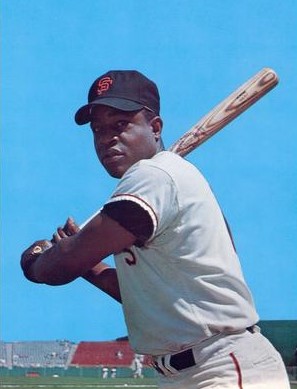
James Ray Hart (October 30, 1941 – May 19, 2016) was an American baseball player who was a third baseman in Major League Baseball. He played for the National League's San Francisco Giants from 1963 to 1973 and the American League's New York Yankees in 1973 and 1974. Hart batted and threw right-handed. In a 12-season career, Hart posted a .278 batting average, with 170 home runs and 578 runs batted in (RBI) in 1,125 major league games played.[1]

Key Information

Early life

[edit]

Hart was born on October 30, 1941, in Lenoir County, North Carolina to Amos and Essie Lee (Jones) Hart, who soon after moved to Hookerton where Amos worked as a sharecropper. He attended Snow Hill High School, and played semi-pro baseball.[2]

Career

[edit]

Hart was signed as an amateur free agent in 1960 by the Giants for $1,000.[3][2] He played in the Giants minor league system from 1960 to 1963.[4] In 1962, with the Single-A Springfield Giants of the Eastern League, Hart had a .337 batting average with 18 home runs and 107 RBIs. He was named the Eastern League Most Valuable Player. In 1963, he hit .312 for the Triple-A Tacoma Giants of the Pacific Coast League in 83 games.[4][2]

Hart was called up to the Giants in 1963.[4] In one of his earliest games, on July 7, 1963, St. Louis Cardinal pitcher Bob Gibson hit Hart with a pitch, breaking Hart's left shoulder, causing him to miss five weeks. Teammate Willie Mays had tried to warn him about "digging in" against Gibson, to no avail. Four days after returning to play in 1963, Cardinals pitcher Curt Simmons hit Hart again, giving him a concussion, resulting in ongoing headaches that finished Hart's season.[5][6][2] The following spring training, Giants manager Alvin Dark worked with Hart on how to avoid being hit by pitches.[2]

In 1964, his first full year with the Giants, Hart hit .286, with 31 home runs, and 81 RBIs. He came in second in rookie of the year voting (behind future hall of fame player Dick Allen and tied with Rico Carty[7]), and 18th in voting for most valuable player.[1]

In 1965, Hart was fined and suspended by Giants' manager Herman Franks after breaking curfew. Some of his teammates feared he was becoming an alcoholic, and Giants' captain Willie Mays had a talk with him. Mays told him, "If you play for me for six days, I'll give you one day," meaning if Hart was ready to play during the week, Mays would give him a bottle of Old Crow each Monday. "He was ready to play every day," Mays reported, and he gave Hart five hundred dollars out of his own pocket after the season for always being ready.[8] Hart hit .299, with 23 home runs and 96 RBIs in 1965, and was 15th in MVP voting.[1]

In 1966, Hart hit .285 with 33 home runs and 93 RBIs.[1] He was also selected to the National League All-Star Team.[9]

He was named NL Player of the Month in July 1967[1](.355, 13 HR, 30 RBIs).[2] While Hart played primarily at third base in 1964 (149 games, with 28 errors), 1965 (144 games, with a league leading 32 errors) and 1966 (139 games with 24 errors), in 1967 he played only 89 games at third base and 73 games in left field; still committing 16 errors at third base, but only two in the outfield.[1] He hit .289, with 29 home runs and 99 RBIs, and was 17th in MVP voting.[1]

Hart had a reputation as a poor defensive player at third base. He finished second, first and second among National League third basemen in errors in his first three full seasons in the majors (1964–66), never playing as many as 90 games at third in a season after that. In The New Bill James Historical Baseball Abstract, Bill James ranks Hart as the 74th-best third baseman of all time, writing about him, "A better hitter than 59 of the 73 men listed ahead of him at third base. This should tell you all you need to know about his defense."[10]

Hart's batting average fell to .258 in 1968, splitting time between third base and left field. He only played in 136 games, the first time he had played less than 153 games in a full season for the Giants. From 1969 to 1972, he continued to play in fewer games (95, 76, 31, 24) for the Giants.[1] In December 1970, Hart had surgery on his right shoulder, for a chronic degenerative condition.[11] In October 1972, he had surgery on a cartilage tear in his left knee.[12] Alcohol and weight control may also have played a part in his declining performance.[2]

Hart hit for the cycle on July 8, 1970.[13] That same day, he also became one of a select few players to have six RBIs in one inning. He did this by hitting a three-run triple and a three-run home run in the fifth inning of a game against the Atlanta Braves.[13]

Hart's rights were sold to the Yankees on April 17, 1973.[3] He hit .254, with 13 home runs and 52 RBIs in 114 games for the Yankees in 1973, but was released after playing in only 10 games in June 1974.[1][3]

Following his release from the major leagues in 1974, Hart played in the Mexican League for part of 1974, as well as in 1975-1976 before retiring from baseball in 1976.[4]

Later life

[edit]

Hart joined the Teamsters as a warehouseman for Safeway supermarkets in Richmond, California, and later in Tracy, California, when operations moved there in 1992; he retired from Safeway in 2006.[14]

Hart died on May 19, 2016.[15]

See also

[edit]

References

[edit]

Further reading

[edit]
[edit]
Revisions and contributorsEdit on WikipediaRead on Wikipedia
from Grokipedia
''Jim Ray Hart'' is an American former Major League Baseball third baseman known for his power-hitting prowess during the 1960s with the San Francisco Giants. Born on October 30, 1941, in Hookerton, North Carolina, Hart debuted with the Giants in 1963 and quickly emerged as a productive slugger after overcoming early injuries, including a notable rookie season in 1964 where he established himself among the league's top power threats. He earned an All-Star selection in 1966 and consistently delivered strong offensive performances during his peak years, making him a key figure in the Giants' lineup despite defensive challenges at third base. Injuries and personal struggles, including issues with alcoholism, gradually reduced his playing time after the late 1960s, leading to diminished roles with the Giants before he finished his major league career with brief stints as a designated hitter for the New York Yankees in 1973 and 1974. Hart later sought recovery and worked in warehouse employment, crediting rehabilitation efforts with turning his life around. He died on May 19, 2016, in Acampo, California, following a long illness.

Early Life

Birth and Family Background

James Ray Hart was born on October 30, 1941, in Hookerton, Lenoir County, North Carolina. His full name was James Ray Hart, and he was one of six children born to Amos Hart and Essie Lee (Jones) Hart. The family lived in rural North Carolina, where his father worked as a sharecropper on a farm in the Hookerton area. Hookerton was a small rural community in eastern North Carolina, and Hart grew up in modest circumstances typical of sharecropping families in the region during that era.

Youth and Early Baseball Involvement

Jim Ray Hart spent his childhood in the rural Hookerton area of Lenoir County, North Carolina, working on his family's cotton farm alongside his parents and five siblings. This physically demanding labor, particularly lifting heavy cotton bales, helped develop his strong, muscular build that would later serve him well in baseball. He attended Snow Hill Colored High School in nearby Snow Hill, North Carolina, where he played baseball. Hart continued his involvement in the sport by playing second base for semipro teams in the region on Sundays while still in the area. In 1960, at the age of 19, Hart signed with the San Francisco Giants as an amateur free agent, receiving a $500 bonus. He packed his belongings in two paper bags and reported to the team's rookie camp in Salem, Virginia, marking his transition from amateur play in North Carolina to professional baseball.

Major League Baseball Career

Minor Leagues and Debut with the Giants

Jim Ray Hart was signed by the San Francisco Giants as an amateur free agent before the 1960 season. He began his professional career that year at age 18, splitting time between two Class D affiliates: the Salem Rebels in the Appalachian League, where he hit .403 with 11 home runs in 34 games, and the Quincy Giants in the Midwest League, batting .266 with 2 home runs in 30 games, for a combined .343 average and 13 home runs across 64 games. In 1961, Hart advanced to the Fresno Giants in the Class C California League, where he posted a .355 batting average, 22 home runs, and 123 RBI over 138 games. He continued his rapid progression in 1962 with the Springfield Giants in the Class A Eastern League, hitting .337 with 18 home runs and 107 RBI in 140 games. In 1963, Hart was promoted to the Triple-A Tacoma Giants in the Pacific Coast League, where he batted .312 with 11 home runs and 56 RBI in 83 games. Hart made his Major League debut with the San Francisco Giants on July 7, 1963, at age 21, against the St. Louis Cardinals. In his limited rookie season, he appeared in seven games, all at third base, recording 4 hits in 20 at-bats for a .200 average, along with 1 double, 2 RBI, 3 walks, and a .360 on-base percentage. His early role with the Giants was as a third baseman in this brief call-up.

Peak Years with the San Francisco Giants (1964–1970)

Jim Ray Hart's peak performance with the San Francisco Giants occurred from 1964 to 1970, a period when he solidified his status as one of the National League's more feared power hitters. In averaging 27 home runs per year from 1964 through 1968, Hart delivered consistent power that helped the Giants remain perennial contenders, finishing second in the National League standings in 1965, 1966, 1967, and 1968. Hart broke out in his 1964 rookie season by hitting 31 home runs (tied for second in the NL), driving in 81 runs, and batting .286 across 153 games. He followed with a durable 1965 campaign, appearing in 160 games while hitting .299 with 23 home runs and 96 RBIs. In 1966, Hart achieved his career high in home runs with 33, added 93 RBIs and a .285 average, and earned a spot on the National League All-Star team. His 1967 season featured a career-best 99 RBIs to accompany 29 home runs and a .289 batting average, including a dominant July that earned him National League Player of the Month recognition after hitting 13 home runs and driving in 30 runs over 29 games. Injuries began to affect his availability in the later part of this span. In 1968, shoulder, knee, and groin issues limited Hart to 136 games, though he still produced 23 home runs and 78 RBIs while batting .258. His output dropped significantly in 1969 amid ongoing shoulder problems, resulting in only 95 games played, 3 home runs, and 26 RBIs. Hart started 1970 in the minors to rehabilitate his chronic right shoulder condition but returned to the majors in July and delivered a memorable performance on July 8 against the Atlanta Braves, where he hit for the cycle and drove in six runs in the fifth inning alone. He concluded the year with a .282 average, 8 home runs, and 37 RBIs across 76 games.

Later Giants Tenure and Trade to the Yankees (1971–1974)

Hart's tenure with the San Francisco Giants from 1971 to early 1973 was marked by significantly reduced playing time and ongoing physical challenges stemming from prior injuries. In 1971 he appeared in just 31 games, primarily as a pinch hitter, batting .256 with 2 home runs in 39 at-bats. The following year he played in 24 games for the Giants, hitting .304 with 5 home runs in 79 at-bats, though he spent considerable time in the minors to regain form. These limited appearances reflected a sharp decline from his earlier production as a regular power hitter. On April 17, 1973, the Giants sold Hart to the New York Yankees, where he benefited from the newly introduced designated hitter position in the American League. He played in 114 games for the Yankees that season, batting .254 with 13 home runs and 52 RBIs across 339 at-bats. Early in the year he showed promise as one of the league's leading designated hitters, but recurrent knee issues contributed to a late-season fade. Hart's final major league season in 1974 proved brief and unproductive with the Yankees, as he appeared in only 10 games and hit .053 in 19 at-bats with no home runs. He was released by the team on June 7, 1974, effectively concluding his MLB career at age 32. His last game occurred on May 27, 1974. This period underscored a marked downturn in performance and availability compared to his peak power years earlier with the Giants.

Career Statistics and Playing Style

Jim Ray Hart played in 1,052 Major League games across his career, primarily with the San Francisco Giants from 1963 to 1974 and briefly with the New York Yankees in 1973–1974. He accumulated 3,295 at-bats, recording 929 hits, 170 home runs, and 546 runs batted in, while posting a career batting average of .282, an on-base percentage of .347, a slugging percentage of .489, and an OPS of .836. Hart primarily played third base (appearing in 668 games at the position) and left field (200 games), demonstrating defensive versatility as a corner infielder and outfielder. He batted and threw right-handed, leveraging his power from the right side to become a middle-of-the-order threat during his tenure. As a player, Hart was noted for his power hitting and line-drive approach at the plate, combining solid contact skills with occasional extra-base production that made him one of the more productive right-handed hitters in the National League during the 1960s. His career numbers reflect consistent run production when healthy, though injuries limited his longevity and peak performance window.

Awards and Honors

All-Star Selections and Other Recognitions

Jim Ray Hart was selected to the National League All-Star team in 1966 as a reserve third baseman for the San Francisco Giants. He entered the July 12 game at Busch Memorial Stadium as a pinch hitter in the eighth inning, striking out in his only plate appearance against Sonny Siebert as the National League won 2–1. This marked his sole All-Star appearance during his major league career. In 1964, Hart tied for second in National League Rookie of the Year voting (with Rico Carty) behind Dick Allen. That season he was also named the San Francisco Giants' Rookie of the Year by the local chapter of the Baseball Writers' Association of America. Hart received Most Valuable Player voting consideration in three seasons, finishing tied for 18th in 1964, 15th in 1965, and 17th in 1967. He was additionally named National League Player of the Month for July 1967 after batting .355 with 13 home runs and 30 RBIs over 29 games.

Posthumous Tributes

Following Jim Ray Hart's death on May 19, 2016, the San Francisco Giants issued an official statement expressing their deep sadness and extending condolences to his family, former teammates, friends, and fans. The team described Hart as a beloved figure in Giants history whose contributions would be remembered fondly. On May 20, 2016, prior to the Giants' home game against the Chicago Cubs at AT&T Park, the organization held a moment of silence to honor Hart's memory. The Giants broadcast team also paid tribute during the pregame coverage by presenting a video montage highlighting some of Hart's most memorable moments and accomplishments in a San Francisco uniform. This segment allowed broadcasters and viewers to reflect on his impact as a key player during the team's 1960s era.

Personal Life

Marriage and Family

Jim Ray Hart was married twice. His first marriage was to Barbara Jean Moore in 1963; they later divorced. He subsequently married Janet Hart-Ayala, and that marriage also ended in divorce. He had four children. He was survived by his four children, twelve grandchildren, and two great-grandchildren.

Post-Retirement Activities and Health

After his Major League Baseball career ended in 1974, Jim Ray Hart continued playing professionally in the Mexican League through 1976 before fully retiring from the sport. He subsequently struggled with alcoholism, which led to significant personal and financial hardship, including the repossession of his San Francisco home and instances of scavenging for change. In 1988, Hart entered a rehabilitation program called Project 90 in San Mateo, California, after a blackout incident during a flight; he later credited the program with saving his life and turning things around. Following rehabilitation, he found steady employment as a warehouse worker in Sacramento, California, providing stability in his post-baseball years. Hart resided in Acampo, California—approximately 30 miles from Sacramento—in his later years. He battled a long illness during this period.

Death

Circumstances and Immediate Aftermath

Jim Ray Hart died on May 19, 2016, at his home in Acampo, California, at the age of 74 following a long illness. He passed away peacefully surrounded by his family. Hart was subsequently cremated. The San Francisco Giants organization issued an immediate statement expressing sorrow over his passing, with president and CEO Larry Baer describing Hart as one of the most popular Giants of all time who played with great passion and pride while offering the team's thoughts and prayers to his family. Hart's wife, Mary, confirmed the circumstances of his death and conveyed that he remained at home until the end. No public memorial services were initially announced, as arrangements remained private in the immediate period following his death.

Legacy

Impact on San Francisco Giants Franchise

Jim Ray Hart established himself as a key power hitter for the San Francisco Giants during the mid-1960s, averaging 27 home runs per season from 1964 through 1968 and becoming one of the more feared sluggers in the team's lineup. As the regular third baseman starting in 1964, he delivered consistent offensive production from the hot corner, including a career-high 31 home runs that year to tie for second on the team in that category. His power contributions complemented the Giants' strong offensive core during a competitive era for the franchise. Over 11 seasons with the Giants from 1963 to 1973, Hart batted .282 with 157 home runs, earning an All-Star selection in 1966 after hitting .285 and finishing in the top 20 in National League MVP voting three times. These accomplishments underscored his role in bolstering the team's offensive output at third base during the organization's push for pennants. Among San Francisco Giants third basemen, Hart holds a prominent place in franchise history due to his power numbers and longevity at the position. He ranks highly in single-season and career home run production for Giants third basemen, distinguishing him in assessments of the club's all-time performers at the position. The team recognized his contributions by including him in lists of notable Giants third basemen and remembering him as a longtime fixture at third base upon his passing.

Baseball Community Remembrances

Following his death on May 19, 2016, after a long illness, the San Francisco Giants organization and baseball community expressed condolences and remembered Jim Ray Hart for his contributions as a power-hitting third baseman during the 1960s. Giants CEO Larry Baer issued a statement saying, "Everyone in the Giants organization is deeply saddened by the news of Jim's passing. Our condolences go out to the Hart family for their tremendous loss and we extend our thoughts to Jim's teammates, his friends, and to all those touched by his passing." The team paid tribute with a moment of silence before their May 20, 2016 game against the Chicago Cubs and featured highlights of his career during the broadcast to honor his time in a Giants uniform.

Place in Baseball History

Jim Ray Hart ranks among the most productive power-hitting third basemen in Major League Baseball during the 1960s, an era generally defined by strong pitching and lower league-wide offensive levels compared to subsequent decades. His ability to combine power and run production at a position often valued more for defense placed him in the upper tier of National League third basemen during his peak years in the mid-1960s. Compared to contemporaries such as Ron Santo and Dick Allen, Hart demonstrated comparable home run power and slugging ability during the period when few third basemen consistently exceeded 25 home runs in a season. While injuries shortened his prime and limited his career longevity, his offensive output in that decade highlighted the emerging potential for third basemen to serve as significant power sources in lineups. Hart's contributions occurred during a transitional phase in National League play, where offensive strategies were adapting to the dominance of pitchers in the mid-1960s. His peak performance in those years stands as a notable example of how select players at the position could challenge the defensive-oriented archetype prevalent in earlier decades.

References

Add your contribution
Related Hubs
User Avatar
No comments yet.