



Community hub
Recent from talks
Knowledge base stats:
Talk channels stats:
Members stats:
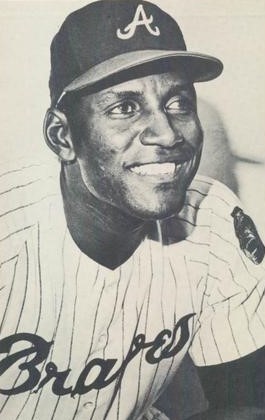
Rico Carty
Ricardo Adolfo Jacobo Carty (September 1, 1939 – November 23, 2024), nicknamed "Beeg Boy", was a Dominican former professional baseball player. He played in Major League Baseball as an outfielder from 1963 to 1979, most prominently as a member of the Atlanta Braves where he helped the franchise win its first National League Western Division title in 1969. Carty had a career batting average of .299 and, was the 1970 National League (NL) batting champion with a .366 batting average. He earned his starting role in the 1970 All-Star Game as a write-in candidate.
Carty also played for the Chicago Cubs, Oakland Athletics, Cleveland Indians, Toronto Blue Jays and Texas Rangers. He was one of the earliest Dominicans to play in the major leagues; however, his career was marked by battles with injuries, illnesses (tuberculosis) and teammates. In 1996, Carty was inducted into the Caribbean Baseball Hall of Fame as part of their inaugural class, and in 2023 he was inducted into the Braves Hall of Fame.
Carty represented the Dominican Republic at the 1959 Pan American Games. He signed a contract with the Milwaukee Braves as a free agent in 1959. While he was considered an excellent hitter, he had poor defensive skills. Originally a catcher, Carty converted to an outfielder to lessen his defensive liabilities and to get his bat into the everyday lineup.
After four years in the minor leagues, Carty made his major league debut in 1964, finishing with a .330 batting average, second to Roberto Clemente in the National League. He was the runner-up to Dick Allen in the National League Rookie of the Year Award ballot. Carty holds the distinction of being the first Braves player to record a hit after the franchise moved from Milwaukee to Atlanta in a game against the Pirates on April 12, 1966.
Carty hit over .300 for three consecutive seasons, then faltered in 1967, slumping to a .255 batting average in part due to a separated shoulder. Carty then missed the entire 1968 season due to tuberculosis. He recovered in 1969 with a .342 batting average (in 104 games and 304 at-bats), helping the Braves win the National League West title, the franchise's first postseason berth since the 1958 World Series. Carty finished 13th in the National League Most Valuable Player Award voting. The Braves would eventually lose to the "Miracle" Mets in the 1969 National League Championship Series.
In 1970, Carty hit 25 home runs with 101 runs batted in (RBIs) and won the National League batting title with a .366 batting average, the highest average in the major leagues since Ted Williams recorded a .388 batting average in 1957. Despite not appearing on the All-Star ballot, he was voted to be a starting outfielder for the National League as a write-in candidate in the 1970 All-Star Game, playing alongside Hank Aaron and Willie Mays in the outfield. It would be the only All-Star appearance of his career.
Carty also compiled a 31-game hitting streak in 1970, the longest by a Braves hitter in the franchise's Atlanta history until Dan Uggla surpassed it in 2011 with a 33-game streak. Carty was named NL Player of the Month for May with a .448 batting average, seven home runs, and 22 RBIs. He finished 10th in the 1970 National League Most Valuable Player Award voting. On May 31, Carty hit 3 home runs against the Phillies, going 4-for-4 with six RBIs in a 9–1 rout of the Phillies.
A knee injury suffered during the Dominican Winter Baseball season meant Carty would miss another entire season in 1971. He returned in 1972 but only managed a .277 batting average. By then, Carty had worn out his welcome with the Braves management as well as his teammates, having been involved in fights with Hank Aaron and Ron Reed.
Hub AI
Rico Carty AI simulator
(@Rico Carty_simulator)
Rico Carty
Ricardo Adolfo Jacobo Carty (September 1, 1939 – November 23, 2024), nicknamed "Beeg Boy", was a Dominican former professional baseball player. He played in Major League Baseball as an outfielder from 1963 to 1979, most prominently as a member of the Atlanta Braves where he helped the franchise win its first National League Western Division title in 1969. Carty had a career batting average of .299 and, was the 1970 National League (NL) batting champion with a .366 batting average. He earned his starting role in the 1970 All-Star Game as a write-in candidate.
Carty also played for the Chicago Cubs, Oakland Athletics, Cleveland Indians, Toronto Blue Jays and Texas Rangers. He was one of the earliest Dominicans to play in the major leagues; however, his career was marked by battles with injuries, illnesses (tuberculosis) and teammates. In 1996, Carty was inducted into the Caribbean Baseball Hall of Fame as part of their inaugural class, and in 2023 he was inducted into the Braves Hall of Fame.
Carty represented the Dominican Republic at the 1959 Pan American Games. He signed a contract with the Milwaukee Braves as a free agent in 1959. While he was considered an excellent hitter, he had poor defensive skills. Originally a catcher, Carty converted to an outfielder to lessen his defensive liabilities and to get his bat into the everyday lineup.
After four years in the minor leagues, Carty made his major league debut in 1964, finishing with a .330 batting average, second to Roberto Clemente in the National League. He was the runner-up to Dick Allen in the National League Rookie of the Year Award ballot. Carty holds the distinction of being the first Braves player to record a hit after the franchise moved from Milwaukee to Atlanta in a game against the Pirates on April 12, 1966.
Carty hit over .300 for three consecutive seasons, then faltered in 1967, slumping to a .255 batting average in part due to a separated shoulder. Carty then missed the entire 1968 season due to tuberculosis. He recovered in 1969 with a .342 batting average (in 104 games and 304 at-bats), helping the Braves win the National League West title, the franchise's first postseason berth since the 1958 World Series. Carty finished 13th in the National League Most Valuable Player Award voting. The Braves would eventually lose to the "Miracle" Mets in the 1969 National League Championship Series.
In 1970, Carty hit 25 home runs with 101 runs batted in (RBIs) and won the National League batting title with a .366 batting average, the highest average in the major leagues since Ted Williams recorded a .388 batting average in 1957. Despite not appearing on the All-Star ballot, he was voted to be a starting outfielder for the National League as a write-in candidate in the 1970 All-Star Game, playing alongside Hank Aaron and Willie Mays in the outfield. It would be the only All-Star appearance of his career.
Carty also compiled a 31-game hitting streak in 1970, the longest by a Braves hitter in the franchise's Atlanta history until Dan Uggla surpassed it in 2011 with a 33-game streak. Carty was named NL Player of the Month for May with a .448 batting average, seven home runs, and 22 RBIs. He finished 10th in the 1970 National League Most Valuable Player Award voting. On May 31, Carty hit 3 home runs against the Phillies, going 4-for-4 with six RBIs in a 9–1 rout of the Phillies.
A knee injury suffered during the Dominican Winter Baseball season meant Carty would miss another entire season in 1971. He returned in 1972 but only managed a .277 batting average. By then, Carty had worn out his welcome with the Braves management as well as his teammates, having been involved in fights with Hank Aaron and Ron Reed.