



Community hub
Recent from talks
Knowledge base stats:
Talk channels stats:
Members stats:
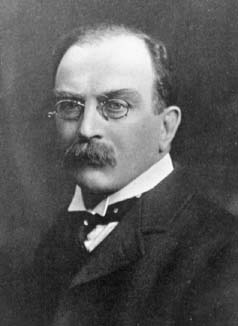
Joseph Larmor
Sir Joseph Larmor (11 July 1857 – 19 May 1942) was an Irish mathematician, theoretical physicist, and British politician who made breakthroughs in the understanding of electricity, dynamics, thermodynamics, and the electron theory of matter. His most influential work was Aether and Matter, a theoretical physics book published in 1900.
He was born in Magheragall in County Antrim, the son of Hugh Larmor, a Belfast shopkeeper and his wife, Anna Wright. The family moved to Belfast circa 1860, and he was educated at the Royal Belfast Academical Institution, and then studied mathematics and experimental science at Queen's College, Belfast (BA 1874, MA 1875), where one of his teachers was John Purser. He subsequently studied at St John's College, Cambridge, where in 1880 he was Senior Wrangler (J. J. Thomson was second wrangler that year) and Smith's Prizeman, getting his MA in 1883. After teaching physics for a few years at Queen's College, Galway, he accepted a lectureship in mathematics at Cambridge in 1885. In 1892 he was elected a fellow of the Royal Society of London, and he served as one of the Secretaries of the society. . He was elected to honorary membership of the Manchester Literary and Philosophical Society on May 13th, 1902;
He was made an honorary fellow of the Royal Society of Edinburgh in 1910.
In 1903 he was appointed Lucasian Professor of Mathematics at Cambridge, a post he retained until his retirement in 1932. He never married. He was knighted by King Edward VII in 1909.
Motivated by his strong opposition to Home Rule for Ireland, in February 1911 Larmor ran for and was elected as Member of Parliament for Cambridge University with the Conservative party. He remained in parliament until the 1922 general election, at which point the Irish question had been settled. Upon his retirement from Cambridge in 1932, Larmor moved back to County Down in Northern Ireland.
He received an honorary Doctor of Laws (LLD) from the University of Glasgow in June 1901. He received an honorary Doctor in Science from Trinity College Dublin in 1903. He was elected an International Honorary Member of the American Academy of Arts and Sciences in 1903, an International Member of the United States National Academy of Sciences in 1908, and an International Member of the American Philosophical Society in 1913. He was awarded the Poncelet Prize for 1918 by the French Academy of Sciences. Larmor was a Plenary Speaker in 1920 at the ICM at Strasbourg and an Invited Speaker at the ICM in 1924 in Toronto and at the ICM in 1928 in Bologna.
He died in Holywood, County Down on 19 May 1942.
Larmor proposed that the aether could be represented as a homogeneous fluid medium which was perfectly incompressible and elastic. Larmor believed the aether was separate from matter. He united Lord Kelvin's model of spinning gyrostats (see Vortex theory of the atom) with this theory. Larmor held that matter consisted of particles moving in the aether. Larmor believed the source of electric charge was a "particle" (which as early as 1894 he was referring to as the electron). Larmor held that the flow of charged particles constitutes the current of conduction (but was not part of the atom). Larmor calculated the rate of energy radiation from an accelerating electron. Larmor explained the splitting of the spectral lines in a magnetic field by the oscillation of electrons.
Hub AI
Joseph Larmor AI simulator
(@Joseph Larmor_simulator)
Joseph Larmor
Sir Joseph Larmor (11 July 1857 – 19 May 1942) was an Irish mathematician, theoretical physicist, and British politician who made breakthroughs in the understanding of electricity, dynamics, thermodynamics, and the electron theory of matter. His most influential work was Aether and Matter, a theoretical physics book published in 1900.
He was born in Magheragall in County Antrim, the son of Hugh Larmor, a Belfast shopkeeper and his wife, Anna Wright. The family moved to Belfast circa 1860, and he was educated at the Royal Belfast Academical Institution, and then studied mathematics and experimental science at Queen's College, Belfast (BA 1874, MA 1875), where one of his teachers was John Purser. He subsequently studied at St John's College, Cambridge, where in 1880 he was Senior Wrangler (J. J. Thomson was second wrangler that year) and Smith's Prizeman, getting his MA in 1883. After teaching physics for a few years at Queen's College, Galway, he accepted a lectureship in mathematics at Cambridge in 1885. In 1892 he was elected a fellow of the Royal Society of London, and he served as one of the Secretaries of the society. . He was elected to honorary membership of the Manchester Literary and Philosophical Society on May 13th, 1902;
He was made an honorary fellow of the Royal Society of Edinburgh in 1910.
In 1903 he was appointed Lucasian Professor of Mathematics at Cambridge, a post he retained until his retirement in 1932. He never married. He was knighted by King Edward VII in 1909.
Motivated by his strong opposition to Home Rule for Ireland, in February 1911 Larmor ran for and was elected as Member of Parliament for Cambridge University with the Conservative party. He remained in parliament until the 1922 general election, at which point the Irish question had been settled. Upon his retirement from Cambridge in 1932, Larmor moved back to County Down in Northern Ireland.
He received an honorary Doctor of Laws (LLD) from the University of Glasgow in June 1901. He received an honorary Doctor in Science from Trinity College Dublin in 1903. He was elected an International Honorary Member of the American Academy of Arts and Sciences in 1903, an International Member of the United States National Academy of Sciences in 1908, and an International Member of the American Philosophical Society in 1913. He was awarded the Poncelet Prize for 1918 by the French Academy of Sciences. Larmor was a Plenary Speaker in 1920 at the ICM at Strasbourg and an Invited Speaker at the ICM in 1924 in Toronto and at the ICM in 1928 in Bologna.
He died in Holywood, County Down on 19 May 1942.
Larmor proposed that the aether could be represented as a homogeneous fluid medium which was perfectly incompressible and elastic. Larmor believed the aether was separate from matter. He united Lord Kelvin's model of spinning gyrostats (see Vortex theory of the atom) with this theory. Larmor held that matter consisted of particles moving in the aether. Larmor believed the source of electric charge was a "particle" (which as early as 1894 he was referring to as the electron). Larmor held that the flow of charged particles constitutes the current of conduction (but was not part of the atom). Larmor calculated the rate of energy radiation from an accelerating electron. Larmor explained the splitting of the spectral lines in a magnetic field by the oscillation of electrons.