Hubbry Logo
Kaliflower CommuneKaliflower CommuneMain
Open search
Kaliflower Commune
Community hub
Kaliflower Commune
logo
8 pages, 0 posts
0 subscribers
Be the first to start a discussion here.
Kaliflower Commune
Kaliflower Commune
from Wikipedia

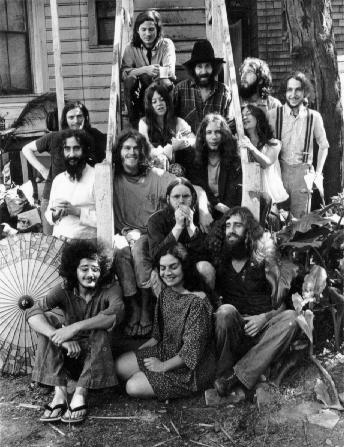
The Friends of Perfection Commune is an American Utopian community in San Francisco, California.[1] The commune was founded in 1967 on principles of a common treasury, group marriage, free anonymous art, gay liberation, and selfless service.[1][2][3][4] They were originally called the Sutter/Scott Street commune, and commonly referred to as the Kaliflower commune, after their newsletter of the same name. Because the commune's publishing activities helped spread their philosophy, they became a significant influence on Bay Area culture.[1] Many members of The Angels of Light, a free psychedelic drag theater group, originally lived in the Kaliflower commune.[5] The name Kaliflower referenced the Hindu name for the last and most violent age of humankind, the Kali Yuga.[6]

Key Information

Background

[edit]

Communes played an integral part of the 1960s American hippie movement.[3] Members of the 1960s counterculture movement created communes as a way to survive outside the hegemonic system and to resist the boredom of enforced heterosexuality, the Vietnam War, capitalism, racism, mass media, and the government.[7]

The Kaliflower commune was founded on the spiritual and economic principles of the SF Diggers: shared resources, free labor, fun, and the liberation of culture from commercialism.[3] The commune's members were also inspired by John Humphrey Noyes, founder of the Oneida Community (a perfectionist religious communal society that existed in New York in the 1840s) and his book, History of American Socialisms,[3] to embrace practices of group marriage, mutual criticism, and selfless service.[3]

Cofounder Irving Rosenthal created the Free Print Shop, a print shop in the commune basement, as a platform for uncensored, radical, free publishing in the Bay Area.[8]

Origins

[edit]

Irving Rosenthal (1930–2022) was a writer and editor from San Francisco.[1][9] He studied at the University of Chicago in the late 1950s where he was an editor of the Chicago Review.[9][10] There he edited and published many Beat writers including Jack Kerouac, Edward Dahlberg, and William Burroughs; but Rosenthal and most of the staff quit the Chicago Review in 1959 after the University attempted to censor an issue of the Review because it included material from William Burroughs′ then-unpublished novel Naked Lunch .[9][10] To publish the disputed material they cofounded a literary review called Big Table, which was immediately charged with obscenity by the U.S. Postal Department.[11][12] However, Rosenthal eventually won the case,[13] which Judge Julius Hoffman adjudicated.[1][10] Rosenthal then moved to New York City, where he continued to edit and publish Beat writers before moving to San Francisco in 1967 with the intention of setting up his own commune free of censorship.[1] He was joined by Hibiscus (a founder of psychedelic free theater groups The Cockettes and the Angels of Light),[14] starting the commune.[9] Members of the SF Diggers helped transport his printing press from New York to start the Free Print Shop.[10]

Commune culture

[edit]

The Kaliflower spirit was one of communalism and cooperation. Many members saw their commune as their family.[1] In one issue of Kaliflower, commune members wrote, "Nuclear family members don't usually buy and sell to each other, are in fact communistic, and we wanted nuclear family intimacy among the communes".[1] It was common for commune members to limit relationships with non-communalist friends.[1] Members gave their savings to the group and were encouraged to quit outside jobs and work inside the community instead.[1] Commune tasks included research, gardening, cleaning, cooking, running the Free Print Shop, maintaining a free store, or delivering the newsletter or food to other communes.[1]

The community supported a culture of polyamory, resisting attachments to a single sexual partner.[1][15] Many members slept in a group bedroom and regularly shared sexual partners, participating in what they considered to be a group marriage.[1]

Major decisions were made by consensus within the daily meeting of committed community members.[1] The commune also held voluntary mutual criticism sessions where members could express issues with each other in a neutral setting.[1] During such a session, the member requesting criticism would invite other members to participate, and then listen in silence while concerns & criticisms were aired. Customarily the member did not respond for three days. This system of self-governance was borrowed from the 19th-century American Utopian community at Oneida, NY.[1]

Publication

[edit]
The Chief 15 offset located in the Free Print Shop in the basement of the Kaliflower Commune

Rosenthal brought his printing press to the commune basement, and the space became known as the Free Print Shop, a free, underground publishing venue for Bay Area communes.[1][8] The flyer for the opening of the Free Print Shop announced, "The Sutter Street Commune invites you to submit manuscripts, drawings, manifestos to our Free Print Shop. Free distribution guaranteed for whatever we print."[6] From then on, the Free Print Shop produced hundreds of publication including books, pamphlets, and flyers (for free services, ecology groups, political protests, announcements for free events), Food Conspiracy order sheets, and Free Medical Clinic prescription forms.[6][8]

Starting in April 1969, members of the group worked in the print shop to create Kaliflower, the free, inter-communal newsletter.[1][6][8] The newsletter was published weekly between April 1969 and December 1971, & at longer intervals through the present.[1][6] The name was a play on Kali Yuga, the Hindu name for the last and most violent age of humankind, the idea being that the publication was "a step toward a seed of positivity growing out of the age of destruction."[6] The publication's readership grew quickly.[8] After three years, it was delivered to more than 300 communes in the Bay Area, eventually becoming so well known that the commune itself became known as Kaliflower.[1][6] Every Thursday became known as "Kaliflower Day," the day on which Kaliflower was bound and distributed. Each issue of Kaliflower was printed in-house and bound by hand using the Japanese method of overstitching yarn on either the top or side.[8]

The newsletter began as a "inter-communal bulletin board" and became a vital mode of communication amongst the communes.[1][6] It listed items that one commune needed or had to offer; upcoming free events; announcements, free ads, and how-to and skill sharing articles.[6][8] For instance, one article from November 20, 1970 contained articles on how to build cold boxes to grow food and a recipe for squash soup.[6] One from December 10, 1970 had an article titled "Yoga Nazal Cleaning" and information on herbal hair care.[6] Over time, it came to offer a broader range of information about collective living including historical context for communalism and utopianism, often citing information from the Revivalist communes in the 1820s and 1840s, most notably the Oneida Commune of John Humphrey Noyes.[1]

Free Food Conspiracy

[edit]

The Free Food Conspiracy (later named the Free Food Family) was organized in 1968, in part by Kaliflower members.[1] The organization was one of the original food conspiracies, groups that pooled food stamps and other resources from participating communes and bought food in bulk which they distributed to participants on the basis of need.[16][17] By pooling resources, early food co-ops like the Free Food Conspiracy saved shopping time and provided high quality food for low bulk prices.[17] By 1973, the organization reached over 150 communes, saving money and increasing cooperation between the communes.[16] Kaliflower expressed hope that one day local communes would eventually pool enough resources to buy property and land; however the Free Food Conspiracy disbanded in 1973 due to resistance against giving up "imported cheeses and health food extravagances" in exchange for a more basic diet.[1]

Free Food Conspiracy legacy

[edit]

Congress saw the Free Food Conspiracy and other resource-sharing plans like it as abuses of welfare.[1] Nixon attempted to restrict organizations like the Free Food Conspiracy from receiving food stamps by changing eligibility requirements to limit households of unrelated people (ie. Communes).[1] This new eligibility requirement was struck down by the US Supreme Court under the equal protection provision of the 5th Amendment in USDA v. Moreno.[2]

Although the Free Food Conspiracy disbanded in 1973, the organization spurred the creation of many food co-ops as people saw the benefits of organizing wholesale buying operations.[17] The Free Food Conspiracy was a predecessor of many anti-capitalist resource sharing programs including other cooperative food systems, bicycle repair workshops, community gardens, and farmers' markets.[1][18] It inspired the Food Not Bombs program, an all-volunteer-run global movement that shares free vegan meals as a protest to war and poverty.[19] The Free Food Conspiracy also gave rise to the Really Really Free Market, a movement of temporary markets based on the gift economy where participants bring unneeded items, food, and skills like haircuts to a community space to share with other participants with the principle of countering capitalism.[18]

Impact

[edit]
Rebirth and Development, 2019
All in Common Garden, 2019

Kaliflower helped create the culture of Haight-Ashbury and the San Francisco hippie movement during the 1970s. The commune that produced the newsletter influenced the formation, structure, and principles of many other communes including The House of Love and Prayer[20] and the One Mind Temple (which became the St. John Coltrane Church).[21] Its existence continues to inspire the creation of other utopian, anti-capitalist communes and resource-sharing groups with similar values.

In 1974, the commune moved to the Mission District.[22] As of 2025, it continues to publish Kaliflower, [23] produce free art, and host services such as a free food pantry, referrals to free services, and a free community garden.[22] The community garden (All in Common Garden) supports the Free Farm Stand on Sundays at Parque Niños Unidos at 23rd and Treat Streets,[24] which was started by a person who was part of the commune.[25]

Representation in media

[edit]

The commune is referenced in The Cockettes, a film by David Weissman and Bill Weber about a psychedelic, San Francisco based, gender-bending theater group founded by Hibiscus, one of the first members of the commune.[14]

The commune is mentioned in The Fabulous Sylvester: The Legend, the Music, the Seventies in San Francisco, a biography by Joshua Gamson about the life of Sylvester, a queer, American singer and performer popular for his disco music.[26] Sylvester did not live in the commune, but another cofounder of the Cockettes, Hibiscus, was a member.[27]

References

[edit]
[edit]
Revisions and contributorsEdit on WikipediaRead on Wikipedia
from Grokipedia
The Kaliflower Commune, originally the Sutter/Scott Street Commune, was a countercultural collective in San Francisco founded in 1967 by Irving Rosenthal, who established it as a hub for free services and communal experimentation inspired by the Diggers' ethos of gratis exchange. In 1968, commune members set up a free print shop equipped with offset presses, providing printing services to countercultural groups without charge, and in spring 1969 launched the weekly Kaliflower newspaper, bound by hand and distributed free to nearly 300 communes to foster intercommunal communication and resource sharing. The group contributed to practical mutual aid efforts, such as organizing the Free Food Conspiracy—later the Free Food Family—by pooling food stamps from member communes to procure and distribute provisions collectively. Kaliflower also served as a creative and social nexus for artists, performers, and queer individuals, incubating projects like the Cockettes drag troupe and aligning with early gay liberation through its inclusive, experimental living arrangements that challenged conventional norms. Occupying properties on Sutter, Scott (1971–1974), and later Shotwell Streets, the commune persisted into the mid-1970s, spawning offshoot groups while embodying the era's aspirations for autonomous, egalitarian communities, though like many such ventures, it grappled with sustainability amid internal dynamics and external pressures.

Historical Development

Founding and Early Years (1967–1968)

The Kaliflower Commune began as the Sutter Street Commune, founded in 1967 by Irving Rosenthal in San Francisco's District. Rosenthal, a and former editor at the Chicago Review, relocated from the East Coast to establish the group amid the burgeoning scene, occupying properties on Sutter and adjacent Scott Streets. The initial setup emphasized communal resource sharing, including a common treasury to support members' needs without individual ownership. In its formative phase, the commune drew inspiration from the San Francisco Diggers' ethos of free distribution and mutual aid, which Rosenthal and early members sought to implement practically. By early 1968, a key transition occurred as Digger principles were passed to the group, solidifying its commitment to providing free services and fostering inter-communal networks among the hundreds of Bay Area collectives emerging since 1967. This period marked the commune's shift toward operationalizing ideals of selfless service, with members pooling resources like food stamps for collective benefit. A pivotal early initiative was the creation of the Free Print Shop in the commune's basement, launched in using offset presses acquired at discount and staffed by members to produce uncensored materials for the . Under Rosenthal's involvement, the shop printed on unconventional materials like gold-lam paper, serving as a hub for radical publishing and aligning with the group's vision of anonymous, free artistic expression. These efforts laid the groundwork for broader communal experiments, though internal dynamics remained fluid with rotating leadership and voluntary participation.

Expansion and Core Activities (1968–1970)

Following its establishment in 1967, the Kaliflower Commune, initially known as the Sutter Street Commune at 1873 Sutter Street in San Francisco, underwent significant expansion in 1968 by founding the Free Print Shop in the early months of that year, with assistance from the San Francisco Diggers. This facility provided free printing services using a Chief 15 offset press, enabling the production of flyers, posters, and materials for various countercultural groups, which broadened the commune's influence within the burgeoning network of Bay Area communes. In spring 1969, the commune launched its flagship publication, the Kaliflower intercommunal , with the first issue dated April 24, 1969. Distributed weekly on Thursdays—designated "Kaliflower Day"—the paper served as a communication hub for communes, featuring free ads, how-to guides, and announcements that fostered resource sharing and coordination among participants. By 1970, Kaliflower's reach was expanding, laying groundwork for distribution to over 300 communes by 1971, reflecting the commune's growing role in intercommunal networking. Core activities during this period centered on selfless service through printing and publication, aligning with Digger-inspired principles of free labor and shared resources. The Free Print Shop operated as a communal hub, producing not only Kaliflower but also supporting broader efforts like the Free Food Conspiracy organized in 1968, where food stamps from member communes were pooled for bulk purchases and free distribution. These operations emphasized practical mutual aid, with the commune salvaging materials and employing techniques like Japanese sewing for binding publications to minimize costs. The commune's expansion was marked by increased visibility and participation in the , though specific membership numbers remain undocumented; its activities contributed to a proliferation of hundreds of communes in the starting in 1967. This period solidified the group's commitment to anonymous art, , and liberation ideals, without reliance on formal or monetary treasury beyond pooled contributions.

Decline and Dissolution (1970s Onward)

The Scott Street Commune, by then commonly known as the , ceased publication of its weekly intercommunal newspaper Kaliflower in 1972 after more than three years of continuous production, marking an early indicator of waning momentum. This decision reflected growing exhaustion among members from the relentless demands of maintaining the Free Print Shop and distributing to nearly 300 Bay Area communes, as the effort shifted from inspirational to rote institutionalization. By 1974, the commune's occupation of a Agency-owned on Scott Street concluded, effectively dissolving the central household that had anchored its operations since 1971. Participants dispersed, with some relocating to rural collectives such as , amid broader countercultural fragmentation following the scene's post-1967 decline into increased drug dependency, crime, and economic pressures. Internal challenges, including burnout from non-stop communal projects without scalable structures for perpetuation, contributed causally to the dissolution, as idealistic "now or never" imperatives proved unsustainable against human limitations on and coordination. Unlike short-term experiments buoyed by novelty, the commune's common treasury and models encountered free-rider dynamics and interpersonal strains inherent to large-scale voluntary collectivism without individual incentives, mirroring failures across 1960s-1970s urban communes where over 90% disbanded by the decade's end due to practical infeasibilities. While the core entity ended, its networked influence lingered in subsequent intentional communities, underscoring how ephemeral urban experiments yielded ideological echoes rather than enduring institutions.

Ideological Foundations

Economic and Communal Principles

The Kaliflower Commune adhered to an centered on a common treasury, where all incoming funds from members' prior savings, donations, or external sources were pooled collectively and disbursed based on communal needs rather than individual ownership. This system rejected , promoting the principle of "all things in common," including money, , , and tools, to eliminate personal accumulation and foster interdependence. Members were required to donate personal assets upon joining and to forgo external employment, directing labor exclusively toward commune-sustaining activities such as free printing, baking, and resource distribution. Communal principles extended beyond finances to emphasize selfless service and intercommunal reciprocity, inspired by the ' rejection of commerce in favor of free goods and labor. Daily operations minimized cash transactions by salvaging materials—like printing presses and building supplies—and leveraging bargain resources, such as discounted paper from local suppliers, to support initiatives like the free print shop and . The commune's weekly newspaper, Kaliflower, facilitated resource sharing across Bay Area communes by listing needs, offers, and services, effectively creating a network that reinforced economic self-sufficiency without monetary exchange. This framework aimed to liberate participants from capitalist incentives, prioritizing collective welfare and spiritual fulfillment over individual gain, though it demanded total commitment, including severing financial ties to family and prior networks. In practice, the model sustained operations from 1967 onward by pooling modest inflows—estimated in anecdotal accounts as sufficient for among dozens of residents—but relied heavily on voluntary contributions and repurposed assets rather than scalable .

Social and Cultural Experiments

The Kaliflower Commune experimented with alternative social structures by promoting and , discouraging exclusive monogamous attachments in favor of rotating sexual partners and shared sleeping arrangements among members. These practices drew inspiration from historical models like the Oneida Community's sexual adventurism, aiming to foster communal bonds over individual romantic ties. Residents, typically numbering 10 to 20 per household in locations such as 1873 Sutter Street, were encouraged to donate personal savings to a common treasury and prioritize labor for the collective, such as gardening or operating the free print shop, over external employment. A core social experiment involved integrating into communal life, with the group serving as a hub for culture through pansexual norms that normalized same-sex relations across the membership. The commune hosted the Symposium from November 28 to 30, 1969, attracting over 800 participants to discuss autonomous gay communes and . It influenced key texts like Carl Wittman's "A Gay Manifesto," published December 26, 1969, which advocated for separate gay living arrangements, and supported early protests by the Committee for Homosexual Freedom starting in April 1969. Members severed connections with non-communalist family and friends, redirecting loyalties to the group as a surrogate family unit. Culturally, the commune emphasized free anonymous and as vehicles for norm-challenging expression, producing elaborate costumes for the avant-garde drag troupe . The Kaliflower newsletter, launched April 24, 1969, and distributed weekly until 1971 to over 300 Bay Area communes, featured homoerotic imagery, practical guides on skills like and herbal remedies, and essays on communal , functioning as both an intercommunal bulletin and artistic outlet. These efforts extended the legacy of street theater and anti-commercial creativity into urban experimental living.

Major Initiatives

Free Food Conspiracy

The Free Food Conspiracy was a cooperative food procurement and distribution system initiated by members of the Kaliflower Commune in 1968 as part of broader efforts to implement a gift economy and communal self-sufficiency in San Francisco's counterculture scene. Drawing inspiration from earlier Digger actions like free street feedings, it aimed to circumvent market dependencies by centralizing bulk purchases for multiple households. Operations centered on approximately a dozen participating communes pooling all collected food stamps from their members, which were then managed by a designated group called Hunga Dunga to buy staple goods in large quantities from wholesalers. Distribution occurred according to need rather than contribution, following the Marxist-derived principle of "from each according to their ability, to each according to their need," with deliveries apportioned based on household size and requirements. The Kaliflower newspaper played a coordinating role, circulating recipes, sourcing tips, and calls for participation among its network of readers, which reached up to 300 communes by 1972. The initiative, later rebranded as the Free Food Family, reportedly expanded to encompass 150 San Francisco-area communes by 1973, reflecting growing intercommunal ties facilitated by Kaliflower's infrastructure. However, it faced practical hurdles, including participant reluctance to relinquish preferences for specialty items like imported cheeses or health foods in favor of basic staples, leading to its effective dissolution after roughly one year of intensive operation. This brevity underscored tensions between ideological purity and everyday pragmatism in sustaining large-scale resource sharing without formal enforcement mechanisms.

Publications and Artistic Output

The Kaliflower Commune operated the Free Print Shop, which served as the primary engine for its publishing activities, producing a wide array of free printed materials including newspapers, posters, and newsletters. Established in the basement of a house adjacent to the commune's main location on Sutter Street, the shop utilized equipment such as the Chief 15 offset press to facilitate anonymous and cost-free printing services for communes and activist groups in the . Central to the commune's output was Kaliflower, a weekly intercommunal newspaper launched on April 24, 1969, by members of the Sutter Street Commune, which evolved into or closely aligned with Kaliflower activities. Distributed hand-delivered every Thursday to up to 300 communes primarily in the Bay Area until June 22, 1972, the publication functioned as a communal bulletin board, listing resource needs, offers of goods, event announcements, and light editorial content promoting shared ideals of free food, service, and mutual aid. Issues were never sold commercially, emphasizing the commune's commitment to gratis dissemination, and later compilations such as Kaliflower Volume Five (1980) preserved selections from its run. Beyond Kaliflower, the Free Print Shop generated artistic and propaganda materials, including art-filled newsletters, posters for events like pickets, and flyers supporting broader countercultural networks influenced by Digger principles. These outputs embodied the commune's ethos of "free anonymous art" and selfless service, with the shop printing for external groups such as the Committee for Homosexual Freedom, thereby extending its reach into activist printing. The variety of materials produced matched the scale of early Digger free services, though sustained only for a few years amid the commune's operational challenges.

Challenges and Criticisms

Internal Dynamics and Conflicts

The Kaliflower Commune emphasized collective decision-making processes, where members engaged in joint consultations on daily operations, , and communal activities such as publishing the Kaliflower newsletter and maintaining free services like a print shop and . Residents were required to donate personal savings to a common treasury, relinquish external employment in favor of commune-directed labor, and sever ties with non-member family and friends to foster undivided loyalty to the group. Central to internal relations was the practice of "," entailing consensual sexual interactions among members regardless of orientation, modeled on historical precedents like the Oneida Community's adventurism and integrated with early efforts. Leadership dynamics revolved around founder Irving Rosenthal, a Beat-era figure whose intellectual curation—such as stocking the commune's library with classical texts—and visionary influence shaped artistic and charitable outputs, including free theater and costume-making for groups like . However, Rosenthal's authoritative style, described in commune publications as embracing "temporary natural authorities," occasionally clashed with members' autonomy, as evidenced by interpersonal frictions over creative control. For instance, filmmaker Mary Jordan, an early associate, departed after disputes with Rosenthal regarding her independent documentary on artist , highlighting tensions between individual artistic pursuits and collective oversight. Broader interpersonal strains stemmed from the commune's radical demands on , including mandatory resource pooling and pansexual intimacy, which could exacerbate , health risks from unregulated , or resentment toward perceived imbalances in labor and emotional investment—common challenges in similar experiments, though Kaliflower-specific accounts remain anecdotal and underdocumented in primary records. By the early , fluctuating membership and "ins and outs" reflected ongoing relational flux, with core figures maintaining operations amid these undercurrents until broader decline set in. No large-scale schisms or expulsions are recorded, but the commune's newsletters occasionally addressed "fucking upwards"—a for transcending ego-driven conflicts through communal —suggesting recurrent minor disputes resolved via group consensus rather than formal .

Economic and Practical Failures

The Kaliflower Commune operated on a model of complete resource sharing, including a common treasury into which members deposited personal savings upon joining, while forgoing external employment in favor of communal labor and free exchanges. This approach, rooted in Digger principles of abolishing money and private property, initially sustained operations through pooled welfare benefits such as food stamps, which funded initiatives like the 1968 Free Food Conspiracy involving multiple communes. However, the absence of diversified income streams and reliance on government aid created vulnerabilities, as urban-based members produced little in goods or services for trade beyond artistic outputs and newsletters. Practical challenges emerged from the commune's rejection of individual incentives and self-sufficiency measures; without private ownership or wage motivation, maintenance of shared facilities, such as the free print shop producing the Kaliflower newsletter, strained limited resources. By 1972, after over three years of weekly publications distributed to nearly 300 communes, the Scott Street collective—Kaliflower's primary site—halted the newsletter, signaling resource exhaustion amid ongoing operational demands. The commune occupied a redevelopment-owned Victorian at Scott Street from 1971 to 1974, exposing it to eviction risks and instability typical of squatter arrangements in San Francisco's shifting urban landscape. These economic rigidities, combined with impractical scaling of free-distribution models in a non-agricultural setting, contributed to the commune's effective dissolution by , as members dispersed without establishing viable long-term financial mechanisms. Despite anti-capitalist ideals, the group's encounters with fiscal constraints underscored broader patterns among communes, where ideological opposition to market mechanisms often clashed with everyday provisioning needs.

Societal and Ethical Critiques

The Kaliflower Commune's promotion of and open sexual relationships, as part of its countercultural ethos, elicited ethical concerns regarding , emotional stability, and gender dynamics. Critics contended that the movement's "" ideal, which Kaliflower embodied through collective intimacy and efforts, often devolved into coercive expectations, particularly for women who faced pressure to remain sexually available within communal settings, leading to exploitation masked as liberation. This pattern contributed to higher rates of , breakups, and psychological strain in such experiments, challenging claims of mutual benefit. Societally, the commune's structure encouraged members to sever connections with external and friends, prioritizing communal bonds as surrogate families, which some viewed as fostering isolation and weakening broader social fabrics reliant on nuclear units for stability and child-rearing. Such practices in intentional communities like Kaliflower risked enabling and dependency, with long-term evaluations of communes highlighting how rejection of traditional ties correlated with higher failure rates due to unresolved interpersonal conflicts and lack of external . Ethical debates also arose over the commune's mutual sessions, intended for selfless growth but potentially mirroring coercive self-examination tactics that suppressed and individual autonomy. These critiques underscore tensions between the commune's aspirational principles of selfless service and empirical outcomes in similar ventures, where unchecked experimentation with norms around sexuality and often amplified vulnerabilities rather than transcending them, as evidenced by widespread commune dissolutions amid internal ethical lapses. While Kaliflower's relative endurance mitigated some extremes, its model persisted in prompting questions about the moral costs of prioritizing communal over proven social safeguards.

Legacy and Impact

Influence on Counterculture Movements

The Kaliflower Commune, active primarily from 1967 to 1972 in San Francisco's Haight-Ashbury district, exemplified and disseminated core Digger principles of free distribution and communal resource sharing, which permeated broader counterculture practices. By operating free stores, food programs, and a pansexual living model that rejected traditional nuclear families, Kaliflower influenced the adoption of similar "free boxes" for clothing and goods in hundreds of subsequent communes nationwide, alongside staples like whole wheat bread baking as communal rituals. This urban experiment contrasted with rural back-to-the-land efforts, demonstrating viable city-based collectivism that inspired groups to prioritize mutual aid over monetary exchange, as evidenced by the commune's coordination of the Free Food Conspiracy in 1968, which pooled food stamps across networks to feed thousands during the Summer of Love aftermath. Kaliflower's weekly newspaper, Kaliflower, distributed free to over 100 communes by , functioned as a vital intercommunal , fostering a decentralized network that exchanged practical advice on farming, printing, and while critiquing commercialized figures. This publication extended the Digger ethos of "communications company" beyond , enabling resource swaps—such as delivery teams returning with donated vehicles or supplies—and modeling low-cost, techniques that other groups replicated for underground media. Its emphasis on anonymous, authorship reinforced ideals of ego-less collaboration, influencing the structure of later zines and free presses in the movement. Socially, Kaliflower's embrace of fluid sexuality and roles advanced countercultural experiments in liberation, notably hosting a 1969 symposium on communes' relevance to , which bridged with emerging LGBTQ+ activism amid San Francisco's evolving scene. Members' creation of elaborate, androgynous costumes for events like the further popularized performative nonconformity, impacting fashion and theater in the broader aesthetic. While these innovations contributed to the commune's reputation for radical , their legacy lies in inspiring transient urban collectives that prioritized experimentation over permanence, though empirical assessments note high turnover rates in emulating communes, with many dissolving by the mid-1970s due to internal strains rather than sustained scalability.

Long-Term Evaluations and Outcomes

The Kaliflower Commune demonstrated unusual persistence among countercultural experiments, with founder Irving Rosenthal maintaining residence at the Scott/Sutter Street site—originally established in 1967—until his death on March 22, 2022, at age 91. This longevity contrasted with the rapid dissolution of most contemporaneous communes, which often collapsed within five years due to interpersonal conflicts, , and free-rider incentives undermining labor. While specific metrics for Kaliflower's internal viability remain undocumented in primary accounts, its evolution into the Intercommunal Free Association by the late suggests adaptive restructuring to sustain operations amid Haight-Ashbury's declining scene post-1967 . Long-term outcomes included the propagation of Digger-inspired principles such as shared resources and cultural liberation, which influenced subsequent intentional communities and reinforced networks across Northern California. The commune's Kaliflower newsletter, circulated weekly from 1969 to around 1971, connected over 300 households and groups, fostering a decentralized "Free City" model that emphasized mutual aid over hierarchical governance. This intercommunal infrastructure outlasted the newsletter itself, embedding practices like anonymous art distribution and group marriage experiments into broader countercultural lore, though empirical assessments of their societal scalability remain absent, with critics attributing limited adoption to inherent tensions between individualism and enforced collectivism. Evaluations of Kaliflower's impact underscore contributions to early , integrating homosexual expression into communal norms during 1969's pivotal shifts in San Francisco's , predating mainstream movements. However, retrospective analyses frame such experiments as transient, with sustained outcomes confined to ideological echoes rather than scalable models; for instance, while the free print shop enabled ongoing artistic output, economic reliance on scavenging and donations proved non-replicable beyond niche enclaves. Overall, Kaliflower's endurance highlights selective success in micro-scale communalism but validates broader causal critiques of utopias, where ideological fervor yielded inspirational precedents at the expense of practical resilience. [Representation in Popular Culture - no content]

References

Add your contribution
Related Hubs
User Avatar
No comments yet.