


Community hub
Recent from talks
Contribute something
Nothing was collected or created yet.
Karin Booth
View on Wikipedia
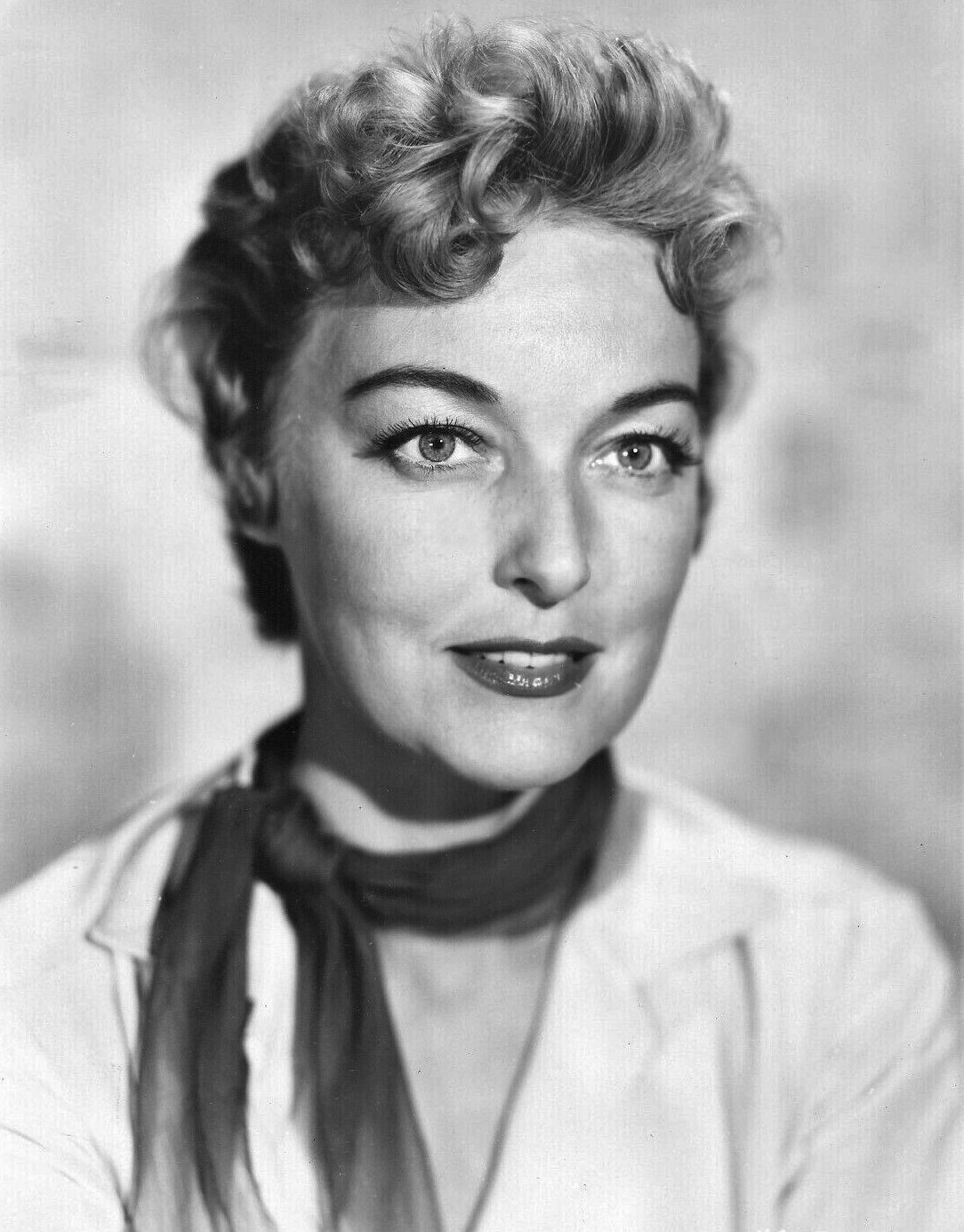
Karin Booth (born June Francis Hoffman,[2] June 19, 1916 – July 27, 2003) was an American film and TV actress of the 1940s to 1960s.
Key Information


Life and career
[edit]She was born June Francis Hoffman on June 19, 1916, in Minneapolis, Minnesota to Francis T. and Ebba V. Hoffman.[3] She lived in Portland and Los Angeles, attending John Marshall High School.[4] She began her career modeling and being a chorus girl in 1939 and was signed under contract to Paramount Pictures in 1941 under the name Katharine Booth.[3][5] Booth was Jewish and, along with Noreen Nash, was a frequent visitor to the Jewish Home for the Aged in Boyle Heights, California.[6]
After changing her screen name to Karin Booth in 1942, she would go on to appear in such feature films as The Unfinished Dance (1947), Big City (1948), The Cariboo Trail (1950), Tobor the Great (1955) and The World Was His Jury (1958). She also appeared on television in Alfred Hitchcock Presents, Perry Mason, M Squad, The Lineup, and This Is The Life. She was considered a Joan Crawford look-alike at the start of her career and was often seen courting with Sterling Hayden, John Hodiak, and Mickey Rooney.[3]
In 1948, she married Allan Pinkerton Carlisle, a well-known and prominent sportsman from Palm Beach, Florida, and had 2 sons, Allan (born November 3, 1950) and Robert (born May 3, 1961).[3] She was expecting a middle child in 1959 but lost the baby unexpectedly while filming Beloved Infidel.[3] She retired in 1964 and lived the rest of her days in the community of Jupiter, Florida, where she died on July 27, 2003[3] and was cremated[7] with her ashes scattered at sea.[citation needed]
Filmography
[edit]- Glamour Boy (1941)[8] – Helen Trent
- Louisiana Purchase (1942) – Louisiana Belle[9]
- The Unfinished Dance (1947)[4] – La Darina
- Big City (1948) – Florence Bartlett[10]
- My Foolish Heart (1950)[11] – Miriam Ball
- State Penitentiary (1950) – Shirley Manners[12]
- The Cariboo Trail (1950) – Francis Harris[13]
- Last of the Buccaneers (1950) – Belle Summer[14]
- Cripple Creek (1952) – Julie Hanson[15]
- Let's Do It Again (1953)[16] – Deborah Randolph
- Charge of the Lancers (1954)[17] – Maria Sand
- Jungle Man-Eaters (1954)[18] – Dr. Bonnie Crandall
- Tobor the Great (1954) – Janice Roberts[19]
- African Manhunt (1955)[20] – Ann Davis
- Seminole Uprising (1955)[21] – Susan Hannah
- Top Gun (1955)[22] – Laura Mead
- The Crooked Sky (1957)[23] – Sandra Hastings
- Alfred Hitchcock Presents (1957) (Season 3 Episode 8: "Last Request")[24] – Sheila Raymond
- The World Was His Jury (1958)[25] – Polly Barrett
- Badman's Country (1958)[26] – Lorna Pardee
- Juke Box Rhythm (1959)[27] – Leslie Anders
- Beloved Infidel (1959) – Janet Pierce[28]
References
[edit]- ^ "Karen Booth - The Private Life and Times of Karen Booth. Karen Booth Pictures". www.glamourgirlsofthesilverscreen.com.
- ^ "Future Stars?". Star Tribune. June 29, 1947. p. 109. Retrieved October 17, 2017 – via Newspapers.com.
- ^ a b c d e f "Karen Booth". Glamour Girls of the Silver Screen. Retrieved October 17, 2017.
- ^ a b "Karin Booth to Emerge From Mold of Hollywood". Los Angeles Times. October 13, 1946. p. 43. Retrieved October 17, 2017 – via Newspapers.com.
- ^ "Exits and Entrances". Oakland Tribune. May 8, 1941. p. 33. Retrieved October 17, 2017 – via Newspapers.com.
- ^ "Jewish Histories in Multiethnic Boyle Heights: Booth and Nash at the Jewish Home for the Aged (Ca. 1942)".
- ^ Wilson, Scott (2016). Resting Places: The Burial Sites of More Than 14,000 Famous Persons (3rd ed.). Jefferson, North Carolina: McFarland & Company, Inc. pp. 75–76. ISBN 9780786479924.
- ^ "Birthday Gift". Harrisburg Telegraph. November 5, 1941. p. 10. Retrieved October 17, 2017 – via Newspapers.com.
- ^ "'Louisiana Purchase' Comes to Strand This Week". The Times. 1942. p. 14. Retrieved October 17, 2017 – via Newspapers.com.
- ^ "'Big City' Is Sentimental Musical for Family Trade". The Evening News. May 21, 1948. p. 24. Retrieved October 17, 2017 – via Newspapers.com.
- ^ "My Foolish Heart". Gasconade County Republican (ad). July 20, 1950. p. 8. Retrieved October 17, 2017 – via Newspapers.com.
- ^ "State Penitentiary". Gasconade County Republican. July 20, 1950. p. 8. Retrieved October 17, 2017 – via Newspapers.com.
- ^ Starr, Peggy (June 29, 1947). "'Cariboo Trail' Standard Plot". Star Tribune. p. 109. Retrieved October 17, 2017 – via Newspapers.com.
- ^ "Sea-Faring Pirate Story at Hollywood". Argus-Leader. November 12, 1950. p. 26. Retrieved October 17, 2017 – via Newspapers.com.
- ^ "'Cripple Creek,' the billion-dol". The Courier-Gazette. October 28, 1952. p. 10. Retrieved October 17, 2017 – via Newspapers.com.
- ^ "Wyman, Milland in Zany Remake of 'Awful Truth'". The Pantagraph. August 9, 1953. p. 38. Retrieved October 17, 2017 – via Newspapers.com.
- ^ "'Sabrina' at Regent; 'Rear Window,' Bijou Film Thriller". Battle Creek Enquirer. November 7, 1954. p. 29. Retrieved October 17, 2017 – via Newspapers.com.
- ^ "Jungle Thriller". Orlando Evening Star. May 26, 1954. p. 11. Retrieved October 17, 2017 – via Newspapers.com.
- ^ "Screen Previews". Waco Tribune-Herald. 1955. p. 42. Retrieved October 17, 2017 – via Newspapers.com.
- ^ "Sandusky-Drive-In". The Sandusky Register. July 9, 1955. p. 2. Retrieved October 17, 2017 – via Newspapers.com.
- ^ "Facing Attack". The Mason City Globe-Gazette. May 28, 1955. p. 12. Retrieved October 17, 2017 – via Newspapers.com.
- ^ "Wednesday Primetime B Grid" (PDF). Los Angeles Times. May 20, 2015. Retrieved October 17, 2017.
- ^ "Wednesday TV, Sept. 17". Courier-Post. September 13, 1958. p. 25. Retrieved October 17, 2017 – via Newspapers.com.
- ^ "Lovely Victim". Press and Sun-Bulletin. November 24, 1957. p. 38. Retrieved October 17, 2017 – via Newspapers.com.
- ^ "Terror Strikes In 'Jury'". The Miami News. March 28, 1958. p. 20. Retrieved October 17, 2017 – via Newspapers.com.
- ^ "Lawman and Girl". Arizona Republic. July 20, 1958. p. 41. Retrieved October 17, 2017 – via Newspapers.com.
- ^ "Television Offers Many Feature Films". The Post-Crescent. September 12, 1965. p. 65. Retrieved October 17, 2017 – via Newspapers.com.
- ^ "Karin Back in Picture". Arizona Republic. October 18, 1959. p. 30. Retrieved October 17, 2017 – via Newspapers.com.
External links
[edit]- Karin Booth at IMDb
| International | |
|---|---|
| National | |
| Other | |

Karin Booth
View on GrokipediaEarly life
Birth and upbringing
Karin Booth was born June Francis Hoffman on June 19, 1916, in Minneapolis, Minnesota.[3] She was the daughter of Francis T. Hoffman and Ebba V. Hoffman, and had a brother, Francis T. Hoffman Jr., and a sister, Joyce Hoffman.[6] Booth spent her early childhood in Minneapolis, a period that coincided with the onset of the Great Depression in 1929, when she was 13 years old. The economic hardships of the era shaped the environment of her formative years in the city's working-class neighborhoods. As a teenager, Booth's family relocated from Minneapolis to Portland, Oregon, and subsequently to Los Angeles, California. This move marked the transition from her Midwestern roots to the opportunities of the West Coast entertainment scene.Education and initial pursuits
In Los Angeles, she attended John Marshall High School.[7] After completing her secondary education in the mid-1930s, Booth pursued initial non-film activities in the entertainment sphere, securing modeling gigs and performing as a chorus girl in local theaters during the late 1930s.[8] These early endeavors, beginning in 1939, represented her first paid roles as a background dancer in stage shows. The family's proximity to Hollywood during this period exposed her to the film industry, nurturing her aspirations in acting through local cultural engagements.[8]Career
Entry into the film industry
Booth transitioned from modeling and chorus work to professional acting after signing a contract with Paramount Pictures in April 1941, under the stage name Katharine Booth.[9] As a contract player, she was obligated to undergo training at the studio's drama school to develop her acting skills.[9] Her screen debut came with an uncredited appearance as a girl at the desk in the romantic drama Hold Back the Dawn, directed by Mitchell Leisen and released in September 1941.[10] Booth's first credited role followed shortly thereafter in the comedy-drama Glamour Boy, where she portrayed Helen Trent under her initial stage name.[11] In 1942, Booth signed with Metro-Goldwyn-Mayer and adopted the name Karin Booth for her screen work.[3] This shift marked the beginning of her established presence in Hollywood, building on her early Paramount commitments.Major film roles and genres
Booth specialized in Westerns, musicals, and occasional dramas throughout her film career, often portraying romantic interests or supporting characters that highlighted her poised, all-American appeal. In Westerns, she frequently played resilient frontier women, such as Francie Harris, the independent saloon owner in The Cariboo Trail (1950), where she shared leads with Randolph Scott and provided emotional grounding amid the film's action sequences.[12] Her musical roles were typically lighter and ensemble-based, including an uncredited appearance as a Ziegfeld Girl in the lavish revue sequences of Ziegfeld Follies (1945), contributing to the film's glamorous spectacle alongside stars like Judy Garland and Gene Kelly.[13] In dramas, Booth took on more varied parts, exemplified by her role as Florence Bartlett, a compassionate neighbor in the family-oriented Big City (1948), supporting Margaret O'Brien's central performance in Norman Taurog's MGM production. One of her most notable performances came in the ballet drama The Unfinished Dance (1947), where she portrayed La Darina, a celebrated guest ballerina whose arrival sparks jealousy and tragedy at a prestigious academy. Though not a trained dancer herself—relying on doubles for wide shots—Booth's portrayal captured the character's elegance and vulnerability, particularly in her poignant "Death of the Swan" sequence inspired by Tchaikovsky's ballet. Critics noted her visual poise amid the film's technical achievements, with Bosley Crowther of The New York Times observing that while the dramatic efforts of Booth and co-star Cyd Charisse were somewhat superficial, they "wear their stunning duds with sharpness and look lovely when they dance."[4] The role marked a rare lead opportunity for Booth under MGM, showcasing her ability to blend grace with dramatic tension in a film that blended Black Swan elements with original storytelling. Booth's career reached its peak in the 1950s, where she became typecast as supporting romantic leads in low-budget B-movies, often for independent studios like Allied Artists and Lippert Pictures. This era saw her in genre fare such as the science-fiction adventure Tobor the Great (1954), playing the love interest to a young inventor amid robotic intrigue, and Westerns like Badman's Country (1958), where she portrayed the understanding girlfriend to lawman Pat Garrett (George Montgomery). These roles capitalized on her reliable screen presence but limited her to formulaic parts as the era's declining studio system favored star-driven A-pictures over ensemble B-features. Booth retired from feature films in 1959 following her final role as Janet Pierce, a friend to Deborah Kerr's character, in the literary drama Beloved Infidel, adapted from Sheilah Graham's memoir of F. Scott Fitzgerald.[14] The decision was influenced by broader industry shifts toward television and fewer opportunities for supporting actresses in theatrical releases. Over her two-decade career, she appeared in more than 40 feature films, transitioning from her initial Paramount contract in the early 1940s to MGM prestige projects and later independent B-movie productions that defined her mid-century output.Television appearances
Karin Booth first appeared on television in 1952 with a guest role in the crime drama Racket Squad, marking the start of her small-screen work in the early 1950s, with episodic roles increasing as opportunities in feature films diminished following the peak of her Hollywood career in the 1940s.[15] Throughout the 1950s, Booth became a familiar face in anthology series, which adapted dramatic stories for the medium's shorter, self-contained episodes. She guest-starred in Alfred Hitchcock Presents in the 1957 episode "Last Request," portraying Sheila Raymond, a character entangled in a tense murder mystery that highlighted the show's suspenseful style.[16] Similar anthology work included Stage 7's "Verdict" (1955), where she supported Stephen McNally in a legal drama, and The Ford Television Theatre's "The Alibi" (1956), involving romantic intrigue amid a theatrical production.[17][18] These roles allowed Booth to leverage her film-honed dramatic skills in live or taped formats suited to television's weekly production demands. Booth frequently appeared in crime dramas as supportive characters, such as wives, witnesses, or allies, contributing to the procedural narratives popular on 1950s airwaves. In Perry Mason's "The Case of the Screaming Woman" (1958), she played Susan Marshall, a woman central to the episode's convoluted inheritance plot and courtroom tension.[19] She took on a similar witness role in M Squad's "Shot in the Dark" (1958), aiding detective Lee Marvin in a sniper investigation, and appeared in Casablanca (1955) amid wartime intrigue.[20] Overall, Booth amassed around a dozen television credits, with these guest spots offering steadier employment than sporadic film offers.[21] Her television work occasionally ventured beyond crime genres, including a single Western appearance as Sarah in The Gray Ghost's "Resurrection" (1957), depicting a Confederate spy's revival.[22] Booth's final role came in 1964 with "Test of Love" on the inspirational anthology This Is the Life, portraying Marge Dickenson in a story of personal trials, after which she retired from acting entirely.[23]Personal life
Marriage and family
Booth married Allan Pinkerton Carlisle on June 1, 1948, in Palm Beach, Florida. Carlisle, a 36-year-old sportsman from Palm Beach and East Islip, New York, was one of three sons of Wall Street broker Jay F. Carlisle and Mary P. Carlisle; he was the grandson of Allan Pinkerton, founder of the Pinkerton National Detective Agency, and had previously been married to Romaine Fleming from 1931 to 1935.[24][3][25] The couple welcomed their first son, Allan Pinkerton Carlisle, on November 3, 1950, in Los Angeles, followed by their second son, Robert P. Carlisle, on May 3, 1961, also in Los Angeles.[24] The family resided in Hollywood after the marriage, where Booth continued her acting career while starting a family.[24] In September 1959, Booth experienced a miscarriage, losing an expected third child during the filming of Beloved Infidel; she resumed work on the production shortly thereafter.[24][25]Later years and death
After retiring from acting in 1964 following her final television appearance on This Is the Life, Karin Booth relocated to Jupiter, Florida, in her later years, where she embraced a quiet life as a homemaker alongside her husband, Allan Pinkerton Carlisle, until his death in 1988.[26][27] In this phase, she largely withdrew from public view, prioritizing family and personal pursuits over any return to the entertainment industry. In her later years, Booth pursued personal interests including reading, photography, and travel.[3] Booth, who was Jewish, made frequent visits to the Jewish Home for the Aged in Boyle Heights, California, during the 1940s, along with actress Noreen Nash. Little is documented about her philanthropic activities post-retirement.[25] Booth died on July 27, 2003, in Jupiter, Florida, at the age of 87.[3] Her remains were cremated, and the ashes scattered at sea in the Atlantic Ocean.[3]Filmography
Feature films
Karin Booth appeared in over 40 feature films between 1941 and 1959, often in supporting roles, with many early appearances uncredited or as bit players in musicals and comedies.[28] Her credits include the following, listed chronologically:| Year | Title | Role | Notes |
|---|---|---|---|
| 1941 | Louisiana Purchase | Louisiana belle | |
| 1941 | Glamour Boy | Helen Trent | Billed as Katharine Booth |
| 1941 | Hold Back the Dawn | Girl at desk | |
| 1942 | This Gun for Hire | Waitress | Uncredited |
| 1942 | The Fleet's In | Swingland hostess | |
| 1942 | Holiday Inn | Hatcheck girl | Uncredited |
| 1942 | Beyond the Blue Horizon | Girl at circus | |
| 1942 | Priorities on Parade | (Unspecified) | Uncredited |
| 1942 | The Forest Rangers | (Unspecified) | Uncredited |
| 1942 | My Heart Belongs to Daddy | Co-ed | |
| 1942 | Take a Letter, Darling | Blonde stenographer | |
| 1943 | Dr. Gillespie's Criminal Case | Cashier | |
| 1943 | Girl Crazy | Girl | |
| 1943 | Star Spangled Rhythm | Kate | |
| 1943 | Swing Shift Maisie | Louise | |
| 1944 | Marriage Is a Private Affair | Girl with Miles | |
| 1944 | Thirty Seconds Over Tokyo | Girl in Officer's Club | |
| 1944 | Maisie Goes to Reno | Girl at party | |
| 1944 | Meet the People | Girl | |
| 1944 | Lost in a Harem | Beautiful girl | |
| 1944 | Swing Fever | (Unspecified) | Uncredited |
| 1944 | Bathing Beauty | Co-ed | |
| 1945 | Bud Abbott and Lou Costello in Hollywood | Louise | |
| 1945 | Dangerous Partners | Miss Day | |
| 1945 | Wonder Man | (Unspecified) | Uncredited |
| 1946 | Up Goes Maisie | Lois | |
| 1946 | No Leave, No Love | WAC | |
| 1946 | The Sailor Takes a Wife | Pretty woman | |
| 1946 | Ziegfeld Follies | Dancer | |
| 1946 | The Hoodlum Saint | Bride | |
| 1946 | Easy to Wed | Clerk | |
| 1947 | The Unfinished Dance | La Darina | |
| 1948 | Big City | Florence Bartlett | |
| 1950 | The Cariboo Trail | Francie Harrison | |
| 1950 | Last of the Buccaneers | Belle Summers | |
| 1950 | State Penitentiary | Shirley Manners | |
| 1950 | My Foolish Heart | Miriam Ball | |
| 1952 | Cripple Creek | Julie Hanson | |
| 1953 | Let's Do It Again | Deborah Randolph | |
| 1954 | Tobor the Great | Janice Roberts | |
| 1954 | Jungle Man-Eaters | Dr. Bonnie Crandle | |
| 1954 | Charge of the Lancers | Maria Sand | |
| 1955 | African Manhunt | Ann Davis | |
| 1955 | Seminole Uprising | Susan Hannah | |
| 1957 | The Crooked Sky | Sandra Hastings | |
| 1958 | Badman's Country | Lorna Farrell | |
| 1958 | The World Was His Jury | Polly Barrett | |
| 1959 | Juke Box Rhythm | Leslie Anders | |
| 1959 | Beloved Infidel | Janet Pierce |
Television credits
Karin Booth's television career primarily consisted of guest appearances in anthology series and procedural dramas during the 1950s and early 1960s.| Year | Title | Episode | Role | Air Date |
|---|---|---|---|---|
| 1955 | Stage 7 | "Verdict" | Stella Williams | May 22, 1955[17] |
| 1955 | Schlitz Playhouse of Stars | "A Mule for Santa Fe" | Mrs. Stuart | June 17, 1955[29] |
| 1956 | Casablanca | "Fateful Night" | Sylvia | January 10, 1956[30] |
| 1956 | The Ford Television Theatre | "The Alibi" | Faye Kittridge | March 7, 1956[18] |
| 1957 | Alfred Hitchcock Presents | "Last Request" | Sheila Raymond | November 24, 1957[16] |
| 1958 | M Squad | "Shot in the Dark" | Helen Endicott | January 10, 1958[20] |
| 1958 | Perry Mason | "The Case of the Screaming Woman" | Susan Marshall | April 26, 1958[19] |
| 1958 | The Lineup | "The Girl Bandit" | Babs Krale | December 19, 1958[31] |
| 1959 | The Lineup | "The Pigeon Drop Case" | Guest appearance | February 27, 1959 |
| 1964 | This Is the Life | "Test of Love" | Marge Dickenson | September 6, 1964[23] |