Hubbry Logo
Katy GallagherKaty GallagherMain
Open search
Katy Gallagher
Community hub
Katy Gallagher
logo
8 pages, 0 posts
0 subscribers
Be the first to start a discussion here.
Katy Gallagher
Katy Gallagher
from Wikipedia

Katherine Ruth Gallagher (/'gæləhər/ GAL-ə-her; born 18 March 1970) is an Australian politician who has been serving as the Minister for Finance, Minister for Women, Minister for the Public Service and Vice-President of the Executive Council in the Albanese Government since 2022 and since 2025 as Minister for Government Services. She also formerly served as the 6th Chief Minister of the Australian Capital Territory from 2011 to 2014. She has been a Senator for the Australian Capital Territory since the 2019 federal election, as a member of the Australian Labor Party (ALP) having previously served in the Senate from 2015 to 2018.

Key Information

Gallagher grew up in Canberra and was a social worker and union organiser with the Community and Public Sector Union (CPSU) before entering politics. She was elected to the Australian Capital Territory Legislative Assembly in 2001, representing the electorate of Molonglo.[2] She was made a minister under Jon Stanhope in 2002, and appointed Deputy Chief Minister in 2006. Gallagher became Chief Minister in 2011 after Stanhope's retirement, and led her party to a fourth consecutive term at the 2012 general election. She resigned in 2014 to seek preselection to the Senate.[3]

In March 2015, Gallagher was appointed to fill the casual vacancy caused by the retirement of Senator Kate Lundy.[4] She was appointed to Bill Shorten's shadow ministry later in the year, and elected to the Senate in her own right at the 2016 federal election. She was subsequently elected Manager of Opposition Business in the Senate. In December 2017, during the parliamentary eligibility crisis, Gallagher was referred to the High Court. The court ruled in May 2018 that she was disqualified from sitting in the Senate for failing to renounce her British citizenship before nomination for election in 2016.[5] She returned to her previous Senate seat at the 2019 federal election.[6]

Early years and education

[edit]

Katherine Ruth Gallagher[7] was born on 18 March 1970[8] in Waramanga, a suburb in the Weston Creek district of Canberra, to Betsy and Charles Gallagher. Her father was born in Stoke-on-Trent, England, and her mother in Guayaquil, Ecuador. Both were British citizens who later became Australian citizens after their arrival from England via New Zealand in 1969.[9][7] She has an elder sister, Clare, along with two younger brothers who were adopted, Richard and Matthew.[10] Her father died in 1995 of lung cancer and her mother in 2005 with peritoneal cancer .[11]

Educated at Duffy Primary School, Melrose High School and Canberra College (previously known as Phillip College), Gallagher completed her studies by obtaining a Bachelor of Arts in Political Science and Sociology at the Australian National University in 1990.[12][13]

She also had training as a cellist, and played with the Canberra Youth Orchestra.[14]

Early career

[edit]

Gallagher was initially employed as a social worker, assisting with a community life skills project and working with children with disabilities. From 1994 to 1997, she worked as an advocate for People First ACT, a support and advocacy organisation for the intellectually disabled.[15]

On 30 January 1997, Gallagher's fiancé, Brett Seaman, was killed in a cycling accident in Merimbula .[16] At the time, Gallagher was 13 weeks pregnant with her first daughter. An 86-year-old female pensioner narrowly escaped a jail term for dangerous and irresponsible driving for the crash. The union movement assisted Gallagher with the funeral and court case that followed the accident.[17]

Gallagher left her previous employment and was offered an administrative job at the Community and Public Sector Union (CPSU), where Seaman had worked. The job offer was made by Margaret Gillespie, who later went on to become Gallagher's chief of staff during her time as a politician.[18] It was during this time she became involved in the labour movement,[12] going on to become a national organiser with the union after her pregnancy.[14]

ACT politics

[edit]

Early career

[edit]

The support provided to Gallagher by the Labor Party and union movement inspired her to run for pre-selection as one of the Labor candidates for the electorate of Molonglo for the 2001 ACT general election.[17] At the time, Labor had two incumbent members in the Assembly representing Molonglo. Long-serving independent Michael Moore retired at the election. The election saw Labor come to power, led by Jon Stanhope. Despite Gallagher winning just 4.38% of the first preference vote,[19] following distribution of preferences, Gallagher was elected as the fifth member to the seven member seat, behind Humphries, Tucker, Corbell, and Quinlan.[20]

Gallagher was appointed to the second arrangement of the first Stanhope ministry on 23 December 2002,[21] when she was given the portfolios of education, youth and family services; women; and industrial relations. A minor change on 26 May 2004 saw Gallagher's ministry for education, youth and family services divided into separate responsibilities.[22]

At the 2004 ACT general election, Gallagher polled strongly, generating 11.59% of the first preference vote[23] and was the first candidate elected to represent Molonglo in the Assembly, ahead of both Labor colleagues, Quinlan and Corbell.[24]

Deputy Chief Minister

[edit]

Gallager's ministerial responsibilities were unchanged in the first arrangement of the second Stanhope ministry and, on 20 April 2006, following the retirement of Ted Quinlan, she was promoted to Deputy Chief Minister with ministerial responsibilities including health, disability and community services, and women.[25] The ministry for children and young people was restored to Gallagher's responsibilities on 17 April 2007.[25]

At the 2008 ACT general election, Gallagher again polled strongly, generating 15.78% of the first-preference vote[26] and was the second candidate elected to represent Molonglo in the Assembly, behind Liberal leader, Seselja.[27] In the third Stanhope ministry, Gallagher took on ministerial responsibility for treasury, in addition to retaining both health and women;[28] whilst a subsequent reshuffle on 9 November 2009 saw her resume ministerial responsibility for industrial relations and lose the portfolio of women.[29]

Health portfolio

[edit]

Amid allegations of bullying, it was reported in early 2010 that nine obstetricians had resigned from Canberra Hospital in the preceding 13 months.[30] The Royal College of Obstetricians and Gynaecologists called on Gallagher to conduct an external, transparent review of the hospital; and, although initially denying the claims,[31] Gallagher agreed to two external reviews, one to look at workplace issues and the other to investigate patient outcomes.[32] The patient outcome review, when handed down in August 2010, sharply criticised hospital management with regards to workload, but stated that patient care was adequate.[33][34] A number of months earlier, Gallagher faced pressure from the Catholic Church, following an agreement that the ACT Government would purchase Calvary Hospital (in Bruce) from the Little Company of Mary Health Care (LCMHC) – an independent arm of the Church – for $77m. Catholic Archbishop of Sydney, Cardinal George Pell claimed that the Government's motives were ideological and driven by anti-Christian elements.[35] Gallagher denied the claims. A dispute subsequently arose between LCMHC and the Government over an accounting concession[36] and the government withdrew from the purchase.[37] The culmination of these matters led the Liberal leader, Zed Seselja, on 17 August 2010, to move a no confidence vote in the Assembly against Gallagher as Minister for Health as follows:[38]

That this Assembly no longer has confidence in the Minister for Health, Katy Gallagher, for her continued neglect of the Health portfolio, most particularly... management failure, staff bullying, over working, and poor processes; ... complete failure in the Calvary Hospital purchase; ... and many instances of attacking those who made complaints, ignoring those who gave advice, and dealing with the problems through denial and neglect; ... and the ongoing poor performance of the ACT health system ...

The motion was defeated (five in favour, nine against), with the ACT Greens supporting the government.[39]

Chief Minister

[edit]
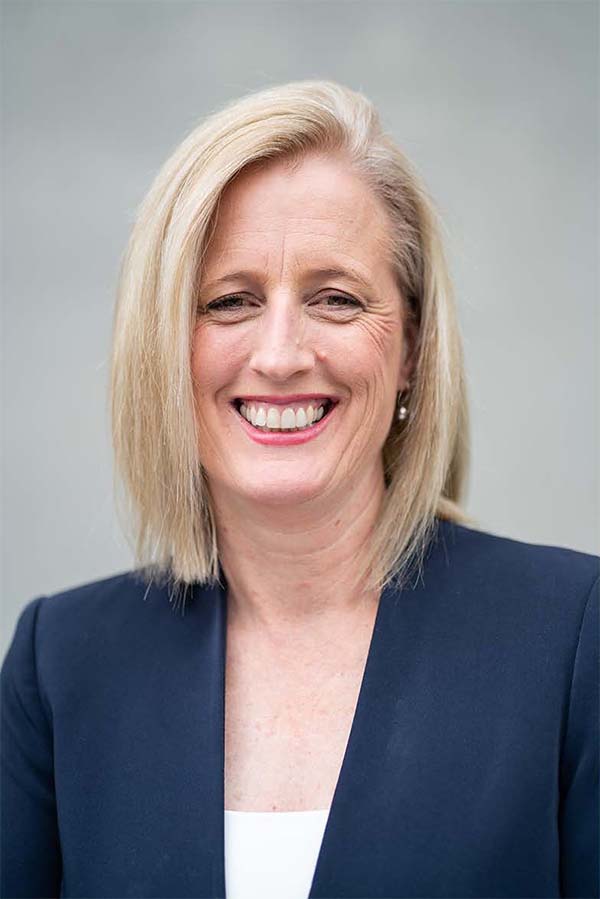
Gallagher in 2011
Gallagher's portrait on display at the Assembly

On 12 May 2011, while Gallagher was deputy chief minister, the current chief minister at the time, Jon Stanhope, resigned. On 16 May 2011, Gallagher was elected by the Assembly as the ACT's 6th Chief Minister and 3rd female Chief Minister.[40] The ALP won an additional seat in the 2012 election, and remained in government after securing the support of the sole remaining Green MLA, Shane Rattenbury.[41]

Gallagher is a supporter of same-sex marriage and on 22 October 2013, she oversaw the ACT becoming the first jurisdiction in Australia to pass a law allowing couples of the same sex to marry.[42] This was later overturned by the High Court on 12 December, just days[quantify] after the first marriages took place. The court ruled only the Commonwealth has the power to make changes to the Marriage Act.[43]

During her term as Chief Minister, Gallagher welcomed The Queen during her 16th tour to Australia in October 2011[44] along with the Duke and Duchess of Cambridge in April 2014.[45]

On 5 December 2014, Gallagher announced that she would resign as chief minister to pursue the upcoming Senate vacancy left by the resignation of Kate Lundy.[46] She resigned as Chief Minister and her deputy Andrew Barr was elected as her replacement on 11 December 2014.[3] As of 2026, Katy Gallaher is the only A.C.T. Chief Minister that was born in Canberra.

Federal politics

[edit]

Opposition

[edit]

Gallagher is a member of Labor Left.[47] She was sworn in as a Senator on 26 March 2015[4] and on 25 September 2015 nominated to join the Shadow Ministry in the Labor Party Caucus. She was elected by the caucus alongside Jim Chalmers unopposed.[48]

On 13 October 2015, Gallagher was appointed to the Shadow Cabinet in the roles of Shadow Minister for Mental Health, Shadow Minister for Housing and Homelessness, and Shadow Minister Assisting the Leader on State and Territory Relations.[49] She held those positions until 23 July 2016 when she was promoted to Shadow Minister for Small Business and Financial Services after the 2016 election.[50] On 12 September 2016, Gallagher was also appointed as Manager of Opposition Business in the Senate.[51]

In 2016, Gallagher accused fellow senator Mitch Fifield of "mansplaining" during a debate in a Senate committee hearing regarding social services legislation, which subsequently went viral.[52]

On 6 December 2017, at her own request, the Senate referred Gallagher to the High Court of Australia to determine her eligibility for election in the 2016 federal election as a part of the 2017–18 Australian parliamentary eligibility crisis.[53]

On 9 May 2018, in a unanimous decision, the full bench of the High Court of Australia found that Gallagher was not eligible for election at the 2016 federal election given that she had still been a British citizen when nominating as a candidate on 31 May 2016 for the election which was held on 2 July 2016. Gallagher completed her Form RN declaration of renunciation of British citizenship on 20 April and the ACT Labor Party lodged it with the UK Home Office on 26 April, the court finding "Senator Gallagher retained that status until 16 August 2016, when her declaration of renunciation of that citizenship was registered by the Home Office of the United Kingdom."[5][54]

Return to politics

[edit]

After her disqualification from the Senate, Gallagher worked as a consultant at Calvary Hospital and joined the board of the RSPCA ACT division.[55] In June 2018, Gallagher announced that she would seek nomination for an ACT seat in the Senate at the next federal election.[56] She successfully sought re-election at the 2019 federal election and took on the role of Shadow Minister for Finance and the Public Service in the Albanese shadow ministry.[6][57]

In April 2020, she was appointed chair of the parliamentary committee into the government's response to the Coronavirus pandemic.[58] In August 2021, she criticised the rollout of the vaccine program after her youngest daughter Evie tested positive to the virus.[59] At the conclusion of the parliamentary term, the committee handed down its report which included recommending a royal commission into the government's handling of the pandemic.[60]

Gallagher also introduced a bill to parliament to amend the Public Governance, Performance and Accountability Act 2013 titled The Public Governance, Performance and Accountability Amendment (Improved Grants Reporting) Bill 2021,[61] in response to the grant programs being administered by the Morrison government which had resulted in criticism from both the Productivity Commission and through various ANAO reports.[62][63]

Albanese Government (2022–present)

[edit]

On 23 May 2022 after Labor's victory at the federal election, Gallagher was sworn in as Minister for Finance, Minister for Health, Minister for Women, Minister for Social Services and Attorney-General.[64] The portfolios of health, social services and attorney-general were only interim until the full Albanese ministry could be sworn in. She is the only holder of the Attorney-General portfolio to have had no prior legal experience, as she was appointed on the basis of holding the office for an interim period and act to "take care" of issues.[65][66] On 1 June with the swearing in of the full cabinet, Gallagher was also sworn in as Minister for the Public Service.[67] She was additionally appointed Manager of Government Business in the Senate.[68]

In October 2022 with Jim Chalmers overseas for meetings, Gallagher became Acting Treasurer, only the second woman to do so.[69]

As part of her election platform, Gallagher campaigned for the repeal of the Euthanasia Laws Act 1997 which prevented the territories from passing legislation to legalise euthanasia and secured a commitment from Albanese to have it as one of the new government's first order of business if elected.[70] The bill was introduced into parliament and passed the lower house on 3 August[71] and voted into law on 1 December with Gallagher managing the debate in the Senate.[72]

In June 2023 Gallagher was accused of misleading parliament after private text messages were released suggesting she may have had prior knowledge of Brittany Higgins' alleged sexual assault before the allegations became public.[73] She subsequently made a speech in parliament clarifying this knowledge and denied any wrongdoing.[74]

In January 2025 with the resignation of Bill Shorten from parliament, Gallagher was additionally sworn in as Minister for Government Services.[75]

Personal life

[edit]

Gallagher was previously engaged to Brett Seaman, who died in a road accident in 1997 when she was pregnant with her first child.[10] She and her partner Dave Skinner are raising three children.[76][77]

Gallagher is a vegetarian[78] and is a classically trained cellist, who used to play with the Canberra Youth Orchestra.[14]

See also

[edit]

References

[edit]
[edit]
Revisions and contributorsEdit on WikipediaRead on Wikipedia
from Grokipedia
Katherine Ruth Gallagher (born 18 March 1970) is an Australian politician who has represented the Australian Capital Territory in the since 2015 as a member of the Labor Party. She currently serves as Minister for Finance, Minister for Women, Minister for the Public Service, and Minister for Government Services in the second ministry of . Gallagher previously held the position of of the Australian Capital Territory from 2011 to 2014, becoming the territory's third female head of government during a period marked by legislative expansions in and laws. Gallagher's political career began in 2001 with her election to the ACT Legislative Assembly, following the sudden death of her first husband, which prompted her entry into public life after roles as a community worker and union organizer. She rose to Deputy in 2006 before assuming the chief executive role amid internal party dynamics. In 2014, she resigned from the ACT position to pursue a federal Senate vacancy, securing appointment that year and subsequent election in 2016. Her federal tenure faced a significant setback in 2018 when the disqualified her under section 44 of the for failing to sufficiently renounce British citizenship acquired by descent from her father, despite her awareness of the dual status and partial efforts to divest it prior to nomination. Gallagher renominated successfully in a 2018 and was re-elected in 2019, later ascending to multiple senior portfolios post-2022 election, where she has overseen fiscal policy, public sector reforms, and initiatives addressing gender-based violence amid ongoing debates over accountability in handling high-profile allegations within government circles.

Early Life and Pre-Political Career

Upbringing and Family Background

Katherine Ruth Gallagher was born in 1970 in Waramanga, a suburb in Canberra's Weston Creek district. Her parents, Charlie and Betsy Gallagher, were immigrants from the who met on a ship en route to . Charlie Gallagher, a chronic asthmatic, relocated the family to on medical advice to benefit from the warmer climate. Gallagher was the second of four children, following her older sister Clare by 18 months; the family later adopted two boys, Richard and Matthew. Raised in Weston Creek, she spent her entire childhood in , one of the few native residents of the planned national capital. Her parents emphasized values of community contribution and kindness, encouraging active participation in local society.

Education and Early Professional Roles

Gallagher completed her secondary education in Canberra before attending the Australian National University, from which she graduated in 1991 with a Bachelor of Arts degree majoring in political science and sociology. Following university, she worked as a community worker from 1993 to 1998, focusing on social services and support programs in the Australian Capital Territory. In 1998, she joined the Community and Public Sector Union (CPSU) as an organiser, a role she held until 2001, where she advocated for public sector employees and coordinated union activities prior to her entry into politics.

Australian Capital Territory Political Career

Entry and Initial Positions

Katy Gallagher was elected to the Legislative Assembly on 20 October 2001 as a member for the Molonglo electorate, representing the Australian Labor Party in the territory's fifth assembly. She assumed her seat on 5 November 2001, entering parliament amid the formation of the Jon Stanhope-led Labor government, which secured a majority following the election. From her entry until December 2002, Gallagher served as a backbencher, contributing to early legislative work without formal shadow or ministerial roles documented in official records. On 23 December 2002, she was appointed to the Stanhope ministry in its second arrangement, assuming responsibility for the portfolios of Minister for Education, Minister for Youth and Family Services, and Minister for Women. These initial positions focused on social services, education policy, and women's issues, aligning with her prior background in union organizing and community sector work. Gallagher retained core elements of these portfolios through her re-election in the territory election, where she secured another term for Molonglo as Labor retained government. By , her and responsibilities extended until 5 that year, while the women’s portfolio continued until 2007, marking her early emphasis on family-oriented and gender-related governance amid ACT's progressive policy environment. Her tenure in these roles involved overseeing budget allocations for schools and youth programs, though specific legislative outputs from this period, such as education reforms, were implemented within the broader Stanhope administration's framework.

Deputy Chief Minister and Health Responsibilities

Katy Gallagher was appointed Deputy of the Australian Capital Territory on 20 April 2006, alongside portfolios including Minister for Health, Minister for Disability and Community Services, and Minister for Children and Young People. In this role, she supported Stanhope in leading the Labor government, focusing on service delivery amid population growth in . Her health responsibilities encompassed oversight of the ACT Health Directorate, public hospitals such as , services, and preventive health initiatives. During her tenure as Health Minister from 2006 to 2011 (extending into her period until 2014), Gallagher prioritized expanding frontline services to match demographic pressures, including investments in new health infrastructure and staff recruitment to reduce elective surgery backlogs, though waiting lists remained a persistent challenge with median times exceeding national averages by 2010. She advanced reforms, notably pledging alignment with the National Action Plan on Mental Health in August 2006, which aimed to integrate services and boost funding for community-based care. Additionally, her government contributed to prevention efforts through governance-focused policies emphasizing cross-sector collaboration, though implementation relied on sustained bureaucratic coordination. Critics, including opposition Liberals, accused the ACT health system under Gallagher's watch of inefficiencies, such as prolonged wait times and data manipulation concerns emerging later in audits of health reporting practices. Despite these issues, her administration achieved incremental gains in service access, including early steps toward nurse-led clinics, which laid groundwork for later expansions. Gallagher retained the Deputy Chief Minister position until 15 May 2011, when she succeeded Stanhope as , continuing her health oversight amid ongoing debates over funding adequacy and performance metrics.

Chief Minister Tenure and Resignation

Katy Gallagher assumed the position of of the Australian Capital Territory on 16 May 2011, succeeding Jon Stanhope who had resigned after 11 years in office. Her administration focused on infrastructure development, social reforms, and environmental targets, including the initiation of the Capital Metro project to connect to the . The government also committed the ACT to achieving by 2020, marking an ambitious push toward sustainability. In the October 2012 ACT Legislative Assembly election, Labor secured 8 seats, matching the Liberals, while the Greens won 3; Gallagher's party formed a through a agreement with Greens MLA Shane Rattenbury. Key legislative achievements included the passage of the Marriage Equality (Same Sex) Act in October 2013, making the ACT the first Australian jurisdiction to legalize , though the invalidated it in December 2013 on grounds of inconsistency with federal law. Additionally, her government established Australia's first public nurse-led walk-in medical centres to improve access to primary healthcare. Gallagher resigned as Chief Minister on 11 December 2014, after announcing her intention on 5 December to contest a federal Senate vacancy created by Kate Lundy's retirement. She endorsed Deputy Chief Minister Andrew Barr as her successor, stating she departed local politics without regrets after three and a half years in the role. Opposition figures, including Liberal senator Zed Seselja, criticized the resignation as abandoning unresolved economic and financial challenges facing the territory. Barr was sworn in as Chief Minister shortly thereafter, continuing the Labor-Greens parliamentary agreement.

Federal Senate Career

Opposition Period and Initial Term

Katy Gallagher transitioned to federal politics following her resignation as ACT Chief Minister on 2 December 2014, announcing her intention to contest a Senate position for the Australian Capital Territory. She was endorsed by the and appointed to the on 25 March 2015 to fill the casual vacancy arising from the retirement of Senator Kate Lundy, effective immediately under section 44 of the Commonwealth Electoral Act 1918. This appointment positioned her in the federal opposition during the led by , later and . Gallagher delivered her in the on 17 June 2015, emphasizing her ACT background in and services while pledging to advocate for territory interests and scrutinize . In her early months, she participated actively in estimates hearings, notably debuting in May 2015 by questioning public service and officials on budget cuts and administrative efficiencies. By September 2015, she was elevated to the opposition frontbench, reflecting Labor leader Bill Shorten's confidence in her executive experience from the ACT Legislative Assembly. During the 2016 federal election campaign, Gallagher nominated as a Labor candidate for the ACT , securing election amid the but facing subsequent scrutiny over her eligibility due to prior British citizenship. Post-election, under opposition leader Shorten, she continued in shadow roles focused on and parliamentary processes, including appointment as Manager of Opposition Business in the on 12 2016 to coordinate Labor's legislative strategy. Her tenure emphasized holding the government accountable on and fiscal matters, drawing on her state-level governance record to critique federal policies affecting territories and services.

Electoral Setbacks and Return to Parliament

Following her election to the at the 2016 federal election, Katy Gallagher faced a significant electoral setback when the ruled on 9 May 2018 that she was ineligible to hold office. The unanimous decision in Re Gallagher determined that Gallagher remained a British citizen at the time of her nomination on 31 May 2016, as her formal renunciation process—initiated in April 2016—had not been completed before nominating, contravening section 44(i) of the Australian Constitution, which prohibits members of Parliament from holding foreign allegiance. This ruling declared her 2016 election void and her seat vacant, effective immediately, amid a broader wave of disqualifications under the same constitutional provision that affected seven other parliamentarians between 2017 and 2018. The vacancy prompted a temporary replacement by Labor's David Smith, appointed via a joint sitting of the ACT Legislative Assembly to serve until the next federal election, preserving party numbers in the Senate but highlighting Labor's loss of Gallagher's position. Gallagher responded by announcing on 8 June 2018 her intention to recontest the ACT Senate seat at the forthcoming 2019 federal election, framing it as a bid to reclaim her role despite internal party competition from her interim successor. Gallagher successfully returned to Parliament at the 2019 federal election on 18 May, topping the ACT Senate ballot with sufficient primary votes to secure a quota alongside Liberal incumbent Zed Seselja, restoring the pre-disqualification composition of one Labor and one Liberal senator for the territory. Her re-election, achieving approximately 37.2% of the primary vote for Labor in the territory-wide contest, marked a direct recovery from the constitutional disqualification without altering the ACT's traditional major-party balance in the Senate.

Ministerial Roles in the Albanese Government

Katy Gallagher was sworn in as a minister in the on 23 May 2022, following the Australian Labor Party's victory in the federal election on 21 May 2022, initially holding the portfolios of Minister for Finance and Minister for Women. On 31 May 2022, her responsibilities expanded to include Minister for the Public Service and Vice-President of the Executive Council, positioning her as a key figure in , gender equity initiatives, and public sector oversight. In a pre-election reshuffle on 19 January 2025, Gallagher was appointed Minister for Government Services, adding oversight of federal welfare agencies and service delivery to her existing duties, amid efforts to streamline administrative functions ahead of the federal poll. Following Labor's re-election, she retained all portfolios in the second Albanese ministry announced on 12 May 2025, including her role as Manager of Government Business in the , which involves coordinating legislative priorities in the . These roles have encompassed responsibilities for budget formulation, public sector reforms, women's policy advancement, and the administration of services like and Medicare, with Gallagher emphasizing efficiency and accountability in government operations. No substantive portfolio changes have been recorded as of October 2025.

Policy Positions and Contributions

Economic and Fiscal Policies

As Minister for Finance since July 2022, Katy Gallagher has prioritized fiscal repair through spending discipline and revenue management, contributing to the Government's delivery of two consecutive surpluses—the first since 2007–08—with $22.0 billion in 2022–23 and $9.3 billion in 2023–24. These results stemmed from revised spending forecasts, higher commodity revenues, and $87 billion in identified savings and reprioritizations over the medium term, including cuts to inefficient programs inherited from the prior administration. Gallagher has described this as the largest single-term improvement, with the underlying cash balance $209 billion stronger over three years to 2024–25 than projected at time, enabling $188 billion less gross in that year and avoiding $60 billion in interest costs over the decade. For 2024–25, the final outcome recorded a $9.7 billion deficit—$17.3 billion narrower than budgeted—despite elevated spending on priorities like cost-of-living relief and , amid moderating pressures. Gross , however, surpassed $1 , reflecting ongoing investments and structural challenges, with projections for widening deficits in subsequent years as revenues normalize. Gallagher's fiscal strategy, outlined in annual budgets, emphasizes low , real spending growth restraint (averaging 1.9% annually post-2024–25), and avoiding unfunded commitments, while critiquing opposition proposals for potentially adding $42 billion to deficits through cuts without offsets. Her approach integrates gender-responsive elements into budgeting, mandating analysis of measures' impacts on women, such as in childcare expansions and wage support in care sectors, alongside broader economic reforms like regulatory streamlining for business efficiency. Critics, including from the Australian Financial Review, have questioned the sustainability of this spending amid rising pressures, portraying Gallagher as a "fiscal hardliner with a heart" who balances restraint against social investments but faces challenges enforcing cuts across cabinet. Earlier claims of inheriting Australia's "worst set of books" have been refuted by fact-checks, which highlight worse debt-to-GDP ratios (e.g., 28.7% post-GFC) and deficits under prior transitions. During her ACT Treasury roles from 2009 to 2011 and as overseeing budgets until 2014, Gallagher focused on countering the global financial crisis through targeted investments in health, education, and , maintaining service delivery amid revenue volatility from federal grants, though the territory consistently recorded net deficits due to capital works funding. Her state-level experience informed federal emphases on productive public spending and local economic input, as seen in convening ACT roundtables for national agendas.

Gender Equality and Social Initiatives

As Minister for Women in the , Katy Gallagher launched Australia's first national strategy, titled Working for Women, on March 7, 2024. The 10-year plan emphasizes five pillars: women's safety, economic equality, sharing and valuing care, , and , with government actions aimed at addressing persistent disparities through targeted reforms. It builds on her involvement in the Women’s Economic Equality Taskforce, where she contributed to recommendations for closing the and enhancing women's workforce participation. Gallagher has prioritized initiatives to combat domestic, family, and sexual violence, aligning with the government's pledge to end such violence against women within one generation. This includes over $4 billion in National Cabinet funding for prevention and support services, alongside the introduction of 10 days' paid family and domestic violence leave for all employees, legislated to take effect progressively from 2023 and embedded in workplace entitlements by February 2025. She commissioned a rapid review of prevention approaches in May 2024, resulting in an expert panel report in August 2024 that recommended accelerated actions like education and behavioral interventions to reduce gender-based violence. In economic and care-sharing domains, Gallagher oversaw expansions to Paid Parental Leave, increasing it to 22 weeks from July 1, 2024, and further to 24 weeks by mid-2025, with superannuation contributions applied to payments starting July 2025 at a cost of $1.1 billion over the forward estimates. These measures aim to support women's re-entry into the workforce post-childbirth and address retirement savings gaps exacerbated by career interruptions. Complementary efforts include a December 2024 pilot program to promote gender equality in workplaces and a February 2025 partnership with the University of Sydney to develop solutions for women's economic security. Reforms in aged care and early childhood education wages have contributed to a record-low national gender pay gap, as reported by the Workplace Gender Equality Agency in 2025.

Controversies and Criticisms

Brittany Higgins Scandal Involvement

Katy Gallagher, then a Labor senator, stated in the Australian Senate on June 1, 2021, that "no one in the Labor Party" had prior knowledge of Higgins' allegation of being raped in Parliament House by fellow Liberal staffer Bruce Lehrmann in March 2019, prior to Higgins' public disclosure on February 15, 2021, via a television interview. This claim came amid parliamentary debate following Higgins' interview, which detailed her alleged assault in Defence Minister ' office and subsequent handling by authorities. Subsequent release of text messages in June 2023 revealed that Gallagher had been contacted by Higgins' partner, David Sharaz, on February 5, 2021—10 days before the interview—sharing details of the allegation, including that it occurred in Reynolds' office and involved a staffer. Gallagher acknowledged the conversation but maintained she took no action, did not inform Labor leaders or , and viewed her 2021 statement as referring specifically to the parliamentary Labor Party's collective awareness rather than her personal knowledge. She offered a full denial in the on June 13, 2023, rejecting accusations of misleading , while defended her, stating the statement was not deceptive. Opposition figures, including , argued the prior knowledge contradicted her assurance, prompting calls for referral to the National Anti-Corruption Commission, though no formal investigation into misleading parliament ensued. As Finance Minister from 2022, Gallagher oversaw aspects of the Commonwealth's $2.445 million compensation settlement with Higgins, finalized in early 2023 after her negligence lawsuit against the government for failing to provide a safe workplace. The payout, approved alongside Attorney-General Mark Dreyfus in under a day, included non-economic damages for Higgins' post-traumatic stress disorder and economic losses, but drew scrutiny for its size—especially after Justice Michael Lee found in a related defamation trial that Higgins likely fabricated aspects of her trauma claims, though the settlement remained binding. Gallagher confirmed she had "no role" in settlement negotiations but did not declare a potential conflict of interest despite her prior communications with Sharaz, stating cabinet processes handled approvals without her recusal. Critics, including Liberals, questioned the expedited approval and taxpayer funding, with Dutton labeling it "entirely inappropriate" amid ongoing political debates, though Gallagher countered that Labor did not "weaponise" Higgins' claims for gain. In February 2025, former Defence Minister demanded an apology from Gallagher during estimates, citing "damage" from Labor's scrutiny of Reynolds' handling of Higgins' complaint, which Reynolds linked to unsubstantiated implications of . Gallagher has consistently denied personal involvement in politicizing the matter, emphasizing her actions post-2021 focused on supporting systemic inquiries like the Jenkins Review into Parliament House culture rather than individual cases. No criminal charges or parliamentary sanctions have resulted from these controversies.

Integrity and Accountability Challenges

In 2012, during Gallagher's tenure as ACT Health Minister and subsequently , an Auditor-General's report revealed systemic falsification of waiting time data at , involving the alteration of approximately 11,700 records over several years to meet performance targets. The report attributed the misconduct to pressure from health executives, including a directive from a senior administrator to under-report wait times, which occurred under Gallagher's oversight of the health portfolio. Gallagher defended her administration's response, stating she had no prior knowledge of the specific falsifications and announcing post-audit measures such as improved , though critics, including opposition Liberals, moved a no-confidence motion against her, alleging failure in maintaining accountability. She expressed no regrets over her handling, emphasizing that the issue predated her full awareness and that systemic reforms followed. A reported personal connection emerged in the , as Gallagher acknowledged a prior professional relationship with the female administrator implicated in ordering the changes, though she maintained it did not influence her decisions or awareness of the misconduct. The opposition questioned this link, suggesting potential conflicts in her capacity to impartially address the issue, but no formal findings substantiated . The episode highlighted broader accountability lapses in ACT , with the Auditor-General noting ongoing dishonesty risks absent stronger oversight. In her federal Senate career, Gallagher faced scrutiny over compliance with constitutional eligibility requirements under Section 44, which disqualifies dual citizens from . Elected in , she was found in December 2017 to hold British by birth (born in in 1970), which she had not renounced prior to nomination, leading to a referral. The court ruled her ineligible in May 2018, vacating her seat; she renounced British citizenship and was reappointed via a later that year. Critics, including constitutional experts and political opponents, described this as an ethical oversight reflecting inadequate on her part and Labor's candidate vetting, potentially undermining in parliamentary integrity. Gallagher attributed the lapse to complexities in her citizenship status acquired through descent, asserting she believed it did not confer active , though the 's strict interpretation prevailed. As Finance Minister from 2022, Gallagher has been involved in responses to probes, such as the Robodebt , where she advocated for enhanced APS independence to prevent future failures, citing breaches of honesty and codes by officials. However, unions have pressed her to intervene in cases like the PwC tax leaks , criticizing government leniency on contractor as sending mixed signals on ethical standards. In August 2025, she introduced updates to Commonwealth Procurement Rules, including an "ethical kill clause" to disqualify bidders with breaches, aiming to institutionalize in government contracting. These actions contrast with earlier criticisms but underscore ongoing debates over her role in enforcing fiscal and administrative transparency.

Personal Life

Family Dynamics and Personal Loss

Katy Gallagher experienced significant personal losses early in adulthood. Her father, Charles Gallagher, died of in 1995 at approximately age 57, when she was 25 years old. Her mother, Betsy Gallagher, succumbed to peritoneal cancer in 2003 at age 62. These deaths followed the family's emigration from the to , where Gallagher was born and raised. Most profoundly, her fiancé, Brett Seaman, was killed on January 30, 1997, in a accident near , , when struck by a traveling at 110 km/h; Gallagher, then 27 and seven months pregnant with their daughter, learned of the incident while awaiting his return from a holiday ride. The tragedy precipitated severe depression, requiring antidepressants, and fostered a tendency toward "catastrophizing" future risks, though Gallagher has emphasized living without regrets as a coping mechanism shaped by the event. Following Seaman's death, Gallagher raised their daughter, (born August 1997), as a single mother, initially relying on Australia's widow's payment and sole parent pension while entering and community work for . She later formed a long-term with Dave Skinner, a senior staffer in the ACT , beginning around 2003; together they had two children—Charlie (born January 2006) and Evie (born circa 2007)—whom Skinner helped raise alongside Abigail, creating a family unit of three children. Family dynamics have centered on balancing Gallagher's demanding political roles, including as ACT from 2011 to 2014, with parenting responsibilities in Canberra's north side, where the family resides. Evie's diagnoses of autism spectrum disorder, , , and ADHD have added complexity, requiring tailored support amid Gallagher's career. Gallagher has described the period after Seaman's death as hitting "the bottom of the bottom," yet credits family support and her partnership with Skinner for rebuilding resilience, enabling her to advance professionally while prioritizing community-oriented values instilled by her immigrant parents. This structure has allowed her to navigate blended parenting challenges without formal marriage, focusing on practical stability over time.

Public Persona and Resilience

Katy Gallagher's public persona is marked by , , and a low-key dedication to , shaped significantly by personal tragedy. In October 2001, her fiancé, Seaman, was killed in a , an event she later described as the "15 minutes that changed my life," occurring while she was five months pregnant with their daughter. This sudden loss led to intense grief, which Gallagher has openly discussed as reaching the "bottom of the bottom," yet it fostered her resilience and commitment to supporting others through adversity. The experience instilled lessons in and prioritization, influencing her leadership style in . Gallagher has emphasized how the taught her the importance of resilience, informing her advocacy for and public sector well-being as Minister for Women and the . Her entry into was not driven by ambition but by a desire to effect change post-loss, positioning her as an "accidental politician" focused on substantive policy over personal acclaim. In federal roles, Gallagher exhibits resilience amid , defending servants against politicization and managing fiscal challenges with a steady, detail-oriented approach. Despite occasional emotional strain under opposition questioning, such as during parliamentary debates in 2023, she maintains a reputation as a reliable inner-circle figure in the , prioritizing Canberra's interests and long-term governance over media spotlight. This persona, rooted in personal fortitude, underscores her ability to rebound from setbacks, including transitions between state and federal arenas.

References

Add your contribution
Related Hubs
User Avatar
No comments yet.