Hubbry Logo
Ken TyrrellKen TyrrellMain
Open search
Ken Tyrrell
Community hub
Ken Tyrrell
logo
8 pages, 0 posts
0 subscribers
Be the first to start a discussion here.
Ken Tyrrell
Ken Tyrrell
from Wikipedia

Robert Kenneth Tyrrell (3 May 1924 – 25 August 2001) was a British Formula Two racing driver and the founder of the Tyrrell Formula One constructor.[1]

Key Information

Biography

[edit]

Born in East Horsley, Surrey,[2] Tyrrell served in the Royal Air Force during World War II. After the war he became a timber merchant; as a result, he was sometimes known as "Chopper". In 1952, at 28, he began racing a Norton-powered Cooper in 500 cc (31 cu in) Formula 3. In 1958, he advanced to Formula Two in a Cooper-Climax, joining Cecil Libowitz and Alan Brown.[1] He achieved a number of good placings and the occasional win.

Realising, however, that he was not going to reach the top and recognising that his talents were better suited to team management, Tyrrell stood down as a driver in 1959 and began to run the works Cooper Formula Junior team, using the woodshed owned by his family business, Tyrrell Brothers, as a workshop. By 1961 he was also managing the Mini Coopers, as well as deputising for an injured John Cooper in Formula One.[1]

Tyrrell was responsible for discovering Jackie Stewart, whom he contracted to race for his Formula Junior team, after a test in 1964.[3] Along with numerous lesser lights, he also approved Jody Scheckter and motorcycle racing ace John Surtees.[1] Recognizing the value of the new Cosworth DFV, after a Lotus win at Zandvoort in its debut in 1967, with financial help from Elf, Dunlop and Ford, Tyrrell achieved his dream of moving to Formula 1 in 1968, as team principal for Matra International, a joint-venture established between Tyrrell's own team and the French auto manufacturer Matra. He persuaded Matra that a DFV was good insurance against the possible failure of Matra's V12 and thus the Matra MS10 was the result.[3]

Stewart helped the new team to place second in the Constructors' Championship for 1968. The success led to Matra's Gérard Ducarouge and Bernard Boyer creating the DFV-powered Matra MS80 for 1969, driven by Jean-Pierre Beltoise and Stewart, who won his first World Drivers Championship.[3] Matra insisted on focusing on their V12, leading Tyrrell to secretly employ Derek Gardner, then at Ferguson (whom he had encountered in trials with a four-wheel drive Matra)[3] to build what became the Tyrrell 001.[4] It was quick, if a trifle unreliable, and spawned the much better Tyrrell 003 for 1971.[5] This, in the hands of Stewart and newly hired François Cevert, took eight wins during 1971 and 1972 and gave Stewart the 1971 World Drivers' Championship.[5]

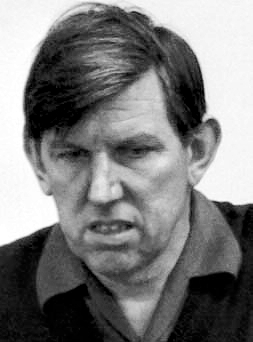
Tyrrell in 1971

For 1972, Gardner tried inboard brakes on the 005 but proved unable to work out their problems.[5][6]

During his early years in F1, "Uncle" Ken, as he was often known, reached the peak of his career. The 006, with its tall airbox, appeared in 1973 and was better than the 005.[7] However, Tyrrell was profoundly affected by the death of Cevert in practice for the 1973 US Grand Prix, leading to Stewart announcing his retirement, the World Championship already his.[8]

With the death of Cevert and the departure of Stewart, Tyrrell in 1974 hired Scheckter and Patrick Depailler and Gardner designed the less-twitchy 007.[7] It was good enough for Scheckter to place third in the World Championship and for Depailler to be ninth in his rookie season and for the team to continue to campaign the car during 1975.[7] In the following years, the Tyrrell team slipped down the rankings to mid-field, despite having employed natural talents such as Scheckter, Depailler and Ronnie Peterson, as well as lesser lights like Jean-Pierre Jabouille, in a third 007 in 1975.[7]

Still, Tyrrell found the time to introduce new concepts for F1. In 1976, the Tyrrell team created the six-wheeled P34, with four front wheels. The Gardner-designed single-seater achieved a race victory but it was abandoned after Goodyear refused to develop the small tyres needed exclusively for the car as it would detract from the efforts in the ongoing tyre war with other tyre manufacturers.

In the early 1980s Tyrrell's fortunes declined to the point where he had to run his team without sponsorship. Tyrrell still retained his eye for talent, bringing Michele Alboreto, Stefan Bellof and Martin Brundle to F1, but was not able to retain them. Without the proper funding, Tyrrell was the only entrant with the Cosworth DFV at a time when all other teams had switched to turbocharged engines. Alboreto scored the engine's last win in 1983, but in 1984 the team was excluded from the championship after being found to have run underweight cars before adding ballast during pit stops. Tyrrell denied this and felt his team was being singled out for refusing to run more expensive turbos.

In the early 1990s Tyrrell relinquished much of the company's control to his sons and to Harvey Postlethwaite, who was the first to introduce the high-nose concept in the 1990 Tyrrell. Jean Alesi scored two-second places in the car and the team led a lap for the last time. Their final podium finish was in 1994 with Mark Blundell and their final points at the 1997 Monaco Grand Prix, with 5th position from Mika Salo.

In 1997 the Tyrrell F1 team was bought by British American Tobacco and Craig Pollock to create British American Racing. Tyrrell did not stay with the team for its last year under the Tyrrell name (1998), after Pollock insisted on hiring Ricardo Rosset, whom Tyrrell regarded as less capable than the also-available Jos Verstappen. Tyrrell also approached Norberto Fontana and had even drafted a contract, but this was also vetoed by British American Racing.

On 25 August 2001 Ken Tyrrell died of pancreatic cancer at the age of 77.

Notes

[edit]

Sources

[edit]
  • Kettlewell, Mike. "Stewart: The Flying Scotsman", in Northey, Tom, ed. World of Automobiles, Vol. 19, pp. 2190–2. London: Orbis, 1974.
  • Setright, L. J. K. "Tyrrell: A Shrewd Talent-spotter", in Northey, Tom, ed. World of Automobiles, Vol. 21, pp. 2417–20. London: Orbis, 1974.
  • Twite, Mike. "BRM: High Hopes and Heartbreak", in Northey, Tom, ed. World of Automobiles, Vol. 3, pp. 246–51. London: Orbis, 1974.
[edit]
Revisions and contributorsEdit on WikipediaRead on Wikipedia
from Grokipedia
Kenneth Tyrrell (3 May 1924 – 25 August 2001) was a British motor racing figure renowned for founding the Tyrrell Racing Organisation, a team that achieved significant success in the 1960s and 1970s, including three drivers' world championships and one constructors' title. Born in East Horsley, , Tyrrell served as a bomber navigator in the Royal Air Force during before entering the family timber business, where he earned the nickname "Chopper" for his work at the woodyard. After the war, he amassed a fortune in timber and began his racing career in 1951, competing in the 500cc Formula 3 series with a Cooper , though his modest results as a driver prompted him to shift focus to team management and car preparation by the late 1950s. In 1960, he established the Tyrrell Racing Organisation at his family's yard, initially entering drivers in Formula 3 and Formula 2 events, and discovered future star in 1964. Tyrrell entered in 1968 as a privateer team using chassis powered by the Ford engine, securing immediate success with Stewart, who won the drivers' championship in 1969. The team transitioned to its own chassis with the Tyrrell 001 in 1970, clinching the constructors' championship in 1971 alongside Stewart's second drivers' title, followed by a third drivers' crown for Stewart in 1973 before his retirement. Notable drivers under Tyrrell included , , , , , , and , contributing to 33 Grand Prix victories overall. The team innovated with the six-wheeled in 1976, which won the that year, though regulatory changes and performance declines marked the late 1970s and 1980s, with the last victory coming in 1983. Married to Norah with two sons, and Bob, Tyrrell ran the team from his timber yard until financial pressures led him to sell to in 1997 for around £10 million; he departed in 1998 as the team rebranded toward . Tyrrell died of at his home in 2001, leaving a legacy as one of Formula One's most respected independent team owners, known for his family-run operation and commitment to young talent—his influence enduring through successor teams that have won additional championships.

Early Life

Family Background and Childhood

Robert Kenneth Tyrrell was born on 3 May 1924 in East Horsley, Surrey, England. He was the son of Leonard Tyrrell, a game warden on a local estate, and Selina Tyrrell, a cook. The family resided in the rural Surrey countryside, where Tyrrell grew up in a working-class household amid the estates and woodlands of the area. Tyrrell's early years were shaped by this rural environment, fostering a practical outlook that would later influence his career, though specific childhood pursuits beyond family life remain sparsely documented. This formative period in preceded his enlistment in the Royal Air Force during , marking a significant pivot in his life.

World War II Service

Ken Tyrrell enlisted in the Royal Air Force (RAF) in the early 1940s as a teenager, shortly after the outbreak of . His service lasted five and a half years, beginning with basic training and assignment to ground crew duties focused on . Trained specifically as a , Tyrrell handled essential repair and upkeep tasks on RAF , developing hands-on technical expertise in mechanics during the height of the conflict. Toward the war's end, he advanced to the role of aboard heavy bombers, participating in operational missions that supported the Allied effort, including flights over to conduct bombing operations against Axis targets. In the final six months of his service, Tyrrell was posted to transport operations, ferrying heavy bombers to strategic locations in the , such as and Ceylon (now ), aiding the Allied push against Japanese forces in the Pacific theater. These experiences in high-stakes team environments and complex mechanical systems honed his discipline, collaborative skills, and aptitude for , qualities that proved instrumental in his later professional endeavors. He was discharged in 1946, receiving a modest £30 and a new suit as recognition of his contributions.

Post-War Professional Start

Following his service in the Royal Air Force during , Ken Tyrrell was demobilized in the immediate period around 1945-1946. Tyrrell then established a successful timber business in partnership with his brother, operating as Tyrrell Brothers in Ockham, . The enterprise quickly grew into a thriving family operation, involving the acquisition of a timber yard and delivery trucks to meet the demands of reconstruction in Britain. This business provided a solid financial foundation, amassing a considerable fortune that enabled Tyrrell to pursue personal interests beyond his professional duties. His profession as a also inspired his enduring "Chopper," derived from the woodman's axe logo he prominently displayed on his , symbolizing his trade. The from the timber business proved crucial, allowing Tyrrell to fund his entry into as a hobby without compromising the family's commercial operations. He utilized the premises of the timber yard as an initial workshop for his racing activities, blending his professional and recreational pursuits seamlessly.

Motorsport Involvement as Driver

Initial Racing in Formula Three

Ken Tyrrell entered motorsport as an amateur driver in 1952, at the age of 28, purchasing a part-share in a Cooper-Norton Mk VI for the 500cc category. His debut came at a club meeting at , where he finished second in the Junior race, marking a promising start to his self-taught racing endeavors. Lacking formal training, Tyrrell relied on instinctive learning and mechanical adjustments to the lightweight, motorcycle-engined car, which he maintained himself alongside his day job. Throughout the early to mid-1950s, Tyrrell competed in a mix of local and national events across Britain and occasionally abroad, funding his hobby through profits from his burgeoning timber merchant business, which had thrived in the economic recovery. He upgraded to a full Cooper Mk VIII-Norton in 1954 and later a Mk IX in 1955, participating in races at circuits such as , , Goodwood, and Oulton Park. These outings allowed him to hone his skills against a field of similarly enthusiastic amateurs and emerging professionals, though his schedule remained part-time due to business commitments. Tyrrell's results were modest but included several notable achievements, such as a third-place finish in the Yorke Trophy at in 1953 and a victory there the following year. He secured his most prominent international success with a win at in in 1955, demonstrating growing competence on varied tracks. Incidents were typical for the era's unforgiving machinery, including hitting a sandbank at Goodwood in 1953 and a collision leading to a DNF at in 1955, which underscored the steep learning curve of his self-reliant approach. By 1956, with finishes like sixth at Goodwood's Earl of March Trophy, Tyrrell's driving career began to wane as he recognized his limitations beyond .

Transition to Formula Two

In 1958, building on his experience in Formula Three, Ken Tyrrell transitioned to the more demanding category by acquiring an upgraded Cooper T45 chassis fitted with a 1.5-liter Coventry-Climax FPF engine, marking a significant step up in equipment and competitiveness from his earlier Norton-powered machines. This move allowed him to compete at a higher level against professional teams and established drivers. Tyrrell entered the season through a partnership with the Alan Brown Equipe, teaming up with former Grand Prix driver Alan Brown and Cecil Libowitz to run a pair of Cooper-Climax cars on the international circuit; Tyrrell piloted one entry while Brown and Libowitz shared the other, providing logistical support and shared resources as private entrants. This association enabled cost-effective participation in major events across . His F2 campaign yielded several strong results, demonstrating improved performance and consistency. Notable finishes included third place in the Crystal Palace Trophy at the London circuit, where he drove steadily to secure a podium behind works entries, and fourth at the non-championship round in May, finishing just behind McLaren's debut-winning effort in a similar Cooper. At the Kent Trophy later that year, Tyrrell placed seventh, navigating mechanical challenges to complete the race. These outcomes highlighted his growing proficiency in handling the faster, more powerful machinery. Through these efforts as a driver, Tyrrell built a solid reputation for reliability and tactical acumen in F2, often punching above his weight against factory-backed opposition and earning respect within the British community for his determined approach.

Retirement from Competitive Driving

Tyrrell's competitive driving career culminated in 1958 with a series of outings that included modest but consistent performances, such as a third-place finish at , fourth at , and participation in the 200. Over the course of his seven-year tenure as a driver, primarily in the 500cc category from 1952 to 1956 and in 1958, he amassed around 50 starts and secured at least five victories, including notable wins at (1954 and 1955), Davidstow (1955), and in (1955). At age 34, Tyrrell retired from driving at the end of 1958, influenced by growing demands from his successful timber business, which had funded his endeavors since the years, and a recognition that his skills were better suited to team management rather than personal competition. He later reflected that persistent mid-field finishes—often fifth through seventh—highlighted the limitations of his talent, admitting he lacked the necessary bravery and ambition for higher echelons like . Immediately after stepping away from the cockpit, Tyrrell immersed himself in organizing and mentoring, lending his Cooper-Climax to drivers like Michael Taylor and entering cars for other racers in events, which provided greater fulfillment than his own racing efforts. This shift marked an exciting new phase, as he channeled his passion into nurturing talent and building a competitive team structure, laying the groundwork for his future successes in management.

Founding and Management of Tyrrell Racing

Establishment of the Team

In 1960, following his retirement from competitive driving the previous year, Ken Tyrrell founded the Organisation as a private entrant team dedicated to activities. This move allowed him to channel his passion for racing into management and organization, building on his earlier experiences in lower formulae. The team was initially based in a modest wooden shed located in the yard of Tyrrell's family-owned timber business in Ockham, , . This setup leveraged family resources, including the lumber yard's facilities for storage and basic maintenance, enabling operations on a limited budget without immediate need for external premises. Tyrrell assembled a small core of mechanics to handle car preparation and maintenance, drawing from local talent familiar with Cooper vehicles. From the outset, the team's focus centered on racing, where it entered factory-supplied Cooper cars for competitive outings across the and European circuits. Tyrrell hired promising young drivers to pilot these machines, emphasizing disciplined preparation and cost-effective logistics to compete against better-resourced outfits. The first entries occurred in 1960 events, marking the organization's debut in organized single-seater competition. Operating from the cramped presented logistical challenges, including constrained space for assembling and storing multiple , as well as reliance on manual transport methods for race weekends. These constraints demanded resourceful improvisation, such as integrating timber business vehicles for hauling equipment, to ensure timely arrivals at distant tracks despite the shoestring operation.

Early Formula Junior and Formula Three Successes

In 1959, Ken Tyrrell transitioned from driving to team management by forming a squad using Cooper chassis, marking the beginning of his reputation as a shrewd entrant in lower formulae racing. By 1960, he formalized the operation as the Organisation, securing factory support from Cooper and BMC to campaign a two-car team across European events. This partnership enabled consistent competitiveness, with the team frequently securing one-two finishes in races as they toured circuits week after week, demonstrating Tyrrell's emphasis on preparation and coaching over raw machinery. A pivotal moment came early in the 1960 season when Tyrrell identified emerging talent , the motorcycle champion making his car racing debut. At Tyrrell's invitation, Surtees piloted a Cooper T52 BMC to second place in the BARC Members' Meeting at Goodwood on March 19, 1960, finishing behind Jim Clark's Lotus but ahead of established drivers like Trevor Taylor. This result not only highlighted Surtees' potential but also underscored Tyrrell's knack for nurturing raw ability, a core ethos that defined his junior teams through the early . Such discoveries helped build the organization's credibility, as Tyrrell prioritized methodical development to propel drivers toward higher categories. Following the end of Formula Junior in 1963, Tyrrell entered the new 1-liter category in 1964 with custom-prepared Cooper-based cars, maintaining the team's winning momentum. A key success came with the discovery of at a 1964 Goodwood event, where Tyrrell signed the young Scot after impressive performances. In 1964 and 1965, Stewart and teammate Warwick Banks delivered multiple victories for Tyrrell in British and European F3 races, including eleven wins from thirteen starts in 1964, solidifying the team's dominance. Tyrrell's hands-on approach—tweaking setups and fostering a family-like environment—yielded multiple victories and podiums in British and continental events from 1960 to 1965, establishing as a dominant force in junior single-seaters without relying on outright championships but through sheer consistency and talent pipeline. This period solidified Tyrrell's philosophy of investing in people over politics, laying the groundwork for future escalations in motorsport.

Entry into Formula One with Matra

In 1968, Ken Tyrrell formalized a partnership with the French manufacturer to enter , establishing the semi-works team known as Matra International. Under the agreement, Tyrrell's organization would handle operations, sponsorship acquisition, and logistics, while Matra supplied the chassis; Tyrrell opted for the reliable Ford V8 engines over Matra's developing V12 to ensure competitiveness from the outset. This collaboration built on Tyrrell's prior successes in lower formulas, where his team had demonstrated strong management and driver development. The team's debut came at the , initially using a modified 2 Matra MS9 prototype before transitioning to the purpose-built Matra MS10 chassis later in the season. Designed by Matra engineer Bernard Boyer with aerospace-inspired construction for enhanced rigidity, the MS10 featured a semi-stressed DFV installation and was shod in Dunlop tires, providing a solid platform despite early reliability concerns with the fuel system. Jackie Stewart, recruited from BRM as the lead driver, piloted the car, supported initially by a single entry before expanding to a two-car team with drivers like Jean-Pierre Beltoise and Johnny Servoz-Gavin. Stewart's talent shone in the team's breakthrough victory at the 1968 at on June 23, where heavy rain turned the circuit into a treacherous challenge. Starting from the front row, Stewart mastered the wet conditions on Dunlop tires, leading a 1-2 finish ahead of Beltoise in the V12-powered MS11, with only 10 of 19 starters completing the race. This win, Stewart's first in the MS10 and 's inaugural success, came despite his lingering wrist injury from a prior testing accident, underscoring the driver's skill and the car's handling advantages. Operationally, Tyrrell ran the team from his Ockham, Surrey base as a compact, family-oriented outfit, securing sponsorship from ELF oil and Ford to fund the venture. The adaptation to Formula One's demands involved rapid scaling from junior series logistics, including last-minute preparations for the South African opener and ongoing tweaks to address fuel tank vulnerabilities in the monocoque design. Tyrrell's hands-on management fostered a close-knit environment, enabling the team to secure three victories that season and position Stewart as a title contender.

Tyrrell as Formula One Constructor

Championship-Winning Years

Ken Tyrrell's entry into Formula One with the Matra-Ford team served as a crucial launchpad, enabling rapid success in the late . In 1969, driver secured the Drivers' Championship for the Tyrrell-run squad, dominating the season with six victories out of eleven races, including wins at , , , , Watkins Glen, and . This triumph marked Stewart's first world title and established Tyrrell as a formidable force, finishing second in the Constructors' standings behind Lotus. The 1970 season saw Tyrrell transition to customer March chassis, yielding no outright wins but notable performances, such as Stewart's pole position at the Monaco Grand Prix, where he led early before retiring due to engine failure in a race marred by multiple retirements and won by Jochen Rindt. Despite the challenges, this period built momentum for Tyrrell's in-house constructor efforts. Tyrrell's golden era peaked in 1971 with the debut of the self-built Tyrrell 003, as Stewart clinched both the Drivers' and Constructors' Championships, again with six victories, including dominant displays at the Spanish, Monaco, French, British, German, and Canadian Grands Prix. The French Grand Prix at Paul Ricard exemplified the team's superiority, with Stewart starting from pole and leading teammate François Cevert to a 1-2 finish, securing Tyrrell's third win of the season. This double championship underscored Tyrrell's operational excellence under Ken Tyrrell's leadership. The team's success continued into 1973, when Stewart won his third and final Drivers' Championship with the Tyrrell 006, securing victories at the South African, Spanish, Belgian, Monaco, Dutch, and Italian Grands Prix, though the Constructors' title eluded them that year amid strong competition from Lotus and McLaren. During this dominant phase from the late 1960s to early 1970s, the team amassed 33 Grand Prix victories in total.

Technical Innovations

Under the leadership of Ken Tyrrell, the team's engineering efforts were spearheaded by chief designer Derek Gardner, who joined in 1970 after collaborating with Tyrrell on the MS84 four-wheel-drive project the previous year. Gardner's role was pivotal in transitioning Tyrrell from reliance on customer to in-house development, enabling greater control over design and performance optimization. The Tyrrell 001, the team's first purpose-built chassis, was developed in strict secrecy during 1970 in Gardner's home garage in , England. Constructed from a lightweight 18-gauge NS4 aluminum , it featured a Ford V8 engine and FG400 five-speed , with a emphasizing , balanced , and ease of to suit the team's limited resources. Debuting at the Oulton Park Gold Cup on August 22, 1970, the 001 demonstrated immediate potential despite initial reliability issues, paving the way for its use in the season's final Grand Prix races and marking Tyrrell's independence as a constructor. This innovation laid the foundation for the team's and drivers' championships by allowing tailored adaptations to driver feedback. Throughout the mid-1970s, Tyrrell pursued aerodynamic refinements under Gardner's guidance to enhance straight-line speed and stability amid evolving regulations on sizes and bodywork. Early experiments included deflectors on the 002 in 1972 to improve airflow over the oil cooler, though these proved unreliable during testing at . By 1973, the team tested a "chisel nose" with side-mounted radiators on the 005 at , inspired by the Lotus 56's Indianapolis design, to reduce frontal drag and improve cooling efficiency; this was contrasted with the more conventional "bluff nose" on the 006 for race use. These tweaks, applied to models like the 007 introduced in 1974, focused on chassis forgiveness for new drivers such as and , incorporating a longer for better high-speed handling without venturing into full ground-effect underbodies that rivals like Lotus pioneered. The most radical innovation came with the , or "Project 34," unveiled in 1976 to address aerodynamic challenges posed by 's 16-inch rear tire mandate, which forced larger front tires and increased drag. Gardner's solution featured four 10-inch front wheels—two per side, partially shielded by a 1.5-meter-wide front —to maximize the for grip while minimizing and lift, effectively equivalent to a 40-horsepower gain in straight-line performance. Custom Goodyear tires were developed for the setup, and the design included driver portholes for visibility over the front wheels and a bell-crank steering system for the leading pair. After secretive testing at using a on a 007 , the P34 debuted at the ; in its fourth outing at the on June 13, 1976, secured and victory at Anderstorp, leading teammate Depailler to a one-two finish—the only Grand Prix win by a six-wheeled car in history. This triumph highlighted Tyrrell's willingness to push engineering boundaries, though tire wear issues and regulatory scrutiny limited its long-term impact.

Declining Fortunes and Sale

Following the championship successes of the early , faced mounting challenges from evolving regulations that curtailed its innovative edge. The team's groundbreaking six-wheeled design, which secured a victory at the 1976 , was rendered obsolete when rules mandated a maximum of four wheels per starting in , forcing to revert to conventional layouts and diminishing its competitive advantage in the emerging ground effect era. This regulatory shift, combined with broader bans on aerodynamic aids like sliding skirts by , hampered ability to match the pace of larger teams investing heavily in turbocharged technology. In the 1980s, Tyrrell's fortunes waned amid frequent driver lineup changes and inconsistent on-track results, exacerbated by a major scandal. delivered the team's last Grand Prix win at the 1983 , but his departure to Ferrari the following year marked the end of podium contention, with subsequent drivers like , , and yielding only sporadic points finishes in a turbo-dominated field. The 1984 season proved catastrophic when Tyrrell was disqualified from the entire after scrutineers discovered lead shot used as illegal in the cars, along with irregularities in fuel systems; the team was excluded from the final races and barred from receiving points, severely damaging its reputation and resources. The 1990s brought further financial strains as Tyrrell operated as a small independent outfit, relying on customer engines that limited development and performance. Switching between suppliers like Ford V8s, Yamaha V10s (1992–1993), and brief V10 support in 1991, the team struggled with underpowered units compared to manufacturer-backed rivals, often finishing in the mid-field with drivers such as (fourth in the 1989 ) and . Escalating costs, without major sponsorship influxes, eroded viability; Japanese partnerships via Yamaha and Japan Tobacco provided temporary aid but could not sustain competitiveness against the growing dominance of factory teams. By late 1997, these pressures culminated in the sale of to (BAR), backed by , for around £10 million; Ken Tyrrell, then 73, cited the inability to secure adequate funding and the lack of family successors as key factors, with no outstanding debts but clear recognition that the independent model was unsustainable after 30 years without a win. The team completed one final season in 1998 under Tyrrell branding before rebranding as BAR for 1999, effectively ending the Tyrrell name in .

Legacy and Personal Life

Influence on the Sport

Ken Tyrrell profoundly shaped through his exceptional talent identification and development, spotting and cultivating drivers who became legends of the sport. He first discovered in the scene, where Stewart secured the 1964 British title under Tyrrell's guidance in a Cooper, propelling him into higher echelons of racing and ultimately to three world championships (1969, 1971, and 1973) as Tyrrell's lead driver. Tyrrell similarly nurtured , recognizing his promise during a 1967 talent search at the Winfield Racing School and integrating him into the Tyrrell team as Stewart's protégé, where Cevert quickly emerged as a formidable talent with multiple podium finishes. In a bold move, Tyrrell signed the young midway through 1973 to prepare him as a potential successor to the retiring Stewart, a decision that paid off as Scheckter secured three Grand Prix victories for the team between 1974 and 1976. Tyrrell's commitment to driver welfare extended to advocating for safety enhancements in , heavily influenced by Stewart's firsthand experiences with the era's dangers. After Stewart's harrowing 1966 Spa crash, Tyrrell supported his 's campaigns for better barriers, medical response times, and circuit modifications, using his position as a team principal to lobby governing bodies and fellow owners for systemic changes that reduced fatalities in the sport. This partnership not only amplified Stewart's voice but also set a precedent for team leaders prioritizing safety over short-term competitive edges. Affectionately known as "Uncle Ken" within the paddock, Tyrrell fostered a unique family-like culture at his team, emphasizing loyalty, personal care, and a supportive environment that contrasted with the cutthroat dynamics of other outfits. This approach built deep bonds with drivers and staff, contributing to Tyrrell's reputation as a paternal figure who prioritized long-term team harmony and morale. In recognition of his enduring impact, Tyrrell was appointed president of the British Racing Drivers' Club in 1999, serving in the role to guide the organization through key decisions on British motorsport's future. Even after selling his team in 1998, Tyrrell's influence persisted through these advisory and leadership roles.

Family and Later Honors

Ken Tyrrell married Norah Tyrrell, who played a key role in supporting the family's racing endeavors by managing travel arrangements for the team during its active years. The couple raised two sons, Bob and , both of whom became involved in the operations of over several decades. Bob Tyrrell handled marketing responsibilities for the team and held a significant shareholding, while Kenneth also maintained an ownership stake, contributing to the family's collective management until the sale of the team in 1997. Following his retirement from in 1998, Tyrrell served as temporary president of the British Racing Drivers' Club (BRDC) in 1999, a role that underscored his enduring influence within British motorsport circles.

Death and Tributes

In the late 1990s, Ken Tyrrell was diagnosed with , which marked the beginning of a two-year battle with the illness. Following the sale of the Tyrrell team in , his health steadily declined as he focused on his personal fight against the disease. Tyrrell passed away at his home in East Horsley, , on 25 August 2001, at the age of 77. His funeral was a private affair attended solely by family and close friends, reflecting his preference for discretion in personal matters. A public memorial service held on 15 November 2001 at drew a significant gathering from the world, including former Tyrrell drivers such as , , and . Sir , who won three World Championships with Tyrrell, delivered one of the addresses, leading tributes that highlighted Tyrrell's role as a mentor and innovator in the sport. Stewart described Tyrrell as an inspirational figure whose family-run approach had profoundly shaped his own career. In the years following his death, several memorials honored Tyrrell's contributions to motorsport. The original Tyrrell workshop, known as "the Shed" in Owslebury, , was preserved and relocated to the Goodwood Motor Circuit, where it stands as a to the garagista era of team building. This site, where many iconic Tyrrell cars were designed and constructed, now serves as an educational and commemorative space for visitors. In 2025, the Silverstone Festival honored Tyrrell's legacy with a historic race featuring six Tyrrell cars, attended by longtime team member Trudy Coughlan, who recounted memories of Ken Tyrrell's leadership.

References

Add your contribution
Related Hubs
User Avatar
No comments yet.