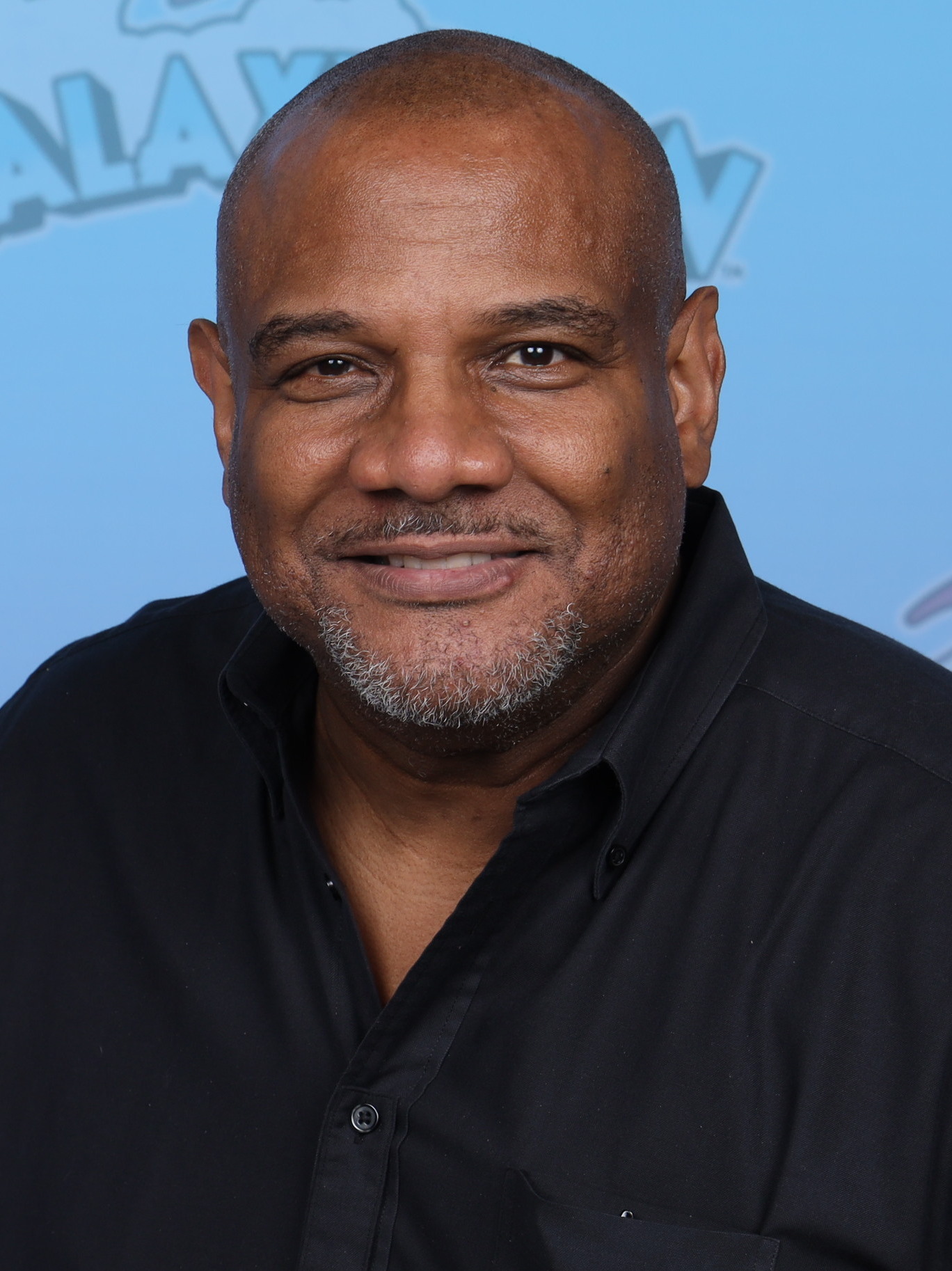
Kevin Clash
Kevin Clash
Main page
2149235

Kevin Clash

logo
Community Hub0 subscribers
Read side by side
from Wikipedia

Kevin Jeffrey Clash (born September 17, 1960) is an American puppeteer, director and producer best known for puppeteering Elmo on Sesame Street from 1985 to 2012. He also performed puppets for Labyrinth, Dinosaurs, Oobi, and various Muppet productions.

Key Information

Clash developed an interest in puppetry at an early age and, in his teen years, performed for local television children's shows in his hometown of Baltimore, Maryland. He joined the cast of Captain Kangaroo in the early 1980s and began performing on Sesame Street in 1984. He was the fifth puppeteer to perform Elmo, who became his signature character, and he also served as an executive producer and director for the show. Clash worked in various productions with The Jim Henson Company and occasionally on other projects. Clash's autobiography, My Life as a Furry Red Monster, was published in 2006; he was later the subject of the documentary Being Elmo: A Puppeteer's Journey (2011).

Clash resigned from Sesame Street in 2012 after allegations of sexual impropriety with minors, all of which he denied and were later dismissed due to expiration of the statute of limitations. Clash returned to puppeteering as a supporting performer in the adult comedy The Happytime Murders (2018).

Early years

[edit]

Clash was born in Baltimore, Maryland, on September 17, 1960, the third of four children born to George Clash, a flash welder and handyman, and Gladys Clash, who ran a small daycare center in their two-bedroom, one-bath home in the Turner Station area of Dundalk, Maryland.[1] Clash developed an interest in puppetry at an early age, inspired by children's shows like Kukla, Fran and Ollie and Sesame Street. He made his first puppet, a version of Mickey Mouse, at the age of 10.[2] When he was twelve, he made a monkey puppet out of the lining of his father's coat.[3] His first performances were for his mother's daycare children.[4]

By the time he was a teenager, he had built almost 90 puppets, which he based upon commercials, popular music, and his friends.[5][6] While still in high school, Clash performed at venues throughout Baltimore, including schools, churches, fundraisers, and community events.[7] While appearing at a neighborhood festival, Clash was discovered by Baltimore television personality Stu Kerr, who became Clash's first mentor and hired him to perform in the children's show Caboose at Channel 2. Clash also built puppets for the Romper Room franchise.[8][9][10] When he was 17, he contacted and met puppeteer Kermit Love, who became Clash's mentor, after seeing Love featured in an episode of the children's educational television series Call It Macaroni.[11][12] In 1979, on Love's recommendation, Clash appeared as Cookie Monster in the Sesame Street float during the Macy's Thanksgiving Day Parade and met Jim Henson, who later became his boss, mentor, and good friend.[13][14]

When he was 19, Clash became a puppeteer for Captain Kangaroo, initially as a guest performer, in which he also made occasional on-camera appearances. The producers of Captain Kangaroo used some of Clash's puppet creations for the show.[15][16] In 1984, Clash had to turn down Henson's offer to work on his film The Dark Crystal because he was working on two TV shows at the same time, Captain Kangaroo and Love's syndicated program The Great Space Coaster, in which he was producer for the first time.[17][18][19]

Career

[edit]

Captain Kangaroo was canceled in 1984 after 29 seasons, and Great Space Coaster ended, freeing up Clash to work on projects with Henson such as the film Labyrinth and Sesame Street.[20] Clash started working at Sesame Street for ten episodes in 1983, mostly performing nondescript, stand-in puppets known as Anything Muppets.[21][22] Some of his earliest characters included the saxophone-playing Hoots the Owl (based on Louis Armstrong),[23] the infant Baby Natasha, and inventor Dr. Nobel Price. He worked on the 1985 feature film Follow That Bird. After 1985, Elmo, a furry red monster, became his main character.[24] Three puppeteers, including Richard Hunt, had performed Elmo previously, but it was Clash's development, with a falsetto voice, that established the character.[25][26][27] He based Elmo's character on the preschool children that attended his mother's daycare in Baltimore and upon his own personality and the personality of his parents.[28] Clash followed the advice of fellow puppeteer Frank Oz, who told Clash to always "find one special hook" for each character. Clash decided that the central characteristic for Elmo should be that he "should represent love".[29]

Clash with Elmo at the Peabody Awards in 2010

After the height of Elmo's popularity, especially the "Tickle Me Elmo" craze in 1996,[30] Clash's responsibilities at Sesame Street increased. He recruited, auditioned, and trained its puppeteers,[31] and became the senior Muppet coordinator, a writer, director, and co-producer of the "Elmo's World" segment of the show.[32][33] Clash worked with and mentored the puppeteers of Sesame Street's international co-productions.[34] He found working with the co-productions "a lot of fun" and "very rewarding".[35] In 2007, he was promoted to senior creative adviser for the Sesame Workshop.[36] Until 2011, he was the sole performer as Elmo in all his public relations appearances, making his schedule, as he called it, "crazy".[33][37] Cheryl Henson, president of the Jim Henson Foundation, called him "essential" to the show.[38]

Clash worked on the first film version of Teenage Mutant Ninja Turtles in 1990 and the sequel, Teenage Mutant Ninja Turtles II: The Secret of the Ooze, which was dedicated to Henson, in 1991, voicing Master Splinter.[39][40] He performed in several productions with Jim Henson Productions, including as the Muppet Clifford in The Jim Henson Hour (1989),[note 1] and performing the puppetry for Frank Oz's characters (Miss Piggy, Fozzie Bear, Sam the Eagle, and Animal) in Muppet Treasure Island (1996).[42] Clash performed in the films Muppets from Space (1999) and The Muppets' Wizard of Oz (2005), and the TV series Muppets Tonight (1996–1998), in which he reprised Clifford, who served as the show's host. He performed characters and worked behind the scenes on the sitcom Dinosaurs.[43]

In 2006, Clash published his autobiography, co-written by Gary Brozek and Louis Henry Mitchell, entitled My Life as a Furry Red Monster: What Being Elmo Has Taught Me About Life, Love and Laughing Out Loud.[44] His life was featured in the 2011 documentary Being Elmo: A Puppeteer's Journey.[45]

After a hiatus of several years, Clash returned to performing with the film The Happytime Murders (2018), directed by Brian Henson and co-produced through Henson Alternative.[46] He later puppeteered in the 2019 Netflix series The Dark Crystal: Age of Resistance, which serves as a prequel series to the 1982 Jim Henson film The Dark Crystal.[47]

Personal life

[edit]

Clash has stated that although children ignore him and speak directly to Elmo, black adults tend to be surprised when they meet him.[32] He has stated in interviews that his racial identity was pertinent to his work, and that it came through in his performances.[33]

Clash was married for 17 years and has a daughter who was born in 1993.[48][49]

In November 2012, Clash publicly revealed his homosexuality in response to the allegations that led to his resignation from Sesame Workshop, stating, "I am a gay man. I have never been ashamed of this or tried to hide it, but felt it was a personal and private matter."[50]

In 2015, Clash moved to Los Angeles to work on other Jim Henson Company productions, including The Happytime Murders and The Dark Crystal: Age of Resistance, performing Lyle and Mr. Bumblypants in the former and Aughra in the latter.[citation needed]

Abuse allegations

[edit]

In November 2012, 23-year-old Sheldon Stephens alleged that he had been in a sexual relationship with Clash that began when Stephens was 16, which would be a felony under New York law that declares illegal any sexual relationship with individuals under 17 years of age, whether consensual or not. Sesame Workshop had initially been presented with the allegation in June, and its investigation found the allegation to be unsubstantiated. Clash acknowledged that he had been in a relationship with the accuser; however, he said the relationship was between two consenting adults.[44] Stephens later recanted his accusation, but two weeks later, another accuser, Cecil Singleton, accused Clash of sexually abusing him when he was 15 years old, and lawsuits were filed by attorney Jeffrey Herman against Clash.[51][52]

Clash resigned from Sesame Workshop on November 20, 2012, and released a statement saying, "Personal matters have diverted attention away from the important work 'Sesame Street' is doing and I cannot allow it to go on any longer. I am deeply sorry to be leaving and am looking forward to resolving these personal matters privately".[51] Sesame Workshop also released a statement: "Unfortunately, the controversy surrounding Kevin's personal life has become a distraction that none of us want, and he has concluded that he can no longer be effective in his job and has resigned from 'Sesame Street'."[51] They stated that other puppeteers had been trained to serve as Clash's understudy and would take over his roles on the show.[53]

In July 2013, the three cases against Clash were dismissed because it was ruled that the claims were made more than six years after each man reasonably should have become aware of Clash's alleged violations during the three years after each turned 18. Clash's lawyers expressed his hope that the ruling would allow him to restore his personal and professional life.[54] Lawyers for the plaintiffs appealed the ruling, alleging that the psychological effects of the abuse were not fully realized until 2012. In April 2014, the decision to dismiss the three lawsuits was upheld by the U.S. Court of Appeals.[55] Months after the other alleged victims made legal accusations, Stephens filed a lawsuit in Pennsylvania against Clash,[56] but it was ultimately dismissed in June 2014 because the statute of limitations had passed.[57]

Filmography

[edit]
Year Title Role(s)
1980–1984 Captain Kangaroo Artie, himself
1980–1984 The Great Space Coaster Goriddle Gorilla, Rory, Big Jock Ox, Scruffy
1983–2012 Sesame Street Elmo, Baby Fats Domino, Benny Rabbit, Billy Idle, Chip Cat, Clementine, Hoots the Owl, Kingston Livingston III, Mario, Paul Pencil, Warren Wolf, Watson, Wolfgang the Seal, Natasha, Mel, Counting Crows Lead Singer, Additional Muppets
1985 Sesame Street Presents: Follow That Bird Additional Muppets, Elmo (voice)
1985–1993 Muppet Meeting Films Luncheon Counter Monster, Franklin, Bob, additional Muppets
1986 The Tale of the Bunny Picnic Be-Bop Bunny, Father Bunny, additional Muppets
1986 Labyrinth Firey
1987 Inner Tube Drummer
1988 Jim Henson's Play-Along Video P.J., Artie, Be-Bop Bunny, Luncheon Counter Monster, additional Muppets
1989 The Song of the Cloud Forest Nick, Caiman
1989 The Jim Henson Hour Leon, Clifford, Bob, Blue-Green Extreme, Codzilla, Himself, additional Muppets
1990 The Cosby Show Clif's Nightmare
1990 Teenage Mutant Ninja Turtles Splinter
1990 The Muppets at Walt Disney World Clifford, Alligator, Frog, Ace Yu
1990 The Muppets Celebrate Jim Henson Clifford, Elmo, additional Muppets
1990 Basil Hears a Noise Elmo, Chip Cat, Watson the Dog and Warren Wolf
1991 Teenage Mutant Ninja Turtles II: The Secret of the Ooze Splinter
1991–1994 Dinosaurs Baby Sinclair, Howard Handupme, Howlin' Jay, additional characters
1992–1995 Dog City Ace Yu (special), Eliot Shag (series), additional Muppets
1993–1996 Muppet Sing-Alongs Billy Bunny, Clifford, Bad Polly, Black Dog, Spa'am, additional Muppets
1994 Muppet Time Do Re Mi Monster, Jeffy, Huffy Monster
1994 The Best of Elmo Elmo, Wolfgang the Seal
1995 Mr. Willowby's Christmas Tree Father Mouse, Owl
1996–2002 The Rosie O'Donnell Show Elmo
1996–2002 Tots TV Tiny (US version only)
1996 Muppet Treasure Island Fozzie Bear (puppetry only), Miss Piggy (puppetry only), Sam Eagle (puppetry only), Animal (puppetry only), Bad Polly, Black Dog, Spa'am, additional Muppets
1996 Muppets Tonight Clifford, Mulch, Bad Polly, Carter, Craniac, Bart, Waldorf, Animal, additional Muppets
1996 Elmocize Elmo, Benny Rabbit
1997 123 Count with Me Benny Rabbit
1997 Elmo Says Boo! Elmo, Kingston Livingston III
1998 The Wubbulous World of Dr. Seuss Little Cat Fleep
1998–2009 Elmo's World Elmo, Baby Natasha, Benny Rabbit, Wolfgang the Seal
1999 Muppets from Space Clifford, Carter, additional Muppets
1999 The Adventures of Elmo in Grouchland Elmo, Pestie, Grouch Cab Driver, Grouch Jailer
2002 It's a Very Merry Muppet Christmas Movie Sam the Eagle
2002 Bert & Ernie's Word Play Elmo, Benny Rabbit
2003–2005 Oobi Randy, additional characters
2003 Sesame Street 4-D Movie Magic Elmo
2004 The West Wing Elmo (Season 5, Episode 16 "Eppur Si Muove")
2004–2005 The Tony Danza Show Elmo
2005 The Muppets' Wizard of Oz Clifford, Black Dog, additional Muppets
2007 Elmo's Christmas Countdown Elmo, Hoots, Billy Bunny, Mel, Mouse King, Wolfgang the Seal
2007–2012 Bert and Ernie's Great Adventures Elmo
2008 Abby in Wonderland Elmo/Red Rabbit
2008 A Muppet's Christmas: Letters to Santa Additional Muppets
2009 Scrubs Elmo
2009 The Game Himself/Mookie (puppet)
2012–2013 Elmo the Musical Elmo
2018 The Happytime Murders Lyle, Mr. Bumblypants
2019 The Dark Crystal: Age of Resistance Aughra, Skeksis skekVar/The General, skekMal/The Hunter, The Gelfling Librarian, Gruenak #1, additional voices
2020 Earth to Ned Additional puppeteer[58]
2022 Fraggle Rock: Back to the Rock Uncle Travelling Matt (puppeteer)

Awards and honors

[edit]
Preceded by Elmo performer
1985–2012
Succeeded by
Preceded by Performer of Mulch
1990s
Succeeded by
None
Preceded by Performer of Clementine
1985–1988
Succeeded by
Preceded by Performer of Dr. Nobel Price
1984–1988
Succeeded by
None
Preceded by
None
Performer of Clifford
1989–2005
Succeeded by
None
Preceded by
None
Performer of Hoots the Owl
1985–2012
Succeeded by
Christopher Hayes
Preceded by Performer of Sam the Eagle
2002–2003
Succeeded by

Notes

[edit]

References

[edit]

Works cited

[edit]
  • Clash, Kevin, Gary Brozek, and Louis Henry Mitchell (2006). My Life as a Furry Red Monster: What Being Elmo has Taught Me About Life, Love and Laughing Out Loud. New York: Random House. ISBN 0-7679-2375-8
  • Davis, Michael (2008). Street Gang: The Complete History of Sesame Street. New York: Viking Penguin. ISBN 978-0-670-01996-0
  • Herman, Karen (2004-07-20). Archive of American Television. Parts 1–4.
  • Marks, Constance (Director) (2011) (DVD). Being Elmo: A Puppeteer's Journey.
[edit]
Revisions and contributorsEdit on WikipediaRead on Wikipedia
from Grokipedia
Kevin Jeffrey Clash (born September 17, 1960) is an American puppeteer, voice actor, director, and producer best known for originating the performance and falsetto voice of the Sesame Street character Elmo, which he developed into a central figure on the children's educational program from 1984 until 2012.[1][2][3] Born in Baltimore, Maryland, Clash constructed his first puppets at age 10 using household materials and debuted them on local television by his early teens, leading to early professional work before joining the Jim Henson Company and Sesame Workshop.[2][4] Over his tenure at Sesame Street, he performed additional characters including Hoots the Owl and Baby Bear, served as a director and senior producer, and received multiple Daytime Emmy Awards for Outstanding Performer in a Children's Series for his Elmo work in seasons spanning 1990 to 2010.[3][5] In November 2012, Clash resigned from Sesame Workshop after a former associate alleged a sexual relationship beginning when the accuser was 16, which Clash denied as involving any minor; additional similar claims followed, but all related lawsuits were dismissed by courts on statute of limitations grounds without adjudication of the merits.[6][7][8] Post-resignation, Clash has continued puppetry-related appearances and received further Emmy recognition for prior contributions.[9]

Early Life

Childhood and Family Influences

Kevin Clash was born on September 17, 1960, in Turners Station, a predominantly African American working-class neighborhood in Baltimore, Maryland.[2] He grew up in an economically modest household where his father, George Clash, worked as a welder and handyman, while his mother, Gladys Clash, served as a homemaker and child care provider.[2] [10] The family environment emphasized creativity amid limited resources, with Clash later describing it as rich in inspiration despite financial constraints.[10] [11] As the third of four children, Clash experienced close-knit family interactions that included sharing stories and engaging with local media, fostering an early interest in performance and entertainment.[2] His siblings included older brother George Jr. and sister Anita, along with a younger sister, Pam, contributing to a dynamic home life centered on communal activities rather than material wealth.[12] Television played a central role in the household, exposing Clash to imaginative content that sparked his curiosity about visual storytelling and character creation.[2] Clash developed a particular fascination with puppetry during his early years, inspired by children's television programs such as Kukla, Fran and Ollie, which featured hand-crafted puppets and interactive formats.[2] This led him to experiment with homemade puppets constructed from everyday materials like papier-mâché, coat hangers, and fabric scraps, often staging informal shows for family members to perform narratives drawn from observed media.[2] [10] These childhood activities highlighted an innate drive toward craftsmanship and expression, shaped by accessible household items and familial encouragement in a resource-limited setting.[10]

Initial Puppeteering Experiments

At the age of 10 in 1970, Kevin Clash began constructing puppets from household scraps, including his first creation—a monkey assembled from the lining of his father's coat—demonstrating an early aptitude for improvisation without formal instruction.[13] His mother taught him to operate a Singer sewing machine around ages 9 or 10, which facilitated the production of approximately 80 puppets over subsequent years using readily available fabrics and materials.[14] Clash's initial efforts were self-directed, relying on observation of television puppetry, particularly programs like Sesame Street, to replicate techniques and character dynamics through trial and error.[2] [11] He staged impromptu performances with these handmade figures for family members, neighbors, and school groups, honing skills in manipulation, voicing, and audience engagement absent any structured training.[15] These experiments underscored his intuitive grasp of puppet mechanics, prioritizing practical functionality over aesthetic refinement in early prototypes.[3] By his early teenage years, Clash had developed dozens of original characters, experimenting with materials like foam and fabric scraps to achieve lifelike movement and expressiveness, often refining designs through iterative failures and successes in home-based rehearsals.[3] This phase laid the groundwork for his distinctive approach, emphasizing character-driven storytelling derived from personal observation rather than institutional methods.[15]

Career

Local Television Beginnings (1970s-1980s)

Clash entered professional puppeteering at age 18 through local Baltimore children's television, where he performed on the program Caboose produced by CBS affiliate WMAR-TV. Discovered by host Stu Kerr during a 1978 appearance, he contributed puppetry segments that integrated his self-built characters into the show's format.[2][16] These early local productions emphasized practical skills development, with Clash managing puppet construction, operation, and vocal performances in resource-limited settings typical of independent or affiliate stations. His involvement with Kerr's shows, including preparatory spots like Professor Kool's Fun Skool, provided initial paid experience in live audience interaction and quick character adaptation.[17][18] By 1981, Clash transitioned to broader exposure on The Great Space Coaster, a syndicated children's series, performing as puppeteer for characters such as Goriddle Gorilla and Rory. Operating within the constraints of a smaller production team, he refined techniques for synchronized puppet movement and ensemble voicing, building endurance for extended segments.[14]

Transition to National Shows

Clash's entry into national television occurred in 1979 when he joined the long-running children's program Captain Kangaroo as a puppeteer, marking his first major exposure beyond local Baltimore stations.[2] There, he performed the puppet character Artie from 1980 to 1984 and collaborated with veteran puppeteer Lemuel Stovall, while also constructing puppets for the show, which aired on CBS until its transition to shorter formats in the early 1980s. This role honed his skills in live audience interaction and character manipulation under the constraints of daily broadcast schedules. In 1981, Clash expanded his national footprint by joining the syndicated children's series The Great Space Coaster, where he served as puppet coordinator and performed multiple characters, including Goriddle Gorilla, Rory, Big Jock Ox, and Huggle Scuffy, through 1986.[2] [19] The program, produced by Rankin/Bass and featuring a mix of live-action, animation, and puppetry, required Clash to voice and operate extraterrestrial-themed puppets in comedic sketches and musical segments, demonstrating his growing proficiency in ensemble puppetry and improvisation.[20] These assignments on Captain Kangaroo and The Great Space Coaster provided Clash with critical experience in high-visibility national programming, allowing him to refine techniques in puppet building, voicing, and performance versatility across diverse character archetypes before his initial utility puppeteering stint on Sesame Street in 1983.[2]

Sesame Street Contributions (1983-2012)

Kevin Clash began contributing to Sesame Street as a puppeteer in 1984, initially performing various background Muppets before securing a full-time role in 1985 following his work on a Macy's Thanksgiving Day Parade float that impressed Jim Henson.[13][3] He took over the role of Elmo, a minor "Anything Muppet" character introduced in the early 1980s, and redefined the puppet through a high-energy performance style that emphasized emotional expressiveness and improvisation, elevating Elmo from a peripheral figure to a central star by the late 1980s.[21][3] This approach involved portraying Elmo in third-person speech and focusing on child-like curiosity and feelings, which resonated with young audiences and boosted the character's popularity in segments like "Elmo's World," debuting in 1998.[3] Clash also originated and performed several other key Muppet characters on the show, including Hoots the Owl, a saxophone-playing jazz musician introduced in 1985 to represent musical diversity and nighttime themes.[15] He voiced and puppeteered Baby Bear starting in the 1990s, a character from the Goldilocks story adaptation that highlighted family dynamics and language development through furry monster interactions.[2] Additional roles encompassed Baby Natasha, an infant monster teaching baby sign language, and various supporting puppets that enriched the street's ensemble.[2] In addition to performing, Clash directed numerous Sesame Street segments and served as puppet captain, training emerging puppeteers in advanced techniques like right-hand manipulation for expressive control.[15] His work influenced educational content by integrating emotional intelligence—such as identifying and managing feelings—through Elmo's interactive skits, while characters like Hoots promoted cultural diversity via jazz influences and inclusive storytelling.[3][15] These contributions aligned with the show's goals of fostering empathy and social skills, evidenced by Elmo's segments addressing topics like sharing and self-regulation, which aired consistently through 2012.[3]

Directorial and Producing Roles

Clash directed multiple episodes and inserts for Sesame Street, including puppet segments that emphasized character-driven storytelling and educational content.[15] He also helmed home video productions such as Abby in Wonderland (2008), adapting classic tales with Muppet ensembles to engage young audiences through interactive puppetry.[15] In specials, Clash served as co-executive producer and contributed to directing efforts for Elmopalooza! (1998), a musical event featuring live performances by Sesame Street characters alongside celebrity guests like Jon Stewart and Rosie O'Donnell, broadcast on ABC.[5][22] Expanding into broader production oversight, Clash co-executive produced segments of the PBS special Families Stand Together: Feeling Secure in Tough Times (2002), directing Muppet contributions focused on family resilience themes.[5] He co-produced The Adventures of Elmo in Grouchland (1999) theatrical film, managing puppet integration and creative alignment with Jim Henson's legacy techniques.[5] As Sesame Street's Muppet captain, Clash executive produced initiatives like Sesame Beginnings, a series of developmental videos promoting early childhood skills via hands-on puppet interactions.[23] In these roles, Clash prioritized mentoring novice puppeteers through practical, on-set training rather than formal academia, fostering skills in character embodiment and technical manipulation as seen in his guidance of talents like Tau Bennett.[14] This approach extended to team leadership on projects, where he emphasized iterative rehearsal and empirical feedback to refine performances, drawing from his experience under mentors like Kermit Love.[14]

Post-2012 Professional Activities

Following his resignation from Sesame Street on November 20, 2012, Kevin Clash engaged in sporadic puppeteering roles. He contributed as a puppeteer to the 2018 adult puppet comedy film The Happytime Murders, directed by Brian Henson.[24] In 2019, Clash performed the character Aughra in the Netflix series The Dark Crystal: Age of Resistance, a prequel to the 1982 film.[12] He appeared in the Disney+ series Earth to Ned in 2020 and provided puppeteering for Fraggle Rock: Back to the Rock in 2022.[1] Clash has made occasional public appearances at fan conventions to discuss his craft. At GalaxyCon Richmond in May 2023, he participated in a Q&A session sharing insights on puppeteering.[25] Similar engagements occurred at Contropolis NJ in 2023.[26] As of 2025, he has not returned to major network television productions or undertaken high-profile directing roles.[1]

Achievements and Recognition

Awards Received

Kevin Clash earned over 20 Daytime Emmy Awards from the National Academy of Television Arts & Sciences for his puppeteering, directing, and producing roles on Sesame Street, with many recognizing his performance as Elmo.[27] His initial win came in 1990 for Outstanding Performer in a Children's Series.[2] Subsequent victories in this category followed in 2005, 2006, 2007, and 2012, marking four consecutive years for the Elmo role by 2012.[28] In 2013, he secured three additional Daytime Emmys for prior Sesame Street work, including Outstanding Performer in a Children's Series, Outstanding Pre-School Children's Series (as co-executive producer), and Outstanding Directing in a Children's Series.[29] Clash also received five NAACP Image Awards, honoring his technical and creative efforts in promoting positive representation in children's media via Sesame Street.[30] One such award was in 1991 for Outstanding Variety Series/Special.[31] Further nominations and wins in the 2000s, such as in 2006 for Outstanding Performance in a Youth/Children's Program (Series or Special), underscored his impact on educational content.[32]

Innovations in Puppeteering and Character Development

Kevin Clash introduced a distinctive puppeteering approach for Elmo, transforming the character from a minor figure with a gruff, caveman-like voice into an energetic 3.5-year-old monster characterized by a high-pitched falsetto and exuberant physicality. This technique emphasized exaggerated movements and emotional expressiveness to mirror toddler behavior, incorporating hugs, laughter, and impulsive curiosity to foster relatability among young viewers.[18][3] Clash's method advanced full-body engagement in live-hand puppetry, where the performer kneels to match the puppet's scale while coordinating arm, head, and torso motions for dynamic comedy, diverging from static or arm-focused operations common in earlier Muppet styles. This innovation enabled seamless integration of physical humor with vocal shifts, allowing Elmo to convey complex emotions like frustration or joy in educational segments, thereby enhancing character-driven learning over scripted memorization. Peers, including Jim Henson associates, noted Clash's ability to imbue puppets with lifelike impulsivity, as evidenced in documentary accounts of his performance evolution.[33] Under Clash's development, Elmo's appeal drove measurable cultural impact, including the 1996 Tickle Me Elmo doll's sales surge to over 1 million units in weeks, revitalizing Sesame Street's merchandise revenue amid 1980s funding declines and contributing to sustained viewership among preschoolers through relatable, interactive content. This causal link is supported by the character's expanded role in episodes post-1985, correlating with shifts toward emotion-focused education that prioritized puppet-child analogies for causal understanding of feelings.[34][3]

Controversies

2012 Abuse Allegations

In November 2012, Cecil Singleton, then aged 23, publicly alleged that he had entered into a sexual relationship with Kevin Clash beginning when Singleton was 15 years old, around 2004.[35] Singleton's claim, first reported on November 12, prompted Sesame Workshop to place Clash on leave pending investigation.[36] Singleton recanted the allegation on November 13, stating that the relationship had been consensual and occurred only after he reached adulthood.[37] Despite the recantation, additional claims emerged rapidly, with a second accuser filing a lawsuit on or around November 20 alleging sexual encounters with Clash starting when the accuser was 16 in the mid-1990s.[38] Two further suits followed shortly thereafter from men claiming similar underage relationships with Clash in the 1990s and 2000s, when they were aged 15 or 16.[39] Clash responded publicly that while he had engaged in consensual adult relationships with some of the accusers, he categorically denied any involvement with minors.[40] The allegations triggered widespread media coverage, described in contemporaneous reports as a frenzy that disrupted Sesame Street production.[41] Sesame Workshop suspended Clash immediately following the initial claim and accepted his resignation on November 20, 2012, citing the need to focus on the show's mission amid the ongoing controversy.[42][8]

Accusers' Claims and Retractions

In November 2012, the first accuser, a then-23-year-old man who spoke anonymously to media outlets, alleged that his sexual relationship with Clash began in 2005 when he was 16 years old and lasted approximately a year and a half, describing it as involving grooming and emotional manipulation.[43] However, within days, he recanted the underage aspect through his attorney, admitting the relationship was consensual and initiated when he was an adult.[35] [44] Subsequent civil lawsuits followed, with accusers using pseudonyms like "John Doe." One such plaintiff claimed in a November 2012 filing that Clash engaged in sexual contact with him as a minor after meeting through a chat line, alleging a pattern of targeting vulnerable young men.[38] [45] Another "John Doe" suit, filed in December 2012, asserted that Clash transported him across state lines as a 16-year-old in the mid-1990s for sexual purposes after meeting in Miami Beach.[46] Cecil Singleton, in a November 2012 complaint, alleged Clash coerced him into sexual encounters beginning when Singleton was 15, seeking over $5 million in damages.[47] Sheldon Stephens filed suit in March 2013, claiming he met Clash at age 16 in 2004 via a modeling opportunity, after which Clash groomed him with gifts, housing, and drugs including crystal methamphetamine during sexual encounters, including a party involving multiple participants.[48] [49] Stephens later attributed delays in reporting to mental health challenges that impaired his ability to pursue claims earlier.[50] Singleton withdrew his lawsuit in April 2013, confessing to his attorney and media that he fabricated the underage claim for financial gain, admitting the relationship began when he was 20 years old.[51] No criminal charges were ever filed against Clash stemming from these allegations, with authorities citing insufficient corroborating evidence to proceed beyond civil complaints.[52] [53] Three civil lawsuits filed against Kevin Clash in New York federal court were dismissed on July 1, 2013, by Judge Lewis A. Kaplan, who ruled that the claims were barred by New York's three-year statute of limitations for such actions, as the alleged incidents occurred between 15 and 20 years prior and the plaintiffs failed to adequately plead equitable tolling based on repressed memories or duress.[54][55] The plaintiffs had argued for tolling due to psychological trauma preventing earlier disclosure, but the court found the assertions conclusory and unsupported by specific facts.[56] The U.S. Court of Appeals for the Second Circuit upheld the dismissals on April 2, 2014, affirming that the district court correctly applied the statute and rejected the tolling claims for lack of evidentiary basis, noting that general allegations of emotional distress did not suffice to extend the filing deadline.[57][58] A fourth civil suit, filed in Pennsylvania federal court by Sheldon Stephens alleging abuse starting in 2004 when he was 16, was dismissed on June 20, 2014, by Judge Eduardo C. Robreno on similar grounds, as it fell outside Pennsylvania's two-year statute of limitations for intentional torts and failed to establish fraudulent concealment or other tolling exceptions.[59] The U.S. Court of Appeals for the Third Circuit affirmed the dismissal on August 5, 2015, holding that Stephens's claims of duress and dependency did not warrant tolling, as he had reached the age of majority and pursued an adult relationship without contemporaneous coercion sufficient to invoke the doctrine.[50] No criminal charges or prosecutions were brought against Clash in connection with the allegations, with all legal actions limited to civil proceedings that were ultimately resolved in his favor through judicial dismissals.[60]

Personal Life

Family Background

Kevin Clash was born on September 17, 1960, in the Turners Station neighborhood of Baltimore, Maryland, to George Clash, a flash welder and handyman, and Gladys Clash, who operated a small daycare center from their home.[61][24] He was the third of four children, including older siblings George Jr. ("Georgie") and Anita ("NeNe"), and a younger sister, Pam.[12][61] Clash's initial exposure to performance occurred within the family setting, where he staged puppet shows for the children attending his mother's daycare, fostering his early interest in puppeteering.[61] His family's supportive environment, including encouragement from parents and siblings, contributed to his development of nearly 90 handmade puppets by his teenage years, modeled after television characters he admired.[62] Clash has one daughter, Shannon Clash, with limited public details available on her birth or family dynamics beyond her existence.[61][10]

Relationships and Sexual Orientation

Clash publicly disclosed his sexual orientation in a statement on November 13, 2012, affirming, "I am a gay man. I have never been ashamed of this or tried to hide it, but felt that because of my high-profile position working with children for the past ten years I needed to protect the youngest fans who idolize 'Elmo.'"[63][64] He emphasized that his personal life was unrelated to his professional role, stating it "had no effect on it whatsoever," thereby distancing his orientation from contemporaneous public scrutiny.[65] Prior to this disclosure, Clash had kept his relationships private, with no public details emerging about adult consensual partnerships before 2012.[66] Following his resignation from Sesame Street, Clash has not publicly confirmed any long-term romantic partnerships, maintaining a focus on privacy in subsequent statements and public appearances. No verifiable records of post-2012 relationships have been reported in reputable sources, aligning with his expressed intent to shield personal matters from media attention.[7]

Legacy

Impact on Children's Programming

Kevin Clash's portrayal of Elmo, beginning in 1985, elevated the character from a minor figure to a central element of Sesame Street, correlating with the program's sustained high viewership among preschool audiences through the 1990s and early 2000s.[67] By 1993, Sesame Street reached 6.6 million viewers weekly, including 2.4 million regular kindergartners, amid Elmo's expanding role in episodes that appealed to younger children.[68] This shift helped maintain the show's dominance in educational television, with Elmo's energetic, child-like persona driving segments that reinforced core learning objectives.[69] Clash's performance emphasized Elmo's emotional expressiveness, contributing to Sesame Street's integration of empathy and social-emotional skills into its curriculum, such as teaching children to identify and discuss feelings.[70] Features like Elmo's World, introduced in 1998 as a recurring segment, used repetitive, exploratory formats to model curiosity and emotional regulation, aligning with research-backed approaches to early childhood development.[71] These elements supported broader educational goals, including vocabulary building for emotions and relational concepts, as evidenced by the show's resources on feelings and kindness.[72] Through hands-on involvement, Clash trained puppeteers in techniques for character animation and live performance, which were applied in Sesame Street's international adaptations to localize content while preserving core puppetry methods.[73] His methods influenced the replication of Elmo-like characters in co-productions worldwide, enabling cultural tailoring of educational puppetry.[12] Elmo's cultural reach extended via merchandise and spin-offs, with the 1996 Tickle Me Elmo doll generating widespread demand through effective marketing, exemplifying the character's penetration into everyday play and generating revenue that funded further programming.[74] This commercial success, tied to Elmo's longevity under Clash, underscored the character's role in sustaining Sesame Street's self-funding model via licensing, without diluting its educational focus.[75]

Cultural and Industry Reflections

Within puppeteering communities, Kevin Clash maintains a reputation for technical mastery and innovative character work, with peers emphasizing his contributions to live performances and Muppet-style artistry even after the 2012 allegations. Performers collaborating with him in post-resignation shows, such as the 2023 Puppet Up! Uncensored production, have described experiences with Clash as evoking the "magic of puppetry" and highlighting his enduring skill in engaging audiences through improvisation and character depth.[76] This positive reception persists despite the career interruption, underscoring a view among industry insiders that Clash's talent transcends the unsubstantiated claims, which were later recanted by multiple accusers and dismissed by courts on procedural grounds.[7][77] Supporters argue that the swift media portrayal of the allegations as fact led to premature cancellation, damaging Clash's professional standing without awaiting legal verification, a pattern critiqued in broader discussions of due process in entertainment. Sesame Workshop's internal investigation in 2012 found the underage conduct claim unsubstantiated, yet the public narrative prompted his resignation amid mounting pressure, illustrating tensions between rapid institutional responses and evidentiary standards.[78] Local community members from Clash's Baltimore roots expressed continued backing, viewing the retractions and dismissals—such as the 2014 federal appeals court upholding of a statute of limitations ruling—as vindication against overhasty judgment.[79] Critiques of Clash's Elmo era focus on the character's hyper-commercialization, with some observers contending it shifted Sesame Street toward merchandising dominance, exemplified by the 1996 Tickle Me Elmo toy frenzy that generated over $800 million in sales but arguably diluted educational focus. Analysts have described Elmo under Clash as an "over-exposed drag" that prioritized market appeal over the show's original ensemble balance, contributing to perceptions of gentrification in children's programming.[80][69] These views, while acknowledging Clash's performative innovations, highlight industry debates on balancing artistic integrity with commercial imperatives in public media.

References

User Avatar
No comments yet.