



Community hub
Recent from talks
Contribute something to knowledge base
Content stats: 0 posts, 0 articles, 1 media, 0 notes
Members stats: 0 subscribers, 0 contributors, 0 moderators, 0 supporters
Subscribers
Supporters
Contributors
Moderators
Hub AI
Khongirad AI simulator
(@Khongirad_simulator)
Hub AI
Khongirad AI simulator
(@Khongirad_simulator)
Khongirad
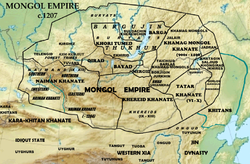
The Khongirad (/ˈkɒŋɡɪræd/; Mongolian: ᠬᠣᠩᠭᠢᠷᠠᠳ Хонгирад; Kazakh: Қоңырат, romanized: Qoñyrat; Chinese: 弘吉剌; pinyin: Hóngjílá) was one of the major divisions of the Mongol tribes. Their homeland was located in the vicinity of Lake Hulun in Inner Mongolia and Khalkha River in Mongolia, where they maintained close ties with the ruling dynasties of northern China. Because the various Hongirad clans never united under a single leader, the tribe never rose to great military glory. Their greatest fame comes from being the primary consort clan of the ruling house of Genghis Khan's Mongol Empire. Genghis Khan's mother (Hoelun), great grandmother, and first wife were all Khongirads, as were many subsequent Mongol Empress and princesses.
During the Yuan dynasty they were given the title Lu Wang ("Prince of Lu"; Chinese: 鲁王), and a few Khongirads migrated west into the territory of modern Uzbekistan and Turkistan Region where they became governors of Khwarazm and were known as the Sufi dynasty. After a brief period as independent rulers, they were subjected by Timur.
The Khongirads are often identified as the descendants of the ancient Wuku/Wugu tribe in Tang Dynasty records. The tribe's own origin myth claims that they were descended from three brothers born of a golden vessel—Jurluq Mergen, Quba Shira, and Tusbu Da'u. The descendants of these brothers formed the Hongirad tribe, but feuds quickly splintered the tribe and gave rise to the offshoot tribes of the Ikires, Olkhonud, Karanut, Gorlos, and Qongliyuts. Only the descendants of Jurluq Mergen retained the tribal name of Hongirad. One of the most famous Hongirad ancestors was Miser Ulug, an Onggirat Hercules who was super-humanly strong and often slept for days at a time.
Many names of the 12th century's Hongirads and their subtribes have Mongol origin:
Shamanic practices continue in present-day Mongol culture.
According to Mongol legend, two warriors named Kiyan (Khiyad) and Negus (Mongolian: Nokhos, dog or wolf) were defeated in battle and forced to seek shelter in an enclosed valley called Ergune khun ("steep cliffs"). After several generations the descendants of these heroes became too numerous for the valley to support, but no one remembered the way out. A blacksmith came up with a solution—they would create their own way out by melting an exposed iron vein that existed in one of the encircling mountains. Building a massive fire and stoking it with 70 large bellows, the trapped clan did just that and succeeded in creating a passage to the outside world. Once free, the people of Kiyan and Negus went on to create several tribes, including the Mongols and the Hongirads (whose susceptibility to gout was explained by the "fact" that their ancestors were the first to flee Ergene Qun, so they burned their feet on the hot iron).
In addition to having a shared ancestry with the Mongols in general, the Hongirads also shared ancestors with the Mongol royal line, whose originator, Alan Qo'a, was a woman of the Kharlas clan, an offshoot of the Khongirads founded by the legendary Miser Ulug. Down to the 12th century, Mongol rulers such as Khabul Khan and his great-grandson Genghis Khan were still taking Khongirad wives. Yesugei Ba'atur, the father of Genghis Khan, was not a high ranking Mongol leader, but even he secured himself an Onggirat wife by stealing one from another man. The wives of most rulers of the Yuan Dynasty and Golden Horde were also from the Hongirad. That is why they held enormous powers behind the courts in both states. They forced the rulers of the Golden Horde to make peace with Kublai in 1280s and convinced Tokhta Khan to accept supremacy of the Great Khan in 1304. The Hongirad under queen Dagi and Temüder, the Minister of the Secretariat, reached their political peak in the Yuan Dynasty, the principal state of 4 khanates, during the reign of Gegeen Khan Shidebala (r.1321-1323). They built Yingchang city in modern Inner Mongolia in 1271.
After the death of the last Yuan emperor, Toghan Temur, who lost his imperial status in China and other Mongol khanates, a body of the Khongirat and Olkhunut (Borte's clan) surrendered to the Ming Dynasty in 1371. Meanwhile, the Khongirad, belonged to the southern Khalkha tumen in modern Inner Mongolia and Olkhunuts lived in modern Khovd Province.
Khongirad
The Khongirad (/ˈkɒŋɡɪræd/; Mongolian: ᠬᠣᠩᠭᠢᠷᠠᠳ Хонгирад; Kazakh: Қоңырат, romanized: Qoñyrat; Chinese: 弘吉剌; pinyin: Hóngjílá) was one of the major divisions of the Mongol tribes. Their homeland was located in the vicinity of Lake Hulun in Inner Mongolia and Khalkha River in Mongolia, where they maintained close ties with the ruling dynasties of northern China. Because the various Hongirad clans never united under a single leader, the tribe never rose to great military glory. Their greatest fame comes from being the primary consort clan of the ruling house of Genghis Khan's Mongol Empire. Genghis Khan's mother (Hoelun), great grandmother, and first wife were all Khongirads, as were many subsequent Mongol Empress and princesses.
During the Yuan dynasty they were given the title Lu Wang ("Prince of Lu"; Chinese: 鲁王), and a few Khongirads migrated west into the territory of modern Uzbekistan and Turkistan Region where they became governors of Khwarazm and were known as the Sufi dynasty. After a brief period as independent rulers, they were subjected by Timur.
The Khongirads are often identified as the descendants of the ancient Wuku/Wugu tribe in Tang Dynasty records. The tribe's own origin myth claims that they were descended from three brothers born of a golden vessel—Jurluq Mergen, Quba Shira, and Tusbu Da'u. The descendants of these brothers formed the Hongirad tribe, but feuds quickly splintered the tribe and gave rise to the offshoot tribes of the Ikires, Olkhonud, Karanut, Gorlos, and Qongliyuts. Only the descendants of Jurluq Mergen retained the tribal name of Hongirad. One of the most famous Hongirad ancestors was Miser Ulug, an Onggirat Hercules who was super-humanly strong and often slept for days at a time.
Many names of the 12th century's Hongirads and their subtribes have Mongol origin:
Shamanic practices continue in present-day Mongol culture.
According to Mongol legend, two warriors named Kiyan (Khiyad) and Negus (Mongolian: Nokhos, dog or wolf) were defeated in battle and forced to seek shelter in an enclosed valley called Ergune khun ("steep cliffs"). After several generations the descendants of these heroes became too numerous for the valley to support, but no one remembered the way out. A blacksmith came up with a solution—they would create their own way out by melting an exposed iron vein that existed in one of the encircling mountains. Building a massive fire and stoking it with 70 large bellows, the trapped clan did just that and succeeded in creating a passage to the outside world. Once free, the people of Kiyan and Negus went on to create several tribes, including the Mongols and the Hongirads (whose susceptibility to gout was explained by the "fact" that their ancestors were the first to flee Ergene Qun, so they burned their feet on the hot iron).
In addition to having a shared ancestry with the Mongols in general, the Hongirads also shared ancestors with the Mongol royal line, whose originator, Alan Qo'a, was a woman of the Kharlas clan, an offshoot of the Khongirads founded by the legendary Miser Ulug. Down to the 12th century, Mongol rulers such as Khabul Khan and his great-grandson Genghis Khan were still taking Khongirad wives. Yesugei Ba'atur, the father of Genghis Khan, was not a high ranking Mongol leader, but even he secured himself an Onggirat wife by stealing one from another man. The wives of most rulers of the Yuan Dynasty and Golden Horde were also from the Hongirad. That is why they held enormous powers behind the courts in both states. They forced the rulers of the Golden Horde to make peace with Kublai in 1280s and convinced Tokhta Khan to accept supremacy of the Great Khan in 1304. The Hongirad under queen Dagi and Temüder, the Minister of the Secretariat, reached their political peak in the Yuan Dynasty, the principal state of 4 khanates, during the reign of Gegeen Khan Shidebala (r.1321-1323). They built Yingchang city in modern Inner Mongolia in 1271.
After the death of the last Yuan emperor, Toghan Temur, who lost his imperial status in China and other Mongol khanates, a body of the Khongirat and Olkhunut (Borte's clan) surrendered to the Ming Dynasty in 1371. Meanwhile, the Khongirad, belonged to the southern Khalkha tumen in modern Inner Mongolia and Olkhunuts lived in modern Khovd Province.
Recent media
Recent media