


Community hub
Recent from talks
Contribute something
Nothing was collected or created yet.
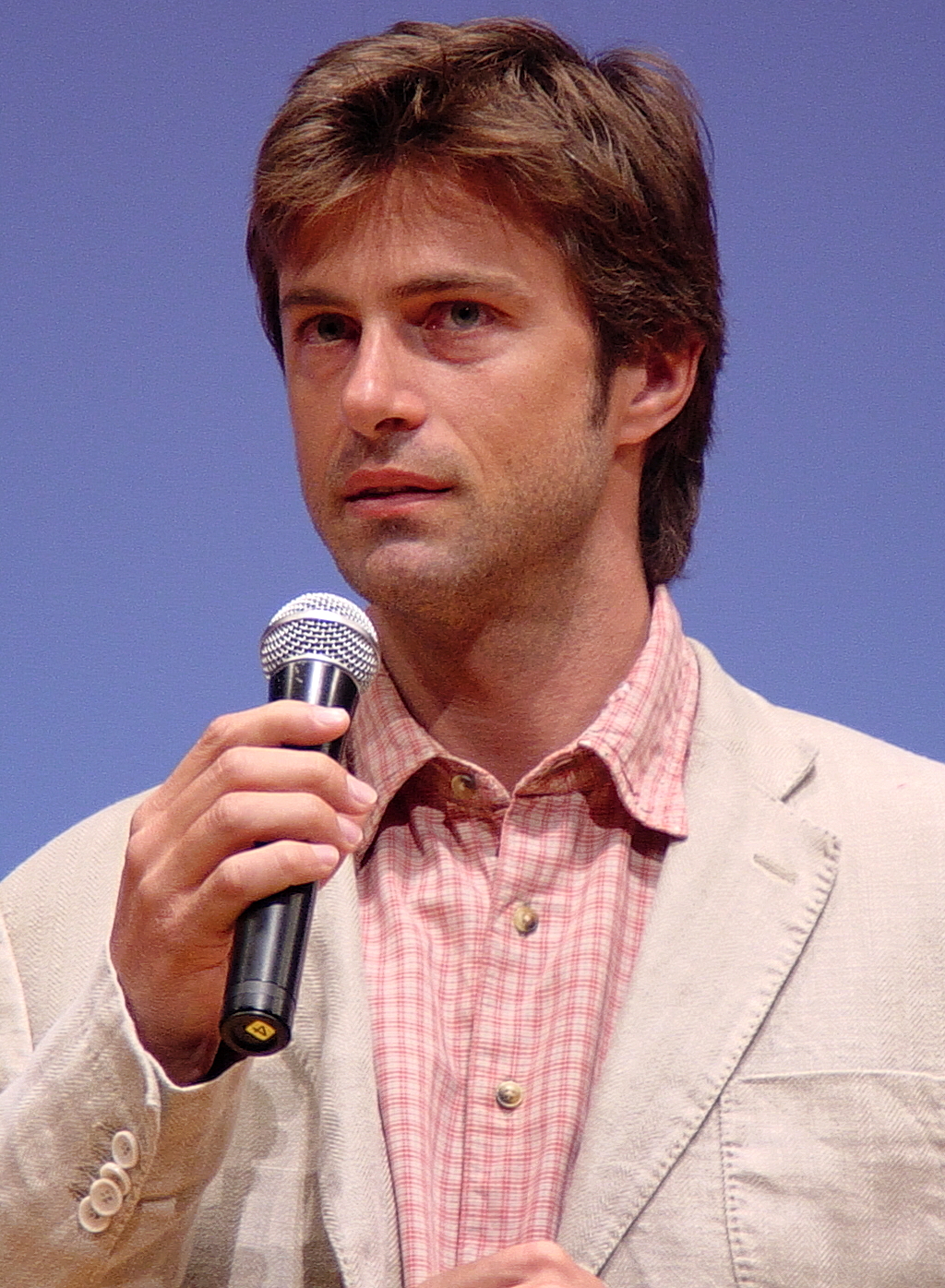
Kim Rossi Stuart
View on Wikipedia | This article has multiple issues. Please help improve it or discuss these issues on the talk page. (Learn how and when to remove these messages)
|

Kim Rossi Stuart (born 31 October 1969) is an Italian actor and director.
Key Information


Early life and career
[edit]Rossi Stuart was born in Rome. His father, Giacomo, was an actor of Italian and Scottish descent (his mother was Scottish). Kim's mother, Klara Müller, was a former top model of German and Dutch descent.
He began acting at the age of five. He studied theatre and in 1986 began acting regularly, especially on television productions such as the Fantaghirò series and for the cinema with a small role in The Name of the Rose. He reached popularity with Karate Warrior and in the film Poliziotti. After this commercial film, he began to act only in quality films, like Senza pelle, where his role, a man with psychological problems, was appreciated by critics. He then acted with director Antonioni in Al di là delle nuvole and played Julien Sorel in the French television film The Red and the Black (Le Rouge et le Noir) in 1997, based upon the novel of the same name by Stendhal.[1]
Rossi Stuart came back to act in the theatre with Re Lear and with the most important Italian actors, like Turi Ferro in the work Il visitatore. In 2002, he appeared in the film Pinocchio as Lucignolo. In 2004, he played in Le Chiavi di Casa, as a young father that attempts to forge a relationship with his teenage, handicapped son when he met him for the first time.
Later, he played Mimmo in the television film Il tunnel della libertà (2004) and he had one of the leading roles (Freddo) in Michele Placido's 2005 film Romanzo Criminale, based on Giancarlo De Cataldo's 2002 novel of the same name.
Rossi Stuart wrote the screenplay, directed and acted in the 2006 film Anche libero va bene. It was followed by Piano, solo (2007), a film based on the life of Italian jazz musician Luca Flores, with Rossi Stuart playing Flores. Another film, Questione Di Cuore was released in 2009. Rossi Stuart's following film was Angel of Evil, based on the life of 1970s Italian gangster Renato Vallanzasca. It was released in Italy in January 2011 and opened in Germany in February of the same year.
In 2020, he played the main role in Cosa sarà by Francesco Bruni. This role brought Rossi Stuart Nastro d'argento and Globo d'oro for Best Actor.[2][3][4]
In 2023, he starred in Everybody Loves Diamonds series, described as an Italian Ocean's Eleven.[5]
Personal life
[edit]Rossi Stuart comes from a family of actors; his father Giacomo and his sister Valentina are both actors, the latter with credits as a stunt performer as well. He was named after the Rudyard Kipling novel Kim. He left his parents' home at age 14 and also left school to begin his career as an actor. Rossi Stuart was engaged to actress Veronica Logan. He speaks English, French and Italian, is an accomplished swimmer and also plays the trumpet. In 2005, Rossi Stuart suffered a severe road accident with multiple fractures and injuries.
In the September 2010 Italian issue of Vanity Fair, Kim spoke about his latest film and personal life, confirming that he is single and expressed the wish to become a father.[6]
He has a son, born 26 November 2011 by his girlfriend Ilaria Spada. The couple married on 2 March 2019.[7]
Filmography
[edit]Film
[edit]| Year | Title | Role | Notes |
|---|---|---|---|
| 1974 | The Murri Affair | ||
| 1986 | The Name of the Rose | Novitiate | |
| 1987 | Karate Warrior | Anthony Scott | |
| 1987 | Il mistero del panino assassino | Direct-to-video | |
| 1988 | Karate Warrior 2 | Anthony Scott | |
| 1988 | Domino | Eugene | |
| 1989 | The Sleazy Uncle | Andrea | |
| 1989 | Obbligo di giocare – Zugzwang | Marco | |
| 1991 | 18 anni tra una settimana | Paolo | |
| 1992 | In camera mia | Prince Fjodor | |
| 1992 | Un'altra vita | Luciano | |
| 1994 | No Skin | Saverio | |
| 1995 | Policemen | Andrea | |
| 1995 | Heartless | Claudio Scalise | |
| 1995 | Beyond the Clouds | Silvano | |
| 1998 | The Garden of Eden | Jeoshua | |
| 1998 | The Ballad of the Windshield Washers | Rafal | |
| 2002 | Pinocchio | Lucignolo | |
| 2004 | The Keys to the House | Gianni | |
| 2005 | Romanzo Criminale | Il Freddo | |
| 2006 | Along the Ridge | Renato Benetti | Also director and co-writer |
| 2007 | Piano, solo | Luca Flores | |
| 2009 | A Question of the Heart | Angelo | |
| 2010 | Angel of Evil | Renato Vallanzasca | |
| 2013 | Those Happy Years | Guido | |
| 2014 | L'Ex de ma vie | Nino | |
| 2015 | Wondrous Boccaccio | Calandrino | |
| 2016 | Tommaso | Tommaso | Also director and co-writer |
| 2020 | The Best Years | Paolo | |
| 2020 | Everything's Gonna Be Alright | Bruno Salvati |
Television
[edit]| Year | Title | Role | Notes |
|---|---|---|---|
| 1984 | I ragazzi della valle misteriosa | Pietro | Miniseries; 10 episodes |
| 1987 | Garibaldi | Menotti Garibaldi | Miniseries; 4 episodes |
| 1989 | Il ricatto | Luca Fedeli | Miniseries; 5 episodes |
| 1989 | Valentina | Bruno | 3 episodes |
| 1990 | Senza scampo | Adriano | Miniseries; 2 episodes |
| 1990 | Mademoiselle Ardel | Alessandro di Falco | Television film |
| 1991 | Fantaghirò | Romualdo | Television film |
| 1992 | Dalla notte all'alba | Matteo | Miniseries; 2 episodes |
| 1992 | Un posto freddo in fondo al cuore | Luca Savio | Television film |
| 1992 | Il cielo non cade mai | Nicola Brentano | Miniseries; 3 episodes |
| 1992 | Fantaghirò 2 | Romualdo | Television film |
| 1993 | Dov'eri quella notte | Tupac | Television film |
| 1993 | Fantaghirò 3 | Romualdo | Television film |
| 1995 | La famiglia Ricordi | Vincenzo Bellini | Miniseries; 4 episodes |
| 1997 | The Red and the Black | Julien Sorel | Television film |
| 2001 | Uno bianca | Inspector Valerio Maldesi | Miniseries; 2 episodes |
| 2004 | Il tunnel della libertà | Domenico "Mimmo" Sesta | Miniseries; 2 episodes |
| 2017 | Maltese – Il romanzo del Commissario | Commissioner Dario Maltese | Miniseries; 4 episodes |
| 2025 | The Leopard (TV series) | Don Fabrizio Corbera | Miniseries; 6 episodes |
References
[edit]- ^ "Premio a Kim Rossi Stuart". Lucca Film Festival. Retrieved 9 May 2024.
- ^ Ascione, Arianna (27 March 2024). "Kim Rossi Stuart: l'esordio a 5 anni, il successo con Fantaghirò, ha interpretato Vallanzasca, 7 segreti". Corriere della sera. Retrieved 9 May 2024.
- ^ "Stasera in tv su Rai 1 «Cosa sarà», il film con Kim Rossi Stuart per la prima volta in chiaro: cast e trama". Il Messaggero. 27 March 2024. Retrieved 9 May 2024.
- ^ "Cosa sarà, il cast del film con Kim Rossi Stuart. FOTO". Sky Tg24. 27 March 2024. Retrieved 9 May 2024.
- ^ Manca, Mario (13 October 2023). "Everybody Loves Diamonds: la serie con Kim Rossi Stuart è l'Ocean's Eleven italiano". Vanity Fair Italia. Retrieved 9 May 2024.
- ^ Italos.it
- ^ "Dentro le nozze di Ilaria Spada e Kim Rossi Stuart". VanityFair.it (in Italian). 8 March 2019. Retrieved 4 August 2021.
External links
[edit]

Kim Rossi Stuart
View on GrokipediaEarly Life
Family Background
Kim Rossi Stuart was born on October 31, 1969, in Rome, Italy, to the actor Giacomo Rossi Stuart and the former top model Klara Müller.[9] His father, born in 1925 in Todi, Italy, to an Italian father and a Scottish mother, had a career in Italian genre cinema, including roles in B-movie horror films such as Kill, Baby... Kill! (1966) directed by Mario Bava.[10] Müller's background was German and Dutch, contributing to the family's multicultural heritage.[10] Stuart grew up with three sisters: Loretta Rossi Stuart and Valentina Rossi Stuart, both of whom pursued acting careers, and Ombretta Rossi Stuart.[9][11] The family's immersion in the performing arts—spanning acting, modeling, and related fields—exposed him to film sets and the craft of acting from an early age, shaping his initial interest in the industry.[12] At age 14, in 1983, Stuart left his parents' home to seek independence, forgoing formal schooling in favor of theater studies that allowed him to continue his education informally.[9]Entry into Acting
Kim Rossi Stuart made his acting debut at the age of five in the 1974 Italian film Fatti di gente perbene (The Murri Affair), directed by Mauro Bolognini, where he appeared alongside his father, the actor Giacomo Rossi Stuart.[13] This early entry into the industry was facilitated by his family's artistic background, with his father providing initial opportunities in cinema.[14] Throughout the 1970s and 1980s, Rossi Stuart took on several early roles in Italian cinema and television, often in family-influenced projects that built on his child actor foundation. Notable appearances included leading roles in youth-oriented productions, such as the TV series I ragazzi della valle misteriosa (1984), where he played a young adventurer.[13] These experiences immersed him in the Italian film scene during a period of genre experimentation, including adventure and coming-of-age stories.[14] Rossi Stuart's acting training was largely informal, acquired through hands-on on-set experiences rather than formal schooling, as he left traditional education at age 14 to focus on his career.[13] He supplemented this with some theater studies, but his multilingual upbringing—stemming from his Italian-Scottish father and German-Dutch mother—equipped him with proficiency in Italian, English, and French, aiding his versatility in diverse roles.[14] By the mid-1980s, Rossi Stuart transitioned from child parts to adolescent roles, marking a shift toward more mature characters and gaining international exposure. This included a novice monk in the multinational production The Name of the Rose (1986), directed by Jean-Jacques Annaud, and the lead in the action film Il ragazzo dal kimono d'oro (Karate Warrior, 1987), which drew from global influences like American martial arts cinema.[13][14]Acting Career
Child and Adolescent Roles
Kim Rossi Stuart began his acting career as a child, making his screen debut at the age of five in the 1974 historical drama The Murri Affair, directed by Mauro Bolognini, where he appeared alongside his father, actor Giacomo Rossi Stuart.[15][16] In the mid-1980s, Rossi Stuart gained notice in international cinema with a small but memorable role as a novice monk in Jean-Jacques Annaud's adaptation of Umberto Eco's novel The Name of the Rose (1986), starring Sean Connery and Christian Slater; this part marked one of his earliest significant appearances in a major English-language production.[17][18] The following year, he took on a leading role as Anthony Scott, a young American teenager learning karate in the Philippines, in the Italian martial arts film Karate Warrior (1987), directed by Fabrizio De Angelis, which highlighted his physicality and appeal in action-oriented youth adventures.[19] As an adolescent, Rossi Stuart achieved widespread popularity in Italy through his portrayal of Prince Romualdo in the fantasy television miniseries Fantaghirò (1991–1992), directed by Lamberto Bava, where he played the heroic knight and love interest to the titular princess; the series, known internationally as The Cave of the Golden Rose, became a cultural phenomenon and solidified his status as a teen idol.[20] These early roles in period fantasies and action films demonstrated his versatility in historical and adventurous settings, laying the foundation for his reputation in Italian media during the late 1980s and early 1990s.[21]Breakthrough and Mature Films
Kim Rossi Stuart's transition to leading adult roles began in the mid-1990s, marking a shift from his earlier adolescent characters toward more nuanced portrayals in Italian cinema, including his collaboration with Michelangelo Antonioni in Beyond the Clouds (1995).[22] In 2002, he took on the role of Lucignolo in Roberto Benigni's ambitious adaptation of Pinocchio, an international production that showcased his versatility in a fantastical narrative while collaborating with global talent.[23] This period saw him embracing mature themes, as evidenced by his performance in The Keys to the House (2004), directed by Gianni Amelio, where he played Gianni, a father confronting his guilt and responsibility toward his disabled teenage son during a challenging journey to Germany.[24] Critics praised Stuart's riveting and authentic depiction of emotional vulnerability, highlighting his ability to convey subtle alienation without sentimentality.[25][26] The year 2005 brought Stuart's breakthrough with Romanzo Criminale, directed by Michele Placido, in which he portrayed Freddo, the stoic leader of a notorious Roman gang navigating the turbulent 1970s underworld.[27] His terrific performance as a complex anti-hero—balancing cold calculation with underlying loyalty—earned widespread acclaim for elevating the film's gritty exploration of crime and betrayal.[28][29] This role solidified his reputation for embodying multifaceted criminals, a theme he revisited in 2010's Angel of Evil, again under Placido's direction, as the charismatic real-life bank robber Renato Vallanzasca.[30] Stuart's tour-de-force portrayal captured the robber's magnetic yet destructive persona amid Italy's Years of Lead, drawing comparisons to international gangster epics while emphasizing psychological depth over mere bravado.[31][32] Throughout the 2010s and into the 2020s, Stuart evolved into introspective, flawed protagonists in arthouse dramas, moving away from romantic leads toward characters grappling with personal crises. In Francesco Bruni's Cosa sarà (2020), he starred as Bruno Salvati, a filmmaker facing leukemia and family estrangement, delivering a natural and fragile performance that blended irony, fear, and redemption in a semi-autobiographical tale.[33] This role exemplified his maturation in Italian cinema, where he consistently portrayed men confronting inner turmoil and societal pressures, contributing to films that prioritize emotional authenticity over commercial spectacle.[34] His work in these decades underscored a deliberate pivot to serious dramatic roles, building on the foundation of his youthful popularity in adventure series like Fantaghirò to establish him as a pillar of contemporary Italian arthouse.[16]Television Appearances
Kim Rossi Stuart's television career began with a prominent role in the fantasy miniseries Fantaghirò (1991–1992), where he portrayed Romualdo across the first two installments, marking an early breakout in Italian broadcasting as a heroic figure in a popular medieval adventure saga that captivated audiences with its blend of romance and magic. This role, part of a five-part series produced for Italian TV, showcased his youthful charisma and helped establish him in serialized formats aimed at family viewers.[35] In his mid-career, Stuart took on dramatic leads in historical and crime-themed miniseries, often exploring themes of justice and escape that echoed the moral complexities in his film work, such as the criminal underworld depicted in Romanzo Criminale. In the 2001 TV movie Uno bianca, he played Inspector Valerio Maldesi, a determined detective investigating a notorious gang of rogue policemen in 1990s Italy, delivering a performance noted for its intensity in a taut procedural narrative.[36] Three years later, in Il tunnel della libertà (2004), he starred as Domenico "Mimmo" Sesta, an Italian student involved in a daring Berlin Wall escape during the Cold War, portraying a character driven by solidarity and risk in this two-part miniseries based on real events.[37] After a 13-year hiatus from TV, Stuart returned in 2017 with Maltese: Il romanzo del commissario, embodying Commissario Dario Maltese, a principled investigator battling Mafia influence in 1970s Sicily across an eight-episode arc that highlighted institutional corruption and personal resolve.[38][39] Stuart's recent television ventures have embraced streaming platforms, expanding his reach to international audiences through high-profile crime and period dramas. In the 2023 Amazon Prime Video series Everybody Loves Diamonds, he led as Leonardo Notarbartolo, the cunning mastermind behind a real-life diamond heist in Antwerp, infusing the ten-episode crime comedy with sly humor and strategic depth.[40] This was followed by his starring role as Prince Fabrizio Corbera in the 2025 Netflix miniseries The Leopard, a six-part adaptation of Giuseppe Tomasi di Lampedusa's novel set during Italy's unification, where he portrayed a nobleman navigating aristocracy's decline amid social upheaval.[41] These projects reflect Stuart's view of television as a versatile medium with "extraordinary potential" for storytelling, offering broader accessibility than cinema while allowing for nuanced character explorations in serialized formats.[38] The shift to streaming in 2023–2025 has amplified this, enabling global distribution of Italian narratives through platforms like Netflix and Prime Video.[42]Directing and Other Contributions
Feature Directing Debut
Kim Rossi Stuart's feature directing debut was the 2006 Italian drama Anche libero va bene (also known as Along the Ridge or Libero), a poignant exploration of family dynamics told primarily from a child's perspective.[43] The film follows Renato (played by Stuart), a single father navigating the complexities of raising his 11-year-old son Tommi and teenage daughter Viola in contemporary Rome after their mother abandons the family, highlighting themes of emotional turmoil, independence, and adolescent struggles within a dysfunctional household.[43] Stuart not only directed but also co-wrote the screenplay with Linda Ferri, Federico Starnone, and Francesco Giammusso, infusing the narrative with an authentic sense of vulnerability drawn from his prior acting role as a father in Gianni Amelio's The Keys to the House (2004).[43] Produced by Palomar and Rai Cinema under producers Carlo Degli Esposti, Giorgio Magliulo, and Andrea Costantini, the film emphasized naturalistic performances, particularly through collaborations with emerging young talents such as Alessandro Morace, who portrayed the introspective Tommi, and Marta Nobili as Viola.[43] Cinematographer Stefano Falivene captured the everyday grit of Roman life, underscoring the family's precarious balance between tenderness and tension without resorting to melodrama. Stuart's multifaceted involvement—directing, writing, and acting—allowed for a deeply personal lens on themes of parental responsibility and youthful resilience, reflecting his own early experiences of independence after entering the acting world as a child.[44] The film premiered at the 2006 Cannes Film Festival in the Directors' Fortnight sidebar, where it received warm applause and praise for its honest depiction of family strife and authentic portrayal of adolescence.[45] Critics lauded Stuart's assured debut for its emotional truth and restraint, noting its appeal to arthouse audiences while marking his transition as a multifaceted filmmaker.[43] Anche libero va bene earned a 7.4/10 rating on IMDb from over 2,700 users and holds a 100% approval on Rotten Tomatoes based on limited reviews, solidifying its reputation as a sensitive milestone in Italian cinema.[46]Additional Creative Work
Kim Rossi Stuart has contributed to screenwriting in several Italian films, often collaborating on projects where he also starred or directed. His screenplay work began prominently with Anche libero va bene (2006), which he co-wrote with Linda Ferri, Federico Starnone, and Francesco Giammusso, exploring themes of family dynamics and adolescence in contemporary Rome.[47] In 2010, Rossi Stuart co-wrote the screenplay for Angel of Evil (Italian title: Vallanzasca - Gli angeli del male), a crime drama based on the life of notorious Italian gangster Renato Vallanzasca, drawing from historical accounts and legal documents to depict the 1970s Milan underworld.[47] He further expanded his writing role in Tommaso (2016), which he directed and in which he co-wrote the story and screenplay with Federico Starnone, centering on a middle-aged man's existential crisis and relationships in modern Italy.[3][47] Rossi Stuart's additional creative output includes the feature film Brado (2022), which he wrote and directed, focusing on introspective themes through a narrative about a father-son relationship on a ranch.[3][47]Awards and Recognition
Major Film Awards
Kim Rossi Stuart has garnered significant recognition in Italian cinema, particularly through prestigious awards that highlight his versatile performances in dramatic roles. His accolades from major institutions such as the David di Donatello, Nastro d'Argento, and Globo d'Oro underscore his status as one of Italy's leading actors, with key wins and nominations emphasizing transformative portrayals in films addressing complex human experiences. Up to 2020, he accumulated approximately 20 wins and nominations across these and other notable film awards, reflecting a career marked by critical acclaim for both lead and supporting roles.[48] One of his earliest major honors came at the David di Donatello Awards, where he won Best Actor for his role as Gianni in The Keys to the House (Le Chiavi di Casa, 2004), a drama exploring father-son reconciliation amid disability, directed by Gianni Amelio. This victory, awarded in 2005, solidified his transition from child actor to mature leading man. He also won the Globo d'Oro for Best Actor for the same role in 2005. He received a nomination for Best Actor the following year for his portrayal of the stoic gangster "Il Freddo" in Romanzo Criminale (2005), Michele Placido's crime epic that propelled his prominence in ensemble casts.[49][50][51] The Nastro d'Argento, presented by the Italian National Syndicate of Film Journalists, further affirmed his prowess. Stuart won Best Actor in 2011 for embodying the notorious criminal Renato Vallanzasca in Angel of Evil (Vallanzasca - Gli angeli del male, 2010), a biopic capturing the charisma and ruthlessness of Italy's 1970s underworld figure. This performance, directed by Placido, earned praise for its intensity and nuance. An earlier win came in 2006 for Romanzo Criminale, where he shared the Best Actor honor with co-stars Pierfrancesco Favino and Claudio Santamaria, recognizing the film's collective impact on Italian gangster cinema. In 2021, he secured another Best Actor Nastro d'Argento for his introspective turn as a grieving father in Cosa sarà (2020), Francesco Bruni's semi-autobiographical dramedy about family loss and healing.[52][53][54] Complementing these, the Globo d'Oro Awards from the Italian Foreign Press Association awarded Stuart Best Actor for Cosa sarà in 2021, marking his second win in the category and highlighting the film's emotional depth. This accolade reinforced his ability to blend vulnerability with resilience in contemporary narratives.[55] Among other key recognitions, Stuart won the Ciak d'Oro for Best Actor in 2011 for Angel of Evil, a popular readers' poll award from the Ciak film magazine that celebrated his commanding screen presence in the biopic. These awards, particularly those tied to breakthrough films like The Keys to the House and Romanzo Criminale, not only elevated his profile but also influenced his selection for subsequent high-profile projects, demonstrating sustained excellence in Italian feature films.[56]Television and Recent Honors
Kim Rossi Stuart's contributions to television have earned him notable recognition, especially as Italian productions increasingly embrace streaming platforms for broader international reach. In 2025, he won the Nastro d'Argento Grandi Serie for Best Actor (Protagonista dell'anno) for his role as Don Fabrizio Corbera in the Netflix miniseries The Leopard, a prestigious honor from the Italian National Syndicate of Film Journalists that underscores his ability to lead complex period dramas.[57][58] This accolade builds on his earlier television acclaim. In 2023, Rossi Stuart received a Career Achievement Award at the Lucca Film Festival, celebrating his enduring impact across mediums, with specific nods to landmark TV roles like those in The Red and the Black (1997) and Uno Bianca (2001), reflecting his evolution from adolescent leads to mature, authoritative characters in the streaming age.[2][59] His performance in the 2023 Amazon Prime series Everybody Loves Diamonds further highlighted his adaptability to modern heist narratives, earning critical praise and contributing to approximately a dozen TV-related honors and nominations throughout his career, emphasizing the shift toward high-production-value series.[60]Personal Life
Family and Relationships
Kim Rossi Stuart has been married to Italian actress Ilaria Spada since March 2, 2019, following an eight-year relationship that began in 2011. The couple exchanged vows in a private ceremony in Rieti, Italy, reflecting their preference for discretion in personal matters.[61] Together, they share three sons: Ettore, born on November 26, 2011; Ian, born in July 2019; and a third son born on February 28, 2022, whose name has not been publicly disclosed. The births took place at the same clinic in Rome, underscoring the continuity in their family life. Rossi Stuart has described fatherhood as a profound learning experience, focusing on fostering his children's independence while managing his own parental anxieties to avoid burdening them.[62][9][63] The family maintains a notably private existence away from the spotlight, with Rossi Stuart occasionally offering glimpses into their blended dynamics through interviews. He has highlighted the balance of his acting career with parenting, emphasizing emotional presence and observation as key to their household harmony.[63]Public Incidents and Interests
In October 2005, Kim Rossi Stuart was involved in a severe motorbike accident in Rome's via Tor di Quinto near Ponte Milvio, where he was rear-ended by a car while riding at night, causing him to be thrown approximately 30 meters.[64][65] The collision resulted in multiple fractures to his pelvis, both legs, and wrist, along with abdominal trauma that necessitated emergency surgery and a prolonged hospitalization at Villa San Pietro clinic.[66][67] Rossi Stuart spent several weeks in intensive care and rehabilitation, marking a significant interruption to his professional commitments during that period.[68] Rossi Stuart is multilingual, fluent in English, French, and Italian, skills partly inherited from his British-Italian family background.[56] He has a personal interest in music and plays the trumpet as a hobby.[56] Throughout his career, Rossi Stuart has maintained a low public profile regarding his personal affairs, avoiding major scandals and emphasizing privacy in his lifestyle based in Rome.[16]Filmography
1970s
Kim Rossi Stuart made his screen debut as a child in The Murri Affair (1974, dir. Mauro Bolognini), playing a minor role in this historical drama based on a real-life Italian scandal.[69]1980s
In The Name of the Rose (1986, dir. Jean-Jacques Annaud), he appeared in a small supporting role as a young monk in the medieval mystery adaptation. Stuart played the lead as Anthony, a young martial artist, in the action film Karate Warrior (1987, dir. Larry Ludman), which helped establish his early popularity in genre cinema. In Domino (1988, dir. Ivana Massetti), he took on the role of Eugene in this adventure story. His role as Andrea in The Sleazy Uncle (1989, dir. Franco Brusati) featured him as a nephew in a comedic family tale.1990s
Stuart played Paolo in 18 Years in One Week (1991, dir. Carlo Vanzina), a coming-of-age comedy-drama. In The Escort (1993, dir. Ricky Tognazzi), he appeared as a supporting character in the story of a young man's journey. He led as Saverio in No Skin (Senza pelle, 1994, dir. Alessandro D'Alatri), portraying a man grappling with psychological turmoil in a critically praised drama. As Andrea, a rookie cop, in Poliziotti (1995, dir. Giulio Base), Stuart starred in this action-comedy that marked a commercial breakthrough. He played Silvano in the segment of Beyond the Clouds (1995, dir. Michelangelo Antonioni and Wim Wenders), contributing to the anthology's exploration of love and desire. In The Star Maker (1995, dir. Giuseppe Tornatore), he had a supporting role in the tale of an aspiring actor's odyssey.2000s
He played Lucignolo in Roberto Benigni's Pinocchio (2002, dir. Roberto Benigni), as the mischievous puppet companion in the live-action adaptation. In The Keys to the House (Le chiavi di casa, 2004, dir. Gianni Amelio), Stuart starred as Gianni, a father reconnecting with his disabled son, delivering a poignant performance.[70] Stuart portrayed Freddo, a key gang member, in the crime drama Romanzo Criminale (2005, dir. Michele Placido), a role that earned acclaim for its intensity. He directed and starred as Renato Benetti in Along the Ridge (Anche libero va bene, 2006), depicting a father's struggles in contemporary Italy.[71] As Luca Flores in Piano Solo (2007, dir. Riccardo Milani), he portrayed a pianist facing personal crises in this musical drama. Stuart played Angelo in A Stroke of Luck (Questione di cuore, 2009, dir. Francesca Archibugi), a heartfelt story of friendship and loss.2010s
In Angel of Evil (Vallanzasca - Gli angeli del male, 2010, dir. Michele Placido), he embodied the infamous criminal Renato Vallanzasca in this biographical crime film. He starred as Guido in Those Happy Years (Anni felici, 2013, dir. Daniele Luchetti), exploring family life during Italy's turbulent 1980s. As Calandrino in Wondrous Boccaccio (Maraviglioso Boccaccio, 2015, dir. Paolo and Vittorio Taviani), he featured in the adaptation of Boccaccio's tales set in medieval Florence. Stuart directed and led as Tommaso in Tommaso (2016, dir. Kim Rossi Stuart), a semi-autobiographical drama about a father's emotional journey.2020s
He played Paolo in The Best Years (Gli anni più belli, 2020, dir. Gabriele Muccino), reflecting on lifelong friendships among four men. In Everything’s Gonna Be Alright (Cosa sarà, 2020, dir. Francesco Bruni), Stuart portrayed Bruno, a separated father navigating life changes. He directed and starred as Renato in Brado (2022, dir. Kim Rossi Stuart), a raw exploration of personal redemption and family bonds. As of November 2025, no confirmed feature film releases beyond 2022, though ongoing projects may emerge.[3]Television Roles
Kim Rossi Stuart's television work primarily consists of lead roles in Italian miniseries and recent streaming productions, showcasing his versatility in fantasy, drama, and crime genres. His early career featured fantasy adventures, while later credits emphasize complex historical and criminal characters on platforms like RAI, Netflix, and Prime Video. The following is a chronological list of his notable television credits, grouped by format.Miniseries
- Fantaghirò (1991, RAI) - Romualdo - Lead role as the prince in this fantasy adventure miniseries inspired by a fairy tale, marking his breakthrough in television.[20]
- Dalla notte all'alba (1992, RAI) - Matteo - Supporting role in this dramatic TV movie exploring personal and social struggles.[72]
- Fantaghirò 2 (1992, RAI) - Romualdo - Lead role continuing the fantasy saga, where he reprises the prince aiding the heroine against evil forces.
- Un posto freddo in fondo al cuore (1992, RAI) - Luca Savio - Lead in this psychological drama TV movie about youth and emotional turmoil.
- Il cielo non cade mai (1992, RAI) - Nicola Brentano - Guest appearance in family-oriented drama TV movie.[73]
- Fantaghirò 3 (1993, RAI) - Romualdo - Lead role in the third installment of the fantasy miniseries, focusing on further adventures and romance.
- The Red and the Black (1997, France 2/RAI) - Julien Sorel - Lead role as the ambitious protagonist in this adaptation of Stendhal's classic novel, highlighting social climbing in 19th-century France.[74]
- Maltese: Il romanzo del commissario (2016, RAI) - Dario Maltese - Lead role as the troubled commissioner investigating corruption in 1980s Sicily, in this crime drama miniseries.
- The Leopard (2025, Netflix) - Don Fabrizio Corbera di Salina - Lead role as the aristocratic prince navigating political change in 1860s Sicily, in this period drama adaptation of Giuseppe Tomasi di Lampedusa's novel.[8]
Series
- Everybody Loves Diamonds (2023–, Prime Video) - Leonardo Notarbartolo - Lead role as the mastermind burglar planning a diamond heist in Antwerp, in this crime thriller series inspired by a real event.[60]