Hubbry Logo
LarkhallLarkhallMain
Open search
Larkhall
Community hub
Larkhall
logo
8 pages, 0 posts
0 subscribers
Be the first to start a discussion here.
Larkhall
Larkhall
from Wikipedia

Larkhall (Scots: Larkhauch,[2] Scottish Gaelic: Taigh na h-Uiseig)[3] is a town in South Lanarkshire, Scotland, around 14 miles (23 km) southeast of Glasgow. It is twinned with Seclin in northern France.

Key Information

Larkhall sits on high ground between the River Clyde to the East and the Avon Water to the West. Larkhall sits on the edge of the scenic Clyde valley and is a commuter town for Glasgow. Larkhall had a population of 14,951 in the 2011 UK Census, and is a typical Scottish former industrial town. Traditionally a mining, weaving and textile area, most of Larkhall's traditional industries have now closed down, including the Lanarkshire ironworks.

Toponym

[edit]

The name Larkhall or Laverock Ha first appears in journals around 1620. The origins of the name are unknown, although Laverock is the Scots word for skylark. However, there is no evidence that the town is named after the bird. It is more likely that Laverock was a surname.[4] The name for Larkhall was originally a Scots word Laverockhaugh (Laverockha), which meant laverock - skylark and haugh - boggy/wet area.

History

[edit]

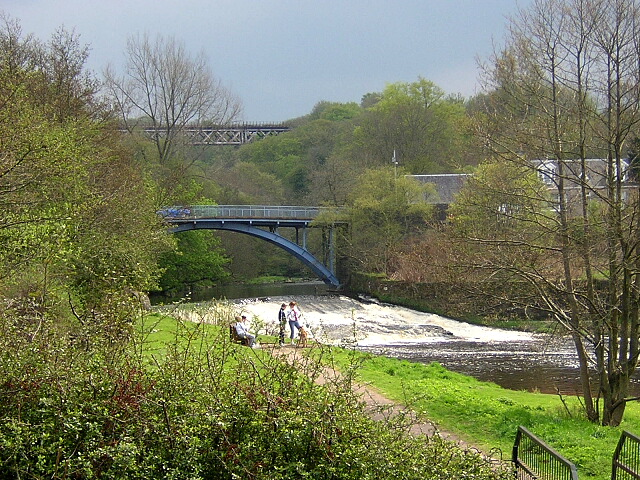
One of the town's most notable historical landmarks is the Morgan Glen viaduct standing over the Avon Water. The viaduct was built between 1898 and 1904 for the Caledonian Railway company by Sir William Arrol & Co.[5] It spans some 285 yards (261 m), and at a height of 175 feet (53 m),[6] it is the tallest viaduct in Scotland. The viaduct is in a state of disrepair since the closure of the railway line in 1965 and is closed to public access for safety reasons. In the 1990s, the viaduct was under the threat of dismantling but was protected by a local heritage group.[7] The viaduct is Category B listed.[5] It is currently on the Buildings at Risk Register for Scotland.[8]

Glenview memorial fountain is a local fountain and artwork in the town, originally produced by the Saracen Foundry.[9]

On 22 December 1999 a large gas explosion took place in the town which resulted in the death of four people.[10] In Transco plc v HM Advocate Transco were subsequently found guilty of culpable homicide and fined £15 million in 2004.[11][12][13]

Education

[edit]

The primary schools in Larkhall are Machanhill Primary School, Dalserf Primary School, Glengowan Primary School, Hareleeshill Primary School, Craigbank Primary School, Netherburn Primary School and Robert Smillie Memorial Primary School. There is also a Catholic primary school, St Mary's. The town's sole secondary school is Larkhall Academy.

Religion

[edit]

The Church of Scotland has most adherents at 7,416 persons (49.6% of the population). The 2011 census notes there are 1,247 Roman Catholics living in the town (8.3% of the population).[14]

Larkhall contains eight churches: Chalmers Parish Church, The Church At The Cross, Larkhall Baptist Church, Larkhall Congregational Church, St. Machan's Parish Church, St. Mary's R.C. Church, Strutherhill Gospel Hall and Trinity Parish Church. There is also a Kingdom Hall of Jehovah's Witnesses.[15]

Transport

[edit]

Trains returned to the town in December 2005, with the opening of the new Larkhall railway station, which is a terminus on the Argyle Line. The station provides regular services to Glasgow and beyond. Merryton railway station serves the northern end of town and is also on the Argyle Line.

Larkhall also has good bus links with frequent services to Hamilton, Lanark, Motherwell, Stonehouse, Strathaven and Wishaw.

Scotland's main motorway, the M74 skirts the eastern edges of the town. Larkhall has 2 motorway intersections: Junction 7 with the A72, which is for southbound traffic only, and Junction 8 with the A71, which is for both northbound and southbound traffic. Junction 8 is known locally as Canderside Toll or The Toll. The centre of Glasgow can be reached in 20 minutes; Edinburgh is around 50 minutes away.

Location grid

[edit]

Sport

[edit]

Because of the Protestant majority, residents mainly support Rangers F.C., to the point where it was noted in 2008 that the colour green—which is associated with that team's rivals Celtic F.C.—is avoided by retailers.[16] However, community leaders attributed any trouble to a small number of vandals.[17] A local authority study in 2017 found that sectarianism was not a major issue in the town.[18]

The town has two Junior Football teams: Larkhall Thistle F.C. and Royal Albert F.C. although Royal Albert now play in Stonehouse, a neighbouring village while Larkhall Thistle play at Gasworks Park on Raploch Street. Royal Albert were once a full member of the Scottish Football League but now ply their trade, as do Larkhall Thistle, in the Third Division (fourth tier) of the West of Scotland Football League. Also present in the town is Larkhall United Junior Football Club.

The town also has its own 9 hole municipal Golf Course which was founded in 1909.[citation needed]

Athletics

[edit]

Larkhall also has a Running & Athletics club, Larkhall YMCA Harriers. Established in 1930 they are one of Scotland's longest established Running & Athletics Club. Based in Larkhall, South Lanarkshire, over the years their members have performed with distinction at District, Inter-Districts, Scottish, British and International level, including the Olympic Games. The most famous and successful member being David Gracie who represented Team GB at the Helsinki Olympic Games in the 400 Hurdles. The Harriers train from their base, the Larkhall YMCA Hall on Caledonian St, Larkhall and other surrounding sports facilities. Their members are drawn from Larkhall and the surrounding towns and villiages of Stonehouse, Ashgill, Netherburn, Blackwood, Kirkmuirhill, Lesmahagow, Strathaven, Ferniegair, Glassford, Lanark and beyond. The club colours are Red and White and they compete in Red vests with two White horizontal hoops. Larkhall YMCA Harriers cater for athletes from Age 5 with no upper age limit and compete in Road Racing, Track & Field and Cross Country.[19]

Notable people

[edit]

Larkhall is home to snooker player and 2006 World Snooker Championship winner Graeme Dott and 2001 and 2025 Scottish Snooker Champion Gary Thomson and his wife professional snooker referee Agnieszka Thomson.[citation needed] Previous residents include footballers Paul McStay[citation needed]; Jim McLean[citation needed] and his brother Tommy McLean[citation needed] come from a village called Ashgill next to Larkhall. Other high-profile former residents include actress Una McLean[citation needed].

David Keir Gracie

[edit]

David Keir Gracie, (26 January 1927 – 26 October 2020) Olympian and member of Larkhall YMCA Harriers. Gracie moved to Larkhall as a young child in the mid 1930's and after leaving the Royal Marines in 1947 he Joined the Larkhall YMCA Harriers where he discovered his love for athletics. He competed in the men's 400 metres hurdles at the 1952 Summer Olympics. Amongst his other achievements, In 1953 he won the World University Games 400m Hurdles title in Dortmund, Germany. He was also part of the Team GB Quartet who won the silver medals in the 4x400m relay at the same event. Gracie died in October 2020 at the age of 93.[19]

Black Lady

[edit]

The black lady of Larkhall is a local ghost story.[20] She was said to be the Indian servant of Captain Henry McNeil Hamilton, the last owner of Broomhill House (55°43′59.03″N 3°59′4.78″W / 55.7330639°N 3.9846611°W / 55.7330639; -3.9846611) who was brought to Larkhall by Captain McNeil after one of his many seafaring voyages. She was happy with her new life but her ignorance of Scottish customs made her a social outcast. The Captain forbade her to leave Broomhill House during the day.[21][unreliable source?] Soon she was not seen at night either and the Captain claimed she had disappeared, but locals were suspicious. She is said to have returned, as her ghostly form appeared in the windows of Broomhill House and then later in Morgan Glen. The Captain is said to have died prematurely.[21][unreliable source?]

When Broomhill House fell into disrepair the 500 long hundredweight (25,000 kg) door lintel was moved down to the Applebank public house on Millheugh road by a large group of men. The next day it was said to be found lying across the road from the public house. In the 1960s a team from the Tonight programme visited Larkhall as they tried to perform the first televised exorcism. The cameras were frozen over in fine weather and after filming finished the director was killed in a road crash on his way to another location. He was found with a fence post impaled in his heart.[22][unreliable source?]

References

[edit]
Revisions and contributorsEdit on WikipediaRead on Wikipedia
from Grokipedia

Larkhall is a town in , , located approximately 20 miles southeast of and adjacent to the Avon Water, with a population of 15,308 recorded in the 2022 . Traditionally an industrial center focused on , , and textile production, the settlement has evolved into a primarily residential commuter area serving nearby urban hubs like Hamilton and . Key features include local archaeological sites revealing camps, roundhouses, and activity, alongside community institutions such as the Larkhall Harriers athletics club, which has sustained notable achievements in regional competitions. The town retains a historical association with social tensions, including sectarian divisions common in Scottish working-class communities, though contemporary assessments question the persistence of such characterizations.

Etymology

Origins of the Name

The name Larkhall first appears in historical journals as Laverock Ha or Laverockha around 1620, predating the town's significant development as a settlement. This early form suggests roots in Lowland Scots, where laverock denotes the skylark (Alauda arvensis), a common bird in Scotland's open landscapes. A prevailing etymological interpretation combines laverock with haugh, a Scots term for a low-lying, often boggy riverside meadow or enclosure, potentially referencing local terrain near the Avon Water. However, the precise derivation remains unconfirmed, with no direct archaeological or documentary evidence tying the name to specific lark populations or enclosures; alternative Gaelic influences, such as "lark on the hill," lack substantiation given haugh's lowland connotation over elevated features. Later 18th-century mappings and parish records standardize the anglicized Larkhall, distinguishing it from unrelated English toponyms like those in , which derive from distinct læwerce (lark) + halh (nook or remote valley) without shared Scots phonetic evolution. Local proposing bird-inspired naming persists anecdotally but finds no empirical support in habitat surveys or contemporary accounts, underscoring the name's likely descriptive rather than ornithological origin.

Geography

Location and Topography

Larkhall is situated in , , at geographic coordinates approximately 55°44′N 3°58′W. The town lies about 15 miles (24 km) southeast of . Its grid reference is NS 7651. The topography consists of elevated terrain rising to around 110 metres (360 ft) above , positioned on high ground between the River Clyde to the east and the Avon Water to the west. The area features rolling hills extending from the Clyde Valley. Geologically, the region underlies the central coalfield of , characterized by strata rich in coal measures. The Avon Water, a 24-mile-long of the River Clyde, borders the western side of Larkhall, with features such as gorges and waterfalls in proximity.

Climate and Environment

Larkhall possesses a temperate maritime typical of inland central , featuring mild temperatures and consistent . Average annual rainfall totals approximately 1,041 mm, occurring over about 159 days, with even distribution throughout the year. marks the warmest month, with average highs of 18°C and lows of 11°C, yielding a mean temperature near 15°C. Winters remain mild, with averages around 5°C highs and 1°C lows, resulting in a mean of about 3°C and occasional frost. The local environment bears legacies of industrial prevalent in , including risks of from unstable underground workings. Historical mine collapses pose threats to surface stability, potentially causing ground settlement or sudden voids in areas with shallow seams. Diffuse from past mining and persists in water bodies, though air quality aligns with Scotland's generally low pollutant levels, with and particulate matter rarely exceeding objectives. Archaeological excavations in 2023-2024 for housing developments uncovered evidence of continuous human-environment interaction in Larkhall from the late through the , indicating the area's long-term suitability for settlement amid its and resources. No designated protected areas exist within Larkhall proper, but proximity to the Avon Water supports local , with monitoring focused on mitigating legacy contamination rather than acute ecological threats.

Demographics

According to the 2011 Census conducted by National Records of , Larkhall recorded a population of 14,951 residents. Mid-year estimates for subsequent years indicate relative stagnation, with the population reaching approximately 15,540 by the early 2020s, reflecting minimal net growth amid broader regional patterns in . This stability follows a slight post-2011 dip, attributable in part to out-migration from legacy communities, as in west-central prompted younger residents to seek opportunities elsewhere, contributing to localized depopulation pressures observed in former industrial locales. Age demographics in Larkhall exhibit a skew toward older cohorts, with data from 2022 showing roughly 43% of the aged 50 and over: 15.6% in the 50-59 group, 12.2% aged 60-69, 10.7% aged 70-79, and 4.7% over 80. This distribution stems from retirements in prior industrial sectors and lower retention of working-age individuals, contrasting with Scotland's national profile where urban areas pull younger demographics. Birth rates in the locality lag below the Scottish average, aligning with the national of 1.25 children per woman recorded in —the lowest on record—exacerbated by socioeconomic factors in post-industrial towns. Migration patterns include modest inflows from proximate areas such as Hamilton, approximately 10 km east, as documented in National Records of Scotland tracking of internal movements within . However, net migration remains subdued, with out-migration to larger conurbations offsetting gains and sustaining overall population inertia, a trend consistent with data on settlement-level shifts in the region.
YearPopulation EstimateAnnual Change Rate
201114,951-
201614,740-0.3% (approx.)
Early 2020s15,540+0.1% (approx.)

Ethnic and Religious Composition

In the 2011 Census, Larkhall's population exhibited high ethnic homogeneity, with over 95% identifying as White Scottish or other White British groups, substantially higher than in urban centers like and reflecting limited net migration from non-European countries in the preceding decade. Non-White ethnic groups, including Asian, African, and mixed categories, accounted for under 2% combined, consistent with South Lanarkshire's overall profile of 98% White residents in that census. Religious affiliation in Larkhall underscored a Protestant majority, with the as the predominant denomination. The 2011 Census recorded 5,123 adherents to the (approximately 34% of the locality's of around 15,000), compared to 1,228 Roman Catholics (8%). Other Christian denominations totaled about 4%, while non-Christian faiths were negligible at under 1%. No was reported by 35.6%, below the Scottish national figure of 36.7%. By the 2022 Census, irreligiosity increased to 50.2% in Larkhall—nearly matching Scotland's 51.1% average—amid broader , yet Christian identification persisted at over 45%, led by the at 5,123 persons (33%). Roman Catholics remained at 1,228 (8%), with other at 601 (4%) and at 96 (0.6%). This composition highlights the enduring empirical predominance of Protestant-affiliated groups, including Presbyterian traditions, against low Catholic and non-Christian shares that diverge from more diverse west-central Scottish locales.
Religious Group (2022 Census, Larkhall Locality)NumberPercentage
5,12333%
Roman Catholic1,2288%
Other Christian6014%
Muslim960.6%
Other religion1250.8%
No religion~7,70050.2%
Data derived from National Records of Scotland via aggregated outputs; totals approximate population of 15,337.

History

Prehistoric and Early Settlement

Archaeological investigations at a promontory site on the west side of Larkhall, conducted by GUARD Archaeology in 2014 prior to residential development, revealed multi-period prehistoric occupation, highlighting the area's long-term attractiveness for settlement due to its elevated position overlooking the River Avon and access to fertile soils and water resources. The earliest evidence consisted of a camp featuring a small, ephemeral circular radiocarbon-dated to the 8th-9th millennia BC, indicating transient activity. Later prehistoric phases included a middle roundhouse structure dated to approximately 1600-1300 BC, characterized by postholes and associated features consistent with domestic use. This was succeeded by an building from the 1st-3rd centuries AD, marked by a large fire-pit and other occupation traces, reflecting continuity into the early historic transition period amid regional pressures from Roman incursions. These findings, published in 2024, underscore repeated exploitation of the site's natural defenses and resources across millennia. No artifacts or structural remains linked to Roman military or civilian presence—despite the broader region's exposure to Roman activity via the and associated outposts—have emerged from Larkhall excavations or systematic regional surveys. Similarly, Viking-era Norse influences, such as characteristic grave goods or settlement patterns documented elsewhere in , are absent in local archaeological records. Post-Iron Age evidence thins considerably, with a gap in continuous occupation until early modern agrarian hamlets documented in the 16th-17th centuries within Dalserf parish, suggesting intermittent or low-density medieval use unpreserved in current records.

Industrial Expansion (18th-20th Centuries)

The industrial expansion of Larkhall from the 18th to 20th centuries was propelled by and production, with the coalfield providing the foundational economic driver. Coal extraction in the region intensified during the , as collieries in Larkhall and adjacent Craigneuk expanded operations from the onward, capitalizing on accessible seams to meet rising demand for fuel in Scotland's burgeoning industries. This growth drew rural migrants seeking employment, contributing to demographic shifts that supported further development. Textile manufacturing, particularly handloom weaving, emerged as a parallel engine of prosperity, leveraging the hydraulic power from the Clyde Valley's rivers, including the nearby Avon Water. Weaving dominated local production in the 18th and early 19th centuries, with 42% of Larkhall's population engaged as weavers by the 1840s, reflecting the sector's scale amid Scotland's cotton and silk booms. Factories supplemented cottage industry; for instance, Young, Caldwell & Co. opened a silk processing plant in Miller Street in 1879, processing raw materials into finished goods and sustaining jobs into the early 20th century. The mid-19th-century extension of Scotland's railway network, part of the broader 1840s mania, facilitated coal and textile exports from by linking local pits and mills to Glasgow's ports and markets, reducing transport costs and amplifying output. This infrastructure spurred in-migration, with Larkhall offering diverse employment in mining, weaving, and ancillary trades by the 1870s, when the town supported roles for skilled workers, servants, and laborers alike. Labor conditions in Larkhall's collieries were marked by mechanization advances by the alongside persistent hazards, prompting organization under the Miners' County Union (renamed Lanarkshire Mineworkers' Union in 1920). Union records document participation in 1920s disputes, including resistance to wage cuts and efforts toward national solidarity amid post-war contraction, though outcomes varied with local production fluctuations.

Decline and Modern Regeneration

The closure of coal mines in the coalfields, including those impacting Larkhall, accelerated during the 1950s and 1960s as part of post-war rationalization efforts by the , leading to a sharp decline in male mining from 1951 to 1961. This contributed to rates in affected Scottish coalfield communities reaching highs of around 25-30% in the immediate post-closure periods, exacerbating social challenges such as increased and out-migration of working-age populations seeking elsewhere. In Larkhall, these trends manifested in long-term economic contraction, with the loss of mining and related industries fostering persistent community fragmentation and reduced local tax bases. Regeneration efforts in Larkhall and surrounding areas began in earnest from the 1980s, supported by and structural funds aimed at physical infrastructure, housing improvements, and enterprise development, though specific enterprise zone designations were limited in . These initiatives yielded mixed results, with some housing refurbishments completed but overall deprivation metrics showing limited progress; for instance, multiple Larkhall data zones consistently rank in the 15-20% most deprived quintiles of the Scottish Index of Multiple Deprivation (SIMD) across domains like and , indicating that state-led interventions have not fully reversed underlying structural weaknesses despite decades of funding. Empirical evidence from SIMD analyses highlights ongoing concentrations, suggesting over-reliance on public subsidies has failed to generate sustainable private-sector growth or skill diversification in such post-industrial locales. In the 2020-2025 period, targeted projects have included the replacement of the aging Larkhall Leisure Centre, with revised designs approved in June 2025 featuring an expanded games hall, , and community spaces at a total cost of £27.75 million, funded primarily by Council (£21.85 million) supplemented by City Deal and other grants. Planning submissions were lodged in July 2025, with construction slated to commence later that year, though the escalation from an initial £23.9 million underscores cost overruns common in public infrastructure projects. Completion rates for similar recent local developments remain provisional, but early indicators prioritize community access over economic multipliers, with no comprehensive cost-benefit analyses yet demonstrating net positive returns on investment amid persistent SIMD deprivation scores.

Governance and Politics

Local Administration

Larkhall is administered as part of , a responsible for delivering local services including , waste management, and community safety within the Hamilton area office jurisdiction. The operates under powers devolved by the , managing fiscal responsibilities such as collection and service provision tailored to local needs. A dedicated local office in Larkhall at 1 Leechlee Road handles allocations and , with contact via phone at 0303 123 1012 or . South Lanarkshire Council's 2025-2026 budget, approved amid a projected £41 million shortfall, included £55 million for local improvements across buildings and roads, with specific allocations such as £5.824 million toward Larkhall upgrades. This funding supports service delivery despite a 6% rise implemented from April 2025 to address revenue pressures. To combat antisocial behaviour, the council's Anti-social Behaviour Strategy 2024-2029 emphasizes themes including alcohol and substance-related incidents, , and disorder, with enforcement actions tracked annually; the 2024-2025 period reported ongoing interventions amid persistent local challenges. Resident engagement occurs through mechanisms like the Larkhall Community Conference on November 22, 2025, at Larkhall Academy, organized by the Larkhall Plan Partnership to disseminate community survey results, host workshops, and gather input on local priorities from 9:30 a.m. to 1:30 p.m. Such events facilitate direct feedback to inform council dependencies on community planning for service enhancements.

Political Affiliations and Voting Patterns

Larkhall, situated within the Hamilton, Larkhall and Stonehouse constituency, has long exhibited strong unionist tendencies, with Labour traditionally dominating as the primary vehicle for anti-independence sentiment among its electorate. In the , the broader area recorded 135,658 votes (60.9%) against independence and 87,269 votes (39.1%) in favor, with a turnout of 85.3%. This outcome contrasted with higher Yes support in urban central , underscoring persistent skepticism toward in the locality despite national media emphasis on pro-independence momentum. The constituency's voting patterns reflect a Labour-unionist core, even as the SNP captured the MSP seat in 2011 and retained it through subsequent elections until Christina McKelvie's death in 2025. In the ensuing on 5 June 2025, Scottish Labour's won with 8,559 votes, edging out the SNP's Katy Lden who polled 7,957 votes, amid a national context of SNP incumbency challenges. This result reaffirmed Labour's local resilience, with turnout at approximately 45% of the electorate. Reform UK emerged as a notable insurgent force in the 2025 by-election, securing 26% of the vote share—its highest in any Scottish parliamentary contest to date—drawing from disillusionment with established parties on economic grounds rather than constitutional identity debates. Earlier, in the 2024 for the overlapping Hamilton and Clyde Valley constituency, Labour took 49.9% (21,020 votes), followed by SNP at 27.4% (11,548 votes), with Conservatives at 10.9%, signaling fragmented opposition but enduring unionist plurality. These patterns highlight Larkhall's divergence from Scotland-wide pro-independence narratives propagated in mainstream outlets, prioritizing empirical electoral data over polling projections often skewed by institutional biases.

Economy

Historical Industries

Larkhall's economy in the 19th century was dominated by coal mining and handloom weaving, which together provided the bulk of employment and drove local prosperity through resource extraction and textile production. Coal mining, conducted in the underlying seams of the Dalserf parish encompassing Larkhall, expanded significantly from the mid-19th century, with nine pits operational around 1840 and further developments in the 1860s and 1870s following leases on the Duke of Hamilton's estates. By 1910, the parish supported 18 collieries employing 3,124 workers, reflecting a peak in output aligned with Scotland's national coal production high of 42.5 million tons in 1913, wherein Lanarkshire held the largest coalfield share. Early 20th-century records indicate around 20 collieries in Dalserf parish producing over 7,000 tons daily, equivalent to approximately 2.55 million tons annually, underscoring coal's causal role in sustaining population growth to 16,122 by 1901 and funding ancillary infrastructure. Handloom weaving, particularly of and later , complemented as a key sector, with 42% of Larkhall's engaged as in the , per local occupational surveys. This industry, reliant on family-based labor often dominated by women and children in Scottish traditions, exported goods via nearby ports, contributing to 19th-century wealth accumulation though exact volumes for Larkhall remain undocumented in surviving trade ledgers. occupations from the era verify gendered patterns, with females comprising the majority in weaving households due to the labor-intensive nature of power looms and finishing processes. By the early 20th century, mining and textiles began yielding to ancillary engineering services supporting colliery operations, though firm-specific data is limited; local bleachworks like Avonbleuk at Millheugh persisted into mid-century before closures amid broader deindustrialization. Textile mills, such as a silk handkerchief producer, shuttered around 1932, signaling the sector's contraction as power mechanization displaced handloom labor and global competition eroded exports. These industries' output peaks—coal in millions of tons pre-1920s and weaving's pervasive employment—directly correlated with Larkhall's economic vitality, employing thousands and funding housing expansions tied to pithead communities.

Contemporary Employment and Challenges

In the of Larkhall, employment has shifted toward retail, services, and light industries, with many residents commuting to nearby for work due to limited local opportunities. Approximately 21.2% of the working-age population (16-64) in , which includes Larkhall, was economically inactive as of March 2024, reflecting persistent barriers to labor market participation beyond formal . Local data indicate that while rates remain relatively low at around 2.9% for the year ending December 2023, economic inactivity rates exceed national averages, driven by factors such as long-term health issues and skills mismatches stemming from the closure of mines and heavy industries in prior decades. Larkhall features prominently in the Scottish Index of Multiple Deprivation (SIMD), with several data zones ranking in the most deprived quintiles for , , and domains, underscoring high levels of and . Retail and service sectors dominate available local jobs, including roles in shops and delivery, but these often provide low-wage, precarious without addressing underlying skills gaps. Commuting to accounts for a substantial portion of the , as light industries in Larkhall sustain only partial local absorption, exacerbating transport costs and regional disparities. Challenges persist from legacy industrial decline, including skills deficiencies in technical and digital competencies, with training programs in the 2020s yielding limited outcomes such as under 10% sustained gains in similar deprived Scottish areas. Small business growth in has occurred, evidenced by a 7% rise in micro-enterprises across , yet overall economic inactivity hovers at 10-15% above active thresholds when adjusted for . These factors contribute to reliance on benefits, with SIMD employment domain ranks highlighting structural barriers over temporary market fluctuations.

Education

Primary and Secondary Schools

Larkhall Academy, the town's non-denominational secondary school, traces its origins to a subscription school founded in 1868 and relocated to its current Broomhill site in 1972 following comprehensivization reforms. It serves approximately 1,208 pupils from Larkhall and surrounding villages including Stonehouse, Ashgill, and Netherburn, with enrollment expected to rise due to housing developments in the catchment. The school offers a range of extracurricular activities, including sports and arts clubs during lunchtimes and after , aimed at supporting pupil development beyond core academics. Primary education in Larkhall is provided by several and denominational schools, including Craigbank Primary, Smillie Memorial Primary, Glengowan Primary, Machanhill Primary, and St. Mary's Primary (Catholic). These institutions emphasize nurturing environments, with examples like Glengowan Primary pursuing attachment-informed accreditation to address pupil wellbeing. In May 2025, Council adjusted catchment areas for Glengowan, Machanhill, and Smillie primaries to align more closely with school capacities and housing patterns, enabling better resource allocation without displacing current pupils. Attainment outcomes at Larkhall schools, including SQA exam pass rates, typically lag behind Scottish national averages, a pattern empirically linked to high local deprivation levels under the Scottish Index of Multiple Deprivation (SIMD). For instance, national Higher pass rates (A-C grades) reached 75.9% in 2025, while socioeconomic gradients show pupils from deprived quintiles achieving 10-20 percentage points lower across subjects like maths and reading, consistent with longitudinal data from and Scottish surveys. This correlation holds independently of school quality, with family income and area deprivation explaining persistent gaps in primary and secondary performance. Local initiatives, such as South Lanarkshire's "It's " substance misuse awareness program targeting youth hotspots, complement school efforts to mitigate risks associated with socioeconomic stressors, though efficacy metrics focus on broader participation rather than isolated outcomes.

Further Education and Literacy Rates

Residents of Larkhall primarily access further education through nearby institutions such as in and New College Lanarkshire campuses in and , both within a short commuting distance via local road and rail networks. These colleges offer vocational courses aligned with regional skills needs, including national certificates and higher national diplomas in fields like , , beauty therapy, and , with pathways from SCQF levels 4 to 7 incorporating work placements to enhance . Enrollment data for New College Lanarkshire indicates over 25,000 learners annually across full-time, part-time, and commercial programs, though specific figures for Larkhall postcode areas are not disaggregated; course offerings emphasize practical, service-oriented training over advanced STEM specializations, reflecting local demand for immediate workforce entry rather than prolonged technical study. Adult literacy in the Larkhall area mirrors broader Scottish trends, where the most recent comprehensive survey (conducted in and published in ) found that approximately 73% of adults possess appropriate skills, with 27% facing occasional or serious challenges in prose, document, or quantitative tasks. concerns persist particularly among older cohorts, who comprise a significant portion of Larkhall's due to its industrial heritage; UK-wide estimates indicate 27% of those aged 55+ exhibit low levels, exacerbating barriers to retraining and digital adaptation in deindustrialized communities. No updated -specific adult survey exists post-, limiting precise local metrics, though Skills Development highlights persistent gaps in essential skills for older workers transitioning from legacy manufacturing roles. Government-funded adult learning initiatives, including those under the Adult Learning Strategy for 2022-2027, provide targeted support in , with programs focusing on foundational skills and vocational upskilling amid post-2020 economic recovery. College reports success rates of around 70-75% for extended courses among participants, including adults, though completion varies by program type and learner demographics; these efforts aim to address deficits through flexible, community-based delivery but face challenges from low uptake among older, less digitally literate groups.

Religion and Community Life

Dominant Religious Traditions

In the 2022 Scotland Census for Larkhall ward, the Church of Scotland held the plurality of religious affiliations, with 6,291 respondents identifying as adherents out of a total population of approximately 16,000, representing about 39% of the ward. Roman Catholics numbered 1,626 (around 10%), followed by other Christians at 769 (5%), while Muslims and other religions each accounted for under 1%. This distribution underscores a longstanding Protestant majority rooted in the town's industrial development during the 19th century, when Ulster Protestant migration bolstered weaving and mining communities, fostering institutions like the local Orange Order lodge established by the early 1900s. Affiliation with Protestant traditions, particularly the , persists culturally through events such as processions commemorating the 1689 , which draw participants reflecting historical loyalties rather than active worship. However, has declined sharply, mirroring national trends where membership fell to 283,600 by 2021 amid broader , with weekly services in Larkhall parishes like New and Trinity attracting fewer than 20% of nominal adherents based on localized reports of closures and low turnout. Interfaith tensions remain empirically minimal, with 2017 research finding no residents in Larkhall attributing personal issues to , and police records showing scant sectarian incidents compared to , challenging amplified media depictions of pervasive division. Local historical analyses further indicate no documented evidence of in Larkhall archives, attributing the town's Protestant cohesion to shared working-class heritage rather than active antagonism.

Cultural and Social Identity

Larkhall's cultural identity is marked by a pronounced Unionist and Protestant orientation, reflected in widespread displays of the and participation in traditional parades that affirm loyalty to the . This manifests in community aversion to symbols linked to , such as the green color associated with Celtic Football Club or the Irish tricolor, leading to instances where shop owners repainted green storefronts to avoid vandalism or social pressure. Historical patterns of Protestant settlement among coal miners reinforced this identity, with low rates of Catholic intermarriage in the underscoring social boundaries tied to industrial labor. Annual events like the Larkhall Band Parade, featuring groups such as the Purple Heroes and No Surrender , serve as key social rituals preserving Protestant heritage through and , drawing participants from the town's working-class core. Complementing these, the Larkhall Heritage Group organizes talks and exhibits on the area's , emphasizing self-reliant traditions of labor and community endurance rather than external dependency. Social norms prioritize resilience amid economic hardship, with residents and authorities addressing antisocial behaviors—such as wilful fire-raising and youth disturbances—through targeted policing rather than passive reliance on state intervention. Incidents, including vehicle fires in 2020, highlight causal ties to deprivation but have prompted local cooperation to mitigate disorder without fostering victimhood. This approach underscores a pragmatic working-class ethos focused on order and continuity.

Transport and Infrastructure

Road and Rail Networks

Larkhall's primary road connections include the A72 Road, which links directly to Junction 7 of the M74 motorway, providing efficient access northward to the M73 and M8 motorways toward and eastward to Hamilton. The nearby A71 offers supplementary routing options, as evidenced by its use in motorway diversions around Larkhall, enhancing redundancy for vehicular traffic between and central . These arterial roads support daily commuter movements, integrating Larkhall into the broader motorway network that connects to the M80 for further northern travel, thereby bolstering regional economic connectivity through reliable overland access. Rail infrastructure centers on Larkhall station, reopened on 12 December 2005 following the reinstatement of 4.7 km of track as part of the Larkhall– railway project to restore passenger services severed during the . Operated by , the station receives half-hourly services during peak periods on the , with up to 38 daily trains to Central, averaging 39 minutes journey time and facilitating direct links via Hamilton Central. This frequency, doubled from pre-reopening levels, underscores the rail network's role in alleviating road congestion for commuters and promoting sustainable travel options within South Lanarkshire's industrial commuter belt. Bus routes complement road and rail by providing flexible local and regional links, with services such as the 253 operated by regional providers departing from stops like William Spiers Place to reach Glasgow Buchanan Bus Station in approximately 41 minutes. These operations, often subsidized by Strathclyde Partnership for Transport, handle variable commuter demands and fill gaps in rail coverage, particularly for off-peak or peripheral destinations. Historically, Larkhall's transport backbone included spurs and branches of the Caledonian Railway, developed during the 19th-century industrial era to serve and ; notable features like the Larkhall and Stonehouse viaducts supported goods and mineral traffic until progressive closures in the mid-20th century rendered most lines disused. These remnants highlight the shift from freight-dominated spurs to modern passenger-focused networks, though vestiges persist as potential for future reactivation studies.

Recent Developments in Public Facilities

In 2024, South Lanarkshire Council confirmed funding for a replacement Larkhall Leisure Centre, initially budgeted at £24 million as part of its 2024-25 capital programme, to address the obsolescence of the 1966 facility. The project scope includes a swimming pool, gym, fitness suite, three-court games hall for activities like badminton and pickleball, flexible studios, and community rooms, with designs emphasizing energy efficiency through modern building standards to reduce operational demands compared to the existing centre. However, by February 2025, the council approved an additional £3.85 million, elevating costs to approximately £27.75 million, primarily to expand the games hall amid local concerns over inadequate community sports provisions. Detailed plans were submitted in July 2025, with construction slated to begin in summer 2026 and completion targeted for summer 2028, though the budget escalation—representing a 15% overrun—has prompted scrutiny over value for taxpayers given the facility's standalone scale outside school projects. Parallel housing developments advanced in 2025, with construction commencing in October on 19 council homes at Watson Street, repurposing the site of the former McWhirter Care Home and Nesbitt Day Centre. Approved in August 2024, the project by CCG (Scotland) for Council prioritizes , with over half the units adapted for specific care needs under the Home+ programme for progressive housing. Groundworks reflect efficient site utilization post-demolition, aiming to deliver social rent accommodations without reported delays, though long-term maintenance costs for specialized adaptations remain a consideration for fiscal sustainability. Community engagement intensified in 2025 via the Larkhall Community Conference scheduled for November 22 at Larkhall Academy, organized by the Larkhall Plan Partnership to disseminate results from a prior resident survey and solicit priorities for local regeneration. Workshops will address , , and ideals, fostering input from public and third-sector partners to guide facility enhancements, though outcomes depend on integrating resident feedback without guaranteed implementation timelines. This follows broader 2020-2025 efforts, including the partnership's September 2025 website launch for transparent project tracking, signaling a shift toward amid past criticisms of top-down decisions.

Sports and Leisure

Athletics and Local Clubs

Larkhall YMCA Harriers, founded in 1930, operates as the town's principal athletics club, providing structured training and competition opportunities in disciplines including , , track athletics, and cross-country events. Affiliated with Scottish Athletics, the governing body for the , the club accommodates participants of all skill levels and has achieved grassroots success through consistent involvement in regional and national meets. Members have secured Scottish national senior titles on two occasions, demonstrating the club's capacity for developing competitive performers without reliance on professional infrastructure. In football, Larkhall Thistle F.C., established in 1878, holds the distinction of being Scotland's oldest continuously active junior football club, initially playing at Loch Park before relocating to its current Gasworks Park ground. Competing in the Second Division as of 2025, the club maintains strong ties to local schools for youth recruitment and development, fostering participation among hundreds of amateur players annually through community matches and training programs. While professional player output remains negligible, reflecting the emphasis on recreational and social benefits over elite pathways, involvement correlates with improved community health metrics in areas like , as evidenced by broader Scottish data on sustained youth engagement. Rugby activities in Larkhall are predominantly school-linked, with limited standalone clubs; nearby Hamilton Rugby Club and Clydesdale RFC draw some local talent but lack dedicated Larkhall-based senior teams. These programs prioritize introductory skills and team sports for adolescents, yielding low progression to professional levels yet supporting grassroots participation rates aligned with averages of around 40-50% for youth contact sports. Historically, the formation of organizations like the Harriers coincided with industrial-era initiatives to counteract sedentary work in Larkhall's and sectors, promoting endurance-based fitness as a counter to occupational health risks prevalent in early 20th-century .

Community Recreation Facilities

The Larkhall serves as the main hub for community recreation, offering a for public use, a equipped with over 50 fitness stations including treadmills, cross trainers, stationary bikes, steppers, and rowers, and a sports hall suitable for group activities. These facilities support general fitness and casual exercise, with the divided into cardiovascular and resistance areas to accommodate varying user needs. Local parks and play areas supplement indoor options, including the Donaldson Road play area adjacent to a hall and games , featuring equipment for juniors and teens such as swings, climbers, and multi-use courts for informal . These outdoor spaces facilitate events and daily , contributing to maintenance amid South Lanarkshire's adult rate of approximately 30%, aligned with Scotland's national prevalence of 31% in 2024. A replacement leisure centre, designed to address the original 1966 structure's limitations, received detailed planning approval in July 2025, incorporating a 25-metre six-lane swimming pool with movable floor, sauna and steam wellness suite, high-spec gym with cardiovascular, resistance, and free weights zones, plus flexible fitness studios. The £23.9 million project prioritizes energy efficiency through sustainable materials and accessibility features like level access and adaptable spaces, following public consultations that garnered strong endorsement for core elements like the pool and gym while prompting revisions for larger multi-purpose halls. Construction is slated to begin in late 2025 and complete by 2027, aiming to enhance usage efficiency and long-term viability.

Notable Residents

Historical Figures

Robert Smillie (17 March 1857 – 16 February 1940), born in , , relocated to Larkhall in as a child and emerged as a key figure in the local community during the late . Working in Larkhall collieries, he rose to leadership in the miners' trade unions, advocating for improved wages and conditions amid the industry's harsh labor practices. By the , Smillie had become secretary of the Larkhall and Stonehouse Miners' Association, organizing strikes and negotiations that influenced broader Scottish mining reforms, including resistance to wage reductions during economic downturns. His efforts contributed to the formation of stronger regional unions, laying groundwork for national coordination in the coal sector before the turn of the century. Local folklore references the "Black Lady" of Broomhill House, allegedly Sita Phurdeen, an Indian woman brought to Larkhall by Captain Henry Montgomery McNeil-Hamilton around 1872 or later during his service abroad. However, accounts vary—some placing her arrival in 1902 upon the captain's retirement—and no archival evidence confirms her as a resident with documented civic or industrial roles beyond spectral tales tied to the estate's decline. Captain McNeil-Hamilton (born 1872), who inherited Broomhill in 1883, represented landed interests in the area but left no verified pre-20th-century contributions beyond estate management. These narratives, while culturally persistent, stem primarily from rather than primary records of substantive local impact.

Modern Personalities

, born in Larkhall on 12 May 1977, is a professional player who turned professional in 1994 and achieved peak success by winning the 2006 against 18–14 in the final, along with the 2004 . His career includes multiple ranking titles and representation of in international competitions, establishing him as one of the town's most prominent athletic exports. Angus John "Gus" Macdonald, born in Larkhall on 20 August 1940, built a career in media as an engineer-turned-executive, serving as chief executive of from 1982 to 1997 before entering politics as a Labour life peer in the . He held ministerial roles under and , including as Transport Minister from 1999 to 2001 and Chancellor of the from 2001 to 2003, influencing policy on and . Scott Gillespie, a resident of Larkhall, captained the Scottish national team to victory at the World Blackball Pool Championships in in 2024, defeating in the final after overcoming initial losses to secure the title on 24 November. His leadership marked Scotland's first world win in the discipline since 2019, highlighting ongoing local contributions to .

References

Add your contribution
Related Hubs
User Avatar
No comments yet.