Hubbry Logo
Laura BatesLaura BatesMain
Open search
Laura Bates
Community hub
Laura Bates
logo
8 pages, 0 posts
0 subscribers
Be the first to start a discussion here.
Laura Bates
Laura Bates
from Wikipedia

Laura Carolyn Bates BEM FRSL (born 27 August 1986) is an English feminist writer. She founded the Everyday Sexism Project website in April 2012. Her first book, Everyday Sexism, was published in 2014.

Key Information

Biography

[edit]
External videos
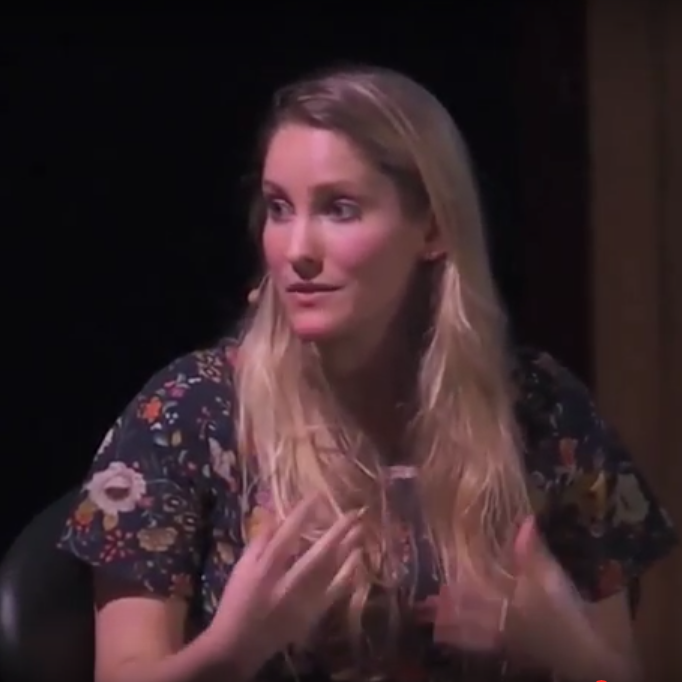
video icon Everyday sexism: Laura Bates at TEDxCoventGardenWomen, TEDx Talks, 16:05, 17 January 2014
External videos
video icon Shouting Back :Laura Bates, Caroline Criado-Perez and Samira Ahmed at Conway Hall 19:30, 9 October 2014

Bates' parents are Diane Elizabeth Bates, a French language teacher, and Adrian Keith Bates, a physician.[1] She grew up in the London Borough of Hackney and Taunton, and has an older sister and a younger brother. Her parents divorced when Bates was in her twenties.[2] She attended King's College, Taunton.[1] She read English literature at St John's College, Cambridge, and graduated from the University of Cambridge in 2007. Bates remained in Cambridge for two-and-a-half years as a researcher for the psychologist Susan Quilliam, who was working on an updated edition of The Joy of Sex.[2]

Bates then worked as an actress and a nanny, a period during which she has said she experienced sexism at auditions and found the young girls she was caring for were already preoccupied with their body image.[3][4]

Everyday Sexism Project

[edit]

The Everyday Sexism Project website was founded in 2012. Around the third anniversary of the website, in April 2015, Everyday Sexism had reached 100,000 entries.[5] Bates has said that she has faced abuse online. After her publication of Men Who Hate Women in 2020, Bates said she received deepfake pornography images of herself performing sexual acts on the sender.[6]

Bates' first book Everyday Sexism, based on the project, was published by the London subsidiary of Simon & Schuster in 2014.[7]

Career

[edit]

After Everyday Sexism, Bates published several more books about sexism. Bates is a contributor to The Guardian,[8] The Independent[9] and other publications. She is a contributor to the New York–based Women Under Siege Project.[10]

Honours and awards

[edit]

Personal life

[edit]

Bates married Nick Taylor in 2014.[2][16]

Publications

[edit]
  • 2014: Everyday Sexism: The Project that Inspired a Worldwide Movement, Simon & Schuster ISBN 1471131572
  • 2016: Girl Up: Kick Ass, Claim Your Woman Card, and Crush Everyday Sexism, Simon & Schuster ISBN 9781471149504
  • 2018: Misogynation: The True Scale of Sexism, Simon & Schuster ISBN 9781471169243
  • 2019: The Burning, Simon & Schuster ISBN 1471170209
  • 2020: Men Who Hate Women, Simon & Schuster ISBN 9781471194337
  • 2022: Fix the System, Not the Women, Simon & Schuster ISBN 9781398514331
  • 2023: Sisters of Sword and Shadow, Simon & Schuster ISBN 9781398520042
  • 2024: Sisters of Fire and Fury, Simon & Schuster Children's UK ISBN 978-1398519374
  • 2025: The New Age of Sexism: How the AI Revolution is Reinventing Misogyny, Simon & Schuster ISBN 9781471190483

References

[edit]
[edit]
Revisions and contributorsEdit on WikipediaRead on Wikipedia
from Grokipedia
Laura Bates is a British feminist author and activist renowned for founding the Everyday Sexism Project, an online initiative launched in 2012 to document and raise awareness of normalized instances of encountered in daily life. The project functions as a crowdsourced repository where individuals submit personal testimonies of , accumulating over 200,000 entries from around the world, which Bates has leveraged to challenge assumptions of achieved and to advocate for systemic reforms. A graduate of the with an MA from St John's College, she has penned eight books examining facets of gender dynamics, such as Everyday Sexism—shortlisted for Book of the Year—and Men Who Hate Women, which scrutinizes online misogynistic subcultures. Bates's advocacy has prompted tangible policy shifts, including revisions to Facebook's moderation standards on harassment and integrations of consent education into school programs, through collaborations with entities like the and the . Honored with the in 2015 for contributions to , alongside a Fellowship in the Royal Society of Literature and multiple honorary doctorates, her efforts have nonetheless drawn personal repercussions, including death threats following the publication of her seminal work on pervasive .

Early Life and Education

Childhood and Upbringing

Laura Bates was born on August 27, 1986, in , , to parents Diane and Adrian Bates. She grew up primarily in the , a historically working-class in known for its socioeconomic diversity and urban challenges during her early years, before the family later relocated to in . Bates has described her childhood as marked by a fearful disposition, recounting in interviews that she was terrified of ghosts and monsters, to the extent that her parents could not leave her home alone. She has an older sister and a younger brother, with the latter's birth providing one of her earliest self-reported observations of gender dynamics in the family. Around age five, Bates noted that her mother received a congratulatory gift—a piece of gold jewelry inscribed "Mother of a Son"—highlighting preferential treatment for the birth of a male child, an experience she later cited as an initial encounter with sexism that shaped her perceptions of gender roles. The family's environment in Hackney emphasized practical amid the area's gritty, multicultural backdrop, where Bates observed everyday social interactions that underscored traditional expectations in working-class communities. These formative years, set against a backdrop of and familial observations, laid a groundwork for her later focus on inequalities, though without formal at the time.

Academic and Early Influences

Bates grew up in Hackney, , where she attended local schools before studying English literature at St John's , . She was elected to a at the college and graduated in 2007 with an MA from the university. During her undergraduate years, Bates focused primarily on rather than participating in student politics, feminist groups, or activism, later reflecting that she had limited engagement with formal feminist discourse at the time. Following graduation, Bates remained in for two years, working as a researcher, which provided early exposure to academic inquiry and writing. She then transitioned into freelance , aspiring to build a career in media and contributing pieces on various topics, including collaborations with writer and Susan Quilliam on issues related to sex, relationships, and gender dynamics. This period honed her skills in narrative analysis and public communication, drawing from her literary training to examine cultural and social themes, though her explicit feminist perspective emerged more prominently from personal experiences than structured ideological influences. Her academic foundation in English literature emphasized textual critique and historical narratives, potentially informing later applications to gender-related cultural patterns, but Bates has indicated minimal prior immersion in second- or third-wave during her formative years. Early journalistic work exposed her to portrayals of women, fostering a critical of representational biases without deep theoretical framing at that stage.

Founding and Development of the Everyday Sexism Project

Origins and Initial Launch (2012)

Laura Bates founded the Everyday Sexism Project in April 2012, specifically on April 16, after experiencing repeated instances of sexual harassment, including being groped on public transit and approached aggressively on the street in London. These encounters, coupled with discussions in which friends and acquaintances dismissed such incidents as trivial or isolated rather than indicative of broader patterns, prompted Bates to seek evidence of normalized sexism by soliciting accounts from other women. The project launched as a rudimentary website designed for crowdsourcing submissions of women's daily experiences with , ranging from minor slights to overt , via , , or direct entry. Bates, then 25 and working as a freelance , developed the site on her without advanced technical resources, initially promoting it through personal networks and to compile anecdotal data challenging the notion that sexism was outdated or exaggerated. This low-barrier approach emphasized unfiltered, first-person testimonies to document prevalence over formal surveys. Within months of launch, submissions surged, reaching entries by February 2013, as women shared stories of workplace belittlement, street catcalling, and medical dismissals, validating Bates' hypothesis of widespread normalization. Early amplification came via social media shares and coverage in outlets like , which hosted discussions and republished entries, positioning the project as a platform for feminist rather than academic research. These initial mechanics highlighted its role in aggregating subjective experiences to counter cultural denialism, though the self-reported nature limited empirical rigor at the outset.

Expansion and Global Reach

Following its launch in April 2012 as a UK-focused website, the Everyday Sexism Project expanded internationally within its first year, establishing localized branches in 17 countries by April 2013 to facilitate submissions in multiple languages and cultural contexts. By 2014, the project had collected over 50,000 testimonies worldwide, reflecting growing participation beyond Britain. This scaling continued, reaching 100,000 entries by April 2015, with submissions documented in over 13 languages and encompassing experiences from diverse global regions. Operational developments included the creation of country-specific sections on the website, such as for the , enabling tailored documentation of local instances. The project eventually supported branches in 25 countries, broadening its scope to address region-specific issues while maintaining a centralized repository. Collaborations with non-governmental organizations, including joint research with the on —revealing that 52% of surveyed women experienced unwanted behavior—aided in amplifying awareness through shared data. Policy engagements marked further reach, with submissions of project testimonies as evidence to UK parliamentary inquiries, such as the Women and Equalities Committee's probe into workplace sexual harassment, influencing discussions on legislative responses. Media coverage, including reports referencing project data on school harassment and public space incidents, correlated with surges in submissions, though this raised concerns about self-selection bias in the resulting dataset, as amplified visibility may disproportionately attract certain demographics. These milestones underscored the project's transition from a domestic initiative to a global platform, though its reliance on voluntary reports limited generalizability without independent verification.

Data Collection Methods and Empirical Basis

The Everyday Sexism Project gathers entries through voluntary submissions via an online form on its , email correspondence, or Twitter tags directed to the project's account. These self-reported accounts detail perceived instances of encountered in daily life, with contributors optionally using real names or pseudonyms. By , the project had amassed over 100,000 such entries from global volunteer contributors. Submissions undergo no systematic verification or fact-checking process; project staff review and publish entries deemed illustrative of everyday sexism without requiring corroborating evidence. Published testimonies are organized into thematic categories, including , workplace discrimination, educational environments, and online abuse, to facilitate public visibility and across reports. This curation aims to aggregate qualitative narratives rather than generate quantitative metrics with statistical controls. The project's empirical foundation rests on this unstructured collection of anecdotes, which lacks , sampling frames, or controls for variables typical in surveys on dynamics. Self-reported data in domains like and is inherently prone to distortions, such as selective recall where respondents emphasize events aligning with preconceived notions of , and attrition biases favoring those already sensitized to issues. Such methods contrast with probability-based surveys, which employ representative sampling to yield generalizable estimates while minimizing volunteer bias. Without , the dataset risks amplification of unconfirmed claims, undermining causal inferences about systemic patterns versus individual perceptions.

Publications and Writing Career

Key Non-Fiction Works

Bates's first major work, Everyday Sexism, published on May 23, 2014, by , compiles anonymized testimonies submitted to the Everyday Sexism Project, presenting them as evidence of widespread, normalized instances of gender-based experienced by women in daily life. The book structures these accounts thematically, covering areas such as , workplace bias, media representation, and medical dismissals, arguing that such "subtle" acts cumulatively undermine women's autonomy and safety more profoundly than overt violence. Bates contends that these reports, numbering in the thousands by publication, reveal a societal failure to recognize everyday as a barrier to equality, relying primarily on qualitative self-reports rather than controlled empirical studies. In Men Who Hate Women: From Incels to Pickup Artists: The Truth about Extreme Misogyny and How It Affects Us All, released in 2020 by Sourcebooks, Bates investigates interconnected online subcultures within the "manosphere," including incels, men's rights activists, and pickup artists, based on her undercover participation in forums, analysis of public posts, and interviews with former participants. The text maps ideological overlaps, such as shared anti-feminist rhetoric linking personal grievances to broader conspiracies about female hypergamy and institutional bias against men, drawing on examples from platforms like Reddit and 4chan to illustrate how these communities foster radicalization and real-world harm, including violence. Bates argues that misogyny in these spaces operates as a self-reinforcing ecosystem, influencing mainstream discourse through figures like Andrew Tate, though her analysis prioritizes narrative synthesis over quantitative metrics of forum activity or causal links to offline behaviors. The New Age of Sexism: How AI and Emerging Technologies Are Reinventing Misogyny, published in May 2025 by Sourcebooks, shifts focus to technological amplification of gender biases, examining how algorithms in AI systems, generation tools, environments, and sex robots perpetuate misogynistic stereotypes through training data skewed by historical imbalances. Bates highlights empirical trends, such as a 2,408% year-on-year surge in non-consensual intimate imagery reported in 2023 by analytics firm Graphika, attributing this to accessible AI tools enabling mass production of harmful content targeting women. The book critiques profit-driven tech development for embedding causal pathways from biased datasets to outputs that normalize harassment in the and reinforce entitlement in companion , urging regulatory interventions based on documented cases of AI-fueled rather than speculative futures.

Fiction and Other Contributions

Bates ventured into fiction with her debut young adult novel Sisters of Sword and Shadow, published on November 9, 2023, by . The work reimagines Arthurian legend through a lens of female agency, centering a group of women forming a counterpart to the Knights of the amid themes of , feuds, and personal power. A , Sisters of Fire and Fury, followed, extending the speculative narrative to explore unification and conflict in a matriarchal reinterpretation of medieval Britain. Beyond novels, Bates has contributed journalism on gender issues, including op-eds and articles for , where she addressed topics such as the incel movement's extremist elements in a 2021 piece. She has similarly written for , with contributions like a 2013 article mapping global everyday patterns via her project's data. These pieces maintain an advocacy-oriented style, drawing on anecdotal and collected testimonies rather than solely empirical analysis. Bates has also served in literary judging capacities, including panels for the , the YA Book Prize, the Young Writers Award, and the RSL Giles St Aubyn Award. These roles position her within broader literary circles, bridging her activist background with evaluations of narrative works by other authors.

Thematic Evolution in Her Writings

Bates' early writings emphasized interpersonal and ambient forms of encountered in daily life, such as verbal harassment in public spaces and subtle workplace biases, as compiled from over 200,000 user-submitted testimonies to the Everyday Sexism Project launched in 2012. These accounts highlighted normalized behaviors often dismissed as trivial, framing as a pervasive cultural undercurrent rather than isolated incidents. Following the mid-2010s expansion of platforms, Bates' thematic focus broadened to encompass structural enablers of , including algorithmic amplification of extremist content and online communities fostering male grievance narratives. In works like Men Who Hate Women (2020), she integrated project data with examinations of digital pathways, attributing shifts in misogynistic expression to the causal role of interconnected online ecosystems that normalize . This progression mirrored societal transitions from analog to digital interactions, where platforms' scale enabled rapid dissemination of ideologies previously confined to fringes. By the mid-2020s, Bates' output pivoted toward technology's role in perpetuating biases, particularly how AI systems trained on historical data replicate discriminatory patterns in outputs like image generation and virtual assistants. Her 2025 book The New Age of Sexism details mechanisms such as deepfakes and sexbots, positing that these innovations causally extend offline into automated forms, drawing on project anecdotes alongside reports of AI-generated harms. This evolution underscores a reliance on qualitative, self-reported evidence from the project to advocate systemic interventions, even as broader empirical indicators—such as indices showing stagnation in over 40% of countries between 2019 and 2022—suggest uneven progress in mitigating disparities. Detractors have noted this approach's potential overemphasis on anecdotes lacking quantitative controls, potentially inflating perceived prevalence amid stable metrics in areas like labor participation.

Awards, Honors, and Public Recognition

Formal Accolades

In 2013, Bates received the Cosmopolitan Ultimate New Feminist Award for her work on tackling everyday through the Everyday Sexism Project. The following year, she was named to the BBC's inaugural 100 Women list, recognizing influential women attempting to change the world, with Bates highlighted for collecting over 80,000 testimonies of via her project. Her book Everyday Sexism, published in 2014, was shortlisted for the Book of the Year, an accolade voted on by booksellers and selected from submissions across genres. In the 2015 Queen's Birthday Honours, Bates was awarded the (BEM) for services to , as announced by the UK . Bates was elected a Fellow of the Royal Society of (FRSL) in 2018 as part of its "40 Under 40" initiative, honoring emerging writers for contributions to literature.

Media and Institutional Endorsements

Bates has delivered keynote speeches at various TEDx events, including TEDxOxford in 2014 on everyday sexism, TEDxCoventGardenWomen in 2014, and TEDxEastEnd in 2014, as well as a main TED Talk in 2019 titled "Everyday Sexism," where she discussed pervasive daily harassment experiences reported through her project. Her speaking engagements extend to professional keynotes on topics such as workplace equality, allyship, and emerging technologies' impact on gender issues, positioning her as a sought-after voice in institutional settings. She has served as a judge for literary awards, including the BBC Young Writers' Award in 2020 alongside other panelists, the YA Book Prize, and the , reflecting her involvement in cultural and educational selection processes. In 2014, Bates was named one of CNN's 10 Visionary Women, a list highlighting individuals advancing women's success and safety, in recognition of her Everyday Sexism Project's role in documenting . Feminist icon has publicly endorsed Bates, stating that she is "showing us the path to both intimate and global survival," in reference to her work on and , further embedding Bates within established feminist networks through such affirmations.

Criticisms, Controversies, and Methodological Debates

Challenges to Project Validity and Verification

The Everyday Sexism Project relies on voluntary, self-reported submissions collected via online forms, , or , with no explicit third-party verification process to confirm the accuracy of accounts. This approach accepts entries without checks for fabrication or exaggeration, potentially incorporating unconfirmed or invented claims, as no mechanisms such as corroborating evidence or follow-up inquiries are implemented. Consequently, the dataset comprises unvetted anecdotes, which undermines its reliability as of 's prevalence or patterns. Self-selection bias inherent in the project's crowdsourced model favors submissions from individuals motivated by intense personal experiences, likely amplifying extreme or memorable incidents while underrepresenting mundane or neutral interactions. Such volunteer-driven , absent random sampling or incentives for broad participation, distorts toward outliers rather than population-level dynamics, as participants self-select based on rather than statistical representativeness. This methodological limitation parallels critiques of similar anecdotal repositories, where emotional salience drives reporting, skewing perceptions of everyday occurrences. Peer-reviewed surveys employing structured methodologies, such as population-based questionnaires, reveal experiences among both genders, with women reporting higher rates (e.g., 9.5% lifetime ) but men also affected (2.9%), contradicting portrayals of victimization as predominantly or exclusively female-directed. Other studies confirm bidirectional patterns, including men harassed by women in workplaces (14% male versus 38% female), highlighting that gender-based mistreatment is not unilateral. These findings, derived from verified respondent pools rather than open submissions, underscore discrepancies between the project's narrative emphasis on pervasive female targeting and broader of mutual dynamics.

Ideological and Empirical Critiques

Critics have accused Laura Bates of perpetuating a patriarchal framework as the primary causal explanation for disparities without sufficient empirical backing, relying instead on anecdotal "lived experiences" collected via her Everyday Sexism Project, which are prone to and memory distortions as demonstrated in on eyewitness reliability. Such analyses, according to these detractors, exhibit selective vision by overlooking data indicating societal leniencies toward women, including meta-analyses showing female criminal defendants receive lighter sentences than males for equivalent offenses and studies revealing hiring preferences for women in STEM fields at ratios up to 2:1. Bates' emphasis on systemic female victimhood has drawn ideological fire for normalizing one-sided narratives that marginalize male disadvantages, such as the stark gender gaps in and outcomes. In the , male rates stood at 16.9 per 100,000 in 2023 compared to 5.5 for females, with men comprising about 75% of total suicides, yet critics contend her writings frame such disparities as secondary to patriarchal harms rather than addressing root causes like male or institutional neglect. Similarly, boys lag in , with only 38% of university entrants being male in recent years versus 62% female, a trend attributed by skeptics to Bates' framework dismissing male-specific vulnerabilities in favor of a victim-oppressor binary derived from rather than interdisciplinary evidence. Men's rights advocates have leveled backlash against Bates' advocacy for , arguing it sidesteps empirical realities of male disadvantages in areas like false accusations and proceedings. While false allegations affect 2-10% of reported cases according to prosecutorial reviews, the severe reputational and legal consequences for the accused—often without recourse—are highlighted by these groups as unexamined in her work, which instead portrays concerns over such risks as manifestations of misogynistic "hate." In s, mothers receive primary custody in approximately 80% of disputed cases in Western jurisdictions, a critics assert Bates' equality ignores, prioritizing female-centric narratives over balanced causal analysis of familial dynamics. These perspectives frame her ideological stance as contributing to cultural overemphasis on female grievance at the expense of verifiable male inequities.

Responses to Broader Cultural Backlash

Following the 2012 launch of the Everyday Sexism Project, Bates reported receiving death and rape threats, which she attributed to backlash from online communities within the , including men's rights activists and anti-feminist forums. These threats escalated to as many as 200 per day at peak instances, often in response to her documentation of perceived sexist behaviors, prompting discussions on the retaliatory dynamics of online discourse where critics viewed her project as amplifying grievances without sufficient empirical verification of systemic patterns. In works like Men Who Hate Women (2020), Bates depicted and alt-right subcultures as interconnected nodes of extreme , framing them as monolithic ideological threats akin to organized rather than disparate fringe responses to socioeconomic or cultural disruptions such as declining rates and shifting norms. Critics have contested this portrayal, arguing it overlooks how such groups often emerge as reactions to perceived erosions of traditional male roles amid broader societal changes, with membership driven more by individual alienation than coordinated ideological recruitment. Empirical analyses of online indicate that while misogynistic exists, it frequently intersects with non-gender-specific factors like economic marginalization, rather than functioning as a unified "terrorist ." Bates has likened misogyny to a terrorist ideology comparable in danger to far-right extremism, emphasizing its role in inciting violence through shared narratives of female culpability. However, data on mass shooters reveal diverse motivations, with explicit misogyny cited in only 21% of cases since 2000—up from 7% prior but far from predominant—and often compounded by mental health issues, personal grievances, or ideological eclecticism rather than isolated gender animus. Studies of perpetrator profiles further show misogyny as among the least common primary drivers across mass shootings, underscoring that causal attributions require disaggregating it from multifactorial triggers like rejection or status loss.

Impact and Legacy

Positive Contributions and Achievements

Bates' Everyday Sexism Project, launched in 2012, has compiled over 100,000 testimonies of gender-based and inequality, enabling the aggregation of to reveal recurring patterns in environments such as workplaces, schools, and public spaces. This repository has supported targeted interventions by providing verifiable, crowdsourced that highlights underreported daily experiences, distinct from high-profile incidents. Through submissions from the project, Bates collaborated with the , supplying documented accounts of harassment on public transport that informed operational changes and contributed to initiatives like Project Guardian, a 2013 crackdown resulting in 15 arrests for sexual offenses in . Her advocacy extended to pressuring platforms like to revise content policies on reporting, yielding updates to moderation guidelines. The project's outreach has shaped UK policy responses across public and private sectors, with testimonies cited in parliamentary discussions and institutional reviews to address systemic gaps in harassment reporting and prevention. By fostering public dialogue via accessible online submissions and media engagements, it has amplified voices on normalized sexism, prompting educational programs and corporate training modules informed by its data.

Unintended Consequences and Critiques of Influence

Critics have argued that the Everyday Sexism Project's emphasis on cataloging pervasive, low-level incidents of fosters a victimhood mentality among women, potentially eroding personal agency and resilience by encouraging reliance on external validation rather than individual strategies. This approach, while intended to validate experiences, has been faulted for amplifying narratives that frame routine interactions as inherently oppressive, which may discourage adaptive behaviors and heighten sensitivity to perceived slights without addressing underlying psychological or behavioral factors. Bates' framing of dissent against feminist interpretations as manifestations of has been linked by some analysts to exacerbated cultural divides, correlating temporally with the expansion of anti-feminist online communities such as the , where men express frustration over perceived overreach in gender discourse. Awareness campaigns like hers, by categorizing broad swaths of male behavior or speech as sexist, can provoke psychological reactance— a defensive backlash that entrenches oppositional views rather than fostering , as evidenced in studies of similar empowerment initiatives triggering denial and alienation among men. Empirical indicators of reveal limited advancement despite the project's prominence since 2012; the World Economic Forum's Global Gender Gap Index stood at approximately 68% closed in 2012 and reached only 68.5% closed by 2024, with political empowerment subindex lagging at 22.5% closed, suggesting that heightened awareness has not translated into accelerated systemic improvements and may reflect misallocation of focus toward narrative amplification over measurable policy outcomes. This stagnation underscores critiques that such initiatives prioritize subjective testimonies over rigorous causal interventions, potentially sustaining polarization without resolving root disparities in economic participation or leadership representation.

Recent Work on Technology and Misogyny (2020s)

Shift to Digital and AI-Focused Analysis

In the early 2020s, Bates directed attention to the role of digital platforms in exacerbating , particularly through algorithmic amplification of radicalizing content within online subcultures such as forums. She argued that recommendation systems on sites like and funnel users toward increasingly extreme material, with a 2019 algorithm adjustment aimed at curbing such pathways but yielding limited long-term efficacy according to subsequent analyses. This emphasis marked a departure from her earlier focus on everyday interpersonal toward the structural dynamics of tech-mediated ideological pipelines. Bates highlighted emerging virtual environments, including the developed by Meta, as amplifying harassment risks for women, reporting personal encounters with graphic abuse within hours of entry and citing reports of widespread virtual sexual assaults. She described these spaces, overseen by , as effectively "no-go" zones for females due to unchecked , threats, and grooming, with UK data indicating that a substantial share of online child grooming incidents—often involving —contributes to this environment. Bates posited causal connections between unrestricted online access and distorted perceptions of women among , framing porn as pervasive "wallpaper" that preconditions acceptance of misogynistic ideologies. Supporting evidence includes parliamentary reviews documenting correlations between adolescent porn exposure and permissive attitudes toward , with surveys showing higher endorsement of myths among frequent consumers. Nonetheless, while Bates advocates for these influences as directionally causal, researchers caution that correlations may reflect selection effects or bidirectional relationships rather than unidirectional causation, as randomized controlled studies remain ethically infeasible and observational data confounds persist. In The New Age of Sexism: How AI and Emerging Technologies Are Reinventing Misogyny, published in May 2025, Laura Bates argues that artificial intelligence and related technologies such as sex robots, deepfake pornography, and virtual metaverses are embedding and amplifying historical patterns of misogyny into digital systems. Bates examines biases in large language models like ChatGPT, citing instances where outputs reflect gender stereotypes derived from training data scraped from internet sources disproportionately critical of women. She contends that sex robots, marketed as companions, often default to submissive female personas programmed with traits reinforcing traditional gender roles, potentially normalizing objectification. Bates highlights the proliferation of deepfake content, projecting that up to 8 million deepfake videos—predominantly non-consensual pornography targeting women—could be shared online by the end of 2025, based on trends from cybersecurity reports showing a surge from 500,000 in 2023. In the book, she links this to broader AI-driven harms, including algorithmic amplification of sexist content in virtual environments, drawing on empirical analyses of bias in machine learning datasets that perpetuate underrepresentation or stereotyping of women. However, some technical critiques note that attributing intent or "misogyny" to algorithms risks anthropomorphizing neutral statistical processes, where outputs mirror societal data inputs rather than novel inventions. Accompanying promotional efforts included Bates' September 10, 2025, interview on PBS NewsHour, where she advocated for regulatory interventions, such as mandatory audits for AI systems and legal prohibitions on harmful generation, to mitigate the replication of offline in digital spaces. Similar calls appeared in events like the Equality Now livestream on AI and reform, emphasizing proactive over reactive fixes. Bates' analysis relies on case studies from tech industry reports documenting propagation, though she acknowledges the need for interdisciplinary evidence to distinguish data-reflected disparities from engineered .

Personal Life

Family and Relationships

Bates married in 2014, reflecting on the experience in a Guardian article that explored reconciling feminist principles with traditional wedding elements. She has described her husband as "extremely calm and extremely supportive," particularly in the context of her public work on gender issues. No public records or statements indicate Bates has children as of 2025. Amid threats and harassment stemming from the Everyday Sexism Project, Bates has limited disclosures about her private life, prioritizing while engaging publicly on . Personal relationships do not appear to have directly shaped her documented views on , with her writings focusing instead on broader empirical patterns from collected testimonies.

Public Persona and Privacy

Laura Bates has developed a public image as an accessible feminist voice through active engagement on and frequent keynote addresses on . As the founder of the Everyday Sexism Project in 2012, she has utilized online platforms to amass over 200,000 user-submitted accounts of sexism, emphasizing relatable, everyday experiences to build solidarity and awareness. Her speaking engagements, including TED Talks and corporate keynotes, further project an approachable demeanor focused on practical and systemic change. This prominence has compelled Bates to prioritize personal amid severe threats. Prior to the project's widespread recognition, she reported receiving approximately 200 abusive messages daily, escalating to and threats that prompted police intervention. In response, authorities installed advanced systems, and Bates adheres to protocols such as withholding her residential location to mitigate risks. More recently, Bates encountered targeted digital violations, including featuring her likeness, which she characterized as a traumatic on her sense of self. These incidents underscore a deliberate guarding of , including scant public disclosure about family or relationships, contrasting with her for others to share vulnerabilities in combating . While Bates promotes narrative-sharing as a tool for collective empowerment, her own reticence reflects pragmatic responses to rather than ideological inconsistency, though some analyses highlight the tension between modeled public openness and enforced private seclusion.

References

Add your contribution
Related Hubs
User Avatar
No comments yet.