Recent from talks
Nothing was collected or created yet.
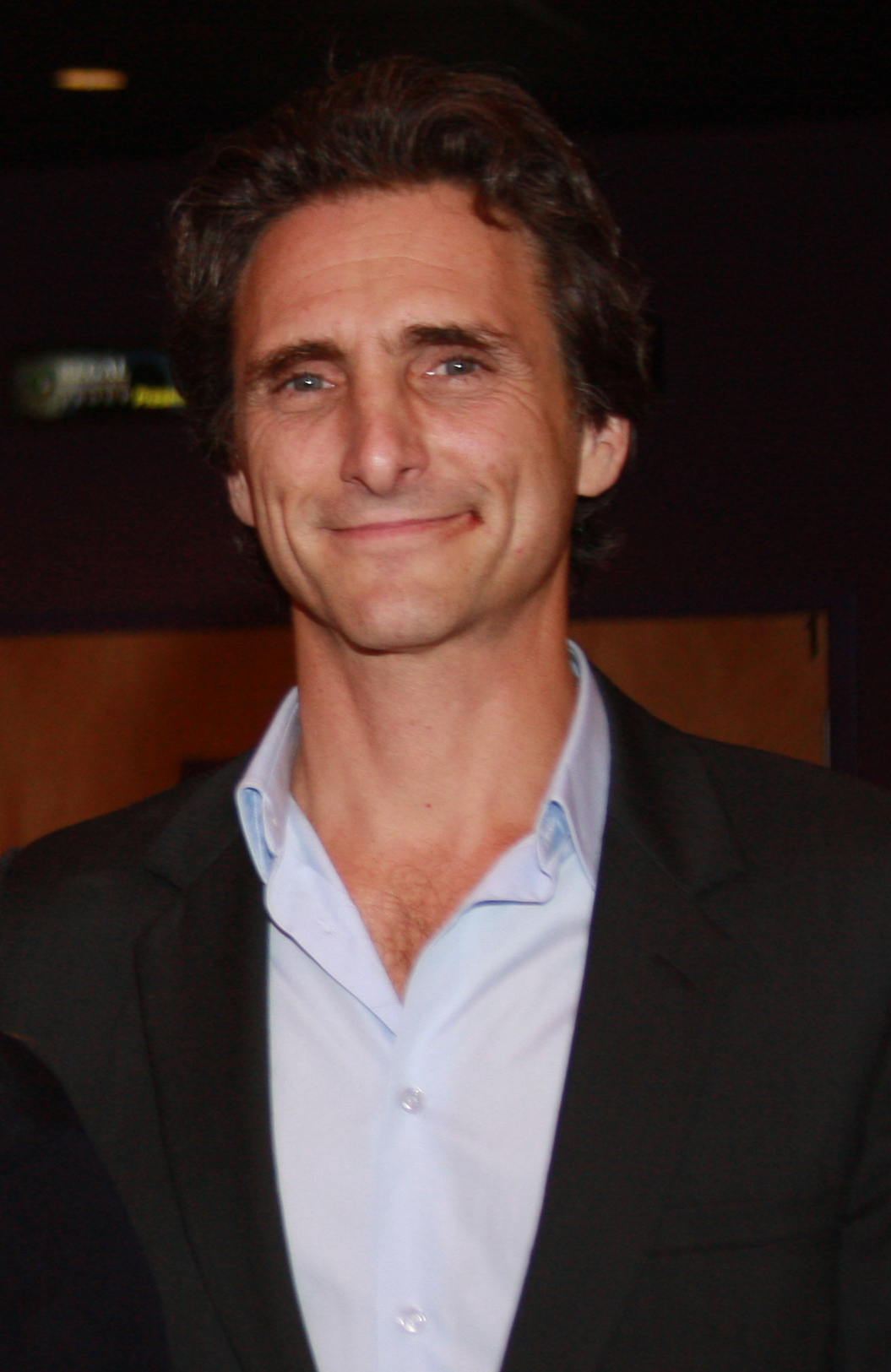
Lawrence Bender
View on Wikipedia
Lawrence Bender (born October 17, 1957) is an American film producer. Throughout his career, Bender-produced films have received 36 Academy Award nominations, resulting in eight wins.[1][2]
Key Information
Bender rose to fame by producing Reservoir Dogs in 1992 and has since produced several of Quentin Tarantino's films, including Pulp Fiction, Jackie Brown, Kill Bill: Volume 1 & 2 and Inglourious Basterds. Bender has also produced three documentary films, most notably An Inconvenient Truth (2006), which won the Academy Award for Best Documentary Feature.[3] He has received three Best Picture nominations for producing Pulp Fiction, Good Will Hunting, and Inglourious Basterds.[4]
Early life
[edit]Bender was born to a Jewish family in The Bronx, New York, and grew up in New Jersey, where his father was a college history professor and his mother was a kindergarten teacher.[5] He described his hometown of Cherry Hill at the time as "all-white and anti-Semitic".[6] He attended Cherry Hill High School East,[7] where he decided to pursue a career as a civil engineer. His grandfather had been a civil engineer and he heard there were good jobs available in the field.[8] He graduated from of the University of Maine in 1979 with a degree in Civil Engineering.[8][9][4]
While in college, Bender acquired a passion for dance. After graduating, Bender pursued dancing and was awarded a scholarship to the Louis Falco dance troupe.[10] He worked as a dancer for some time before a series of injuries ended his dance career.[4]
Career
[edit]Film
[edit]In the 1980s, he worked as a grip on the syndicated anthology series Tales from the Darkside. In 1989 he produced, along with Sam Raimi, the film Intruder, for which he also co-wrote the story. After meeting Tarantino in 1990 and being given the script for Reservoir Dogs, he agreed to produce the film, which went on to achieve commercial success.[11] Throughout the 1990s, Bender also produced Pulp Fiction (1994), Killing Zoe (1994), Fresh, White Man's Burden (1995), From Dusk till Dawn (1996), Jackie Brown (1997), Good Will Hunting (1997), A Price Above Rubies (1998), and Anna and the King (1999). He had deals with Miramax and Fox 2000 Pictures.[12]
In the early 2000s, Bender produced the films, The Mexican (2001), Knockaround Guys (2001), Kill Bill: Volume 1 (2003), Kill Bill: Volume 2 (2004), Innocent Voices (2004), and Dirty Dancing: Havana Nights. Since May 2005, Bender has been a contributing blogger at HuffPost.
On February 8, 2018, multiple news outlets broke the story that Bender was responsible for covering up a car crash on the set of the film Kill Bill that Uma Thurman claims “nearly killed” her.[13]
In 2009, Bender produced the Tarantino film Inglourious Basterds which was nominated for an Academy Award for Best Picture. It would be the last time Bender and Tarantino would ever work together. He also produced the 2012 film Safe, which starred Jason Statham.[14] In 2016, he was executive producer for The Forest, Martin Scorsese's Silence and Mel Gibson's Hacksaw Ridge.[15] In 2017, it was announced that Bender would serve as a producer for the film The Widow.[16]
In 2024, Bender produced the film How Kids Roll.[17]
Bender makes a cameo appearance in many of the films he produces: he was a police officer chasing Mr. Pink in Reservoir Dogs, a restaurant patron billed as a "Long Hair Yuppie-Scum" in Fresh, Pulp Fiction and Four Rooms, a hotel clerk in Kill Bill: Volume 2, and as a bartender in Safe.[14]
Documentaries
[edit]He produced the 2006 documentary An Inconvenient Truth, which raised unprecedented awareness about climate change and won the Academy Award for Best Documentary Feature.[18]
In 2008, Bender was a founding member of the World Security Institute campaign, Global Zero.[19] His 2010 documentary, Countdown to Zero, featured British Prime Minister Tony Blair, Pakistani President Pervez Musharraf, Soviet Union President Mikhail Gorbachev, South African President F. W. de Klerk and US President Jimmy Carter among others and detailed the urgent risk posed by proliferation, terrorism, and accidental use of nuclear weapons.[20] Bender was an executive producer for the 2017 sequel to An Inconvenient Truth, An Inconvenient Sequel: Truth to Power.[21]
Television
[edit]In the early 2000s, Bender formed a partnership with Kevin Kelly Brown and created the production company Bender Brown Productions. The company produced the CBS Drama Dr. Vegas and the Syfy channel mini-series Earthsea.[22]
In 2008, it was reported that Bender was working with Nine Inch Nails' Trent Reznor to create a television series based on the 2007 album Year Zero.[23]
Bender produced the 2015 Starz miniseries Flesh and Bone.[24] In 2017, it was announced that Bender and Brown would executive produce a reboot pilot of the television series Roswell for The CW.[25] The CW ordered Roswell, New Mexico to series in May 2018.[26] Bender also executive produced the 2018 Netflix series Seven Seconds.[27]
Personal life
[edit]Bender is also a passionate social and political activist and supports many causes.[28] Bender serves on the board of The Creative Coalition. He is a member of Council on Foreign Relations the Pacific Council. Bender is also on the Advisory Board for the UCLA Institute of the Environment and Sustainability and a member of the Global Zero campaign.[29][30]
In 2004, Bender was a top fundraiser for John Kerry's presidential campaign.[31] He was also an early supporter of Barack Obama's 2008 presidential campaign.[32] Being of Jewish descent, in August 2015 he signed – as one of 98 members of the Los Angeles' Jewish community – an open letter supporting the proposed nuclear agreement between Iran and six world powers led by the United States "as being in the best interest of the United States and Israel."[33]
On May 11, 2013, he returned to The University of Maine to receive an honorary Doctor of Humane Letters degree and share remarks during the 2013 Commencement ceremonies.[4]
Awards and recognition
[edit]In 1994, Pulp Fiction won the Palme d'Or award at the Cannes Film Festival.[34] Bender received a producer of the year award at the Cannes Film Festival in 2001, becoming the third person ever to win the award and the first American to do so.[35] In 2005, Bender was presented with the Torch of Liberty award from the ACLU.[36] He was named a Wildlife Hero by the National Wildlife Federation in 2011.[37] Throughout his career, films Bender has produced or executive produced have won a total of eight Academy Awards.[2]
Filmography
[edit]Film
[edit]Producer
- Intruder (1989) (Also co-writer)
- Tale of Two Sisters (1989)
- Reservoir Dogs (1992)
- Fresh (1994)
- Pulp Fiction (1994)
- Four Rooms (1995)
- White Man's Burden (1995)
- Good Will Hunting (1997)
- Jackie Brown (1997)
- A Price Above Rubies (1998)
- Anna and the King (1999)
- The Mexican (2001)
- Knockaround Guys (2001)
- Kill Bill: Volume 1 (2003)
- Kill Bill: Volume 2 (2004)
- Kill Bill: The Whole Bloody Affair (2004)
- Dirty Dancing: Havana Nights (2004)
- Voces inocentes (2004)
- The Chumscrubber (2005)
- The Great Raid (2005)
- An Inconvenient Truth (2006)
- The Youngest Candidate (2008)
- Killshot (2008)
- Inglourious Basterds (2009)
- Countdown to Zero (2010)
- Safe (2012)
- Greta (2018)
- Capone (2020)
- The Harder They Fall (2021)
- How Kids Roll (2024)
Executive producer
- Killing Zoe (1994)
- Snakeland (1996)
- From Dusk till Dawn (1996)
- From Dusk till Dawn 2: Texas Blood Money (1999)
- From Dusk till Dawn 3: The Hangman's Daughter (1999)
- Stark Raving Mad (2002)
- Goal! (2005)
- 88 Minutes (2007)
- The Forest (2016)
- Silence (2016)
- Hacksaw Ridge (2016)
- An Inconvenient Sequel: Truth to Power (2017)
Television
[edit]Executive producer
- Anatomy of a Hate Crime (2001)
- Lost in Oz (2002)
- Nancy Drew (2002)
- The Survivors Club (2004)
- Dr. Vegas (2004)
- Earthsea (2004)
- Build or Bust (2005)
- Flirt (2006)
- The Line-Up (2007)
- Long Island Confidential (2008)
- Seven Seconds (2018)
- Roswell, New Mexico (2019)
Producer
- Flesh and Bone (2015)
- Red Alert (2025)
References
[edit]- ^ "Lawrence Bender, UCLA Institute of the Environment and Sustainability". www.environment.ucla.edu. Retrieved April 25, 2016.
- ^ a b "Honoree Lawrence Bender" (PDF). Archived from the original (PDF) on February 2, 2020. Retrieved June 2, 2018.
- ^ "Steve Golin and Lawrence Bender Talk About How Film Can Drive Cultural Change". June 20, 2016.
- ^ a b c d "UMaine alum, Hollywood producer Bender to give commencement address". April 23, 2013.
- ^ L.A. Confidential: "Lawrence Bender Loves Israel" By Lawrence Bender Archived May 25, 2015, at the Wayback Machine retrieved May 25, 2015
- ^ Koehler, Robert. "Hey, Chili, Meet a Real Producer", Los Angeles Times, January 6, 1996. Accessed August 8, 2019. "The poverty was somewhat self-imposed. The Bronx-born Bender grew up in Cherry Hill, N.J., 'which was all-white and anti-Semitic, so I’d hear comments about me like, "He’s a good kid for a Jew." I have some idea of what it means to be discriminated against, though not as a distinct minority of color.'"
- ^ Greenblatt, Sarah. "Oscar might be clutched by Cherry Hill grad tonight", Courier-Post, February 25, 2007. Accessed November 19, 2023, via Newspapers.com. "If Cherry Hill High School East alumnus Lawrence Bender hadn't injured his knees, his father said, he might still be a professional dancer."
- ^ a b "Hollywood film producer credits UMaine". May 5, 2013.
- ^ "The University of Maine - Commencement 2013 - Honorary Degree Recipient and Speaker". Archived from the original on May 10, 2013. Retrieved May 12, 2013.
- ^ Weinraub, Bernard (September 22, 1994). "A Film Maker and the Art of the Deal". The New York Times.
- ^ Weinraub, Bernard (1994). "A Film Maker and the Art of the Deal". The New York Times. Retrieved May 11, 2018.
- ^ Petrikin, Chris (November 12, 1998). "Fox 2000 takes second look at Bender". Variety. Retrieved January 14, 2021.
- ^ "Kill Bill producer apologises to Uma Thurman over car crash claims". Independent.co.uk. February 8, 2018.
- ^ a b Taylor, Drew (April 26, 2012). "'Safe' Producer Lawrence Bender Talks Jason Stathan's Appeal & Why He Didn't Produce 'Django Unchained'". IndieWire. Archived from the original on May 11, 2018. Retrieved May 11, 2018.
- ^ "Lawrence Bender". September 22, 2016.
- ^ Ford, Rebecca (May 5, 2017). "Cannes: Isabell Huppert, Chloe Grace Moretz to Star in Thriller 'The Widow'". The Hollywood Reporter. Retrieved May 24, 2018.
- ^ Davis, Clayton (November 11, 2022). "Israeli-Palestinian Drama 'Roll' From 'Pulp Fiction' Producer Wraps Filming in Tunisia (EXCLUSIVE)". Variety. Archived from the original on July 16, 2023.
- ^ Skoll, Jeff (April 27, 2016). "Participant's Jeff Skoll: How the Power of Film Spread 'An Inconvenient Truth'". Variety. Retrieved May 24, 2018.
- ^ Lim, Dennis (July 16, 2010). "It's Time to Start Worrying Again". The New York Times.
- ^ Schroeder Mullins, Anne (April 6, 2010). "Thumbs Up For Bender Nuclear Doc". Politico. Retrieved May 24, 2018.
- ^ Pedersen, Erik (June 1, 2017). "'An Inconvenient Sequel' Getting Limited Summer Release From Paramount - Update". Deadline Hollywood. Retrieved May 24, 2018.
- ^ Andreeva, Nellie (August 1, 2012). "Lawrence Bender & Kevin Brown's Company Signs Pod Deal With Universal Cable Prods". Deadline Hollywood. Retrieved May 24, 2018.
- ^ Pareles, Jon (June 8, 2008). "Frustration and Fury: Take It. It's Free". The New York Times. Archived from the original on July 31, 2018. Retrieved June 8, 2008.
- ^ Charaipotra, Sona (November 4, 2015). "'Pulp Fiction' Producer Lawrence Bender On Trading Bullets For Ballet With 'Flesh and Bone'". Thrillist. Retrieved May 24, 2018.
- ^ Andreeva, Nellie (October 12, 2017). "'Roswell' Reboot With Immigration Twist In Works At the CW From Amblin TV". Deadline Hollywood. Retrieved July 30, 2018.
- ^ Petski, Denise (May 11, 2018). "The CW Picks Up 'Charmed' & 'Roswell' Reboots, 'TVD'/'Originals Offshoot, 'In The Dark' & Greg Berlanti Pilot To Series". Deadline Hollywood. Retrieved May 11, 2018.
- ^ Ryan, Maureen (February 22, 2018). "TV Review: 'Seven Seconds' On Netflix". Variety. Retrieved May 24, 2018.
- ^ "The Other Avenger: Tarantino's Producer Lawrence Bender". August 18, 2009.
- ^ UCLA Institute of the Environment and Sustainability
- ^ Lawrence Bender on His Involvement with the UCLA IoES on YouTube
- ^ "A Chat With Inconvenient Truth Co-Producer and Hollywood Bigwig Lawrence Bender". March 7, 2007.
- ^ "Barack Obama to Hollywood: Without You, No Obama White House". May 27, 2009.
- ^ Abramovitch, Seth (August 12, 2015). "98 Prominent Hollywood Jews Back Iran Nuclear Deal in Open Letter (Exclusive)". The Hollywood Reporter.
- ^ "Pulp Fiction Brought Guns, Gimps and Glory to the Cannes Film Festival". The A.V. Club. August 21, 2014.
- ^ "Bender Feted as Producer of the Year". May 14, 2001.
- ^ "2013 Commencement Honorary Degree Recipient and Speaker Lawrence Bender". April 4, 2013.
- ^ "Jack Hannah Honored By the National Wildlife Federation". Archived from the original on October 10, 2015. Retrieved June 2, 2018.
External links
[edit]Lawrence Bender
View on GrokipediaEarly life and education
Childhood and family background
Lawrence Bender was born on October 17, 1957, in The Bronx, New York City, to a Jewish family of Romanian descent.[5][6] As the eldest of four children, he was raised in a middle-class academic household.[7] His father worked as a college history professor, initially focusing on the philosophy of history before later transitioning to psychoanalysis, while his mother served as a kindergarten teacher, one of the few white educators in an inner-city school setting.[5][8] The family initially resided on the Grand Concourse near Yankee Stadium in the Bronx but relocated during Bender's early childhood, spending much of his formative years in South Jersey.[9] This suburban environment provided a stable backdrop for his upbringing, influenced by his parents' emphasis on education and intellectual pursuits. In high school, Bender developed an early interest in invention and engineering, inspired by his grandfather, a prolific patent holder whose career exemplified practical innovation.[5][10] This familial exposure to creative problem-solving laid groundwork for his later professional pivot, though it initially steered him toward technical fields.[7]Academic pursuits and career pivot
Bender earned a bachelor's degree in civil engineering from the University of Maine in 1979, aligning with an initial career trajectory rooted in practical, technical fields influenced by familial engineering traditions.[11][12][5] During his time at the university, he developed an interest in dance, participating in classes and performances with the Robinson Ballet Company, which foreshadowed a departure from engineering.[12][13] Following graduation, Bender pursued dance professionally for several years until a injury curtailed that path, prompting a shift toward acting.[5] He relocated to New York to study under acting coach Sandra Seacat, training alongside notable performers such as Jessica Lange and Mickey Rourke, which honed his creative instincts and oriented him toward performance arts.[14][15][5] This evolution culminated in entry-level positions in the film industry during the 1980s, including work as a grip on productions like Tales from the Darkside and other low-budget features, serving as a practical entry point into behind-the-scenes operations without formal producing roles at that stage.[14][16] These roles bridged his acting aspirations to production, leveraging technical skills from engineering while immersing him in filmmaking logistics.[5]Professional career
Initial forays into film production
Bender's entry into film production occurred in the late 1980s, following his experience as a grip on low-budget genre pictures, where he shifted to producing independent horror films destined for direct-to-video release. His first credited producing effort was Intruder (1989), a slasher film set in a supermarket overnight shift, directed by Scott Spiegel and co-developed from a story Bender wrote with the director. To finance the project, Bender raised $100,000 through Empire Pictures, a company known for low-budget exploitation fare, highlighting the financial hurdles of securing even modest capital for unproven ventures in the indie sector.[9] These early productions demanded resourceful improvisation amid severe resource limitations, including reliance on practical effects, minimal crews, and guerrilla-style shooting to stretch tight budgets, thereby cultivating Bender's proficiency in logistical oversight and cost management. While Intruder and similar straight-to-video horror efforts generated negligible box office or rental revenue, they immersed him in the gritty mechanics of independent filmmaking, from talent scouting among emerging directors like Spiegel—whom he connected through mutual contacts such as Boaz Yakin—to negotiating distribution in niche markets dominated by video stores. This foundational phase underscored the perseverance required to survive in an ecosystem favoring high-concept pitches over polished execution.[17]Breakthrough collaboration with Quentin Tarantino
Lawrence Bender first encountered Quentin Tarantino in the early 1990s through mutual connections in the independent film scene, where Tarantino pitched an idea for a dialogue-driven heist film that became Reservoir Dogs.[18] Impressed by the script Tarantino delivered shortly after, Bender optioned it for a nominal fee and secured financing, producing the film on a modest budget of approximately $1.2 million.[19] Released in 1992, Reservoir Dogs premiered at the Sundance Film Festival, earning critical acclaim for its raw tension, nonlinear structure, and Tarantino's distinctive blend of pop culture references and graphic violence, which marked a breakthrough for both men in elevating Bender's reputation as a producer of bold indie projects.[20] The partnership reached its zenith with Pulp Fiction in 1994, which Bender produced alongside Tarantino's expanded vision of interconnected crime stories. With a budget of $8 million, the film grossed over $213 million worldwide, becoming the highest-grossing independent film at the time and revitalizing the careers of actors like John Travolta through its ironic casting and memorable roles.[21] Its success stemmed from causal elements such as the innovative non-chronological narrative that heightened suspense and thematic depth, unapologetic depictions of violence that challenged mainstream sensibilities, and a soundtrack-driven aesthetic that amplified cultural resonance, positioning it as a phenomenon that influenced subsequent indie and mainstream cinema by demonstrating profitability in unconventional storytelling.[22][20] Bender continued collaborating with Tarantino on subsequent projects, including the two-volume Kill Bill saga released in 2003 and 2004, where he handled production logistics for the director's homage to martial arts cinema featuring elaborate action sequences and Uma Thurman's lead performance.[23] These films sustained the partnership's momentum, with Kill Bill: Volume 1 alone benefiting from Tarantino's stylistic flair—such as stylized gore and revenge-driven plotting—that echoed Pulp Fiction's formula for critical and commercial viability, further solidifying Bender's role in facilitating Tarantino's auteur-driven successes.[20]Expansion into major feature films
Bender broadened his scope beyond early Tarantino collaborations by co-producing Good Will Hunting (1997), a character-driven drama featuring Matt Damon and Ben Affleck's Oscar-winning screenplay, which grossed $225.9 million worldwide on a $10 million budget, marking a pivot to mainstream dramatic fare with broad commercial appeal.[24] This success underscored Bender's strategy of partnering with emerging talent and studios to transform low-budget independents into high-grossing releases, leveraging Miramax's distribution for wider reach.[2] In subsequent years, Bender facilitated Tarantino's evolution into larger-scale productions, including Inglourious Basterds (2009), a black comedy war film that earned $321.5 million globally despite its unconventional narrative structure, exemplifying genre-blending from pulp aesthetics to historical revisionism.[25] Django Unchained (2012), another Bender-produced Tarantino effort, amplified this versatility in the spaghetti Western format, achieving $426.1 million in worldwide earnings through provocative themes of slavery and retribution backed by The Weinstein Company's marketing push.[26] These films highlighted Bender's role in securing substantial budgets—$70 million for Inglourious Basterds and $100 million for Django Unchained—while preserving directorial autonomy amid studio oversight.[27][26] Diversifying further, Bender produced Hacksaw Ridge (2016), Mel Gibson's directorial return depicting WWII medic Desmond Doss, which grossed $180.6 million internationally on a $40 million outlay, demonstrating proficiency in biographical war dramas appealing to faith-oriented audiences via Cross Creek Pictures' financing.[28] Across his career, Bender's feature films have amassed over $1.38 billion in cumulative global box office, reflecting adept navigation of production scaling from indie roots to blockbuster viability.[29] Certain outputs, notably Tarantino's later works, drew scrutiny for stylized violence potentially glorifying retribution, with detractors claiming it risks audience desensitization to brutality.[30] Defenders, however, maintain such elements causally mirror historical atrocities' moral reckonings, serving narrative catharsis rather than endorsement, as Bender's consistent backing enabled these auteur-driven explorations without compromising commercial outcomes.[30]Documentary and activist-oriented projects
Bender entered non-fiction filmmaking with An Inconvenient Truth (2006), a documentary directed by Davis Guggenheim that presented former Vice President Al Gore's slideshow on anthropogenic climate change, emphasizing rising CO2 levels and projected environmental impacts.[31] The film, which grossed $49.8 million worldwide, won the Academy Award for Best Documentary Feature on February 25, 2007, and contributed to heightened public discourse on emissions reductions, influencing events like the 2007 Nobel Peace Prize shared by Gore and the IPCC.[31] However, aspects of its framing, such as timelines for sea-level rise exceeding 20 feet or direct causation of Hurricane Katrina's intensity, faced scrutiny in a 2007 UK High Court ruling on its educational use, which required disclaimers for nine factual inaccuracies or exaggerations based on empirical data available at the time. In 2010, Bender produced Countdown to Zero, directed by Lucy Walker, which examined the risks of nuclear proliferation and accidents through interviews with policymakers including Barack Obama, John McCain, and Tony Blair, advocating for a world free of nuclear weapons under the Global Zero initiative.[32] Premiering at the Sundance Film Festival on January 25, 2010, the documentary highlighted incidents like the 2009 Norwegian rocket launch misidentified as a missile and the unsecured Pakistani arsenal, urging verifiable disarmament treaties.[33] While effective in mobilizing campaigns that gathered over 2 million petition signatures for non-proliferation by 2011, the film's premise has been challenged by defense experts for downplaying the empirical stability provided by nuclear deterrence, as major nuclear-armed states have avoided direct conflict since 1945 due to mutually assured destruction dynamics rather than disarmament pressures.[34] These projects reflect Bender's approach to documentary production as a vehicle for activism, prioritizing messages on existential threats over comprehensive causal analysis, such as economic trade-offs in climate mitigation or geopolitical incentives for retaining arsenals amid rogue state actors.[33]Television ventures and recent developments
Bender's initial forays into television production in the early 2000s included executive producing miniseries and pilots such as Anatomy of a Hate Crime (2001), a Showtime film dramatizing the murder of Matthew Shepard, and The Survivors Club (2004), a Lifetime adaptation of a novel about rape survivors. He also served as an executive producer on Dr. Vegas (2004), a CBS drama starring Rob Lowe as a casino owner, which aired for one season before cancellation due to low ratings. These projects marked a pivot from feature films to episodic formats, though Bender's involvement remained selective, often limited to pilots or short-run series amid his primary focus on cinema.[35] In the 2010s, Bender expanded into streaming and network television, executive producing the Netflix limited series Seven Seconds (2018), a crime drama exploring racial tensions following a police cover-up, which received mixed reviews for its handling of social issues but garnered praise for performances.) He co-executive produced the CW pilot for the Roswell reboot in 2018, which evolved into Roswell, New Mexico, running for four seasons (2019–2022) and blending sci-fi with immigrant allegory, attracting a dedicated fanbase despite network shifts.[36][37] These efforts highlighted Bender's adaptation to serialized storytelling, prioritizing narratives with social resonance over high-budget spectacle. Bender's most recent television venture, announced in November 2024, is the five-part Israeli series Red Alert, co-produced with Keshet Media Group and focusing on civilian responses during the October 7, 2023, Hamas attacks.[38] The scripted drama interweaves stories of five ordinary Israelis thrust into crisis, emphasizing acts of heroism, survival instincts, and community resilience, drawn from real survivor testimonies and eyewitness accounts to depict unvarnished human agency amid chaos.[39][9] Filming occurred in Israel during spring 2025, incorporating diverse casts including Rotem Sela as a festival attendee and integrating authentic locations to underscore themes of defiance and recovery.[40] The series premiered globally on Paramount+ on October 7, 2025—two years to the day of the attacks—receiving attention for its unflinching portrayal of events without sensationalism, though some critics noted its potential to challenge prevailing media framings of the conflict.[41][39]Political views and activism
Alignment with progressive domestic politics
Lawrence Bender has consistently supported progressive domestic politics through substantial financial contributions and fundraising, directing all documented donations from his production company exclusively to Democratic candidates and committees between 2000 and 2016, totaling $81,450.[42] As a bundler for Barack Obama's 2008 presidential campaign, he facilitated significant fundraising from Hollywood networks, aligning with Obama's progressive priorities such as the Affordable Care Act's expansion of health coverage to over 20 million uninsured Americans by 2016, though implementation involved premium increases averaging 105% for individual plans from 2013 to 2017 according to federal data.[43] Bender hosted high-profile fundraisers at his Los Angeles home for Democratic figures, including Obama events that drew elite donors and emphasized economic stimulus measures post-2008 recession, which empirical analyses credit with averting deeper contraction but also with contributing to sustained federal deficits exceeding $13 trillion by 2016.[44] His executive production of the 2006 documentary An Inconvenient Truth, featuring Al Gore's advocacy for aggressive climate regulations, exemplified alignment with progressive environmentalism, highlighting data on rising global temperatures and CO2 levels to push for cap-and-trade systems and renewable subsidies—policies later enacted under Obama that reduced U.S. coal dependency but correlated with electricity price hikes of 15-20% in affected regions by 2016.[45] Supporters view Bender's engagements as principled responses to verifiable crises like healthcare access gaps and emissions trajectories, grounded in data-driven calls for systemic intervention. Critics, however, contend that such Hollywood-backed progressivism reflects an elite disconnect, prioritizing identity-inflected or regulatory approaches over causal economic realism, as evidenced by stagnant real wages for working-class households amid policy expansions that disproportionately burdened manufacturing sectors.[46] Bender's historical opposition to Republican figures like Donald Trump manifested through Democratic advocacy, though a 2025 interview revealed pragmatic detachment, stating hopes for Trump's success irrespective of partisan divides, suggesting potential evolution beyond rigid progressive orthodoxy.[39] This stance has drawn defenses as mature realism amid polarized domestic debates on trade and deregulation, contrasted by accusations of selective engagement that overlooks empirical working-class erosion under prior progressive tradeoffs, such as offshoring incentives tied to environmental mandates.Foreign policy engagements and criticisms
Bender served as producer for the 2010 documentary Countdown to Zero, which contends that the estimated 23,000 nuclear warheads held by nine nations, including approximately 5,100 by the United States as of 2009, pose an unacceptable risk of catastrophic use through accident, miscalculation, or terrorism, advocating instead for verifiable global elimination within a decade via renewed diplomacy and arms control.[47] The film draws on interviews with over 100 experts and leaders, including former U.S. President Jimmy Carter and former UK Prime Minister Tony Blair, to highlight proliferation incentives and historical near-misses, such as the 1962 Cuban Missile Crisis, while urging the U.S. to lead by ratifying treaties like the Comprehensive Nuclear-Test-Ban Treaty.[4] In promoting the project, Bender participated in public events critiquing entrenched nuclear policies, including a 2010 discussion where he emphasized the arms race's escalation risks amid post-Cold War complacency, aligning with broader calls for U.S. reductions to set an example for rivals.[48] Earlier, as a collaborator with the Detroit Project around 2002–2003, he supported advertising campaigns linking U.S. oil consumption—totaling about 20 million barrels daily—to funding Middle Eastern terrorism, implicitly faulting energy dependence for entangling America in regional conflicts and enabling adversary financing.[49] Critics of Bender's positions, including some nuclear policy analysts, contend that such advocacy overlooks empirical evidence of deterrence's success—nuclear-armed states have avoided direct war since 1945, with no peer conflicts despite tensions—and underweights non-reciprocal threats from actors like Russia, which suspended New START compliance in 2023, or North Korea's 70+ missile tests since 2017, potentially incentivizing U.S. vulnerability without mutual verification.[47] While the films raised awareness, contributing to discourse on risks like the 2010 U.S.-Russia New START treaty limiting deployed warheads to 1,550 each, skeptics argue they overemphasize American initiative at the expense of causal factors such as China's arsenal expansion to over 500 warheads by 2024 and Iran's uranium enrichment to near-weapons-grade levels, ignoring how unilateral steps could erode credibility against determined proliferators.[50]Evolving stance on Israel and Middle East conflicts
Bender, a longtime advocate for Middle East peace who had met with former Israeli Prime Minister Shimon Peres and Palestinian Authority President Mahmoud Abbas, shifted toward vocal support for Israel following the October 7, 2023, Hamas attacks.[51] Previously aligned with progressive causes, Bender cited the scale of the atrocities—over 1,200 Israelis killed, including civilians at sites like the Nova music festival—and the relative silence from Hollywood peers as catalysts for his change.[52] In an October 9, 2023, Instagram post, he declared solidarity with Israel, urging global unity against "barbaric attacks" and emphasizing shared pain.[53] This evolution manifested in his executive production of Red Alert, a four-part scripted miniseries released on Paramount+ in October 2025, which dramatizes real-time responses to the Hamas incursions, including civilian and security force heroism under dire conditions.[39][54] Drawing from survivor testimonies and official records, the series highlights underdog resilience, such as rapid civilian mobilizations amid communication blackouts and infiltrations at multiple sites.[55] Bender described the project as a "new chapter" to counter distorted narratives, produced in collaboration with Israeli filmmakers like director Lior Chefetz and Keshet Media Group, and filmed partly in Israel despite security risks.[39][9] Bender's stance diverged from segments of Hollywood's progressive consensus, which often muted criticism of Hamas or equated Israeli responses with the initial assault.[56] In interviews, he expressed frustration with industry reluctance to engage, noting his intent to amplify Israeli perspectives amid global protests.[51] By July 2025, he visited Israel, received a lifetime achievement award at the Jerusalem Film Festival, and articulated a deepened personal connection: "I'm Jewish; Israel is where my soul is," framing his efforts as a pivot to "focus on my people" post-October 7.[57][58] While Red Alert earned praise for visceral depiction of events and human agency, detractors in some outlets questioned its emphasis on immediate heroism over pre-attack policy dynamics, though Bender maintained the series prioritizes empirical reconstruction over partisan analysis.[9]Controversies and criticisms
On-set safety issues in productions
During the principal photography of Kill Bill: Volume 2 in April 2003, actress Uma Thurman was involved in a high-speed car crash while filming a driving sequence on a narrow dirt road near Mexico City. The scene required her to operate a 1950s Volkswagen Karmann Ghia convertible at approximately 40 miles per hour; the vehicle, sourced as a prop rather than a stunt-ready car, featured makeshift modifications including sandbags in place of functional seatbelts and an unsecured convertible top. Thurman veered off course, striking a palm tree, which caused the car to crumple and resulted in her sustaining a concussion, fractured neck vertebrae, crushed collarbone, and severe knee damage requiring extensive surgery and physical therapy; she reported permanent mobility limitations and chronic pain thereafter.[59][60] Thurman publicly alleged production negligence, stating she had repeatedly voiced safety concerns about the unroadworthy "death box" vehicle and reluctance to drive it herself, yet was pressured by director Quentin Tarantino to proceed without stunt driver involvement or coordinator oversight, as the sequence was not formally designated a stunt under industry protocols. She further claimed a subsequent cover-up, including Miramax's initial refusal to release crash footage to her—citing liability fears—until she signed a broad liability waiver releasing the studio from future claims related to her injuries. The stunt coordinator, Nicholas Dunn, corroborated that he was neither notified nor consulted about Thurman operating the vehicle, emphasizing standard practice would have precluded an untrained actor from such a maneuver.[59][61][60] Producer Lawrence Bender, whose company A Band Apart co-produced the film, responded in February 2018 to Thurman's disclosures by expressing "deep regret" for her physical and emotional pain but categorically denying any concealment, asserting, "I never hid anything from her or anyone else, and I never would." Tarantino described the incident as a "horrendous mistake" and among his greatest career regrets, admitting the car had passed a prior test run under different conditions but acknowledging lapses in preparation; he maintained, however, that all parties, including Thurman, had consented to the shot as routine driving rather than a high-risk stunt. No formal lawsuit was filed by Thurman against the production team, though the episode highlighted broader set safety vulnerabilities, such as inadequate vehicle inspections and pressure to complete reshoots amid tight schedules. Industry observers noted the crash underscored causal risks from combining vintage, unmodified vehicles with non-professional drivers on unprepared terrain, deviating from SAG-AFTRA guidelines mandating professional stunt performers for speeds exceeding 5 mph.[62][63][64]Public critiques of institutional narratives
In June 2024, producer Lawrence Bender signed an open letter from over 260 Jewish film industry professionals criticizing the Academy Museum of Motion Pictures' "Hollywoodland: Jewish Founders and the Making of a Movie Capital" exhibit, which opened in May 2024 and focused on the Jewish immigrants who established major Hollywood studios in the early 20th century.[65][66] The letter accused the exhibit of perpetuating antisemitic tropes, such as portraying Jewish founders as greedy exploiters controlling an industry for nefarious ends, and described it as a "hatchet job" that disproportionately emphasized their moral failings—like labor abuses and exclusionary practices—over their entrepreneurial achievements in building Hollywood from nickelodeons into a global powerhouse by the 1930s.[67][68] Bender described the exhibit as "uninspired" and "joyless," arguing it reflected conscious bias through derogatory language about Jewish founders, whom he noted escaped pogroms and antisemitism in Europe to create an industry that employed thousands and innovated storytelling techniques central to modern cinema.[69][70] He questioned responsibility for what he called an "atrocity," grounding his critique in the historical reality that Jewish pioneers like those from Warner Bros., MGM, and Paramount developed vertical integration models and star systems that propelled film from a marginal entertainment to a dominant cultural force by 1927, when Warner Bros. released The Jazz Singer, the first feature-length "talkie."[69][71] The backlash prompted the Academy Museum to announce revisions to the exhibit on June 10, 2024, acknowledging the need to better balance the founders' contributions with critiques of industry practices, while committing to avoid unintended reinforcement of stereotypes.[72][67] Defenders of the original exhibit, including some historians and critics, argued it appropriately contextualized power dynamics, such as the founders' resistance to unionization and exclusion of Black talent until the 1960s, without inherently endorsing antisemitic narratives, and contended that omitting these "uncomfortable truths" risks whitewashing history in a manner that could fuel conspiracy theories by idealizing Jewish success.[73][74] Others maintained that factual accounts of flaws—like studio heads' involvement in blacklisting or monopolistic practices documented in antitrust cases from the 1940s—do not equate to trope perpetuation unless selectively framed to imply collective ethnic culpability, a nuance the revisions aimed to clarify.[75][76]Reception of produced content's thematic elements
The thematic elements of violence and moral ambiguity in films produced by Lawrence Bender, notably Quentin Tarantino's Reservoir Dogs (1992) and Pulp Fiction (1994), have provoked ongoing debates about their potential to desensitize viewers and normalize antisocial behavior. Empirical research, including meta-analyses of experimental studies, demonstrates that repeated exposure to graphic media violence correlates with diminished physiological and emotional arousal to subsequent violent stimuli, alongside modest increases in aggressive cognitions and behaviors, effects observed across short- and long-term exposures in youth and adults.[77][78] These findings challenge dismissals of such content as harmless catharsis, as causal mechanisms like observational learning and priming appear operative independent of individual predispositions.[79] Conservative critics have contended that the charismatic portrayal of criminals and stylized brutality in these works glorifies crime, eroding ethical distinctions by presenting moral ambiguity as entertaining relativism rather than consequence-laden reality.[80] For instance, Pulp Fiction's non-linear narratives interweaving heists, overdoses, and retribution have been faulted for aestheticizing underworld ethos, potentially contributing to cultural tolerance for ethical shortcuts amid rising urban crime rates in the 1990s.[81] Counterarguments from film scholars highlight artistic innovations, such as Tarantino's homage to pulp genres, which Pulp Fiction leveraged to revive independent cinema's commercial viability and influence dialogue-driven storytelling in subsequent media.[82] This cultural revival—evident in the film's Palme d'Or win at Cannes on May 21, 1994, and its role in elevating indie budgets from under $10 million to mainstream contention—prioritizes stylistic disruption over didacticism, though such merits do not negate evidenced psychological impacts when weighed against first-principles scrutiny of human response to simulated harm.[83] Assertions equating fictional violence critiques to opposition against progressive policies overlook isolated media effects data, as longitudinal studies affirm correlations without conflating them to macroeconomic or institutional failures.[84]Awards, recognition, and industry impact
Oscar nominations and wins
Films produced by Lawrence Bender have collectively received 36 Academy Award nominations and secured eight wins, with notable success in categories such as Best Original Screenplay, Best Supporting Actor, and Best Documentary Feature.[37] Bender himself earned three nominations in the Best Picture category as producer for Pulp Fiction (67th Academy Awards, 1995), Good Will Hunting (70th Academy Awards, 1998), and Inglourious Basterds (82nd Academy Awards, 2010).[85] These nominations highlight patterns in his productions, particularly strong performances in writing and acting categories from independent-leaning films distributed by Miramax and The Weinstein Company, though none resulted in a Best Picture victory for Bender. Key examples include:- Pulp Fiction (1994): Seven nominations, including Best Picture, Best Director (Quentin Tarantino), Best Actor (John Travolta), Best Supporting Actor (Samuel L. Jackson), Best Supporting Actress (Uma Thurman), Best Original Screenplay, and Best Film Editing; won Best Original Screenplay.[86]
- Good Will Hunting (1997): Nine nominations, including Best Picture, Best Director (Gus Van Sant), Best Actor (Matt Damon), Best Supporting Actor (Robin Williams), Best Supporting Actress (Minnie Driver), Best Original Screenplay, and Best Film Editing; wins for Best Original Screenplay and Best Supporting Actor (Robin Williams).[85]
- Inglourious Basterds (2009): Eight nominations, including Best Picture, Best Director (Quentin Tarantino), Best Original Screenplay, and Best Supporting Actor (Christoph Waltz); win for Best Supporting Actor (Christoph Waltz).[85]
- An Inconvenient Truth (2006): Nominations including Best Documentary Feature and Best Original Song ("I Need to Wake Up"); wins for Best Documentary Feature and Best Original Song.[87]
