


Community hub
Recent from talks
Contribute something
Nothing was collected or created yet.
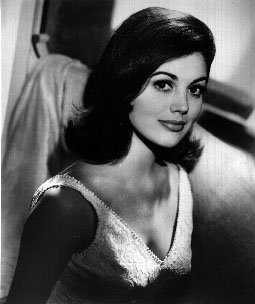
Linda Harrison
View on Wikipedia | This article's use of external links may not follow Wikipedia's policies or guidelines. (August 2023) |
Linda Melson Harrison (born July 26, 1945) is an American television and film actress. She played Nova in the science fiction film classic Planet of the Apes (1968) and the first sequel, Beneath the Planet of the Apes; she also had a cameo in Tim Burton's 2001 remake of the original. She was a regular cast member of the 1969–70 NBC television series Bracken's World. She was the second wife of film producer Richard D. Zanuck (Jaws, Cocoon, Driving Miss Daisy, Charlie and the Chocolate Factory); her youngest son is producer Dean Zanuck (Road to Perdition, Charlie and the Chocolate Factory).
Key Information


Early life and family
[edit]Linda Melson Harrison was born in Berlin, Maryland. She was the third of five daughters of Isaac Burbage Harrison, a nurseryman, and his wife, Ida Virginia Melson, a beautician. She was the middle child, with two older sisters, Kay and Gloria, and two younger sisters, Jane and Joan.[2][3] The Harrisons, like Linda's maternal Melson ancestors, had a long history in the Delmarva region. According to Ancestry.com, the Melson family were mid-17th century immigrants to Maryland from Melsonby St James in North Yorkshire. The Anglo-Welsh Harrisons had been resident for generations in West Kirby, Cheshire, when one Richard Harrison, son of another Richard Harrison, emigrated in the early 17th century from West Kirby to the New Haven Colony in what is now Connecticut, thence to Maryland. Richard's descendant, Harrison's paternal grandfather, Joseph G. Harrison, and Joseph's older brother, Orlando Harrison (Mayor of Berlin 1900–1910 and 1916–1918 and Maryland State Senator for Worcester County, 1916-1928), established J.G. Harrison & Sons Nurseries, which were, at one time, the largest fruit tree nursery business in America, employing some five hundred workers.[4] The former Harrison Laboratory at the University of Maryland, College Park campus, which Harrison attended briefly, was named for her paternal great-uncle, Senator Orlando Harrison.[5]
"I knew she'd be a star when she was only five," Ida Harrison told an interviewer in 1969.[6] Mrs Harrison, who described her middle daughter as "a little ham", enrolled her in ballet and acrobatics classes at age five.[2][3] By age six, Harrison was performing on stage, and liking it. She attended Berlin's Buckingham Elementary School, which her mother and all her sisters attended.[2] In 1956, when she was eleven, Harrison's acrobatic performance earned her first prize in the Delmarva Chicken Festival Talent Contest.[2][3] Six years later, at the same festival, Harrison won the "Miss Delmarva" beauty contest.[2][3][7] By the time she entered Berlin's Stephen Decatur High School, Harrison had become a skilled acrobatic dancer. Harrison also dreamed of becoming an actress and a star.
It was Harrison's plan to become an actress by entering and winning beauty contests, then travel to California to be seen and noticed.[8] When she was in her teens, Harrison worked summers as a waitress at Phillips Crab House in Ocean City, Maryland; she was dating the son of the restaurant's owners when she flew to California for the Miss America beauty contest.[8] From time to time, she appeared as a narrator on local TV programs carried on Baltimore TV station WMAR.[2] Harrison essayed her first dramatic role while attending Stephen Decatur High School, that of "Connie Fuller" in the senior class production of the 1940 Kaufman/Hart play George Washington Slept Here.[2] On Saturday, May 19, 1962, William Hockersmith crowned her Miss Berlin at the Miss Berlin Beauty Pageant, which was held at the high school.[9] A month later, Harrison represented her home town at the Delmarva Chicken Festival beauty contest.[7]
After graduating from high school, Harrison enrolled for a summer term at the University of Maryland, College Park, and a secretarial school in Baltimore, but found it uninspiring.[2] When her oldest sister, Kay, graduated from college and headed for New York, Harrison went with her, with $250 and their mother's credit card.[3] Several years later, Harrison would lament her "admittedly deficient formal education" to an interviewer, saying that she "missed a great deal because I didn't finish school."[10]
In New York, Kay and Linda shared an apartment and their mother Ida's credit card. Harrison scored some success as a model, but she disliked New York and was homesick for Maryland.[3] Less than a year later, she returned home; following her plan to become an actress by winning beauty contests, she entered the 1964 Miss Delmarva beauty pageant as Miss Berlin, and won.[7] Harrison followed her 1964 victory by entering the Miss Maryland beauty pageant, a preliminary event to the Miss America pageant, itself the final preliminary event to the Miss International contest, which would be held in Long Beach, California, in mid-June 1965. Harrison won the contest over nineteen other girls; that June, as Miss Maryland, she flew to California for the Miss America contest.[3] She thought the trip would last for two weeks; bidding farewell to her boyfriend, she scheduled her return home in two weeks, after she was crowned Miss America. But she was first-runner up, not the winner. Harrison was "devastated", and so deeply disappointed over losing that she wept backstage.[3]
Her striking good looks and hourglass figure, however, had gained the notice of Mike Medavoy, then an agent at the General Artist Corporation. "You ought to be in pictures," Medavoy told her.[11][12] In August 1965, Medavoy obtained a "personality test" for her at 20th Century Fox. No acting was involved; Harrison answered questions directed to her from off-camera, while speaking into the camera on various subjects. The test earned her Fox's standard 60-day option agreement, scheduled to expire in November 1965.[3][11] During her 60-day option period, Harrison studied with Fox acting coach, Pamela Danova.[2]
In October 1965, prior to the expiration of her option, Fox assigned Harrison as the date of studio attorney Harry E. Sokolov for the premiere of The Agony and the Ecstasy. She was selected as Sokolov's date because "Harry was from Baltimore."[8] Harrison was excited, because it was her first premiere, and because the film co-starred Charlton Heston, who had been her idol since she had seen Ben-Hur.[12][13] At the post-premiere party, which she attended with her studio-assigned date, Harrison was thrilled to meet her longtime idol, Heston, with whom she would soon co-star in Planet of the Apes. At the premiere, Harrison met Sokolov's boss, Fox's Vice President in Charge of Production Richard D. Zanuck. Zanuck, Harrison said later, was immediately "smitten" and fell "madly in love" with her, and she with him, and they began to date.[8] Harrison's acting career, as well as her life, became inextricably intertwined with their subsequent relationship.[14][12]
Career
[edit]Early roles
[edit]Right after meeting Zanuck, Harrison signed Fox's standard seven-year contract in November and was placed in the studio's Talent Training School. Although Harrison told interviewers that Zanuck had created the school so "he could keep an eye on me",[8] the school was actually a former Fox institution which Zanuck had revived to train aspiring, talented young actors and actresses under contract to Fox; besides Harrison, the student roster included Jacqueline Bisset, James Brolin, Tom Selleck and Edy Williams. Under coaches Pamela Danova and Curt Conway, Harrison attended drama classes, speech classes, fencing classes, dance and body movement classes, and lectures by veteran actors, actresses, directors, writers, publicity agents, and teachers. In addition to her strenuous round of classes, Harrison worked with a speech coach to eradicate her Eastern Maryland accent.[10]
Harrison's first assignment under her new Fox contract was as a "Biker Chick" in Men Against Evil, a TV pilot which became the TV series Felony Squad.[10] "I had three words, "Go, man, go!" I was all of 20, and dressed in this really racy motorcycle outfit. Those were my first words! This was still the era of stardom and premieres. When you were put under a studio contract, every minute of your life was so exciting, because you were doing something so unique and special."[11][13] (Three years later, Harrison co-starred as Felony Squad star Dennis Cole's love interest in the NBC TV series Bracken's World.) Harrison's next assignment was in the Batman TV series, where she appeared briefly as one of three high school cheerleaders in the episodes "The Joker Goes to School" and "He Meets His Match, The Grisly Ghoul", aired in early March 1966. To prepare Harrison for her few seconds onscreen, her Fox dance coach worked Harrison and her fellow cheerleaders early in the morning and on through the day.[11][12] Linda, a former high school cheerleader, complained, "You're going to use up all my energy, so when the shot comes, I won't have any." Her coach complained that "Linda Harrison gave me a hard time."[11][12][14] After the brief late afternoon shot, Harrison's overworked leg muscles failed on her way home, and Zanuck had to carry her upstairs to their Wilshire-Westwood apartment.[11][12][15]
All during this period, Dick was telling me about this fabulous book called Planet of the Apes and that it was going to make a great movie. He said, "I want you to play the ape, Dr. Zira."[14]
On March 8, 1966, immediately after her brief appearance on Batman, Harrison was filmed in ape makeup for a proposed film version of Pierre Boulle's satirical novel, Monkey Planet, later released as Planet of the Apes.[16] Zanuck had financed the test in order to show Fox's money men that, despite all doubts to the contrary, the Planet of the Apes project was feasible. The test, written by Rod Serling and directed by Franklin J. Schaffner, starred Harrison's idol, Charlton Heston, and Edward G. Robinson as Heston's nemesis, Dr. Zaius. Harrison appeared as Zira, the role ultimately played by Kim Hunter, while Harrison's Talent School classmate fellow contract actor, James Brolin, took on Roddy McDowall's role of Cornelius.[16][17]
I think they always had me in mind for Nova. But they needed someone to do the screen test, and you keep trying to employ your actors. So. I did the screen test. The part that was hard for me was actually doing the mask, where they put all that plaster on your face and you have to lie there still for a long time. Fortunately, I was an acrobat growing up, and a very very good one — I won a lot of contests — so I knew how to control my body and be 'quiet'. You had to do that, you had to be very still and lay there and be a 'good patient'. A young actor will do anything to get their mug on the screen![8][14] I remember that the makeup process took about three hours. I had to lay back and be perfectly still as they put this plaster mold on my face. After seeing the test, everyone was very enthusiastic about going ahead with making Planet of the Apes. But they felt the makeup needed a little more work and perfecting before it would look good on screen.[13]
Though the ape make-up test was considered successful, the studio rejected the project again.[16] Meanwhile, in May 1966, Harrison made her big screen debut as one of several "Treasure Hunters" in The Fat Spy. The low-budget comedy might have been forgotten had it not been mentioned in a 2004 documentary as one of The 50 Worst Movies Ever Made.[citation needed] Harrison's next big screen outing was in the Jerry Lewis comedy Way...Way Out; she played half of a husband-wife astronaut team on the verge of divorce.[2] She appeared early in the film, arguing furiously, in her still-uneradicated Down Eastern accent, with her onscreen husband and off-screen Talent School classmate, James Brolin, with whom she had appeared in the Planet of the Apes makeup test.
.JPG)
After Way...Way Out, Harrison appeared in a four-minute test segment entitled "Who's Afraid of Diana Prince?", created by Batman producer William Dozier, which was supposed to engender interest in a Wonder Woman pilot and an eventual TV series. Harrison played a glamorous mirror image of Wonder Woman, which existed only in the imagination of the homely Diana Prince character, played by Ellie Wood Walker (Robert Walker Jr.'s wife). The "Who's Afraid of Diana Prince?" segment failed to engender any interest in a Wonder Woman pilot, although Lynda Carter had great success in the role eight years later. Harrison next appeared as Carl Reiner's blonde-wigged young inamorata "Miss Stardust" in A Guide for the Married Man (1967),[2][18] a bedroom comedy about marital infidelity directed by Gene Kelly and starring Walter Matthau, Robert Morse and Inger Stevens. Harrison described her vignette with Carl Reiner as "fun" because it took her "all over the world. I was in limousines and on a donkey and on a camel." In addition to speaking one line of dialogue, she wore several costumes for her five-minute globe-trotting adventure, including an elaborate sequinned bikini, a diaphanous negligee, and a fiery red sarong.
Planet of the Apes
[edit]Producer Arthur P. Jacobs had first thought of former Bond girl Ursula Andress for Nova, and extensive auditions were held for the role, with one of the women tested being Angelique Pettyjohn, who had played a warrior in the Star Trek episode "The Gamesters of Triskelion".[19] Filming was to commence in May 1967, but as late as April 17 Charlton Heston noted in his diary, "The casting problem's really Nova: who will do it, and how naked can she be. The tests I saw were not good."[20] Zanuck eventually asked Jacobs and Mort Abrahams if they would test Harrison. "[Dick] did it very nicely," Abrahams said.
"He said, 'I'd like you to consider Linda.' Linda was in the acting school that was on the lot at that point and about four or five times a year the students did little scenes live on a soundstage and the producers and directors on the lot were invited to attend. So I'd seen her act and I said to Dick, 'We will be glad to meet with Linda,' and [director] Frank[lin Schaffner] and I would chat with her and talk about the part but that she would be treated like an actress, not as an affiliation with anybody else. And he said, 'That's the way it has to be.' And we did and we thought she was fine."[16]
In the 1998 AMC documentary Behind the Planet of the Apes,[21] Harrison said of her role as Nova, "I thought about animal instincts, the way [Nova] would move and the way she would react would be more the way an animal would react, more from fear. It seemed to be what the director wanted." After her test, Harrison was hired to play the role for which she would later be known. Harrison, Mort Abrahams said, was
"delighted to get it, because she'd only done little tiny bit parts in a couple of pictures before that. I was pleasantly surprised by her. She called me one day and asked if she could bring her sister along with her onto location. I said, 'Sure, of course, no problem.' And I was delighted because she was going out with the head of the studio. She could have been the biggest pain in the ass alive. And I would be in a terribly awkward position if she started with the limousines and the special means and whatever the hell it is—or complaining about whatever. But never a peep out of her. Most pleasant, most charming, very cooperative, very hard-working. She was always there half an hour before her call and she always stayed on for a half hour just in case. Interested in everything that went on, and was a total joy. I couldn't ask for a more cooperative actor."[16]
Planet of the Apes commenced filming on May 21, 1967 and ended August 10, 1967. The first scenes were shot on locations near Page, Arizona. Horseshoe Bend on the Colorado River stood in for the Forbidden Zone, through which Taylor, Zira, Cornelius, and Harrison's Nova fled after escaping from Ape City. Harrison, who had the company of her oldest sister Kay on location with her,[16] found working in the desert "beautiful", and marveled "how they move an entire production, like a little mini-town, and set up."[8]
"I don't know if people viewed me differently because I was Richard Zanuck's girlfriend.[16] I was so delighted and grateful to be in this picture that I probably never saw the negative side as much. I just didn't. I remember one piece of advice Dick gave me: He said, 'You go to work on time and listen to your director and do your job. And I don't want to hear any complaints about you!' I had to be even more careful and nice because I was his girlfriend."[22]

Heston noted in his diary on June 16, 1967 that "Linda H. has problems, but Frank's keeping her nearly immobile in her scenes, which works."[23] Harrison noted that as Heston knew it was her "first big picture", he took it upon himself to coach her. Harrison was admittedly still "camera-shy",[14] so Heston "taught me to favour the camera. Don't look right into it. Look off to the side, don't look too far, you know, not to turn my head this way. And he would say turn it just here. Don't go all the way back. And he held my hand for a lot of things."[24] Their off-screen relationship, Harrison said, tended to reflect their on-screen relationship.
"Heston had a quiet quality about him and was very courteous with me. He encouraged me to favor the camera. I was a newcomer in many ways – which may have helped my character. I'm sure Heston had his doubts about me; however, he never showed them. He treated me more like a child than an adult and not much was discussed between us, in character or out. When you idolize someone like I did, you tend to submit rather than assert yourself. Again, this worked in our roles and the relationship between us, as Taylor and Nova.[25] Heston was terrific to work with and so helpful and such a gentleman."[16]
As the "rookie" on the set, Harrison credited the help she received from the veteran actors: "Everybody that was involved in it, they all realized I was a neophyte, I was like 21 years old so they kind of took me under their wing, since I hadn't done acting that much."[21]
Kim Hunter recalled working with Harrison on the Planet of the Apes set:
"She was a lovely girl and so pretty, such a lovely figure and consumed with the work. I also remember her in relation to the Valium I used to take to relax because of the makeup. She asked what my strength was. It was five milligrams, or whatever, and she said, 'Oh, my God, that little? I never go to sleep without ten at least.' I do remember that conversation."[16]
At one point, it was decided that Nova was pregnant, and scenes were filmed around the Page locations revealing Nova's pregnancy. In the penultimate drafts of Planet of the Apes, Taylor was killed by the bullet of an ape sniper while Nova, pregnant with Taylor's child, escaped and vanished into the Forbidden Zone. Although Harrison believed it was Heston who rejected the idea of Nova's pregnancy, those scenes were deleted, according to screenwriter Michael Wilson, "at the insistence of a high-echelon Fox executive who found it distasteful. Why? I suppose that, if one defines the mute Nova as merely "humanoid" and not actually human, it would mean that Taylor had committed sodomy."[26] It was also decided that Nova's pregnancy would detract from the film's ending. In any case, all Harrison's scenes with Heston and Hunter in the sequence of Nova's pregnancy were cut. "There's probably a great deal of footage of it somewhere."[16]
After filming in the desert concluded, production moved to Malibu Creek State Park, northwest of Los Angeles, on Las Virgenes Road off Mulholland Highway, where the 20th Century Fox's Malibu Ranch was located.[16] Ape City was built on the ranch, and a field of corn grown, by which Heston first encounters Harrison. "It was stinking hot," Harrison recalled. "The scenes of us in cages were also shot at Ape City."[8] From the Malibu Ranch, production moved to the coast, where the penultimate scenes were shot between Malibu and Oxnard. The final scenes were filmed in a secluded cove between Zuma Beach and Point Dume on the far eastern end of Westward Beach. Harrison's Nova was the sole human witness to Taylor's outburst on the beach, after which she looks up and, in the film's iconic ending, sees the ruined Statue of Liberty, without comprehending why it has caused her mate's grief.
Harrison's favourite scenes were shot at the coast. She "thought that was kind of neat. And then jumping on his horse and riding with him and he turned around and I smiled. And we were going off to wherever – was out there. And that would have been a great way to start – well, they sort of started the next one that way."[27]
In later years, Harrison said she was conscious of the film's socio-political undertones:
"We were the flower children. We were the baby boomers. We were at war. We were changing and making transitions.[12] What was seeping through people's consciousness in that era was a fear of Russia and a fear of the bomb... It revealed what a lot of us were feeling but couldn't talk about, and that was the race issue."[28]
Planet of the Apes premiered in February 1968. The film was a hit upon its release, as well as a critical and commercial success. In the opening credits, Harrison was billed under the tag "introducing Linda Harrison"; although she had appeared in three previous films. Zanuck wanted to draw attention to Harrison because he felt the role would catapult her to stardom.[25] Harrison impressed audiences with her hourglass figure, long dark hair, and large brown eyes, which, in the absence of spoken dialogue, did most of her acting, though some critics were unimpressed. Renata Adler of the New York Times dismissed Harrison as “Heston's Neanderthal flower girl. She wiggles her hips when she wants to say something."[29] The success of Planet of the Apes spawned four sequels, an animated cartoon series, a live-action TV series, a remake by Tim Burton, and a reboot that spawned four films. Heston and Harrison appeared in the first sequel, Beneath the Planet of the Apes. Three decades later, Harrison had a brief cameo in the 2001 reboot, which also featured Heston.
On August 27, 1998, the Academy of Motion Picture Arts and Sciences presented a 30th anniversary screening of Planet of the Apes. Harrison attended, along with Heston, Kim Hunter, Roddy McDowell and John Chambers.[17] The film was also an inductee of the 2001 National Film Registry list.[30]
Beneath the Planet of the Apes
[edit]Linda Harrison's second outing in her most famous role was in the first sequel to Planet of the Apes. She admitted "it wasn't as good as the first",[8] saying that the original "had a top director and cinematographer. You couldn't beat Franklin J. Schaffner. In the second film we made it for less."[12]


.jpg)
No sequels had been contemplated at the time of the production of Planet of the Apes; it was only during that film's success that a sequel was discussed.[26] Neither Charlton Heston nor Kim Hunter wanted to do another Apes film;[16] Roddy McDowall pleaded another commitment; and Harrison herself was ambivalent. She was engaged to her mentor, Richard Zanuck and "no longer totally concerned with being an actress. I don't even want to do another picture. But since this is a sequel to the one I did last year, I felt obligated.[31] "Ted Post was a wonderful television director,"[8] Harrison said, "fabulous to work with, an actor's dream. I could get away with murder with him."[12]
Although her role as Nova was expanded,[8] the sequel was a disappointing rush to production to capitalize on the original. Harrison's character eked out one word before she was shot to death, but nothing fresh was added. The budget was half that of Planet of the Apes.[32] Director Ted Post said, "It moved basically as an entertainment piece, nothing more." Post wanted the script rewritten. "I was very unhappy with the script, and I thought the script was far from what it should have been.[16] The story was unclear, and didn't measure up." On his first reading of the script for Beneath the Planet of the Apes, star James Franciscus phoned Charlton Heston. "Jesus Christ, Chuck," he said, "have you read this piece of crap?"[16][26]
Post knew Harrison's role was difficult to do anything with.
"Linda was a wonderfully cooperative young lady that needed direction. Had no technique and no real acting experience. She was engaged to marry Dick Zanuck. So in Planet of the Apes they put her in with Frank Schaffner, then in mine, they underwrote her. They had nothing for her to do in this one, except just be part of the sequel. In other words, she was so badly conceived in the writing that I had to conceive actions for her to make her belong to the piece. And the big action which I gave her – and I think she came off beautifully with it – was to try to understand what these people were trying to communicate to her. And struggling to understand and feeling sympathetic vibrations coming from these people. So I gave her something which was not in the script to play and she played that, I think, very simpatico, very beautifully."[8]
Harrison's co-star, James Franciscus, remembered her fondly:
"Linda was a joy to work with. I remember we were doing a tracking shot, a camera car on tracks running about one hundred yards down this field. Linda and I were on this horse with no saddle, no reins, just the mane. If anybody fell, that camera truck is there to roll under. It was a very dodgey scene. You're galloping through gopher holes, etc. And they got the mares down at the far end. The stallion getting ready to go is smelling the mares and he's running like a bat out of hell and Linda's behind me saying, 'I'm very nervous about this horse.' And I said, 'Join the club. Just hang on and if you feel you can't do it, just don't do it. It's risky. There's no question about it, it's not a safe shot. What a horse is going to do, no one can tell.' But she was courageous, foolhardy or not, maybe me, too. She went ahead and we did it. I recall afterwards Loren Janes, my stunt man, came up and said, 'You're crazy. I wouldn't have done that. It's too dangerous.' And he's probably right. I thought it was very foolish to have done it. Anyway, Linda was a gutsy little gal and she did it. So she was very pleasant to work with and very nice."[16]
Harrison recalled "having a lot of fun on the second Apes film":
"It was Ted Post and it was more relaxed. I remember running down this hill and getting up so much speed that one of these fabulous makeup men – big guy, burly chest – had to step in and stop me. Otherwise, I would have tumbled, God knows where. It was a very arduous picture, physically, with those horses and everything, but we just got in there and did our jobs."[8]
Bracken's World and wrongful termination suits
[edit]
While filming Beneath the Planet of the Apes, Harrison was cast as one of a trio of starlets in the Fox-produced NBC TV series Bracken's World. It was, she said, "a series Dick [Zanuck]) for a long time had wanted to do. So I got that part and I had to finish Beneath and go right into the pilot..."[14] She played Paulette Douglas, a naive young woman and aspiring actress, who tried to balance studio pressures with her romance with a studio stuntman (Harrison's Felony Squad co-star Dennis Cole). The series also starred Emmy Award-winning actress Jeanne Cooper as Douglas's pushy mother. Harrison began filming the day after she finished her work on Beneath the Planet of the Apes. "And I had to start remembering lines! Silence may be golden," she told an interviewer in October 1969, "but no one knows how happy I am to be off the gold standard."[6]
Harrison was noted as "one of the most refreshing young faces to light up TV screens this new season."[6] Fox publicists issued press releases glossing over Harrison's deficient education and claiming for her a passion for Shakespeare, Voltaire, and Aristotle which she never possessed.[10] Midway through its second season, Bracken's World was cancelled. Harrison said later that the studio wanted recognizable stars every week, instead of allowing the regular cast to grow as an ensemble, as was the case with shows such as Star Trek. "Had they done it like a continuing drama and focused on the regular characters, it would have lasted longer," she said. "NBC, however, wanted a one-hour contained show, so they would stock each episode with a big guest star. After a while, you run out of story."[13]
After Bracken's World was cancelled, Harrison was caught in the 20th Century Fox proxy shareholder war that began in December 1970. Harrison's husband, Richard Zanuck, was one of the majority shareholders of the company with his father, studio head Darryl Zanuck, and his mother, actress Virginia Fox, then the estranged wife of Darryl. The proxy battle pitched Harrison's husband and mother-in-law against her father-in-law, after the studio had posted losses in consecutive years. In the course of the struggle, then-studio chief Darryl fired his son. Harrison's contract was abruptly terminated in November 1970.[33] The reason given was that her presence might prove "embarrassing" to the studio.[34] Harrison, who was by then pregnant with her first son, later sued for wrongful termination, breach of contract, alleged defamation, and infliction of emotional distress. Harrison was named in the $22 million lawsuit her husband filed November 1, 1971, against Darryl, Fox, the studio chairman and CEO Dennis C. Stanfill, and Fox Executive Committee chairman William T. Gossett. In his suit Zanuck contended that he, Harrison, and former Fox executive David Brown had been wrongly terminated and subjected to humiliation and embarrassment.[35][15][36] The suit was settled out of court. The terms and amounts of Harrison's settlements were never disclosed.
Films and television: 1974–1988
[edit]In 1974, after a sabbatical of several years, Harrison attempted to return to her career. She desperately wanted the role of Roy Scheider's wife in Jaws, and urged her husband to give it to her. Zanuck asked director Steven Spielberg if he would consider Harrison, but Spielberg preferred actress Lorraine Gary, whom he had seen in a TV movie, The Marcus Nelson Murders, and cast her instead of Harrison "because she was right for the part."[37][38] Harrison was upset over Spielberg's preference for Gary, feeling that her husband should have gotten her the part. "I really wanted Dick to go to bat for me this one time." As a consolation, Universal chief Sid Sheinberg, Lorraine Gary's husband, got Harrison a part in Airport 1975 as Gloria Swanson's personal assistant, Winnie.[39] Though the movie starred Harrison's long-time idol, Charlton Heston, Harrison had no scenes with him, and "would have much rather had Jaws on my resume."[40] Years later, in an April 2012 interview, Harrison offered a reason she had lost the role because "They said Roy Scheider couldn't get a girl as beautiful as me."[12]
Despite her disappointment over losing the coveted Jaws role, Harrison was fascinated by Gloria Swanson, and spent hours with her on sets between takes. "She took a special liking to me. She really went on about the sex she had with Joe Kennedy. There wasn't anything she wouldn't say. He was going to marry her, but he couldn't leave Rose and the children, he was a wonderful lover, and she'd detail it."[41] Airport 1975 was the first time Harrison appeared under the name "Augusta Summerland", which her guru had chosen for her.
After Airport 1975, Harrison guest-starred on several TV shows. As "Augusta Summerland", she appeared on Barnaby Jones in episode #67 "The Alpha-Bravo War" (air date: October 24, 1975); on Switch in episode #24 "Death Squad" (air date: April 6, 1976); and again on Barnaby Jones in episode #114 "The Damocles Gun" (air date: October 20, 1977). In the 1980s, Harrison resumed studying acting and enrolled in an acting school. When the school held a showcase presentation of its students' work, Harrison invited her by-then ex-husband and his third wife, Lili Fini Zanuck. The Zanucks needed a middle-aged actress to play Barrett Oliver's mother in their upcoming production of Cocoon; after viewing Harrison's scenes, they told her there might be a part for her. "So I had an interview with Ron Howard and he said 'You got the part.'"[12] Harrison reprised her role as Susan in the 1988 sequel, Cocoon: The Return, which failed to achieve the commercial and critical success of its predecessor.
Later work: 1990 to 2015
[edit]
In 1990, Harrison moved back home to Berlin, where she opened a consignment shop which she named "Harrison's Peach Tree" half a mile from the house where she was born and raised. Several years later, wanting to be closer to her sons, she returned to Los Angeles and obtained a real estate license, like her eldest sister, Kay. In 1995, she landed a small part as the "Madam" in Wild Bill. In 1998, she appeared as herself in the Kevin Burns TV documentary Behind the Planet of the Apes about the making of the first five Planet of the Apes films. In October 1998, Harrison attended her first science fiction convention in New Jersey. Also in attendance were Jonathan Harris, Marta Kristen, Mark Goddard and Angela Cartwright, of the original Lost in Space TV series; Lou Ferrigno of The Incredible Hulk TV series; and Bela Lugosi Jr. and Sara Karloff. Harrison found it "rewarding when you really haven't done anything for a number of years and then, all of a sudden, people want your autograph. It was very gratifying." Eventually, Harrison became an institution at Planet of the Apes cons. "I like it. It's very good. You're being appreciated for your work."[11] In 2001, she had a cameo as the "Woman in Cart" in Tim Burton's remake of Planet of the Apes. "They are much more brutal in the new movie," she said. "And strong. They literally hurl the humans 50 or 60 feet."[42] Most of the footage Harrison shot was omitted from the final, so "if you blink you miss me. They showed my shots all over the place, but it got cut out."[12]
In 2013, Harrison began filming Midnight Massacre, on which she served as executive producer and co-star. The post-apocalyptic thriller, set in the near future, is loosely based on Shakespeare's Julius Caesar.[43] The film's final release date was December 15, 2023.
Awards
[edit]In 2008, the 40th anniversary of the release of Planet of the Apes, Harrison traveled to Catalonia, Spain, where on October 11, she was awarded the Maria Honorifica at the Festival Internacional de Cinema Fantàstic de Catalunya in recognition of her career.[44][45]
Filmography
[edit]Films
[edit]| Year | Film | Director | Role |
|---|---|---|---|
| 1966 | The Fat Spy | Joseph Cates | Treasure Hunter |
| Way...Way Out | Gordon Douglas | Peggy | |
| 1967 | A Guide for the Married Man | Gene Kelly | Miss Stardust |
| 1968 | Planet of the Apes | Franklin J. Schaffner | Nova |
| 1970 | Beneath the Planet of the Apes | Ted Post | Nova |
| 1974 | Airport 1975 | Jack Smight | Winnie (credited as "Augusta Summerland") |
| 1985 | Cocoon | Ron Howard | Susan |
| 1988 | Cocoon: The Return | Daniel Petrie | Susan |
| 1995 | Wild Bill | Walter Hill | Madam |
| 2001 | Planet of the Apes | Tim Burton | Woman in Cart |
| 2022[46] | Midnight Massacre | Travis Bowen (lead director) |
Quinia Brutus |
Television
[edit]| Year | Show | Episode | Role |
|---|---|---|---|
| 1966 | Men Against Evil | Pilot | Biker Chick |
| Batman | The Joker Goes to School | Cheerleader II | |
| He Meets His Match, The Grisly Ghoul | |||
| 1967 | Wonder Woman: Who's Afraid of Diana Prince? | Short | Wonder Woman – Reflection (uncredited) |
| 1969 | The Tonight Show Starring Johnny Carson | Wednesday, November 19, 1969 | Herself |
| 1969–1970 | Bracken's World | 41 episodes | Paulette Douglas |
| 1975 | Barnaby Jones | "The Alpha Bravo War" | Dori Calder (credited as "Augusta Summerland") |
| 1976 | Switch | Death Squad | Jill Martin (credited as "Augusta Summerland") |
| 1977 | Barnaby Jones | The Damocles Gun | Jan Redbow (credited as "Augusta Summerland") |
| 1998 | Behind the Planet of the Apes | TV documentary | Herself |
| 2014 | Inside Edition | Episode #25.221 | Herself |
References
[edit]- ^ Strodder, Chris; Phillips, Michelle (March 1, 2007). The Encyclopedia of Sixties Cool. Santa Monica Press. p. 166. ISBN 978-1-59580-017-6.
- ^ a b c d e f g h i j k Daytona Beach Morning Journal. Linda Made It Big Her First Time, July 25, 1970, p 29
- ^ a b c d e f g h i Crockett, Sandra (February 23, 1992). "A Cinderella Homecoming: From Berlin to Hollywood to the Eastern Shore Again". The Baltimore Sun. Retrieved September 27, 2021.
- ^ The National Nurseryman Vol. 30, National Nurserymen Pub. Co. (1922), ISBN 9781286363812, pp 164, 339
- ^ "Harrison Laboratory, Facilities Management, University of Maryland". Retrieved September 27, 2021.
- ^ a b c Heffernan, Harold. New Starlet Wants Most To Marry, Raise Family Monday October 13, 1969, The Pittsburgh Press, p 46
- ^ a b c The Salisbury Times, June 14, 1962, p 1
- ^ a b c d e f g h i j k l m Weaver, Tom (2004). It Came from Horrorwood: Interviews with Moviemakers in the Science Fiction and Horror Tradition. Jefferson, NC: McFarland & Co, Inc. pp. 161–166, 168. ISBN 0786420693.
- ^ The Salisbury Times, May 19, 1962, p 11
- ^ a b c d Lewis, Richard Warren. In Bracken's World Live Beautiful People, Including... TV Guide Magazine, February 14, 1970, pp 28–30
- ^ a b c d e f g "Linda Harrison Interview". Forbidden Zone: Planet of the Apes. Retrieved August 31, 2014.
- ^ a b c d e f g h i j k l Tweedle, Sam. (April 2012) Nova Speaks: A Conversation with Linda Harrison
- ^ a b c d Lisanti, Tom (2001). Fantasy Femmes of 60's Cinema: Interviews with 20 Actresses from Biker, Beach, and Elvis Movies. Jefferson, NC: McFarland & Company, Inc. pp. 260, 263, 265. ISBN 0786408685.
- ^ a b c d e f Woman of the Apes: Interview with Linda Harrison, Starlog(USA), April 1995, Issue 213, pp 57–60
- ^ a b Harris, Marlys J. (1989). The Zanucks of Hollywood: The Dark Legacy of an American Dynasty. New York: Crown Publishers, Inc. pp. 118–119, 121–123, 129, 135, 146, 163, 199–200, 212, 220–223, 261–262, 269. ISBN 0-517-57020-3.
- ^ a b c d e f g h i j k l m n o Russo, Joe; Landsman, Larry; Gross, Edward (2001). Planet of the Apes Revisited: The Behind-the-Scenes Story of the Classic Science Fiction Saga. New York, NY: St. Martin's Press. ISBN 0-312-25239-0. pp 26–27, 28, 30, 31, 58–59, 68, 78, 124, 129
- ^ a b Hofstede, David (June 2001). Planet of the Apes: An Unofficial Companion. ECW Press. pp. 9, 98. ISBN 1550224468.
- ^ Vernon Scott. "Linda Harrison Has Really Got It Made", Schenectady Gazette, Tuesday July 2, 1970
- ^ Hofstede, David (2001). Planet Of The Apes: An Unofficial Companion. ECW Press. p. 8. ISBN 1550224468.
- ^ Heston, Charlton (1978). The Actor's Life: Journals, 1956–1976. New York, NY: E.P. Dutton. ISBN 055305743X.
- ^ a b Behind the Planet of the Apes
- ^ Weaver, pp 165–166
- ^ Heston, Actor's Life, p 274
- ^ Collins, John N and Scott, Lesley. Linda Harrison Interview (Part 3) January 23, 2014
- ^ a b Lisanti, p 265
- ^ a b c Winogura, Dale (Summer 1972). "Planet of the Apes Issue" (PDF). Cinefantastique. Retrieved August 31, 2014.
- ^ Collins, John N and Scott, Lesley. Linda Harrison Interview (Part 2) January 23, 2014
- ^ Pendreigh, Brian. The Legend of the Planet of the Apes, reprinted in Night & Day (2001)
- ^ Adler, Renata (February 9, 1968). "Planet of the Apes". The New York Times Company. The New York Times. Retrieved August 31, 2014.
- ^ "Complete National Film Registry Listing | Film Registry | National Film Preservation Board | Programs | Library of Congress". Library of Congress.
- ^ Heffernan, Harold. Starlet His Choice: Younger Zanuck Marrying Again The Pittsburg Press, 3 July 1969, p 19
- ^ Charles P. Mitchell, A Guide to Apocalyptic Cinema, p 21
- ^ Archerd, Army (December 31, 1970). "Just For Variety". Daily Variety. p. 2.
- ^ Farber, Stephen; Green, Marc (July 1984). Hollywood Dynasties: DFZ and The Dauphin. Putnam Pub Group (T). ISBN 0887150004.
- ^ Lisanti, Tom (2001). Fantasy Femmes of Sixties Cinema. McFarlane Books. pp. 267–8. ISBN 0786461012.
- ^ The Dispatch, Son Against Father in Big Movie Lawsuit, November 2, 1971, p 2
- ^ Nixon, Rob. "The Big Idea Behind Jaws".
- ^ Mell, Ella (January 2005). Casting Might-Have-Beens: A Film-by-Film Directory of Actors Considered For Roles Given To Others. Mcfarland & Co Inc. p. 133. ISBN 0786420170.
- ^ Fischer, Dennis (July 1, 2000). Science Fiction Film Directors, 1895–1998. McFarland & Company. p. 551. ISBN 0786407409.
- ^ Terrill, Marshall. "Interview with Linda Harrison 9/8/98" (PDF). Ape Chronicles: The International Planet of the Apes Fan Club. Terry Hoknes. Retrieved April 15, 2013.
- ^ Shearer, Stephen Michael (August 27, 2013). Gloria Swanson: The Ultimate Star. New York, NY: Thomas Dunne Books. p. 387. ISBN 978-1250001559.
- ^ Secrets Behind the New Planet of the Apes, The Forbidden Zone, May–June 2001
- ^ "Camera's Roll on Linda Harrison for the first time since Tim Burton's Planet of the Apes". November 24, 2013.
- ^ Linda Harrison and Luis Miñarro receive the Honorary María Award
- ^ Festival de Sitges: premio a Linda Harrison Archived April 2, 2015, at the Wayback Machine
- ^ "News". Eerie Frequency Entreteniment. Archived from the original on August 8, 2022.
External links
[edit]
- Linda Harrison at IMDb
- Interview with Linda Harrison (Part 1), (Part 2), (Part 3) (2014)
- Nova Speaks: A Conversation with Linda Harrison (2012)
- Linda Harrison Tribute (2009)
- Festival de Sitges: premio a Linda Harrison (2008)
- The Linda Harrison Interview (2003)
- Meet Actress Linda Harrison (1999)
- Linda Harrison Interview (1998)
- Interview with Linda Harrison (1998)
- Woman of the Apes (1994)
- A Cinderella Homecoming: From Berlin to Hollywood to the Eastern Shore Again (1992)
- Cult Sirens: Linda Harrison
- Glamour Girls of the Silver Screen: Linda Harrison
Further reading
[edit]- Harris, Marlys J. (1989). The Zanucks of Hollywood: The Dark Legacy of an American Dynasty. Crown. ISBN 0517570203.
- Heston, Charlton (1978). The Actor's Life: Journals, 1956–1976. New York, NY: E.P. Dutton. ISBN 9780525050308.
- Hofstede, David (2001). Planet of the Apes: An Unofficial Companion. ECW Press. ISBN 1550224468.
- Lisanti, Tom (2001). Fantasy Femmes of Sixties Cinema: Interviews with 20 Actresses from Biker, Beach, and Elvis Movies. McFarland & Company. ISBN 0786408685.
- Russo, Joe; Landsman, Larry; Gross, Edward (2001). Planet of the Apes Revisited: The Behind-the-scenes Story of the Classic Science Fiction Saga. St. Martin's Griffin. ISBN 0312252390.
- Silverman, Stephen M. (1988). The Fox That Got Away: The Last Days of the Zanuck Dynasty at Twentieth Century-Fox. Lyle Stuart. ISBN 081840485X.
- Strodder, Chris; Phillips, Michelle (2007). The Encyclopedia of Sixties Cool: A Celebration of the Grooviest People, Events, and Artifacts of the 1960s. Santa Monica Press. ISBN 978-1595800176.
- Weaver, Tom (2004). It Came from Horrorwood: Interviews with Moviemakers in the SF and Horror Tradition. McFarland. ISBN 0786420693.
| International | |
|---|---|
| National | |
| Artists | |
| People | |
| Other | |

Linda Harrison
View on GrokipediaEarly life and education
Family background
Linda Melson Harrison was born on July 26, 1945, in Berlin, Maryland.[5] She was the third of five daughters in her family.[6] Her father, Isaac Burbage Harrison, operated J.G. Harrison & Sons Nurseries, a prominent local business founded by her grandfather and great-uncle that specialized in fruit trees and once employed up to 500 workers, providing the family with a stable yet labor-intensive foundation.[6][7] Her mother, Ida Virginia Melson Harrison, worked as a beautician while managing homemaking duties for the large household.[6] This rural, working-class environment on the Delmarva Peninsula shaped a close-knit family dynamic centered around community and nature.[6] Harrison's sisters included older siblings Kay and Gloria, as well as younger sisters Jane and Joan, contributing to a lively home filled with sibling interactions and shared responsibilities in the nursery operations.[6] The parental emphasis on hard work and local roots instilled in her an appreciation for perseverance from an early age.[6]Education and early interests
Linda Harrison attended Stephen Decatur High School in Berlin, Maryland, where she developed her early talents in performance arts. During her high school years, she participated in school plays, including a lead role in the senior class production of George Washington Slept Here in 1963, showcasing her dramatic abilities. She graduated from the school that same year.[3][8] In 1963, Harrison won the title of Miss Berlin, marking her initial foray into public performance and modeling. Encouraged by her family's support, particularly her mother's enrollment of her in ballet and acrobatics classes from a young age, she pursued further opportunities in the entertainment field. Following her sister's path, she briefly modeled in New York's Garment Center, but homesickness soon prompted her return to Maryland, where she continued building her aspirations through additional pageant successes, such as Miss Del-Mar-Va.[9][8][10] Her childhood unfolded against the backdrop of her family's Harrison & Sons Nurseries, a prominent fruit tree business in Berlin that provided a stable, rural environment fostering her early interests in the arts.[10][8]Personal life
Marriages and relationships
Linda Harrison began her romantic relationship with Richard D. Zanuck, then vice president of production at 20th Century Fox, following a screen test in 1965, during the early stages of her studio contract as a starlet.[11] Zanuck was immediately drawn to her fresh appeal and their personalities aligned, leading to a four-year courtship that blended personal and professional spheres.[11] The couple married on October 26, 1969, in a ceremony on the balcony of the Sands Hotel in Las Vegas, with Harrison at age 24.[12] Their union lasted nearly a decade, ending in divorce in 1978.[13] As a high-profile studio executive, Zanuck's influence significantly shaped Harrison's career trajectory, securing her a seven-year contract at Fox and opening doors to prominent roles without the need for an agent, including her casting as Nova in the Planet of the Apes series.[11]Children and family
Linda Harrison and her former husband Richard D. Zanuck welcomed two sons during their marriage: Harrison Zanuck, born on February 23, 1971, in Los Angeles, and Dean Zanuck, born on August 11, 1972, also in Los Angeles.[14][15] Both sons followed their parents into the film industry, with Harrison working as a visual effects coordinator on projects like Deep Impact (1998) and as a producer on films such as The Zero Theorem (2013), while Dean advanced to producing roles, including co-producer on Road to Perdition (2002) and production executive on Charlie and the Chocolate Factory (2005), thereby extending the Zanuck family's longstanding Hollywood legacy.[14][16] Following her 1978 divorce from Zanuck, Harrison stepped away from acting for several years to prioritize raising her young sons, fostering a stable family environment while maintaining an amicable co-parenting relationship with her ex-husband that emphasized their children's well-being.[17] She balanced this maternal focus by resuming selective acting and producing work in the 1980s, such as her role in Cocoon (1985), which was produced by Zanuck, allowing her to support her family's involvement in the industry without overshadowing her parental responsibilities.[17]Career
Early career and breakthrough roles
After competing as first runner-up in the Miss America pageant in Long Beach, California, in July 1965, Harrison relocated to Los Angeles to launch an acting career, building on her prior experience as a model in New York's Garment District.[3] In August 1965, she completed a personality screen test at 20th Century Fox, which led to her signing a seven-year contract with the studio in November 1965 as part of its talent program.[3] Harrison made her acting debut in the unsold television pilot Men Against Evil (1966), portraying a biker chick in a story that later inspired the series Felony Squad.[18] She followed this with supporting roles in feature films, including Peggy, one of the astronauts' wives, in the science fiction comedy Way... Way Out (1966), directed by Gordon Douglas and starring Jerry Lewis. The next year, she appeared as Miss Stardust, a beauty contest winner, in the romantic comedy A Guide for the Married Man (1967), directed by Gene Kelly and featuring Walter Matthau.[19] These early screen credits were complemented by guest spots on popular television series, such as playing a cheerleader in the Batman episode "The Joker Goes to School" (1966). She also made an appearance on The Monkees (1967), further establishing her presence in Hollywood and transitioning from beauty pageants to professional acting roles.[3]Planet of the Apes series
Linda Harrison was cast as the mute primitive human Nova in the 1968 science fiction film Planet of the Apes, directed by Franklin J. Schaffner and starring Charlton Heston as astronaut George Taylor.[20][21] Her selection came without a formal audition, as 20th Century Fox executive Richard Zanuck, whom she was dating at the time, deemed her physical appearance ideal for the role, leading to her signing a seven-year studio contract in 1965 that facilitated such opportunities.[22][21] Harrison prepared by serving as a model for the film's groundbreaking makeup designs by John Chambers, enduring a three-hour plaster mold process to test human-ape contrasts before production began.[22] For the character's minimal dialogue—limited to a single word, "Taylor," at the film's emotional climax—she drew on animalistic instincts and non-verbal cues, guided by Heston's on-set mentorship in camera techniques and avoiding the source novel per Zanuck's advice to focus solely on the screenplay.[17][22] Harrison reprised her role as Nova in the 1970 sequel Beneath the Planet of the Apes, directed by Ted Post, where the character accompanies Taylor deeper into the Forbidden Zone and encounters astronaut Brent, played by James Franciscus.[21][23] Key scenes highlight Nova's silent guidance, such as leading Brent to observe the ape society's militaristic assembly and later revealing the subterranean mutant human cult worshiping an atomic bomb, underscoring her role as a bridge between the primitive surface world and the film's escalating horrors.[23][24] The narrative culminates in an apocalyptic ending, with Nova and Brent witnessing Taylor's death before the doomsday device detonates, symbolizing humanity's self-destruction and leaving Nova as a survivor amid the ruins.[22] A planned scene depicting Nova as pregnant with Taylor's child was filmed but ultimately cut from the final release.[17] Harrison maintained her connection to the franchise with a brief cameo as a human slave in a cage wagon in Tim Burton's 2001 remake Planet of the Apes, appearing alongside Heston, who portrayed the orangutan Thade, in a nod to her original contributions.[21][25] In the scene, her character attempts to restrain the protagonist Leo Davidson from provoking their ape captors during transport to Ape City, embodying the enduring human subjugation theme from the series.[26] This appearance marked her fourth collaboration with Heston, reinforcing her iconic status within the Planet of the Apes legacy.[21]Bracken's World and legal issues
In 1969, Linda Harrison was cast as Paulette Douglas, a shy and ambitious aspiring actress under contract at the fictional Century Studios talent agency, in the NBC drama series Bracken's World. The program, produced by 20th Century Fox Television, explored the professional and personal challenges faced by actors, agents, and executives in Hollywood, with Harrison appearing alongside co-stars including Elizabeth Allen, Peter Haskell, and Laraine Stephens.[27][28] The series premiered on September 26, 1969, and ran for a single season of 41 episodes until its cancellation in early 1970 due to low ratings in the competitive Friday night slot. Harrison's role as Paulette, the daughter of an overbearing mother played by Jeanne Cooper, highlighted themes of nepotism and personal sacrifice in the entertainment industry. Her involvement overlapped briefly with the production schedule for Beneath the Planet of the Apes, though no major conflicts were reported.[8] Following the series' end, Harrison's seven-year studio contract with 20th Century Fox was abruptly terminated in November 1970, amid broader corporate turmoil including the ouster of studio president Richard D. Zanuck, with whom she was romantically involved. The studio cited alleged breaches related to her commitments, but Harrison contested this as unjustified. Pregnant with her first child at the time, she joined Zanuck and former Fox executive David W. Brown in filing a $22.2 million lawsuit against 20th Century Fox, its chairman Darryl F. Zanuck, CEO Dennis C. Stanfill, and others on November 1, 1971.[2][8] Her portion of the suit sought $282,000 for wrongful termination, humiliation, breach of contract, defamation, and intentional infliction of emotional distress, alleging that studio executives had planted defamatory stories in the press to damage her reputation.[29] The high-profile litigation, part of a larger proxy battle for control of the studio, strained Harrison's professional standing at Fox and within the industry, effectively halting her momentum as a leading actress. The case was settled out of court in 1972, with terms including an acknowledgment of wrongful termination but no public disclosure of the financial resolution. This resolution ended her exclusive Fox contract but marked a pivotal shift, as Harrison stepped back from acting to prioritize family life following the birth of her son.[30][2]Mid-career films and television (1970s–1980s)
Following the resolution of her legal disputes from the early 1970s, Linda Harrison resumed her acting career with a focus on supporting roles in films and guest appearances on television, often under the pseudonym Augusta Summerland to distance herself from prior associations. In 1974, she portrayed Winnie, the personal assistant to Gloria Swanson's character in the disaster film Airport 1975, directed by Jack Smight. This ensemble production, which grossed over $47 million at the box office, featured a star-studded cast including Charlton Heston as the airline captain and Karen Black as a flight attendant, depicting a mid-air collision that strands passengers on a crippled jetliner. Harrison's role highlighted her ability to contribute to high-stakes dramatic scenes amid the film's tense aviation crisis narrative.[31] Throughout the mid-1970s, Harrison made several guest appearances on popular television series, showcasing her versatility in crime and drama genres. She appeared as Jan Redbow in the Barnaby Jones episode "The Alpha-Bravo War" (1975), investigating sabotage and murder within a corporate rivalry, and later as Dori Calder in "The Damocles Gun" (1977), involving a hit-and-run mystery. Additionally, in 1976, she guest-starred as Jill in the Switch episode "Death Squad," a procedural drama centered on undercover operations against a criminal syndicate. These roles, typically involving intricate plotlines of deception and justice, allowed Harrison to engage with established ensemble casts like Buddy Ebsen in Barnaby Jones and Robert Wagner in Switch, reflecting her continued presence in episodic television during a period of selective projects.[32][33] Harrison's mid-career work culminated in the science fiction comedy Cocoon (1985), produced by her then-husband Richard D. Zanuck and directed by Ron Howard, where she played Susan, the adult daughter of one of the rejuvenated senior protagonists played by Don Ameche. The film, which earned Academy Awards for Best Supporting Actor (Don Ameche) and Best Visual Effects and grossed $76 million domestically, explored themes of aging, extraterrestrial intervention, and second chances through its story of elderly friends discovering alien pods in a pool. Harrison reprised the role of Susan in the sequel Cocoon: The Return (1988), directed by Daniel Petrie, as the characters return to Earth; though the film received mixed reviews and underperformed commercially with $39 million in earnings, it marked her return to genre filmmaking reminiscent of her Planet of the Apes era.[34]Later acting and producing work (1990s–present)
Following her prominent roles in the 1970s and 1980s, Linda Harrison largely stepped back from acting in the 1990s, embracing a period of semi-retirement focused on family life while taking on only sporadic minor appearances.[1] In 1995, she portrayed the Madam in the Western film Wild Bill, a small supporting role in the Walter Hill-directed picture starring Jeff Bridges. Three years later, in 1998, Harrison appeared as herself in the television documentary Behind the Planet of the Apes, reflecting on her iconic work in the franchise. During this time, she shifted emphasis toward behind-the-scenes contributions, influenced by her family's deep ties to the film industry; her sons, Harrison Zanuck and Dean Zanuck, both pursued successful producing careers, with Dean earning credits on major films like Road to Perdition (2002). This legacy underscored Harrison's transition from performer to supporter of production endeavors.[8] Harrison's return to more substantial involvement came in the 2010s and beyond, marked by selective projects that blended acting with producing and directing. In 2023, she took on the minor role of Charlene Proube in the black comedy thriller The Kill Room, directed by Nicol Paone and starring Uma Thurman. Her most notable recent effort is Midnight Massacre (2025), a post-apocalyptic thriller reimagining Shakespeare's Julius Caesar in a dystopian setting after World War III. Filming began in 2013, during which Harrison served as executive producer, co-director alongside Travis Bowen, Byron Cherry, and Don Pedro Colley, and lead actress in the role of Quinia Brutus, a key figure in the outlaw terrorist organization.[4] The film premiered on October 25, 2025, at Movies 8 in Boardman, Ohio, marking a significant creative milestone in her later career.[35]Recognition
Awards and honors
In 2008, Linda Harrison was awarded the Maria Honorifica at the 41st Festival Internacional de Cinema Fantàstic de Catalunya (Sitges Film Festival) in recognition of her contributions to science fiction cinema.[36] The honor, presented on October 11 in Catalonia, Spain, celebrated the 40th anniversary of Planet of the Apes and highlighted her iconic portrayal of Nova in the film and its sequel.[37] This lifetime achievement-style accolade from the prestigious genre festival underscored her enduring impact on the genre, though Harrison has not received other major formal acting awards or nominations throughout her career.Legacy and cultural impact
Linda Harrison's portrayal of Nova in Planet of the Apes (1968) and Beneath the Planet of the Apes (1970) established her as an enduring icon in science fiction cinema, embodying a mute, primitive human in a post-apocalyptic world dominated by evolved apes.[38] Nova's character, often clad in rudimentary furs and communicating through gestures, symbolized raw human primitivism amid societal collapse, serving as a stark contrast to the articulate, hierarchical ape society. This depiction influenced subsequent portrayals of women in post-apocalyptic genres, where female figures frequently represent instinctual survival and vulnerability in dystopian settings, echoing Nova's role as both companion and emblem of lost humanity.[39] The character's legacy extended into the modern franchise reboot, with the introduction of a similarly mute human girl named Nova in War for the Planet of the Apes (2017), confirming her foundational impact on themes of human-ape dynamics and silent female resilience.[40] Harrison's transition to producing and directing remains under-discussed, marking a shift from acting to behind-the-scenes contributions in independent cinema. In a notable fulfillment of her directing aspirations, she co-directed the post-apocalyptic thriller Midnight Massacre (2025), her first such credit since earlier production involvement, where she also starred as Quinia Brutus in a narrative involving terrorist factions rebuilding society after World War III.[4] This project, filmed starting in 2013 but released in 2025 with a premiere on October 25, highlighted her ongoing engagement with sci-fi themes reminiscent of her Planet of the Apes roots, bridging her early career with contemporary low-budget genre filmmaking.[35] Fan interest has revived Harrison's Apes legacy through convention circuits and screenings, including a 2008 40th-anniversary event where she received recognition for her contributions to the film.[41] The 2025 release of Midnight Massacre further tied into this revival, with coverage noting her return to screens as a living link to classic sci-fi, drawing renewed attention from genre enthusiasts amid the franchise's ongoing popularity.[4]Filmography
Films
| Year | Title | Role | Notes |
|---|---|---|---|
| 1966 | The Fat Spy | Treasure Hunter | [42] |
| 1966 | Way... Way Out | Peggy | |
| 1967 | A Guide for the Married Man | Miss Stardust | |
| 1968 | Planet of the Apes | Nova | [43] |
| 1970 | Beneath the Planet of the Apes | Nova | [44] |
| 1974 | Airport 1975 | Winnie | Credited as Augusta Summerland [45] |
| 1985 | Cocoon | Susan | [46] |
| 1988 | Cocoon: The Return | Susan | |
| 1995 | Wild Bill | Madam | |
| 1996 | Dunston Checks In | n/a | Uncredited cameo |
| 1999 | Runaway Bride | n/a | Cameo as herself |
| 2001 | Planet of the Apes | Woman in cart | Cameo |
| 2023 | The Kill Room | Charlene Proube | |
| 2025 | Midnight Massacre | Quinia Brutus | Also co-director and executive producer [4] |