Hubbry Logo
Lockheed EP-3Lockheed EP-3Main
Open search
Lockheed EP-3
Community hub
Lockheed EP-3
logo
8 pages, 0 posts
0 subscribers
Be the first to start a discussion here.
Contribute something
Lockheed EP-3
Lockheed EP-3
from Wikipedia

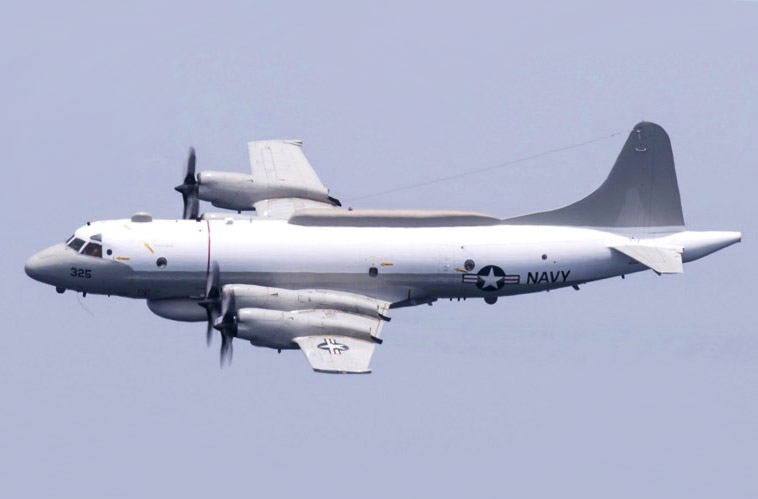
The Lockheed EP-3 is an electronic signals reconnaissance variant of the P-3 Orion, primarily operated by the United States Navy.

Key Information

Development

[edit]

A total of 12 P-3C aircraft were converted to replace older versions of the aircraft, which had been converted in the late 1960s and early 1970s. The aircraft is known by the acronym ARIES, or "Airborne Reconnaissance Integrated Electronic System".[1] and has Signals intelligence (SIGINT) capabilities. SIGINT is the interception of signals, whether communications between people (communications intelligence—abbreviated to COMINT) or from electronic signals not directly used in communication (electronic intelligence—abbreviated to ELINT). The EP-3E generally has a crew of 24, including linguists, cryptographers and technicians.

The squadrons that flew the EP-3E also flew the Lockheed EC-121 Warning Star from 1962 to 1974 and the Douglas EA-3B Skywarrior from 1960 to 1991. There are 11 EP-3Es in the Navy's inventory, the last of which was delivered in 1997.

Hainan Island incident

[edit]

On 1 April 2001, an aerial collision between a United States Navy EP-3E ARIES II, a signals reconnaissance version and a People's Liberation Army Navy Shenyang J-8II fighter resulted in an international incident between the United States and China. Operating about 70 miles (110 km) away from the PRC island province of Hainan Island, the EP-3 was intercepted by two J-8II fighters. One of the J-8IIs collided with it. The J-8II crashed into the sea and the pilot, Lt. Cdr. Wang, was seen to eject after the collision. His body was never recovered and he was declared dead. The EP-3 came close to becoming uncontrollable, at one point sustaining a nearly inverted roll, but was able to make a successful, unauthorized emergency landing at Lingshui airfield on Hainan island, where the two J-8II fighters involved in the incident had been based. At least 15 distress signals from the Orion had gone unanswered. The crew and the plane were subsequently detained by Chinese authorities because of the death of the Chinese pilot.

After several days of interrogations, the crew was repatriated separately to the United States while the aircraft remained in China, reportedly taken apart for research on American intelligence technology. Although the crew attempted to destroy as much classified material, hardware, and software on the aircraft as possible prior to the emergency landing, there is little doubt that the EP-3 was exploited by Chinese intelligence services. An American team was later permitted to enter Hainan in order to dismantle the aircraft, which was subsequently airlifted on board two of Polet Flight's Antonov An-124s back to the United States for reassembly and repair.[2]

This incident is fictionally portrayed in the TV Series JAG: Season 7, Episode 9 https://www.imdb.com/title/tt0613245/?ref_=ttep_ep9

Other incidents

[edit]

On 29 January 2018, a near accident was reported on the Black Sea, when a Russian Su-27 passed a U.S. EP-3 at a distance of several feet.[3][4]

In a separate incident, on 5 November 2018, a U.S. EP-3 was again claimed to have been closely passed in international airspace by a Russian Su-27.[5]

On 19 July 2019, a U.S. EP-3 was "performing a multi-nationally recognized and approved mission in international airspace" over the Caribbean Sea, when a Venezuelan Su-30 aggressively shadowed it at an unsafe distance.[6]

Fictional incidents

[edit]

EP-X

[edit]

Boeing has started working on an unscheduled replacement aircraft, the EP-X, based on their 737.[7]

On 16 August 2009, The Navy issued an "EP-X Analysis of Alternatives" that called for "information useful for the execution of the Electronic Patrol-X (EP-X) program which will recapitalize the EP-3E aircraft to provide tactical, theater, and national level Intelligence, Surveillance, Reconnaissance, and Targeting (ISR&T) support to Carrier Strike Groups and to Theater, Combatant, and National Commanders."[8]

On 23 September 2009, leaked Navy budget documents for FY2011 revealed that the EP-X program would be delayed rather than started in that year.[9]

On 1 February 2010, President Obama unveiled his proposed budget for 2010. This budget called for, among other things, canceling the EP-X program.[10]

Replacement

[edit]

After the cancellation of the EP-X Program, the U.S. Navy replaced the EP-3E Aries II with the Northrop Grumman MQ-4C Triton unmanned aircraft and the MQ-8B Fire Scout unmanned helicopter.[11] All P-3 Orion aircraft assigned to special projects squadrons (VPU) and all EP-3E Aries II aircraft were retired in February 2025.[failed verification]

Variants

[edit]
U.S. Navy Lockheed EP-3A Orion of air test and evaluation squadron VX-1 Pioneers in 1983. This aircraft was used in the "EMPASS" project, the "Electromagnetic Performance of Air and Ship Systems" (EMPASS) Project.
  • EP-3A: Seven modified for electronic reconnaissance testing.
  • EP-3B: Least known of all in the P-3 family. Three P-3As (BuNo 149669, BuNo 149673, and BuNo 149678) were obtained by the CIA from the U.S. Navy under Project STSPIN in May 1963, as the replacement aircraft for CIA's own covert operation fleet of RB-69A/P2V-7Us. Converted by Aerosystems Division of LTV at Greenville, Texas, the three P-3As were simply known as "black" P-3As under Project Axial. Officially transferred from U.S. Navy to CIA in June/July 1964. LTV Aerosystems converted the three aircraft to be both ELINT and COMINT platforms. The first of the three "black" P-3As arrived in Taiwan and were officially transferred to ROCAF's top secret "Black Bat" Squadron on 22 June 1966. Armed with 4 Sidewinder short range AAM missiles for self-defense, the three "black" P-3As flew peripheral missions along the China coast to collect SIGINT and air samples. When the project was terminated in January 1967, all three "black" P-3As were flown to NAS Alameda, California, for long term storage. Two of the three aircraft (BuNo 149669 and BuNo 149678) were converted into the only two EP-3Bs in existence by Lockheed at Burbank in September 1967, while the third aircraft (149673) was converted by Lockheed in 1969–1970 to serve as a development aircraft for various electronic programs. The two EP-3Bs, known as "Bat Rack", owing to their period of service with Taiwan's "Black Bat" Squadron, were issued to the U.S. Navy's VQ-1 Squadron in 1969 and deployed to Da Nang, Vietnam. In the 1980s these two planes were based at the Naval Air Facility, Atsugi, Japan with the Atsugi VQ-1 detachment. Later, the two EP-3Bs were converted to EP-3E ARIES, along with 10 EP-3As. The 12 EP-3Es retired in 1990s, when replaced by 12 EP-3E ARIES II.[12]
  • EP-3: ELINT aircraft for the Japanese Maritime Self-Defense Force.
  • EP-3E ARIES: 10 P-3As and two EP-3Bs were converted into ELINT aircraft.
  • EP-3E ARIES II: 12 P-3Cs were converted into ELINT aircraft. Last delivered in 1997.[13]
  • EP-3J: Two Electronic Warfare aircraft that were extensively modified P-3B Orions that supported the Fleet Electronic Warfare Support Group (FEWSG) . The aircraft were used as simulated adversary Electronic Warfare platforms in Tactical Electronic Warfare Squadron 33 (VAQ-33), then transferred to Patrol Squadron 66 (VP-66) and finally transferred to Fleet Air Reconnaissance Squadron 11 (VQ-11).

Operators

[edit]
Map with EP-3 operators in blue

Current operators

[edit]

Japan

[edit]

Former operators

[edit]

United States

[edit]

Specifications (EP-3E-II – P-3C as indicated)

[edit]
Lockheed EP-3E flying past Mt. Fuji, Japan

Data from Encyclopedia of world military aircraft Vol.2,[15] Jane's All the World's Aircraft 1984–85[16]

General characteristics

  • Crew: 4 (minimum)
  • Capacity: 19+ mission crew
  • Length: 116 ft 10 in (35.61 m)
  • Wingspan: 99 ft 8 in (30.38 m) P-3C
  • Height: 33 ft 8.5 in (10.274 m) P-3C
  • Wing area: 1,300 sq ft (120 m2) P-3C
  • Aspect ratio: 7.5 P-3C
  • Airfoil: root: NACA 0014-1.10; tip: NACA 0012-1.10[17] P-3C
  • Empty weight: 61,491 lb (27,892 kg) P-3C
  • Design zero-fuel weight: 77,200 lb (35,017 kg)
  • Gross weight: 135,000 lb (61,235 kg) P-3C
  • Max takeoff weight: 142,000 lb (64,410 kg) P-3C
  • Maximum landing weight: 103,880 lb (47,119 kg) P-3C
  • Fuel capacity: 9,200 US gal (7,700 imp gal; 35,000 L) / 62,000 lb (28,123 kg) P-3C
  • Powerplant: 4 × Allison T56-A-14 turboprop engines, 4,910 shp (3,660 kW) each equivalent P-3C
  • Propellers: 4-bladed Hamilton Standard 54H60, 13 ft 6 in (4.11 m) diameter constant-speed fully-feathering propellers P-3C

Performance

  • Maximum speed: 380 kn (440 mph, 700 km/h) at 15,000 ft (4,572 m)
  • Patrol speed: 180 kn (207 mph; 333 km/h)
  • Combat range: 2,200 nmi (2,500 mi, 4,100 km) with 0 time on station
  • Service ceiling: 28,000 ft (8,500 m)
  • Rate of climb: 2,175 ft/min (11.05 m/s) at sea level
  • Take-off run: 4,240 ft (1,292 m) at MTOW P-3C
  • Take-off distance to 50 ft (15 m): 5,490 ft (1,673 m) at MTOW P-3C
  • Landing distance from 50 ft (15 m): 5,490 ft (1,673 m) at Design landing weight P-3C

Avionics

  • A wide variety of ELINT, SIGINT and COMINT systems known as the ARIES Suite

See also

[edit]

References

[edit]

Further reading

[edit]
[edit]
Revisions and contributorsEdit on WikipediaRead on Wikipedia
from Grokipedia
The Lockheed EP-3 is a family of electronic reconnaissance aircraft based on the P-3 Orion four-engine turboprop maritime patrol airframe, developed primarily for signals intelligence (SIGINT) operations by the United States Navy. The primary variant, the EP-3E Aries II, equipped with advanced antennas, receivers, and processing systems, enabled the interception and analysis of enemy radar, communications, and other electronic emissions to support tactical and strategic intelligence needs. Introduced in the 1970s as an upgrade from earlier EP-3A and EP-3E Aries I models, the EP-3 series provided land-based multi-intelligence reconnaissance, including full-motion video, for naval battle groups and expeditionary forces over several decades. The EP-3E's capabilities extended to exploiting a wide spectrum of electromagnetic signals from standoff distances, featuring high-gain dish antennas and electronic countermeasures, which made it a cornerstone of U.S. maritime surveillance until its fleet-wide retirement in 2024 following the final operational mission in the U.S. 5th Fleet area. While primarily a U.S. Navy asset with about 12 aircraft in service at peak, variants like the Japanese EP-3J demonstrated the platform's adaptability for allied electronic intelligence roles. Notable for its endurance in contested environments, the EP-3 contributed to real-time intelligence during Cold War-era missions and post-9/11 operations, though it faced operational risks exemplified by mid-air collisions with foreign interceptors.

Overview and Strategic Role

Design Basis and Mission Capabilities

The Lockheed EP-3E Aries II derives from the P-3 Orion airframe, a four-engine turboprop platform originally designed for maritime patrol and adapted for electronic reconnaissance. This signals intelligence variant emphasizes passive collection over the anti-submarine warfare focus of standard P-3 models, utilizing the Orion's inherent long-range capabilities for extended missions. The EP-3E achieves endurance exceeding 12 hours, supporting prolonged loiter times to monitor targeted areas without kinetic engagement. Equipped with advanced electronic surveillance systems, the aircraft features sensitive receivers and high-gain dish antennas to intercept radar emissions, communications signals, and other electronic warfare indicators from significant distances. Onboard processing integrates these signals into actionable intelligence, handled by a crew of 24 that includes flight personnel, tactical evaluators, cryptologic technicians, and support specialists. Data is analyzed in near real-time and disseminated via secure links to provide fleet and theater commanders with timely insights. The EP-3E's mission capabilities center on multi-intelligence reconnaissance, including SIGINT and full-motion video, distinguishing it from armament-carrying variants by prioritizing non-offensive data gathering. This configuration enables support for carrier battle groups and amphibious operations through exploitation of electronic emissions, without provisions for weapons deployment.

Contributions to National Security

The Lockheed EP-3E Aries II has bolstered U.S. national security by delivering real-time signals intelligence (SIGINT) on adversary naval forces, particularly during the Cold War when it monitored Soviet radar, communications, and submarine electronic emissions. These intercepts from Pacific and Atlantic patrols enhanced tracking of Soviet submarine deployments, providing indications and warnings that deterred potential aggressions and supported strategic stability amid nuclear tensions. In one declassified instance during the 1983 crisis following the KAL 007 shootdown, an EP-3E orbiting nearby gathered data on Soviet reactions, contributing to U.S. assessments that clarified misperceptions and averted escalation. Post-Cold War, EP-3E deployments sustained deterrence through persistent surveillance in contested maritime domains, including the Pacific theater where squadrons flew extended missions to intercept signals from emerging threats. This SIGINT enabled identification of missile-related emissions and irregular vessel activities, informing freedom of navigation assertions against aggressive patrols and reducing conflict risks via proactive threat awareness. Following the September 11, 2001 attacks, the platform supported counterterrorism by tracking potential illicit maritime networks, with its multi-intelligence upgrades allowing adaptation to non-state actors' electronic signatures. The crewed EP-3E's value in national security stems from its ability to provide nuanced, battlespace-contextualized intelligence that unmanned alternatives historically lacked in endurance and adaptability. By fusing SIGINT with onboard analysis, it delivered actionable insights during dynamic operations, countering narratives that undervalue manned ISR; for example, its real-time data on adversary emissions has directly shaped commander decisions to de-escalate by confirming non-hostile intents or exposing concealed threats.

Development

Initial Variants and Origins

The Lockheed EP-3 series originated from U.S. Navy requirements during the Cold War for standoff electronic intelligence (ELINT) collection against Soviet naval forces, leveraging the P-3 Orion's established turboprop airframe for its long endurance, extended loiter times over maritime areas, and spacious cabin suitable for installing specialized sensors without necessitating a new aircraft design. This adaptation minimized development risks and capitalized on the existing P-3 logistics infrastructure, including maintenance, training, and supply chains already supporting the Navy's antisubmarine warfare fleet, thereby enabling rapid fielding of reconnaissance capabilities at lower cost than purpose-built platforms. The EP-3A debuted in 1969 as an initial ELINT variant, converting P-3A airframes by removing antisubmarine warfare equipment and integrating analog receivers and antennas optimized for intercepting Soviet radar emissions from safe distances. These early configurations relied on basic analog signal processing to detect and record electronic signals, prioritizing real-time standoff monitoring over advanced analysis due to the technological constraints of the era. Subsequent enhancements led to the EP-3B, also known as "Bat Rack," with two P-3A conversions completed in 1969 for Fleet Air Reconnaissance Squadron One (VQ-1); these featured expanded electronic surveillance suites for both ELINT and communications intelligence (COMINT), including tape recorders for signal storage and rudimentary computer-assisted analysis to broaden coverage of Soviet radar and radio transmissions. The design retained the P-3's four Allison T56 turboprops for reliable, low-altitude operations, ensuring logistical compatibility while accommodating the added weight of mission gear through structural reinforcements derived from the proven Orion platform.

EP-3E Aries II Program

The EP-3E Aries II program converted twelve existing P-3C Orion airframes into advanced electronic reconnaissance platforms, replacing earlier EP-3 variants with enhanced signals intelligence capabilities. Initiated in the early 1990s, the effort focused on integrating state-of-the-art mission systems to address post-Cold War requirements for broader threat detection amid diversifying global risks. Initial training for the upgraded systems was completed in the first quarter of fiscal year 1996, leading to initial operating capability shortly thereafter. The last aircraft was delivered to the U.S. Navy in 1997. Central to the Aries II was the Sensor System Improvement Program (SSIP), which upgraded communications and modular mission avionics to enable real-time processing and fusion of multi-intelligence data streams, evolving the platform from primary SIGINT focus to comprehensive reconnaissance. This hardware-software integration supported onboard analysis of intercepted signals, reducing reliance on ground stations and improving responsiveness in dynamic operational environments. Key enhancements included high-gain dish antennas and sensitive receivers for exploiting a wide spectrum of electronic emissions from extended ranges, paired with advanced computers, displays, and recording devices for mission execution. High-speed data links facilitated secure transmission and interoperability with joint and allied forces, enabling the EP-3E to contribute directly to networked operations. By 2000, the fleet achieved full operational capability, solidifying its role in land-based maritime surveillance.

Modernization and Upgrades

The EP-3E Aries II underwent the Sensor System Improvement Program (SSIP) in the early 2000s, which enhanced signals intelligence (SIGINT) communications interoperability to deliver tactical intelligence more effectively to fleet commanders and national consumers. This upgrade improved the platform's ability to process and disseminate electronic signals in contested environments, incorporating advanced receivers for greater sensitivity to low-probability-of-intercept emissions. Subsequent modifications under the Joint Services Airborne SIGINT Architecture (JSAF) Block Modernization Program addressed subsystem limitations, upgrading low-band SIGINT capabilities and associated infrastructure to counter evolving electronic warfare threats, including jamming resistance through refined signal processing algorithms. These block-level enhancements, implemented progressively through the 2000s, sustained the EP-3E's operational relevance by enabling standoff collection against peer adversaries' advanced air defenses, as demonstrated in persistent missions over high-threat regions like the Indo-Pacific and Middle East. In the 2010s and into the early 2020s, the aircraft transitioned from a SIGINT-only configuration to a multi-intelligence platform, incorporating sensors for broader electronic emissions collection at extended ranges and near-real-time full-motion video dissemination to support battlespace awareness and indications-and-warnings. This final pre-retirement modernization, completed amid delays to operational commitments, extended the EP-3E's utility until its 2024-2025 phase-out, ensuring persistent reconnaissance contributions despite aging airframes and intensifying intercepts by adversarial fighters.

Operational History

U.S. Navy Service

The Lockheed EP-3 entered U.S. Navy service in the late 1960s, with Fleet Air Reconnaissance Squadron VQ-1 achieving initial operational capability in 1969 and deploying detachments to Da Nang Air Base, Vietnam, for signals intelligence missions supporting combat operations. VQ-1, based at Naval Air Station Whidbey Island, Washington, and VQ-2, operating from Naval Station Rota, Spain, formed the core of EP-3 operations, conducting electronic reconnaissance flights across global theaters during the Cold War to monitor adversary communications and radar emissions. These squadrons logged extensive flight hours in contested airspace, contributing to deterrence by providing real-time intelligence that informed naval and joint force decision-making. EP-3 deployments peaked during major conflicts, including Operations Desert Shield and Desert Storm in 1990-1991, where VQ-1 and VQ-2 detachments supported coalition efforts by intercepting Iraqi command-and-control signals, enabling suppression of enemy air defenses. Post-Cold War, operations shifted toward the Indo-Pacific, with VQ-1 emphasizing surveillance of high-threat regions to counter emerging peer competitors, while maintaining flexibility for worldwide tasking. The platform adapted to asymmetric threats, including counter-narcotics missions; in 2019, a VQ-1 EP-3E conducted drug interdiction surveillance in the Caribbean, monitoring trafficking routes despite interceptions by Venezuelan aircraft. Amid delays in replacement platforms, the Navy extended EP-3 service through 2025 to meet persistent demands in the Middle East, with VQ-1 aircraft executing final missions in U.S. 5th Fleet areas of operations as late as November 2024. This extension underscored the aircraft's sustained value in providing multi-intelligence reconnaissance amid regional tensions. The EP-3 fleet concluded over 55 years of Navy service with the retirement of the final aircraft on February 13, 2025, at NAS Whidbey Island, having amassed thousands of flight hours in support of national security objectives.

Japan Maritime Self-Defense Force Operations

The Japan Maritime Self-Defense Force (JMSDF) operates five EP-3D electronic reconnaissance aircraft, a variant of the Lockheed P-3 Orion adapted for signals intelligence missions. These aircraft, based at Marine Corps Air Station Iwakuni, were acquired to bolster maritime surveillance in the East China Sea amid rising regional tensions. The EP-3D platforms enable the JMSDF to independently collect electronic signals from potential threats, including activities by China and North Korea, supporting national defense without reliance on allied assets for core intelligence gathering. JMSDF EP-3D operations emphasize persistent monitoring of adversarial communications and radar emissions in contested maritime domains. Integration with U.S. forces occurs through bilateral exercises, such as the April 2025 advanced warfare training involving EP-3D alongside U.S. Navy EA-18G Growler aircraft and JMSDF surface units, enhancing interoperability in electronic warfare scenarios. These activities focus on joint signals exploitation to counter evolving threats from North Korean missile tests and Chinese naval expansions. As of October 2025, the JMSDF maintains an active fleet of five EP-3D aircraft at Iwakuni, with no official retirement announcements despite transitions to complementary platforms like the UP-3D for electronic attack roles. Ongoing operations continue to prioritize real-time intelligence on East Asian maritime dynamics, underscoring the platform's enduring relevance in Japan's defense posture.

Notable Missions and Intelligence Achievements

![U.S. Navy Lockheed EP-3E Aries II][float-right] During the Cold War, EP-3 variants flew signals intelligence (SIGINT) missions in international airspace near Soviet borders, such as the Baltic Sea and Mediterranean, to intercept and analyze electronic emissions from radar, communications, and other sources, providing the U.S. Navy with insights into adversary order of battle and electronic warfare capabilities. These operations relied on onboard crews' real-time interpretation of complex radio frequency data, enabling adaptive reconfiguration of reconnaissance antennas mid-mission to target emerging signals, a flexibility that complemented fixed satellite systems by offering persistent, human-judged coverage in dynamic environments. In Operation Desert Storm (1991), EP-3E Aries I aircraft operated from bases in Bahrain and Jiddah, delivering tactical reconnaissance support including SIGINT to coalition forces, which contributed to suppressing Iraqi air defenses and facilitating air superiority. The platform's ability to provide near real-time intelligence in contested airspace underscored manned reconnaissance's advantage in fusing multi-source data for precise targeting, reducing risks of misidentification compared to automated alternatives. EP-3E Aries II missions from September 17 to 30, 2001, along the Afghanistan-Pakistan border collected SIGINT on Taliban and al-Qaeda communications, establishing initial battlespace awareness prior to major strikes in Operation Enduring Freedom. This intelligence, integrated with complementary reconnaissance from F-14 Tomcats, supported precision operations by enabling commanders to correlate electronic signatures with ground movements, minimizing collateral damage through verified targeting. In Operation Iraqi Freedom (2003), Fleet Air Reconnaissance Squadron Two (VQ-2) EP-3Es executed novel ground-support missions, relaying critical SIGINT directly to Marine and Army units for time-sensitive targeting of insurgent activities, achieving high reliability in urban and denied-access areas where unmanned systems faced higher jamming vulnerabilities. Crew expertise in real-time analysis ensured low false-positive rates, with the aircraft's endurance—up to 12 hours on station—providing theater-wide electronic order of battle updates that informed over 100 strikes per deployment.

Incidents

Hainan Island Incident

On April 1, 2001, a U.S. Navy EP-3E Aries II (BuNo 156511) from Fleet Air Reconnaissance Squadron One (VQ-1), operating as mission PR32 under Lt. Shane Osborn, collided mid-air with a People's Liberation Army Navy Shenyang J-8II fighter jet piloted by Lt. Cmdr. Wang Wei over the South China Sea, approximately 70 miles southeast of Hainan Island in international airspace. The EP-3E, on a routine signals intelligence surveillance flight, had been intercepted over 10 times by Chinese fighters during the mission, with the J-8II approaching aggressively on its final pass. Eyewitness accounts from the U.S. crew, including Osborn, described the Chinese jet clipping the EP-3's No. 1 propeller and nose cone, causing the fighter to break apart and eject debris that severed hydraulic lines and damaged the aircraft's radome and right inboard engine. Wang Wei ejected but was killed when his parachute failed to deploy fully. The EP-3 crew regained control after severe turbulence and executed a 26-minute emergency descent, landing without permission at Lingshui Airfield on Hainan Island. The 24 U.S. crew members—21 men and 3 women—were detained by Chinese authorities for 11 days, during which they faced interrogation and limited access to U.S. consular officials. In the immediate aftermath of the collision and landing, the crew initiated emergency destruction protocols for classified equipment and data, including zeroizing computer memories, erasing tapes, smashing hardware with axes, and discarding materials through hatches, though efforts were incomplete due to time constraints and aircraft instability. Subsequent assessments indicated partial compromise of electronic intelligence (ELINT) systems, with Chinese technicians accessing undestroyed components before the aircraft's return. Chinese officials asserted the EP-3 had deviated from its flight path and turned into the J-8II, causing the collision, a claim unsupported by U.S. crew testimonies emphasizing the fighter's repeated close-quarters shadowing—often within 10-20 feet—in violation of standard intercept separation distances. Diplomatic tensions escalated as China demanded a formal apology for the incident and unauthorized landing, while the U.S. rejected blame for the collision, attributing it to provocative Chinese tactics. Resolution came on April 11, 2001, via a U.S. letter from Ambassador Joseph Prueher expressing "very sorry" for Wang Wei's death and for the EP-3's entry into Chinese airspace without verbal clearance, but explicitly regretting the loss without admitting fault and noting satisfaction that the crew landed safely. This "letter of two sorries" enabled crew release and aircraft repatriation, though China retained the damaged EP-3 for months before returning it disassembled. U.S. analyses, drawing from pilot debriefs and flight data, consistently highlighted the J-8II's maneuvers as the causal factor, contrasting with Chinese narratives that aligned with state-directed accountability for perceived surveillance intrusions.

Other Incidents

The 1969 shootdown of a U.S. Navy EC-121M reconnaissance aircraft by North Korean MiG-21 fighters over the Sea of Japan, resulting in the loss of all 31 crew members, served as a historical precursor that highlighted vulnerabilities in signals intelligence missions near adversarial airspace, influencing subsequent operational protocols for platforms like the EP-3 to emphasize de-escalation and evasion tactics during intercepts. These lessons informed EP-3 risk assessments, prioritizing international airspace adherence while maintaining mission continuity despite repeated foreign interceptions. Following the 2001 Hainan incident, Chinese People's Liberation Army Air Force aircraft conducted multiple aggressive intercepts of U.S. Navy EP-3E flights in the East and South China Seas, escalating tensions through unsafe maneuvers such as low-altitude passes and proximity flights that forced evasive actions. For instance, on July 23, 2017, two J-10 fighters intercepted an EP-3E operating in international airspace over the East China Sea, approaching within 50 feet and crossing the aircraft's path unsafely, as reported by U.S. Pacific Command. Similar buzzing incidents in the region during the late 2000s and 2010s, including close-quarters shadowing, reflected a pattern of coercive interference aimed at deterring reconnaissance without direct engagements. Non-operational accidents, such as runway excursions unrelated to adversary actions, occasionally affected EP-3E airframes but did not stem from mission profiles; for example, an EP-3E veered off the runway at Chania-Souda Airport in Greece due to landing gear issues, with no crew injuries reported. Despite these interceptions and isolated mechanical events, no additional EP-3 losses occurred, prompting enhanced operational security measures like improved intercept monitoring and diplomatic protests, while U.S. missions persisted, countering narratives of inherent vulnerability through demonstrated resilience and adaptation.

Variants

The EP-3 variants represent progressive adaptations of the P-3 Orion airframe for signals intelligence roles, replacing anti-submarine warfare equipment with electronic surveillance suites including radomes, antennas, and mission pallets for intercepting and analyzing emissions. Early models emphasized electronic intelligence (ELINT), while later iterations incorporated communications intelligence (COMINT) and multi-intelligence fusion.
VariantBase AirframeKey Modifications and CapabilitiesQuantity Produced
EP-3AP-3ASpecialized radar systems and radomes under forward fuselage and center wing for basic ELINT reconnaissance and testing.Several (exact number varies by source; operated by U.S. Navy test units).
EP-3B "Batrack"P-3AAdapted for monitoring radar and radio signals, focused on ELINT against specific targets like Soviet systems.2 aircraft.
EP-3E Aries I / "Deepwell"P-3AARIES mission systems for ELINT and initial COMINT integration; radomes on fuselage and wings; later converted to Aries II standard.3 ARIES + 7 Deepwell conversions.
EP-3E Aries IIP-3CAdvanced multi-intelligence platform with upgraded electronics for fused SIGINT, ELINT, and COMINT; high-gain antennas and receivers for deep-target exploitation; evolved from SIGINT focus to broader reconnaissance. 12 aircraft, peaking U.S. Navy inventory.
The Japan Maritime Self-Defense Force operated five EP-3 aircraft, equipped with aerials and radomes akin to U.S. models for ELINT and electronic support measures (ESM), entering service in March 1991. These lacked the full multi-int fusion of Aries II but provided comparable ESM capabilities.

Operators

Current Operators

The Japan Maritime Self-Defense Force (JMSDF) operates the only remaining fleet of EP-3 aircraft worldwide, consisting of five EP-3D variants configured for electronic intelligence (ELINT) and signals intelligence (SIGINT) collection. These land-based platforms, assigned to squadrons such as the 51st Kōkūtai at Iwakuni Air Base, conduct maritime reconnaissance missions focused on monitoring regional threats in the Indo-Pacific, including electronic emissions from adversarial naval and air forces. The EP-3D's persistence in service underscores Japan's commitment to sustaining independent ISR assets amid alliance dependencies, with the aircraft integrating into joint exercises like those with U.S. Navy electronic warfare units to enhance interoperability. No other nations maintain active EP-3 operations as of 2025, reflecting the platform's niche role in Japan's defense posture.

Former Operators

The United States Navy, the primary operator of the EP-3E Aries II variant, completed the phase-out of its fleet in February 2025 after 45 years of service. The final operational deployment in the U.S. 5th Fleet area of responsibility concluded with a flight on October 29, 2024, operated by Fleet Air Reconnaissance Squadron One (VQ-1) "World Watchers" from Naval Air Station Whidbey Island, Washington. Retirement was initially anticipated earlier but postponed due to ongoing operational commitments, with the last aircraft decommissioned via an informal ceremony on February 12, 2025, at Whidbey Island. VQ-1, the sole remaining EP-3E squadron, transitioned its missions to successor platforms, including the MQ-4C Triton unmanned system and P-8A Poseidon adaptations. No other nations operated the EP-3E as a former platform, with earlier reconnaissance variants phased out by the U.S. in prior decades.

Replacement and Legacy

EP-X Program and Cancellation

The EP-X program, initiated by the U.S. Navy in 2007, aimed to procure a manned airborne intelligence, surveillance, and reconnaissance (ISR) platform to replace the aging EP-3E Aries II fleet for signals intelligence (SIGINT) missions. Designated as a top Navy priority by the Chief of Naval Operations, it sought to integrate advanced electronic intelligence capabilities into a new airframe, emphasizing persistent ISR over contested maritime environments. The effort proceeded to a competitive concept refinement phase without advancing to prototype development or flight testing. In February 2008, the Navy awarded three $1.25 million study contracts to industry teams led by Boeing (with Argon ST), Lockheed Martin, and Northrop Grumman (with L-3 Communications) to define system requirements and potential platforms, including evaluations of modified commercial derivatives like the Boeing 737 or P-8A for SIGINT roles. These contracts focused on trade studies for mission systems integration, sensor suites, and endurance, but no downselect to a single competitor occurred, reflecting early-stage bureaucratic deliberations on cost, interoperability, and alignment with broader ISR architectures. The program was canceled in February 2010 under President Obama's fiscal year 2011 budget proposal, which eliminated funding to address escalating defense spending amid economic recession pressures, without citing technical shortfalls in the competing concepts. This decision stemmed from DoD-wide reprioritization favoring multi-mission assets with partial ISR overlap—such as the P-8A Poseidon—over a dedicated EP-3 successor, alongside inter-service debates on manned versus unmanned SIGINT platforms and constraints from impending sequestration-like fiscal caps. No aircraft were produced, leaving the EP-3E in extended service despite its obsolescence.

Transition to P-8 Poseidon and Unmanned Systems

The U.S. Navy has transitioned core signals intelligence (SIGINT) and maritime ISR roles previously fulfilled by the EP-3E Aries II to the Boeing P-8A Poseidon, augmented by specialized mission pods and avionics upgrades. The P-8A's baseline SIGINT suite enables detection, geolocation, and classification of radar and other emissions, providing a manned platform for dynamic tactical exploitation that partially offsets the EP-3E's onboard analysis capabilities. Increment 3 Block 2 modifications, including the AN/ALQ-263 SIGINT system, further enhance the P-8A's electronic reconnaissance pods, antennas, and sensor integration to assume EP-3E-like functions in contested environments. These upgrades, delivered starting in 2024, equip patrol squadrons for multi-intelligence missions without requiring dedicated ELINT variants. Complementing the P-8A, the Northrop Grumman MQ-4C Triton unmanned aerial vehicle delivers persistent wide-area surveillance, serving as the primary numerical successor to the EP-3E for high-altitude SIGINT and targeting. The Triton achieves over 30 hours of endurance at altitudes exceeding 50,000 feet, surpassing the EP-3E's 12+ hour missions and enabling continuous orbits that reduce sortie frequency. By October 2024, the Navy had established a third Triton orbit under Fleet Air Reconnaissance Squadron VQ-3, integrating multi-intelligence sensors for real-time data relay to manned assets like the P-8A. This migration trades the EP-3E's manned flexibility—such as immediate onboard decision-making and adaptive maneuvering—for unmanned endurance gains and lower personnel risk, though it introduces dependencies on ground-based exploitation for complex signals processing absent in the Triton. The P-8A mitigates some flexibility losses through its crewed operations and rapid pod reconfiguration, but full unmanned reliance on Triton limits improvisation in denied-access scenarios compared to the EP-3E's human-in-the-loop adaptability. Navy planning emphasized seamless handoff, with VQ squadrons like VQ-1 completing EP-3E divestment by February 13, 2025, achieving transition without operational gaps.

Retirement and Final Operations

The U.S. Navy extended the service life of its EP-3E Aries II fleet beyond the initial 2020 divestment plan due to persistent operational demands in the Indo-Pacific and Middle East regions, where real-world threats necessitated continued signals intelligence collection capabilities. These delays pushed the final operational cessation from an October 8, 2024, target to later dates, with Fleet Air Reconnaissance Squadron One (VQ-1) maintaining missions amid heightened geopolitical tensions. The last EP-3E, Bureau Number 159893, completed its final operational deployment on October 29, 2024, in the U.S. 5th Fleet area of responsibility before returning to Naval Air Station Whidbey Island, Washington, its home base. VQ-1, known as the "World Watchers," conducted this concluding mission after nearly six decades of the platform's aggregate service, providing multi-intelligence reconnaissance that informed battle group tactics. Retirement culminated in an informal ceremony on February 12, 2025, at NAS Whidbey Island, marking the decommissioning of the final EP-3E after 45 years of fleet service. The aircraft from the 2001 Hainan Island incident, which collided with a Chinese J-8 fighter and was subsequently repaired for continued operations, was transferred to the Pima Air & Space Museum in Arizona for preservation, arriving in October 2024. This airframe's post-incident data and mission logs contributed to training datasets for successor platforms, ensuring institutional knowledge transfer.

Specifications

References

Add your contribution
Related Hubs
Contribute something
User Avatar
No comments yet.