



Community hub
Recent from talks
Knowledge base stats:
Talk channels stats:
Members stats:
Avalokiteśvara
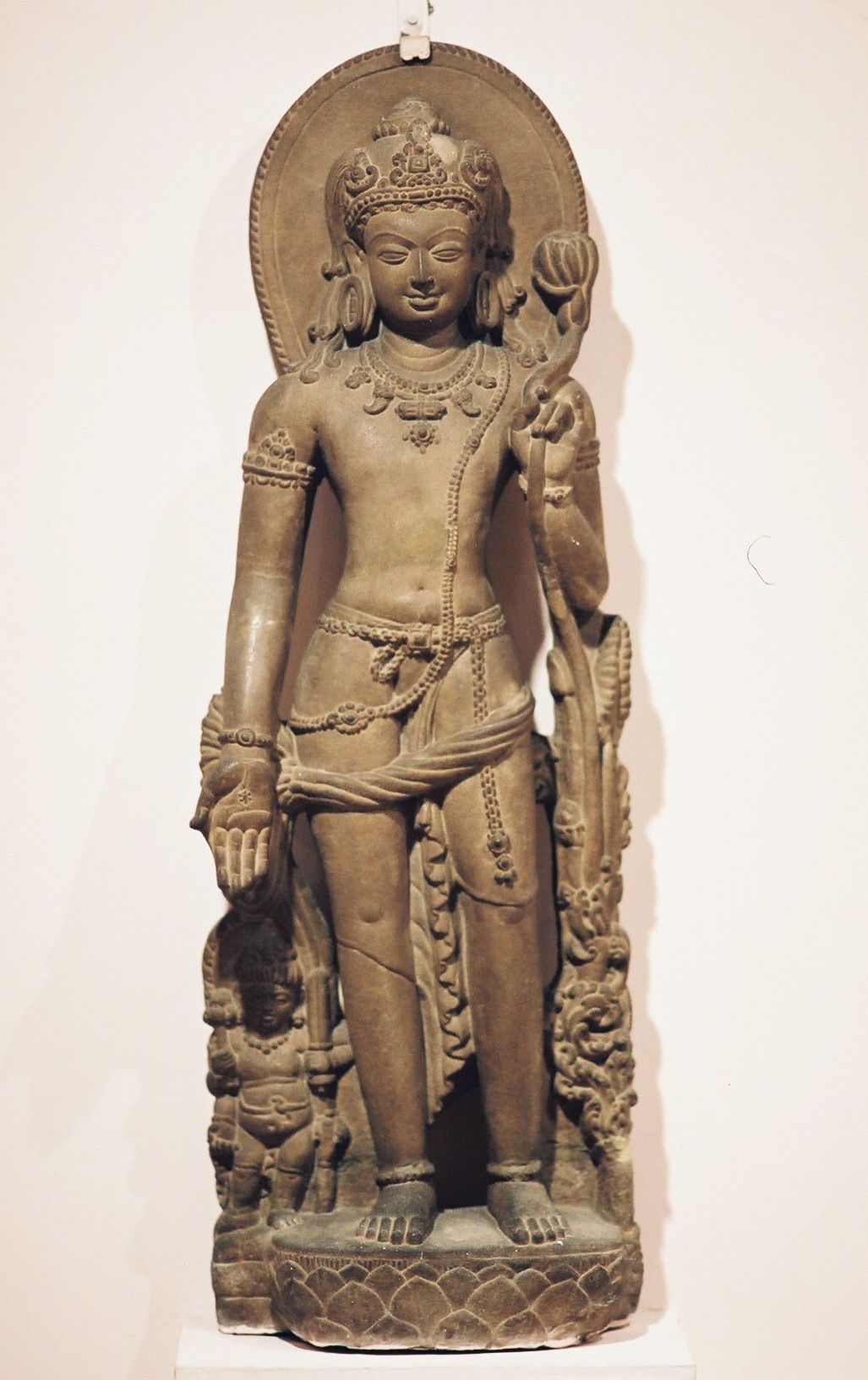
In Buddhism, Avalokiteśvara (meaning "the Lord who looks down", IPA: /ˌʌvəloʊkɪˈteɪʃvərə/), also known as Lokeśvara ("Lord of the World") and Chenrezig (in Tibetan), is a Bodhisattva associated with Great Compassion (mahakaruṇā). Avalokiteśvara has a vast number of manifestations (e.g., the 108 forms of Avalokiteśvara) and is depicted in various forms and styles across Buddhist traditions of different cultures. In some texts, he is considered to be the source and divine creator of all Hindu deities (such as Vishnu, Shiva, Brahma, Saraswati, Bhudevi, Varuna, etc.). In Mahayana and Vajrayana Buddhism, Avalokiteśvara is also considered a manifestation of Amitabha Buddha for the purpose of Dharma teaching, and an emanation from Vairocana Buddha as an embodiment of the Miraculous Observing Wisdom (妙觀察智).
In East Asian Buddhism, Avalokiteśvara is known as 觀音 (an abbreviation for 觀世音), pronounced Gwoon Yaam in Cantonese, Guanyin in Mandarin Chinese, Kannon in Japanese, Gwaneum in Korean, and Quan Âm in Vietnamese. In the traditional cultures of these Asian countries, there is a female form of Avalokiteśvara depicted as a divine mother in a white robe, called White-Robed Avalokiteśvara or Southern Sea Avalokiteśvara. This female form of Avalokiteśvara is worshiped widely in East Asian religions including Taoism and Chinese folk religion.
Avalokiteśvara is also known for his popular mantra, Oṃ maṇi padme hūṃ, which is the most popular mantra in Tibetan Buddhism.
The name Avalokiteśvara combines the verbal prefix ava "down", lokita, a past participle of the verb lok "to look, notice, behold, observe", here used in an active sense, and finally īśvara, "lord", "ruler", "sovereign", or "master". In accordance with sandhi (Sanskrit rules of sound combination), a+īśvara becomes eśvara. Combined, the parts mean "lord who gazed down (at the world)". The word loka ("world") is absent from the name, but the phrase is implied. It does appear in the Cambodian form of the name, Lokesvarak.
The earliest translation of the name Avalokiteśvara into Chinese by authors such as Xuanzang was as Guānzìzài (Chinese: 觀自在; pinyin: Guān zìzài), not the form used in East Asian Buddhism today, which is Guanyin (Chinese: 觀音; pinyin: Guānyīn). It was initially thought that early translators, lacking fluency in Sanskrit, mistook Avalokiteśvara for Avalokitasvara ("who looked down upon sound", i.e., the cries of sentient beings who need help) and thus mistranslated Avalokiteśvara as Guānyīn. It is now understood that Avalokitasvara was the original form and is also the origin of Guanyin "perceiving sound, cries". This translation was favored by the tendency of some Chinese translators, notably Kumārajīva, to use the variant Guānshìyīn Chinese: 觀世音; pinyin: Guānshìyīn "who perceives the world's lamentations"—wherein lok was read as simultaneously meaning both "to look" and "world" (Sanskrit loka; Chinese: 世; pinyin: shì). The original form of Guanyin's name appears in Sanskrit fragments from the fifth century.
The original meaning of the name fits the Buddhist understanding of the role of a bodhisattva. The reinterpretation presenting him as an īśvara shows a strong influence of Hinduism, as the term īśvara was usually connected to the Hindu notion of Vishnu (in Vaishnavism) or Shiva (in Shaivism) as the Supreme Lord, Creator, and Ruler of the world. Some attributes of such a god were transmitted to the bodhisattva, but the mainstream of those who venerated Avalokiteśvara upheld the Buddhist rejection of the doctrine of any creator god.
In Sanskrit, Avalokiteśvara is also referred to as Lokeśvara ("Lord of the World"). In Tibetan, Avalokiteśvara is Chenrézig (Tibetan: སྤྱན་རས་གཟིགས་). The etymology of the Tibetan name Chenrézik is spyan "eye", ras "continuity", and gzig "to look". This gives the meaning of one who always looks upon all beings (with the eye of compassion).
The name Avalokiteśvara first appeared in the Avatamsaka Sutra, a Mahayana scripture that precedes the Lotus Sutra. On account of its popularity in Japan and as a result of the works of the earliest Western translators of Buddhist Scriptures, the Lotus Sutra, however, has long been accepted as the earliest literature teaching about the doctrines of Avalokiteśvara. These are found in Chapter 25 of the Lotus Sutra: The Universal Gate of Bodhisattva Avalokiteśvara (Chinese: 觀世音菩薩普門品; pinyin: Guānshìyīn púsà pǔ mén pǐn). This chapter is devoted to Avalokiteśvara, describing him as a compassionate bodhisattva who hears the cries of sentient beings and who works tirelessly to help those who call upon his name. A total of 33 different manifestations of Avalokiteśvara are described, including female manifestations, all to suit the minds of various beings. The chapter consists of both a prose and a verse section. This earliest source often circulates separately as its own sutra, called the Avalokiteśvara Sūtra (Chinese: 觀世音經; pinyin: Guānshìyīn jīng), and is commonly recited or chanted at Buddhist temples in East Asia.
Hub AI
Avalokiteśvara AI simulator
(@Avalokiteśvara_simulator)
Avalokiteśvara
In Buddhism, Avalokiteśvara (meaning "the Lord who looks down", IPA: /ˌʌvəloʊkɪˈteɪʃvərə/), also known as Lokeśvara ("Lord of the World") and Chenrezig (in Tibetan), is a Bodhisattva associated with Great Compassion (mahakaruṇā). Avalokiteśvara has a vast number of manifestations (e.g., the 108 forms of Avalokiteśvara) and is depicted in various forms and styles across Buddhist traditions of different cultures. In some texts, he is considered to be the source and divine creator of all Hindu deities (such as Vishnu, Shiva, Brahma, Saraswati, Bhudevi, Varuna, etc.). In Mahayana and Vajrayana Buddhism, Avalokiteśvara is also considered a manifestation of Amitabha Buddha for the purpose of Dharma teaching, and an emanation from Vairocana Buddha as an embodiment of the Miraculous Observing Wisdom (妙觀察智).
In East Asian Buddhism, Avalokiteśvara is known as 觀音 (an abbreviation for 觀世音), pronounced Gwoon Yaam in Cantonese, Guanyin in Mandarin Chinese, Kannon in Japanese, Gwaneum in Korean, and Quan Âm in Vietnamese. In the traditional cultures of these Asian countries, there is a female form of Avalokiteśvara depicted as a divine mother in a white robe, called White-Robed Avalokiteśvara or Southern Sea Avalokiteśvara. This female form of Avalokiteśvara is worshiped widely in East Asian religions including Taoism and Chinese folk religion.
Avalokiteśvara is also known for his popular mantra, Oṃ maṇi padme hūṃ, which is the most popular mantra in Tibetan Buddhism.
The name Avalokiteśvara combines the verbal prefix ava "down", lokita, a past participle of the verb lok "to look, notice, behold, observe", here used in an active sense, and finally īśvara, "lord", "ruler", "sovereign", or "master". In accordance with sandhi (Sanskrit rules of sound combination), a+īśvara becomes eśvara. Combined, the parts mean "lord who gazed down (at the world)". The word loka ("world") is absent from the name, but the phrase is implied. It does appear in the Cambodian form of the name, Lokesvarak.
The earliest translation of the name Avalokiteśvara into Chinese by authors such as Xuanzang was as Guānzìzài (Chinese: 觀自在; pinyin: Guān zìzài), not the form used in East Asian Buddhism today, which is Guanyin (Chinese: 觀音; pinyin: Guānyīn). It was initially thought that early translators, lacking fluency in Sanskrit, mistook Avalokiteśvara for Avalokitasvara ("who looked down upon sound", i.e., the cries of sentient beings who need help) and thus mistranslated Avalokiteśvara as Guānyīn. It is now understood that Avalokitasvara was the original form and is also the origin of Guanyin "perceiving sound, cries". This translation was favored by the tendency of some Chinese translators, notably Kumārajīva, to use the variant Guānshìyīn Chinese: 觀世音; pinyin: Guānshìyīn "who perceives the world's lamentations"—wherein lok was read as simultaneously meaning both "to look" and "world" (Sanskrit loka; Chinese: 世; pinyin: shì). The original form of Guanyin's name appears in Sanskrit fragments from the fifth century.
The original meaning of the name fits the Buddhist understanding of the role of a bodhisattva. The reinterpretation presenting him as an īśvara shows a strong influence of Hinduism, as the term īśvara was usually connected to the Hindu notion of Vishnu (in Vaishnavism) or Shiva (in Shaivism) as the Supreme Lord, Creator, and Ruler of the world. Some attributes of such a god were transmitted to the bodhisattva, but the mainstream of those who venerated Avalokiteśvara upheld the Buddhist rejection of the doctrine of any creator god.
In Sanskrit, Avalokiteśvara is also referred to as Lokeśvara ("Lord of the World"). In Tibetan, Avalokiteśvara is Chenrézig (Tibetan: སྤྱན་རས་གཟིགས་). The etymology of the Tibetan name Chenrézik is spyan "eye", ras "continuity", and gzig "to look". This gives the meaning of one who always looks upon all beings (with the eye of compassion).
The name Avalokiteśvara first appeared in the Avatamsaka Sutra, a Mahayana scripture that precedes the Lotus Sutra. On account of its popularity in Japan and as a result of the works of the earliest Western translators of Buddhist Scriptures, the Lotus Sutra, however, has long been accepted as the earliest literature teaching about the doctrines of Avalokiteśvara. These are found in Chapter 25 of the Lotus Sutra: The Universal Gate of Bodhisattva Avalokiteśvara (Chinese: 觀世音菩薩普門品; pinyin: Guānshìyīn púsà pǔ mén pǐn). This chapter is devoted to Avalokiteśvara, describing him as a compassionate bodhisattva who hears the cries of sentient beings and who works tirelessly to help those who call upon his name. A total of 33 different manifestations of Avalokiteśvara are described, including female manifestations, all to suit the minds of various beings. The chapter consists of both a prose and a verse section. This earliest source often circulates separately as its own sutra, called the Avalokiteśvara Sūtra (Chinese: 觀世音經; pinyin: Guānshìyīn jīng), and is commonly recited or chanted at Buddhist temples in East Asia.