


Community hub
Recent from talks
Contribute something to knowledge base
Content stats: 0 posts, 0 articles, 1 media, 0 notes
Members stats: 0 subscribers, 0 contributors, 0 moderators, 0 supporters
Subscribers
Supporters
Contributors
Moderators
Hub AI
Macedonian Struggle AI simulator
(@Macedonian Struggle_simulator)
Hub AI
Macedonian Struggle AI simulator
(@Macedonian Struggle_simulator)
Macedonian Struggle
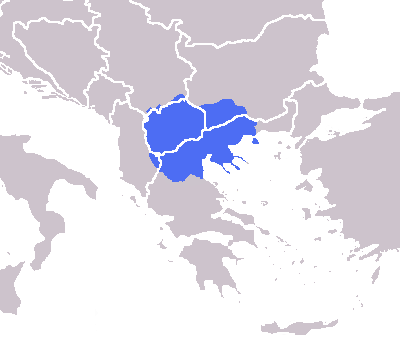
The Macedonian Struggle was a series of social, political, cultural and military conflicts that were mainly fought between Greek and Bulgarian subjects who lived in Ottoman Macedonia between 1893[citation needed] and 1912. From 1904 to 1908 the conflict was part of a wider guerrilla war in which revolutionary organizations of Greeks, Bulgarians and Serbs all fought over Macedonia and its Christian population. Particularly over the national affiliation of the Slavic population which was forced to declare themselves for either of the sides. Gradually the Greek and Bulgarian bands gained the upper hand. Though the conflict largely ceased by the Young Turk Revolution, it continued as a low intensity insurgency until the Balkan Wars.
Initially the conflict was waged through educational and religious means, with a fierce rivalry developing between supporters of the Ecumenical Patriarchate of Constantinople (Greek-speaking or Slavic/Romance-speaking people who generally identified as Greek), and supporters of the Bulgarian Exarchate, which had been recognized by the Ottomans in 1870. Starting from the 1870s, Bulgaria, Greece and Serbia intensified their competition for the allegiance of the Christian population of Macedonia, most of whom was yet to develop a national consciousness. The construction of churches and schools was used as mean of conducting intense propaganda campaigns through which the "proper" national sense was implanted amongst the Christian peasants, so that the territorial claims over Macedonia can be validated. Different national movements could manipulate data and information in order to realize their nationalist agendas due to the absence of collective ethnic identity between the Macedonian people. Nevertheless, at the dawn of the 20th century, most of the local population did not develop a clear sense of national identity at all, they would only took national identities when they were forced by the nationalist education, propaganda and terror campaigns.
As Ottoman rule in the Balkans crumbled in the late 19th century, competition arose between Greeks and Bulgarians (and to a lesser extent also other ethnic groups such as Serbs, Aromanians and Albanians) over the multi-ethnic region of Macedonia. The Bulgarians founded in 1893 the Internal Macedonian Revolutionary Organization (initially known as Bulgarian Macedonian-Adrianopolitan Revolutionary Committees) which coordinated the majority of Bulgarian actions in the region. The defeat of Greece in the Greco-Turkish War of 1897 was a loss that appalled Greeks which led to the dissolution of the Ethniki Eteria, by Prime Minister Georgios Theotokis. With little prospect of liberation by Greece, the Macedonian Greeks took their fate into their own hands and began to form various armed bands that would ultimately fall under the control of the Hellenic Macedonian Committee. The region quickly became a constant battleground among various armed groups, with hostilities peaking in 1904-1908. The main struggle was waged over securing the national interpreted affiliation of the population to the Exarchate or the Patriarchate, by using violent and terrorist actions over the population. Thus, easily claimed were Slav-speaking Exarchists as Bulgarians and Greek-speaking Patriarchists as Greeks, but the main issue arose with the Slav-speaking Patriarchists who were claimed as Bulgarians based on the language and Greeks cause of the church affiliation. Also, the Slav-speaking population in the northwest of Macedonia was claimed as Serbs. The Slavic population was forced to declare themselves for either of the sides, thus became divided into Bulgarophiles, Grecomans and Serbomans. It was common for whole villages to change the church affiliation, based on which side offered free or cheap education or by force with violent methods from the armed bands. Same families could have members affiliated to different "nationalities", an individual could pass through multiple religio-national orienation. The Ottoman Army was also involved in the conflict and perpetuated atrocities against the Christian population in attempt to quell the unrest. Due to the Christian population of Macedonia, whether Greek, Serb, Bulgarian or Aromanian, engaging in more or less constant rebellion against the Ottoman Empire, in conjunction with the revolutionary activities of Armenian nationalists in Anatolia, many Ottoman officers believed that all Christians of the empire were disloyal and treasonous. However, the majority of Macedonian people were more concerned with surviving the terror caused by the plundering of nationalist bands than with following any specific ethnic ideology.
In 1893, Internal Macedonian-Adrianople Revolutionary Organization (IMARO) had been founded in Thessaloniki. Initially its membership was allowed only for Bulgarians, but later it opened itself to all ethnic groups in Macedonia and Adrianople regions. Earlier on, IMARO claimed that it was fighting for the autonomy of Macedonia and not for annexation to Bulgaria. However, many of the members of the organization saw Macedonian autonomy as an intermediate step to unification with Bulgaria, but others saw as their aim the creation of a Balkan federal state, with Macedonia as an equal member. In practice, most of the followers of the IMARO were native Macedonian Bulgarians, though they also had some Aromanian allies, like Pitu Guli, Mitre The Vlach, Ioryi Mucitano and Alexandru Coshca. In April 1903, a group known as the Boatmen of Thessaloniki, with assistance from the IMARO, blew up the French ship Guadalquivir and the Ottoman Bank in Thessaloniki. In August 1903, the IMARO organised the Ilinden Uprising in Macedonia and the Preobrazhenie Uprising in the Adrianople Vilayet which led to the formation of the short-lived Kruševo Republic and Strandzha Republic. The uprisings were ultimately suppressed by the Ottoman Army with the subsequent destruction of many villages and the devastation of large areas in Western Macedonia and around Kırk Kilise near Adrianople. Following the failed Ilinden–Preobrazhenie Uprising the IMARO ultimately weakened due to a split into and a pro-Bulgarian nationalist right-wing faction (centralists) and a left-wing faction (federalist) who continued to favor autonomous Macedonia as part of a Balkan Federation. The previous events motivated Greece and Serbia to increase their revolutionary and educational activities and take a more direct role in achieving their agendas.
Already from 1895 the Supreme Macedonian-Adrianople Committees were formed in Sofia in order to reinforce the Bulgarian actions in Ottoman Empire. One of Komitadjis' first activities was the capture of the predominantly Greek town of Meleniko (today Melnik, Bulgaria), but they couldn't hold it for more than a few hours. Bulgarian bands destroyed the Pomak village of Dospat where they massacred local inhabitants. This kind of activity alerted Greeks and Serbians, who made a farce of the slogan "Macedonia for the Macedonians", being against the constitution of Macedonia as separate state. In the following years SMAC activists as well as the activists of another smaller group formed in Sofia called the Bulgarian Secret Revolutionary Brotherhood, started to infiltrate the IMARO. They would later become the core of the IMARO right-wing, and through them the Bulgarian government would assume control over IMARO after 1903. As Bulgarian efforts intensified, they started to affect European public opinion.
In order to strengthen Greek efforts for Macedonia, the Hellenic Macedonian Committee was founded in 1903 by Stefanos Dragoumis and functioned under the leadership of wealthy publisher Dimitrios Kalapothakis. Its members included many Greek notables in addition to the fighters. Among its members were Ion Dragoumis and Pavlos Melas. Its fighters were known as Makedonomachoi ("Macedonian fighters").
Under these conditions, in 1904 a vicious guerrilla war broke as response of IMRO activities between Bulgarian and Greek bands within Ottoman Macedonia. The Bishop of Kastoria, Germanos Karavangelis, who was sent to Macedonia by Nikolaos Mavrokordatos, the ambassador of Greece, and Ion Dragoumis, the consul of Greece in Monastir, realised that it was time to act in a more efficient way and began to organise the intensification of the Greek opposition.
While Dragoumis concerned himself with the financial organisation of the efforts, the central figure in the military struggle was the very capable Cretan officer Georgios Katechakis. Bishop Germanos Karavangelis travelled to raise morale and encourage the Greek population to take action against the IMRO. Many committees were also formed to promote the Greek national interests.
Macedonian Struggle
The Macedonian Struggle was a series of social, political, cultural and military conflicts that were mainly fought between Greek and Bulgarian subjects who lived in Ottoman Macedonia between 1893[citation needed] and 1912. From 1904 to 1908 the conflict was part of a wider guerrilla war in which revolutionary organizations of Greeks, Bulgarians and Serbs all fought over Macedonia and its Christian population. Particularly over the national affiliation of the Slavic population which was forced to declare themselves for either of the sides. Gradually the Greek and Bulgarian bands gained the upper hand. Though the conflict largely ceased by the Young Turk Revolution, it continued as a low intensity insurgency until the Balkan Wars.
Initially the conflict was waged through educational and religious means, with a fierce rivalry developing between supporters of the Ecumenical Patriarchate of Constantinople (Greek-speaking or Slavic/Romance-speaking people who generally identified as Greek), and supporters of the Bulgarian Exarchate, which had been recognized by the Ottomans in 1870. Starting from the 1870s, Bulgaria, Greece and Serbia intensified their competition for the allegiance of the Christian population of Macedonia, most of whom was yet to develop a national consciousness. The construction of churches and schools was used as mean of conducting intense propaganda campaigns through which the "proper" national sense was implanted amongst the Christian peasants, so that the territorial claims over Macedonia can be validated. Different national movements could manipulate data and information in order to realize their nationalist agendas due to the absence of collective ethnic identity between the Macedonian people. Nevertheless, at the dawn of the 20th century, most of the local population did not develop a clear sense of national identity at all, they would only took national identities when they were forced by the nationalist education, propaganda and terror campaigns.
As Ottoman rule in the Balkans crumbled in the late 19th century, competition arose between Greeks and Bulgarians (and to a lesser extent also other ethnic groups such as Serbs, Aromanians and Albanians) over the multi-ethnic region of Macedonia. The Bulgarians founded in 1893 the Internal Macedonian Revolutionary Organization (initially known as Bulgarian Macedonian-Adrianopolitan Revolutionary Committees) which coordinated the majority of Bulgarian actions in the region. The defeat of Greece in the Greco-Turkish War of 1897 was a loss that appalled Greeks which led to the dissolution of the Ethniki Eteria, by Prime Minister Georgios Theotokis. With little prospect of liberation by Greece, the Macedonian Greeks took their fate into their own hands and began to form various armed bands that would ultimately fall under the control of the Hellenic Macedonian Committee. The region quickly became a constant battleground among various armed groups, with hostilities peaking in 1904-1908. The main struggle was waged over securing the national interpreted affiliation of the population to the Exarchate or the Patriarchate, by using violent and terrorist actions over the population. Thus, easily claimed were Slav-speaking Exarchists as Bulgarians and Greek-speaking Patriarchists as Greeks, but the main issue arose with the Slav-speaking Patriarchists who were claimed as Bulgarians based on the language and Greeks cause of the church affiliation. Also, the Slav-speaking population in the northwest of Macedonia was claimed as Serbs. The Slavic population was forced to declare themselves for either of the sides, thus became divided into Bulgarophiles, Grecomans and Serbomans. It was common for whole villages to change the church affiliation, based on which side offered free or cheap education or by force with violent methods from the armed bands. Same families could have members affiliated to different "nationalities", an individual could pass through multiple religio-national orienation. The Ottoman Army was also involved in the conflict and perpetuated atrocities against the Christian population in attempt to quell the unrest. Due to the Christian population of Macedonia, whether Greek, Serb, Bulgarian or Aromanian, engaging in more or less constant rebellion against the Ottoman Empire, in conjunction with the revolutionary activities of Armenian nationalists in Anatolia, many Ottoman officers believed that all Christians of the empire were disloyal and treasonous. However, the majority of Macedonian people were more concerned with surviving the terror caused by the plundering of nationalist bands than with following any specific ethnic ideology.
In 1893, Internal Macedonian-Adrianople Revolutionary Organization (IMARO) had been founded in Thessaloniki. Initially its membership was allowed only for Bulgarians, but later it opened itself to all ethnic groups in Macedonia and Adrianople regions. Earlier on, IMARO claimed that it was fighting for the autonomy of Macedonia and not for annexation to Bulgaria. However, many of the members of the organization saw Macedonian autonomy as an intermediate step to unification with Bulgaria, but others saw as their aim the creation of a Balkan federal state, with Macedonia as an equal member. In practice, most of the followers of the IMARO were native Macedonian Bulgarians, though they also had some Aromanian allies, like Pitu Guli, Mitre The Vlach, Ioryi Mucitano and Alexandru Coshca. In April 1903, a group known as the Boatmen of Thessaloniki, with assistance from the IMARO, blew up the French ship Guadalquivir and the Ottoman Bank in Thessaloniki. In August 1903, the IMARO organised the Ilinden Uprising in Macedonia and the Preobrazhenie Uprising in the Adrianople Vilayet which led to the formation of the short-lived Kruševo Republic and Strandzha Republic. The uprisings were ultimately suppressed by the Ottoman Army with the subsequent destruction of many villages and the devastation of large areas in Western Macedonia and around Kırk Kilise near Adrianople. Following the failed Ilinden–Preobrazhenie Uprising the IMARO ultimately weakened due to a split into and a pro-Bulgarian nationalist right-wing faction (centralists) and a left-wing faction (federalist) who continued to favor autonomous Macedonia as part of a Balkan Federation. The previous events motivated Greece and Serbia to increase their revolutionary and educational activities and take a more direct role in achieving their agendas.
Already from 1895 the Supreme Macedonian-Adrianople Committees were formed in Sofia in order to reinforce the Bulgarian actions in Ottoman Empire. One of Komitadjis' first activities was the capture of the predominantly Greek town of Meleniko (today Melnik, Bulgaria), but they couldn't hold it for more than a few hours. Bulgarian bands destroyed the Pomak village of Dospat where they massacred local inhabitants. This kind of activity alerted Greeks and Serbians, who made a farce of the slogan "Macedonia for the Macedonians", being against the constitution of Macedonia as separate state. In the following years SMAC activists as well as the activists of another smaller group formed in Sofia called the Bulgarian Secret Revolutionary Brotherhood, started to infiltrate the IMARO. They would later become the core of the IMARO right-wing, and through them the Bulgarian government would assume control over IMARO after 1903. As Bulgarian efforts intensified, they started to affect European public opinion.
In order to strengthen Greek efforts for Macedonia, the Hellenic Macedonian Committee was founded in 1903 by Stefanos Dragoumis and functioned under the leadership of wealthy publisher Dimitrios Kalapothakis. Its members included many Greek notables in addition to the fighters. Among its members were Ion Dragoumis and Pavlos Melas. Its fighters were known as Makedonomachoi ("Macedonian fighters").
Under these conditions, in 1904 a vicious guerrilla war broke as response of IMRO activities between Bulgarian and Greek bands within Ottoman Macedonia. The Bishop of Kastoria, Germanos Karavangelis, who was sent to Macedonia by Nikolaos Mavrokordatos, the ambassador of Greece, and Ion Dragoumis, the consul of Greece in Monastir, realised that it was time to act in a more efficient way and began to organise the intensification of the Greek opposition.
While Dragoumis concerned himself with the financial organisation of the efforts, the central figure in the military struggle was the very capable Cretan officer Georgios Katechakis. Bishop Germanos Karavangelis travelled to raise morale and encourage the Greek population to take action against the IMRO. Many committees were also formed to promote the Greek national interests.
Recent media
Recent media