Hubbry Logo
Manmohan GhoseManmohan GhoseMain
Open search
Manmohan Ghose
Community hub
Manmohan Ghose
logo
8 pages, 0 posts
0 subscribers
Be the first to start a discussion here.
Manmohan Ghose
Manmohan Ghose
from Wikipedia

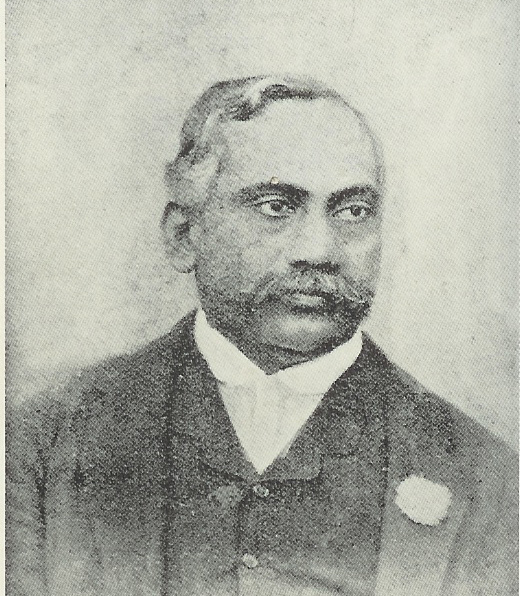
Manmohan Ghose (19 January 1869[1] – 4 January 1924) was an Indian poet and one of the first from India to write poetry in English. He was a brother of Sri Aurobindo.

Background

[edit]

Manmohan Ghose was born the son of Dr. Krishna Dhan Ghose by his wife, Swarnalata Devi Ghose (née Basu). His ancestral village was in Konnagar, present day Hooghly district.[2] His family was bengali Kayastha , and were among the early adopters of English education. Consequently, they had acquired affluence and the prestige of holding government jobs. Manmohan's father, Krishna Dhun Ghose, was a doctor in the government service, who served as Assistant Surgeon of Rangpur in Bengal. Formerly a member of the Brahmo Samaj religious reform movement, he had become enamoured with the then-new idea of evolution while pursuing medical studies in Britain.[a] Manmohan's mother, Swarnalata Devi, was the daughter of Shri Rajnarayan Bose, a leading figure in the Brahmo Samaj. He was the best friend of Laurence Binyon. Manmohan was the second of siblings. The eldest was his brother, Benoybhusan Ghose, then Manmohan himself, then his brother Sri Aurobindo (the famous revolutionary and ascetic) followed by his only sister Sarojini, and last of all was another brother, Barindrakumar (usually referred to as Barin).[3][4]

Career

[edit]
Manhohan Ghose with his daughters Mrinalini and Latika.

He was educated at The Manchester Grammar School (1881–84), St Paul's school in London (1884–87) and won an open scholarship to Christ Church, Oxford.

His work was published in Primavera:Poems by Four Authors (1890), with Laurence Binyon, Arthur S. Cripps, and Stephen Phillips. Ghose later met Oscar Wilde at the Fitzroy Street Settlement, who reviewed Primavera in Pall Mall Gazette, with particular favour towards Ghose. During this time in London Ghose met many other members of the "Rhymers' Club" set such as Lionel Johnson, Ernest Dowson, who were both very fond of him.

In 1893, after his father's death, Ghose returned to India and took a series of teaching posts at Patna, Bankipur, and Calcutta. In 1897, he was appointed assistant professor of Dacca College. After the death of his wife Malati Banerjee in 1918, his health deteriorated and he aged prematurely. For 30 years Ghose had cherished the dream of returning to England and even booked a passage along with his daughter in March 1924, but after a short illness on 4 January 1924 he died in Calcutta.

His daughter left for London and met Laurence Binyon, who helped her edit Songs of love and death, which was published in 1926.

Notes

[edit]

References

[edit]

Bibliography

[edit]
[edit]
Revisions and contributorsEdit on WikipediaRead on Wikipedia
from Grokipedia
Manmohan Ghose (19 January 1869 – 4 January 1924) was an Indian poet and university professor who wrote primarily in English, establishing himself as one of the earliest Indian authors to contribute significantly to English-language with works that fused Romantic lyricism and Indian themes. Born in in the (present-day ), he was the second son of Krishna Dhun Ghose, a prominent , and his wife Swarnalata , and the elder brother of the philosopher and nationalist Ghose. Ghose's early life was marked by his family's progressive outlook; at age eight, he was sent to Loreto House in Darjeeling for initial schooling before traveling to England in 1879 at around age ten. There, he received a distinguished education as a brilliant classical scholar, attending Manchester Grammar School from 1881 to 1884, St Paul's School in London from 1884 to 1887, and Christ Church, Oxford, from 1887 to 1890, where he earned a B.A. in Classics in 1894 despite financial challenges that forced him to leave prematurely. During his time in Britain, Ghose immersed himself in English literary circles, forming close friendships with poets such as Laurence Binyon, Ernest Dowson, and members of the Rhymers' Club, and even encountering Oscar Wilde in the 1880s. His early poetic efforts appeared in school publications like Manchester Grammar School's Ulula and culminated in the collaborative anthology Primavera: Poems by Four Authors (1890), which he co-authored with Binyon, Stephen Phillips, and G. S. Street while still an Oxford undergraduate. Returning to in 1894 after completing his B.A. amid his family's financial difficulties, Ghose embarked on an academic career with positions at , Presidency College in Calcutta, and Dacca College, later serving as professor at Presidency College from 1903 until his retirement in 1921 due to health issues. In his , he married Malati around 1898 or 1899; the couple had two daughters, Mrinalini (born 1900) and Lotika (born 1902), though his wife's prolonged illness from 1905 led to her death in 1918. Ghose's literary output, though not voluminous due to his academic commitments and personal hardships, was meticulous and influential in bridging Indian and British poetic traditions. His first solo collection, Love-Songs and Elegies of Ghanota (1898), explored themes of love and loss with a delicate, introspective style. He also composed the dramatic poem Perseus, the Gorgon Slayer between 1898 and 1916, though it remained unpublished during his lifetime, and translated Rabindranath Tagore's Parash Pathar. Following his death from heart disease, his daughters, with editorial assistance from Binyon, published the posthumous volume Songs of Love and Death (1926), which earned high praise from Binyon and W. B. Yeats for its emotional depth and technical finesse; Yeats specifically commended individual poems like "Himself" in the collection's introduction. Later, his daughters oversaw the release of four volumes of Collected Poems (1970–1977), cementing Ghose's legacy as a pioneering voice in Indian English poetry.

Early Life and Education

Family Background

Manmohan Ghose was born on 19 January 1869 in , , British India, though his family's ancestral home was in , . He belonged to a family of middle-class intellectuals who were early adopters of Western education. His father, Dr. Krishna Dhan Ghose, was a doctor trained in , serving as a civil surgeon in various postings; he died in 1892, an event that influenced the family's decision to return to from abroad. His mother, Swarnalata Devi Ghose, was the eldest daughter of Rajnarayan Bose, a leading reformer and nationalist thinker, which provided the family with indirect exposure to progressive and reformist ideas. As the second of six siblings—eldest brother Benoybhushan, younger brother (later a famed philosopher and revolutionary), a brother who died in childhood, sister Sarojini, and youngest brother Barindra—Manmohan grew up in an intellectually stimulating environment.

Schooling in England

Prior to traveling to , Ghose attended Loreto Convent School in for initial education starting at age eight. Manmohan Ghose arrived in in 1879 at the age of ten, sent abroad along with his mother and brothers due to his father's prominent position as a civil in the British medical service. Under the guardianship of William R. Drewett, a family friend and tutor, Ghose received private instruction in classics and English literature before formal schooling. In 1881, Ghose was admitted to , where he studied until 1884, demonstrating exceptional aptitude in classical subjects. He topped his form in Latin, , and English during his first year, and later excelled in Greek and , laying a strong foundation in Western classical education. Ghose transferred to St Paul's School in in 1884, remaining there until 1887 as a day scholar. During this period, he honed his scholarly skills while developing a profound interest in and poetry, notably through his close friendship with classmate , a budding poet who later acknowledged Ghose's influence in introducing him to and . In July 1887, Ghose secured an open classical scholarship to , where he entered in and pursued studies in (Greek and Latin), obtaining a second-class in Classical Moderations in 1889 but leaving due to financial difficulties; he returned in 1893 and earned his B.A. in in 1894. At Oxford, he continued to engage with English literary circles, particularly through his ongoing association with Binyon, who joined him there in 1888. This extended exposure to England's premier educational institutions immersed Ghose in Western literary and classical traditions, profoundly shaping his poetic style by fostering a synthesis of Eastern heritage with Romantic and classical influences.

Literary Career

Early Publications

Manmohan Ghose's first major publication was Primavera: Poems by Four Authors, released in 1890 by B.H. Blackwell in , co-authored with fellow undergraduates , Stephen Phillips, and Arthur Shearly Cripps. This slender volume of 43 pages marked Ghose's debut in , featuring four of his contributions: "Tis my twentieth year," "Raymond and Ida," "," and "A Dream." The collection as a whole comprised lyrical verses from the four poets, introduced by a preface from , who highlighted the collaborative spirit among the young writers. Ghose's poems in Primavera blended Romantic influences—such as vivid nature imagery and emotional intensity—with subtle Indian themes, reflecting his hybrid cultural identity as an Indian student immersed in English literary traditions. In "Raymond and Ida," he explored romantic love through a of connection and loss, employing artful imperfect rhymes and delicate . "A Lament" evoked for a departed beloved amid natural elements like stars, roses, and changing seasons, while "A Dream" incorporated meditative undertones suggestive of Eastern , with references to spring flowers and trees in a dreamlike reverie. "Tis my twentieth year" reflected on youth and poetic aspiration. These works demonstrated Ghose's notable command of English prosody, combining refinement with a "foreign feeling" that Symonds praised for its peculiar subtlety. The reception of Primavera garnered modest critical notice in late Victorian literary journals, surprising given the poets' relative anonymity, as it quickly sold out and prompted a second edition. Symonds' contributed to its appeal, positioning the volume within emerging aesthetic currents, and it established Ghose as an early voice in the through its lyrical elegance and introspective depth. His , where he honed his poetic craft alongside Binyon and others, served as a key catalyst for this initial output.

Associations in London

During his time in London in the late 1880s and early 1890s, Manmohan Ghose formed significant associations within the city's vibrant literary circles, particularly as an associate of the Rhymers' Club, a group of poets centered around the Cheese pub and known for its decadent sensibilities. Although not a formal member, Ghose mingled with key figures such as and , who both held him in high regard and fostered his poetic development through shared discussions on and verse. These interactions exposed him to the club's emphasis on introspective, symbolist-influenced , bridging Victorian traditions with emerging modernist tendencies. A notable encounter occurred through the 1890 publication of Primavera, a collaborative anthology with Laurence Binyon, Stephen Phillips, and Arthur S. Cripps, which drew praise from Oscar Wilde in his Pall Mall Gazette review. Wilde commended Ghose's contributions for their exquisite sensibility, highlighting how quick and subtle are the intellectual sympathies of the oriental with northern culture, thus affirming Ghose's unique position in the Aesthetic movement. This recognition elevated Ghose's profile among London's literati, underscoring his ability to blend Eastern introspection with Western formalism. Ghose's closest friendship developed with , beginning at St. Paul's School in the mid-1880s, where they bonded over classical literature and poets like . This partnership led to joint projects, including Primavera, and evolved into a lifelong mutual admiration, with Binyon crediting Ghose for sparking his own poetic interests and describing their early rapport as akin to that of Wordsworth and Southey—marked by reciprocal inspiration and encouragement. These connections placed Ghose within late 19th-century London salons that fused Aestheticism's art-for-art's-sake ethos with nascent modernist experimentation, including gatherings linked to the Hobby Horse journal and figures like W.B. Yeats. Such environments profoundly shaped his verse, emphasizing sensory refinement and cultural hybridity over didacticism.

Academic Career in India

Teaching Positions

Following the death of his father, Krishna Dhan Ghose, in 1893, Manmohan Ghose returned to India and began his academic career with an initial teaching position at Patna College, where he served as assistant professor of English. He subsequently took on roles at institutions in Bankipur (now part of Patna), focusing on English literature and classics, which drew from his earlier education in England to inform a teaching style that blended classical Western traditions with emerging Indian perspectives. Ghose later moved to colleges in Calcutta, including Presidency College, where he lectured on poetry and European literature from the late onward, contributing to the curriculum through his expertise in Romantic and Victorian works. In 1897, he was appointed assistant professor at Dacca College (now in , ), advancing to full professor in 1901, and continued teaching there until his transfer to Presidency College in 1903, where he served until his death in 1924, though he ceased active teaching in 1921 due to deteriorating health. At Dacca, he emphasized comparative literature, bridging English and Indian traditions by incorporating analyses of European poetry alongside translations and studies of works like Rabindranath Tagore's , fostering cross-cultural appreciation among students. Throughout his career, Ghose faced challenges in adapting Western pedagogical methods—rooted in his English training—to the Indian educational context, particularly amid rising , which led to political of his family due to his brothers' activities and contributed to his sense of professional isolation and exhaustion. Despite these obstacles, his tenure helped introduce nuanced literary discussions in colonial institutions, prioritizing intellectual depth over .

Later Works and Challenges

Upon returning to India in the late 1890s, Manmohan Ghose continued his poetic endeavors alongside his academic commitments, producing substantial but largely unpublished work during the early decades of the 20th century. His ambitious epic Perseus, the Gorgon Slayer between 1898 and 1916, though it remained unfinished and unpublished in his lifetime due to the demands of his teaching positions at institutions like Presidency College in Calcutta. These professional obligations, combined with administrative roles such as inspector of schools in Chota Nagpur from 1903, increasingly limited his time for revision and publication, leaving much of his output in manuscript form. The rise of the after 1905 indirectly influenced Ghose's creative life, as the revolutionary activities of his brothers—Aravinda () and Barindra Kumar Ghose—drew British surveillance upon the family, fostering an atmosphere of suspicion that curtailed his literary freedom. Although Ghose himself remained apolitical and uninvolved in nationalist politics, this external pressure amid the broader anti-colonial ferment. His during this period subtly explored themes of cultural hybridity, reflecting the tensions of his Anglo-Indian identity and exile-like existence in his homeland, building on earlier motifs of displacement without overt political engagement. Ghose's health began to decline around 1918 following the death of his wife, Malati Banerjee, from a nervous disorder, which exacerbated his own physical frailties and led to partial blindness in one eye by 1921, severely restricting his ability to write manually. In response, he dictated later compositions, including the sequences Immortal Eve and Orphic Mysteries, which were posthumously assembled and published as Songs of Love and Death in 1926, addressing mortality, love, and mythic renewal amid personal loss. These years also presented broader challenges, including profound isolation from the vibrant literary circles of his youth, such as his associations with and the Rhymers' Club, as his return to severed those connections and immersed him in a culturally divergent environment. Balancing the rigors of academia with creative pursuits proved increasingly arduous, compounded by the era's political tensions and his deteriorating , culminating in plans for a restorative return to in 1924—a dream nurtured for three decades—that he could not realize.

Personal Life and Legacy

Marriage and Family

Manmohan Ghose married Malati Banerjee between December 1898 and February 1899, the daughter of Kailash Chandra Bannerjee, a who owned a shop in Ganderia, Dacca. The couple settled initially in Dacca, where Ghose served as an assistant professor at Dacca College from 1897. Their family life revolved around this location before relocating to Calcutta on 21 October 1903 following Ghose's transfer to Presidency College. The marriage produced two daughters: the elder, Mrinalini (born 22 October 1900), and the younger, Lotika (born 1902). Lotika later played a significant role in preserving her father's legacy by traveling to in the 1920s, where she collaborated with poet to edit and publish Songs of Love and Death in 1926. During Ghose's professional commitments, including his stint as an inspector of schools that involved periodic travels across regions, his wife and daughters maintained the household in Calcutta, providing essential stability amid his absences. In 1905, Malati Banerjee suffered an injury from a fall in Dacca, resulting in and loss of speech and memory; she recovered partially by 1909 but relapsed in early 1914 with another hysterical fit leading to , requiring devoted care from Ghose until she succumbed to during an in late October 1918. Her death profoundly affected Ghose, exacerbating his emotional distress and contributing to a rapid decline in his health. Unlike his younger brother , who engaged deeply in political activism, Ghose's family remained insulated from such involvements, focusing instead on domestic and personal matters.

Death and Posthumous Recognition

Manmohan Ghose died on 4 January 1924 in Calcutta after a short illness, just three weeks before his planned retirement from Presidency College and return to . Following his death, his daughter Lotika Ghose collaborated with the British poet to edit and publish Songs of Love and Death in 1926, a collection that compiled many of Ghose's unpublished poems and included an introduction by Binyon highlighting his lyrical talent. Later posthumous editions, such as the four-volume Collected Poems edited by Lotika Ghose (1970–1977) and Selected Poems (1974), further preserved his oeuvre, drawing attention to his fusion of Victorian influences with Indian themes. Ghose's work has received renewed scholarly interest in the late 20th and early 21st centuries, particularly within studies of Anglo-Indian and colonial Anglophone , where his contributions are examined for their role in bridging Eastern and Western literary traditions. His lyrical style, often contrasted with the more philosophical and nationalist bent of his brother Sri Aurobindo's , underscores his place in early verse as a pioneer of hybrid forms that prefigure postcolonial expressions.
Add your contribution
Related Hubs
User Avatar
No comments yet.