Hubbry Logo
Manuel LisaManuel LisaMain
Open search
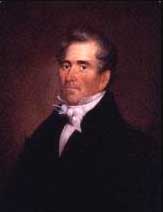
Manuel Lisa
Community hub
Manuel Lisa
logo
8 pages, 0 posts
0 subscribers
Be the first to start a discussion here.
Manuel Lisa
Manuel Lisa
from Wikipedia

Manuel Lisa, also known as Manuel de Lisa (September 8, 1772, in New Orleans Louisiana (New Spain) – August 12, 1820, in St. Louis, Missouri), was a Spanish citizen and later American citizen who, while living on the western frontier, became a landowner, merchant, fur trader, United States Indian agent, and explorer. Lisa was among the founders, in St. Louis, of the Missouri Fur Company, an early fur trading company. Manuel Lisa gained respect through his trading among Native American tribes of the upper Missouri River region, such as the Teton Sioux, Omaha and Ponca.

Key Information

After being appointed, as US Indian agent, during the War of 1812, Lisa used his standing among the tribes to encourage their alliance with the United States and their warfare against tribes allied with the United Kingdom.[2] While still married to a European-American woman in St. Louis, where he kept a residence, in 1814 Lisa married Mitane, a daughter of Big Elk, the principal chief of the Omaha people, as part of securing their alliance. They had two children together, whom Lisa provided for equally in his will with his children by his other marriage.

Early life

[edit]

Little is known of the early life of Manuel Lisa, but he is believed to have been born in 1772 in New Orleans, then part of Spanish Louisiana. It was ceded to Spain by France after the British victory in the Seven Years' War, when the British gained Florida in exchange with Spain for French lands west of the Mississippi River.[3][4] His father, Christoval de Lisa, was born in Murcia, Spain, while his mother, Maria Ignacia Rodriguez, was born to a colonial family in St. Augustine, Florida.[3] It is likely that Christoval came to Spanish Louisiana in the service of the governor Alejandro O'Reilly, who started his tenure in 1769.[3] Manuel had at least one elder brother, Joaquin Lisa, who worked with him in his early trade expeditions.[5][6]

By 1789, Manuel Lisa and his brother Joaquin were trading on the Mississippi River in New Madrid, Missouri; the next recorded mention of Manuel Lisa was again in New Madrid, after he had returned from trading along the Wabash River.[3]

Marriage and family

[edit]

By 1796 Lisa had married Polly Charles Chew (d. 1817), a young widow from New Orleans.[citation needed] After he obtained a land grant in the Missouri area, they relocated to St. Louis, which was the center of the region's thriving fur trade, established primarily by French colonists, some also from New Orleans. Polly Lisa lived in the city with their three children while her husband made his long expeditions to various Indian territories on the Upper Missouri River.

After founding Fort Lisa about 1813, a post in what is now part of Omaha, Nebraska, Lisa worked to gain alliances with local tribes, such as the Omaha. After being appointed US Indian agent in the area by the governor of the Missouri Territory, in 1814 Lisa married Mitane, a daughter of Big Elk, the principal chief of the Omaha until 1846. Both sides saw it as a strategic alliance. Lisa and Mitane had two children together, Rosalie and Christopher,[1] born in subsequent years after Lisa's expeditions and wintering over at Fort Lisa.

"Kinship and ties of affinity proved more than merely useful to the traders. They were both a source of power and a necessity if one was to achieve success in the trade."[7] Only traders were accepted for marriages to high-status women, such as the daughters of chiefs, as the chiefs saw such marriages as a way to increase their own power. As the Omaha had a patrilineal system, the children of Lisa and Mitane were considered "white" as their father was "white". The tribe protected them, but unless such mixed-race children were officially adopted by a man of the tribe, they were not considered Omaha and had no real place in a gens (clan), the basic kinship unit.[8]

Polly Chew Lisa died in 1817 in St. Louis while Manuel Lisa was away on an expedition. After his return the following year, on August 5, 1818, Lisa married the widow Mary Hempstead Keeny, a sister of his friend, the attorney Edward Hempstead. As a widow, she had migrated with her parents and siblings from Connecticut to join four brothers already in Missouri.[9][10]

In 1819 Lisa took his new wife Mary with him for his next expedition and winter at Fort Lisa, Nebraska. He tried to gain custody of his children with Mitane, who let him take Rosalie back to St. Louis the next year for education at a Catholic school, but refused to let him have Christopher.[1] Lisa included provisions for both Rosalie and Christopher in his will, along with his children by his first wife Polly Chew. Only Rosalie Lisa Ely (c. 1815 – 1904) survived to adulthood, married and had children.[11]

Land and purchases of enslaved people in the Louisiana Territory

[edit]

In 1799, Manuel Lisa requested a land grant; according to his letter to the Spanish governor, Manuel wanted it "upon one of the banks of the River Missouri, in a place where may be found some small creek emptying into the said river, in order to facilitate the raising of cattle, and, with time, to be able to make shipments of salted and dried meat to the capital." After being awarded the grant, Manuel Lisa and his wife relocated to St. Louis, where they purchased a home on Second Street near the Mississippi River. In the late 1790s and early 1800s, Lisa purchased numerous enslaved people. [12]

Early trade expeditions

[edit]

Lisa likely moved to St. Louis to enter the fur trade, the major part of the regional economy. By 1802, he had obtained a trade monopoly from French officials (the territory had traded hands again) with the Osage Nation. (The monopoly had formerly been held by Auguste Chouteau, a French colonist and first settler of St. Louis).[3] But, after the Louisiana Purchase and annexation of the territory by the United States, Lisa's relationship with the new government officials was not as strong. He competed with Pierre Chouteau, a prominent member of the founding family, who had gained a position as a U.S. government Indian agent; Chouteau and his brother had gained their wealth and social positions through the fur trade and as merchants.[3]

Lisa had difficult relations with James Wilkinson, then-governor of U.S. Louisiana Territory.[3] Later found to have been a secret agent of the Spanish Crown, Wilkinson denied Lisa's requests to establish trade routes to Santa Fe, New Mexico, which was still under Spanish colonial rule.[3] In 1806, Wilkinson warned Zebulon Pike, undertaking Pike's Expedition, to prevent Lisa's efforts to make business connections to Santa Fe.[13]

Having been stymied by the government and the Chouteau family, Lisa began organizing a trade expedition to the upper Missouri River region.[3] On the first expedition, which departed in April 1807, Lisa and his company of 42 men (including John Colter, George Drouillard or Benito Vázquez) [14] moved up the Missouri until they reached the mouth of the Yellowstone River. After ascending the Yellowstone some 170 miles (270 km), Lisa established a trading post on November 21 at the mouth of the Bighorn River in present-day Montana.[3] Named Fort Raymond for his son (also known as Fort Manuel), it was the first such outpost in the upper Missouri region.[3]

Lisa assigned John Colter of his party to explore the region and trade with the nearby Blackfeet tribe.[3] During his exploration, Colter became the first known European to visit what is now known as Yellowstone National Park; he reported on what was named the eponymous Colter's Hell.[3]

In July 1808, after a successful trading season, Lisa departed Fort Raymond, leaving behind a small party of men for the winter.[3] While operations from the area were profitable for Lisa, the outpost suffered frequent attacks by the Blackfeet. During these years of Lisa's expeditions to the upper Missouri, his wife Polly and children stayed in St. Louis.[15]

Sketch of Fort Lisa, North Dakota.

Creation of the Missouri Fur Company

[edit]

Upon his return to St. Louis in August 1808, Lisa established the Missouri Fur Company (sometimes referred to as the St. Louis Missouri Fur Company), a joint venture with Jean Pierre Chouteau, Pierre Chouteau, Jr., William Clark, Andrew Henry, Francois Marie Benoit,[16] and other prominent St. Louis fur traders.[17] Jean Pierre Chouteau had also come from New Orleans, so the two men had ties to its French and Spanish Creole community. The company was created as a temporary trust by its founders, designed to either expire or reorganize after three years.[13]

In the spring of 1809, Lisa returned to Fort Raymond with a major expedition, made up of 350 men, about half of whom were Americans, the rest French Canadians and Creoles. They had 13 barges and keel-boats loaded with food, munitions, and articles suitable for the Indian trade, and the trip up the Missouri River was slow. Lisa transferred the fort's contents to the new company, and abandoned the isolated post.[18]

Directing the large force of men, Lisa built the first Fort Lisa (also called Fort Manuel) near what is now Bismarck, North Dakota. It was near a Gros Ventres village between the mouth of the Little Missouri and the Knife rivers.[19] After the new fort was constructed, Lisa returned to St. Louis in October 1809.[17] The next year, he ascended the river to Fort Lisa and conducted more trading operations. He returned to St. Louis in the autumn of 1810.[13]

In April 1811, Lisa began a final expedition of the Missouri Fur Company's first three years; he had two goals: to locate the then-lost fur trader Andrew Henry, and to transport the remaining property from Fort Lisa to St. Louis.[13] The expedition became famous in its day as the company's barges heading up the Missouri overtook the rival Astor Expedition, led by William Price Hunt for the American Fur Company, which had set out three weeks earlier.[13] Lisa remained among the Mandan and Arikara tribes until Henry came downriver, and they returned to St. Louis together at the end of 1811.[13] In 1811 Lisa was host to the first recorded tourist to present-day South Dakota: Pittsburgh lawyer Henry Marie Brackenridge.[20]

When the Missouri Fur Company was reorganized during the winter of 1811-1812, Lisa became more prominent among its leadership.[21] That year he built a brick home in St. Louis as a measure of his success.[22] (Earlier he had built a stone warehouse for his fur company, which stood until the late 1930s, when it was demolished for other development.[23])

In May 1812, Lisa went upriver to Fort Lisa, trading there until his return to St. Louis on June 1, 1813.[13] Lisa happened to be at Fort Lisa in North Dakota when Sacagawea, the historic interpreter and guide for the Lewis and Clark Expedition, died at the fort on December 20, 1812. She was buried there.[24]

On this journey he established a new fort further downriver, also called Fort Lisa, in what is now the North Omaha area of Omaha, Nebraska.[13] Lisa at that time became the first known United States settler of Nebraska. His outpost became among the most important in the region, and the basis for the development of the major city of Nebraska.[19]

War of 1812

[edit]

In June 1812 the U.S. Congress voted to declare war on the United Kingdom. After Lisa's return to St. Louis in 1813, he heard fears expressed that British agents would encourage the upper Missouri tribes to attack settlements throughout the northern and western territories.[13] The war disrupted the fur trade with the northern tribes on both sides of the border; in 1813 the British and American Indian allies burned Fort Lisa of North Dakota. Like other traders, Lisa had to suspend his operations for the period of the war.

Early in 1814, William Clark, governor of the Missouri Territory, appointed Lisa as US Indian Agent to the tribes located above the mouth of the Kansas River, at an annual salary of $548.[13] Lisa set out for Fort Lisa of Nebraska, where he secured alliances between the United States and Missouri-area tribes, such as the Omaha and Ponca. He was especially effective among the Teton Sioux further upriver in present-day Minnesota,[25] whom he organized to send war parties against tribes allied with the British.[13] While securing these alliances, in 1814 Lisa took Mitain as a consort; she was the daughter of Big Elk, the principal chief of the Omaha people. (Lisa was still legally married to Polly, his first wife, but European-American men often took "country wives" among their Native American allies to build their relationships.)[26]

Later, the U.S. government recognized Lisa, calling his efforts as a "great service in preventing British influence" in the northern area.[27] After the war's conclusion in 1815, Lisa renewed his yearly trade expeditions to the area, staying each winter at Fort Lisa, Nebraska. He eventually had two children with Mitain: Rosalie and Christopher.[1][28]

Later life

[edit]

After the war, Lisa's reputation in St. Louis improved as a result of his success in the fur trade and having aided the Americans. In 1815, he invited 43 Native American chiefs and headmen from various tribes living between the Mississippi and Missouri to the city to strengthen their alliance with the Americans, and entertained them for about three weeks. He conducted them to Portage des Sioux to meet with the commissioners William Clark, Edwards and Auguste Chouteau to sign treaties of friendship. About two years later, he hosted another 24 chiefs from the Pawnee, Missouri and Sioux before another treaty signing.[29]

Lisa's house in St. Louis
Mary Manuel Lisa

In St. Louis, Lisa was considered an ally of the landed elite.[30] He became more affiliated with leading American members of St. Louis, including Edward Hempstead, a land claims attorney, and Thomas Hart Benton, editor of the St. Louis Enquirer.[31] In the fall of 1817, while the trader was on an expedition up the Missouri, his first wife Polly Lisa died.[26]

In 1818 Lisa was with most of the residents in St. Louis who turned out to welcome the newly assigned Bishop Louis William Du Bourg. He had decided to make St. Louis the seat of the diocese of Louisiana and the Floridas. Lisa and other Creole families pledged substantial funds to build a church (now called the Old Cathedral) near the river that was fit for the diocese.[32] After his return from that year's expedition, on August 5, 1818, Lisa married the widow Mary Hempstead Keeny (a sister of Edward Hempstead).[33][34] As a measure of Lisa's social standing, Pierre Chouteau was a witness at his second wedding.[35]

After living a year in St. Louis, Lisa took Mary with him for the winter of 1819-1820 to Fort Lisa in Nebraska (Mary Lisa reportedly became the first woman of European descent to travel so far up the Missouri River).[36] When he and Mary arrived, Lisa sent his second wife Mitain away from the fort.

By the time of his 1819 expedition, Lisa had developed strong relationships with the Omaha, Ponca, Yankton and Teton Sioux, Mandan and Arikara peoples. He was instrumental in extending the "commercial outreach of St. Louis" to the Yellowstone and Bighorn rivers and to tribes previously more under British influence.[37] By 1829 the Missouri Fur Company had invested capital of about $10,000, highest among the local firms.[38]

Although Lisa returned to St. Louis in good health in April 1820, he soon became ill.[39] The unidentified illness caused his death at Sulphur Springs (now within the city of St. Louis) on August 12, 1820. He was buried at Bellefontaine Cemetery at the Hempstead family plot.[40][41] Although his will provided for $2000 for each of his children upon reaching adulthood (including those by Mitain[42]), there is no evidence that they received any money. The historian Chittenden believed Lisa left few assets to his estate.[43]

After his death, Joshua Pilcher led the Missouri Fur Company to do business under various names until about 1830. By 1830, John Jacob Astor had gained a monopoly with his American Fur Company. As the fur trade had been declining overall with changes in taste, Pilcher dissolved the Missouri Fur Company.

Establishments

[edit]

Manuel Lisa was responsible for constructing at least seven forts as trading posts in the American West.[44] They included:

See also

[edit]

Notes

[edit]

References

[edit]

Further reading

[edit]
[edit]
Revisions and contributorsEdit on WikipediaRead on Wikipedia
from Grokipedia
Manuel Lisa (September 8, 1772 – August 12, 1820) was an American fur trader, merchant, and explorer of Spanish descent who spearheaded the commercial fur trade on the upper after the , co-founding the Missouri Fur Company and erecting the first permanent trading posts in regions now comprising and . Born in New Orleans to Spanish parents Christobal de Lisa and Maria Ignacia Rodriguez, Lisa honed his mercantile skills trading along the and rivers before establishing himself in as a prominent supplier to westward ventures. In 1807, he organized and led the inaugural major fur-trading expedition up the , navigating perilous waters and tribal territories, reaching the mouth of the Yellowstone River and ascending it to construct Fort Raymond—the earliest fortified trading outpost—at the junction of the Bighorn and Yellowstone rivers, marking the onset of sustained American commercial penetration into the northern Rockies. Through the Missouri Fur Company, which he reorganized multiple times amid competitive pressures and tribal conflicts, Lisa pioneered a model of fortified depots and trapper networks that influenced subsequent outfits, including those of the , while also serving as a U.S. Indian agent appointed in 1814 by Missouri Territory Governor William Clark, negotiating truces with and other nations essential for trade continuity. His relentless expeditions, including the establishment of Fort Manuel Lisa near the Knife River in 1809 and later posts amid the disruptions, underscored his role in bridging eastern markets with western resources, though his enterprises contended with Blackfeet hostility and rival British influences until his death in from illness.

Origins and Early Career

Birth and Family Background

Manuel Lisa was born on September 8, 1772, in New Orleans, within Spanish Louisiana. He was the son of Christóbal de Lisa, a native of , , who immigrated to the American colonies around the time acquired Louisiana in 1762, and María Ignacia Rodríguez, from a colonial family in . Lisa's parents were of Spanish descent, reflecting the colonial networks of the Mississippi Valley under Spanish rule, though details on siblings or extended family remain scarce in historical records. While some secondary accounts propose a birthplace in or the , primary historical evidence from and regional archives favors New Orleans.

Settlement in New Orleans and Move to St. Louis

Manuel Lisa was born on September 8, 1772, in New Orleans, then part of Spanish Louisiana, to Christobal de Lisa, a native of , who worked for the Spanish government, and Maria Ignacia Rodriguez Lisa. Little is documented about his childhood or initial activities in New Orleans, though the city's role as a major port facilitated early exposure to mercantile trade networks in the Mississippi Valley. Prior to relocating westward, Lisa engaged in trading and storekeeping in , establishing himself in frontier commerce. In 1796, he married Polly Charles Chew, with whom he had two sons, Raymond and Manuel, before moving the family from to around 1798. This relocation positioned him in Spanish Upper Louisiana, a burgeoning hub for due to its proximity to the and access to Native American territories. By 1799, Lisa and his family had settled permanently in , then a modest village of about 1,000 residents under Spanish control until the 1803 . The move aligned with his ambitions in the fur trade, which dominated the regional economy, allowing him to leverage mercantile skills amid growing American interest in western expansion. In , he quickly acquired land and initiated business ventures, including supply contracts with the U.S. Army post-1803, marking his transition from itinerant trader to established frontiersman.

Initial Mercantile Activities and Land Acquisitions

Upon settling in around 1799, Manuel Lisa secured a from Spanish authorities for property situated on one of the banks of the , which supported his relocation and early establishment in the territory. This acquisition preceded the 1803 , positioning Lisa advantageously in a region transitioning from Spanish to American control. In , Lisa developed a mercantile enterprise centered on regional trade, capitalizing on the town's role as a hub at the confluence of the and rivers. His operations involved general commerce, including early involvement in furs, amid competition from entrenched traders like the Chouteau family. By 1802, Lisa obtained an exclusive trading privilege with the along the and Osage rivers, disrupting prior monopolies held by rivals and expanding his mercantile reach into Native American commerce. This deal, granted under French administration following the brief 1800 transfer from , underscored his aggressive business tactics and laid groundwork for deeper engagements, though it ended with U.S. sovereignty in 1804.

Entry into the Fur Trade

Motivations and Preparations for Western Expansion

Manuel Lisa's entry into the western was primarily driven by the economic promise of untapped beaver populations in the Upper region, as revealed by the Lewis and Expedition's reports of abundant fur-bearing animals upon their return to in 1806. With eastern fur resources depleted from overtrapping, Lisa sought to capitalize on these newly accessible territories for commercial gain, aiming to trade manufactured goods with Native American tribes in exchange for pelts destined for European hat-making markets. His motivations aligned with the broader post-expedition rush among merchants to exploit the frontier's resources before competitors, positioning the venture as the first large-scale commercial push upriver. In preparation for the 1807 expedition, Lisa partnered with Pierre Menard, a fellow trader, to assemble a force of approximately 42 men, including seasoned frontiersmen such as , John Potts, and —veterans of the Lewis and Clark journey who joined along the route. The party equipped two keelboats laden with trade goods tailored for Native American exchange, including glass beads, Belgian firearms adapted for the trade, ammunition, foodstuffs, and other merchandise like cloth and tools, alongside provisions for the arduous upstream journey. Lisa's strategy emphasized establishing permanent trading posts to facilitate ongoing fur collection and storage, departing from in late spring 1807 with the intent to reach the confluence and beyond for direct and tribal .

1807 Missouri River Expedition

In 1807, Manuel Lisa organized the first major commercial trading expedition up the following the , aiming to establish networks with Native American tribes in the upper river regions. Drawing on reports from the , Lisa partnered with Menard and William Morrison to outfit the venture with trade goods valued at approximately $16,000. The party, consisting of 50 to 60 men including experienced frontiersmen such as , , John Potts, and Peter Weiser—veterans of the Lewis and Clark journey—departed on April 19, 1807, aboard two keelboats. These flat-bottomed vessels were propelled by oars, poles, and sails against the river's powerful currents, sandbars, and shifting channels, a grueling ascent that tested the crew's endurance over thousands of miles. During the upstream voyage, the expedition encountered several Native American groups, including the , , and , negotiating passage and initial trades amid occasional hostilities. Lisa employed his diplomatic skills and gifts to secure safe conduct, though tensions foreshadowed future conflicts with tribes like the Blackfeet. By August, the group reached the mouth of the , pressing onward to the Bighorn River confluence, arriving on November 21, 1807. The expedition's success in penetrating the upper Missouri laid the foundation for sustained American fur trade operations, yielding initial pelts and intelligence on beaver-rich territories, despite the physical toll and risks from environmental hazards and indigenous resistance. This venture demonstrated Lisa's bold entrepreneurial approach, prioritizing direct engagement over reliance on intermediaries.

Establishment of Initial Trading Posts

In spring 1807, Manuel Lisa organized and led an expedition of approximately 50 men up the , aiming to establish fur trading operations in the upper reaches of the river system. The party, equipped with keelboats loaded with trade goods, ascended the river despite challenges from sandbars, strong currents, and encounters with Native American tribes such as the Teton . By late summer, the expedition reached the confluence, where Lisa directed efforts to construct the first permanent in the region. Fort Raymond, also known as Fort Manuel or Manuel's Fort, was established in mid-November 1807 at the mouth of the Bighorn River on the in present-day . Named after Lisa's son , the outpost consisted of log stockades and served as a base for trading with and other tribes while dispatching trappers like into the surrounding mountains to secure beaver pelts. This strategic location facilitated access to rich fur-bearing territories and marked the initial foothold for organized American fur trade beyond the villages, predating similar efforts by competitors. Operations at Fort Raymond focused on exchanging merchandise for furs, with Lisa emphasizing direct engagement with indigenous groups to build alliances and monopolize regional commerce. The post operated successfully for several years, yielding substantial returns on investment through the collection of furs transported back to . However, it faced threats from hostile tribes and environmental hardships, underscoring the risks of frontier trading ventures. Fort Raymond's establishment demonstrated Lisa's foresight in exploiting post-Lewis and Clark expedition reports of abundant resources, laying the groundwork for his dominance in the upper Missouri trade.

Formation and Leadership of the Missouri Fur Company

Company Organization and Partnerships

The St. Louis Missouri Fur Company, the initial incarnation of what became known as the Missouri Fur Company, was formally organized on March 7, 1809, as a three-year among prominent merchants and traders to monopolize above the villages on the upper . The partners included Benjamin Wilkinson, Pierre Chouteau Sr., Manuel Lisa, Augustin Chouteau Jr., Reuben Lewis, , Sylvestre Labbadie from ; Pierre Menard and William Morrison from ; Andrew Henry from ; and Dennis Fitzhugh from . Capital was structured around equal contributions from each partner for outfits, merchandise, and expedition expenses, with decisions on expenditures requiring majority approval; the company accepted initial assets including merchandise valued at specified rates and 38 horses from Lisa, Menard, and Morrison. Leadership roles were delineated in the , with Pierre Chouteau Sr. designated to command the expedition, Manuel Lisa and Benjamin Wilkinson appointed as factors to manage on-site trading operations, and serving as the St. Louis-based agent responsible for handling incoming peltry, funds, and correspondence. In practice, Lisa exerted dominant influence as the operational leader, personally leading upriver expeditions and establishing trading posts, leveraging his prior venture's experience despite the formal structure. Trading activities were restricted to regions above the nation to avoid competition, with violations punishable by forfeiture of interest and expulsion; new partners required unanimous consent. The company dissolved in January 1812 amid financial strains and internal disputes, after which Lisa reorganized operations independently or with subsets of partners for subsequent voyages. A major reorganization occurred in 1819 under the simplified name Fur Company, incorporating Lisa alongside Thomas Hempstead, Andrew Woods, Joseph Perkins, Moses B. Carson, and Joshua Pilcher, shifting toward broader investment from elites to sustain upper dominance. This structure emphasized Lisa's field command while distributing risk through merchant capital, reflecting the era's joint-stock model for frontier ventures.

Operations Along the Upper Missouri

In spring 1807, Manuel Lisa organized an expedition of approximately 60 men that ascended the to establish trading operations in the upper reaches, constructing —also known as Manuel's Fort—at the mouth of the Bighorn River on the Yellowstone in present-day by November of that year. This post served as the first permanent trading structure in the region, facilitating exchanges with the Crow tribe through goods such as beads, knives, and cloth for beaver pelts and other furs. Following the formal organization of the Missouri Fur Company in February 1809, Lisa integrated Fort Raymond into the company's network, dispatching trapping parties from the post to harvest in surrounding streams while encouraging Crow hunters to bring pelts for barter. Operations emphasized direct with cooperative tribes like the , supplemented by company trappers who ventured into the Yellowstone and Bighorn drainages, yielding returns of furs transported downstream via keelboats to markets. Lisa's agents, including scouts like and Edward Rose, promoted the post among bands to build alliances and secure steady supplies, though independent trapping often provoked tensions with neighboring groups. In 1810, company partners Pierre Menard and Andrew Henry led a contingent of about 32 men, including veterans from Lisa's earlier ventures, to the Three Forks of the —where the Jefferson, Madison, and Gallatin rivers converge—to erect a new aimed at accessing rich grounds. However, the site lay within Blackfeet territory, and without prior consent or alliances, the post faced immediate hostility; Blackfeet warriors besieged the fort for several months, killing at least 20 trappers through raids and starvation tactics, forcing the survivors to abandon the location by early 1811. This failure highlighted the risks of unilateral encroachment on tribal lands, curtailing company ambitions in the immediate Three Forks area and shifting focus back to more defensible sites like for subsequent seasons. Despite these setbacks, the company's Upper Missouri efforts under Lisa's direction amassed significant fur returns by leveraging riverine and selective tribal partnerships, with operations winding down around amid broader competitive pressures and the onset of . Lisa's approach prioritized fortified posts as bases for both Indian trade and autonomous trapping, establishing a template for later Rocky Mountain fur enterprises, though chronic shortages of supplies and hostile encounters limited profitability.

Competition and Trade Dominance

The Fur Company, under Manuel Lisa's direction, secured early dominance in the upper fur through pioneering expeditions and strategic post establishment, effectively controlling access to key beaver-rich territories from 1807 onward. Lisa's 1807 keelboat expedition of approximately 43 men ascended the to the confluence, where they overwintered before constructing Fort Raymond (also known as Fort Lisa) at the Three Forks in present-day by mid-1808, the first American trading fort in the northern Rockies. This position enabled exclusive with and other tribes, yielding substantial returns—estimated at over 10,000 plews ( pelts) in the years—while deterring entrants by monopolizing tribal alliances and supply lines from . Lisa maintained this edge via aggressive tactics, including price undercutting to outbid itinerant free trappers and leveraging federal appointments as deputy superintendent of Indian trade from , which granted official sanction and intelligence on rivals. The company's , blending direct trapping with tribal barter, processed furs at fortified depots like the Fort Manuel Lisa near modern , minimizing losses to raids and ensuring steady downstream shipments; by 1812, annual outfits exceeded $20,000 in value, outpacing fragmented competitors. Competition intensified during the , as British-aligned traders from incited and hostilities against American posts, disrupting Lisa's operations and forcing defensive alliances with tribes like the Omaha. Post-war, John Jacob Astor's posed the gravest threat, dispatching rival outfits upriver by 1817 and prompting Lisa to reorganize the Missouri Fur Company in 1819 with partners like Pilcher to consolidate resources against Astor's chartered steamships and capital advantages. Despite these incursions, Lisa's personal oversight and tribal preserved short-term supremacy, with the company dominating roughly 70% of upper furs until his death on August 12, 1820. Subsequent fragmentation and Astor's buyouts eroded this hold, as evidenced by the 1822 sale of company assets amid mounting debts and Blackfeet hostilities, underscoring how Lisa's dominance relied on his irreplaceable entrepreneurial drive rather than sustainable infrastructure.

Role During the War of 1812

Appointment as Indian Agent

In 1814, amid the War of 1812, William Clark, governor of the Missouri Territory and superintendent of Indian affairs, appointed Manuel Lisa as sub-agent for the tribes inhabiting the Missouri River above the mouth of the Kansas River. This role positioned Lisa to represent federal interests among groups such as the Omaha, Ponca, and various Sioux bands, leveraging his established fur trading networks and personal relationships forged through prior expeditions. The appointment reflected Lisa's demonstrated utility in frontier diplomacy, as his multiple ascents of the Missouri since 1807 had built trust with native leaders, distinguishing him from less experienced officials. Lisa's responsibilities as sub-agent included distributing annuities and trade goods, mediating disputes, and countering British efforts to incite tribal hostilities against American settlements. Unlike full agents, sub-agents operated under the superintendent's oversight with limited formal authority, but Lisa's practical command of riverine logistics and linguistic interpreters enabled effective fieldwork. The federal government valued his insider knowledge, as British agents from Canada had been active among upper Missouri tribes, supplying arms and urging attacks on U.S. frontiers; Lisa's mandate emphasized securing neutrality or alliance through persuasion and selective provisioning rather than military coercion. This appointment integrated Lisa's commercial pursuits with public service, allowing him to advance Fur Company operations while fulfilling governmental duties, though it drew scrutiny for potential conflicts of interest in blending trade monopolies with official diplomacy. Clark's selection underscored a pragmatic approach, prioritizing proven traders over politically connected appointees, as Lisa's prior interactions—such as treaties with the Omaha—had already demonstrated his capacity to stabilize relations without escalating violence. The role lasted through the war's duration, ending with Lisa's focus shifting back to private enterprise post-1815.

Diplomatic and Military Engagements with Tribes

In 1814, amid the , Manuel Lisa was appointed sub-agent for Native American tribes on the Upper by Governor , tasking him with countering British efforts to incite tribal hostilities against American interests. Lisa leveraged his established fur trading networks to promote U.S. alliances, distributing trade goods and ammunition to foster loyalty while disrupting British agent Robert Dickson's recruitment among the tribes. Lisa's diplomacy with the Omaha tribe solidified through his 1814 marriage to Mitain, daughter of principal chief Big Elk, a strategic union that strengthened trade ties and secured the Omaha's support for American forces against British-aligned groups. He extended similar negotiations to the and Omaha, ensuring their neutrality or active cooperation, which helped protect frontier settlements from raids. Against the , Lisa employed divide-and-conquer tactics, exploiting divisions between the pro-American Teton Sioux and British-influenced Santees, Sissetons, and Yanktons; he armed the Tetons and deployed a Sioux operative named Tamaha to sabotage British plans, including a threatened assault on Fort Meigs. By war's end in , Lisa had rallied over 40 Sioux chiefs to the U.S. cause, preventing a unified tribal offensive that could have overwhelmed American outposts along the . These efforts relied on economic incentives rather than direct combat, though British forces did burn one of Lisa's forts in retaliation. In June 1815, shortly after the war's , Lisa escorted and other northern tribal leaders to for a council with , reinforcing post-war diplomatic commitments and trade dependencies on the U.S. His interventions mitigated broader tribal-British coordination, earning federal recognition for bolstering frontier security without large-scale military engagements.

Contributions to American Frontier Defense

In 1814, Manuel Lisa was appointed sub-agent for the Indian tribes on the Upper Missouri by Missouri Territory Governor William Clark, tasking him with countering British efforts to enlist tribal support against the United States. Leveraging his prior fur trading networks, Lisa distributed merchandise valued at over $1,300 to Sioux leaders and maintained posts employing 100-200 men, ensuring an American economic presence that deterred British traders like Robert Dickson. These actions prevented a unified Sioux front, as Lisa aligned the Teton Sioux—who controlled key Upper Missouri access—with U.S. interests, isolating pro-British Santees and reducing the risk of coordinated attacks on frontier settlements and trade routes. Lisa's diplomacy extended to intelligence operations, including dispatching a operative named Tamaha to disrupt British recruitment at Fort Meig in 1813, thereby weakening potential reinforcements for British campaigns in the . He also secured favorable dispositions among the Omaha, , Pawnee, and Mahas through gifts and trade, as evidenced by Clark's report noting successful shifts in tribal attitudes after Lisa's merchandise expedition. By introducing agricultural goods like seeds, tools, and livestock, Lisa fostered economic dependence on American suppliers, further binding tribes to neutrality or alliance rather than British overtures. Strategically, Lisa established Fort Lisa near Council Bluffs (present-day Fort Calhoun, ) around 1812-1813, shifting operations there from vulnerable northern posts like Fort Manuel, which was abandoned amid and hostilities. This fortification served as a defensive outpost and supply hub, bolstering U.S. control over the lower and preventing British penetration via allied tribes. Overall, Lisa's efforts maintained relative security along the Upper frontier, averting incursions that plagued eastern theaters and preserving American claims to the , as reflected in his 1817 resignation letter detailing alliances that safeguarded dominance and .

Later Expeditions and Business Reorganizations

Post-War Voyages and Fortifications

Following the in 1815, which ended the , Manuel Lisa recommenced fur trading operations along the , leveraging his established network of posts amid renewed competition from British and American rivals. He focused on maintaining supply lines and tribal alliances forged during the conflict, dispatching traders to collect furs from the upper reaches while navigating low water levels and hostile encounters that had intensified during wartime disruptions. In 1816, Lisa formed a partnership with Theodore Hunt, a former competitor, to bolster the Missouri Fur Company's logistics and expand trapping parties into the Platte and confluences, yielding modest returns from beaver pelts amid fluctuating market prices in . Fort Lisa, constructed in 1812 near present-day , served as the primary downstream stronghold during this period, fortified with stockades and cannon to deter theft and raids; it functioned as a depot for goods and a winter quarters for trappers until its abandonment around 1820. Lisa personally oversaw repairs and reinforcements to the fort in subsequent years, emphasizing its role in securing trade routes against intermittent threats from Sioux bands. By 1819, amid financial strains, Lisa led his final upstream expedition with a keelboat convoy carrying merchandise valued at approximately $10,000, ascending the to reassert company presence at upper posts like the remnants of Fort Raymond. The voyage reached Fort Lisa by autumn, where Lisa wintered with his wife Mary Hempstead Keeney and hosted officers from the U.S. Army's Yellowstone Expedition under Colonel , providing intelligence on river navigation and tribal dispositions that aided military logistics. This effort coincided with the company's reorganization, incorporating partners such as Joshua Pilcher and Joseph Perkins to inject capital, though it marked the onset of Lisa's declining health and the firm's eventual pivot toward military contracts.

Conflicts with Rivals and Native Groups

In the years following the , Manuel Lisa's renewed expeditions with the Missouri Fur Company encountered persistent resistance from certain Native American groups, particularly the Blackfeet, who opposed American traders encroaching on their territories in the upper Missouri and Rocky Mountain regions. This hostility stemmed from fears that American-supplied firearms would empower rival tribes, leading to attacks on trapping parties and rendering permanent winter forts untenable in uncooperative tribal areas. Lisa recognized the impracticality of defending isolated posts against such opposition, stating it was "impossible to maintain and defend trading forts through the winter in places where the Indian tribes did not want them to be." Although Lisa's prior diplomacy had secured alliances with groups like the , the Blackfeet's antagonism increased operational risks and costs during the 1817–1819 voyages, contributing to substantial losses, including a fire that destroyed $20,000 in furs and robes (equivalent to approximately $338,000 in modern value). Specific post-war incidents of violence were limited compared to earlier encounters, such as the 1810 Blackfeet siege at Three Forks that killed 20 of the company's trappers, but the ongoing threat deterred expansion beyond safer southern posts like the rebuilt Fort Lisa near present-day , established around 1812–1813 and used through the 1810s. Lisa's strategy emphasized negotiation over confrontation, leveraging his experience to council with tribes like the , , and , yet northern groups' refusal to tolerate fixed trading sites forced reliance on mobile operations and seasonal withdrawals, undermining profitability. Competition with rival traders intensified the company's strains, as entities like John Jacob Astor's emerging pursued aggressive expansion into the trade, hiring experienced hands and undercutting prices through . This business rivalry, combined with the U.S. government's factory trading system (operating until 1822), which supplied tribes with goods at non-profit rates to regulate intercourse and reduce private trader influence, eroded the Missouri Fur Company's market share. Private traders, including Lisa, viewed the factories as unfair interference that fostered tribal dependency on subsidized goods, diverting from commercial channels and amplifying the financial pressures from Native opposition. By 1819, during Lisa's final reorganization and upriver push, these combined factors—tribal resistance and competitive erosion—culminated in mounting debts, prompting the company's dissolution shortly after his death in 1820.

Financial Struggles and Company Dissolution

Following the , the Missouri Fur Company under Manuel Lisa's leadership encountered persistent cash flow shortages and mounting operational costs, exacerbated by ongoing tribal hostilities and fluctuating fur prices. Despite reorganizations, including a 1819 revival with new partners, the enterprise struggled against competition from entities like the and repeated setbacks from groups such as the and Blackfeet. These pressures culminated in Lisa's personal insolvency; he died in debt on August 12, 1820, in , leaving the company's future uncertain. After Lisa's death, Thomas Hempstead assumed management of operations, while Joshua Pilcher directed field activities. The firm persisted briefly but faced catastrophic losses, including an robbery of trading posts and a Blackfeet ambush on May 31, 1823, which killed seven traders, wounded four others, and resulted in approximately $15,000 in destroyed traps, horses, and pelts. Heightened rivalry from the and further eroded profitability, prompting a retreat from upper territories. By spring 1824, the company declared , abandoning posts above Council Bluffs and effectively dissolving its core structure, though remnants operated under variant names until final in 1830. These events underscored the fur trade's volatility, where high initial returns—such as $42,000 from one season's haul with 300 traders—proved insufficient against cumulative debts and external threats.

Personal Life and Character

Marriage, Family, and Household

Manuel Lisa's first marriage was to (Mary) , with whom he had two children: Rosalie and . managed the family household in during Lisa's extended fur-trading expeditions along the , a common arrangement for frontier traders whose wives remained in settled areas. In 1814, while still married to , Lisa entered into a customary union with Mitain, daughter of an Omaha chief, during his time trading among the tribe; such polygamous or informal marriages with Native women were typical among fur traders to secure alliances and access to tribal resources. This relationship produced two children, Raymond Lisa and Mitain Lisa Jr., both of whom survived to adulthood and were provided for in Lisa's will alongside his children from . Polly Charles died in 1818. Later that year, on August 5, 1818, Lisa married Mary Hempstead Keeney, a and of prominent figure Edward Hempstead; the union reflected Lisa's rising social status, attended by notable guests including Pierre Chouteau. Mary accompanied Lisa on his 1819 expedition, wintering with him at Fort Lisa near present-day , marking her as the first white woman to travel deep into the upper region for trade purposes. No children resulted from this marriage, and the couple maintained a household in , where Lisa owned the prominent "Old Rock House" on the riverfront as a family residence and business base.

Reputation Among Contemporaries

Manuel Lisa elicited a range of opinions from contemporaries, often divided between respect for his audacious in fur trading expeditions and of his demanding nature and competitive tactics. Traders and subordinates frequently viewed him as not well-liked personally, despite his willingness to share the rigors of river ascents and overland treks equally with his men, which earned him a for resilience amid hardships like those faced during the 1807 Yellowstone expedition. Meriwether Lewis harbored significant irritation toward Lisa, as evidenced in a May 6, 1804, letter to decrying delays in preparations for their expedition: "Damn Manuel [Lisa] and triply damn Mr. B. [likely François Marie Benoit, Lisa's partner]. They give me more vexation and trouble than their lives are worth." This stemmed from protracted negotiations over boat-building materials and permissions, highlighting Lisa's assertive, sometimes obstructive, business style in protecting his interests. William Clark, however, regarded Lisa positively, appointing him U.S. sub-agent for upper tribes on , 1812, and later in 1814, valuing his diplomatic sway in aligning Native groups against British-allied forces during the ; Clark's endorsement reflected Lisa's effectiveness in distributing goods and counsel to maintain American frontiers. Rivals, including agents of John Jacob Astor's such as Wilson Price Hunt and Robert McClellan, perceived Lisa as a shrewd, smooth-tongued antagonist, fostering animosities like a near-duel with Hunt in 1811 over interpreter and lawsuits that McClellan threatened with violence. By 1817, Lisa resigned his Indian agency amid accusations of defrauding the government and tribes, lamenting in correspondence to how "unjustly my character and reputation has suffered," while defending his provision of seeds, tools, and equitable trade that had secured Native loyalty; this episode underscored persistent skepticism about his integrity despite his self-proclaimed diligence.

Labor Practices Including Enslaved Workers

Manuel Lisa's fur trading operations relied on a workforce of engagés—contract laborers who signed agreements for terms typically lasting one to three years, serving as crews, trappers, hunters, and fort builders during upriver expeditions on the . These workers, drawn primarily from St. Louis's diverse population of French Creoles, Americans, and immigrants, endured severe hardships including seasonal flooding, extreme temperatures, starvation risks, and skirmishes with Indigenous groups, in exchange for fixed wages, provisions, and potential profit shares from peltry returns. Desertions were common due to the demanding conditions, prompting Lisa to enforce strict discipline and incentives like advances in goods to maintain crews for voyages such as the 1807 ascent to the . Enslaved formed part of the broader labor pool available to traders like Lisa, who resided in the slave-holding territory of Upper Louisiana (later ). Archival records indicate black individuals, including slaves and free persons of color, joined early expeditions organized by Lisa and the Missouri Fur Company starting in , performing roles akin to those of other engages such as boating and outpost labor. A specific legal complaint from the period 1807–1812 accused Lisa of purchasing free men from Jonathan Purcell and reducing them to , suggesting potential involvement in coercive enslavement practices amid the fluid boundaries between free and bonded status in . While direct evidence of Lisa's personal slave ownership is sparse, the systemic use of enslaved labor in mercantile households and trade outfits implies its incidental role in his enterprises, though contract engages predominated for hazardous upriver work.

Death and Legacy

Final Years and Demise

In 1819, facing intensified competition and financial strain from rivals like the , Lisa organized and led a final upriver expedition with the reorganized Missouri Fur Company to re-establish trading operations, reinforce posts such as Fort Lisa, and secure alliances with Native American groups along the and Yellowstone Rivers. The venture encountered , logistical challenges, and depleting returns, mirroring the broader instability in the post-War of 1812 , but Lisa's direct involvement underscored his persistent drive to dominate the upper commerce. By early 1820, deteriorating health forced Lisa to abandon the expedition prematurely upon reaching Fort Lisa, leading to his return downriver to by spring. He sought recovery at the medicinal Sulphur Springs near the city, but an unidentified illness—possibly exacerbated by years of arduous travel and exposure—proved fatal. Lisa died there on August 12, 1820, at age 47, leaving the company under interim management by associates like Thomas Hempstead amid mounting debts estimated in the tens of thousands of dollars. Lisa's demise marked the effective end of his personal oversight of the Missouri Fur Company, which staggered on under successors before final dissolution in 1830, highlighting the precarious balance of risk and reward in frontier enterprise. He was interred in in , where his grave reflects the modest legacy of a man whose ventures had expanded American commercial reach but often at personal ruin.

Economic and Exploratory Impact

Manuel Lisa's establishment of the Missouri Fur Company in 1807 marked the inception of organized commercial fur trading on the upper , shifting the industry from sporadic ventures to systematic operations that generated substantial pelts and revenue for merchants. His 1807 expedition, involving about 50-60 trappers aboard keelboats, ascended the river to construct near the Bighorn-Yellowstone confluence, yielding thousands of pelts and establishing a network of trade posts that facilitated exchanges with tribes such as the Omaha, , and . This venture, reorganized as the Fur Company by 1809, dominated the upriver trade until 1820, employing hunters and boatmen while integrating Native suppliers into a centered on , which by then served as the primary hub for Western commerce. Exploratorily, Lisa's initiatives extended American commercial reach into the northern Rockies, building on Lewis and Clark's paths by dispatching parties that mapped uncharted tributaries and valleys. In 1810, under his direction, Andrew Henry and Pierre Menard erected Forts Henry at , and on Henry's Fork, —early footholds later abandoned amid Blackfeet hostilities but instrumental in scouting beaver-rich streams. Trappers like , employed by Lisa, conducted the first documented traversals of present-day , describing geysers and thermal features that informed subsequent geographic knowledge. Over his career, Lisa logged approximately 26,000 miles navigating the system, erecting at least seven forts and pioneering routes that accelerated territorial reconnaissance and trade penetration beyond the villages. These efforts catalyzed broader economic expansion by demonstrating the viability of overland trapping parties into the Rockies, influencing competitors like and paving the way for the American Fur Company's dominance, while exploratorily hastening the integration of the upper watershed into U.S. commercial geography, though often at the cost of heightened intertribal conflicts over trade access. Lisa's model of fortified posts and mobile engages underscored the trade's role as a vanguard for settlement, with his routes enabling later migrations despite the enterprise's financial volatility.

Historical Assessments and Debates

Historians generally assess Manuel Lisa as a pioneering figure in the early American , credited with extending commercial operations up the following the , thereby facilitating the economic integration of the upper Missouri watershed into U.S. markets. His establishment of trading posts, such as Fort Raymond in 1807 and Fort Manuel in 1812, demonstrated strategic foresight in navigating riverine logistics and tribal alliances, amassing significant peltry returns despite logistical hazards like seasonal ice and arid portages. Contemporary records and later analyses portray him as an "ambitious risk-taker" whose personal leadership of four major upriver expeditions from 1807 to 1819 dominated the regional trade until his death, influencing successors like the . Debates persist regarding Lisa's interactions with Native American groups, particularly the extent to which his operations fostered mutual exchange versus exploitation. Proponents of a pragmatic view highlight his reported success in gaining respect from tribes like the Teton , Omaha, and through consistent trading and diplomatic overtures, as evidenced by his 1817 defense against accusations of Indian cheating, wherein he emphasized extended immersion in remote areas to ensure fair dealings over a decade of operations. Critics, drawing from expedition logs and tribal conflict accounts, argue his aggressive competition exacerbated intertribal tensions, such as by leveraging War of 1812-era divisions among the to secure trade advantages, potentially prioritizing profit over long-term stability. historiography often frames such practices as a "mixed blessing," introducing valued goods like blankets and tools while disseminating alcohol, which fueled dependency and social disruption among recipient communities. A notable historiographic controversy centers on Lisa's indirect role in the disputed fate of , the interpreter from the Lewis and journey, who reportedly died of putrid fever on December 20, 1812, at Fort Manuel under his company's auspices, as recorded in clerk John Luttig's journal and corroborated by William 's subsequent recognition of her children's welfare. This account, accepted by most scholars based on primary documents, conflicts with and oral traditions asserting survived, remarried, and died around 1884 near Fort Washakie, , at approximately 100 years old, prompting debates over whether Luttig's entry referred to an unrelated woman or if tribal narratives conflate identities to preserve . These interpretations underscore broader tensions in frontier between documentary evidence and indigenous epistemologies, with Lisa's fort serving as a focal point for assessing early 19th-century intercultural dynamics. Assessments of Lisa's economic legacy emphasize his catalytic but unstable contributions, as the Missouri Fur Company's repeated reorganizations amid debt and Native hostilities—culminating in dissolution by 1823—highlighted the trade's volatility, yet his infrastructural precedents enabled later monopolists like to consolidate dominance. Some analyses critique his post-1812 ventures for overextension, leaving minimal estate assets upon his death, while others credit his navigational expertise—spanning 25,000 miles—as foundational to mapping the upper Missouri's commercial viability. These evaluations, informed by 20th-century works like Hiram Chittenden's , balance Lisa's entrepreneurial acumen against systemic risks inherent to pre-industrial , without romanticizing outcomes for either traders or tribes.

References

Add your contribution
Related Hubs
User Avatar
No comments yet.