Hubbry Logo
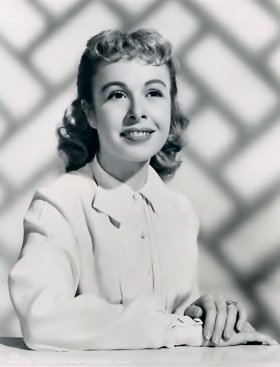
Marge ChampionMarge ChampionMain
Open search
Marge Champion
Community hub
Marge Champion
logo
8 pages, 0 posts
0 subscribers
Be the first to start a discussion here.
Contribute something
Marge Champion
Marge Champion
from Wikipedia

Marjorie Celeste Champion (née Belcher; September 2, 1919 – October 21, 2020) was an American dancer and actress. At fourteen, she was hired as a dance model for Walt Disney Studios animated films. Later, she performed as an actress and dancer in film musicals, and in 1957 had a television show based on song and dance. She also did creative choreography for liturgy, and served as a dialogue and movement coach for the 1978 TV miniseries, The Awakening Land, set in the late 18th century in the Ohio Valley.

Key Information

Early life

[edit]

Champion was born in Los Angeles on September 2, 1919.[1] Her father, Ernest Belcher, was a dance director who taught Shirley Temple, Betty Grable, Ramon Novarro, Cyd Charisse, Fay Wray and Joan Crawford, as well as Champion's future husband Gower Champion;[1][2] her mother was Gladys Lee Baskette (née Rosenberg).[1] Champion had an older half sister, Lina Basquette,[2] who began acting in 1916 in silent films. Lina was the daughter of her mother's first husband, Frank Baskette, who died by suicide.[3] Champion and Basquette's maternal grandfather, Lazarus Rosenberg, was Jewish.[4][5]

Champion began dancing at an early age as her sister had done. She started as a child under the instruction of her father.[6] She studied exclusively with her father from age five until she left for New York.[7] She credited her good health and long career to her father's teaching principles: careful, strict progression of activity, emphasis on correct alignment, precise placement of body, attention to detail and to the totality of dynamics and phrasing.[7] Her first dance partner was Louis Hightower.[8] In 1930, she made her debut in the Hollywood Bowl at age 11 in the ballet "Carnival in Venice".[9] By age twelve, she became a ballet instructor at her father's studio. Champion played Tina in the Hollywood High School operetta The Red Mill. She also sang in the Hollywood High School Girls' Senior Glee Club and graduated in 1936.[10]

She was hired in 1933 at age 14 by the Walt Disney Studio as a dance model for their animated film Snow White and the Seven Dwarfs (1937).[11] Her movements were copied to enhance the realism of the animated Snow White character.[9] For one scene Champion served as model while wrapped in a baggy overcoat for two dwarfs at once, when for the "Silly Song" dance, Dopey gets on Sneezy's shoulder to dance with Snow White.[12] Champion later modeled for characters in other animated films: the Blue Fairy in Pinocchio (1940) and Hyacinth Hippo in the Dance of the Hours segment of Fantasia, a ballet parody that she also helped choreograph. She even recalled doing some modeling for Mr. Stork in Dumbo.[6][9] When working with Disney on Snow White and the Seven Dwarfs, Champion recalled, "the animators couldn't take a young girl out of themselves, they couldn't take the prince out of themselves".[13]

Career

[edit]

The first picture Champion remembered being in was The Castles with Fred Astaire and Ginger Rogers.[14] This gave her a feeling that she would really like to do movies but what she really wanted to do was go to New York and be in New York shows. Sadly, Champion wasn't tall enough for ballet, which is what she trained all her life for.[13]

After her marriage to Gower Champion, the two performed together as a dance team in MGM musicals of the 1940s and 50s, including their first MGM musical Till the Clouds Roll By (1946),[15] Show Boat (1951) and Everything I Have Is Yours (1952). Other films with Gower included Mr. Music (1950, with Bing Crosby), Give a Girl a Break (1953), Jupiter's Darling (1955), and Three for the Show (1955).[16] MGM wanted the couple to remake Fred Astaire and Ginger Rogers films, but only one, Lovely to Look At (1952), a remake of Roberta (1935), was completed.[17] The couple refused to remake any of the others, the rights to which were still owned by RKO.[18]

Gower and Marge Champion appeared as the Mystery Guests on the May 15, 1955, airing of What's My Line. Mary Healy guessed who they were. They appeared again on the February 8, 1959, airing of the show, with panelist Martin Gabel guessing who they were.[19]

Marge and Gower Champion (1957)

During the summer of 1957, the Champions had their own TV series, The Marge and Gower Champion Show, a situation comedy with song and dance numbers. Marge played a dancer and Gower a choreographer.[16][20] Real-life drummer Buddy Rich was featured as a fictional drummer named Cozy.[21]

In the 1970s, Champion, actress Marilee Zdenek, and choreographer John West were part of a team at Bel Aire Presbyterian Church that created a number of creative worship services featuring dance and music. They later offered workshops and related liturgical arts programs throughout the country. She and Zdenek co-authored two books, Catch the New Wind and God Is a Verb, related to this work.[22]

Champion served as a dialogue and movement coach for the TV miniseries, The Awakening Land (1978), adapted from Conrad Richter's trilogy of the same name.[23][24] It was set in the late 18th-century Ohio Valley. She has also worked as a dance instructor and choreographer in New York City. She made a rare television acting appearance in 1982 on the dramatic TV series Fame, playing a ballet teacher with a racial bias against African-American students.[2][25]

Stage

[edit]

Champion appeared in several stage musicals and plays on Broadway as a performer. She made her New York debut in What's Up (1943). She also performed in the Dark of the Moon (1945) as the Fair Witch, and Beggar's Holiday (1946) having multiple roles. She made her last Broadway appearance in 3 for Tonight in 1955.[26] She also worked as a choreographer or Assistant, including Lend an Ear in 1948 as assistant to the Choreographer; Make a Wish in 1951, as assistant to Gower Champion; Hello, Dolly! in 1964 as special assistant; and Stepping Out (1987) as choreographic associate.[15][27] She appeared as Emily Whitman in the 2001 Broadway stage revival of Follies.[28] She stated how "as a dancer, by the time you're 40 you're done. If I ever come back, I want to be an actress – it lasts long. But I was 81 when I was in "Follies".[29]

Personal life

[edit]

Champion married Art Babbitt, an animator at Disney and creator of Goofy, in 1937, when she was 18 and he was 30. They divorced three years later.[1] She married dancer Gower Champion in 1947, and they had two sons (Blake and Gregg).[1] The two met when she was 12 years old in the ninth grade at Bancroft Junior High, and that was when their romance started.[13] Although performances often took them away from California, Los Angeles remained their home base.[7] They divorced in January 1973.[30][22]

Champion married director Boris Sagal in 1977.[1] He died four years later on May 22, 1981, in a helicopter accident during the production of the miniseries World War III.[30][31] She became stepmother to Boris' five children including Katey, Jean, Liz, and Joey.[32][33] Her son Blake died at the age of 25 in a car accident in 1987.[1]

Death

[edit]

Champion died on October 21, 2020, at her son's home in Los Angeles.[1] She was 101.[2]

Legacy and honors

[edit]

Champion choreographed Whose Life Is It Anyway?, The Day of the Locust, and Queen of the Stardust Ballroom, for which she received an Emmy Award.[6] She was honored with the Disney Legends Award in 2007.[14] Two years later, she was inducted into the National Museum of Dance's Mr. & Mrs. Cornelius Vanderbilt Whitney Hall of Fame[34] In 2013, Champion received The Douglas Watt Lifetime Achievement Award at the Fred and Adele Astaire Awards ceremonies.[35]

Champion was interviewed in numerous documentaries, including for the behind-the-scenes documentary directed by Oscar-winner Chris Innis, The Story of the Swimmer, which was featured on the 2014 Grindhouse Releasing/Box Office Spectaculars Blu-ray/DVD restoration of The Swimmer. She was also interviewed at a screening of The Swimmer by filmmaker Allison Anders for the same release.[36] Champion and Donald Saddler, who met while performing together in the Follies in 2001, are the subjects of a short film about the two dancers leading meaningful lives at age 90.[37] She still danced twice a week with choreographer, actor, and an original member of American Ballet Theatre, Donald Saddler, who first performed at Jacob's Pillow in 1941. The still-spry dance partners were making a documentary "Still Dancing," which chronicles their biweekly dance sessions.[38]

Selected filmography

[edit]
Year Title Role Notes
1937 Snow White and the Seven Dwarfs Model for "Snow White" Uncredited
1938 The Goldwyn Follies Associate choreographer[39]
1939 Honor of the West Diane Allen
What a Life Student in Doorway at Dance Uncredited
Sorority House Coed Uncredited
1940 Pinocchio Model for "The Blue Fairy" Uncredited[1]
Fantasia Model for "Hyacinth Hippo" Uncredited[1]
1941 Dumbo Model for "Mr. Stork" Uncredited[2]
1950 Mr. Music Herself
1951 Show Boat Ellie Mae Shipley
1952 Lovely to Look At Clarisse
Everything I Have Is Yours Pamela Hubbard
1953 Give a Girl a Break Madelyn Corlane
1955 Three for the Show Gwen Howard
Jupiter's Darling Meta
1968 The Party Rosalind Dunphy
The Swimmer Peggy Forsburgh
1970 The Cockeyed Cowboys of Calico County Mrs. Bester
1975 The Day of the Locust Dance supervisor
2012 Carol Channing: Larger Than Life Herself Documentary
Television
Year Title Role Notes
1949 The Philco Television Playhouse Episode: Dark of the Moon
1953 Lux Video Theatre Millie Episode: A Bouquet for Millie
1954 The Red Skelton Hour Cameo Episode: Deadeye at the Golden Nugget
1975 Queen of the Stardust Ballroom TV film (Choreographer )[40]
1982 Fame Ann Carlton Episode: Beginnings

References

[edit]
[edit]
Revisions and contributorsEdit on WikipediaRead on Wikipedia
from Grokipedia
Marge Champion (September 2, 1919 – October 21, 2020) was an American dancer, , and choreographer renowned for her graceful performances in Hollywood musicals, her pioneering role as a live-action model for Walt Disney's animated films, and her influential choreography on stage and television. Born Marjorie Celeste Belcher in , , to renowned Ernest Belcher, who founded the Belcher Ballet School and taught stars like and , began her dance training under her father's guidance from a young age. By age 12, she was teaching ballet classes at her father's studio, and at 14, she auditioned successfully for a modeling role at Studios, where she spent three years (circa 1935–1938) providing live-action reference footage for animators. Her movements directly inspired the character of in the 1937 film Snow White and the Seven Dwarfs, as well as the Blue Fairy in (1940) and the Hyacinth Hippo in Fantasia (1940). made her film debut in 1939's The Story of , but her career gained prominence after meeting dancer in 1946; the pair married in 1947 and formed a celebrated husband-and-wife dance team that epitomized the polished, all-American style of mid-20th-century musicals. As the Champions, they starred in numerous MGM musicals, including Show Boat (1951), Lovely to Look At (1952), Give a Girl a Break (1953), and Three for the Show (1955), where their synchronized, athletic choreography—often developed through rigorous month-long rehearsals—captivated audiences with seamless, long-take sequences. They also headlined their own CBS variety series, The Marge and Gower Champion Show, in 1957, showcasing their versatility in song, dance, and comedy. The duo divorced in 1973 amid professional and personal strains, after which Champion pursued solo choreography, earning a Primetime Emmy Award in 1975 for her work on the TV movie Queen of the Stardust Ballroom. Her later credits included choreographing Broadway productions like the 1980 revival of 42nd Street and the 2001 revival of Follies, where at age 82 she performed alongside veteran dancers. Champion's marriages included a brief first union to a Disney animator, her high-profile second partnership with Gower, a third marriage to director Boris Sagal from 1977 until his death in 1981, and a fourth to writer Peter F. Pilafian in 1987. Champion's enduring legacy was recognized with honors such as induction into the National Museum of Dance's Hall of Fame in 2009 and designation as a Disney Legend for her foundational contributions to animation. She passed away at her home in on October 21, 2020, at the age of 101, leaving behind a profound influence on American dance, film, and stage performance.

Early Life

Family Background

Marjorie Celeste Belcher, known professionally as Marge Champion, was born on September 2, 1919, in , . She was the only child of Ernest Belcher and his wife, Gladys (née Basquette) Belcher. Ernest Belcher was a renowned British-born and choreographer who had immigrated to the and established himself as a key figure in Hollywood's scene. He founded the Ernest Belcher School of Dancing in 1916, later renamed the Celeste School of Dance in honor of his daughter, where he trained numerous stars including , , and . Gladys Belcher, previously married to businessman Frank Basquette and mother to actress from that union, managed the household while Ernest pursued his career. Growing up as an in her parents' home on Orange Drive in Hollywood, Champion was enveloped in an environment rich with and the burgeoning . Her father's deep ties to Hollywood studios, beginning with his involvement in films as early as 1918 and friendships with figures like , brought a constant flow of industry professionals into their lives. The Belcher household served as an extension of the dance school, with lessons, rehearsals, and visits from aspiring actors and dancers creating an immersive atmosphere of creativity and discipline. This proximity to Hollywood's exposed her to the glamour and rigor of from infancy, shaping her innate affinity for movement and performance. Champion's earliest influences stemmed directly from her family's dynamic, where dance was not just a profession but a way of life. As a , she attended her father's classes at the , absorbing techniques alongside older students and observing the graceful forms of professional dancers who frequented the studio. Ernest's emphasis on , combined with the eclectic energy of Hollywood visitors, fostered her natural talent and curiosity, laying the groundwork for her future without formal structure at first. This nurturing yet demanding home life, centered on artistic pursuit, distinguished her childhood from typical ones and primed her for the world of entertainment.

Initial Dance Training

Marge Champion, born Marjorie Celeste Belcher, began her formal training at age three under the guidance of her father, Ernest Belcher, a prominent Hollywood dance instructor who founded the Belcher School in in 1916. At his studio, she immersed herself in , tap, and , developing a versatile foundation that blended classical techniques with the energetic styles prevalent in early Hollywood entertainment. Belcher's background as a British vaudeville performer exposed her to rhythmic, theatrical movement from an early age, while the school's curriculum emphasized the precision of alongside more accessible forms suited to and stage work. By age 11, in 1930, Champion made her first public performance debut at the , dancing in the "Carnival in Venice" as part of a production that showcased her emerging poise and technical skill. This recital marked her initial foray into live audiences, building on the rigorous daily classes at her father's school where she honed her abilities in group formations and solo expressions. At age 12, she transitioned into assisting as a ballet instructor at the Belcher Ballet School, simultaneously beginning to perform in local stage productions, which allowed her to refine her technique through practical application. In the mid-1930s, her training led to chorus roles in professional productions, including work with the Civic Opera, where she performed in large-scale shows at venues like the before audiences of up to 23,000, navigating complex formations blending precision with theatrical flair. These 1930s experiences as a chorus dancer in stage shows were instrumental in building her stamina, timing, and adaptability across and popular dance styles.

Career

Animation Modeling

At the age of 14, Marge Champion (then Marjorie Belcher) was hired by Walt Disney Studios in 1934 to serve as a live-action dance model for the title character in the animated feature Snow White and the Seven Dwarfs (1937). She was selected after auditioning at age 13, performing in a simple dress to demonstrate graceful movements that could inspire the animators' depiction of a young princess. Over the production's three years, Champion visited the studio periodically—typically one or two days per month—for filming sessions at $10 per day, during which she enacted scenes and dances in costume to provide reference footage. Her movements directly inspired the character of Snow White in the 1937 film Snow White and the Seven Dwarfs, as well as the Blue Fairy in Pinocchio (1940) and the Hyacinth Hippo in Fantasia (1940). Champion continued her modeling work for subsequent Disney productions, portraying the ethereal movements of the Blue Fairy in Pinocchio (1940) and the fluid ballet sequences of a ballerina (referenced in the "Dance of the Hours" segment with Hyacinth Hippo) in Fantasia (1940). These roles built on her initial contributions, emphasizing elegant, dance-based actions that required sustained poise and expressiveness to capture on film. Her early ballet training under her father, Ernest Belcher, a renowned dance instructor, equipped her with the technical precision needed for these demanding sessions, allowing her to perform with natural fluidity. A key aspect of Champion's involvement was her close collaboration with animator , who supervised much of the reference filming for using his personal 16mm camera to capture her gestures and interactions, such as dancing with bird puppets to simulate the film's woodland scenes. This partnership extended personally, as the two married in during production, though their union lasted only until 1941; professionally, Babbitt's direction helped translate Champion's live performances into animated form. The process relied heavily on , a technique where animators traced Champion's filmed movements frame by frame onto transparent cels, ensuring anatomical accuracy and realistic weight shifts in the characters' actions—particularly vital for human-like figures under the film's tight deadlines. Disney kept this method confidential to maintain the illusion of pure imagination, but it marked a pioneering use of live-action reference to enhance animation's believability. Champion's ballet-honed technique proved especially valuable in adapting her movements for animation, where animators exaggerated her poses to convey emotion and personality—stretching a simple curtsy into a more whimsical, elongated gesture or amplifying a twirl for dramatic flair—while preserving the underlying grace that grounded the sequences in realism. This approach not only influenced the fluid dance numbers in Snow White, Pinocchio, and Fantasia but also set a standard for integrating live performance into cel animation, contributing to Disney's reputation for lifelike character dynamics.

Performing Partnership

Marge Champion met in 1945 at her father's studio, the Ernest Belcher School of Dancing in , where both were training. They initially formed a professional dance team billed as "Gower and Bell" before marrying on , 1947, after which they adopted the name Marge and for their performances. This partnership blended their personal and professional lives, drawing on Champion's earlier experience in modeling to inform their expressive and precise movements. In the years following their marriage, the duo honed their act through nightclub engagements across the United States, beginning in 1946 and continuing into 1947. Their routines incorporated elements of ballet, modern dance, and comedy, creating a versatile and engaging style that captivated audiences in intimate venue settings. These early performances helped establish their reputation as a dynamic couple, emphasizing seamless synchronization and playful interaction. The Champions achieved their breakthrough in film with a featured role in the 1950 Paramount musical Mr. Music, starring Bing Crosby, which showcased their dance talents in a lively production number. This led to a lucrative contract with Metro-Goldwyn-Mayer (MGM), where they appeared in five musicals between 1951 and 1955, including Show Boat, Lovely to Look At, Everything I Have Is Yours, Give a Girl a Break, and Jupiter's Darling. Under this contract, they delivered highly synchronized dance sequences that highlighted their signature style of elegant, athletic partnering, characterized by innovative lifts, fluid transitions, and acrobatic precision.

Film and Stage Roles

Marge Champion made her Broadway debut in the musical Beggar's Holiday (1946), where she performed as the Lookout, the Girl, and Lead Dancer under her maiden name, Marjorie Belle. Earlier, she appeared in the play Dark of the Moon (1945) as the Fair Witch, also credited as Marjorie Belle. In the , following her high-profile partnership, Champion took on regional theater roles. During her era in the early , Champion starred in several musical films alongside her then-husband , showcasing their synchronized tap and ballroom routines. In (1951), she portrayed Ellie May Shipley in a supporting role that highlighted the duo's precise footwork and chemistry. She followed with (1952), featuring a standout sequence amid the film's lavish production numbers. The autobiographical Everything I Have Is Yours (1952) allowed the couple to demonstrate their tap and adagio specialties in a narrative centered on their real-life performing dynamic. Their final collaboration, (1953), paired them with in energetic ensemble dances that emphasized Champion's versatility in both solo and partnered work. Later in her career, Champion ventured into non-musical films, marking a shift toward dramatic . In The Swimmer (1968), she played the supporting role of neighbor Peggy Forsburgh, appearing alongside in a scene that showcased her ability to convey subtle emotional depth without elements. This transition proved challenging, as Champion had studied with Maria to break beyond her dancer persona, noting that such training was essential for conveying narrative through movement in her earlier roles. However, in musicals limited her opportunities for straight dramatic parts, confining much of her on-screen work to -centric characters during the studio system's peak.

Television Work and Choreography

Marge Champion and her then-husband Gower Champion starred in The Marge and Gower Champion Show, a 1957 NBC summer sitcom that aired for 12 episodes and blended sketch comedy with musical numbers and dance routines, where Marge portrayed a dancer and Gower a choreographer. The series showcased their signature partnership, incorporating live performances that highlighted their precise, narrative-driven choreography adapted for the small screen. Throughout the 1950s and 1960s, the Champions made numerous guest appearances on prominent variety programs, including The Bell Telephone Hour, The Ed Sullivan Show, The Dinah Shore Chevy Show, and General Electric Theater, where they performed dance segments that often drew from their film experience to create dynamic, camera-friendly routines. These spots emphasized innovative storytelling through movement, such as satirical pantomimes parodying famous dance styles, allowing Champion to explore choreography tailored to television's intimate format. Following her 1973 divorce from Gower, Champion pursued solo television projects, focusing on choreography that adapted stage and film techniques for broadcast. Her most notable contribution was choreographing the 1975 CBS television film Queen of the Stardust Ballroom, a drama centered on social dancing in a New York ballroom, for which she won the Primetime Emmy Award for Outstanding Achievement in Choreography. This work featured authentic, character-driven dance sequences filmed with real patrons at Myron's Ballroom in Los Angeles, blending emotional depth with accessible movement to enhance the story's themes of loneliness and connection. Champion also directed movement for various television specials during this period, applying her expertise to guide performers in integrating dance with narrative elements on screen.

Teaching and Later Contributions

In the later stages of her career, following her retirement from active performing in the 1970s, Marge Champion dedicated significant time to and mentorship within the community. She served as a dance instructor and choreographer in , imparting her expertise in and musical theater movement to aspiring artists. Champion also taught master classes at the Dance Festival, where she shared techniques from her extensive background in film and stage , emphasizing graceful, narrative-driven . These sessions focused on preserving classical forms while adapting them for contemporary performers, contributing to the festival's legacy of and archival efforts. Champion extended her influence through mentorship of younger dancers, fostering the next generation via workshops that highlighted the integration of in , a hallmark of her own career. At , she conducted hands-on sessions that preserved historical practices, drawing from her experiences in animation modeling and Broadway. Although her son Gregg pursued directing rather than , Champion's broader guidance supported emerging talents in maintaining the artistry of mid-20th-century musical performance. In addition to teaching, Champion continued her choreography work on Broadway into the late 20th and early 21st centuries. She choreographed the 1980 Tony Award-winning revival of 42nd Street, which revitalized the classic musical and ran for over 3,500 performances. In 2001, at age 82, she contributed choreography to the revival of and performed in it alongside other veteran dancers, demonstrating her enduring vitality and expertise. In her later years, Champion made select appearances that revisited her foundational contributions to animation. She featured in the 2009 documentary Keep Dancing, which explored her enduring partnership with fellow dancer Donald Saddler and her lifelong commitment to the art form into her 90s. Archival footage of her modeling appeared in Disney retrospectives, including the 2001 Platinum Edition release of and the Seven Dwarfs, underscoring her role in the film's movement. A brief cameo in the 2013 film marked one of her final on-screen roles. Throughout the 2010s, she participated in interviews reflecting on her Disney legacy, including a 2013 discussion at the about her live-action reference work and a 2010 Huffington Post feature on the golden age of . These appearances reinforced her impact on blending live performance with cinematic innovation.

Personal Life

Marriages and Relationships

Marge Champion's first marriage was to Disney animator , whom she met while serving as a live-action model for and the Seven Dwarfs in the mid-1930s. They wed in August 1937, when she was 17 and he was 29; the union lasted less than three years, ending in divorce around 1940. This early marriage immersed Champion in the animation world, influencing her foundational work in motion studies and character development at the studio. Following her divorce from Babbitt, Champion reconnected with dancer , whom she had known since their teenage years at a performing arts school. They married on October 5, 1947, and their partnership became the cornerstone of her career as a celebrated duo, though the professional aspects are detailed separately. The marriage lasted until their divorce on December 20, 1973, after which Champion transitioned to independent and roles. Despite the separation, she maintained a close friendship with Gower until his death in 1980. Champion's third marriage was to television and film director , beginning on January 1, 1977. Their relationship, which ended with his accidental death on May 22, 1981, was marked by mutual interests in and the , aligning with her ongoing work in dance and direction. No further marriages followed, as Champion focused on her later career contributions until her own passing in 2020.

Family and Children

Marge Champion and her husband, the dancer and choreographer , welcomed two sons during their marriage: , born on November 20, 1956, and Blake Champion, born on February 14, 1962. followed in his parents' footsteps into the entertainment industry as a director and producer, with notable credits including the The Cowboy Way (1994) and television movies such as (2010) and (2014). In her later years, Champion lived with in , where he provided familial support until her death in 2020. Blake Champion, the younger son, pursued interests in dance and the arts before his untimely death in a car accident on May 21, 1987, at the age of 25. Champion had no other biological children and navigated motherhood amid her high-profile career in Hollywood, often drawing on family as a grounding force while maintaining her professional commitments in performance and choreography. In the wake of Blake's death, Champion honored his memory by donating a barn on her property—named Blake's Barn—to the Dance Festival in the early 1990s, transforming it into an archives and exhibition space that reflected her enduring connection to and family legacy. She later reflected on this gesture as a means of keeping Blake's spirit alive through , demonstrating her resilience in channeling personal loss into lasting contributions.

Death and Legacy

Final Years and Passing

In her later years, Marge Champion continued to reside in , where she remained active in the entertainment world well into her 90s, participating in interviews and receiving recognition for her enduring legacy. She shared reflections on her early modeling work for in a 2016 interview, and in 2019, as she marked her 100th birthday on September 2, she was honored with tributes from animation historian John Canemaker via a dedicated post and from the Dancers Over 40 organization through a public video message celebrating her contributions to dance. By early 2020, Champion had moved in with her son in amid the onset of the , signaling a period of increased reliance on family support in her final months. Her engagement with teaching and mentoring in prior decades had helped sustain her vitality, as she often credited these pursuits with keeping her connected to the arts. She passed away on October 21, 2020, at the age of 101, at her son's home in ; her son confirmed the death but did not specify a cause. A private family service was held following her death, after which Champion received widespread tributes from the Disney organization and the broader dance community. Disney Chief Creative Officer Jennifer Lee issued a statement lauding Champion's "magic and grace" in animating beloved characters like , while outlets including aired remembrances highlighting her influence on American choreography.

Awards and Honors

Marge Champion received the Legend Award in 2007, recognizing her pioneering contributions as a live-action model for animated characters in classic films such as and the Seven Dwarfs. In 2009, she was inducted into the National Museum of 's Mr. & Mrs. Hall of Fame, honoring her lifelong impact on as a performer, choreographer, and educator. Champion earned a Primetime Emmy Award in 1975 for Outstanding Achievement in for the Queen of the Stardust Ballroom, a milestone that highlighted her innovative work adapting dance for the small screen. In 2013, she was presented with the Douglas Watt Lifetime Achievement Award at the Fred and Adele Astaire Awards by the Theatre Development Fund, celebrating her enduring influence on Broadway and stage . No major posthumous awards or honors for Champion have been documented as of 2025.

Cultural Influence

Marge Champion's pioneering work in as a live-action model for Studios significantly shaped the golden age of animation during the 1930s and 1940s. At age 14, she was selected to perform dances and scenes for and the Seven Dwarfs (1937), where animators traced her filmed movements frame-by-frame to achieve fluid, realistic gestures that imbued the character with lifelike grace and emotional expressiveness. This technique, refined through her contributions, extended to other iconic figures, including the Blue Fairy in (1940), whose ethereal poise drew directly from Champion's improvisational acting, and the comedic Hyacinth Hippo in Fantasia (1940), where she choreographed ballet sequences blending human elegance with whimsical exaggeration. By merging ballet-trained precision with narrative-driven performance, Champion's modeling elevated from a mere technical tool to a cornerstone of Disney's expressive style, influencing the studio's approach to in subsequent classics and establishing benchmarks for realism in hand-drawn features. In mid-20th-century musicals, , alongside her husband Gower, popularized partnered dance as a narrative device, emphasizing synchronized storytelling and spatial dynamics that advanced the form's integration with plot and emotion. Their routines in films such as (1951) and (1952) showcased hybrid movements drawing from , , and , creating visually compelling partnerships that highlighted mutual support and fluidity between performers. This approach contributed to the evolution of musical . Their emphasis on accessible yet technically sophisticated partnering democratized dance in Hollywood entertainment, fostering a legacy of collaborative performance that resonated in Broadway's postwar innovations. Champion's mentorship through teaching and archival preservation extended her influence to modern dancers and filmmakers, embedding her techniques in contemporary practice. As a longtime pedagogue who began instructing at her father's studio at age 12, she guided generations in blending classical training with performative storytelling, impacting professionals through coaching and workshops that emphasized emotional authenticity in movement. Her son, director , carried forward this legacy into film production, while her own transitional role in —such as directing sequences for television specials—mentored emerging talents in adapting stage craft to visual media. Archival footage from recordings spanning decades, featured in documentaries like the Dance Festival's Remembering Marge Champion series, preserves her demonstrations of rotoscoping-era gestures and partnered forms, serving as educational resources for filmmakers exploring animation's roots and dancers reviving mid-century styles. Champion's performances also reflected and subtly critiqued roles in Hollywood during an era dominated by traditional expectations for female performers. In musicals, her roles often embodied and feminine versatility, as seen in routines that balanced poise with narrative submissiveness, mirroring broader cultural shifts toward idealized domesticity while showcasing women's physical agency through intricate footwork and lifts. This representation highlighted the constraints and strengths of women in the industry, where dancers like navigated by excelling in technically demanding sequences that demanded both delicacy and strength. Her influence persisted in television , where she earned an Emmy for Queen of the Stardust Ballroom (1975), innovating formats for the small screen by incorporating intimate partnering into dramatic narratives.

Selected Works

Film Appearances

Marge Champion began her film career as a live-action reference model for Walt Disney's animated features, providing the foundation for several iconic characters through her dance and movement expertise. At age 14, she was hired by the Disney Studio to model for Snow White in Snow White and the Seven Dwarfs (1937), where animators studied her graceful motions to capture the character's innocence and fluidity in scenes like the dance with the dwarfs. She continued this role in Pinocchio (1940), serving as the model for the Blue Fairy, whose ethereal movements were derived from Champion's performances. Additionally, in Fantasia (1940), Champion modeled for the Hyacinth Hippo in the "Dance of the Hours" segment, influencing the character's balletic parody through her ballet training. These uncredited modeling contributions were pivotal in early Disney animation techniques but did not involve on-screen appearances. Champion made her on-screen film debut as an uncredited dancer, billed as Marjorie Belcher, in The Story of Vernon and Irene Castle (1939). After meeting dancer Gower Champion in 1946, she frequently performed alongside him in Hollywood musicals, showcasing their synchronized dance partnership. Their first film together was Till the Clouds Roll By (1946), an MGM musical biography of composer Jerome Kern, in which they performed dance sequences. In Mr. Music (1950), she appeared as herself in a Paramount production, executing a lively dance sequence with Gower to "Life Is So Peculiar" alongside Bing Crosby, highlighting their vaudeville-honed chemistry. The following year, in the MGM remake of Show Boat (1951), Champion played Ellie May Shipley, contributing to energetic dance numbers such as "Life Upon the Wicked Stage" and "I Might Fall Back on You," which emphasized her precise footwork and comedic timing. Champion's film work extended into dramatic territory later in her career. In Give a Girl a Break (1953), an MGM musical directed by Stanley Donen, she portrayed Madelyn Corlane, performing a standout rooftop dance with Gower that blended athleticism and romance, choreographed by Gower himself. Her most notable non-musical role came in The Swimmer (1968), where she played Peggy Forsburgh in Frank Perry's adaptation of John Cheever's story, delivering a subdued dramatic performance as one of the suburban figures encountered by Burt Lancaster's protagonist, marking a shift from her dance-centric roles. Other appearances, such as her uncredited dancer role in Lovely to Look At (1952), further underscored her versatility in supporting musical sequences without leading billing.

Television Credits

Marge Champion began her television career in the late 1940s and 1950s as a performer alongside her then-husband , showcasing their acclaimed dance partnership on numerous variety programs. Their appearances emphasized precise, expressive choreography that blended , tap, and modern styles, influencing early TV musical entertainment. A highlight was their starring role in The Marge and Gower Champion Show, a 1957 CBS sitcom that aired for one season, where Champion co-starred as herself—a dancer navigating comedic domestic scenarios with song-and-dance interludes. Champion made multiple guest appearances on The Bell Telephone Hour throughout the 1950s and 1960s, performing dances in episodes such as "We Two" (1960), which featured famous couples, and "Encore!" (1961), highlighting classic musical moments. She also guested as a dancer on The Ed Sullivan Show in the 1950s, including episode #8.22 (1955), a tribute to , and "Invitation to Moscow" (1959), a special international broadcast. In the 1960s, Champion continued contributing to variety television through performances on shows like The Garry Moore Show (1958) and Perry Como's Kraft Music Hall (1958), often demonstrating innovative routines that bridged stage and screen techniques. Later in her career, Champion transitioned to choreography, earning acclaim for her work on television specials. She won an Emmy Award for Outstanding Achievement in Choreography for the 1975 TV movie Queen of the Stardust Ballroom, where her dances captured the emotional depth of ballroom culture among seniors. Additionally, archival footage of Champion as the live-action model for Disney's Snow White has been featured in various Disney television documentaries, preserving her foundational role in animation history.

References

Add your contribution
Related Hubs
Contribute something
User Avatar
No comments yet.