Hubbry Logo
Massimo SeratoMassimo SeratoMain
Open search
Massimo Serato
Community hub
Massimo Serato
logo
8 pages, 0 posts
0 subscribers
Be the first to start a discussion here.
Massimo Serato
Massimo Serato
from Wikipedia

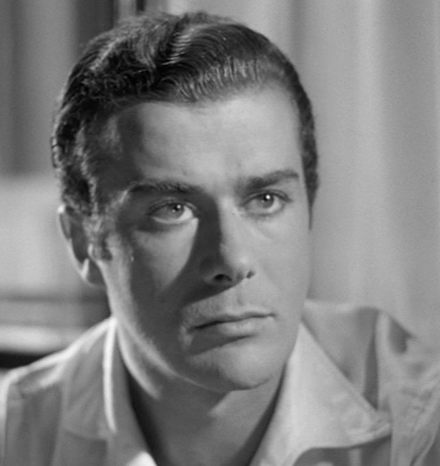
Massimo Serato (born Giuseppe Segato; 31 May 1917 – 22 December 1989) was an Italian film actor with a career spanning over 40 years.[1]

Key Information

Biography

[edit]

Serato was born in Oderzo, Veneto, Italy and started appearing in films in 1938. He played leading roles in several historical dramas and sword-and-sandal epics, mainly Italian, as well as roles in major international films. His notable appearances include Piccolo mondo antico (1941), The Naked Maja (1958), David and Goliath (1960), The Loves of Hercules (1960), El Cid (1961), 55 Days at Peking (1963) Camille 2000 (1969) and Don't Look Now (1973).[2] In 1947 he won a Nastro d'Argento for Best Supporting Actor for his performance in the neorealist war-drama film The Sun Still Rises.[3]

He had an affair with the actress Anna Magnani who bore him a son, Luca, whom she affectionately called Cellino.[4] Luca contracted polio at an early age; "In time he was able to walk with steel braces but [he] spent much of his time in a wheelchair."[5]

Serato died in Rome in 1989.

Selected filmography

[edit]

References

[edit]
[edit]
Revisions and contributorsEdit on WikipediaRead on Wikipedia
from Grokipedia
Massimo Serato (born Giuseppe Segato; 31 May 1916 – 22 December 1989) was an Italian film and actor renowned for his versatile performances in over 140 productions spanning more than five decades, particularly in historical dramas, peplum films, and international thrillers. Born in , , he trained at the in and made his screen debut in the romantic comedy Inventiamo l'amore, quickly establishing himself as a leading man in Italian cinema. His career highlights include a breakthrough role as the nobleman Franco Maironi in Mario Soldati's 1941 adaptation of Piccolo mondo antico, which showcased his charisma in period pieces. Serato's early postwar work earned critical acclaim, notably winning the prestigious Nastro d'Argento for Best Supporting Actor for his portrayal of the conflicted German Major Heinrich in Aldo Vergano's 1946 anti-fascist drama Il sole sorge ancora (also known as Outcry). Throughout the 1950s and 1960s, he specialized in muscular, heroic roles in sword-and-sandal epics, such as Le fatiche di Ercole (1958) and David e Golia (1960) opposite Orson Welles, while also venturing into spaghetti westerns under pseudonyms like John Barracuda. His international breakthrough came with supporting parts in high-profile Hollywood-backed films, including the Oscar-nominated epic El Cid (1961) as Fanez alongside Charlton Heston, and Anthony Mann's 55 Days at Peking (1963). In his later years, Serato transitioned to more nuanced character roles, most memorably as Bishop Barbarrigo in Nicolas Roeg's atmospheric horror-thriller Don't Look Now (1973). Beyond cinema, Serato was active in theater, collaborating with luminaries like in revues such as Venticello del Sud (1945–1946), with whom he shared a significant romantic relationship that produced their son, Luca, in 1942. He also appeared in Italian television adaptations and sceneggiati, extending his influence into the medium until his final roles in the 1980s, including the miniseries (1986). Serato's enduring legacy lies in his ability to embody aristocratic intensity and moral complexity, bridging Italy's neorealist era with the global peplum boom and beyond.

Early life

Childhood and family background

Massimo Serato was born Giuseppe Segato on 31 May 1916 in Oderzo, a small provincial town in the Veneto region of the Kingdom of Italy. This birth occurred amid the Kingdom's participation in World War I, a conflict that profoundly shaped the region's social and economic landscape. Oderzo, located in the and home to around 20,000 residents in the early , retained its historical significance as a former Roman while serving as a quiet agricultural and commercial hub in . The town's cultural environment reflected the broader Venetian tradition of community gatherings, local festivals, and exposure to through traveling troupes, though it remained modest compared to urban centers like nearby . In 1917, shortly after Serato's birth, Oderzo experienced direct impacts from the war when Italian forces retreated following the , leading to occupation by Austro-Hungarian troops and considerable damage to infrastructure and civilian life. Serato grew up in this resilient community during the war's aftermath and Italy's interwar recovery, where family life centered on stability amid economic challenges and regional traditions that valued and cultural participation. His early years in laid the foundation for interests that would later influence his path toward formal .

Education and initial training

Massimo Serato, born Giuseppe Segato in , , completed his early at local schools in the town before relocating for higher studies in the mid-1930s. In the mid-1930s, Serato enrolled in university studies, reflecting the expectations of his provincial background in , where family influences initially steered him toward conventional academic pursuits. Around 1936–1937, after winning a competition at the Scalera , he decided to abandon his education to dedicate himself to , enrolling at the in , Italy's national film school founded in 1935. At the Centro Sperimentale, Serato joined the branch as part of the 1938 graduating class, undergoing a rigorous two-year curriculum that emphasized practical skills and theoretical foundations essential for cinematic performance. The program's acting training included specialized courses for voice modulation and articulation, alongside dramatic techniques drawn from and cinema history, taught by influential instructors such as Alessandro Blasetti, Francesco Pasinetti, Luigi Chiarini, and Umberto Barbaro. These early formative experiences at the institution shaped Serato's approach to character portrayal, blending vocal precision with expressive methodologies rooted in emerging .

Acting career

Theatre debut and early stage roles

Massimo Serato entered professional theatre in the late 1930s, shortly after his screen debut in the film Inventiamo l'amore. His formal training at Rome's , where he studied acting from the mid-1930s, equipped him with foundational techniques that bridged cinema and stage work, enabling his initial forays into live performances amid Italy's burgeoning theatrical scene. In the early 1940s, Serato joined emerging companies in , taking on supporting roles in Italian productions that emphasized classical and contemporary . These engagements, often staged in small venues amid wartime restrictions, allowed him to develop his commanding presence and versatility, performing in works that explored themes of human conflict and resilience. Notable among these were collaborations with innovative ensembles focused on revitalizing post-fascist , where his tall, aristocratic bearing suited roles requiring poise and intensity. By the 1945–1946 season, Serato transitioned to revue theatre, appearing in Venticello del Sud by Franco Nelli and Mario Mangini at Milan's Teatro Trianon. In this variety show, he shared the stage with Nino Taranto, Dolores Palumbo, Marisa Merlini, and Harry Feist, delivering comedic sketches and musical numbers that captured the lighthearted escapism sought by audiences recovering from . The production's blend of and song showcased Serato's adaptability, moving from dramatic intensity to humorous timing, and solidified his reputation within Italy's diverse stage landscape.

Italian film breakthrough

Massimo Serato's entry into Italian cinema came with his leading role as Franco Maironi in Piccolo mondo antico (1941), directed by Mario Soldati and adapted from Antonio Fogazzaro's novel. In this historical drama set during the Risorgimento, Serato portrayed a young nobleman torn between love and ideological conflict, marking his breakthrough as a film actor after early theater work. The film achieved significant commercial success in Fascist Italy, becoming one of the era's top-grossing productions and praised for its elegant visual style, though later critiqued as emblematic of calligrafismo's polished escapism. Serato's performance established him as a versatile leading man capable of conveying aristocratic poise and inner turmoil. Following , Serato transitioned into neorealist cinema with his role as Major Heinrich, a ruthless Nazi officer, in Il sole sorge ancora (1946), directed by Aldo Vergano. This war drama depicted the Italian Resistance in , where Serato's portrayal of the perfidious antagonist highlighted moral ambiguity and authoritarian menace, earning him the Nastro d'Argento for Best Supporting Actor in 1947. The film's recognition, including a special Nastro d'Argento for expressive qualities, underscored Serato's ability to embody complex, negative characters in post-war narratives of national reckoning. Throughout the late and , Serato solidified his stardom in Italian productions, often playing aristocratic figures or morally conflicted roles in historical dramas and neorealist works. In Luisa Sanfelice (1942), directed by Leo Menardi, he appeared as Ferdinando Ferri in a tale of Neapolitan revolution, showcasing restrained intensity amid period intrigue. Later, in Luciano Emmer's Domenica d'agosto (1949), a light neorealist ensemble about Romans escaping to the beach, Serato contributed to vignettes of everyday complexity, blending sophistication with subtle irony. These roles, including others like Monastero di Santa Chiara (1949) where he navigated wartime romance and peril, emphasized his signature depiction of elite or enigmatic personas, influencing his reputation in domestic cinema before mid-decade shifts.

International films and later works

Serato's transition to international cinema began in the late , building on his established reputation in Italian films to secure roles in co-productions. In 1958, he appeared in the US-Spanish The Naked Maja, directed by , where he portrayed a supporting character in a story centered on the painter and the Duchess of Alba, starring and . This marked his entry into Hollywood-influenced projects, expanding his visibility beyond . His prominence grew in epic and peplum genres during the early 1960s, often in multinational spectacles. In 1960, Serato played Abner in the Italian-Yugoslav biblical epic David and Goliath, directed by Ferdinando Baldi and featuring as King Saul. That same year, he took on the role of Licos, a scheming courtier, in the Italian peplum The Loves of Hercules, an international co-production starring and . In 1961, he portrayed Fanez in Anthony Mann's grand-scale , a US-Spanish epic with as the titular hero and as Chimene, depicting the 11th-century Spanish knight's battles against the Moors. Serato continued in this vein with his appearance as the Italian volunteer Garibaldi in the 1963 US-Yugoslav historical , directed by and Guy Green, which starred Heston, Loren, and in a dramatization of the 1900 siege. By the late and , Serato shifted toward more nuanced character roles in diverse international productions, reflecting his evolution from to versatile . In 1969, he played Armand's father in Radley Metzger's modernized adaptation , an Italian erotic drama updating Alexandre Dumas's La Dame aux Camélias with themes of drug addiction and featuring and Danièle Gaubert. A notable later role came in 1973 as Bishop Barbarrigo in Nicolas Roeg's , a British-Italian-Canadian film starring and , where Serato's portrayal added gravitas to the supernatural narrative set in . In the , as his film work tapered, Serato increasingly appeared in Italian television, including roles in miniseries like Garibaldi the General (1987) and Fratelli d'Italia (1989), often as authoritative figures, until his final performances shortly before his death.

Personal life

Relationship with Anna Magnani

Massimo Serato met in Rome's dynamic theatre circles in the early , where both were establishing themselves as promising stage actors during a time of artistic ferment in . Their professional proximity soon evolved into a romantic relationship that began around 1941, marking a significant chapter in Serato's early career and providing Magnani with emotional intensity amid her marital separation from director Goffredo Alessandrini. The couple's partnership extended to shared professional collaborations on , where they performed together, allowing their personal connection to influence their artistic approaches and enhance the raw emotional power in their portrayals of complex characters. This contributed to their growth as performers in the pre-war Italian scene, though they had limited joint work. Despite the absence of specific collaborations like those Magnani later pursued with directors such as , their work together underscored a mutual artistic that shaped their individual styles. The romantic aspect of their relationship concluded in the mid-1940s, around 1943, as wartime pressures and personal circumstances intervened, but Serato and Magnani preserved an enduring friendship and professional admiration within the Italian entertainment industry, occasionally crossing paths in subsequent projects and maintaining cordial ties.

Family and health challenges

Massimo Serato and Anna Magnani's relationship resulted in the birth of their son, Luca Magnani, in 1942. Luca, whom Magnani affectionately called Cellino, contracted poliomyelitis at the age of 18 months, a devastating illness that left him with permanent mobility impairments. The condition necessitated extensive treatments, including multiple surgeries in a Swiss clinic arranged by Magnani, and resulted in Luca's lifelong reliance on a and leg braces, severely limiting his physical independence. Serato, who declined to marry Magnani upon learning of the pregnancy, had limited involvement in Luca's upbringing amid his demanding acting career, leaving Magnani to primarily shoulder the responsibilities of single parenthood during and after . This familial strain was compounded by the era's hardships, including wartime disruptions in , where the family navigated Luca's medical needs and Serato's professional commitments. Despite these challenges, Serato remained Luca's biological father. In his later years, Serato resided in , where he maintained a private without known marriages or additional relationships following his time with Magnani. The ongoing impact of Luca's health struggles and the unresolved dynamics of their early family unit contributed to a subdued private existence for Serato, focused more on his film work than public family affairs, until his death in 1989.

Death and legacy

Final years and death

In the 1980s, Massimo Serato's acting career shifted toward fewer film appearances and a greater emphasis on Italian television productions and supporting roles in cinema. Notable among these were his portrayal of Monsignor Betti in the comedy Saving Grace (1986), directed by Robert W. Young, and his role as Fabiano Bassi in the comedy film Fratelli d'Italia (1989). He also took on minor parts in films such as Nana (1983), where he played Faucherie, and 32 Dicembre (1988). Serato's health began to decline in the mid-1980s following a serious car accident in August 1982 on Rome's Viale Aventino, which resulted in cranial trauma and leg fractures that temporarily interrupted his work. Despite this, he continued selectively, completing a shoot in by March 1989, after which he hosted a celebratory gathering at his home. His reputation from earlier international collaborations, such as El Cid (1961) and (1973), helped maintain his standing in the industry during this period. On the evening of December 21, 1989, Serato was admitted to 's Policlinico Umberto I for routine medical examinations. He suffered a the following morning and died on December 22, 1989, at the age of 72. Serato's funeral was held in , and he was interred at the Cimitero Flaminio di . Tributes from the Italian film community highlighted his elegance and classic charisma; television host , who had frequently invited him to share nostalgic anecdotes about Cinecittà's golden era, described him as a true gentleman of the screen.

Awards and cultural impact

Massimo Serato received the prestigious Nastro d'Argento for Best Supporting Actor in 1947, awarded by the Italian National Syndicate of Film Journalists for his portrayal of Major Heinrich in the post-war drama Il sole sorge ancora (also known as Outcry or The Sun Still Rises). This recognition highlighted his early contributions to Italian cinema during the neorealist era, where the film depicted the struggles of ordinary Italians under Nazi occupation. Beyond this primary accolade, Serato was honored in Italian cinema circles through appearances at major festivals, including the 19th Venice International Film Festival in , where he was present for screenings and events showcasing Italian productions. While no formal lifetime achievement awards are prominently recorded, his extensive body of work earned nods from critics and peers for bridging neorealism and genre filmmaking in post-war . Serato's cultural impact endures through his iconic portrayals of sophisticated villains and aristocratic antagonists in peplum and epic films, which helped define tropes in 1960s Italian cinema. Often cast opposite muscleman heroes like and , his roles emphasized cunning and elegance over brute force, influencing the archetype of the urbane adversary in adventures. His contributions to the Italian film are evident in early works like Il sole sorge ancora, which exemplified the shift toward realistic depictions of national trauma, while later international appearances, such as in (1961), extended his influence to global audiences.

References

Add your contribution
Related Hubs
User Avatar
No comments yet.