Hubbry Logo
Max RookeMax RookeMain
Open search
Max Rooke
Community hub
Max Rooke
logo
8 pages, 0 posts
0 subscribers
Be the first to start a discussion here.
Max Rooke
Max Rooke
from Wikipedia

Max Rooke (born Jarad Maxwell Rooke; 19 December 1981) is a former Australian rules footballer who played for the Geelong Football Club in the Australian Football League (AFL).

Key Information

A utility player, 1.89 metres (6.2 ft) tall and weighing 93 kilograms (210 lb), Rooke's versatility allowed him to play as a forward, defender, and midfielder. Rooke made his Geelong debut in 2002 and went on to become a dual premiership player with the club, playing key roles in both the 2007 and 2009 grand final victories.

AFL career

[edit]

Rooke was recruited from Casterton in 2001, and he made his debut in the second round of 2002. In 2003, he was awarded Geelong's most determined and dedicated player award. Rooke was a regular senior player until a shin injury forced him to miss the second half of 2004, including the finals series, but he recovered to play all but one game in 2005.

His lack of pace against small forwards was exposed in Round 20, 2005, when Melbourne's Russell Robertson kicked six goals against him. This prompted coach Mark Thompson to move him into the midfield the following week. This move was successful, with Rooke nullifying Hall of Fame midfielder Chris Judd. In Geelong's close loss to the Sydney Swans in the elimination final, Rooke laid a remarkable fifteen tackles.

Rooke missed out on most of Geelong's 2007 season after suffering a potential season-ending 7 cm hamstring tear in Round 13.[1] On 12 July, Geelong spent $20,000 on Rooke to receive treatment by soft-tissue expert Dr Hans-Wilhelm Muller-Wohlfarth in Germany.[1] He returned to the side in the 106-point qualifying final win against the Kangaroos after key defender Matthew Egan suffered a season-ending foot injury.[1]

In October 2010, Rooke announced his retirement from AFL football due to an acute knee injury which kept him out for most of the 2010 home-and-away season.[2]

Coaching career

[edit]

Rooke returned to Geelong in 2011 as a development coach for four seasons before joining Gold Coast as a development coach for the 2016 season.[3][4] In November 2016, he joined Melbourne as a development coach.[5] Rooke was stood down from Melbourne in May 2020 due to limitations caused by the COVID-19 pandemic.[6]

Personal life

[edit]

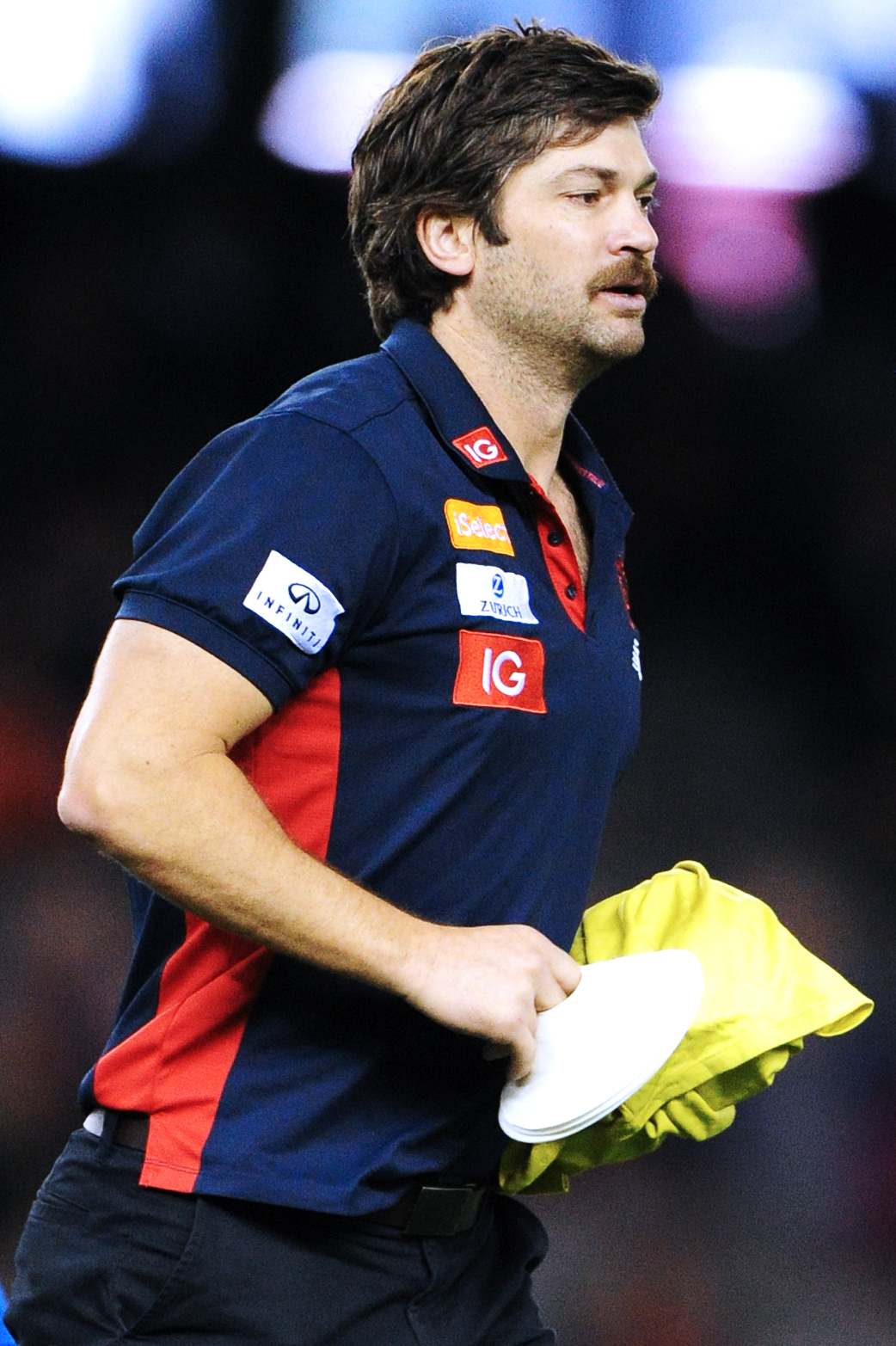
In November 2006, Rooke made the decision to officially change his legal name to Max. Rooke's middle name at birth was Maxwell, and both of his grandfathers were known as Max, which led to a fondness of the name being the main reason behind the change.[7] He also sported a wild 1970s-style hairstyle and beard.[8] Rooke was known by the new name in all official AFL records from the 2007 season onwards.

Concussion history and class action against the AFL

[edit]

Rooke claims that he had about 20 to 30 concussions throughout his nine-year career, according to an AFL class-action writ. In a suit reminiscent to that of the NFL, Rooke is the lead plaintiff in a class-action lawsuit filed in the Supreme Court of Victoria in March 2023 on behalf of players employed by one or more AFL clubs between 1985 and 14 March 2023 who either suffered concussion or suffered damage from concussions, with the lawsuit seeking up to A$1 billion compensation for alleged long-term concussion damage to AFL players.[9][needs update]

Statistics

[edit]
[10]
Legend
  G  
Goals
  K  
Kicks
  D  
Disposals 
  T  
Tackles
  B  
Behinds 
  H  
Handballs 
  M  
Marks
Season Team No. Games Totals Averages (per game)
G B K H D M T G B K H D M T
2002 Geelong 33 15 1 0 93 69 162 37 26 0.1 0.0 6.2 4.6 10.8 2.5 1.7
2003 Geelong 33 18 3 3 134 103 237 74 38 0.2 0.2 7.4 5.7 13.2 4.1 2.1
2004 Geelong 33 11 0 1 51 47 98 38 18 0.0 0.1 4.6 4.3 8.9 3.5 1.6
2005 Geelong 33 23 3 1 131 129 260 88 68 0.1 0.0 5.7 5.6 11.3 3.8 3.0
2006 Geelong 33 17 8 1 114 121 235 62 55 0.5 0.1 6.7 7.1 13.8 3.6 3.2
2007 Geelong 33 8 6 3 38 45 83 26 27 0.8 0.4 4.8 5.6 10.4 3.3 3.4
2008 Geelong 33 20 13 4 113 156 269 84 70 0.7 0.2 5.7 7.8 13.5 4.2 3.5
2009 Geelong 33 22 24 15 135 108 243 97 76 1.1 0.7 6.1 4.9 11.0 4.4 3.5
2010 Geelong 33 1 0 1 3 5 8 2 2 0.0 1.0 3.0 5.0 8.0 2.0 2.0
Career 135 58 29 812 783 1595 508 380 0.4 0.2 6.0 5.8 11.8 3.8 2.8

References

[edit]
[edit]
Revisions and contributorsEdit on WikipediaRead on Wikipedia
from Grokipedia

Jarad Maxwell Rooke (born 19 December 1981), commonly known as Max Rooke, is a former professional Australian rules footballer who played for the in the Australian Football League (AFL). Recruited from Casterton in Victoria, he debuted in 2002 and appeared in 135 games, kicking 58 goals, before retiring in 2010 due to injuries. Rooke contributed to Geelong's success as a dual premiership player in 2007 and 2009, earning recognition for his tough, tackling style that embodied the club's hard-running ethos.
Post-retirement, Rooke has pursued coaching roles, including development positions with Gold Coast and Melbourne, and in 2025 returned to coaching at Casterton Sandford in a revamped setup. He has also become an advocate for mental health and recovery, leading breathwork, mindfulness, and cold exposure workshops informed by his experiences with repeated head trauma. Rooke serves as the lead plaintiff in a class action lawsuit against the AFL, filed in 2023, seeking up to $1 billion in compensation for former players alleging the league's negligence in concussion management caused permanent, life-altering injuries. The suit claims Rooke endured 20 to 30 concussions over his career, including instances of lost consciousness, without adequate protocols to mitigate risks or monitor long-term effects. As of 2025, the proceeding has survived challenges to its class certification and involves multiple Geelong players among proposed group members.

Early Life

Upbringing and Family Background

Jarad Maxwell Rooke, professionally known as Max Rooke, was born on 19 December 1981 in Victoria, Australia. Rooke spent his early years in Casterton, a small rural town in western Victoria with a population of approximately 1,000 during the 1980s and 1990s, where he was immersed in a family-oriented environment centered on local community and outdoor activities. He was raised by his mother and father alongside one older brother and two sisters, fostering a close-knit household that emphasized sibling bonds through shared rural pastimes. Much of Rooke's childhood revolved around informal sports in the family's paddocks, particularly Australian football and , which he played competitively with his brother, developing his early athletic skills in an unstructured, physical setting typical of country Victoria. These experiences laid the groundwork for his later involvement with the Casterton Football Club, reflecting a upbringing shaped by regional traditions rather than urban opportunities.

Introduction to Australian Football

Max Rooke, born Jarad Maxwell Rooke in 1981, grew up in the rural town of Casterton in western Victoria, a community deeply immersed in culture. From childhood, he was exposed to the sport through attending local matches at the Casterton Football Club, fostering an early passion that shaped his development. In such country football towns, young players typically begin in junior ranks, progressing through under-age teams before challenging for senior spots, reflecting the pathway common in regional Victoria. Rooke's dedication manifested in rigorous training, enabling him to play senior football for Casterton as a slight teenager. At age 17, he contributed significantly to the club's 2000 Western Border Football League campaign, despite their loss to South Gambier. This performance highlighted his toughness and skill in contested situations, traits honed in the physical, low-scoring style of country leagues where and are paramount over polished athleticism. His standout local form drew attention from AFL scouts, leading to his rookie draft selection by the in late 2001.

AFL Playing Career

Draft and Early Professional Years

Rooke was selected by the in the 2001 AFL Rookie Draft at pick number 41, having been recruited from the Casterton Football Club in rural Victoria. The selection came after Rooke, born Jarad Rooke on December 19, 1981, had impressed in country football, though he was overlooked in the national draft due to his late development and regional background. Elevated to Geelong's senior list ahead of the 2002 season, Rooke made his AFL debut that year at age 20, transitioning from the club's VFL affiliate to the top level. Initially playing as a tough, run-with midfielder, he featured in limited games during his rookie year but quickly earned a reputation for relentless tackling and physicality in contested situations. By the end of 2006, Rooke had accumulated 84 AFL matches, reflecting steady progression amid Geelong's rebuilding phase under coach Mark Thompson. His early professional tenure emphasized durability and team-first contributions, with Rooke often deployed to tag opposition , helping lay foundations for Geelong's later success despite the team's inconsistent appearances in the mid-2000s.

Peak Performance and Premiership Wins

Rooke's peak performance occurred during Geelong's dominant late-2000s era, particularly in and , when he combined consistent midfield output with goal-kicking contributions amid the club's premiership pushes. In , across 20 games, he recorded 269 disposals at an average of 13.45 per game, alongside 70 tackles and 13 goals, showcasing his versatility as a tough inside . The following year, , saw him play 22 games, amassing 243 disposals, a career-high 24 goals, and 76 tackles, reflecting heightened scoring threat while maintaining pressure acts central to Geelong's contested ball style. These seasons underpinned Rooke's role in Geelong's 2007 and 2009 premiership victories, where his finals intensity proved decisive despite earlier injury interruptions. Limited to eight home-and-away games in 2007 due to hamstring issues, he returned for the finals series, culminating in the grand final against Port Adelaide on September 29, where he contributed nine disposals, six tackles, and one goal in Geelong's 119-point thrashing. His resilience exemplified the Cats' depth, enabling a record-margin win after a third-place finish. In the 2009 grand final rematch against St Kilda on September 26, Rooke delivered a standout effort, scoring the opening goal via a chase-down and holding-the-ball free in the third minute, then adding a second after the siren to extend the 12.8 (80) to 9.14 (68) victory following Paul Chapman's deadlock-breaker. His two goals and physical presence set an aggressive tone, embodying Geelong's lower-body drive against a high-contact Saints outfit.

Later Career and Retirement

Following the 2009 AFL premiership victory, in which Rooke contributed significantly with 22 games played that season, his participation in 2010 was severely restricted by chronic knee tendinitis. He managed only one senior appearance for , as the injury persisted through the home-and-away season and into the finals period. On October 13, 2010, at the age of 28, Rooke announced his immediate retirement from the AFL, citing the knee condition's impact on his long-term health and inability to return to competitive form. officials and medical assessments confirmed the decision, noting the injury's chronic nature had prevented sustained training and play. Rooke expressed disappointment but acceptance, reflecting on his 135 games and dual premierships ( and ) as highlights of a career marked by versatility and toughness. The club honored him in subsequent seasons, including a tribute match in 2011.

Career Statistics and Accolades

Rooke appeared in 135 senior games for the between 2002 and 2010, scoring 58 goals. His career record included participation in 83 wins, 2 draws, and 50 losses, yielding a win percentage of 62.22%; he averaged 15 disposals per game. Among his primary accolades, Rooke was a member of Geelong's AFL premiership teams in 2007 and 2009. In the 2009 victory over St Kilda, he contributed significantly by kicking the opening goal of the match in the first quarter and the sealing goal in the final term, helping secure a 12-point win.

Coaching Career

Initial Coaching Roles

Following his retirement from the AFL at the end of the 2010 season, Rooke joined in a coaching capacity. On October 27, 2011, the club announced his appointment as a development coach, with the role commencing ahead of the 2012 season. In this position, Rooke worked primarily with Geelong's younger and emerging players, contributing to their skill development and integration into the senior program over four seasons through 2015. Rooke's initial foray into professional coaching leveraged his experience as a two-time premiership player with the Cats, emphasizing leadership and resilience in player mentoring. football manager James Odone highlighted Rooke's broad football perspective, noting his ability to guide young talent having "seen all sides of football." This role marked his first formal coaching position post-playing career, focusing on grassroots talent pathways rather than senior game-day responsibilities.

Current Positions and Coaching Philosophy

In 2025, Max Rooke serves as the senior game day coach for Casterton Sandford Football Netball Club in the Limestone Coast Football Netball League, directing in-game strategy from the bench, managing player rotations, and making tactical decisions to enable the playing coach to focus on on-field performance. His appointment leverages his AFL-level experience, including prior development coaching roles at (2011–2014), Gold Coast (2016), and (2017), where he specialized in talent nurturing and skill progression. Following the mid-season resignation of playing coach Jarrod O’Brien in May 2025 due to personal and health issues, Rooke extended his tenure through the remainder of the year, stabilizing the second-placed side (three wins, one loss at the time) and drawing praise for his football acumen and presence, which commands respect among younger players. Rooke's coaching prioritizes collective team effort, rigorous training, injury resilience, and recovery protocols, informed by his own career challenges and AFL premiership successes; he emphasizes mutual support and consistent preparation as foundational to performance, as reflected in his reflections on sustaining team dynamics amid adversity. At Casterton Sandford, this manifests in mentoring across senior and junior levels, fostering a structured environment that builds on his development expertise to enhance overall club momentum.

Health Challenges

Concussion Incidents During Career

During his (AFL) career with the from 2001 to 2012, Max Rooke alleged sustaining numerous , primarily attributed to his aggressive, physical playing style involving frequent tackles and contests for the ball. In legal proceedings, Rooke claimed to have experienced between 20 and 30 concussions overall, including at least 23 significant head knocks or concussions specifically during senior AFL matches, with additional incidents occurring in training and pre-season sessions. These events spanned from 2002 to 2009, encompassing home-and-away seasons, finals, and (VFL) games, during which he played 135 senior matches. Rooke reported losing consciousness on at least two occasions due to head strikes. Specific incidents detailed in his claims include his first documented in March 2002, early in his career; two head knocks in the first quarter of an elimination final on 3 September 2005; two further head knocks in the third and fourth quarters of a match on 8 April 2006; and two head knocks in the first quarter of a preliminary final in September 2007. In several instances, Rooke alleged continuing to play or train while symptomatic, without receiving prescribed rest periods for full recovery. These events formed the basis of Rooke's assertions in a lawsuit against the AFL, where he contended that inadequate protocols contributed to repeated exposure despite evident risks. The claims highlight a pattern of head trauma in high-contact scenarios typical of his role as a , though contemporaneous medical records or club reports from the era are not publicly detailed beyond the litigation filings.

Post-Career Health Management and Resilience

Following retirement from the AFL in 2010, Max Rooke reported experiencing persistent symptoms including depression, brain fog, anxiety, and joint pain, which he attributed to sustaining more than 20 concussions during his career, alongside chronic knee and injuries. Initially, he managed these through unhealthy mechanisms that masked underlying issues, but after reaching a personal low point, he pursued alternatives such as , nutritional adjustments, psychological support, and natural remedies before discovering the Wim Hof Method. Rooke adopted the Method—a protocol combining controlled exercises, gradual exposure, and —as a core strategy for post-career health management, practicing it consistently to address and symptom severity. This approach enabled him to eliminate reliance on painkillers and anti-inflammatories for chronic knee pain, achieving a pain-free state and enhanced capacity to handle anxiety and depression, particularly during the isolation of the 2020 lockdown. He has described the method's and components as instrumental in fostering mental clarity and reducing stress responses tied to his injury history. Despite allegations in his 2023 class action lawsuit that concussions caused permanent, life-altering neurological damage—including memory loss, uncontrolled spasms, anger, and episodes—Rooke has demonstrated resilience by becoming a certified Method instructor after training in . Through dedicated application, he reports sustained improvements in physical endurance and emotional regulation, allowing active participation in demanding activities like leading breathwork workshops for athletes and individuals facing similar health challenges. This self-directed regimen underscores his shift toward proactive, non-pharmacological interventions amid ongoing concussion-related vulnerabilities.

Initiation of Class Action Lawsuit

In March 2023, former Geelong Football Club player Max Rooke filed a class action lawsuit in the Supreme Court of Victoria against the Australian Football League (AFL), alleging negligence in concussion management that led to long-term brain injuries for players. The proceeding, titled Rooke v AFL, claims the AFL breached its duty of care by failing to implement adequate protocols for preventing, diagnosing, and treating concussions during training and matches from the 1980s onward, despite awareness of associated risks. Rooke, who played 155 AFL games for between 2001 and 2012 and won two premierships, served as the lead plaintiff, asserting he sustained 20 to 30 concussions, including multiple instances of , without sufficient safeguards or oversight from the league. The initial sought for , suffering, economic loss, and expenses on behalf of over 60 former players who allegedly suffered similar repeated head trauma while competing in the AFL. Group members were defined as individuals exposed to multiple concussions in AFL careers, particularly under circumstances where the league knew or should have known of cumulative neurological harm. The highlighted evidence from internal AFL documents, including a 1993 medical officer's report on risks, to argue that the organization prioritized game continuity over player safety despite early scientific warnings about (CTE)-like conditions. Filed on March 14, 2023, the action positioned Rooke as a representative for broader , with potential claims valued in the hundreds of millions, though exact figures remained undisclosed at .

Key Arguments, Defenses, and Ongoing Developments

Rooke and the group members argue that the AFL negligently failed to implement adequate management protocols despite awareness of long-term risks, including from a 1993 internal report highlighting potential brain damage from repeated head impacts. The plaintiffs contend that the league's guidelines, such as those issued in the early 2000s, were insufficient to protect players, leading to permanent neurological injuries like and mood disorders for Rooke, who experienced multiple during his 2001–2010 tenure with . They assert causation through evidence of sub-concussive and concussive hits in AFL games and training, claiming the AFL prioritized competitive integrity over player safety by not mandating stricter return-to-play rules or independent medical oversight until recent years. The AFL defends by asserting that concussion risks were not fully understood or foreseeable to the extent alleged during the relevant periods, emphasizing evolving knowledge and the league's progressive responses, such as the 2019 consensus statement on management co-developed with experts. The league and have argued for decertification of the , contending that individual variations in injury severity, exposure history, and contributory factors—like players' own decisions to continue playing—necessitate separate proceedings rather than a unified group claim potentially worth billions. They highlight voluntary initiatives, including a $25 million investment announced in March 2023 for long-term brain health research, as evidence of proactive fulfillment. In June 2025, Supreme Court Justice Ginnane expressed concerns over the expanding group size, noting at least seven Geelong players involved and warning that unmanaged growth could render the proceeding unviable, prompting calls for tighter eligibility criteria. On September 10, 2025, the court rejected the AFL and Geelong's joint application to declass the action, affirming its suitability as a group proceeding but ordering an initial opt-out mechanism for members to refine the cohort. The case, filed in the Supreme Court of Victoria, continues toward discovery and trial, with nearly 100 plaintiffs registered as of mid-2025 and potential for further joinders amid heightened scrutiny of contact sports' health impacts.

Post-Football Endeavors

Transition to Wellness Advocacy

Following his retirement from the Australian Football League (AFL) in October 2010 due to a knee injury, Max Rooke encountered ongoing health challenges, including symptoms from an estimated 20 to 30 concussions sustained during his 135-game career with Geelong. These experiences prompted him to investigate non-pharmacological interventions for mental and physical recovery, leading to his adoption of breathwork and cold exposure protocols as primary tools for symptom management and performance optimization. Rooke has stated that these practices helped him address issues such as uncontrollable spasms and self-harm tendencies linked to repeated head trauma, transforming his approach from reactive coping to proactive resilience-building. Rooke formalized his commitment to these methods by becoming a certified instructor in the Method, a regimen combining controlled breathing, cold immersion, and mindset training, which he promotes for enhancing mental clarity and stress tolerance. Through his personal website, he positions himself as a guide for high-achievers seeking to "master their mental game," integrating these techniques into for individuals and teams facing high-pressure environments. His advocacy emphasizes empirical self-observation over victimhood, framing wellness practices as evidence-based solutions derived from his direct post-career experimentation rather than institutional prescriptions. By 2025, Rooke's transition had evolved into public endorsements of breathwork and cold therapy as accessible countermeasures to modern stressors, with collaborations such as joint sessions alongside media personality Angie Hilton highlighting their application beyond elite athletics. He has been featured in events like the Right Mate Race Day, where his keynote addresses detailed the shift from AFL physicality to holistic wellness, underscoring benefits like reduced inflammation and improved focus supported by his lived outcomes. This phase marks a deliberate pivot from sport-specific recovery to broader advocacy, prioritizing techniques with demonstrated personal efficacy amid skepticism toward conventional medical narratives on management.

Motivational Speaking and Educational Initiatives

Following his AFL retirement, Max Rooke has established himself as a , delivering keynotes on resilience, , and personal recovery drawn from his experiences with repeated concussions and subsequent struggles. In June 2025, he served as the keynote speaker at the Right Mate Race Day event hosted by the Geelong Racing Club during Men's Week, where he discussed breathwork and cold exposure techniques as tools for building mental clarity and overcoming adversity. These talks emphasize practical strategies for high performers, informed by Rooke's transition from elite sport to wellness advocacy after enduring symptoms like uncontrollable spasms and linked to brain injuries. Rooke's educational initiatives center on instructing the Method, a protocol combining controlled breathing, cold exposure, and mindset training to enhance physical and mental resilience. As a certified instructor, he conducts workshops and sessions in , the Surfcoast, and Otways , targeting individuals seeking to manage stress and build . In 2025, he hosted multiple breathwork sessions through Destination Happiness, promoting the method's benefits for recovery and performance, with events scheduled as late as December. These programs draw on empirical observations of improved control and reduced , though Rooke attributes their efficacy to his firsthand application in post-injury rehabilitation rather than unverified clinical trials. His efforts extend to community-focused events, such as a 2024 guest speaking appearance in the Upper Murray region, where he shared insights on leadership and perseverance tailored to local audiences. Rooke's initiatives prioritize actionable, evidence-based tools over abstract motivation, reflecting a causal approach to linking physiological practices with psychological outcomes, as evidenced by his sustained involvement in men's health forums amid ongoing AFL concussion litigation.

Personal Life

Family and Relationships

Max Rooke has been married to Rooke since 2008. , originally from , serves as associate head coach and recruiting coordinator for Pepperdine University's women's team, a role she assumed after prior coaching positions including head women's volleyball coach at the . The couple collaborates professionally in athletic development, with Max in soccer coaching at the same institution, reflecting a shared commitment to sports and post his AFL retirement. No public records indicate children.

Community Engagement and Hometown Ties

Max Rooke was born on December 19, 1981, in Victoria, , and raised in the small rural town of Casterton, where he developed his early passion for . As a 17-year-old in 2000, he contributed to the Casterton Football Club's campaign, helping the team reach the Western Border Football League , though they lost to South Gambier. These formative experiences in Casterton, a community facing in southwest Victoria, instilled lasting ties that Rooke has actively nurtured post-retirement. Rooke's community engagement centers on revitalizing his hometown's football club, the Casterton Cats (now Casterton-Sandford), which has struggled with low numbers and viability. In July 2021, he returned to play alongside fellow former players Brad Ottens and in a match to boost the club's profile and aid its rebuild amid ongoing rural challenges. By 2012, Rooke had expressed commitment to "breathing life" into the club, reflecting his dedication to sustaining local sport as a anchor. In recognition of his roots and contributions, Casterton inducted him into its hall of fame in July 2018. In late 2024, Rooke deepened these ties by joining the at Casterton-Sandford, initially as senior game day coach announced on November 5, and later taking the full senior coaching role in May 2025 after Jarrod O'Brien's departure, with plans to continue into the 2026 season. This role underscores his ongoing investment in fostering youth development and club stability in Casterton, where he has reflected on his upbringing with family, including parents, a brother, and two sisters, in local media and . Through these efforts, Rooke exemplifies a commitment to rural via , prioritizing hands-on involvement over broader advocacy.

References

Add your contribution
Related Hubs
User Avatar
No comments yet.