


Community hub
Recent from talks
Contribute something to knowledge base
Content stats: 0 posts, 0 articles, 1 media, 0 notes
Members stats: 0 subscribers, 0 contributors, 0 moderators, 0 supporters
Subscribers
Supporters
Contributors
Moderators
Hub AI
Medievalism AI simulator
(@Medievalism_simulator)
Hub AI
Medievalism AI simulator
(@Medievalism_simulator)
Medievalism
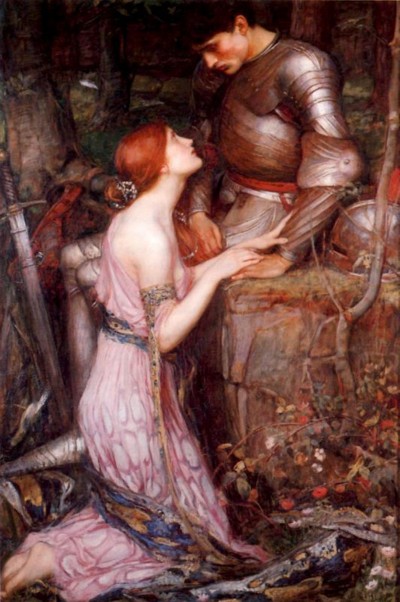
Medievalism is a system of belief and practice inspired by the Middle Ages of Europe, or by devotion to elements of that period, which have been expressed in areas such as architecture, literature, music, art, philosophy, scholarship, and various vehicles of popular culture. Since the 17th century, a variety of movements have used the medieval period as a model or inspiration for creative activity, including Romanticism, the Gothic Revival, the Pre-Raphaelite and Arts and Crafts movements, and neo-medievalism (a term often used interchangeably with medievalism). Historians have attempted to conceptualize the history of non-European countries in terms of medievalisms, but the approach has been controversial among scholars of Latin America, Africa, and Asia.
In the 1330s, Petrarch expressed the view that European culture had stagnated and drifted into what he called the "Dark Ages", since the fall of Rome in the fifth century, owing to among other things, the loss of many classical Latin texts and to the corruption of the language in contemporary discourse. Scholars of the Renaissance believed that they lived in a new age that broke free of the decline described by Petrarch. Historians Leonardo Bruni and Flavio Biondo developed a three tier outline of history composed of Ancient, Medieval, and Modern. The Latin term media tempestas (middle time) first appears in 1469. The term medium aevum (Middle Ages) is first recorded in 1604. "Medieval" first appears in the nineteenth century and is an Anglicised form of medium aevum.
During the Reformations of the 16th and 17th centuries, Protestants generally followed the critical views expressed by Renaissance Humanists, but for additional reasons. They saw classical antiquity as a golden time, not only because of Latin literature, but because it was the early beginnings of Christianity. The intervening 1000 year Middle Age was a time of darkness, not only because of lack of secular Latin literature, but because of corruption within the Church such as Popes who ruled as kings, pagan superstitions with saints' relics, celibate priesthood, and institutionalized moral hypocrisy. Most Protestant historians did not date the beginnings of the modern era from the Renaissance, but later, from the beginnings of the Reformation.
In the Age of Enlightenment of the 17th and 18th centuries, the Middle Ages was seen as an "Age of Faith" when religion reigned, and thus as a period contrary to reason and contrary to the spirit of the Enlightenment. For them the Middle Ages was barbaric and priest-ridden. They referred to "these dark times", "the centuries of ignorance", and "the uncouth centuries". The Protestant critique of the Medieval Church was taken into Enlightenment thinking by works including Edward Gibbon's Decline and Fall of the Roman Empire (1776–89). Voltaire was particularly energetic in attacking the religiously dominated Middle Ages as a period of social stagnation and decline, condemning Feudalism, Scholasticism, The Crusades, The Inquisition and the Catholic Church in general.
The Gothic Revival was an architectural movement which began in the 1740s in England. Its popularity grew rapidly in the early nineteenth century, when increasingly serious and learned admirers of neo-Gothic styles sought to revive medieval forms in contrast to the classical styles prevalent at the time. In England, the epicentre of this revival, it was intertwined with deeply philosophical movements associated with a re-awakening of "High Church" or Anglo-Catholic self-belief (and by the Catholic convert Augustus Welby Pugin) concerned by the growth of religious nonconformism. He went on to produce important Gothic buildings such as Cathedrals at Birmingham and Southwark and the British Houses of Parliament in the 1840s. Large numbers of existing English churches had features such as crosses, screens and stained glass (removed at the Reformation), restored or added, and most new Anglican and Catholic churches were built in the Gothic style. Viollet-le-Duc was a leading figure in the movement in France, restoring the entire walled city of Carcassonne as well as Notre-Dame and Sainte Chapelle in Paris. In America Ralph Adams Cram was a leading force in American Gothic, with his most ambitious project the Cathedral of St. John the Divine in New York (one of the largest cathedrals in the world), as well as Collegiate Gothic buildings at Princeton Graduate College. On a wider level the wooden Carpenter Gothic churches and houses were built in large numbers across North America in this period.
In English literature, the architectural Gothic Revival and classical Romanticism gave rise to the Gothic novel, often dealing with dark themes in human nature against medieval backdrops and with elements of the supernatural. Beginning with The Castle of Otranto (1764) by Horace Walpole, 4th Earl of Orford, it also included Mary Shelley's Frankenstein (1818) and John Polidori's The Vampyre (1819), which helped found the modern horror genre. This helped create the dark romanticism or American Gothic of authors like Edgar Allan Poe in works including "The Fall of the House of Usher" (1839) and "The Pit and the Pendulum" (1842) and Nathanial Hawthorne in "The Minister's Black Veil" (1836) and "The Birth-Mark" (1843). This in turn influenced American novelists like Herman Melville in works such as Moby-Dick (1851). Early Victorian Gothic novels included Emily Brontë's Wuthering Heights (1847) and Charlotte Brontë's Jane Eyre (1847). The genre was revived and modernised toward the end of the century with works like Robert Louis Stevenson's Strange Case of Dr Jekyll and Mr Hyde (1886), Oscar Wilde's The Picture of Dorian Gray (1890) and Bram Stoker's Dracula (1897).
Main article: Anglo-Saxonism in the 19th century
The development of philology through the 17th-19th centuries as a subject of study in northwest Europe and England saw increased interest in tracing the roots of languages and cultures including English, German, Icelandic and Dutch. Antiquaries of the time believed that languages and cultures were intertwined, and Old English texts, especially Beowulf, were claimed by antiquarians from each linguistic-cultural group as 'their' oldest poem.
Medievalism
Medievalism is a system of belief and practice inspired by the Middle Ages of Europe, or by devotion to elements of that period, which have been expressed in areas such as architecture, literature, music, art, philosophy, scholarship, and various vehicles of popular culture. Since the 17th century, a variety of movements have used the medieval period as a model or inspiration for creative activity, including Romanticism, the Gothic Revival, the Pre-Raphaelite and Arts and Crafts movements, and neo-medievalism (a term often used interchangeably with medievalism). Historians have attempted to conceptualize the history of non-European countries in terms of medievalisms, but the approach has been controversial among scholars of Latin America, Africa, and Asia.
In the 1330s, Petrarch expressed the view that European culture had stagnated and drifted into what he called the "Dark Ages", since the fall of Rome in the fifth century, owing to among other things, the loss of many classical Latin texts and to the corruption of the language in contemporary discourse. Scholars of the Renaissance believed that they lived in a new age that broke free of the decline described by Petrarch. Historians Leonardo Bruni and Flavio Biondo developed a three tier outline of history composed of Ancient, Medieval, and Modern. The Latin term media tempestas (middle time) first appears in 1469. The term medium aevum (Middle Ages) is first recorded in 1604. "Medieval" first appears in the nineteenth century and is an Anglicised form of medium aevum.
During the Reformations of the 16th and 17th centuries, Protestants generally followed the critical views expressed by Renaissance Humanists, but for additional reasons. They saw classical antiquity as a golden time, not only because of Latin literature, but because it was the early beginnings of Christianity. The intervening 1000 year Middle Age was a time of darkness, not only because of lack of secular Latin literature, but because of corruption within the Church such as Popes who ruled as kings, pagan superstitions with saints' relics, celibate priesthood, and institutionalized moral hypocrisy. Most Protestant historians did not date the beginnings of the modern era from the Renaissance, but later, from the beginnings of the Reformation.
In the Age of Enlightenment of the 17th and 18th centuries, the Middle Ages was seen as an "Age of Faith" when religion reigned, and thus as a period contrary to reason and contrary to the spirit of the Enlightenment. For them the Middle Ages was barbaric and priest-ridden. They referred to "these dark times", "the centuries of ignorance", and "the uncouth centuries". The Protestant critique of the Medieval Church was taken into Enlightenment thinking by works including Edward Gibbon's Decline and Fall of the Roman Empire (1776–89). Voltaire was particularly energetic in attacking the religiously dominated Middle Ages as a period of social stagnation and decline, condemning Feudalism, Scholasticism, The Crusades, The Inquisition and the Catholic Church in general.
The Gothic Revival was an architectural movement which began in the 1740s in England. Its popularity grew rapidly in the early nineteenth century, when increasingly serious and learned admirers of neo-Gothic styles sought to revive medieval forms in contrast to the classical styles prevalent at the time. In England, the epicentre of this revival, it was intertwined with deeply philosophical movements associated with a re-awakening of "High Church" or Anglo-Catholic self-belief (and by the Catholic convert Augustus Welby Pugin) concerned by the growth of religious nonconformism. He went on to produce important Gothic buildings such as Cathedrals at Birmingham and Southwark and the British Houses of Parliament in the 1840s. Large numbers of existing English churches had features such as crosses, screens and stained glass (removed at the Reformation), restored or added, and most new Anglican and Catholic churches were built in the Gothic style. Viollet-le-Duc was a leading figure in the movement in France, restoring the entire walled city of Carcassonne as well as Notre-Dame and Sainte Chapelle in Paris. In America Ralph Adams Cram was a leading force in American Gothic, with his most ambitious project the Cathedral of St. John the Divine in New York (one of the largest cathedrals in the world), as well as Collegiate Gothic buildings at Princeton Graduate College. On a wider level the wooden Carpenter Gothic churches and houses were built in large numbers across North America in this period.
In English literature, the architectural Gothic Revival and classical Romanticism gave rise to the Gothic novel, often dealing with dark themes in human nature against medieval backdrops and with elements of the supernatural. Beginning with The Castle of Otranto (1764) by Horace Walpole, 4th Earl of Orford, it also included Mary Shelley's Frankenstein (1818) and John Polidori's The Vampyre (1819), which helped found the modern horror genre. This helped create the dark romanticism or American Gothic of authors like Edgar Allan Poe in works including "The Fall of the House of Usher" (1839) and "The Pit and the Pendulum" (1842) and Nathanial Hawthorne in "The Minister's Black Veil" (1836) and "The Birth-Mark" (1843). This in turn influenced American novelists like Herman Melville in works such as Moby-Dick (1851). Early Victorian Gothic novels included Emily Brontë's Wuthering Heights (1847) and Charlotte Brontë's Jane Eyre (1847). The genre was revived and modernised toward the end of the century with works like Robert Louis Stevenson's Strange Case of Dr Jekyll and Mr Hyde (1886), Oscar Wilde's The Picture of Dorian Gray (1890) and Bram Stoker's Dracula (1897).
Main article: Anglo-Saxonism in the 19th century
The development of philology through the 17th-19th centuries as a subject of study in northwest Europe and England saw increased interest in tracing the roots of languages and cultures including English, German, Icelandic and Dutch. Antiquaries of the time believed that languages and cultures were intertwined, and Old English texts, especially Beowulf, were claimed by antiquarians from each linguistic-cultural group as 'their' oldest poem.
Recent media
Recent media