Hubbry Logo
Michel PollentierMichel PollentierMain
Open search
Michel Pollentier
Community hub
Michel Pollentier
logo
8 pages, 0 posts
0 subscribers
Be the first to start a discussion here.
Michel Pollentier
Michel Pollentier
from Wikipedia

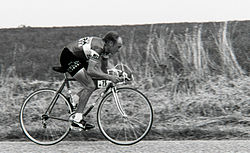
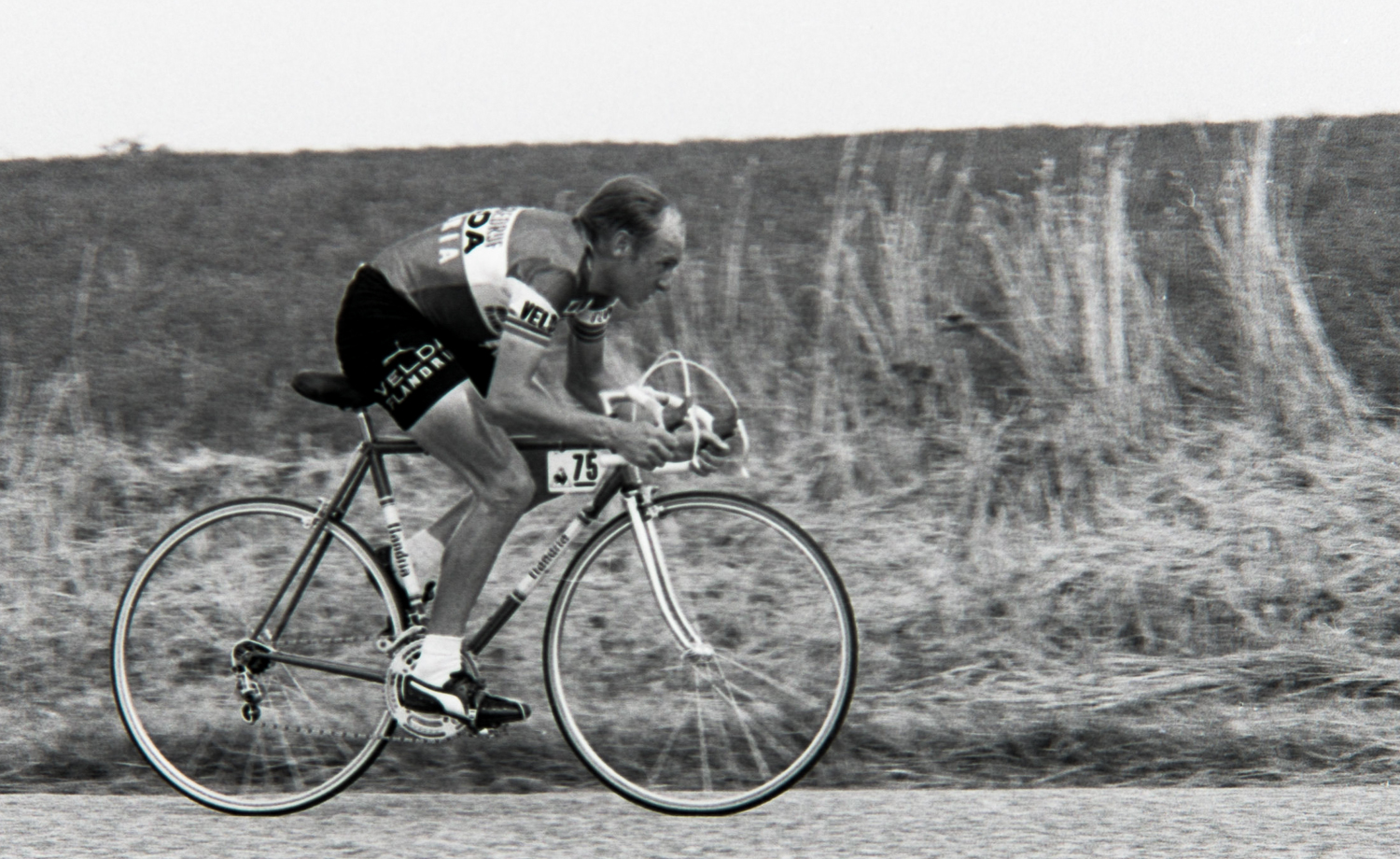
Michel Pollentier (born 13 February 1951) is a Belgian former professional road bicycle racer.

Key Information

He became professional in 1973. The highlight of his career was his overall win in the 1977 Giro d'Italia.[1] Pollentier is one of just three Belgian riders to win the Giro, the others being Eddy Merckx and Johan de Muynck.

In the 1978 Tour de France, he was the Belgian national champion when he won the stage arriving in Alpe d'Huez, took the yellow jersey and would have been involved in a battle with Joop Zoetemelk and eventual winner Bernard Hinault for the remainder of the race as the three were within +0:30 of one another. However, he was accused of foul play in the succeeding doping test, having used what was described politely as a pear-shaped tube (in fact a condom) of different urine held under the armpit and connected by a plastic tube to give the impression of urinating.[2] Pollentier was uncovered after another rider at the test had trouble operating his own system of tubes and aroused the suspicion of the doctor, who then demanded Pollentier lift his jersey to show if he too was cheating. He was put out of the Tour immediately.[2]

The affair took away most of Pollentier's credibility in international cycling. Even though he won the 1980 edition of the Tour of Flanders[3] and he also came 3rd in the 1982 Vuelta a España where he was the beneficiary of a doping incident when the initial winner was disqualified bringing him to 2nd overall.[4] 1984 was his last professional season; he finished outside the top 10 at the Vuelta and won the final grand tour stage of his career.

After his cycling career, Pollentier became a car tyre garage owner and founded a cycling school.

In "Seigneurs et Forcats du Velo" by Olivier Dazat, Pollentier is quoted as saying that he and another named Belgian cycling champion of the era had trouble after their careers because of drugs they had taken while racing. Dazat quotes him as saying: "I've never hesitated to confess that I spent three weeks under the surveillance of Dr Dejonckheere at the St-Joseph clinic at Ostend and that after treatment... I stayed under his control for another two years. Why hide it? It's impossible to come out of a situation like that without the help of a doctor.'

Career achievements

[edit]

Major results

[edit]
1971
1st Gent – Staden
10th Ronde Van Vlaanderen Beloften
1973
2nd Tour du Loir-et-Cher
3rd Overall Tour de Romandie
4th Overall Étoile des Espoirs
6th Kattekoers
9th Paris–Tours
1974
4th Overall Vuelta a Andalucía
4th Kampioenschap van Vlaanderen
7th Boucles de l'Aulne
7th Overall Tour de France
1st Stage 21b (ITT)
9th Overall Tour de Luxembourg
1975
1st Stage 13 Tour de France
1st Stage 6 Critérium du Dauphiné Libéré
2nd Overall Tour of Belgium
2nd Brabantse Pijl
2nd Trofeo Baracchi
4th Paris–Brussels
4th Druivenkoers Overijse
5th Amstel Gold Race
6th Kuurne–Brussels–Kuurne
8th Overall Vuelta a Andalucía
8th Gran Premio di Lugano
10th Gent–Wevelgem
1976
1st Overall Tour of Belgium
1st Stage 3
1st Overall Escalada a Montjuïc
1st Stage 1c (ITT)
1st Giro del Piemonte
1st Stadsprijs Geraardsbergen
1st Trofeo Baracchi (with Freddy Maertens)
2nd Overall Tour de Suisse
1st Stages 2, 4a & 9b (ITT)
4th Overall Ronde van Nederland
7th Overall Tour de France
1st Stage 16
8th Grand Prix de Wallonie
10th Züri-Metzgete
1977
1st Road race, National Road Championships
1st Overall Giro d'Italia
1st Stage 21 (ITT)
1st Overall Tour de Suisse
1st Prologue, Stages 3a, 3b (ITT) & 9b (ITT)
1st Gouden Pijl Emmen
2nd Grand Prix of Aargau Canton
3rd Setmana Catalana de Ciclisme
4th Grand Prix de Wallonie
5th Tour of Flanders
6th Overall Vuelta a España
1st Stage 4 (ITT)
7th Trofeo Laigueglia
8th Liège–Bastogne–Liège
1978
1st Road race, National Road Championships
1st Overall Critérium du Dauphiné Libéré
1st Stages 5 & 7b (ITT)
1st Overall Escalada a Montjuïc
1st Stages 1a (ITT), 1b & 1c (ITT)
1st Overall Vuelta a Mallorca
1st Stages 1a & 2a
2nd Tour of Flanders
4th Overall Tour of Belgium
4th Omloop van het Houtland
5th Overall Tirreno–Adriatico
5th La Flèche Wallonne
5th Critérium des As
6th Brabantse Pijl
8th Overall Tour de Suisse
1st Stages 4b (ITT) & 9b (ITT)
10th Giro di Lombardia
10th Gent–Wevelgem
1979
1st GP du Tournaisis
3rd Overall Vuelta a España
3rd E3 Prijs Vlaanderen
4th Overall Tour of Belgium
4th Brabantse Pijl
5th Omloop Het Volk
7th Overall Tirreno–Adriatico
7th Liège–Bastogne–Liège
1980
1st Tour of Flanders
1st Brabantse Pijl
2nd Le Samyn
5th Overall Tour of Belgium
5th Road race, National Road Championships
8th Overall Tirreno–Adriatico
1981
8th Overall Étoile de Bessèges
1982
1st Omloop van het Houtland
2nd Overall Vuelta a España
4th Tour of Flanders
6th Road race, UCI Road World Championships
1983
3rd Overall Three Days of De Panne
7th Tour of Flanders
7th La Flèche Wallonne
1984
1st Stage 6 Vuelta a España

Grand Tour general classification results timeline

[edit]
Grand Tour 1973 1974 1975 1976 1977 1978 1979 1980 1981 1982 1983 1984
A yellow jersey Vuelta a España 6 3 26 2 13
A pink jersey Giro d'Italia 1
A yellow jersey Tour de France 34 7 23 7 DSQ DNF DNF DNF
Legend
Did not compete
DNF Did not finish
DSQ Disqualified

See also

[edit]

References

[edit]
[edit]
Revisions and contributorsEdit on WikipediaRead on Wikipedia
from Grokipedia
''Michel Pollentier'' is a Belgian former professional road bicycle racer known for winning the 1977 Giro d'Italia and for his disqualification from the 1978 Tour de France after attempting to falsify a doping test by using a substitute urine device. Born on 13 February 1951 in Diksmuide, Belgium, Pollentier turned professional in 1973 and competed until 1984, riding prominently for teams including Flandria and Splendor. He emerged as a versatile rider capable in time trials, climbing, and general classification contests, securing early recognition with a stage win in the 1974 Tour de France and a sixth-place overall finish in 1976. His career peaked in 1977 with victories in the Giro d'Italia, Tour de Suisse, and the Belgian national road race championship, followed by wins in the Critérium du Dauphiné Libéré and another national title in 1978. He also claimed three Tour de France stage victories between 1974 and 1976, along with success in other stage races such as the Tour de Belgique. Pollentier's career is indelibly marked by the 1978 Tour de France incident, where he won the stage to Alpe d'Huez, took the yellow jersey, but was expelled from the race later that day after officials discovered his attempt to submit another person's urine during doping control; the disqualification came with a two-month suspension and is regarded as one of cycling's most notorious doping-related events. Despite later successes, including a win in the Tour of Flanders in 1980, he never regained his previous form after the scandal.

Early life

Birth and youth

Michel Pollentier was born on 13 February 1951 in Diksmuide, a town in the West Flanders province of Belgium. He holds Belgian nationality and hails from the Flemish region, the Dutch-speaking northern part of the country where Diksmuide is situated. Details about his youth and early life prior to his professional cycling debut in 1973 are not widely documented.

Professional cycling career

Entry into professional cycling (1973–1976)

Michel Pollentier turned professional in 1973 with the Flandria–Carpenter–Shimano team. He rode for Flandria-sponsored squads throughout this period, supporting teammates such as Freddy Maertens while developing his own stage-racing capabilities. Pollentier made his mark in the Tour de France during these early years. In 1974, he won stage 21b, an individual time trial over 37.5 km from Orléans to Orléans, finishing in 48:23 and beating Eddy Merckx by 10 seconds. This victory helped secure his 7th place in the general classification, 16 minutes and 34 seconds behind Merckx. In 1975, Pollentier claimed stage 13 from Albi to Super Lioran (260 km), attacking solo over the final 7 km to win in 8:58:44 ahead of Merckx by 25 seconds. He added another Tour stage win in 1976 by taking stage 16 from Pau to Fleurance (152 km) with a 10 km solo effort, finishing in 4:38:33 and 16 seconds clear of teammate Freddy Maertens. That year he again placed 7th overall in the general classification, 14 minutes and 59 seconds behind Lucien Van Impe. These Tour de France stage victories and consistent top-10 general classification finishes established Pollentier as a promising climber and time trialist within the peloton by the end of 1976.

Peak achievements (1977–1978)

Michel Pollentier's most successful period in professional cycling occurred in 1977 and 1978, when he captured major stage race victories and national titles that marked the high point of his career. In 1977, he achieved his most prestigious triumph by winning the Giro d'Italia general classification, becoming one of only three Belgians to claim the Italian Grand Tour, alongside Eddy Merckx and Johan De Muynck, and also secured the individual time trial victory on stage 21. That same year, Pollentier dominated the Tour de Suisse, winning the general classification while taking multiple stage victories, including the prologue, stage 3a, the stage 3b individual time trial, and the stage 9b individual time trial. He added the Belgian National Road Race Championship title in June 1977 and claimed a stage win in the Vuelta a España with victory in the stage 4 individual time trial. In 1978, Pollentier continued his strong form by winning the Critérium du Dauphiné Libéré general classification, complemented by stage victories in stage 5 and the stage 7b individual time trial. He also successfully defended his Belgian National Road Race Championship title that year.

Later professional years (1979–1984)

In 1979, Michel Pollentier rode for the Splendor–Euro Soap team and secured third place overall in the Vuelta a España, finishing behind winner Joop Zoetemelk and second-placed Francisco Galdós. The following year with the same squad (then known as Splendor–Admiral–TV Ekspres), he claimed victory in the Tour of Flanders, outsprinting Francesco Moser and Jan Raas in Meerbeke after a race marked by late attacks on the Bosberg and a tight lead group. Pollentier switched to Vermeer Thijs for the 1981 season before joining Safir–Marc (with varying co-sponsors) from 1982 through 1984. In 1982, he finished third overall in the Vuelta a España. Original winner Ángel Arroyo tested positive for methylphenidate following stage 17 and received a doping sanction, but retained the victory. Two years later, he took a stage victory in the Vuelta a España, winning stage 6 from Salou to Sant Quirze del Vallès. Pollentier retired from professional cycling at the end of the 1984 season.

Doping scandal

1978 Tour de France incident

In the 1978 Tour de France, Michel Pollentier won stage 16, finishing atop Alpe d'Huez, and claimed the yellow jersey as the overall race leader, establishing himself as a strong contender for the general classification victory. Following the stage, Pollentier was called for doping control. He attempted to defraud the test by employing a urine substitution device consisting of a condom or flask filled with clean urine, concealed under his armpit with a rubber tube running down his arm to his wrist to provide a fraudulent sample. The fraud was discovered when officials, including Dr. Calvez of the French Cycling Federation and UCI inspector Renato Sacconi, grabbed his arm and pulled up his jersey, revealing the tube and device. As a result, Pollentier was immediately disqualified for attempted fraud, placed last in the stage, fined 1,000 Swiss francs, and removed from the Tour de France; he also received a two-month suspension. This incident occurred after Pollentier had won the Belgian National Road Race Championship earlier in the year.

Major results

Grand Tour performances

Michel Pollentier recorded several competitive performances across the three Grand Tours, with particular success in stage hunting and occasional high general classification placings. In the Tour de France, he finished seventh overall in both 1974 and 1976, while also securing stage victories in 1974, 1975, and 1976. In 1978, he won a stage but was disqualified from the race after the doping control incident. His most prominent Grand Tour achievement was in the Giro d'Italia, where he claimed the overall general classification victory in 1977 accompanied by one stage win. Pollentier also performed consistently in the Vuelta a España, achieving third overall in 1979 and second overall in 1982. He added stage wins in that race in 1977 and 1984. These results highlight his ability to target mountain stages and contend for high classifications in multi-week events.

Classic races and national titles

Michel Pollentier was a prominent performer in one-day classic races and Belgian national competitions during his professional career. He won the Belgian National Road Race Championships in 1977 and again in 1978, securing the national title in consecutive years. His most notable classic victory came in the Tour of Flanders, which he won in 1980. In the 1980 Tour of Flanders, Pollentier prevailed in a three-man breakaway featuring Francesco Moser and Jan Raas, launching repeated attacks to disrupt a likely sprint finish before sealing the victory with a decisive move in the final 500 meters after Moser and Raas hesitated. He had earlier finished second in the 1978 edition of the race. Pollentier also showed consistent strength in the Tour of Flanders across multiple seasons, with a fifth place in 1977, fourth in 1982, and seventh in 1983. Beyond the Tour of Flanders, Pollentier won La Flèche Brabançonne (Brabantse Pijl) in 1980. In Liège–Bastogne–Liège, he achieved top-ten finishes, placing eighth in 1977 and seventh in 1979. He additionally placed tenth in the Giro di Lombardia in 1978.

Retirement and later life

Post-racing career and activities

Michel Pollentier retired from professional cycling at the end of the 1984 season. After his retirement, he became the owner of a car tyre garage. He also founded a cycling school.

Reflections on drug use and recovery

Michel Pollentier has openly reflected on the severe personal challenges he encountered after retiring from professional cycling, attributing them to the drugs he used during his racing career. In Olivier Dazat's book Seigneurs et Forçats du Vélo, Pollentier admitted to serious post-career difficulties arising from the substances taken while competing, including trouble quitting them. To address these issues, he sought medical help and spent three weeks under the supervision of Dr. Dejonckheere at the St-Joseph clinic in Ostend, followed by two years of continued care under the doctor's control. Pollentier emphasized the necessity of professional assistance in his recovery. He expressed no reluctance to discuss his experience publicly, stating: “I’ve never hesitated to confess that I spent three weeks under the surveillance of Dr Dejonckheere at the St-Joseph clinic at Ostend and that after treatment… I stayed under his control for another two years. Why hide it? It’s impossible to come out of a situation like that without the help of a doctor.” This admission underscores his view that medical intervention was indispensable and that there was no reason to conceal the process.
Add your contribution
Related Hubs
User Avatar
No comments yet.