Hubbry Logo
Miles RomneyMiles RomneyMain
Open search
Miles Romney
Community hub
Miles Romney
logo
8 pages, 0 posts
0 subscribers
Be the first to start a discussion here.
Miles Romney
Miles Romney
from Wikipedia
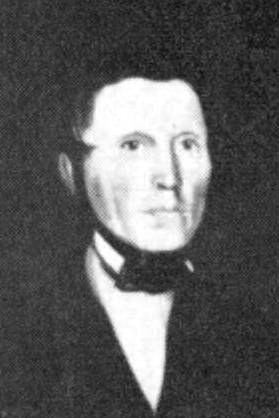
Miles Romney
Elizabeth Gaskell Romney (1809–1884)

Miles Romney (July 13, 1806 – May 3, 1877) was a British convert to Mormonism, Mormon pioneer and early settler of the American west, including St. George, Utah. In 1837, Romney and his wife, Elizabeth, joined the Church of the Latter Day Saints in a baptism ceremony just south of Preston, Lancashire, England.[1] Soon after, they emigrated to the United States to join with the Church of Jesus Christ of Latter Day Saints in Nauvoo, Illinois.

Early life

[edit]

Romney was born in Dalton-in-Furness, Lancashire in 1806. He was the son of George Romney, Jr. (whose father, George Romney, Sr., was first cousin to the English portrait artist also named George Romney[1][2]) and Sarah King. On November 16, 1830, he married Elizabeth Gaskell.[3] The couple eventually had nine children, including Miles Park Romney, and moved to the Preston area where they may have been practising members of the Church of England congregation at St Mary's parish church in Penwortham.[1]

Romney worked as a carpenter in the area,[1] also working in nearby Preston. Seven years after the founding of Church of Christ (renamed the Church of Jesus Christ of Latter Day Saints in 1838), in 1837 seven missionaries were sent to Northwest England, and started preaching in Preston. Romney and his wife were early converts, baptized in the River Ribble at Preston.[1] They later emigrated to join other members of the Church in Nauvoo, Illinois.

United States

[edit]

Once in the United States, Romney worked as an architect,[4] designing or assisting in building early temples, tabernacles and other buildings important to the Church of Jesus Christ of Latter-day Saints (LDS Church). Romney worked in both Nauvoo and westward in Utah, and assisted in building the Nauvoo Temple.

After coming to Utah, Romney went with a group of pioneers to settle St. George, Utah.[5][6] There he served as superintendent of construction for the St. George Utah Temple, the first LDS temple completed in the state of Utah.[7] As an architect, Romney designed the St. George Tabernacle and Brigham Young Winter Home and Office, the latter with his son, Miles Park Romney. Both are listed on the U.S. National Register of Historic Places.[8][9] Miles Romney supervised the construction of the St. George Temple and Tabernacle.[10]

Romney died in St. George, Utah, on May 3, 1877, from complications suffered from a fall while working on the St. George Temple.

Romney is an ancestor of politicians George W. Romney and Mitt Romney.

See also

[edit]
St. George Tabernacle, designed by Romney, was completed in 1876
Brigham Young's winter home in St. George, Utah, completed in 1871

References

[edit]
Revisions and contributorsEdit on WikipediaRead on Wikipedia
from Grokipedia
Miles Romney (July 13, 1806 – May 3, 1877) was an English-born carpenter, architect, and early convert to The Church of Jesus Christ of Latter-day Saints who emigrated to the and contributed as a Mormon pioneer to the settlement of southern Utah. Born in , , , to George Romney and Sarah King, he married in 1830, and the couple was baptized into the Church in September 1837. They emigrated from in 1841, arriving in , after a 51-day voyage, and later joined the westward migration to the in 1848 as part of the pioneer companies. Romney settled in southern under Brigham Young's direction, becoming a key figure in St. George's development by preparing architectural plans and serving as master builder for the St. George Tabernacle's woodwork and structure, as well as contributing to other local constructions like Brigham Young's winter home. His efforts exemplified the self-reliant craftsmanship central to early Latter-day Saint communities in .

Early Life

Birth and Family Background

Miles Romney was born on July 13, 1806, in , , (now part of ), to George Romney, a mason by trade, and Sarah King. He was baptized on July 15, 1806, at St. Mary the Virgin Church in , reflecting the family's adherence to the established at the time. The Romneys were part of a working-class in the industrializing region of , where George's occupation as a mason likely involved stonework for local buildings and amid the area's growing quarrying and activities. Little is documented about King's background beyond her marriage to George around 1800, though the couple resided in Dalton, a modest known for its and proximity to the Peninsula's natural resources. Miles grew up in this environment, with no records indicating siblings, suggesting he may have been an or that other members predeceased early.

Occupation and Marriage in England

Miles Romney worked as a carpenter in Dalton-in-Furness, , , where he likely engaged in constructing or repairing local structures, such as farm machinery or weaving frames, common trades in the industrializing region. His skills in and basic formed the basis of his later contributions as a builder in America, though in England he remained in modest employment tied to the area's rural and emerging . On November 6, 1830, Romney married , also born in in 1808, in a local ceremony reflective of their shared community roots. The couple initially resided in Dalton, where they had two children—George in 1831 and another soon after—before relocating to near Preston in the mid-1830s, possibly for better work opportunities in amid regional shifts toward mechanized industry. This marriage endured through their subsequent emigration and settlement in the United States, producing a total of five children by 1841.

Conversion to Mormonism

Initial Exposure and Baptism

Miles Romney, employed as a joiner in , encountered the proselytizing efforts of the first Latter-day Saint missionaries to Britain in the summer of 1837. These missionaries, including , , Joseph Fielding, , and John Goodman, arrived in on July 6, 1837, and promptly traveled to nearby Preston, where they commenced at locations such as the cockpit and in front of the Exchange. The missionaries' message, emphasizing restoration of primitive Christianity, biblical prophecy fulfillment, and the , drew initial crowds and led to the first baptisms in the River Ribble on July 30, 1837. Romney and his wife, , responded positively to these sermons amid a wave of early conversions in the Preston area, where economic hardship and religious dissatisfaction among working-class communities facilitated receptivity to the new . By September 1837, the couple had been baptized in the River Ribble, marking their formal entry into the Church of Jesus Christ of Latter-day Saints. This baptism occurred during a period of rapid growth for the British mission, with over 140 converts by year's end, though local opposition from established clergy labeled the missionaries as "vulgar and cunning" deceivers.

Preparation for Emigration

Following their into The Church of Jesus Christ of Latter-day Saints in September 1837 in the Preston, England, area, Miles Romney and his wife Elizabeth resolved to gather with the main body of Saints in America, in line with church teachings emphasizing physical relocation to . As a joiner by trade, Romney maintained his occupation in while engaging in the local Mormon branch activities, which fostered community support and reinforced as a religious imperative. Over the subsequent four years, the Romneys prepared amid economic challenges and family growth, which by 1841 included five children. Early missionaries such as had established emigration frameworks, including arrangements for passage from and appointments of local leaders like Romney to coordinate efforts among British converts. These roles facilitated fundraising, asset liquidation, and group organization, with church assistance providing subsidized tickets for committed families. In early 1841, the family joined a company of Saints from Preston and , departing on February 7 aboard a vessel chartered for the voyage. After crossing the Atlantic, they reached , on April 18, marking the completion of their preparations and arrival among the approximately 12,000 church members there.

Emigration and Early American Experiences

Voyage to Nauvoo

Miles Romney and his wife , along with their young children, departed , , on February 7, 1841, aboard the ship as part of a company of 233 Mormon converts emigrating to join the Latter-day Saint community. The voyage, captained by Richard K. Porter and presided over by Hiram , lasted approximately seven weeks, with the vessel arriving in New Orleans, Louisiana, on March 30, 1841. Romney served as one of the counselors to Clark, assisting in the spiritual and organizational leadership of the passengers, which included organizing hymn singing to maintain morale amid the challenges of sea travel. From New Orleans, the emigrants, including the Romneys, transferred to steamboats for the upriver journey along the , navigating seasonal floods and rudimentary transport conditions typical of early river travel. This leg of the voyage covered roughly 1,000 miles and took about two to three weeks, depending on river currents and stops. The group reached , on April 18, 1841, where they integrated into the burgeoning Mormon settlement amid ongoing construction of the and community expansion. No major incidents specific to Romney's family are recorded during the transatlantic or river portions, though the overall reflected the collective sacrifices of British converts, many of whom sold possessions to fund passage after years of preparation following their 1837 baptisms.

Involvement in Mormon Community

Upon arriving in , on April 18, 1841, Miles Romney, a skilled carpenter from , engaged in the burgeoning Mormon community's infrastructure development. He contributed to the construction of the , a central project symbolizing the Saints' commitment amid persecution and expansion. Romney served as foreman over the star builders for the temple and personally carved all the capitals for its tower, leveraging his expertise in fabricating intricate stone and wood elements. He also oversaw broader woodwork aspects of the structure, aiding in its completion despite resource shortages and external threats. During his residence in Nauvoo, where his son Miles Park was born on August 18, 1843, Romney supported the community's collective labor system, which mobilized members for public buildings and fortifications. His efforts aligned with the era's emphasis on and temple-focused devotion, though records emphasize his technical roles over leadership at this stage.

Pioneer Settlement in the West

Migration to Utah Territory

After the expulsion of Latter-day Saints from , in 1846, Miles Romney and his family relocated temporarily to areas in and , where they labored as carpenters and farmers to accumulate resources for the overland journey westward. By early 1850, having saved sufficient funds through such employment, the Romneys departed from their staging point on March 18, 1850, traveling by ox-drawn wagons as part of a larger Mormon pioneer exodus aimed at reaching the under Brigham Young's direction. The family joined the Edward Hunter Company, one of the organized Perpetual Emigrating Fund groups, which assembled near the and commenced its trek on June 29, 1850, comprising 261 individuals and 67 wagons funded partly by church loans to aid indigent converts. This company, led by Bishop Edward Hunter, followed the established route, enduring typical hardships of the plains crossing, including river fords, dust storms, scarcity of water and forage, and the physical toll of handcart and wagon maintenance amid a company that included families, single adults, and children like Romney's seven-year-old son, Miles Park. The journey spanned approximately 1,000 miles from the outfitting posts, reflecting the collective determination of British and American converts to establish a theocratic settlement beyond federal reach following years of persecution. The Edward Hunter Company arrived in the on October 12 or 13, 1850, marking the Romneys' entry into the newly organized , where they initially encamped on the temple block in . Upon arrival, Romney contributed his skills to immediate community needs, such as building shelters and , while the family integrated into the burgeoning pioneer economy centered on , farming, and fort to sustain the influx of thousands of immigrants that year. This migration solidified Romney's role as a in , transitioning from urban English life to the rigors of frontier self-sufficiency under ecclesiastical governance.

Establishment in St. George

In response to Brigham Young's call on October 8–9, 1860, to colonize southern region, Miles Romney relocated from northern to the area in 1862 with his wife Elizabeth Gaskell Romney and several of their children. Initially settling briefly in the nearby community of Grafton, the family soon moved to St. George, where Romney constructed a residence shortly after arrival to establish a permanent household. As an experienced carpenter and architect, Romney applied his skills to and community infrastructure from the outset, while also taking up farming on local land to provide for his family amid the arid pioneer conditions. These efforts aligned with the broader Mormon colonization strategy of rapid self-sufficiency through agriculture and building, transforming the valley's challenging terrain into viable settlements. Romney's household grew alongside St. George's development, with his labor supporting both personal stability and the influx of additional pioneers called to the region in the early 1860s. Romney further solidified his establishment by collaborating with his son on key building projects, including the rear addition to Brigham Young's winter home in St. George, demonstrating his integral role in the community's foundational physical development. By the mid-1860s, these activities had positioned the as established settlers, enduring the harsh climate through diversified labor in farming and craftsmanship until Romney's death in St. George in 1877.

Contributions as Builder and Settler

Role in St. George Tabernacle

Miles Romney served as the supervising architect in St. George for the construction of the St. George Tabernacle, overseeing on-site work under church architect William H. Folsom, who contributed to the design. His role leveraged his expertise as a carpenter and builder, essential for erecting the structure amid the pioneer settlement's limited resources and harsh desert conditions. On November 5, 1871, during a local Church conference, Romney was formally sustained as assistant and chief carpenter, reflecting his hands-on leadership in advancing the project toward completion. The tabernacle's construction had commenced earlier, with cornerstones laid on April 5, 1863, by apostles , Amasa M. Lyman, and Erastus , but progressed intermittently due to community priorities like and home building. Romney's contributions included directing carpentry efforts for the two-story edifice, which featured a prominent and styling with Greek Revival elements, serving as both a worship space and community gathering hall. By late 1871, under his supervision, the building was sufficiently advanced for use, though full interior finishing extended into subsequent years until its dedication in 1876.

Other Community Developments

Miles Romney served as superintendent of in St. George, overseeing projects critical to the settlement's infrastructure and expansion following his arrival in 1862. He collaborated with his son, Miles P. Romney, to build the rear portion of Brigham Young's winter home in St. George, a key residence for the church leader during his visits to southern . Romney also constructed his own family home in St. George, exemplifying the self-reliant building practices of early in the region.

Family and Personal Life

Children and Polygamy Practices

Miles Romney married on November 16, 1830, in , , , prior to their conversion to the Church of Jesus Christ of Latter-day Saints. The couple emigrated to , in 1841, where several of their children were born or raised amid the growing Mormon community. Romney and Gaskell had nine children, including George Romney (born August 14, 1831, in ; died 1920), Elizabeth Ann Romney (born 1833), Sarah Romney (born 1836; died 1909), Joseph Gaskell Romney (born 1838; died 1888), (born August 18, 1843, in Nauvoo; died 1904), Hiram Thomas Gaskell Romney (born 1845), and Mary Ann Romney (born 1848; died 1924). These children were raised in the pioneer settlements of , contributing to the family's establishment in St. George after the 1861 migration call. Although plural marriage was introduced as a church practice in the 1840s and publicly announced in 1852 under , during Romney's active membership and settlement years, no historical records confirm that Romney himself entered into plural marriages. His family structure remained with Gaskell until his death, contrasting with his son , who practiced and fathered children with multiple wives. This adherence to aligned with the choices of many early converts who did not fully embrace , despite its theological emphasis in the community.

Relationships with Descendants

Miles Romney collaborated closely with his adult son, , on key construction projects in , including the addition of the rear wing to Brigham Young's winter home in the early 1870s. This partnership exemplified the intergenerational labor dynamics within pioneer Mormon families, where fathers trained sons in skilled trades essential to . Miles Park, born in 1843 and trained as a builder under his father's guidance, contributed to the same infrastructural efforts that defined Romney's later career, such as tabernacle expansions and residential builds. Several of Romney's children, including George (1831–1920), Elizabeth (1833–1907), (1836–1909), Joseph Gaskell (1838–1888), and Mary Ann (1848–1924), remained in the St. George vicinity or broader into adulthood, fostering familial proximity amid the settlement's growth. These ties aligned with the patriarchal and communal structures of early Latter-day Saint society, where extended kin supported mutual economic and religious endeavors, though specific personal correspondences or anecdotes from Romney's interactions remain undocumented in primary records. His descendants through Miles Park later extended family influence into the following the 1880s anti-polygamy campaigns, but these migrations occurred after Romney's death in 1877.

Death and Legacy

Final Years

In the 1870s, Miles Romney remained actively involved in St. George's major construction efforts, overseeing and serving as superintendent for the St. George Temple, where he applied his expertise as a master . Despite advancing age, he continued hands-on labor at the Temple site, reflecting his dedication to the community's infrastructure development under Brigham Young's direction. On October 12, 1874, Romney sustained serious injuries from a fall while working on the Temple, fracturing his arm and leg; he recovered enough to return to his supervisory role shortly thereafter. This incident highlighted the physical demands of his ongoing contributions but did not deter his commitment to the project. Romney died on May 3, 1877, in St. George, Washington County, , at age 70, from complications arising from a subsequent fall at the Temple construction site. He was buried in the St. George City Cemetery.

Historical Impact and Descendants

Miles Romney's enduring historical impact stems from his pivotal role in the architectural and infrastructural development of , where his designs and supervision of key projects facilitated the transformation of a remote outpost into a stable Mormon settlement. As the architect and master builder of the St. George Tabernacle, initiated in 1863, Romney incorporated innovative features such as its distinctive circular staircases, contributing to a structure that served as a communal and religious hub for decades and remains a preserved today. His oversight as superintendent of the St. George Temple's construction further exemplified the pioneer emphasis on erecting enduring edifices amid resource scarcity, with Romney's work on and even portions of Brigham Young's winter home underscoring his broader influence on southern Utah's built environment. These contributions reflect Romney's embodiment of Mormon pioneer resilience, as he transitioned from a woodwork foreman to a leader in the "," helping establish agricultural and civic foundations in an arid region through collective labor and engineering ingenuity. His efforts aligned with church directives under to secure southern frontiers, yielding long-term economic viability via and settlement patterns that persist in Washington County's development. Romney's descendants amplified his legacy through continued church involvement, territorial expansion, and later national prominence. Fathering ten children with , including son (1843–1904), the family line extended polygamous practices that prompted migrations, such as Miles Park's relocation to Mexico's Mormon colonies in the to evade U.S. anti-polygamy laws. This branch produced (1871–1955), whose son served as Michigan's governor (1963–1969) and U.S. Secretary of Housing and Urban Development (1969–1973), while grandson held positions as governor (2003–2007), 2012 Republican presidential nominee, and U.S. Senator from (2019–2025). These figures illustrate the Romney lineage's adaptation from frontier settlement to political influence, rooted in early Mormon communal ethos.

References

Add your contribution
Related Hubs
User Avatar
No comments yet.