Hubbry Logo
Mister CeeMister CeeMain
Open search
Mister Cee
Community hub
Mister Cee
logo
8 pages, 0 posts
0 subscribers
Be the first to start a discussion here.
Mister Cee
Mister Cee
from Wikipedia

Key Information

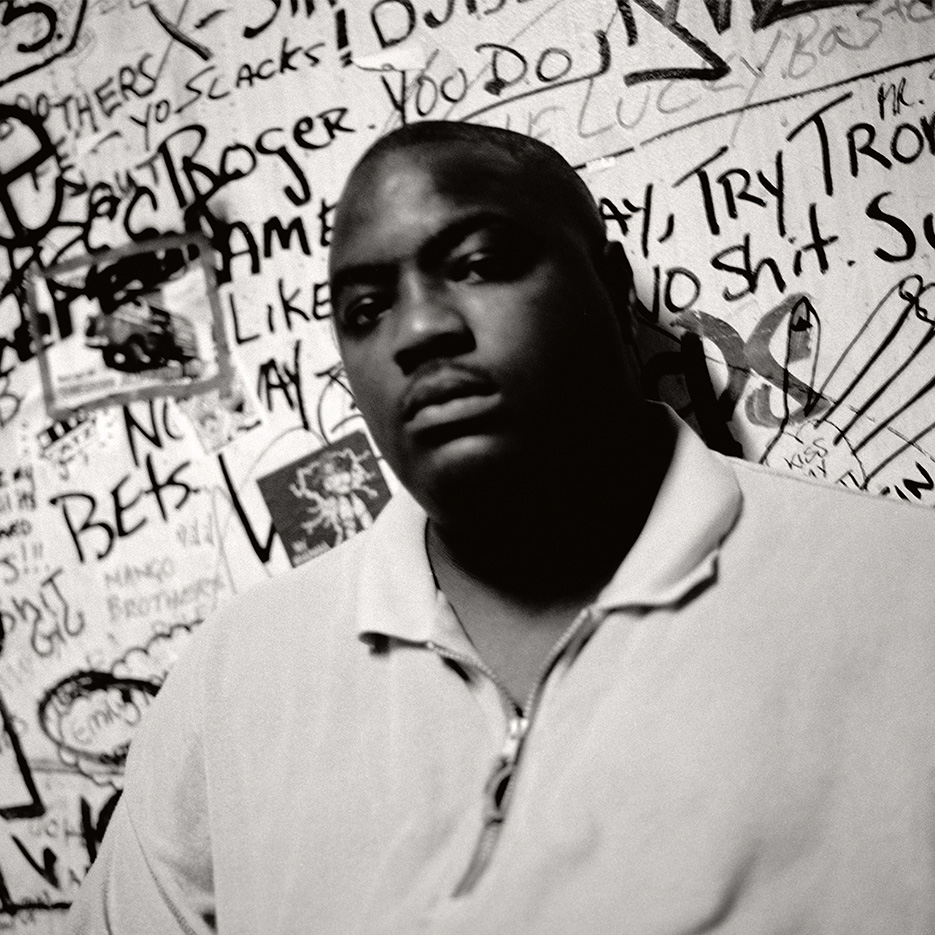
Calvin LeBrun (August 17, 1966 – April 10, 2024), known professionally as Mister Cee or DJ Mister Cee, was an American DJ, broadcaster, record executive, and radio personality. He guest appeared on Big Daddy Kane's 1988 debut album Long Live the Kane and served as associate executive producer for the Notorious B.I.G.'s debut album, Ready to Die (1994); widely considered to be a pioneering figure in 1990's East Coast hip hop, LeBrun is often credited with having discovered both rappers.[1][2][3][4][5]

Life and career

[edit]

LeBrun was born on August 17, 1966,[6] in Bedford–Stuyvesant, Brooklyn, New York City. At a young age, he learned how to DJ from a crew called DJ Knight and the Knights of Hollywood.[2] In high school, he met rapper Big Daddy Kane. After graduation, he worked for several messenger companies, including Airborne Express,[7] until he began deejaying for Kane in the late 1980s. He appeared on the track "Mister Cee's Master Plan" from Kane's 1988 debut album, Long Live the Kane,[2] and was a member of the Juice Crew, alongside rapper Roxanne Shante.[8][9]

In the early 1990s, he gained popularity as a radio DJ, showcasing the music of rising artists. His radio shows Throwback at Noon and Friday Night Live would air respectively on New York radio stations Hot97 and WBLS.[3] During this time, LeBrun discovered the Notorious B.I.G., otherwise known as Biggie Smalls,[10][11] after meeting the rapper through his DJ 50 Grand.[2] He would serve as B.I.G.’s mentor,[12] help record B.I.G.'s demo and facilitate the deal that got Notorious B.I.G. signed by Sean "Diddy" Combs to Bad Boy Records.[2]

In 1998, LeBrun became a member of The Flip Squad, which included Mark Ronson.[13] He influenced many popular artists, including Alicia Keys,[14] and was referenced in Jay-Z's Death of Autotune.[15] He was one of the first DJs to play Fetty Wap's "Trap Queen" in 2014, helping launch the rapper's career.[15] Aside from his contributions in music, LeBrun also helped develop a new flavor called "Island Punch Finisher" for Tropical Fantasy soft drinks.[16] In 2008, the video game Grand Theft Auto IV featured a realistic Mister Cee character on a rap radio station titled "102.7, the Beat".[17]

In 2013, his sexuality entered the public debate after his repeated arrests for soliciting prostitution from trans women.[18][19][20] Challenged by his radio cohost Ebro Darden, he was partly secretive, but denied being gay.[19][20] The controversy persisted until he publicly acknowledged that, while not seeking sex with trans women, he had sought activities such as oral sex,[19][21] and questioned his sexuality.[22] As a result of the controversy and the station's new plans for music, he resigned from Hot97 temporarily in 2013 and permanently in 2014, moving to his show on WXBK.[4] Despite the prevalence of homophobia in the hip hop community, he received support from many notable hip hop figures, including Questlove.[23] Addressing the incident in 2021 on a podcast hosted by Maino, LeBrun said that being outed made him feel dead and likened the experience to a funeral, stating that in his mind "a whole funeral scene unfolded: who came and didn’t come, who was mourning, who was laughing from the back of the pews." In the same interview he identified himself as a "Try-sexual" meaning that he was "willing to try anything", and affirmed that he was attracted to trans women.[24][5]

In 2020, LeBrun became the host of Sirius XM's “The Set It Off Show” on LL Cool J's Rock the Bells Radio, a position he held until his death.[25]

Death

[edit]

LeBrun died in New York City on April 10, 2024, at the age of 57 due to "diabetes-related coronary artery/kidney disease." LeBrun's cause of death was confirmed in an official statement from the family.[26][11][27] Numerous recording artists and broadcasters expressed their condolences on social media, including 50 Cent, Faith Evans, Queen Latifah, Fat Joe, DJ Premier, Pete Rock, Chuck D, Busta Rhymes, Raekwon, Ed Lover, Memphis Bleek, MC Lyte, Big Daddy Kane, DJ Jazzy Jeff, journalist Elliott Wilson, and Hot 97 DJ Peter Rosenberg.[28][29][30][31][32]

Legacy

[edit]

LeBrun is considered a legendary figure in hip-hop and one of the greatest DJs of all time.[4] DJ Premier called Mister Cee an "icon", 50 Cent called Mister Cee a "legend",[15] and Peter Rosenberg called Mister Cee "one of the most important and impactful DJs of all time".[28] Common called Mister Cee "one of the most important people ever in hip-hop" and said "thank you for what you’ve done for the Culture, the Music and for Us."[33] Wyclef Jean added that Mister Cee was “one of the greatest pillars of hip-hop music”.[34] Busta Rhymes stated, "I just want people to understand how much Mister Cee really meant. I hope everybody can understand how significant of a blow this is to our culture as a whole...we’re not letting Mister Cee’s legacy die. We’re going to make sure your legend lives for infinity."[35]

Discography

[edit]

References

[edit]
[edit]
Revisions and contributorsEdit on WikipediaRead on Wikipedia
from Grokipedia
Calvin LeBrun (August 1966 – April 10, 2024), professionally known as Mister Cee, was an American hip hop DJ, record producer, and radio personality based in Brooklyn, New York. Born and raised in the Bedford-Stuyvesant neighborhood, he emerged in the 1980s as a pioneering figure in New York's hip hop scene, initially gaining prominence as the DJ for rapper Big Daddy Kane. LeBrun later played a key role in discovering and promoting The Notorious B.I.G., serving as an executive producer on the rapper's debut album Ready to Die (1994), which helped launch Biggie's career and influenced the East Coast hip hop sound. His radio work at Hot 97, including the long-running Throwback at Noon segment and influential mixtapes, solidified his status as a tastemaker who bridged golden-era hip hop with subsequent generations. LeBrun's death at age 57 resulted from diabetes-related coronary artery and kidney disease, as confirmed by the New York City Medical Examiner. Throughout his career, he faced multiple arrests for public lewdness and soliciting prostitution, involving encounters with transgender sex workers, leading to temporary resignations from Hot 97 and public discussions of his personal struggles, including self-described "try-sexual" inclinations and an addiction to such activities.

Early Life

Childhood and Introduction to Hip-Hop

Calvin LeBrun, professionally known as Mister Cee, was born on August 17, 1966, in , New York. Raised primarily by his grandparents in the Bedford-Stuyvesant neighborhood's Lafayette Gardens projects, LeBrun grew up amid the Trinidadian immigrant community and the raw, street-level emergence of hip-hop in the late 1970s and early 1980s. This era saw 's blocks transform into incubators for the genre, with outdoor parties, , , and MCing becoming ubiquitous in areas like Bed-Stuy, fostering a communal culture that captivated local youth. LeBrun's initial exposure to music came through and radio, where he absorbed acts like and alongside pioneering hip-hop groups such as the World Famous Supreme Team and Awesome Two. A key influence was his uncle Barry, a mobile DJ affiliated with the crew DJ Knight and the Knights of Hollywood, whose performances at neighborhood block parties and events introduced LeBrun to the mechanics of and crowd engagement. Mentored by his uncle, LeBrun began honing basic DJ skills on home setups during his teenage years at Sarah J. Hale High School, experimenting with records and mixes inspired by the pulsating energy of Brooklyn's grassroots hip-hop gatherings. This hands-on introduction laid the groundwork for his affinity for the art form, though he initially pursued it as a amid the vibrant, unpolished scene of local parties and parks.

Initial Influences and Skill Development

Growing up in Bedford-Stuyvesant, Brooklyn, Calvin LeBrun—professionally known as Mister Cee—was mentored in the basics of DJing by his uncle, a member of a local DJ troupe, fostering his early passion for turntable manipulation amid the burgeoning hip-hop scene of the late 1970s and early 1980s. LeBrun drew key influences from pioneers like , whose advancements in —using techniques such as the cut and crossfader for rhythmic breaks—and seamless mixing profoundly shaped his technical approach to blending records. He also absorbed foundational elements from Kool Herc's innovations, emphasizing extended breaks and crowd engagement. During adolescence, LeBrun experimented with fundamentals, practicing and basic beat manipulation on home setups to replicate the precision of early hip-hop DJs, often at informal gatherings in his neighborhood. These sessions built his proficiency in mixing disparate tracks into cohesive sets, prioritizing timing and vinyl control over mere playback. By the mid-1980s, LeBrun's refined skills enabled performances at local venues and block parties, transitioning him from casual hobbyist to semi-professional status through consistent neighborhood exposure.

Career

Production and Associations with Pioneers

Mister Cee entered professional hip-hop in the late 1980s as the DJ for Brooklyn rapper , with whom he had grown up in the Bedford-Stuyvesant neighborhood. He provided turntable scratches for Kane's tracks, including contributions to the rapper's 1988 debut album Long Live the Kane, which featured cuts like "Ain't No Half-Steppin'". This role extended to live performances and tours, where Cee handled mixing duties to support Kane's fast-rhyming style and stage presence. As an original member of the collective, centered around Queensbridge producer , Mister Cee participated in the group's foundational activities during the mid-to-late 1980s. The collective, which included acts like and , emphasized raw lyricism and innovative techniques amid New York's competitive environment. Cee's DJ skills aligned with the era's focus on technical prowess, helping to bridge and scenes through shared performances and recordings. In these early years, Cee also engaged in informal talent scouting within New York's underground clubs and block parties, identifying promising MCs and beatmakers amid the hip-hop surge. This groundwork positioned him as a connector in the pre-commercial rap ecosystem, prior to major label involvement.

Mixtape and Radio Breakthroughs

In the 1990s, Mister Cee rose to prominence in New York City's hip-hop underground via his cassette , which showcased his distinctive mixing techniques and earned him the enduring moniker "The Finisher" for delivering conclusive, high-impact sets that left audiences satisfied. These tapes typically incorporated seamless blends of tracks, exclusive artist freestyles, and club-ready edits, fostering street-level hype for emerging sounds in and the broader . By the mid-1990s, examples such as his 1996 "Getta Grip Muthaphuckas (The Sequel)" exemplified this format, solidifying his reputation among DJs and enthusiasts for prioritizing raw, unpolished hip-hop energy over commercial polish. Mister Cee transitioned to radio in 1993 upon joining Hot 97 (WQHT-FM), where he secured midday slots that amplified underground hip-hop for mainstream consumption. His programming emphasized New York-bred artists and unheralded tracks, helping to define the station's identity as a launchpad for local talent during the East Coast renaissance. Over 21 years, he maintained a noon-hour presence, curating sets that mirrored his ethos of tight transitions and regional authenticity, thereby influencing listener tastes and industry tastemakers alike. After departing Hot 97 in November 2014, Mister Cee adapted to digital and competing formats by launching "The Set It Off Show" on SiriusXM's Radio (channel 43), which aired Monday through Thursday and preserved his signature blend of throwbacks and contemporary cuts. Concurrently, starting in 2022, he hosted "Throwback at Noon" daily on 94.7 The Block (WBLS-HD2), a slot dedicated to 1990s and 2000s New York hip-hop, ensuring his platform remained tethered to the city's cultural core despite shifts toward streaming and national syndication.

Discoveries and Mentorship of Major Artists

Mister Cee is credited with discovering The Notorious B.I.G. (Christopher Wallace) in 1991 after receiving a demo tape from a local DJ following a recording session with the then-unknown rapper. He played the tape on his mixtapes, generating early buzz in New York City's underground scene and helping circulate it to industry figures, including Sean "Puff Daddy" Combs, which contributed to Wallace's signing with Bad Boy Records. Mister Cee also produced tracks for B.I.G.'s debut album Ready to Die in 1994, including providing beats and scratches that shaped its sound. In the early 2000s, Mister Cee supported (Curtis Jackson) during a period when the rapper faced industry blackballing after his shooting in 2000, premiering his tracks on Hot 97 radio and including them on mixtapes to build momentum ahead of his major-label breakthrough with Get Rich or Die Tryin' in 2003. Jackson later publicly credited Cee for standing by him and aiding his early success through consistent airplay and promotion when few others would. This radio and mixtape advocacy extended to other emerging artists, such as providing premiere spins for Jay-Z's early work and ' singles, helping propel their visibility in the competitive New York market. These efforts underscore Cee's role in scouting and elevating talent through direct exposure rather than formal label mechanisms, as corroborated by contemporaneous artist acknowledgments and hip-hop media coverage.

Arrests for Solicitation

In October 2010, Calvin LeBrun, professionally known as Mister Cee, was arrested in connection with -related activities and subsequently pleaded guilty to . On March 30, 2011, LeBrun was arrested at approximately 3:55 a.m. in after Lindsay Agard observed him in a parked receiving from Lawrence Campbell, a 20-year-old male identified as a prostitute. He was initially charged with public lewdness and exposure of a person. On June 1, 2011, LeBrun pleaded guilty in New York Criminal Court to loitering for the purpose of engaging in , a violation under New York Penal Law § 240.37. On May 4, 2013, LeBrun was arrested in the Bushwick section of at the intersection of Madison Street and Broadway after approaching an undercover male posing as a prostitute and attempting to solicit sex. He was charged with patronizing a prostitute in the third degree. LeBrun awaited following the arrest, with no records of extended incarceration; prior resolutions had involved pleas to reduced charges without significant prison time.

Public Admissions and Resignation from Hot 97

On September 11, 2013, Mister Cee resigned from his long-standing role at New York radio station Hot 97 after a video surfaced online depicting him in a vehicle with a individual, allegedly negotiating payment for sexual services. In his statement, he cited the need to protect those closest to him, noting his affiliation with the station since 1993. The next day, September 12, 2013, Cee appeared for a tearful on-air interview with Hot 97 host , where he confessed to repeated instances of receiving from prostitutes dating back years, contradicting his prior public denials of such encounters. He attributed the behavior to an to oral gratification rather than an orientation toward men, emphasizing that the appeal lay in the feminine presentation of the individuals involved, and explicitly rejected identifying as , stating, "I don't think that I'm ." Cee acknowledged the pattern as a recurring issue, having faced prior arrests in 2009 and 2011 for similar solicitations, though he had minimized them publicly before. The admissions drew attention to his over sexual impulses, with Cee expressing remorse for the deception and its impact on his professional standing. 97 reinstated Cee within 24 hours of his resignation, permitting only a short break before he resumed , which highlighted the station's prioritization of his contributions despite the . This rapid return underscored his professional resilience amid public scrutiny.

Impact on Career and Hip-Hop Culture

The scandals surrounding Mister Cee's arrests for of in 2011 and 2013 exposed underlying tensions within hip-hop's longstanding hyper-masculine culture, where public perceptions of non-heteronormative behavior often triggered intense scrutiny and stigma from peers and fans alike. Reactions from figures like , who publicly questioned Cee's denials and emphasized personal accountability, underscored a genre rooted in unyielding projections of toughness and , leading to shaming that pressured individuals to conform or face . This dynamic reflected causal pressures from hip-hop's origins in competitive street narratives, prioritizing group signaling of over private individual choices, though such norms did not uniformly enforce privacy invasions. Despite the immediate fallout, including his 2013 resignation from Hot 97 amid leaked audio of a attempt, Cee's career demonstrated resilience, continuing through independent DJ sets and production without the full-scale professional exile that might occur in eras dominated by identity-based cancellations. His decision to step away was framed as self-imposed to address personal "transgressions," yet he returned to and maintained industry ties, attributing to professional merit rather than yielding to cultural purges over sexual rumors. This outcome highlighted hip-hop's pragmatic tolerance for proven talent amid scandals, contrasting with stricter accountability in less forgiving professional landscapes. Evidence of limited audience erosion appeared in Cee's sustained post-scandal engagements, with no reported sharp declines in event attendance or peer collaborations; for instance, he headlined events and received endorsements from artists tied to his early production work, suggesting listeners prioritized his curatorial role over moral judgments. Hip-hop's gradual shift away from overt homophobia, as noted in contemporaneous analyses, allowed such continuity, though the incidents amplified debates on versus communal expectations without derailing his operational influence.

Death

Circumstances and Immediate Aftermath

On April 10, 2024, Calvin LeBrun, professionally known as DJ Mister Cee, died at the age of 57. His family informed Hot 97, the New York radio station where he had long been affiliated, of his passing, prompting the station to issue an official statement: "As a family at HOT 97 and , we're deeply saddened by the passing of our beloved Mister Cee. He wasn't just a DJ; he was family to his co-workers and counterparts. We’ll be there for your family and millions of fans." No cause of death was released by authorities on the day of his passing, and initial reports contained no indications of suspicious circumstances. Tributes quickly emerged from hip-hop figures, underscoring his foundational role in New York radio. DJ Premier described him as "one of the illest DJs ever" and lamented the loss to NYC, while 50 Cent posted, "I love you Cee," reflecting personal affection amid broader community grief.

Legacy and Influence

Contributions to New York Hip-Hop

Mister Cee advanced turntable techniques in New York hip-hop DJing, emphasizing high-energy blending and to create dynamic, immersive sets. As DJ for from the late 1980s into the early 1990s, he mastered seamless transitions that enhanced live performances and crowd engagement, drawing from influences like the World Famous Supreme Team. These skills, described by peers as an "organized hurricane" of meticulous preparation, set standards for DJ precision in Brooklyn's vibrant scene. In the , Mister Cee's exemplified innovative curation by integrating underground street exclusives with commercial hits, reshaping mixtape economics through elevated production quality and exclusive content that boosted artist visibility. This approach, featured in releases like Hip Hop According to Cee, influenced promotional strategies by prioritizing unreleased tracks alongside popular records, fostering a hybrid format that appealed to both niche and broader audiences in . His broadcasting on Hot 97, spanning over two decades from the mid-1990s, facilitated hip-hop's migration from underground tapes to radio prominence via curated playlists on shows like "Late Night With ." By blending emerging talent with established tracks—such as in "Throwback at Noon" mixes incorporating rarities and hits—he bridged subcultural sounds to mainstream airwaves, solidifying New York's role as hip-hop's epicenter. This curation not only amplified local artists but also defined the era's radio aesthetic, earning him the moniker "The Finisher" for closing sets with impactful transitions.

Reception of Achievements and Criticisms

Mister Cee's contributions to hip-hop were widely praised for propelling emerging artists to prominence through strategic radio premieres and production involvement. He served as associate executive producer on The Notorious B.I.G.'s debut album Ready to Die, released on September 13, 1994, which sold over 4 million copies in the U.S. and peaked at number 15 on the Billboard 200, correlating his early advocacy—including playing Biggie's demo tape on air—with the album's breakthrough chart performance. Similarly, 50 Cent publicly credited Cee for providing crucial airplay support during a 2002-2003 period when other New York stations blackballed him amid industry tensions, aligning with 50 Cent's subsequent rise via Get Rich or Die Tryin', which debuted at number one on the Billboard 200 in February 2003 and sold over 12 million copies worldwide. His radio programs demonstrated sustained impact through high listenership metrics, particularly the "Throwback at Noon" segment on , described as one of New York City's most popular midday shows during the and , reflecting audience demand for his curation of classic tracks. This format influenced younger DJs, who emulated his blend of exclusivity and live radio energy in preserving hip-hop's foundational sounds, as evidenced by tributes highlighting his mentorship role in talent discovery. Criticisms centered on perceived inconsistencies between his public persona and personal scandals, raising questions about authenticity in hip-hop's emphasis on masculine bravado. Multiple arrests between 2011 and 2013 for soliciting , culminating in his September 2013 resignation from Hot 97, drew scrutiny for clashing with genre norms; Cee admitted in an on-air to repeated encounters and described himself as "try-sexual," prompting debates on internalized homophobia. , for instance, repeatedly mocked Cee as a "serial purchaser of dick" on air, amplifying perceptions that such disclosures undermined his credibility as a of "hardcore" East Coast narratives amid the culture's diversification. Some contemporaries argued his heavy rotation of 1990s New York classics risked over-reliance on , potentially sidelining evolving subgenres like Southern trap, though empirical data on his shows' ratings underscored enduring appeal over adaptation critiques.

Discography

Key Productions and Mixtapes

Mister Cee contributed scratches to Big Daddy Kane's breakthrough single "Ain't No Half-Steppin'" on the 1988 album Long Live the Kane, enhancing its classic boom-bap sound with precise . He also produced four tracks on Masta Ace's debut album Take a Look Around, released in 1990, including beats that underscored Ace's lyrical prowess in early East Coast hip-hop. In 1993, Mister Cee handled early demo recordings for , capturing raw freestyles that foreshadowed Biggie's rise, and served as associate executive producer on Biggie's debut album in 1994, aiding its polished production. His involvement extended to curating exclusive content, such as Biggie's performances alongside artists like 2Pac during live sessions. A cornerstone of his mixtape legacy is The Best of Notorious B.I.G., released in 1995, which compiled freestyles, live cuts like the Madison Square Garden session featuring Biggie, Big Daddy Kane, 2Pac, and Shyheim, and rare tracks that amplified Biggie's underground buzz before mainstream breakthrough. Mister Cee's "Finisher" branded mixtapes, starting in the 1990s and continuing into the 2000s, spotlighted exclusive freestyles from emerging talents including Jay-Z and Nas, innovating blend formats that bridged radio play with street-level distribution. These releases, such as the 2004 Ultimate Cookout Mixtape, emphasized party-ready fusions of funk, soul, and new hip-hop, solidifying his role in mixtape evolution.

References

Add your contribution
Related Hubs
User Avatar
No comments yet.