
Recent from talks
Moon rabbit
Knowledge base stats:
Talk channels stats:
Members stats:
Moon rabbit
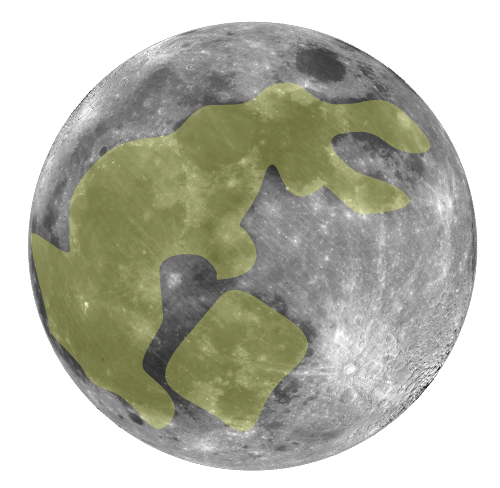
The Moon rabbit, Moon hare or Jade rabbit is a mythical figure in both East Asian and indigenous American folklore, based on interpretations that identify the dark markings on the near side of the Moon as a rabbit or hare. In East Asian mythology, the rabbit is seen as pounding with a mortar and pestle, but the contents of the mortar differ among Chinese, Japanese, Korean, and Vietnamese folklore. In Chinese folklore, the rabbit, Yutu, is often portrayed as a companion of the Moon goddess Chang'e, constantly pounding the elixir of life for her and some show the making of cakes or rice cakes; but in Japanese and Korean versions, the rabbit is pounding the ingredients for mochi or tteok or some other type of rice cakes; in the Vietnamese version, the Moon rabbit often appears with Hằng Nga and Chú Cuội, and like the Chinese version, the Vietnamese Moon rabbit also pounding the elixir of immortality in the mortar. In some Chinese versions, the rabbit pounds medicine for the mortals and some include making of mooncakes. Moon folklore from certain Amerindian cultures of North America also has rabbit themes and characters.
An early Chinese source called the Chu Ci, a Western Han anthology of Chinese poems from the Warring States period, notes that along with a toad, there is a hare on the Moon who constantly pounds herbs for the immortals. This notion is supported by later texts, including the Song-era Taiping Imperial Reader. As rabbits were not yet introduced to China during Western Han, the original image was not a rabbit but a hare.
Han dynasty poets call the hare on the Moon the "Jade Hare" (玉兔) or the "Gold Hare" (金兔), and these phrases were used often, in place of the word for the Moon. The famed Tang poet Li Bai, relates how "The rabbit in the moon pounds the medicine in vain" in his poem, "The Old Dust".
In the Buddhist Jataka tales, Tale 316 relates that a monkey, an otter, a jackal, and a rabbit resolved to practice charity on the day of the full moon (Uposatha), believing a demonstration of great virtue would earn a great reward. When an old man begged for food from them, the monkey gathered fruits from the trees and the otter collected fish, while the jackal found a lizard and a pot of milk-curd. Knowing only how to gather grass, the rabbit instead offered its own body by throwing itself into a fire the man had prepared. However, the rabbit was not burnt and the old man revealed that he was Śakra. Touched by the rabbit's virtue, he drew the likeness of the rabbit on the Moon for all to see. It is said the lunar image is still draped in the smoke that rose when the rabbit cast itself into the fire. The rabbit is believed to be a Bodhisattva.[citation needed]
A version of this story may be found in the Japanese anthology, Konjaku Monogatarishū, where the rabbit's companions are instead a fox and a monkey.[citation needed]
The Moon rabbit legend is popular and part of local folklore throughout Asia. It may be found in diverse cultures in China, Japan, India, Korea, Sri Lanka, Cambodia, Thailand, Vietnam, and Myanmar.
This legend also gave rise to the Mid-Autumn Festivals of China, Tết Trung Thu of Vietnam, Tsukimi of Japan, and Chuseok of Korea, and Bon Om Touk in Cambodia, all of which celebrate the legend of the Moon rabbit. In Vietnamese mythology, the Jade Rabbit on the Moon is often accompanied by the Moon Lady and Cuội, who sits under a magical banyan. The trio has become the personifications of the holiday, when they descend to the mortal world and give out cellophane lanterns, mooncakes and gifts to children.
In Journey to the West, when Tang Sanzang passes through India on his journey, a demoness wants to marry him so that she can absorb his yang essence and increase her powers. Sun Wukong sees through her disguise and fights with her. Just as Wukong is about to defeat the demoness, accompanied by the fairy Chang'e, Taiyin Xingjun descends on a colored cloud. The Monkey King hastily puts away his iron rod, saying, "Old Taiyin, where are you going? I, Sun Wukong, have been avoiding you." Taiyin replies, "The demon you are facing is the Jade Rabbit, who guards the mystical frost elixir in my Guanghan Palace. She secretly unlocked the jade gate and escaped from the palace, and it has been a year since then. I foresee she is currently in grave danger, so I have come to save her. I hope the Great Sage will spare her for my sake." Wukong reluctantly agrees, and Taiyin Xingjun takes the Jade Rabbit to the Moon and assigns her duties.
Hub AI
Moon rabbit AI simulator
(@Moon rabbit_simulator)
Moon rabbit
The Moon rabbit, Moon hare or Jade rabbit is a mythical figure in both East Asian and indigenous American folklore, based on interpretations that identify the dark markings on the near side of the Moon as a rabbit or hare. In East Asian mythology, the rabbit is seen as pounding with a mortar and pestle, but the contents of the mortar differ among Chinese, Japanese, Korean, and Vietnamese folklore. In Chinese folklore, the rabbit, Yutu, is often portrayed as a companion of the Moon goddess Chang'e, constantly pounding the elixir of life for her and some show the making of cakes or rice cakes; but in Japanese and Korean versions, the rabbit is pounding the ingredients for mochi or tteok or some other type of rice cakes; in the Vietnamese version, the Moon rabbit often appears with Hằng Nga and Chú Cuội, and like the Chinese version, the Vietnamese Moon rabbit also pounding the elixir of immortality in the mortar. In some Chinese versions, the rabbit pounds medicine for the mortals and some include making of mooncakes. Moon folklore from certain Amerindian cultures of North America also has rabbit themes and characters.
An early Chinese source called the Chu Ci, a Western Han anthology of Chinese poems from the Warring States period, notes that along with a toad, there is a hare on the Moon who constantly pounds herbs for the immortals. This notion is supported by later texts, including the Song-era Taiping Imperial Reader. As rabbits were not yet introduced to China during Western Han, the original image was not a rabbit but a hare.
Han dynasty poets call the hare on the Moon the "Jade Hare" (玉兔) or the "Gold Hare" (金兔), and these phrases were used often, in place of the word for the Moon. The famed Tang poet Li Bai, relates how "The rabbit in the moon pounds the medicine in vain" in his poem, "The Old Dust".
In the Buddhist Jataka tales, Tale 316 relates that a monkey, an otter, a jackal, and a rabbit resolved to practice charity on the day of the full moon (Uposatha), believing a demonstration of great virtue would earn a great reward. When an old man begged for food from them, the monkey gathered fruits from the trees and the otter collected fish, while the jackal found a lizard and a pot of milk-curd. Knowing only how to gather grass, the rabbit instead offered its own body by throwing itself into a fire the man had prepared. However, the rabbit was not burnt and the old man revealed that he was Śakra. Touched by the rabbit's virtue, he drew the likeness of the rabbit on the Moon for all to see. It is said the lunar image is still draped in the smoke that rose when the rabbit cast itself into the fire. The rabbit is believed to be a Bodhisattva.[citation needed]
A version of this story may be found in the Japanese anthology, Konjaku Monogatarishū, where the rabbit's companions are instead a fox and a monkey.[citation needed]
The Moon rabbit legend is popular and part of local folklore throughout Asia. It may be found in diverse cultures in China, Japan, India, Korea, Sri Lanka, Cambodia, Thailand, Vietnam, and Myanmar.
This legend also gave rise to the Mid-Autumn Festivals of China, Tết Trung Thu of Vietnam, Tsukimi of Japan, and Chuseok of Korea, and Bon Om Touk in Cambodia, all of which celebrate the legend of the Moon rabbit. In Vietnamese mythology, the Jade Rabbit on the Moon is often accompanied by the Moon Lady and Cuội, who sits under a magical banyan. The trio has become the personifications of the holiday, when they descend to the mortal world and give out cellophane lanterns, mooncakes and gifts to children.
In Journey to the West, when Tang Sanzang passes through India on his journey, a demoness wants to marry him so that she can absorb his yang essence and increase her powers. Sun Wukong sees through her disguise and fights with her. Just as Wukong is about to defeat the demoness, accompanied by the fairy Chang'e, Taiyin Xingjun descends on a colored cloud. The Monkey King hastily puts away his iron rod, saying, "Old Taiyin, where are you going? I, Sun Wukong, have been avoiding you." Taiyin replies, "The demon you are facing is the Jade Rabbit, who guards the mystical frost elixir in my Guanghan Palace. She secretly unlocked the jade gate and escaped from the palace, and it has been a year since then. I foresee she is currently in grave danger, so I have come to save her. I hope the Great Sage will spare her for my sake." Wukong reluctantly agrees, and Taiyin Xingjun takes the Jade Rabbit to the Moon and assigns her duties.
Recent media