Hubbry Logo
Moose cavalryMoose cavalryMain
Open search
Moose cavalry
Community hub
Moose cavalry
logo
8 pages, 0 posts
0 subscribers
Be the first to start a discussion here.
Moose cavalry
Moose cavalry
from Wikipedia
Moose

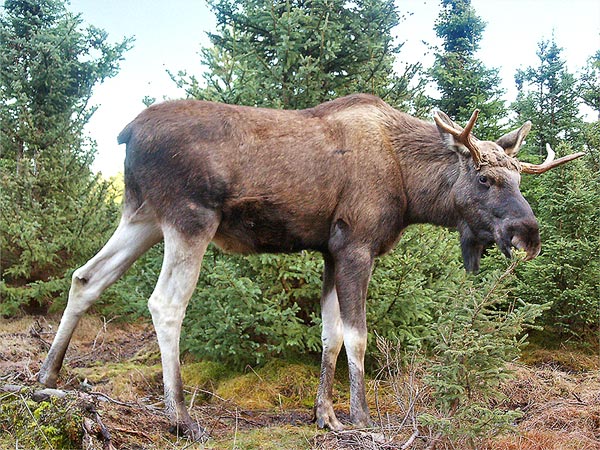
Moose cavalry are military units of cavalrymen mounted on moose (AKA Eurasian elk, Alces alces alces) rather than the more usual horses. Some sources[who?] state that in 17th-century Sweden Charles XI trialled the use of moose as a replacement for horses, which had to be imported, but this is disputed. The use of moose cavalry by the Soviets in the Winter War of 1939 and 1940 is also reported but seems to stem from a 2010 Popular Mechanics April Fools' Day article.

Sweden

[edit]

The moose (Eurasian elk, Alces alces alces) had been used in Sweden to draw the sleighs of royal couriers since at least the reign of Charles IX.[1] They proved effective in this role, able to travel around 230 miles (370 km) in a day.[1] Some sources state that as a development of this role, Charles XI (1660–1697) trialled the use of moose cavalry.[2][3] The intention was apparently to replace the horses of one of his cavalry regiments with moose, to avoid the need to import horses as was the contemporary practice.[4][5] It is said to have been thought that the animals would cause fear in the horses of enemy cavalry, allowing formations to be broken without the need for artillery or musketry.[4] The idea was allegedly presented to the Royal Swedish Academy of Sciences in Stockholm.[5]

It is said that during training the moose was too fearful to allow itself to be ridden into battle and took fright at the sound of gunfire.[6] They were also said to be of too peaceful in nature for the purpose.[1] Moose were also more susceptible to disease than horses and there was difficulty in feeding the animals which were used to foraging across large areas rather than being fed on fodder in pasture.[4]

Swedish historian Dick Harrison has stated that he has found no evidence for the use of moose cavalry in contemporary sources. The only evidence comes from 19th century rumors about a past moose cavalry. (Though he does note that there were serious attempts to domesticate moose, at least in the 19th century.) [7]

Russian April Fools' Day hoax

[edit]

Some news outlets have reported that Joseph Stalin attempted to introduce the moose as a replacement for horses in Soviet cavalry regiments based in the northern parts of the country during the 1930s.[5][8] The story is thought to have been popularised by a 2010 April Fools' Day article published in the Russian language edition of Popular Mechanics.[9]

The article claimed that 1,500 moose cavalrymen were trained for service in the Winter War of 1939 and 1940.[10] Machine guns were supposedly mounted to the antlers of the moose.[9] Among the more outlandish claims was that the start of the war was postponed to avoid clashing with the moose mating season and that the animals could distinguish between the Russian and Finnish languages at a distance of over a kilometre. The article included several photographs supposedly showing members of the moose cavalry unit. These were in fact posed by members of Popular Mechanics' publishing house dressed in reproduction Red Army uniforms with the moose superimposed in post-processing. A graphics artist, Vitas Chernyauskas, mocked-up the front cover of an instruction manual for the unit, based on contemporary Soviet documents and this was also included in the article.[9]

The hoax article was widely reproduced in Russian media over the following years, often without the April Fools' Day disclaimer carried in the original article.[9] Posters on military history forums often claimed to have seen, or even read, copies of the fictional instruction manual.[9] The coverage in newspapers, satirical sites and social media meant that the story gained a measure of credence as a historical fact.[9] Moose were successfully domesticated in Soviet Russia but as livestock, at Pechoro-Ilychkaya from 1949 and Kostroma Moose Farm from 1965.[11]

In 2017, a war museum in Lakhdenpokhya, Karelia, Russia showcased the doctored photographs from the Popular Mechanics article in an exhibition as a recent discovery of historic documents. The exhibition claimed that the "war moose" had been trained by the Soviet army for four years.[9]

The story, sourced from the museum exhibition, was covered by the Finnish national public broadcaster Yle in a television broadcast and as an online news article in June 2017.[12][13] The story was also covered by the tabloid newspaper Iltalehti.[14] Yle was informed of the errors in the story by a member of the public but only issued a correction one month later. As a consequence they were investigated by the Finnish media regulator the Council for Mass Media in Finland for failures in fact-checking and responding to the error report.[12] The erroneous story is still available on the Yle website, including the doctored images from Popular Mechanics, but with a disclaimer and link to the Council for Mass Media's findings.[12][15] Iltalehti also published amendments to their online article and a link to the Council for Mass Media.[16]

There is some information relating to Soviet moose cavalry trials that pre-dates the 2010 hoax. In 2004 the manager of the Kostroma Moose Farm claimed that the trials were carried out in the 1930s. He claimed that "Stalin thought elk could replace horses in cavalry regiments based in the north ... but this did not work out, and the idea was abandoned".[8] The National Archives of Finland state that the Red Army did use limited numbers of moose during the Second World War, though as pack or draft animals, not as mounts.[17]

See also

[edit]

References

[edit]
Revisions and contributorsEdit on WikipediaRead on Wikipedia
from Grokipedia
Moose cavalry refers to the historical concept and limited experimental efforts to domesticate and deploy (Alces alces), large cervids native to northern forests, as mounts for military cavalry units in place of horses. These attempts, driven by the animals' potential advantages in speed, endurance, and suitability for rugged, snowy terrains, occurred primarily in 17th-century and 20th-century Soviet but ultimately failed due to the moose's wild temperament, trainability issues, and aversion to battlefield conditions. According to later historical accounts, in during the reign of King Charles XI (1660–1697), the idea emerged as a strategic response to the high costs and logistical challenges of importing horses for the Swedish military. Charles XI, advised by naturalist observations from earlier works like Olaus Magnus's 16th-century Historia de Gentibus Septentrionalibus, proposed forming dedicated -mounted regiments, citing the animals' reported ability to cover distances such as to in 24 hours—far surpassing horses—and their ox-like strength for carrying loads. However, the initiative was abandoned after demonstrated poor adaptability: they escaped enclosures easily, contracted diseases more readily than horses, and panicked at the sound of gunfire or troop movements during proposed tests. No cavalry units were ever fielded in combat, and archival records from the Carolinian era confirm the absence of such formations in the , with the story itself lacking contemporary evidence. Centuries later, in the , similar ambitions resurfaced amid preparations for harsh winter warfare. In the late 1930s, directed the establishment of moose farms, including the Pechora-Ilych in the , to breed and train for roles, transport, and even as a food source during potential conflicts like the looming with . Proponents highlighted the 's superior performance in deep snow—weighing over 500 kg and capable of pulling sleds or carrying riders over obstacles where struggled—but training efforts faltered as the animals proved too skittish, refusing to tolerate fire or close human handling in military simulations. The program was curtailed by the outbreak of in 1939, with resources redirected; subsequent Soviet initiatives under in the 1960s shifted focus to civilian applications like milk production (noted for its medicinal properties against gastrointestinal illnesses) and logging, though most farms closed due to economic unviability. As of 2025, the sole remaining moose farm in , operational since the 1960s, continues limited research and breeding without military intent. These episodes underscore the challenges of adapting wild megafauna to organized warfare, influencing later discussions on animal in while highlighting moose's enduring role in non-combat uses such as transport in regions.

Swedish Experiment

Origins and Rationale

During the late 17th century, Sweden faced significant economic and military challenges that form the historical backdrop to the legendary concept of moose cavalry. The kingdom was embroiled in conflicts such as the (1675–1679) against , which exacerbated resource strains, including the procurement of horses for cavalry units. Native Swedish horses were often deemed insufficient in size, strength, and tolerance for gunfire, leading to reliance on costly imports from suppliers in and —regions that were both trade partners and adversaries. This dependency increased financial pressures on the crown amid broader efforts to maintain a capable of defending territorial gains from the era. King Charles XI (r. 1660–1697), known for his absolutist reforms and military reorganization, is credited in 19th-century accounts with envisioning (known locally as älg) as a native alternative to imported horses. These legends suggest that in the 1680s, Charles XI decreed the creation of moose breeding farms and experimental programs to develop a domestic mount. The initiative was purportedly motivated by the need for self-sufficiency in wartime , as Sweden's forested landscapes and harsh winters hindered traditional and supply lines. The proposed advantages of moose over horses centered on their adaptation to Sweden's environment: greater endurance in dense woods and snow, superior cold tolerance, and lower upkeep costs, as they could forage on local vegetation without the need for imported grain or hay. Proponents in these anecdotal narratives argued that moose could provide a more reliable, cost-effective option for light cavalry roles in northern terrain, potentially reducing vulnerability to blockades on horse imports during wars like the Scanian conflict. However, Swedish historian Dick Harrison has emphasized that no primary sources from the period corroborate these details, attributing the story to romanticized 19th-century folklore rather than documented policy.

Implementation and Challenges

According to 19th-century accounts and , any purported implementation of the cavalry concept faced immediate challenges, though no contemporary records confirm that trials ever occurred. Legends describe as difficult to domesticate due to their wild nature, with anecdotal reports suggesting they panicked at the sound of gunfire and were prone to escaping enclosures. These narratives highlight the animals' unsuitability for training, as they reportedly refused close human contact and struggled in controlled environments, leading to high rates of disease and stress-related deaths. Swedish historians note the absence of archival evidence for such efforts, reinforcing the view that the story remains unverified legend.

Failure and Aftermath

The legendary Swedish moose cavalry concept under King Charles XI is said to have been abandoned by the late 1690s due to insurmountable obstacles described in , with no operational units ever formed. Anecdotal accounts attribute the to the moose's aversion to gunfire and chaotic conditions, as well as their vulnerability to diseases and difficulty in breeding and control. These stories note the animals' speed and unpredictability, with escaped moose reportedly covering great distances rapidly, underscoring their unfitness for disciplined roles. In the aftermath, any supposed moose farms or enclosures from the legends were not documented and did not influence later practices significantly. The effort, if conceptualized, aligned with Charles XI's broader military reforms, which ultimately prioritized horse-based units. While 18th-century explorations of moose for non-military uses like draught animals occurred during the Age of Liberty period (1718–1772), these also met limited success, and no verified legacy of organized moose domestication for warfare persists in Swedish records.

Soviet Experiments

Stalin-Era Initiatives

In the 1930s, the Soviet Union under Joseph Stalin's rule underwent rapid industrialization through the Five-Year Plans and enforced collectivization of agriculture, which caused severe disruptions to the rural economy and led to the slaughter of approximately 47 percent of the nation's horses between 1928 and 1933. These policies, aimed at boosting agricultural output and military readiness amid rising tensions in Europe, created shortages in draft animals and heightened interest in alternative resources, including the domestication of native wildlife like the moose (Alces alces) to supplement or replace imported or traditional livestock. Concurrently, the Red Army expanded its forces and developed new doctrines for mechanized and deep operations warfare, preparing for potential conflicts with neighbors such as Finland and Germany, where harsh winter conditions and forested terrains posed unique logistical challenges. The initiative for moose domestication gained momentum following the First All-Russian Congress on Nature Conservation in 1933, which recommended establishing moose farming programs to harness the animal's potential for economic and strategic uses. In 1934, the Soviet Central Executive Committee (CEC), through its Committee on Reserves, issued orders to create moose reserves and breeding centers, including sites in the Buzuluksky Forest Reserve and along the Demyanka River, as part of broader efforts to integrate wildlife into national development plans. These programs drew inspiration from historical precedents, such as 17th-century Swedish experiments with moose cavalry, and incorporated reports from Siberian regions highlighting the animal's adaptability. Stalin personally endorsed the military potential of moose around 1937, reportedly issuing directives to explore their use after observing a demonstration of "moose cavalry" at the Volosovsky Special Nursery No. 3, where trained moose carried riders in simulated drills. The strategic rationale emphasized the moose's superior navigation of deep snow and taiga environments, its resistance to extreme cold, and its suitability as a surprise element for cavalry operations on forested fronts, potentially reducing reliance on horses vulnerable to such conditions. Early planning involved coordination between agricultural ministries and Red Army elements to study moose biology, breeding, and training for militarization, with experimental stations like those in Yakutsk beginning research by 1935.

Domestication Efforts

In the early , the launched practical domestication programs to breed and train for potential roles, building on Stalin's strategic emphasis on adapting local to enhance capabilities in snowy terrains. Following a 1934 directive from the , experimental breeding centers were established, including the Volosovsky Special Nursery No. 3 and other early sites such as and Vyskinichsky. The primary facility, at the Pechora-Ilych in the , began structured operations in 1949 under biologist Yevgeny Knorre, though preparatory capture and taming efforts traced back to the preceding decade; by then, it maintained around 14 tame , with the station expanding to support broader breeding goals. Breeding and training methods centered on capturing wild calves, typically in spring, and hand-rearing them with bottle-feeding to foster dependency on humans from a young age. Moose were acclimated through gradual exposure to handlers, saddles, and loads, with military drills testing their ability to carry riders, pull sleds or artillery pieces, and perform reconnaissance maneuvers in forested or snowy conditions. Feed consisted largely of browse from local forests supplemented by agricultural byproducts, allowing semi-free ranging within fenced enclosures to mimic natural behaviors while ensuring control. By the late 1930s, these programs had scaled to involve up to several hundred moose across sites, demonstrating viability for draught and transport roles. Key innovations included prioritizing female moose, or cows, for their generally milder disposition, which eased rider acclimation and reduced aggression during training sessions. This approach also aligned with dual-use objectives, as females could be milked alongside their transport duties. These techniques represented an attempt to create a taiga-adapted equivalent to domesticated , emphasizing selective taming over full enclosure to preserve the animals' strength and agility.

Results and Dissolution

The Soviet moose domestication efforts yielded partial successes in non-combat applications, with proving effective for milk production that supported medical needs, though no full cavalry units were ever deployed in military operations. The programs were effectively halted by the outbreak of the with in 1939 and the full-scale invasion by in 1941, preventing any further development. Despite these gains, the program faced significant failures in military applications, including behavioral issues like skittishness under gunfire that mirrored challenges encountered in earlier Swedish experiments, rendering unsuitable for combat roles. Logistical hurdles, such as vulnerability to disease, difficult feeding requirements, and disruptions from wartime destruction of facilities like the farm by German forces, further hampered mobilization efforts. By the mid-1940s, the initiative was deprioritized as the Soviet shifted toward mechanized units like tanks, which offered greater reliability and scalability in . The program's dissolution occurred gradually, with surviving moose farms repurposed for civilian research between 1946 and 1950, exemplified by the establishment of the Pechora-Ilychsky Reserve farm in 1949 focused on breeding for dairy and draught purposes rather than military training. This transition left a lasting legacy in contemporary Russian moose husbandry, where facilities like the continue operations centered on dairy production for therapeutic uses and , sustaining small herds without military objectives. Post-war evaluations, drawn from declassified Soviet archival records reviewed in the 1960s, confirmed the limited military viability of moose, attributing the shift to practical and strategic shortcomings while highlighting successes in selective domestication techniques.

Hoaxes and Misconceptions

Russian April Fools' Prank

On April 1, 2010, the Russian edition of Popular Mechanics published an article titled "Рогатая кавалерия: боевые лоси" (Horned Cavalry: Battle Moose), fabricating a historical account of Soviet moose cavalry during the Winter War. The piece claimed that Joseph Stalin had issued a secret order in 1938 to domesticate and train 1,500 moose as combat mounts for the invasion of Finland in 1939–1940, aiming to leverage the animals' natural camouflage and endurance in snowy forests where horses struggled. The detailed fictional training programs at the "Volosovsky Special Nursery No. 3" near Leningrad, where were conditioned to carry riders, tolerate gunfire, and even respond to commands distinguishing Finnish from Russian speech. It described the animals equipped with heavy machine guns mounted on saddles or supported by their antlers for , deployed in small units of 10–15 riders for stealthy ambushes that allegedly terrorized Finnish troops. The article was illustrated with fabricated photographs, including photoshopped images of soldiers riding armed through winter landscapes, enhancing its pseudohistorical authenticity. Written by science editor Mamontov, the article was explicitly marked by an editorial note as an prank in the magazine's April 2010 issue (#4), intended to entertain readers while subtly mocking the persistence of unverified military myths. Although the disclaimer appeared in print, the story's engaging narrative and visual elements led to widespread initial credulity. The prank quickly spread across Russian online forums, blogs, and news sites, with many reposting excerpts without noting the joke, sparking enthusiastic discussions on Soviet ingenuity and historical what-ifs. Some outlets and commenters treated it as genuine, prompting debates on overlooked aspects of tactics and even calls for archival verification, before the hoax was widely acknowledged in the days following publication. This reaction underscored the prank's success in exposing vulnerabilities to sensationalized historical claims, drawing loose inspiration from actual but limited Soviet domestication efforts in the 1930s.

Modern Media Echoes

The Russian April Fools' about Soviet moose cavalry gained international traction in 2017 when Finland's public broadcaster published an article presenting the claims as factual history, alleging that the had trained over 1,000 moose for use against in the . This piece, which detailed supposed secret farms and combat readiness, was quickly republished by other Nordic outlets, sparking widespread media coverage before Yle's error was exposed. The incident prompted an investigation by the Finnish Communications Regulatory Authority (Viestintävirasto), which examined Yle's fact-checking processes and issued warnings about journalistic standards, highlighting vulnerabilities in cross-border information sharing. The hoax's propagation has significantly influenced popular culture, manifesting in memes across platforms like Reddit's r/HistoryMemes, where users humorously depict moose-mounted soldiers charging into battle, often garnering thousands of upvotes since 2018. YouTube videos, such as the 2021 "Swedish Moose Cavalry - Weird History" by Fire of Learning, which explores the myth's origins and has accumulated over 94,000 views, further amplify its appeal as quirky wartime trivia. In literature and media, it appears as a comedic WWII trope, with online histories from 2018 to the early 2020s blending hoax elements with real events, and fictional nods like the moose-riding protagonist in Sterling E. Lanier's 1973 post-apocalyptic novel Hiero's Journey, which echoes the concept without direct historical ties. References also surface in video games and speculative fiction as exaggerated symbols of unconventional warfare, reinforcing the idea in gaming communities discussing alternate history scenarios. These echoes have fostered persistent misconceptions, particularly conflating the fictional cavalry with the Soviet Union's genuine 1930s-1940s moose programs at farms near and , where animals were bred for , , and limited rather than . This confusion has amplified myths of "Soviet battle moose" in narratives, portraying them as viable weapons against Finnish defenses despite moose proving unsuitable for military use due to their flight response to gunfire and difficulty in training. In the , social media revivals on and have recirculated the tale, often without context, while debunking efforts like We Are The Mighty's article clarify the hoax's origins and distinguish it from verified attempts, emphasizing the absence of any deployment.

References

Add your contribution
Related Hubs
User Avatar
No comments yet.