Hubbry Logo
Mount SuswaMount SuswaMain
Open search
Mount Suswa
Community hub
Mount Suswa
logo
8 pages, 0 posts
0 subscribers
Be the first to start a discussion here.
Mount Suswa
Mount Suswa
from Wikipedia

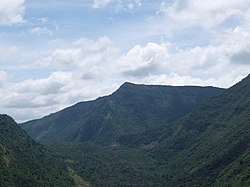
Mount Suswa is a shield volcano in the Great Rift Valley, Kenya.[1] It is located between Narok and Nairobi, the capital of Kenya. The northwestern part of Mount Suswa is in Narok County, while the eastern and southern parts are in Kajiado County. The town with the same name, Suswa, is just northwest of the mountain and it is the main access point for visits to the mountain.

Key Information

Physical features

[edit]

Mount Suswa has a unique double crater with a moat-like inner crater surrounding a tilted block of rock. The mountain is also known for its lava tubes on the northeast side of the outer crater.

Satellite image of Mount Suswa

Flora and Fauna

[edit]

The inner crater is home to a variety of snakes species. Other wildlife of interest found on or near Mount Suswa includes zebras, giraffes, mongooses, turtles, hyenas and leopards.

Mountaineering and Tourism

[edit]

It is possible to drive up the lesser-end of the mountain into the outer crater with a four-wheel-drive vehicle or motorbike; however, there are numerous barricades across the trail where members of the Mount Suswa Conservancy collect fees for allowing you through. Arrangements can be made to pay a set fee and get a guide to take you past the barricades.

It is also possible to climb the mountain, which has a 2,356-meter summit. There are no specified paths, but Mount Suswa is best accessed from the mountain from the north and northeast. The Suswa Primary school, located at the base of the mountain, is another practical starting point. Also, there are many Masaai homesteads surrounding the base of the mountain; it is recommended to introduce yourself to the head of the family if your route crosses such. With the exception of Rauch's Trail, there are no designated pathways to the summit. However, the Masaai do graze cattle on the mountain's grasslands, making for the occasional route. The peak can be reached on foot by following Rauch's Trail, which begins approximately one-and-a-half kilometers from the summit, from the northeast. Rauch's Trail is marked with a wooden sign, overlooking the crater.

The network of lava caves on the east side of the mountain can also be visited and some of these caves are inhabited by baboons.[2] The BBC documentary The Great Rift: Africa's Wild Heart, shows baboons entering one of these caves to seek shelter from leopards; this underground chamber in the rocks has been nicknamed 'baboon parliament'.[3]

See also

[edit]

References

[edit]
Revisions and contributorsEdit on WikipediaRead on Wikipedia
from Grokipedia
Mount Suswa is a located in the Kenyan portion of the , about 50 km southwest of and 35 km south of . Rising to an of 2,356 meters, it covers an area of approximately 270 km² and features a distinctive double structure, with an outer measuring 8–12 km in diameter and an inner of 4–5 km that includes a moat-like depression encircling a central tilted block known as the "island." The volcano is primarily composed of sodalite-bearing phonolites and , erupted as lavas and pyroclastic deposits atop an older plateau. The geological evolution of Mount Suswa, also called Ol Doinyo Nyukie ("Red Mountain" in Maasai), unfolded in three principal eruptive phases beginning in the Pleistocene. The initial phase formed a broad, asymmetric shield through central vent eruptions of phonolitic lavas, establishing the foundational cone. This was followed by caldera collapse via cauldron subsidence, accompanied by explosive pumice eruptions and ring-dyke intrusions that fed peripheral lavas. The final phase involved post-caldera volcanism, including the construction of a subsidiary cone within the inner caldera and the formation of a 3.75 km-wide ring graben, with flank vents producing the youngest, sparsely vegetated lava flows possibly dating to the past few centuries. Although no Holocene eruptions are definitively confirmed, the volcano remains dormant with persistent fumarolic activity, and its extensive lava tube caves—formed by post-caldera flows—support unique ecosystems and local cultural uses.

Geography and Topography

Location and Extent

Mount Suswa is situated within the of , specifically in the segment of the System, which forms part of the broader African continental rift system. The lies between and Counties, approximately 100 km northwest of , the capital city of . The precise coordinates of Mount Suswa are approximately 1°09′S 36°21′E. The encompasses a shield-shaped structure spanning about 270 km², with an overall diameter of roughly 20 km, rising from the rift floor at around 1,500 m elevation to a summit height of 2,356 m. Mount Suswa is located about 35 km south of Lake Naivasha, a prominent soda lake in the rift valley. Administratively, the northwestern portion falls within Narok County, while the eastern and southern parts extend into Kajiado County, with much of the surrounding area managed as communal conservancy lands by local Maasai communities.

Physical Features

Mount Suswa is a broad, low-lying shield volcano rising to an elevation of 2,356 meters above sea level at its highest point. Its base sits at approximately 1,500 meters, forming gentle outer slopes that transition into more rugged terrain characteristic of the Kenyan Rift Valley landscape. The volcano features a prominent double caldera system, with the outer caldera measuring 8 by 12 kilometers and breached on its south and east sides where ancient lava flows descended the flanks. This outer structure reaches depths of up to 1 kilometer from the surrounding rim, enclosing a younger inner caldera approximately 4 to 5 kilometers in diameter that forms a moat-like depression around a tilted, island-like block of older lava flows measuring about 3.75 kilometers across. The inner caldera's steep walls drop more than 500 meters, creating dramatic cliffs that highlight the volcano's asymmetric profile. On its southeastern flank, Mount Suswa hosts an extensive network of lava tubes and caves, totaling around 11 kilometers in length across approximately 40 known features, formed by the cooling of surface lava flows that left hollow conduits beneath. These subterranean passages, some reaching depths of several meters vertically, contribute to the rugged lava fields surrounding the caldera base. The terrain is further marked by sparse vegetation on recent lava flows and indicators of ongoing geothermal activity, including widespread fumarolic emissions along fracture lines.

Geology

Formation and Structure

Mount Suswa is classified as a shield volcano, characterized by its broad, gently sloping flanks built primarily through the accumulation of fluid phonolitic and trachytic lava flows during the Pleistocene epoch. This formation process exemplifies typical , where low-viscosity magmas erupted effusively, spreading over a wide area to create a low-relief edifice covering approximately 270 km². The volcano developed on a pre-existing trachytic plateau within the Kenyan segment of the Valley, with volcanic activity spanning from approximately 240 ka to more recent times, though focused here on the Pleistocene structural buildup. The internal structure of Mount Suswa features two nested summit resulting from the of underlying chambers following major evacuations of viscous . The outer measures about 10-12 km in , while the inner is roughly 4-5 km across, enclosing an uplifted central island block approximately 3.75 km in that represents a resistant raft of older volcanic material. Within the inner , several phonolitic domes have formed, contributing to a complex annular ring structure and highlighting post- resurgence. This nested configuration is a hallmark of -forming events in settings, where repeated withdrawal led to gravitational instability and subsidence. Volcanic activity spans from approximately 240 ka to less than 10 ka, unfolding in three principal eruptive phases as described in the introduction. The predominant rock types at Mount Suswa include and , with subordinate pyroclastics such as tuffs and ignimbrites. Trachytic lavas form the foundational layers, often fractionated at depths around 14 km to produce the more evolved phonolitic compositions observed in the upper edifice, including sodalite-bearing phonolites and quartz-trachytes. Evidence of rift-related is apparent in the peralkaline of these rocks and their association with bimodal , where basalts interact with differentiates. Tectonically, Mount Suswa is situated within the System, a major continental divergent zone where the African plate is splitting along north-south trending faults. This setting drives the volcano's activity through lithospheric thinning and upwelling of asthenospheric mantle, facilitating the generation of rift-related magmas that supply the shield's construction. The structure aligns with regional rift trends, including northeast-southwest fault patterns that influence orientation and overall edifice asymmetry.

Volcanic History

Mount Suswa, a in the Valley, began forming less than 400,000 years ago through effusive eruptions of peralkaline and lavas that built a broad, low-angle shield structure approximately 270 km² in area. The initial phase involved voluminous lava flows from central vents, establishing the primitive edifice before transitioning to more explosive activity. Subsequent eruptive episodes marked a shift to formation, with the outer (approximately 10 km in diameter) resulting from major events around 200,000 to 100,000 years ago, accompanied by tuffs, ignimbrites, and ring-fracture zone eruptions. This was followed by the development of the inner (4-5 km diameter) through incremental , including the formation of a central block and the Ol Doinyo Nyukie post- via localized phonolitic flows. These explosive phases reshaped the summit into its characteristic nested structure, distinct from the single of nearby . The final phase of activity occurred in the , with post- phonolitic lavas and minor effusive events dated to less than 10,000 years ago, though no confirmed historical eruptions are recorded, with the youngest flows possibly dating to the past few centuries. Today, Suswa is classified as dormant, with persistent fumarolic emissions of steam, CO₂, and nitrogen at caldera margins indicating residual heat, and no confirmed explosive events. Recent satellite-based InSAR monitoring from 2015 to 2020 detected localized ground uplift rates of up to 4.3 cm/year between 2018 and 2019, suggesting pressurization of a shallow reservoir but no immediate eruptive threat.

Biodiversity

Flora

Mount Suswa's flora is characterized by a diverse array of plant communities adapted to its volcanic soils and varied topography, with vegetation transitioning across altitudinal zones influenced by the mountain's elevation gradient from approximately 1,500 meters to 2,356 meters. On the lower slopes (1,500–1,800 m), semi-arid savannah grasslands and Acacia woodlands dominate, featuring drought-tolerant species such as Acacia drepanolobium that thrive in the nutrient-poor, humic andosols formed from volcanic ash and lava. These areas support perennial grasses like Themeda triandra and Chloris gayana, which act as pioneer species in regenerating disturbed rangelands. As elevation increases to the mid-slopes (1,800–2,100 m), the vegetation shifts to mixed shrublands with scattered forest patches, including wild olive (Olea africana) and resilient forbs such as Pentanisia ouranogyne and Hypoestes verticillaris, which are well-suited to the erosion-prone volcanic substrates. In the upper (above 2,100 m), a cooler and moister fosters denser montane forest cover and shrubs; however, recent lava flows create barren zones where pioneer lichens and grasses slowly colonize the sterile surfaces. This zonation reflects adaptations to increasing moisture and decreasing temperatures, contrasting dry below 1,800 m with montane communities at higher altitudes. Other adapted plants encompass volcanic soil specialists like annual grasses (Aristida keniensis and Eragrostis tenuifolia) that stabilize slopes post-eruption, alongside lichens that initiate on recent lava. These species demonstrate resilience to the harsh, low-organic-matter environment, with grasses showing higher diversity and in rehabilitated zones. Conservation challenges for Mount Suswa's stem from by , which degrades herbaceous cover, alongside proliferation and . Rehabilitation efforts have increased vegetation cover to up to 74.67% and to 1,459 kg/ha in treated areas by promoting grass recovery, underscoring the need to protect these volcanic-adapted communities from further anthropogenic pressure.

Fauna

Mount Suswa's fauna is characterized by a diverse array of species adapted to its volcanic landscapes, including lava tubes, crater forests, and surrounding savannas, supporting a low-density but high-diversity ecosystem. The inner caldera serves as a biodiversity sanctuary, providing isolation that shelters unique mammals, birds, and other wildlife from external pressures. Among the mammals, plains zebras (Equus quagga) roam in small herds of 3–10 individuals across grassy clearings on the outer flanks, while Masai giraffes (Giraffa camelopardalis tippelskirchi) browse acacias seasonally in the same areas. Striped hyenas (Hyaena hyaena) and spotted hyenas (Crocuta crocuta) are nocturnal predators with home ranges of 20–40 km², utilizing caves and lava slopes for dens; spotted hyenas emit distinctive whooping calls at night. Leopards (Panthera pardus) are rare and elusive, primarily inhabiting the inner crater's forested zones, where tracks and scat indicate their presence as apex carnivores. Mongooses, including banded, white-tailed, and slender varieties, control insect and rodent populations across scrublands and rocky outcrops. Olive baboons (Papio anubis) form troops exceeding 100 individuals, roosting in the Baboon Parliament cave within the caldera and foraging along the crater rim. Smaller mammals such as rock hyraxes (Procavia capensis) live in family groups of 3–12 on cliffs, serving as prey for larger predators, while bush vlei rats and grass mice burrow in volcanic soils as key components of the food web. Birds thrive in the varied habitats, with raptors like Verreaux’s eagles, Augur buzzards, Egyptian vultures, and peregrine falcons preying on small mammals and reptiles from perches on steep cliffs and geothermal vents. Nocturnal species include Verreaux’s eagle-owls (Bubo lacteus), which hunt hares and bats with their distinctive pink eyelids, and (Otus senegalensis) that camouflage in trees and emit soft "prrrp" calls. In the inner crater forests, Hartlaub’s turacos (Tauraco hartlaubi) aid with their vibrant plumage, while secretary birds (Sagittarius serpentarius), standing over 1.2 m tall, patrol open grasslands for snakes. Reptiles and amphibians are well-represented in the caldera's microhabitats, with leopard tortoises (Stigmochelys pardalis), exceeding 40 cm in length, grazing on herbs along trails and shrubs. Rock pythons (Python sebae), Kenya's largest snakes, inhabit caves and inner crater areas, alongside rarer Kenya sand boas (Eryx colubrinus) that burrow in volcanic ash. Agama lizards and skinks display bright colors on lava outcrops, and flap-necked chameleons (Chamaeleo dilepis) hunt insects near steam vents. Banded rubber frogs (Phrynomantis bifasciatus) emerge in seasonal pools around geothermal sites, featuring black skin with red or orange bands. Lava tubes harbor significant bat populations, including the rare Harrison’s giant bat (Otomops harrisoni) with a over 50 cm—listed as Vulnerable by the IUCN and subject to ongoing conservation efforts since 2023 to protect its maternity colonies—alongside Egyptian fruit bats and little free-tailed bats numbering in the tens of thousands, contributing to . Insects such as safari driver ants ( spp.) form massive colonies that prey on other invertebrates, enhancing soil aeration in the . The caldera's isolation acts as a refuge for endangered and endemic species, such as the Harrison’s giant bat, protecting them from broader regional declines. However, the fauna faces threats from , which fuels human-wildlife conflicts, and due to expanding and development around the conservancy. Ecological dynamics revolve around predator-prey interactions, such as leopards and targeting baboons and smaller ungulates like klipspringers (Oreotragus oreotragus) on crater walls, while raptors prey on and . Geothermal areas around steam vents support specialized communities, including and frogs that tolerate elevated temperatures and humidity.

Cultural and Human Significance

Maasai Cultural Role

Mount Suswa holds profound spiritual significance for the , serving as a sacred integral to their traditional ceremonies and beliefs. The mountain's lava caves are revered as dwellings of Enkai, the Maasai , and are considered passages to the belly of the earth, connecting the physical and spiritual realms. These caves function as ritual sites where Maasai communities conduct initiation ceremonies for morans (young warriors), including periods of seclusion and reflection essential to rites of passage. In Maasai cosmology, Mount Suswa embodies a deep connection to ancestral traditions, with its caves and s utilized for prayers and communal rituals that honor spiritual heritage. surrounding the mountain is preserved through oral histories that recount its role in sustaining Maasai identity, often shared during gatherings to reinforce cultural values and . Historically, the surrounding lands and floors have been vital areas for Maasai , the cornerstone of their , while temporary homesteads known as bomas have been established within the to support seasonal movements. Today, Maasai guides lead cultural tours at Mount Suswa, offering visitors insights into these traditions through demonstrations of rituals, , and , thereby preserving pre-colonial oral histories amid ongoing cultural interactions.

Conservation Efforts

The Mount Suswa Conservancy was established in by local Maasai communities as the Mount Suswa Conservation Trust, spanning approximately 8,000 hectares across and counties to foster of , habitats, and revenues while addressing from and resource extraction. Key conservation programs emphasize community stewardship, including anti-poaching patrols conducted by locally trained game scouts in collaboration with the , which provide training and support to enhance enforcement against wildlife threats. Rangeland rehabilitation initiatives promote sustainable grazing practices to reduce and restore herbaceous diversity on degraded slopes, with studies demonstrating lower runoff and improved vegetation cover in treated areas compared to overgrazed zones. These efforts also include targeted protection, such as for vulnerable species in volcanic caves, through partnerships with organizations like the East African Wild Life Society and the IUCN Bat Specialist Group. A 2023 project funded by the Rufford Foundation focuses on conserving the vulnerable Harrison's giant mastiff (Otomops harrisoni), addressing threats from , loss, and human disturbance through community awareness and cave protection plans. Challenges persist in managing human-wildlife conflicts, particularly predator depredation on , which exacerbates tensions between pastoralist communities and in the ecosystem; mitigation strategies involve compensation schemes and awareness programs to reduce retaliatory killings. Achievements include stabilized populations within conservancies like , where community-led initiatives have contributed to broader trends of increasing large numbers outside national parks since the mid-2010s, alongside enhanced monitoring for species such as the vulnerable Harrison's giant mastiff . Post-2020 studies have highlighted Mount Suswa's geothermal potential, estimated at up to 750 MW, for eco-friendly , with assessments focusing on minimizing environmental impacts and ensuring benefits through sustainable extraction models that align with conservation goals; however, the project remains in pre-construction as of 2025 amid local protests over potential land displacement and cultural site disruption.

Tourism and Recreation

Access and Hiking

Mount Suswa is accessible primarily from via the A104 -Nakuru Highway, turning left at the Mai Mahiu junction after approximately 40 km, then proceeding onto the B3 Road for another 30 km before taking a left onto a 7 km dirt track marked by a Suswa Conservancy sign. The total distance is about 80-90 km, taking 1.5-2 hours by private , though the final off-road section features rough, sandy, and rocky terrain that necessitates a 4WD or high-clearance , particularly during the rainy season when mud can make it impassable. Alternative access includes public matatus from 's Nyamakima or River Road terminals to the Suswa turn-off (KES 400-600, 1.5-2 hours), followed by a boda boda for the last 7 km (KES 300-500), or organized private transfers costing KES 5,000-8,000 one-way. Popular routes begin at the conservancy gate on the outer rim and focus on the northeast ascent via the Summit Trail, a moderately challenging path covering about 7 km one-way with approximately 500 m gain to the highest point at 2,356 m, typically taking 3-4 hours round trip. For those seeking a longer adventure, the Rim Circuit offers a 20-22 km loop around the inner , which can take 6-8 hours and provides panoramic views of the volcanic landscape, though it requires good fitness due to rocky descents. All trails are guided by local Maasai from the conservancy, who are recommended for navigation and cultural insights, with entry fees of KES 500 for Kenyan citizens, KES 1,000 for residents, and USD 30 for non-residents (as of 2025), payable in cash at the gate. Hiking is best during the from to , when trails are less slippery from lava rock and sand; the rainy period should be avoided due to increased risk of falls and potential vehicle issues on access roads. Safety considerations include starting early (6-8 a.m.) to avoid midday heat, carrying 2-3 liters of per person, wearing sturdy footwear for the uneven , and being alert for encounters or bee swarms along the paths. While the altitude of 2,356 m poses minimal risk for most, hikers should monitor for fatigue on steeper sections, and groups are advised to travel together with a guide to mitigate disorientation in the expansive .

Cave Exploration and Other Activities

Mount Suswa features an extensive network of over 30 lava tubes formed by ancient volcanic flows, creating a complex system of caverns and passages accessible for spelunking. These tubes, including notable sites like the Baboon Parliament , span dozens of interconnected tunnels and are home to colonies and fragile lava formations such as ropes and benches. Exploration requires sturdy boots due to sharp basaltic edges, headlamps or torches for the pitch-black interiors, helmets, and gear provided by local guides, with essential for navigating the multi-level structures. Hikers often use trails as an entry point to reach entrances near the outer rim. Beyond , visitors can camp on the outer rim or near sites, offering panoramic views of the double under clear skies ideal for stargazing, thanks to the area's complete lack of . tours highlight over 100 species inhabiting the lava fields and surrounding woodlands, while cultural visits to nearby Maasai manyattas provide insights into traditional practices like , fire-making, and . Cave entry is limited to guided groups for safety, with conservancy fees—such as 500 KES per day for Kenyan citizens or 30 USD for non-residents (as of 2025)—supporting maintenance and local communities; separate cave tour fees apply at 1,500–3,000 KES per group (as of 2025). Since 2020, eco-lodges like those near have emerged as low-impact options for overnight stays, complementing self-camping sites that require visitors to bring their own gear and pack out all waste. Unique experiences include observing geothermal vents used by locals for condensation and photography of the dramatically tilted inner block against the Rift Valley backdrop.

References

Add your contribution
Related Hubs
User Avatar
No comments yet.