Hubbry Logo
CavingCavingMain
Open search
Caving
Community hub
Caving
logo
8 pages, 0 posts
0 subscribers
Be the first to start a discussion here.
Contribute something
Caving
Caving
from Wikipedia
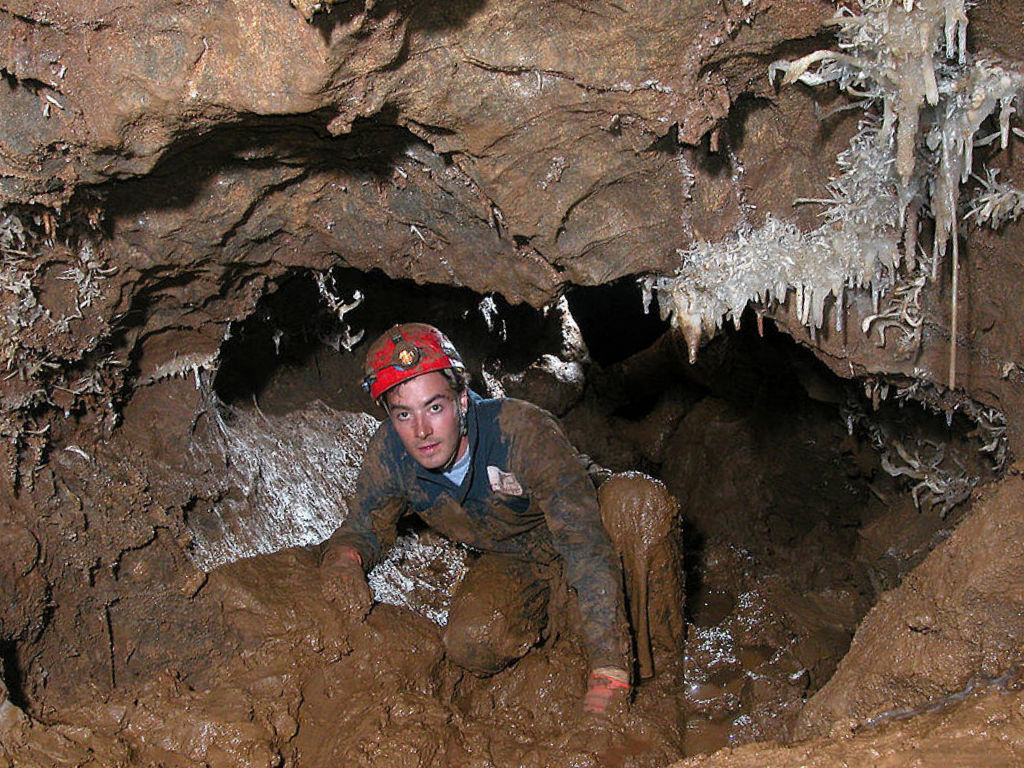
A man caving in muddy passage with helictite formations on the walls and ceiling
Caving in a muddy section of Black Chasm Cave in California
Stephens Gap, a vertical cave in Alabama

Caving, also known as spelunking (United States and Canada) and potholing (United Kingdom and Ireland), is the recreational pastime of exploring wild cave systems (as distinguished from show caves). In contrast, speleology is the scientific study of caves and the cave environment.[1]

The challenges involved in caving vary according to the cave being visited; in addition to the total absence of light beyond the entrance, negotiating pitches, squeezes,[2] and water hazards can be difficult.[3] Cave diving is a distinct, and more hazardous, sub-speciality undertaken by a small minority of technically proficient cavers.[4] In an area of overlap between recreational pursuit and scientific study, the most devoted and serious-minded cavers become accomplished at the surveying and mapping of caves and the formal publication of their efforts. These are usually published freely and publicly, especially in the UK and other European countries, although in the US they are generally more private.

Although caving is sometimes categorized as an "extreme sport," cavers do not commonly use this terminology and typically dislike the term being used in reference to caving, as it implies a disregard for safety.[2][5] Though caving is a fairly safe sport compared to other activities that are sometimes classified as "extreme sports", incidents do occur.[6] These tend to be related to flooding, hypothermia, rock falls, caver falls, SRT accidents, or some combination of these.[7]

Many caving skills overlap with those involved in canyoning and mine and urban exploration.

Motivation

[edit]

Caving is often undertaken for the enjoyment of the outdoor activity or for physical exercise, as well as original exploration, similar to mountaineering or diving. Physical or biological science is also an important goal for some cavers, while others are engaged in cave photography.[2] Virgin cave systems comprise some of the last unexplored regions on Earth and much effort is put into trying to locate, enter and survey them. In well-explored regions (such as most developed nations), the most accessible caves have already been explored, and gaining access to new caves often requires cave digging or cave diving.

Caving, in certain areas, has also been utilized as a form of eco and adventure tourism, for example in New Zealand. Tour companies have established an industry leading and guiding tours into and through caves. Depending on the type of cave and the type of tour, the experience could be adventure-based or ecological-based. There are tours led through lava tubes by a guiding service (e.g. Lava River Cave, the oceanic islands of Tenerife, Iceland and Hawaii).

Caving has also been described as an "individualist's team sport" by some,[3] as cavers can often make a trip without direct physical assistance from others but will generally go in a group for companionship or to provide emergency help if needed. Some however consider the assistance cavers give each other as a typical team sport activity.[8]

Etymology

[edit]

The term potholing refers to the act of exploring potholes, a word originating in the north of England for predominantly vertical caves.

Caving in the north of England

Clay Perry, an American caver of the 1940s, wrote about a group of men and boys who explored and studied caves throughout New England. This group referred to themselves as spelunkers, a term derived[9] from the Latin spēlunca ("cave, cavern, den").[10] This is regarded as the first use of the word in the Americas. Throughout the 1950s, spelunking was the general term used for exploring caves in US English. It was used freely, without any positive or negative connotations, although only rarely outside the US.

In the 1960s, the terms spelunking and spelunker began to be considered déclassé among experienced enthusiasts. In 1985, Steve Knutson – editor of the National Speleological Society (NSS) publication American Caving Accidents – made the following distinction:

…Note that (in this case) the term 'spelunker' denotes someone untrained and unknowledgeable in current exploration techniques, and 'caver' is for those who are.

This sentiment is exemplified by bumper stickers and T-shirts displayed by some cavers: "Cavers rescue spelunkers". Nevertheless, outside the caving community, "spelunking" and "spelunkers" predominately remain neutral terms referring to the practice and practitioners, without any respect to skill level.

History

[edit]

In the mid-19th century, John Birkbeck explored potholes in England, notably Gaping Gill in 1842 and Alum Pot in 1847–8, returning there in the 1870s. In the mid-1880s, Herbert E. Balch began exploring Wookey Hole Caves and in the 1890s, Balch was introduced to the caves of the Mendip Hills. One of the oldest established caving clubs, Yorkshire Ramblers' Club, was founded in 1892.[11]

Caving as a specialized pursuit was pioneered by Édouard-Alfred Martel (1859–1938), who first achieved the descent and exploration of the Gouffre de Padirac, in France, as early as 1889 and the first complete descent of a 110-metre (360 ft) wet vertical shaft at Gaping Gill in 1895. He developed his own techniques based on ropes and metallic ladders. Martel visited Kentucky and notably Mammoth Cave National Park in October 1912. In the 1920s famous US caver Floyd Collins made important explorations in the area and in the 1930s, as caving became increasingly popular, small exploration teams both in the Alps and in the karstic high plateaus of southwest France (Causses and Pyrenees) transformed cave exploration into both a scientific and recreational activity. Robert de Joly, Guy de Lavaur and Norbert Casteret were prominent figures of that time, surveying mostly caves in Southwest France.[citation needed]

During World War II, an alpine team composed of Pierre Chevalier, Fernand Petzl, Charles Petit-Didier and others explored the Dent de Crolles cave system near Grenoble, France which became the deepest explored system in the world at that time at a depth of 658 metres (2,159 ft). The lack of available equipment during the war forced Pierre Chevalier and the rest of the team to develop their own equipment, leading to technical innovation. The scaling-pole (1940), nylon ropes (1942), use of explosives in caves (1947) and mechanical rope-ascenders (Henri Brenot's "monkeys", first used by Chevalier and Brenot in a cave in 1934) can be directly associated to the exploration of the Dent de Crolles cave system.[12]

In 1941, American cavers organized themselves into the National Speleological Society (NSS) to advance the exploration, conservation, study and understanding of caves in the United States. American caver Bill Cuddington, known as "Vertical Bill", further developed the single-rope technique (SRT) in the late 1950s.[13] In 1958, two Swiss alpinists, Juesi and Marti teamed together, creating the first rope ascender known as the Jumar.[14] In 1968 Bruno Dressler asked Fernand Petzl, who worked as a metals machinist, to build a rope-ascending tool, today known as the Petzl Croll, that he had developed by adapting the Jumar to vertical caving. Pursuing these developments, Petzl started in the 1970s a caving equipment manufacturing company named Petzl. The development of the rappel rack and the evolution of mechanical ascension systems extended the practice and safety of vertical exploration to a wider range of cavers.[citation needed]

Practice and equipment

[edit]
Caver in an Alabama cave showing common caving wear: coveralls, helmet-mounted lights, heavy boots and gloves.

Hard hats are worn to protect the head from bumps and falling rocks. The caver's primary light source is usually mounted on the helmet in order to keep the hands free. Electric LED lights are most common. Many cavers carry two or more sources of light – one as primary and the others as backup in case the first fails. More often than not, a second light will be mounted to the helmet for quick transition if the primary fails. Carbide lamp systems are an older form of illumination, inspired by miner's equipment, and are still used by some cavers, particularly on remote expeditions where electric charging facilities are not available.[15]

The type of clothes worn underground varies according to the environment of the cave being explored, and the local culture. In cold caves, the caver may wear a warm base layer that retains its insulating properties when wet, such as a fleece ("furry") suit or polypropylene underwear, and an oversuit of hard-wearing (e.g., cordura) or waterproof (e.g., PVC) material. Lighter clothing may be worn in warm caves, particularly if the cave is dry, and in tropical caves thin polypropylene clothing is used, to provide some abrasion protection while remaining as cool as possible. Wetsuits may be worn if the cave is particularly wet or involves stream passages. On the feet boots are worn – hiking-style boots in drier caves, or rubber boots (such as wellies) often with neoprene socks ("wetsocks") in wetter caves. Knee-pads (and sometimes elbow-pads) are popular for protecting joints during crawls. Depending on the nature of the cave, gloves are sometimes worn to protect the hands against abrasion or cold. In pristine areas and for restoration, clean oversuits and powder-free, non-latex surgical gloves are used to protect the cave itself from contaminants. Ropes are used for descending or ascending pitches (single rope technique or SRT) or for protection. Knots commonly used in caving are the figure-of-eight- (or figure-of-nine-) loop, bowline, alpine butterfly, and Italian hitch. Ropes are usually rigged using bolts, slings, and carabiners. In some cases cavers may choose to bring and use a flexible metal ladder.

In addition to the equipment already described, cavers frequently carry packs containing first-aid kits, emergency equipment, and food. Containers for securely transporting urine are also commonly carried.[16] On longer trips, containers for securely transporting feces out of the cave are carried.[17]

During very long trips, it may be necessary to camp in the cave – some cavers have stayed underground for many days, or in particularly extreme cases, for weeks at a time. This is particularly the case when exploring or mapping extensive cave systems, where it would be impractical to retrace the route back to the surface regularly. Such long trips necessitate the cavers carrying provisions, sleeping, and cooking equipment.

Safety

[edit]
A caver begins rope descent of a vertical shaft using an abseil rack.

Caves can be dangerous places; hypothermia, falling, flooding, falling rocks and physical exhaustion are the main risks. Rescuing people from underground is difficult and time-consuming, and requires special skills, training, and equipment. Full-scale cave rescues often involve the efforts of dozens of rescue workers (often other long-time cavers who have participated in specialized courses, as normal rescue staff are not sufficiently experienced in cave environments), who may themselves be put in jeopardy in effecting the rescue. This said, caving is not necessarily a high-risk sport (especially if it does not involve difficult climbs or diving). As in all physical sports, knowing one's limitations is key.

Caving in warmer climates carries the risk of contracting histoplasmosis, a fungal infection that is contracted from bird or bat droppings. It can cause pneumonia and can disseminate in the body to cause continued infections.[18]

In many parts of the world, leptospirosis, a type of bacterial infection spread by animals including rats,[19] is a distinct threat. The presence of rat urine in rainwater or precipitation that enters the cave's water system is the primary vector of infection. Complications are uncommon, but can be serious. These safety risks while caving can be minimized by using a number of techniques:

  • Checking that there is no danger of flooding during the expedition. Rainwater funneled underground can flood a cave very quickly, trapping people in cut-off passages and drowning them. In the UK, drowning accounts for almost half of all caving fatalities (see List of UK caving fatalities).
  • Using teams of several cavers, preferably at least four. If an injury occurs, one caver stays with the injured person while the other two go out for help, providing assistance to each other on their way out.
  • Notifying people outside the cave as to the intended return time. After an appropriate delay without a return, these will then organize a search party (usually made up by other cavers trained in cave rescues, as even professional emergency personnel are unlikely to have the skills to effect a rescue in difficult conditions).
  • Use of helmet-mounted lights (hands-free) with extra batteries. American cavers recommend a minimum of three independent sources of light per person,[20] but two lights is common practice among European cavers.[citation needed]
  • Sturdy clothing and footwear, as well as a helmet, are necessary to reduce the impact of abrasions, falls, and falling objects. Synthetic fibers and woolens, which dry quickly, shed water, and are warm when wet, are vastly preferred to cotton materials, which retain water and increase the risk of hypothermia. It is also helpful to have several layers of clothing, which can be shed (and stored in the pack) or added as needed. In watery cave passages, polypropylene thermal underwear or wetsuits may be required to avoid hypothermia.
  • Cave passages look different from different directions. In long or complex caves, even experienced cavers can become lost. To reduce the risk of becoming lost, it is necessary to memorize the appearance of key navigational points in the cave as they are passed by the exploring party. Each member of a cave party shares responsibility for being able to remember the route out of the cave. In some caves it may be acceptable to mark a small number of key junctions with small stacks or "cairns" of rocks, or to leave a non-permanent mark such as high-visibility flagging tape tied to a projection.
  • Vertical caving uses ladders or single rope technique (SRT) to avoid the need for climbing passages that are too difficult. SRT is a complex skill and requires proper training and well-maintained equipment. Some drops that are abseiled down may be as deep as several hundred meters (for example Harwoods Hole).

Cave conservation

[edit]

Many cave environments are very fragile. Many speleothems can be damaged by even the slightest touch and some by impacts as slight as a breath. Research suggests that increased carbon dioxide levels can lead to "a higher equilibrium concentration of calcium within the drip waters feeding the speleothems, and hence causes dissolution of existing features."[21] In 2008, researchers found evidence that respiration from cave visitors may generate elevated carbon dioxide concentrations in caves, leading to increased temperatures of up to 3 °C and a dissolution of existing features.[21]

Pollution is also of concern. Since water that flows through a cave eventually comes out in streams and rivers, any pollution may ultimately end up in someone's drinking water, and can even seriously affect the surface environment, as well. Even minor pollution such as dropping organic material can have a dramatic effect on the cave biota.

Cave-dwelling species are also very fragile. Often, a particular species found in a cave may live within that cave alone, and be found nowhere else in the world; an example is the Alabama cave shrimp. Cave-dwelling species are accustomed to a near-constant climate of temperature and humidity, and any disturbance can be disruptive to the species' life cycles. Though cave wildlife may not always be immediately visible, it is typically nonetheless present in most caves.

Bats are one such fragile species of cave-dwelling animal. Bats which hibernate are most vulnerable during the winter season, when no food supply exists on the surface to replenish the bat's store of energy should it be awakened from hibernation. Bats which migrate are most sensitive during the summer months when they are raising their young. For these reasons, visiting caves inhabited by hibernating bats is discouraged during cold months; and visiting caves inhabited by migratory bats is discouraged during the warmer months when they are most sensitive and vulnerable. Due to an affliction affecting bats in the northeastern US known as white nose syndrome (WNS),[22] the US Fish & Wildlife Service has called for a moratorium effective March 26, 2009, on caving activity in states known to have hibernacula (MD, NY, VT, NH, MA, CT, NJ, PA, VA, and WV) affected by WNS, as well as adjoining states.[23]

Some cave passages may be marked with flagging tape or other indicators to show biologically, aesthetically, or archaeologically sensitive areas. Marked paths may show ways around notably fragile areas such as a pristine floor of sand or silt which may be thousands of years old, dating from the last time water flowed through the cave. Such deposits may easily be spoiled forever by a single misplaced step. Active formations such as flowstone can be similarly marred with a muddy footprint or handprint, and ancient human artifacts, such as fiber products, may even crumble to dust under all but the most gentle touch.

In 1988, concerned that cave resources were becoming increasingly damaged through unregulated use, Congress enacted the Federal Cave Resources Protection Act, giving land management agencies in the United States expanded authority to manage cave conservation on public land.[24]

Caving organizations

[edit]

Cavers in many countries have created organizations for the administration and oversight of caving activities within their nations. The oldest of these is the French Federation of Speleology (originally Société de spéléologie) founded by Édouard-Alfred Martel in 1895, which produced the first periodical journal in speleology, Spelunca. The first University-based speleological institute in the world was founded in 1920 in Cluj-Napoca, Romania, by Emil Racovita, a Romanian biologist, zoologist, speleologist and explorer of Antarctica.

The British Speleological Association was established in 1935. In the United States, the National Speleological Society in the US was founded in 1941; however, it was originally formed as the Speleological Society of the District of Columbia on May 6, 1939.

An international speleological congress was proposed at a meeting in Valence-sur-Rhone, France in 1949 and first held in 1953 in Paris. The International Union of Speleology (UIS) was founded in 1965.[25]

See also

[edit]

References

[edit]
Revisions and contributorsEdit on WikipediaRead on Wikipedia
from Grokipedia
![A man caving in muddy passage with helictite formations on the walls and ceiling](./ assets/Caving2.jpg) Caving, also known as spelunking, is the recreational of wild , encompassing activities such as navigating narrow passages, ascending or descending vertical shafts, and traversing subterranean waterways. Participants engage in this pursuit for adventure, scientific discovery, and appreciation of geological formations, often requiring physical endurance, technical proficiency in work, and familiarity with the cave environment's hazards including darkness, unstable terrain, and sudden floods. Essential equipment includes hard hats with illumination, durable protective clothing, and harnesses for descents, with safety protocols emphasizing group travel, contingency planning, and environmental conservation to mitigate risks. Falls constitute the predominant cause of injuries and fatalities in caving incidents, underscoring the activity's inherent dangers despite its relative rarity compared to other outdoor pursuits. The National Speleological Society, founded in 1941, coordinates much of organized caving through local grottos, promoting alongside preservation efforts that have mapped extensive cave systems and advanced science.

Definition and Fundamentals

Definition and Scope

Caving entails the recreational or scientific exploration of natural caves, characterized by navigating undeveloped subterranean passages that demand physical exertion to traverse tight squeezes, vertical drops via ropes, and environments of total darkness without artificial aids. This activity contrasts with casual visitation to developed show caves, which provide electric lighting, constructed walkways, and guided tours for , whereas caving focuses on self-reliant penetration of wild caves lacking such . Unlike mining or of artificial structures, caving targets geological voids formed by natural processes, excluding man-made tunnels or shafts. The scope of caving encompasses diverse cave formations, primarily solutional caves resulting from the chemical dissolution of soluble such as by acidic over millennia, creating extensive networks of chambers and passages. Other types include lava tubes, primary caves generated when the surface of flowing molten lava cools and solidifies while interior liquid continues to drain, leaving tubular voids often found in volcanic regions. Caves qualifying for exploration are natural openings in the Earth sufficiently large for human entry, with entrances typically at or below ground surface leading to extendable, interconnected passages that may span multiple vertical levels, thereby distinguishing them from mere rock shelters or fissures. This delineation emphasizes empirical boundaries rooted in the inherent challenges of natural cave systems, where exploratory intent drives progression through unstable terrains, water hazards, and confined spaces, setting caving apart from surface-based pursuits or engineered subterranean access.

Etymology and Key Terminology

The term caving refers to the recreational or exploratory activity of navigating natural underground voids, derived directly from the English noun "," which traces to cave (hollow place) via cave and Latin cava (feminine of cavus, hollow). In contrast, spelunking, predominantly used in , emerged in the 1940s to describe informal cave exploration, originating from the obsolete verb "spelunk" meaning to probe caves, itself from Latin spelunca (cave, cavern), borrowed from Greek spêlunx or spêlaion (cave). This usage gained traction through early American cavers like Clay Perry, who applied it in writings around 1946, though experienced practitioners often prefer "caving" to distinguish serious endeavors from what they view as dilettantish "spelunking." Speleology, denoting the systematic scientific study of caves, karst, and subterranean phenomena, was coined in French as spéléologie by Édouard-Alfred Martel and Émile Rivière around 1890, combining Greek spêlaion (cave) with -logia (study of); it entered English by 1895. Unlike recreational caving or spelunking, emphasizes interdisciplinary research, including , , and , and its terminology has influenced broader caving lexicon through organizations like the National Speleological Society (NSS), established in 1941 to promote cave and exploration. Standard caving terminology, refined in speleological glossaries since the mid-20th century, includes pitch, a vertical shaft or drop requiring descent (also termed "abseil" in some regions); breakdown, accumulations of collapsed, unstable rock forming chokes or piles; and sump, a flooded passage where water level reaches the ceiling, often necessitating diving gear for passage. Distinctions persist between horizontal caving (primarily walking, crawling, or squeezing through level passages) and vertical caving (involving pitches and for drops exceeding hand-over-hand feasibility), with the latter demanding specialized and skills formalized in NSS guidelines post-1940s. These terms evolved via peer-reviewed speleological literature and society publications to ensure precision, avoiding ambiguity in reporting explorations or hazards.

Historical Development

Ancient and Prehistoric Contexts

Prehistoric humans during the period frequently occupied caves as shelters, providing protection from environmental extremes and predators, as indicated by stratified deposits of hearths, stone tools, and animal bones in numerous sites across and . These occupations, spanning from the around 300,000 years ago to the ending approximately 10,000 years ago, reflect opportunistic use driven by survival needs rather than deliberate exploration. Evidence from sites like in demonstrates repeated habitation during the , with artifacts including worked flint tools and faunal remains confirming long-term utilitarian activities such as butchering and fire-making. Cave art represents incidental deep access for non-utilitarian purposes, possibly ritualistic, with parietal paintings in , dated to 17,000–21,000 years ago via radiocarbon analysis of associated charcoal, featuring over 600 animal figures rendered in mineral pigments applied by blowing or drawing techniques. Similarly, contains polychrome depictions of and other from the culture, with uranium-thorium dating placing some artwork between 35,500 and 15,200 years ago, evidencing human entry into restricted chambers using portable light sources like lamps fueled by animal fat. These artistic endeavors, alongside engravings, suggest cognitive capacities for symbolism but were embedded in broader survival contexts without evidence of sport-like caving. Burial practices further illustrate prehistoric cave utilization for ceremonial ends, as seen in Neanderthal interments at Shanidar Cave, Iraq, where pollen analysis from a 50,000–70,000-year-old grave suggests intentional placement with flowers, corroborated by recent excavations revealing articulated remains in pits. In La Chapelle-aux-Saints, , a Neanderthal skeleton from circa 50,000 years ago was deliberately buried in a shallow pit, with reanalysis confirming the absence of natural sedimentary processes and indicating purposeful manipulation of cave spaces. Early Homo sapiens burials, such as at in dated 32,000–31,000 years ago via shell ornaments, parallel these, underscoring caves' role in funerary rituals across hominin species. In ancient Mediterranean civilizations, caves transitioned into sites of mythological significance and extractive industry, with Greek lore portraying them as underworld portals, as in the myth of inspired by features like Alepotrypa Cave in , which supported communities around 5,000 BCE before abandonment possibly due to seismic events. Roman engineering advanced cave-related mining through and hydraulic flushing () to access ore veins, documented in texts like Pliny the Elder's , enabling large-scale metal production from adits resembling artificial caves, though habitation remained rare owing to dampness and darkness. These activities prioritized economic utility over habitation or leisure, laying groundwork for later systematic subterranean endeavors.

18th-19th Century Exploration

In the late , English naturalist John Hutton conducted one of the earliest documented systematic surveys of caves in the vicinity of and Settle in , publishing A Tour to the Caves in 1781, which included mappings and his theory attributing cave formation primarily to subterranean water erosion rather than volcanic activity. This work reflected the Enlightenment-era shift toward empirical geological inquiry, emphasizing observable processes over mythological explanations, though Hutton's ideas on dissolutional origins predated broader acceptance of uniformitarian principles later advanced by contemporaries like . By the early 19th century, cave explorations expanded amid rising interest in and fossils, exemplified by Charles Darwin's 1831 visit to the limestone caves at Cefn in alongside geologist , where observations of glacial deposits and bone accumulations contributed to Darwin's early conceptions of geological time and faunal succession, foundational to his later evolutionary framework. In France, post-Enlightenment investigations gained traction, with archaeological excavations commencing at the Arcy-sur-Cure cave complex in 1829 under geologist Alexandre de Bonnard, revealing artifacts and prompting analyses of subterranean hydrology in limestone regions. These efforts were motivated by scientific , as European scholars sought to catalog natural wonders amid geopolitical rivalries, often prioritizing empirical mapping over recreational descent. Mid-century advancements in Britain highlighted the perils of rudimentary techniques, as landowner John Birkbeck attempted the first recorded descent of in 1842, reaching a 55-meter ledge via hemp rope lowered by laborers after diverting surface water, followed by partial explorations of Alum Pot in 1847–1848. Explorers employed basic oil lanterns for illumination and knotted ropes or improvised ladders for vertical traversal, exposing them to hazards like falls and sudden floods; fatalities from such incidents emerged in the , underscoring the era's high-risk profile absent modern safety protocols. These ventures laid causal foundations for by linking cave morphology to dissolution, influencing subsequent theoretical models without reliance on speculative .

20th Century Advancements

The formation of dedicated speleological organizations marked a pivotal institutionalization of caving in the early 20th century. The British Speleological Association was established in 1935 by Eli Simpson, providing a structured platform for coordinating explorations, research, and safety protocols across British cave systems. In the United States, the National Speleological Society (NSS) was founded on January 1, 1941, in Washington, D.C., by a group of enthusiasts aiming to advance cave exploration, conservation, and , growing rapidly to include local chapters (grottos) that facilitated standardized training and mapping efforts. These bodies shifted caving from isolated adventures to collaborative endeavors, emphasizing documentation and preservation amid increasing participation. Technical innovations, particularly in vertical caving, accelerated after , enabling access to deeper pits and shafts. The (SRT), which uses ascenders and on a fixed static for efficient up-and-down travel, gained traction in the , supplanting cumbersome ladders and etriers. Pioneered by American caver William "Vertical Bill" Cuddington, who abandoned ladder-based methods in 1961 in favor of mechanical ascenders, SRT was refined through international exchanges and became widespread by the late , reducing rigging time and fatigue while enhancing safety in multi-pitch descents. This post-war boom in vertical techniques, bolstered by surplus military gear like s and harnesses, facilitated a surge in ambitious descents across and . Major expeditions underscored these advancements, with Mammoth Cave in exemplifying systematic extensions from the 1920s through the 1970s. Explorers connected Morrison Cave—discovered in the 1920s—to the main system, pushing surveyed passages southeastward, while NSS-led efforts in the 1960s and early 1970s linked it to the Flint Ridge system on September 9, 1972, creating the world's longest known cave network at over 300 miles by decade's end. These milestones relied on SRT and coordinated teams, highlighting institutional roles in overcoming logistical barriers without relying on unverified heroism narratives. Caving's scientific dimension expanded via biospeleology, focusing on subterranean ecosystems and adaptations. The discovery of blind Mexican cavefish (Astyanax mexicanus) populations in Chica Cave in 1936 revealed troglomorphic traits like eye degeneration and enhanced sensory organs, prompting studies by ichthyologist Carl L. Hubbs on convergent reductions in pigmentation and vision across cave species. Such findings, documented through NSS and European society expeditions, illuminated evolutionary responses to perpetual darkness, shifting caving toward empirical contributions in and while underscoring the need for habitat protection against over-exploration.

21st Century Expeditions and Records

In 2018, Russian speleologists from the Perovo-speleo club, including Pavel Demidov, reached the terminal sump of in the Arabika Massif of , Georgia, at a depth of 2,212 meters, surpassing and establishing it as the deepest known cave on . This achievement followed decades of expeditions in the region, with initial discoveries in the 1960s and progressive deepening in the 2010s through sustained pushes amid challenging wet conditions and sumps requiring . The Arabika Massif remained a focal point for deep caving in the , with teams employing rebreathers and advanced rigging to navigate narrow pitches and flooded passages, yielding incremental depth gains and data on extreme subterranean environments. Internationally, the Deep Caving Team advanced efforts in Sistema Cheve, , during a 2024 expedition that integrated multi-disciplinary skills in vertical caving and digital surveying to explore beyond 1,000 meters, contributing to records in the despite logistical hurdles like equipment transport. Similarly, the 2024 Mulu Caves expedition in extended known passages and conducted biological inventories, underscoring ongoing global pushes. Recent initiatives include the August 2025 international speleological expedition to the Kozu-Baghlan region in Kyrgyzstan's Southern Tien Shan, targeting unexplored features for new surveys and potential depth records in . The 19th International Congress of , held in , , in July 2025, featured presentations on contemporary surveys, including hydrological tracing and mapping advancements from Brazilian and global teams. These efforts increasingly incorporate digital tools like terrestrial for precise of cave geometry, enabling detailed analyses of subterranean —such as in aquifers—and biological discoveries, including troglobitic adapted to nutrient-poor depths.

Motivations and Contributions

Recreational and Psychological Drivers

Recreational caving attracts participants through intrinsic drives for challenge, of uncharted subterranean realms, and the test of in isolated, demanding conditions that evoke adrenaline from physical and navigational risks. These elements cultivate resilience by compelling individuals to confront and surmount obstacles requiring physical and mental fortitude. In contrast to passive cave , which involves guided walks in developed show caves focused on visual , recreational caving emphasizes active, skill-based where participants navigate tight passages and vertical drops independently, prioritizing personal achievement over mere observation. Empirical studies confirm that motivations center on gaining life experience and nature immersion rather than extrinsic rewards like prestige from sightseeing. Caving participation surged after the , aligned with postwar expansions in time and outdoor pursuits, as evidenced by the proliferation of caving clubs and formal initiatives; for instance, U.S. programs from 1958 to 1960 demonstrably increased the number of skilled cavers and trip leaders. This growth reflected broader trends in adventure recreation, with dedicated communities forming to support self-organized expeditions rather than commercial outings. Psychologically, caving yields benefits akin to those in extreme sports, including sharpened problem-solving through real-time decision-making amid uncertainty and enhanced resilience via adaptation to stressors like confined spaces and . Participants report heightened and presence, as the activity demands total focus, reducing anxiety and promoting emotional regulation.

Scientific and Practical Benefits

Caving expeditions have enabled access to subsurface microbial communities that serve as analogs for , particularly in isolated, energy-limited environments. In lava tube caves, such as those in , chemolithoautotrophic sustain themselves through rock processes independent of surface , providing insights into potential metabolic strategies on Mars or icy moons like Europa. NASA's deployment of cave rovers in terrestrial analogs, including California lava tubes, tests instrumentation for detecting biosignatures in analogous extraterrestrial subsurface habitats. Speleothems, including stalagmites and flowstones formed by incremental precipitation, archive paleoclimate signals via stable isotope ratios and trace elements reflecting drip-water chemistry. These deposits yield high-resolution records of regional hydrology and temperature, such as uranium-thorium dated sequences from caves worldwide spanning the and beyond. For instance, analysis of speleothems from Minnetonka Cave in reveals cooler, wetter early winters transitioning to drier mid- conditions around 7400–3800 . In , caving surveys map networks characterized by rapid conduit flow, enhancing understanding of dynamics in soluble rock terrains. systems supply approximately 40% of U.S. from sources. Speleological data from cave streams and passages delineate recharge zones and flow paths, as demonstrated in USGS tracer studies and mapping of watersheds. The National Speleological Society has historically contributed to by integrating caver observations with professional models, advancing predictions of behavior. Practically, these mappings support identification of resources and mitigation of -related hazards like , where subsurface voids lead to surface collapse. Exploration data inform digital elevation models and susceptibility assessments for predicting occurrence in and . Historically, caving targeted economic deposits such as bat guano, mined from caves like Carlsbad Caverns—yielding up to 100,000 tons estimated in some sites—used as fertilizer due to high phosphate content until operations ceased around 1923. Voluntary data repositories maintained by organizations like the National Speleological enable sharing of survey datasets with agencies for and planning.

Techniques and Practices

Surface Preparation and Entry Methods

Surface preparation for caving begins with thorough site scouting to identify entrance locations, evaluate terrain accessibility, and confirm cave stability, often involving preliminary surface to avoid unstable sinkholes or obscured openings. Permit checks are essential, as many caves on require authorization from agencies like the U.S. to regulate access and prevent overuse, with violations potentially leading to fines or closures. Team assembly prioritizes experienced participants, typically forming groups of at least four to distribute responsibilities and enable capabilities if needed, drawing from established safety protocols that emphasize collective decision-making over solo ventures. Hydrological and weather assessments form the causal foundation for timing descents, as surface precipitation can rapidly elevate underground water levels through karst conduits, flooding passages within hours in responsive systems. Cavers consult local hydrological data and forecasts to gauge flood risks, avoiding trips during rainy periods in areas where caves connect directly to , a factor implicated in numerous incidents where delayed egress trapped explorers. Teams implement basic protocols like the , where paired members maintain visual and verbal contact to monitor fatigue and hazards, enhancing situational awareness without relying on advanced subsurface aids. Initial entry methods vary by cave morphology but prioritize energy-efficient progression to preserve stamina for extended explorations, as inefficient locomotion can elevate metabolic demands by up to 20-30% in confined spaces. Crawling through low entrances conserves energy via prone postures that distribute weight evenly and minimize vertical lifts, while squeezing demands diagonal body angling to reduce friction against irregular walls. In water-influenced sites, boating across sumps provides a low-exertion alternative to wading, though it requires pre-assessing current strengths to avoid downstream drift. These approaches stem from empirical observations that streamlined entry techniques correlate with lower overall fatigue, enabling safer navigation in unmapped sections.

Subsurface Navigation and Rope Work

Subsurface navigation in caving requires techniques that exploit frictional opposition and body balance to traverse passages varying from horizontal crawls to vertical drops, often without fixed aids beyond natural rock features. These methods prioritize mechanical efficiency, with legs bearing primary load in climbs to conserve upper-body strength, and coefficients between clothing or skin and rock determining grip reliability. Horizontal and low-angle movement includes hand-over-hand traversal along ledges or ropes for balance, where arms pull sequentially while feet seek purchase, though this is limited to short distances due to from arm-dominant loading. Chimneying addresses narrow vertical fissures (typically 18 inches to 4 feet wide), involving pressed opposition of feet against one wall and back or hands against the opposite, generating normal forces that yield frictional resistance proportional to the of (often 0.6-0.8 for damp rock and synthetic suits) to counteract . Toes or heels provide key purchase in tighter chimneys, enabling incremental ascents or descents by shifting weight upward while maintaining equilibrium through distributed contact points. Free-climbing steeper inclines employs a three-point-contact , securing two feet and one hand or vice versa to distribute balance and prevent falls, with legs absorbing 70-90% of body weight via on irregularities while arms stabilize via tension rather than pull. This relies on center-of-mass positioning over the base of support to minimize torque-induced slips, effective for drops under 10-15 feet where setup proves inefficient. Vertical pitches exceeding free-climb feasibility demand (SRT), using a static (11-13 mm diameter, tensile strength exceeding 3000 kg) anchored via bolts or natural points. Descent utilizes like adjustable-bar racks or devices, which thread the rope to create variable via multiple wraps or bars, allowing speed control from 0.5-2 m/s by modulating contact and . Self-locking variants incorporate cams for emergency grip if hands release. Ascent typically follows a frog-rig system with a handled ascender on foot loops (upper) and chest-mounted ascender (lower), where eccentric cams clamp the rope downward while permitting upward slide, alternating leg extensions to advance 0.5-1 meter per cycle; balance derives from harness suspension and taut foot-loop tension countering sway. Maintaining directional awareness employs magnetic es to log bearings at junctions, calibrated against known entry orientations, as —estimating position via integrated pace counts and headings—accumulates errors up to 10-20% per kilometer from terrain-induced deviations in stride length and unperceived turns. Local ferromagnetic minerals in or can distort compass readings by 5-15 degrees, necessitating cross-checks with multiple instruments or pace-adjusted . Constricted features like squeezes (passages 7.5-12 inches high or wide) require adaptations such as full exhalation to reduce thoracic diameter by 0.5-1 inch, gear streamlining, and sequential propulsion using knee-elbow friction against walls, with body rotation to align widest dimensions (shoulders, pelvis) parallel to the constriction. Balance shifts to side-to-side wedging for progress, leveraging static friction to inch forward without slippage. Short sumps—submerged crawls under low airspaces—are navigated by streamlined prone positioning, pulling on fixed lines or rock while submerged briefly (under 1 minute), relying on hand-friction holds and buoyancy-assisted balance to locate air bells without specialized diving equipment.

Mapping and Surveying Protocols

Cave surveying protocols emphasize precision in documenting subterranean passages to support scientific analysis, repeated , and hazard assessment, prioritizing empirical measurements over estimation to achieve positional accuracy typically within 1-2% of total survey length. The core method follows a station-to-station framework, where surveyors designate fixed points (stations) marked with nails or bolts along the cave's centerline or walls, then record vector data—linear distance, horizontal (bearing), and vertical inclination—for each leg connecting stations, often limiting legs to under 30 meters to reduce instrumental errors from misalignment or environmental interference. Teams typically comprise an instrument operator, note-taker, and sketcher, with the sketcher capturing cross-sectional details, passage dimensions, and features like stalactites or breakdown piles adjacent to the primary survey line. Error minimization relies on , including forward and backsight readings at each station to verify agreement within 2 degrees for and inclination, as well as incorporating closure loops—survey circuits returning to prior stations—to quantify and distribute discrepancies via , ensuring the final map reflects causal geometric constraints rather than unchecked propagation of measurement variances. Raw field data, logged in notebooks with timestamps and environmental notes (e.g., humidity affecting performance), undergo post-processing to integrate sketches with numeric vectors, historically manual but shifting post-1990s to digital formats that model three-dimensional . This digital transition, accelerating from the late 1990s, replaced predominant hand-drawn 2D plans—rooted in 19th-century mining surveys using tapes and prismatic compasses—with software-driven 3D reconstructions, enabling scalable integration of dense datasets for volumetric analysis without distorting subsurface causality. Instruments like the DistoX, a compact laser distometer combining rangefinding with digital compass and inclinometer, facilitate this by capturing coordinated splay shots (radial offsets from the main line) directly into portable devices, reducing transcription errors and supporting immediate loop closure checks in the field. Processed data import into open-source tools like Therion, which automates error balancing and exports vector-based maps compatible with GIS for geoscientific correlation, such as tracing karst hydrology. These protocols, refined through organizations like the National Speleological Society's Survey and Cartography Section, underscore that map utility derives from verifiable closure errors below 5% in complex systems, prioritizing raw measurement fidelity over interpretive smoothing.

Equipment and Technological Advances

Essential Personal Gear

Essential personal gear in caving prioritizes protection against common injuries such as head trauma, fractures, abrasions, and , which analyses of incidents indicate occur frequently due to falls, impacts, and environmental exposure. In a survey of cavers, 37% reported injuries, with as the most prevalent, followed by fractures and concussions, underscoring the need for gear that mitigates these risks through impact absorption, , and mobility support. Gear selection adheres to established standards, such as those from the Union Internationale des Associations d'Alpinisme (UIAA), ensuring reliability in demanding subterranean conditions. Helmets provide critical head protection against falling rocks and low ceilings, meeting UIAA 106 or equivalent EN 12492 standards for impact resistance and retention systems. These standards test for multiple impacts and falling objects, directly addressing the 15% of injuries involving the head reported in epidemiological data. Knee and elbow pads safeguard against abrasions and bruises during prolonged crawling in tight passages, a common source of lower and upper extremity injuries comprising 29% and 21% of cases, respectively. Protective coveralls or overalls, often made from durable, tear-resistant materials like , shield the body from sharp rocks and mud while allowing mobility; experienced cavers favor waterproof-coated versions to reduce contamination and enhance durability. Thermal base layers and synthetic insulation, such as or , prevent by retaining body heat in cold, damp caves, countering the leading injury type identified in caver surveys. Sturdy boots with ankle support and aggressive treads ensure stable footing on uneven terrain, reducing slip-related falls that contribute to fractures. Durable gloves protect hands from cuts and improve grip, essential for handling rough surfaces without compromising dexterity. For vertical caving involving ropes, sit harnesses and carabiners certified to UIAA standards enable safe descent and ascent, preventing falls that account for a significant portion of fractures. A minimal first-aid kit, including bandages, antiseptics, and pain relief, addresses minor injuries on-site, as comprehensive incident reviews emphasize before external rescue.

Illumination, Communication, and Support Tools

Illumination in caving relies primarily on helmet-mounted LED headlamps, which have largely supplanted carbide lamps due to superior brightness, energy efficiency, and reduced risk of flame-related hazards, though carbide systems remain valued for their mechanical simplicity and independence from batteries. Modern LED units, powered by lithium-ion batteries, offer run times exceeding 12 hours on high settings before dimming, significantly lowering failure rates compared to incandescent bulbs prone to filament breakage in impacts. Historical progression from candles and lamps, which extinguished easily in drafts or , to acetylene generators in the early 1900s, and then battery electrics by mid-century, culminated in widespread LED adoption post-2000, enabling brighter, more reliable output with failure incidents dropping as redundancy protocols standardized. Standard practice mandates at least three independent light sources per caver— a primary headlamp, a secondary helmet-mountable backup, and spares—to achieve redundancy ratios mitigating total blackout risks, as endorsed by caving safety guidelines emphasizing that even robust LEDs can fail from water ingress or battery depletion. Lithium-ion cells outperform alkaline types in cold, damp conditions, extending effective life and reducing voltage sag that historically plagued earlier electrics. Communication tools emphasize low-tech reliability over electronics, which falter against rock attenuation; whistles provide audible signals across distances up to 100 meters in passages, using codes such as one blast for "stop" or "attention," two for "all clear," and three for "emergency aid needed." Pull-lines attached to ropes enable tactile feedback during vertical maneuvers, with standardized tugs signaling "OK" (one pull), "more line" (two pulls), or "urgent assistance" (multiple rapid pulls), ensuring coordination without verbal reliance in noisy or echoing environments. These methods, supplemented by light flashes for visual cues, maintain team synchronization where radio waves propagate poorly. Support tools include specialized caving packs for gear distribution, typically 15-30 liter waterproof models with welded seams and haul loops to evenly share collective loads like ropes and survey instruments, preventing overload on individuals during extended trips. These packs facilitate by allowing backups and spares to be carried communally, with designs prioritizing durability against abrasion and submersion to support safe egress.

Emerging Innovations like Drones and Robotics

Drones integrated with sensors have enabled rapid aerial scouting and high-fidelity mapping of large cave chambers, producing 3D point clouds that detail and obstacles with centimeter-level accuracy. In 2023, field demonstrations confirmed the viability of such systems in subterranean environments, where drones autonomously navigate darkness to generate datasets for visualization and analysis. These innovations support pre-expedition planning by identifying navigable passages and instability risks from elevated vantage points, surpassing traditional manual surveys in speed and coverage. Autonomous unmanned aerial systems (UAS) have further advanced cave exploration through collision-tolerant designs, as tested by the in Sicilian caverns, where drones deliberately contacted walls to probe tight spaces and relay video feeds. Commercial platforms like those from Emesent and Exyn employ SLAM-based for real-time underground mapping, minimizing human entry into unstable or contaminated zones while yielding volumetric data volumes orders of magnitude larger than handheld methods. Limitations include finite battery endurance, typically under 30 minutes per flight in low-light conditions, and vulnerability to dust or humidity degrading sensors. Robotic ground systems complement drones by penetrating narrow or vertical passages beyond aerial reach, with prototypes like the University of Arizona's 2023 breadcrumb-deployment rovers using wireless beacons to maintain communication chains during autonomous traversal of networks. These rovers, deployed in flocks from a carrier vehicle, drop nodes to enable signal propagation through signal-attenuating rock, facilitating persistent data on battery power for extended missions. In August 2025, collaborative trials in a lava tube demonstrated heterogeneous robot teams—comprising rappelling, scouting, and mapping units—autonomously descending 235 meters to construct 3D models and assess habitability analogs, techniques directly transferable to caving for hazard . Such systems mitigate risks by proxying presence in flood-prone or collapse-vulnerable areas, while generating sensor-rich datasets for predictive modeling; however, remains constrained, with missions limited to hours before recharge or depletion necessitates retrieval. Overall, these technologies enhance efficiency but require hybrid oversight for validation in irregular terrains.

Risks and Safety Protocols

Primary Hazards and Causal Factors

Caves present physical hazards rooted in geological instability and hydrological dynamics. Falls occur due to irregular, uneven terrain compounded by slick mud, , or loose , where acts unimpeded on missteps in low-visibility conditions. Flooding arises from the physics of aquifers, where high permeability allows rapid infiltration of surface , causing sudden rises in subterranean streams even after rainfall with lagged response times of several days. stems from conductive heat loss in consistently cold, damp environments, where prolonged exposure to temperatures often below 15°C (59°F) and high humidity accelerates core body cooling via and . Rockfalls result from structural weaknesses in or other soluble rock, exacerbated by , freeze-thaw cycles, and seismic vibrations that propagate fractures. Biological risks involve exposure to pathogens and adapted to subterranean niches. Airborne fungi like proliferate in accumulations, releasing spores that irritate respiratory tracts upon disturbance. Contact with or their vectors can transmit via bites or scratches, while spreads through water contaminated by rodent urine, leveraging the cave's moist, enclosed hydrology. Hematophagous , such as cave-dwelling mosquitoes or midges, facilitate pathogen transfer by feeding on hosts like , introducing risks of vector-borne diseases through incidental human encounters. Psychological disorientation emerges from in perpetual darkness and acoustic isolation, impairing spatial awareness and inducing temporal distortion, which heightens vulnerability to physical errors. These hazards' manifestations typically trace to predictable causal chains—governed by Newtonian , , and microbial —rather than capricious environmental forces; incidents predominantly arise from participants' failure to account for such fundamentals, such as underestimating water's or rock's under load.

Empirical Data on Incidents

Data from the National Speleological Society's American Caving Accidents (ACA) reports indicate an average of approximately three caving fatalities per year and combined, excluding those solely attributed to in some analyses. Over a 28-year period documented in ACA records from 1980 to 2008, 81 fatalities were reported among 1,356 involved cavers across 877 incidents, equating to a fatality rate of about 6% of total reported cases. Falls, often associated with vertical caving techniques such as rope work failures or missteps on steep , accounted for 30% of these fatalities, while drowning—frequently linked to flooding—contributed another 30%. Injury statistics from the same ACA dataset reveal an average of 32 incidents per year involving around 50 victims, predominantly traumatic events like falls (74% of cases), with lower extremities most affected (29%) and fractures common. A preliminary national survey of cavers estimated an overall injury rate of approximately 1 per 1,990 caving hours, though this encompasses minor incidents like hypothermia alongside more severe outcomes. These figures likely underestimate true incidence due to underreporting, particularly among informal or non-affiliated groups not submitting data to NSS channels. No clear linear decline in overall fatality rates appears in U.S. data from 1980 to 2010, with annual deaths averaging three and peaking at nine in 1993. However, cave diving subsets show a reduction from about eight fatalities annually in earlier decades to fewer than three by the , potentially linked to expanded requirements and standards. Comparable organized reporting is scarcer internationally; in the , anecdotal estimates suggest around three fatalities yearly among roughly 10,000 active cavers, implying similar per-participant risks in structured communities, though unregulated exploration elsewhere may elevate untracked incidents.

Mitigation Strategies and Self-Reliance Emphasis

Cavers mitigate risks through deliberate self-preparation, prioritizing physical conditioning and accumulated field over bureaucratic approvals or mandatory permits, as empirical analyses consistently identify inexperience as the predominant causal factor in mishaps rather than systemic equipment defects. Studies of caver reveal that participants maintain moderate aerobic capacity, comparable to active non-athletes, yet success hinges on targeted fitness regimes emphasizing core strength, flexibility, and to navigate prolonged exertion in confined, irregular terrains without fatigue-induced errors. Self-reliant practitioners advance via progressive skill-building—commencing with horizontal traverses to master and stability, then escalating to vertical workshops focused on (SRT) for pit descents and ascents—often through volunteer-led sessions that instill proficiency without formal oversight. Pre-expedition rituals underscore : exhaustive gear audits verify integrity, harness compatibility, and redundancy—requiring at least three independent sources per person with fresh batteries—to preempt failures in lightless voids. Contingency frameworks demand mapping alternate egress paths, provisioning extra sustenance and hydration for extended delays, and rehearsing self-extrication maneuvers, enabling isolated teams to address entrapments or injuries independently rather than awaiting external intervention, which may prove infeasible in deep systems. While institutional guidelines advocate training, surveys of cavers indicate divided views on formal courses versus , with many attributing hazard avoidance to personal judgment honed through repeated exposure rather than credentialed compliance. Over-dependence on regulatory gatekeeping risks complacency, as evidenced by persistent novice errors in permitted outings; conversely, methodical self-educators demonstrate resilient outcomes by internalizing causal chains—such as overestimating stamina in vertical drops—via iterative post-event deconstructions that dissect sequences without assigning , thereby refining heuristics for subsequent ventures. This approach aligns with broader adventure paradigms where adaptive outperforms rigid protocols in dynamic subsurface environments.

Environmental Interactions

Direct Impacts from Human Activity

Direct physical impacts from cavers include breakage of through accidental contact or intentional acts, as well as disturbance of and via foot and gear movement. Such damage is permanent, with growth rates often too slow—typically millimeters per century—to repair fractures within human timescales. In wild caves accessed by recreational cavers, quantitative assessments have documented sediment compaction and proportional to visit frequency, though specific breakage incidents remain case-specific rather than systematically tallied across sites. Vandalism, such as inscription, manifests more frequently in show caves with higher accessibility and tourist volumes, where documented cases include chemical residues from inks and paints adhering to surfaces. In contrast, wild caves experience rarer instances, primarily linked to isolated acts rather than widespread patterns, with empirical surveys indicating graffiti coverage under 1% of surveyed passages in low-access sites. Mud transfer from cavers' gear onto formations causes discoloration, introducing organic traces that alter surface chemistry without measurable ecosystem-wide proliferation in controlled visits. Trace contaminants from gear, including anthropogenic microparticles like from clothing and equipment, have been quantified in cave sediments at averages of 90.9 items per dry weight, with spatial heterogeneity tied to entry points and traffic paths. These levels remain low in low-traffic caves, where long-term monitoring shows negligible accumulation compared to high-traffic tourist sites, where visitor numbers exceeding thousands annually amplify deposition and persistence. In settings, such effects dissipate over decades absent repeated intrusion, underscoring visit limits as a causal of impact magnitude.

Pathogen Transmission and Ecosystem Effects

White-nose syndrome (WNS), caused by the fungus , was first observed in bats during the winter of 2006–2007 in caves near . The pathogen primarily spreads through direct bat-to-bat contact during , but indicates secondary transmission via cavers' equipment, as fungal spores adhere to and persist on boots, clothing, and gear, facilitating movement between caves. Studies confirm that spores remain viable on surfaces for extended periods, with risk assessments highlighting cavers as potential vectors despite primary spread occurring through infected bats colonizing new sites. WNS has triggered massive bat die-offs, with over 6 million hibernating s estimated dead in by 2012, including declines exceeding 90% in species such as little brown bats (Myotis lucifugus) and northern long-eared bats (M. septentrionalis). These losses disrupt ecosystems by reducing bat populations that control outbreaks through predation, leading to potential increases in prey species and altered nutrient cycling from diminished deposits, which support communities. While some food webs exhibit partial resilience through alternative energy inputs, the cascading effects underscore bats' keystone role in subterranean trophic dynamics. Cave-adapted species, or troglobites, face heightened vulnerability to pathogen introductions and associated disturbances, owing to their low population densities, slow reproductive rates, and strict dependence on stable subterranean conditions. Human-mediated spread exacerbates risks to these endemics, which lack mobility to recolonize affected habitats, though direct empirical links to WNS remain indirect via bat population crashes. Decontamination protocols, such as the National Decontamination Protocol updated in 2024, mandate cleaning gear with approved disinfectants like solutions or Virkon, bagging contaminated items during transport, and dedicating equipment to single where feasible, to mitigate fungal transfer. closures implemented post-2007 have empirically slowed WNS spread in unaffected regions by limiting human access, yet these measures have concurrently restricted ecological , reducing on baseline and dynamics. Human health risks from cave pathogens are limited but include , a from inhaling spores in bat -disturbed air, with outbreaks documented among cavers, such as 24 cases at a 1999 U.S. convention linked to specific cave exposures. Unlike WNS, which does not infect humans, histoplasmosis poses greater threats to immunocompromised individuals, though incidence remains low with proper ventilation and avoidance of heavy guano disturbance.

Evidence-Based Preservation Approaches

Adaptations of principles to caving emphasize minimizing physical and biological disturbances through practices such as boot cleaning to prevent the transfer of sediments, pathogens, and non-native species into cave ecosystems. Cavers are advised to clean footwear thoroughly before entering to avoid introducing surface contaminants that could disrupt microbial communities or damage fragile formations, with protocols involving brushing off mud and disinfecting soles where feasible, drawing from broader efficacy studies showing reduced bacterial loads post-cleaning. Minimization of fixed gear, such as bolts and anchors, preserves the natural structural integrity of caves by reducing drilling impacts on rock formations, as excessive installations can accelerate deterioration through micro-fractures and . National Speleological Society guidelines advocate single-use or removable aids where possible, supported by observations that over-reliance on permanent fixtures alters hydrological flows and increases risks in high-traffic passages. Non-invasive monitoring employs passive integrated transponder (PIT) tags and environmental sensors to track biota and microclimatic changes without routine human intrusion, enabling data-driven assessments of preservation efficacy. For instance, PIT systems have successfully monitored populations in hibernacula, detecting activity patterns across thousands of individuals over multiple seasons with minimal disturbance, thus informing targeted interventions like seasonal access limits. Similarly, wireless sensor networks measure parameters such as and in real-time, providing empirical baselines for detecting anthropogenic influences. Voluntary incentives for private landowners, including access agreements tied to conservation practices, encourage stewardship by aligning exploration opportunities with habitat protection, as seen in programs facilitating gated entry to vulnerable sites in exchange for monitoring compliance. Such approaches leverage landowner self-interest in maintaining cave value for recreational or scientific use, avoiding coercive measures while fostering empirical evaluation of impact thresholds. Cave exploration and mapping contribute to preservation by identifying structural vulnerabilities and ecological hotspots, allowing proactive measures like route to avoid sensitive areas. Detailed surveys, using techniques such as , create models that quantify formation stability and track changes over time, with evidence from applications demonstrating how mapped data prevents undetected degradation. This knowledge-based strategy underscores that informed access can enhance long-term safeguarding, balancing discovery with evidence of minimal-impact protocols.

Controversies and Policy Debates

Access Restrictions vs. Property Rights

On public lands managed by the (NPS) and other federal agencies, access to caves has been significantly curtailed since the detection of (WNS), a fungal disease devastating bat populations, first identified in 2006 near . In response, the NPS implemented permitting systems, decontamination protocols, and outright closures for many caves to mitigate fungal spore transmission by human visitors, with over 150 bat species affected and millions dying annually by 2011. The (BLM) issued advisories in 2010 recommending avoidance of all caves and mines in affected regions, emphasizing gear and bans on entry in high-risk areas. These measures, while aimed at causal containment of Pd fungus spread via clothing and equipment, have resulted in uniform restrictions that limit recreational and scientific caving, even in low-prevalence sites. In contrast, govern access to the majority of U.S. wild caves, where surface landowners hold title to subterranean features beneath their holdings, enabling owner-discretionary permissions rather than blanket federal mandates. In , home to over 7,500 documented caves—predominantly on private land—cavers must secure explicit owner consent, fostering site-specific arrangements that accommodate exploration while addressing liabilities like or ecological risks. This variance allows tailored protocols, such as conditional entry for vetted groups, preserving access where owners perceive mutual benefits, unlike the precautionary closures on public lands that persist regardless of localized WNS absence. Access conflicts arise from trespassing incidents, where unauthorized entry undermines property rights and invites enforcement disputes, particularly when scientific rationales clash with owner prerogatives. Landowners have reported apprehending cavers on their properties decades after initial violations, highlighting enforcement challenges tied to cave entrances' remoteness and the subsurface extension across boundaries. Empirical patterns indicate voluntary conservation mechanisms, such as cave conservancy agreements with private owners, sustain ongoing access more effectively than regulatory impositions; these partnerships facilitate without total bans, as seen in assistance pacts between agencies and caving groups that balance preservation with controlled entry. Such arrangements empirically outperform mandates by incentivizing owner through liability-limited access, avoiding the overreach of public-land policies that have shuttered thousands of sites post-WNS without equivalent private-sector flexibility.

Regulation Overreach and Personal Freedom

The Federal Cave Resources Protection Act of 1988 mandates the preservation of significant s on , prohibiting the removal, destruction, or sale of cave resources and requiring agencies to withhold location information from public disclosure to prevent vandalism and unauthorized entry. These provisions, enforced by agencies like the and U.S. Forest Service, extend to access controls, including permits and guided-only entry for many public caves. In response to white-nose syndrome (WNS), a fungal first detected in 2006 that has killed over 6 million bats across 38 U.S. states and seven Canadian provinces as of 2023, federal and state authorities imposed widespread cave closures starting in 2008, affecting hundreds of sites on public lands. Decontamination protocols for gear and bans on entry during seasons aim to curb fungal spore transmission, yet empirical evidence indicates limited success, as Pd () has spread to previously unaffected regions despite these measures. Critics, including bat biologist , argue that indiscriminate closures of non-hibernation or already-infected caves represent regulatory excess, failing to halt WNS while denying recreational access to geological features with minimal presence and imposing undue burdens on self-reliant explorers who could mitigate risks through voluntary practices. Such policies, Tuttle contends, overlook causal evidence that human vectors are not the sole transmission pathway—spores persist in soil and air—and prioritize hypothetical preservation over verifiable public benefits from controlled visitation, echoing broader concerns that uniform mandates treat competent adults as incapable of informed . On private lands, which host over 90% of U.S. caves, regulations intersect with property rights; while owners retain over access, federal incentives like conservation easements can pressure restrictions, potentially curtailing voluntary agreements between landowners and cavers in favor of top-down environmental dictates. Proponents of personal freedom emphasize that caving's inherent demands—navigation, physical endurance, and hazard awareness—foster individual , rendering blanket prohibitions antithetical to the activity's , where participants assume liability for outcomes rather than deferring to state-enforced nets that inflate administrative costs without proportional incident reductions. This tension manifests in jurisdictions like , where statutes penalize vandalism but explicitly preserve private owners' autonomy, highlighting a preference for targeted enforcement over pervasive oversight.

Commercialization Critiques and Market Solutions

Critiques of caving commercialization center on show caves, where mass generates revenue but imposes biophysical strains through visitor volume. , a prominent example, attracted 466,000 visitors in 2018, yielding $30.2 million in local spending and broader economic benefits exceeding $34 million. Yet, such operations elevate cave CO2 concentrations—up to several times baseline levels from tourist respiration—and introduce humidity alterations from exhaled water, fostering microbial growth and degradation. exacerbates these effects, as uncontrolled foot traffic compacts sediments, damages fragile formations, and promotes off-trail intrusions, with studies documenting persistent physical alterations in high-traffic show caves. Commercialization in wild caving remains exceptional, confined to sporadic guided expeditions rather than routine public access, limiting widespread parallels but highlighting how scaled amplifies cumulative harms absent in low-volume pursuits. Market-oriented solutions emphasize pricing mechanisms and private incentives to ration access and fund upkeep, prioritizing sustainability over subsidized volume. Dynamic admission fees, calibrated to visitor willingness-to-pay—as estimated at €10-20 per entry for Italian caves—enable operators to cap numbers, channeling revenue into monitoring and restoration. Private eco-tourism models exemplify this: Vietnam's Son Doong Cave restricts entries to 1,000 annually via permits costing around $3,000 each, with proceeds supporting habitat protection and trail reinforcement, yielding intact ecosystems superior to overvisited public analogs. Similarly, U.S. ventures like Raccoon Mountain Caverns offer regulated wild tours with revenue-backed safety and conservation protocols. Empirical comparisons reveal commercially managed caves often sustain better conditions than unregulated sites, as profit motives drive like boardwalks and to confine impacts, contrasting with and in free-access areas. Private ownership marginally outperforms public in visitor-perceived and , incentivizing long-term via asset value preservation over short-term extraction. These approaches harness economic self-interest to mitigate degradation, fostering resilience through rather than blanket prohibitions.

Organizations and Community Dynamics

Major National and International Bodies

The Union Internationale de Spéléologie (UIS), established in 1965, functions as the principal international organization for caving and , coordinating activities across member countries through 21 commissions addressing specialized topics such as protection and cave biospeleology. It fosters global scientific collaboration, including partnerships with for conservation initiatives, and institutionalizes cooperation among researchers while promoting standardized methodologies for cave exploration and documentation. In the United States, the National Speleological Society (NSS), founded on January 1, 1941, in , emphasizes cave exploration, scientific , and conservation, operating as the world's largest caving membership organization with over 8,000 members organized into more than 250 local chapters called grottos. The NSS advocates for evidence-based cave management policies that prioritize habitat preservation alongside access for qualified explorers. Regionally, the European Speleological Federation (FSE), created on September 8, 1990, in , , unites national speleological bodies from 31 European countries to advance caving as both a and scientific discipline, facilitating joint projects on monitoring and cross-border expeditions. In , the Sociedade Brasileira de Espeleologia (SBE), formed on November 1, 1969, during the 4th Brazilian Congress of Speleology in , , supports national inventory efforts and hosts major events, including the 19th International Congress of from July 20 to 27, 2025, in . These entities collectively develop guidelines for ethical caving that integrate empirical risk assessments with sustainable access protocols.

Training, Certification, and Event Structures

The National Speleological Society (NSS) coordinates vertical caving training through its Vertical Training Commission (VTC), established in 2021 following a series of avoidable incidents to promote safe (SRT) practices via a train-the-trainers . VTC Level 1 courses focus on foundational skills such as rappelling, ascending, and passing knots, targeting novice cavers to build competence before unsupervised vertical exposure. Local NSS grottos, as affiliated chapters, deliver these sessions through regular practices, including monthly SRT drills in accessible venues to reinforce and hazard recognition without cave entry. Rescue-oriented certification falls under the NSS National Cave Rescue Commission (NCRC), offering tiered programs from Orientation to Cave Rescue—a one-day introduction to basic protocols—to advanced Level 3 Cave Rescue Specialist courses spanning a week, emphasizing small-party assisted rescues and vertical extraction in low-light, confined settings. These certifications require demonstrated proficiency in SRT and teamwork, with VTC instructors often cross-training participants to integrate vertical skills into emergency response. Empirical data from caving injury surveys indicate that individuals with over five years of experience, typically accrued through structured training, exhibit lower injury rates compared to novices, underscoring the value of progressive skill-building in mitigating falls—the predominant accident type, accounting for 74% of reported cases. Event structures facilitate peer-to-peer knowledge exchange and simulated practice. NSS annual conventions feature workshops on vertical techniques and CaveSim—a portable, interactive cave simulator with scored rope ladders and multi-level tunnels—for hands-on efficacy testing, with expansions at the 2025 event including junior olympics and vertical sessions. Internationally, the Union Internationale de Spéléologie (UIS) hosts the quadrennial International Congress of , such as the 19th edition from July 20-27, 2025, in , , where attendees share training methodologies, accident analyses, and regional adaptations amid over 1,000 participants from 50+ countries. These gatherings prioritize evidence-based refinements, with proceedings documenting reduced incident trends in trained cohorts through post-event surveys and accident compilations showing overall low annual rates—averaging 28 non-fatal U.S. incidents since 2006.

Notable Achievements

Record-Setting Caves

The longest known cave system is Mammoth Cave in , , with 426 miles (686 kilometers) of surveyed passages as of April 2025. This measurement incorporates ongoing explorations by cavers affiliated with the National Speleological Society (NSS) and the , using traditional surveying methods such as compass-clinometer triangulation, tape measurements, and modern aids like laser rangefinders and GPS for surface connections. The system's extent more than doubles the next longest, in , and reflects dissolution processes in Mississippian , excluding non-solutional features like lava tubes from comparative records. No significant extensions beyond this have been verified internationally by the Union Internationale de Spéléologie (UIS) as of late 2025, though potential connections to nearby systems like Fisher Ridge Cave continue to drive surveys. The deepest known cave is in the Arabika Massif of , reaching a vertical depth of 2,212 meters (7,257 feet) from entrance to sump. First fully explored to this depth by a joint Russian-Peruvian team in 2018, its measurements were obtained via rigged rope descents and precise vertical profiling with clinometers and distometers, confirmed through multiple expeditions. This exceeds Krubera-Voronja Cave in the same region by approximately 13 meters, with records maintained for karstic vertical shafts and passages rather than flooded or artificial depths. UIS-endorsed surveys emphasize empirical depth from highest entrance to lowest air-filled point, excluding sumps unless traversable, and no deeper verified caves have emerged by 2025 despite pushes in systems like Sistema Cheve in .
Record CategoryCaveMeasurementLocationVerification Notes
Longest SystemMammoth Cave426 miles (686 km), NSS/NPS surveys; extended by 6 miles in 2025 via manual mapping.
Deepest VerticalVeryovkina Cave2,212 m (7,257 ft)Expedition profiling; Guinness-recognized since 2018.

Pivotal Expeditions and Discoveries

The incident on November 24, 2009, underscored critical limitations in operations when 26-year-old caver John Edward Jones became trapped upside down in a narrow, 10-by-18-inch passage approximately 400 feet from the entrance in , , remaining so for 27-28 hours until his death from due to positional asphyxiation. efforts, involving over 100 personnel, failed after 19 hours when a system rigged with anchors collapsed, injuring a rescuer and preventing body extraction; the cave was subsequently sealed with concrete to prevent future access. This event prompted reevaluations of caving protocols, emphasizing pre-entry risk assessments for tight passages, improved rigging redundancies, and the hazards of inverted entrapment, influencing national speleological guidelines on novice participation and equipment standards. Expeditions in the Arabika Massif of Georgia's Western Caucasus during the 2010s advanced vertical exploration limits and revealed unique deep-subterranean ecosystems. In Krubera-Voronja Cave, systematic pushes extended known depths to 2,197 meters by 2017, with diving extensions in sumps reaching 52 meters underwater in 2012, confirming it as the first cave surpassing 2,000 meters and enabling studies of hydrogeological dynamics in systems. Concurrently, was fully explored to 2,209 meters by 2018, including a 26-meter , yielding the current deepest confirmed profile and documenting a subterranean community below 2,000 meters, including arthropods like the springtail Plutomurus ortobalaganensis adapted to extreme oligotrophic conditions. These findings illuminated biological resilience in aphotic, low-nutrient environments and informed paleogeographic models of regional uplift and incision rates exceeding 1,000 meters per million years. In the 2020s, cave explorations have uncovered specialized fauna, such as four eyeless species in South Korean and Sobaek mountain s, exhibiting dragon-like and adaptations to perpetual darkness after isolation for centuries, contributing to phylogeographic insights into subterranean divergence. Discoveries of blind cave fish, including Barbodes klapanunggalensis in Indonesian Island systems and elongated, translucent species with reduced eyes in Chinese plateau s, highlight of troglomorphism and potential hydrological connectivity across fragmented networks. Detailed mapping from these efforts has facilitated predictive modeling of flows and contaminant transport, as seen in aquifer delineations linking cave morphologies to surface , enhancing forecasts for and ecological baselines. Upcoming expeditions, such as the August 2025 international effort in Kyrgyzstan's Kozu-Baghlan Region of the Southern Tien Shan, aim to prospect uncharted vertical shafts and document features, potentially revealing new hydrological linkages and endemic biota in high-altitude systems. Similarly, the July 2025 Tuya-Muyun survey targets undocumented caves via topographic documentation, building on prior mappings to predict regional behaviors and hotspots amid glacial retreat influences. These initiatives underscore how expedition-derived supports causal projections in and , from recharge zone delineations to evolutionary isolation patterns, beyond mere depth records.

References

Add your contribution
Related Hubs
Contribute something
User Avatar
No comments yet.