



Community hub
Recent from talks
Knowledge base stats:
Talk channels stats:
Members stats:
Mycology
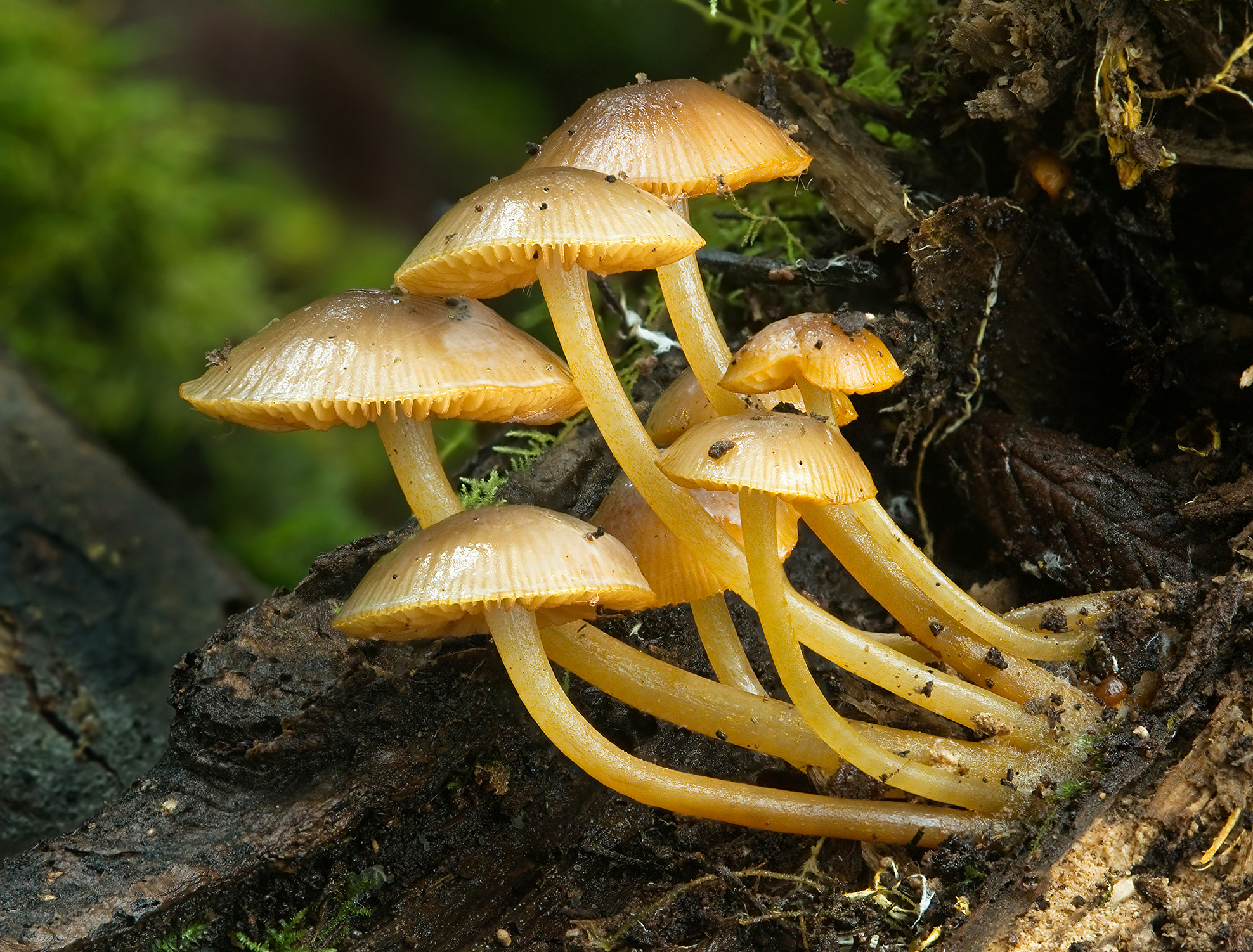
Mycology is the branch of biology concerned with the study of fungi, including their taxonomy, genetics, biochemical properties, and use by humans. Fungi can be a source of tinder, food, traditional medicine, as well as entheogens, poison, and infection. Yeasts are among the most heavily utilized members of the fungus kingdom, particularly in food manufacturing.
Mycology branches into the field of phytopathology, the study of plant diseases. The two disciplines are closely related, because the vast majority of plant pathogens are fungi. A biologist specializing in mycology is called a mycologist.
The word mycology comes from the Ancient Greek: μύκης (mukēs), meaning "fungus" and the suffix -λογία (-logia), meaning "study." Pioneer mycologists included Elias Magnus Fries, Christiaan Hendrik Persoon, Heinrich Anton de Bary, Elizabeth Eaton Morse, and Lewis David de Schweinitz. Beatrix Potter, author of The Tale of Peter Rabbit, also made significant contributions to the field. Pier Andrea Saccardo developed a system for classifying the imperfect fungi by spore color and form, which became the primary system used before classification by DNA analysis. He is most famous for his Sylloge Fungorum, which was a comprehensive list of all of the names that had been used for mushrooms. Sylloge is still the only work of this kind that was both comprehensive for the botanical kingdom Fungi and reasonably modern.
Many fungi produce toxins, antibiotics, and other secondary metabolites. For example, the cosmopolitan genus Fusarium and their toxins associated with fatal outbreaks of alimentary toxic aleukia in humans were extensively studied by Abraham Z. Joffe.
Fungi are fundamental for life on earth in their roles as symbionts, e.g. in the form of mycorrhizae, insect symbionts, and lichens. Many fungi are able to break down complex organic biomolecules such as lignin, the more durable component of wood, and pollutants such as xenobiotics, petroleum, and polycyclic aromatic hydrocarbons. By decomposing these molecules, fungi play a critical role in the global carbon cycle.
Fungi and other organisms traditionally recognized as fungi, such as oomycetes and myxomycetes (slime molds), often are economically and socially important, as some cause diseases of animals (including humans) and of plants.
Apart from pathogenic fungi, many fungal species are very important in controlling the plant diseases caused by different pathogens. For example, species of the filamentous fungal genus Trichoderma are considered one of the most important biological control agents as an alternative to chemical-based products for effective crop disease management.
Field meetings to find interesting species of fungi are known as 'forays', after the first such meeting organized by the Woolhope Naturalists' Field Club in 1868 and entitled "A foray among the funguses [sic]".
Hub AI
Mycology AI simulator
(@Mycology_simulator)
Mycology
Mycology is the branch of biology concerned with the study of fungi, including their taxonomy, genetics, biochemical properties, and use by humans. Fungi can be a source of tinder, food, traditional medicine, as well as entheogens, poison, and infection. Yeasts are among the most heavily utilized members of the fungus kingdom, particularly in food manufacturing.
Mycology branches into the field of phytopathology, the study of plant diseases. The two disciplines are closely related, because the vast majority of plant pathogens are fungi. A biologist specializing in mycology is called a mycologist.
The word mycology comes from the Ancient Greek: μύκης (mukēs), meaning "fungus" and the suffix -λογία (-logia), meaning "study." Pioneer mycologists included Elias Magnus Fries, Christiaan Hendrik Persoon, Heinrich Anton de Bary, Elizabeth Eaton Morse, and Lewis David de Schweinitz. Beatrix Potter, author of The Tale of Peter Rabbit, also made significant contributions to the field. Pier Andrea Saccardo developed a system for classifying the imperfect fungi by spore color and form, which became the primary system used before classification by DNA analysis. He is most famous for his Sylloge Fungorum, which was a comprehensive list of all of the names that had been used for mushrooms. Sylloge is still the only work of this kind that was both comprehensive for the botanical kingdom Fungi and reasonably modern.
Many fungi produce toxins, antibiotics, and other secondary metabolites. For example, the cosmopolitan genus Fusarium and their toxins associated with fatal outbreaks of alimentary toxic aleukia in humans were extensively studied by Abraham Z. Joffe.
Fungi are fundamental for life on earth in their roles as symbionts, e.g. in the form of mycorrhizae, insect symbionts, and lichens. Many fungi are able to break down complex organic biomolecules such as lignin, the more durable component of wood, and pollutants such as xenobiotics, petroleum, and polycyclic aromatic hydrocarbons. By decomposing these molecules, fungi play a critical role in the global carbon cycle.
Fungi and other organisms traditionally recognized as fungi, such as oomycetes and myxomycetes (slime molds), often are economically and socially important, as some cause diseases of animals (including humans) and of plants.
Apart from pathogenic fungi, many fungal species are very important in controlling the plant diseases caused by different pathogens. For example, species of the filamentous fungal genus Trichoderma are considered one of the most important biological control agents as an alternative to chemical-based products for effective crop disease management.
Field meetings to find interesting species of fungi are known as 'forays', after the first such meeting organized by the Woolhope Naturalists' Field Club in 1868 and entitled "A foray among the funguses [sic]".