


Community hub
Recent from talks
Contribute something to knowledge base
Content stats: 0 posts, 0 articles, 1 media, 0 notes
Members stats: 0 subscribers, 0 contributors, 0 moderators, 0 supporters
Subscribers
Supporters
Contributors
Moderators
Hub AI
New York City draft riots AI simulator
(@New York City draft riots_simulator)
Hub AI
New York City draft riots AI simulator
(@New York City draft riots_simulator)
New York City draft riots
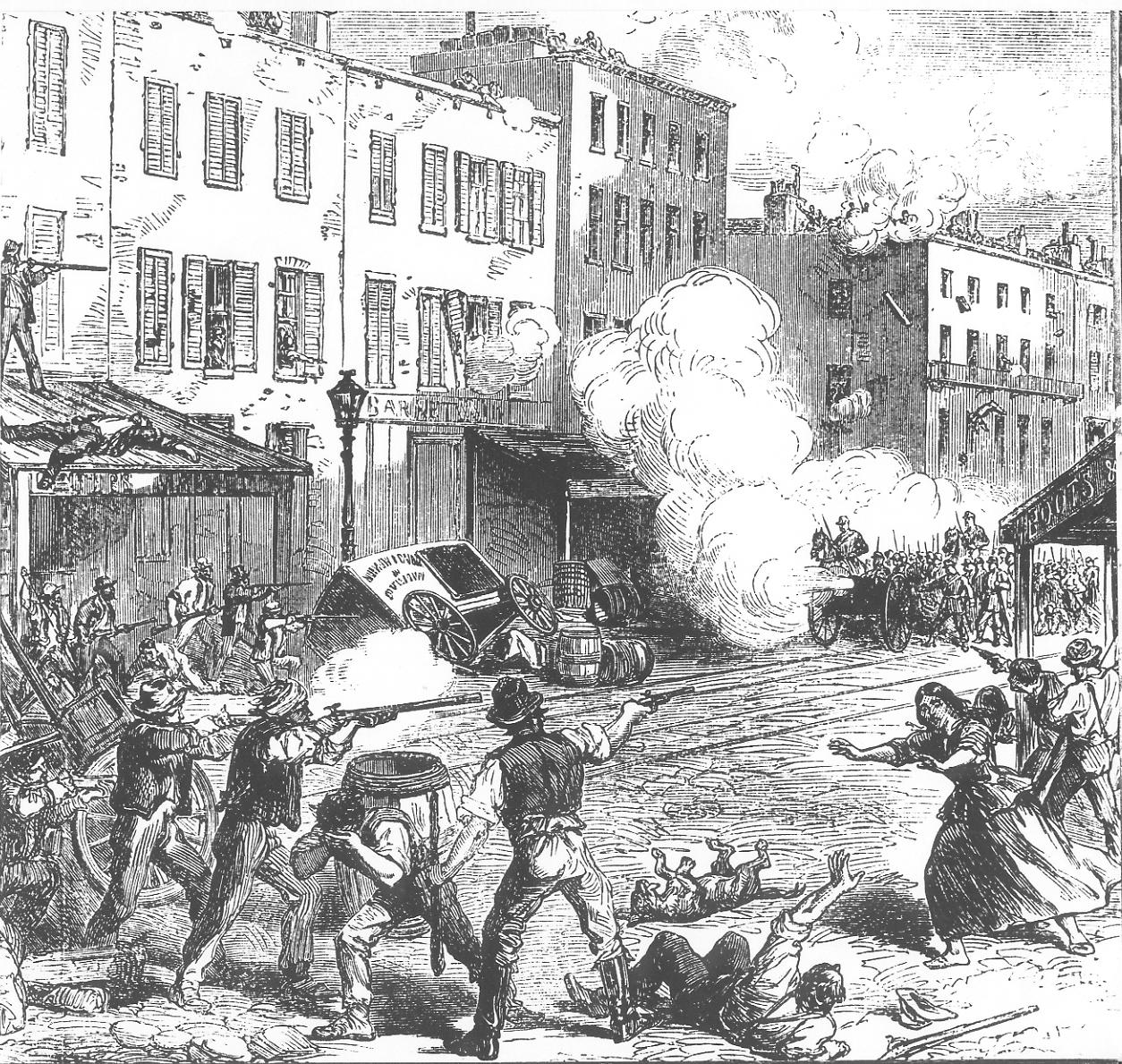
The New York City draft riots (July 13–16, 1863), sometimes referred to as the Manhattan draft riots and known at the time as Draft Week, were violent disturbances in Lower Manhattan, widely regarded as the culmination of working-class discontent with new laws passed by Congress that year to draft men to fight in the ongoing American Civil War. The protests turned into a race riot against African Americans by Irish American rioters. President Abraham Lincoln diverted several regiments of militia and volunteer troops after the Battle of Gettysburg to control the city. The official death toll was listed at either 119 or 120 individuals.
The riots remain the largest civil urban disturbance in American history. Conditions in the city were such that Major General John E. Wool, commander of the Department of the East, said on July 16 that "Martial law ought to be proclaimed, but I have not a sufficient force to enforce it." According to Toby Joyce, the riot represented a "civil war" within the city's Irish community, in that "mostly Irish American rioters confronted police, [while] soldiers, and pro-war politicians ... were also to a considerable extent from the local Irish immigrant community."
The military did not reach the city until the second day of rioting, by which time the mobs had ransacked or destroyed numerous public buildings, two Protestant churches, the homes of various abolitionists or sympathizers, many black homes, and the Colored Orphan Asylum at 44th Street and Fifth Avenue, which was burned to the ground. The area's demographics changed as a result of the riot. Many black residents left Manhattan permanently with many moving to Brooklyn. By 1865, the black population had fallen below 11,000 for the first time since 1820.
New York's economy was tied to the South; by 1822, nearly half of its exports were cotton shipments. In addition, upstate textile mills processed cotton in manufacturing. New York had such strong business connections to the South that on January 7, 1861, Mayor Fernando Wood, a Democrat, called on the city's Board of Aldermen to "declare the city's independence from Albany and from Washington"; he said it "would have the whole and united support of the Southern States." When the Union entered the war, New York City had many sympathizers with the South.
The city was also a continuing destination of immigrants. Since the 1840s, most were from Ireland and Germany. In 1860, nearly 25 percent of the New York City population was German-born, and many did not speak English. During the 1840s and 1850s, journalists had published sensational accounts, directed at the white working class, dramatizing the evils of interracial socializing, relationships, and marriages. Reformers joined the effort.
The Democratic Party's Tammany Hall political machine had been working to enroll immigrants as U.S. citizens so they could vote in local elections and had strongly recruited Irish. In March 1863, with the war continuing, Congress passed the Enrollment Act to establish a draft for the first time, as more troops were needed. In New York City and other locations, new citizens learned they were expected to register for the draft to fight for their new country. Black men were excluded from the draft as they were largely not considered citizens, and wealthier white men could pay for substitutes.
New York political offices, including the mayor, were historically held by Democrats before the war, but the election of Abraham Lincoln as president had demonstrated the rise in Republican political power nationally. Newly elected New York City Republican Mayor George Opdyke was mired in profiteering scandals in the months leading up to the riots. The Emancipation Proclamation of January 1863 alarmed much of the white working class in New York, who feared that freed slaves would migrate to the city and add further competition to the labor market. There had already been tensions between black and white workers since the 1850s, particularly at the docks, with free black people and white immigrants competing for low-wage jobs in the city. In March 1863, white longshoremen refused to work with black laborers and rioted, attacking 200 black men.
There were reports of rioting in Buffalo, New York, and certain other cities, but the first drawing of draft numbers—on July 11, 1863—occurred peaceably in Manhattan. The second drawing was held on Monday, July 13, 1863, ten days after the Union victory at Gettysburg. At 10 am, a furious crowd of around 500, led by the volunteer firemen of Engine Company 33 (known as the "Black Joke"), attacked the assistant Ninth District provost marshal's office, at Third Avenue and 47th Street, where the draft was taking place.
New York City draft riots
The New York City draft riots (July 13–16, 1863), sometimes referred to as the Manhattan draft riots and known at the time as Draft Week, were violent disturbances in Lower Manhattan, widely regarded as the culmination of working-class discontent with new laws passed by Congress that year to draft men to fight in the ongoing American Civil War. The protests turned into a race riot against African Americans by Irish American rioters. President Abraham Lincoln diverted several regiments of militia and volunteer troops after the Battle of Gettysburg to control the city. The official death toll was listed at either 119 or 120 individuals.
The riots remain the largest civil urban disturbance in American history. Conditions in the city were such that Major General John E. Wool, commander of the Department of the East, said on July 16 that "Martial law ought to be proclaimed, but I have not a sufficient force to enforce it." According to Toby Joyce, the riot represented a "civil war" within the city's Irish community, in that "mostly Irish American rioters confronted police, [while] soldiers, and pro-war politicians ... were also to a considerable extent from the local Irish immigrant community."
The military did not reach the city until the second day of rioting, by which time the mobs had ransacked or destroyed numerous public buildings, two Protestant churches, the homes of various abolitionists or sympathizers, many black homes, and the Colored Orphan Asylum at 44th Street and Fifth Avenue, which was burned to the ground. The area's demographics changed as a result of the riot. Many black residents left Manhattan permanently with many moving to Brooklyn. By 1865, the black population had fallen below 11,000 for the first time since 1820.
New York's economy was tied to the South; by 1822, nearly half of its exports were cotton shipments. In addition, upstate textile mills processed cotton in manufacturing. New York had such strong business connections to the South that on January 7, 1861, Mayor Fernando Wood, a Democrat, called on the city's Board of Aldermen to "declare the city's independence from Albany and from Washington"; he said it "would have the whole and united support of the Southern States." When the Union entered the war, New York City had many sympathizers with the South.
The city was also a continuing destination of immigrants. Since the 1840s, most were from Ireland and Germany. In 1860, nearly 25 percent of the New York City population was German-born, and many did not speak English. During the 1840s and 1850s, journalists had published sensational accounts, directed at the white working class, dramatizing the evils of interracial socializing, relationships, and marriages. Reformers joined the effort.
The Democratic Party's Tammany Hall political machine had been working to enroll immigrants as U.S. citizens so they could vote in local elections and had strongly recruited Irish. In March 1863, with the war continuing, Congress passed the Enrollment Act to establish a draft for the first time, as more troops were needed. In New York City and other locations, new citizens learned they were expected to register for the draft to fight for their new country. Black men were excluded from the draft as they were largely not considered citizens, and wealthier white men could pay for substitutes.
New York political offices, including the mayor, were historically held by Democrats before the war, but the election of Abraham Lincoln as president had demonstrated the rise in Republican political power nationally. Newly elected New York City Republican Mayor George Opdyke was mired in profiteering scandals in the months leading up to the riots. The Emancipation Proclamation of January 1863 alarmed much of the white working class in New York, who feared that freed slaves would migrate to the city and add further competition to the labor market. There had already been tensions between black and white workers since the 1850s, particularly at the docks, with free black people and white immigrants competing for low-wage jobs in the city. In March 1863, white longshoremen refused to work with black laborers and rioted, attacking 200 black men.
There were reports of rioting in Buffalo, New York, and certain other cities, but the first drawing of draft numbers—on July 11, 1863—occurred peaceably in Manhattan. The second drawing was held on Monday, July 13, 1863, ten days after the Union victory at Gettysburg. At 10 am, a furious crowd of around 500, led by the volunteer firemen of Engine Company 33 (known as the "Black Joke"), attacked the assistant Ninth District provost marshal's office, at Third Avenue and 47th Street, where the draft was taking place.
Recent media
Recent media